Durban lines that need steady finishing control
Durban plants work with humidity, salt air and busy production schedules, so label finishing needs careful setup and regular checks. We support digital finishing lines used for self-adhesive labels, short runs, variable data work and fast changeovers where registration and web control matter from the first roll through to the finished reel.
In this area we see presses and finishing lines feeding from roll stock that can vary in width, core size and coating type. That means unwind tension, web guide settings and sensor alignment need to be handled with care, or the line starts to drift, wrinkle or mark the face stock. Our Durban support work is built around those daily production details, not broad advice from far away.
We assist teams that need clean finishing on paper, film and metallised label stocks. When the web is not tracking well, or matrix waste starts lifting unevenly, the whole line slows down. The aim is to keep output neat, square and ready for packing or application.
What we cover on site in Durban
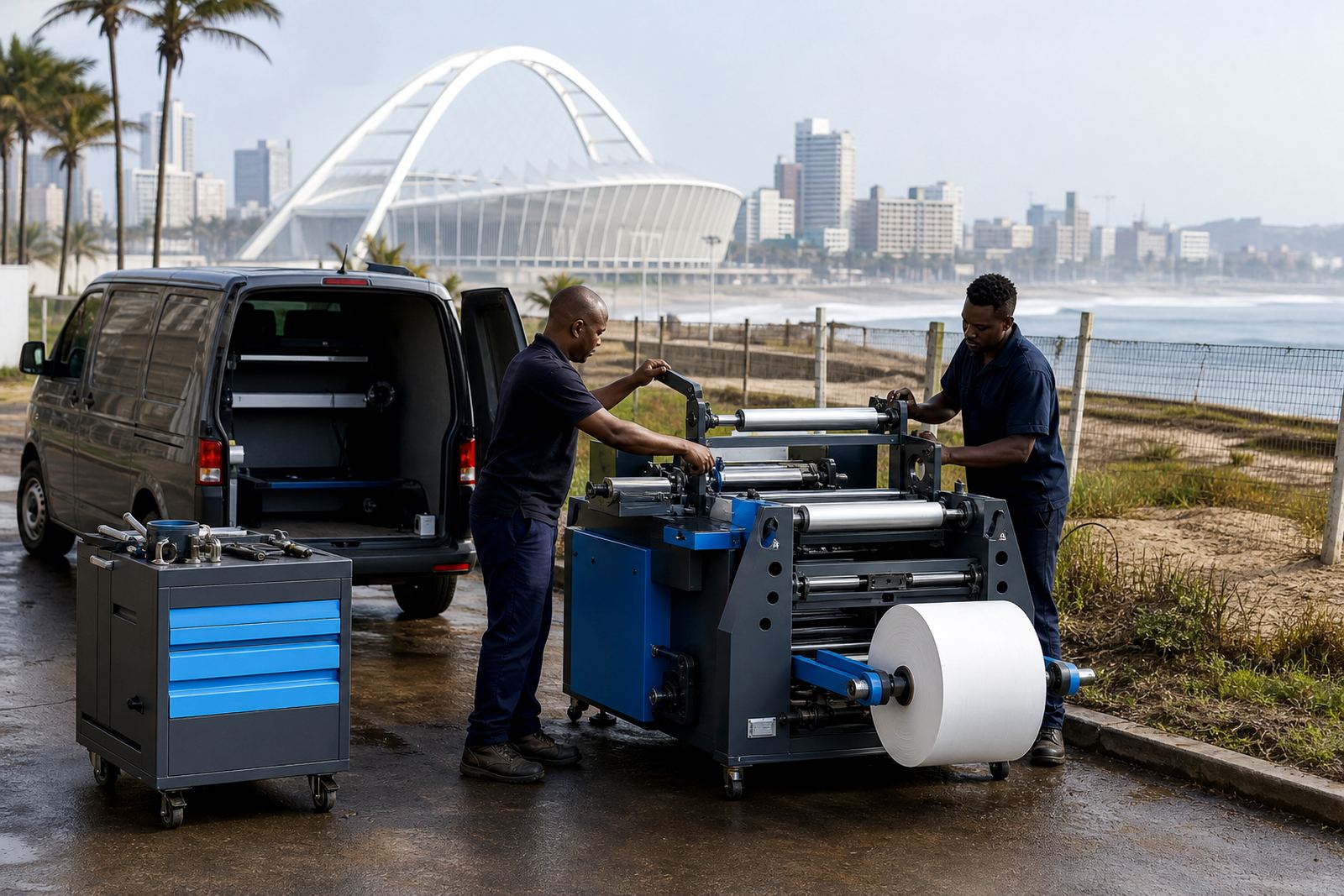
Our site work in Durban covers the full finishing path, from the reel infeed to the finished output roll. That includes setup for lamination, varnish, die-cutting, matrix stripping, slitting and rewinding. Where the job calls for semi-rotary tooling or laser finishing, we help the team set the job correctly and keep the registration marks in line.
- Machine installation and line positioning
- Commissioning and first-run setup
- Registration calibration and sensor checks
- Die setup help for flexible dies and repeat work
- Slitting setup for finished roll widths
- Rewind setup for clean output rolls
- Preventive maintenance and breakdown repairs
We also cover feed and rewind paths, matrix take-up, waste stripping and finishing speed checks. If a line is producing narrow webs or smaller repeat lengths, the settings need to be tighter. If it is running wider rolls for packaging work, the unwind and rewind sections need more attention to edge control and roll stability.
Typical Durban clients and the work they ask for
Durban support is usually for label printers, packaging houses and converters that run mixed production. Some are producing retail labels with frequent artwork changes, others handle industrial labels, carton tags or short packaging runs that need a quick shift from one job to the next. The common thread is that the finishing stage has to match the print stage without wasting stock.
In coastal conditions, adhesive behaviour and substrate handling can shift through the day. Teams often notice this first on matrix removal, die depth and rewind quality. A roll that looks fine in the morning can show edge lift or slight tracking drift later in the day, especially on longer runs. We look at those practical signs and set the line accordingly.
For operators, the most useful support is clear setup guidance. That may mean adjusting waste stripping, checking web tension, aligning the registration mark reading, or confirming the slit widths before production starts. Small adjustments can prevent a lot of scrap, and they also make handover easier for new staff.
Travel into Durban and local coverage details
We cover Durban and the wider metro, including industrial and warehouse areas where label production is tied to packaging, dispatch and despatch planning. Travel from Kya Sand, Randburg is arranged around the job type and the machine on site, whether it is a first installation, a planned service visit or a repair on a line that has stopped mid-production.
For Durban operations, access, floor layout and machine location matter. Some plants have tight receiving areas, others keep the finishing line close to the pressroom or pack-off area. We work with the site layout as it stands and plan around the actual machine position, cable runs and material handling space. That keeps the job practical and avoids wasted movement on the floor.
The region also has a mix of larger plants and smaller production rooms, so support needs vary. A narrow web slitter on one site may need a different setup from a wider finishing line with lamination and varnish on another. Our Durban coverage is set up for that range, from clean commissioning work to fault finding on older lines that still need reliable output.
Parts, consumables and machine coverage
We keep common service items and consumable parts in mind when supporting Durban customers, especially the parts that affect web path, cutting accuracy and reel quality. That includes items linked to guides, shafts, rollers, waste removal, rewind control and registration sensing. If a machine is under strain, these are often the first places to check.
- Cutting and finishing assemblies
- Web guiding and tension control parts
- Slitting and rewind components
- Matrix stripping and waste handling parts
- Sensor and registration components
- Routine service kits and wear items
When a line is running labels with finer detail or tighter cut tolerances, the setup needs better control on the finishing side. We help the Durban team match the machine settings to the job, whether the output is for shelf labels, pack labels or variable data work. That keeps the reel tight, the cuts clean and the roll ready for the next step.
Training that fits the operator on shift
Operator training is a major part of our Durban support. A machine that is well installed can still underperform if the team is unsure about load paths, registration marks, die pressure or rewind tension. We train staff on the actual machine in front of them, with the job material they are using, so the guidance fits the production floor rather than a generic classroom version.
Training usually covers start-up checks, safe threading, die setup help, registration calibration, waste stripping, slit width changes and rewind checks. We also go through what to look for when a roll starts drifting or the cut is not landing where it should. That makes the shift handover easier, and it reduces pressure on the technical team when production gets busy.
For Durban sites with rotating teams, this practical approach helps new operators settle into the line faster. It also supports supervisors who need clear notes on how each job should be set and what to inspect during a run. On a busy floor, a tidy setup routine matters just as much as the machine itself.