

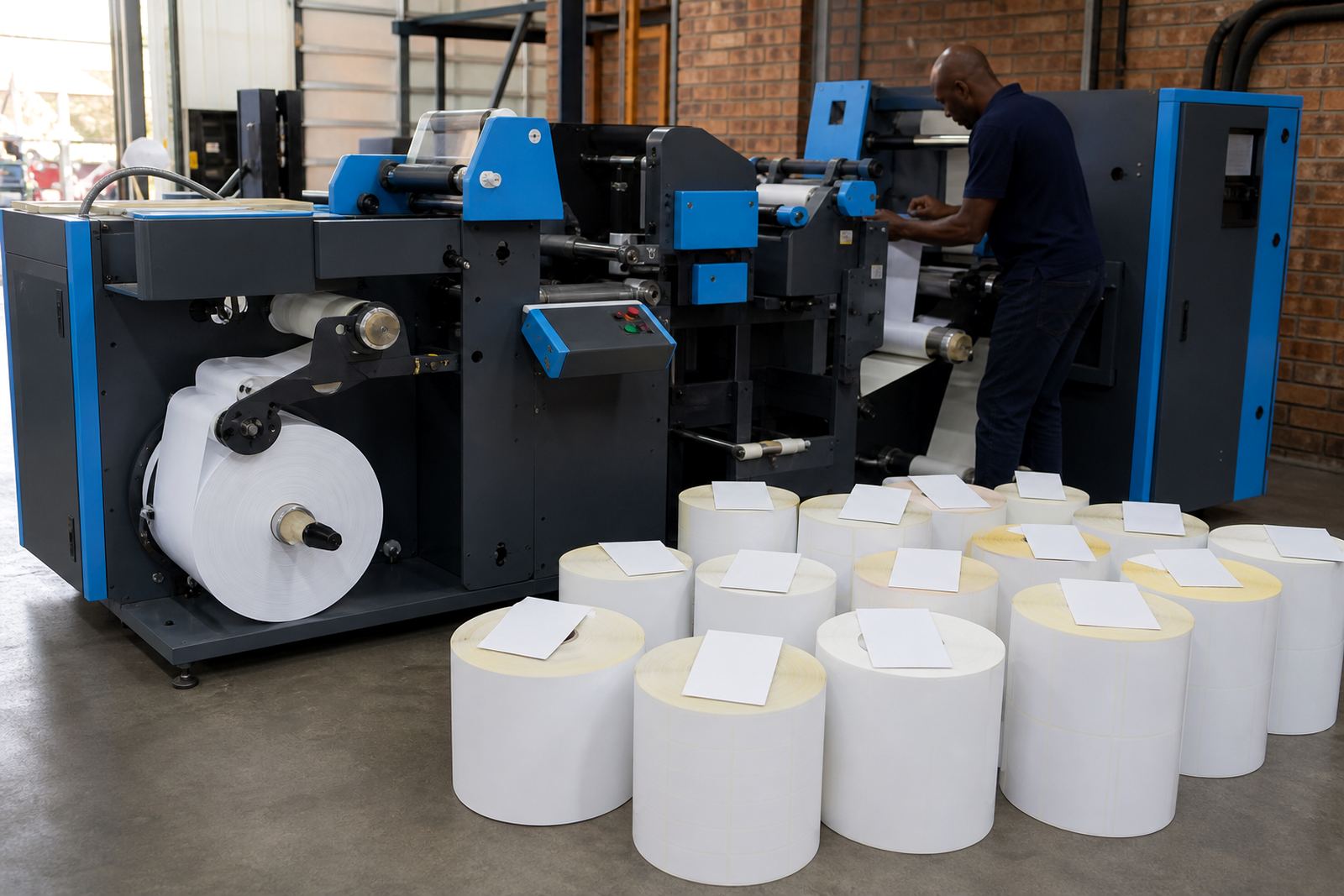
Short runs that still need clean edges
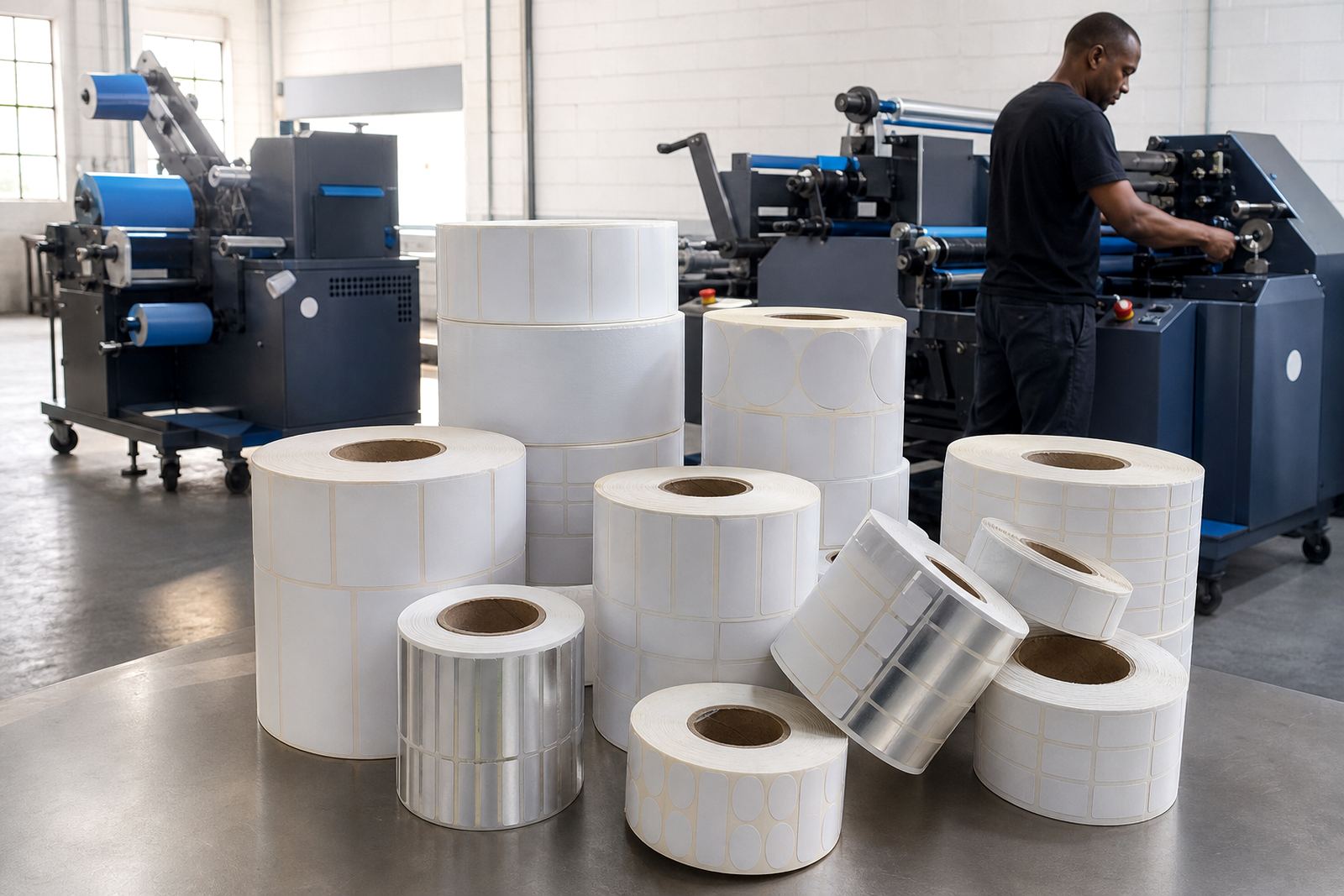
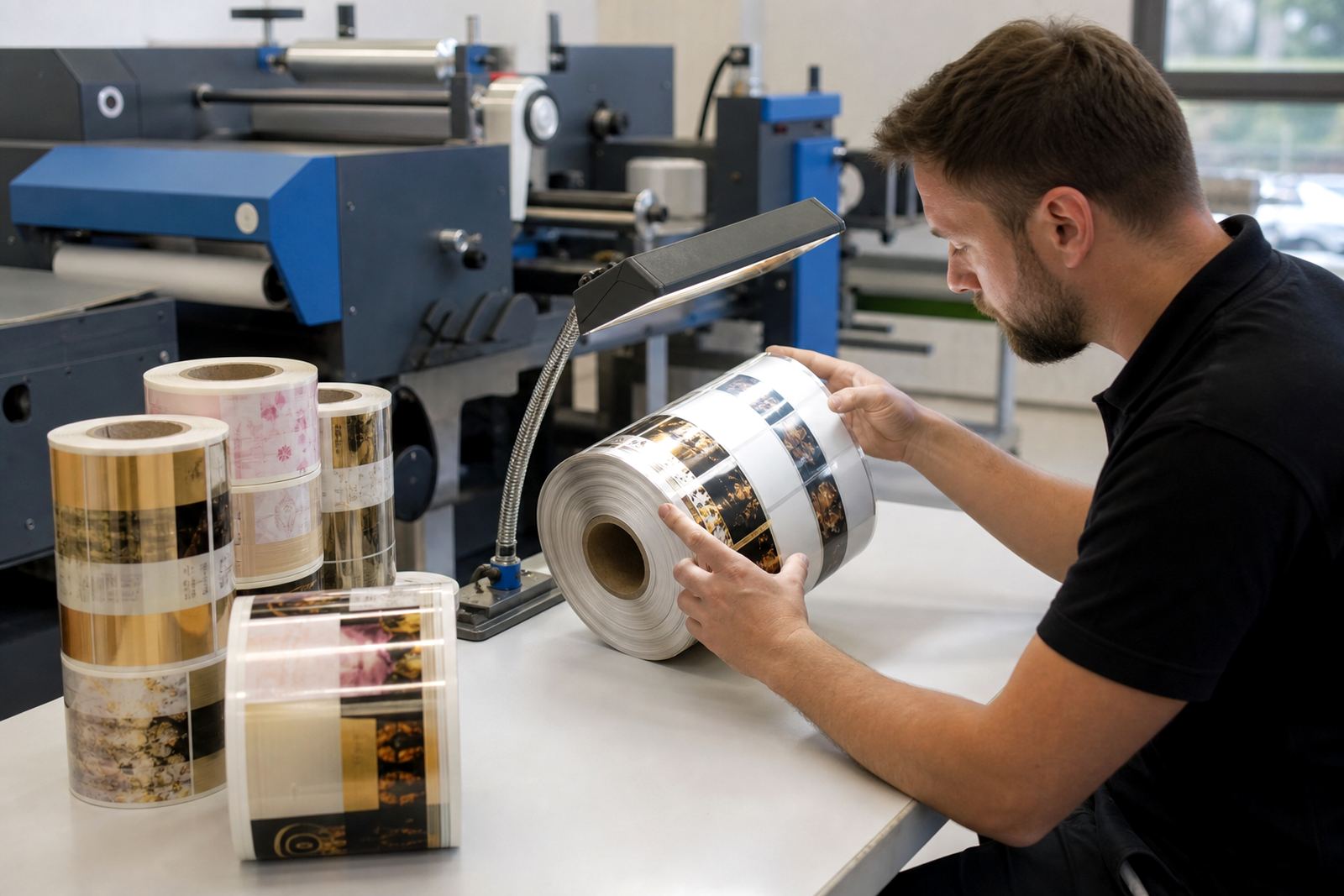
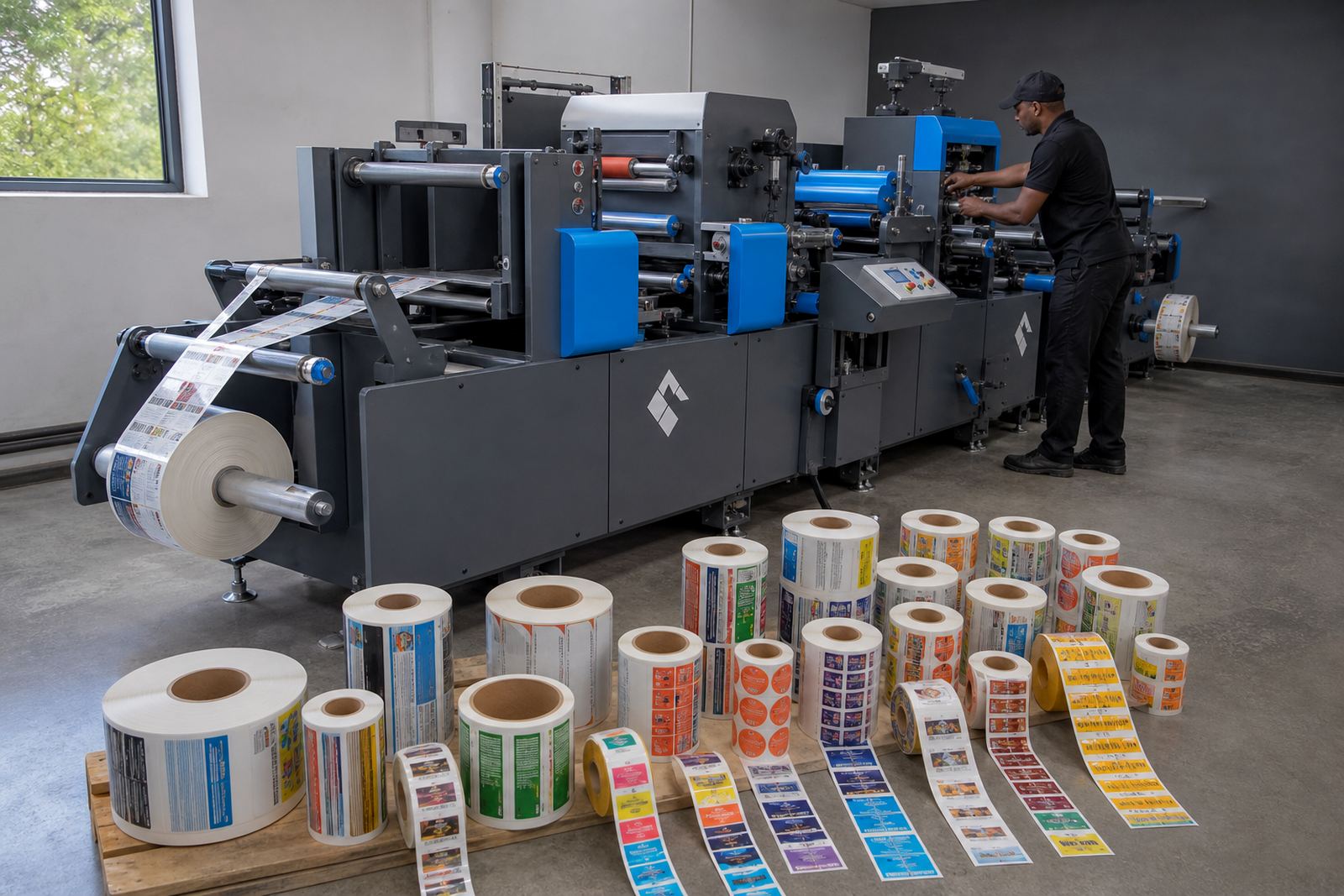
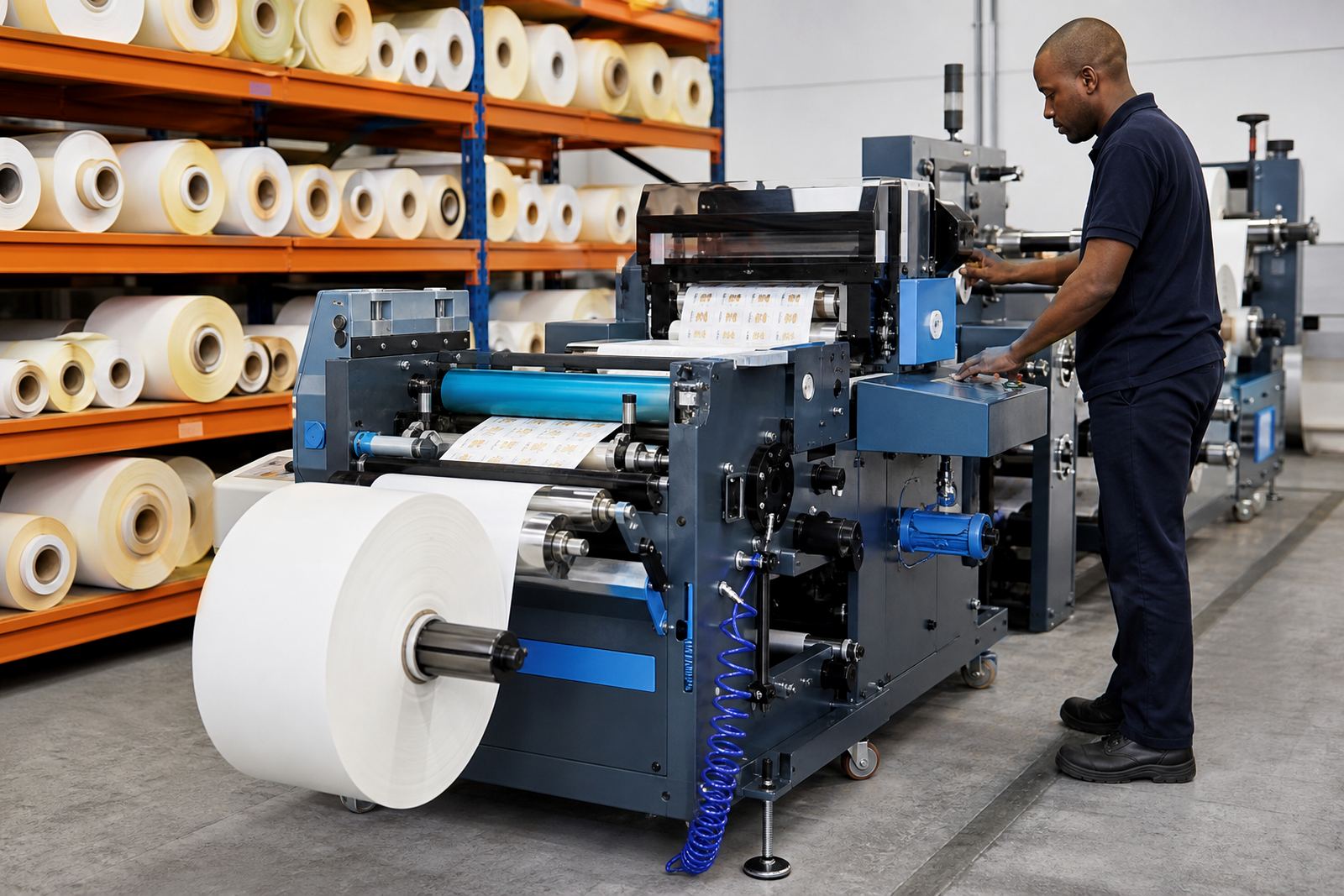
Short run labels often move fast from proof to production, but the finishing still has to hold registration, keep web tension steady and leave a clean edge on every roll. That can mean laser cutting for changing shapes, or semi-rotary die-cutting when the artwork stays stable and the make-ready needs to stay tight.
We look at repeat length, substrate thickness and how the press sheet or web enters the finishing line. Some jobs need flexible dies for familiar shapes, while others are better handled with digital cutting where artwork changes are common and waste must be stripped neatly.
- Short promotional runs with changing artwork
- Variable data labels for traceability and dispatch
- Proof-to-production work on small roll counts
Pressure-sensitive labels for retail and product packs
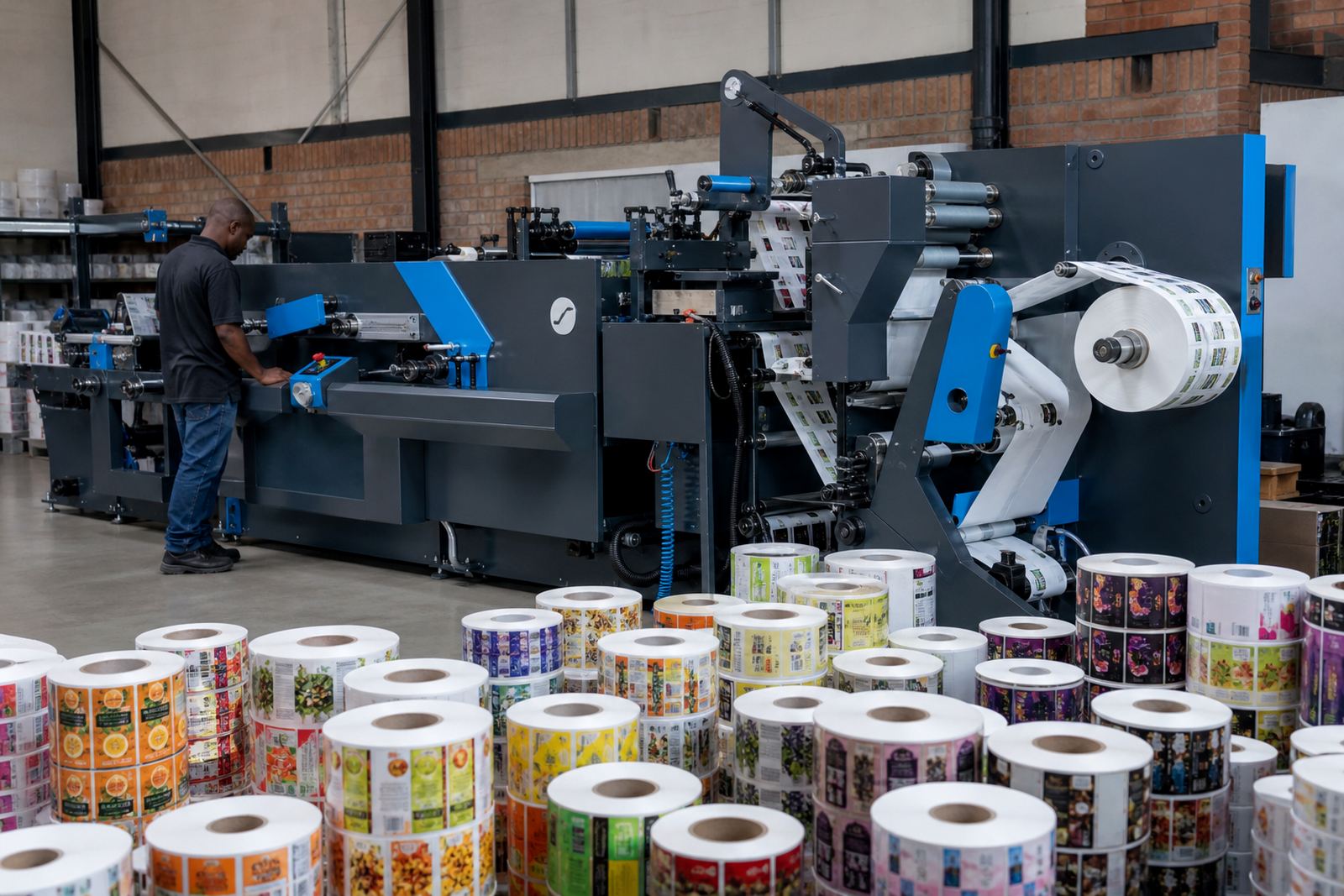
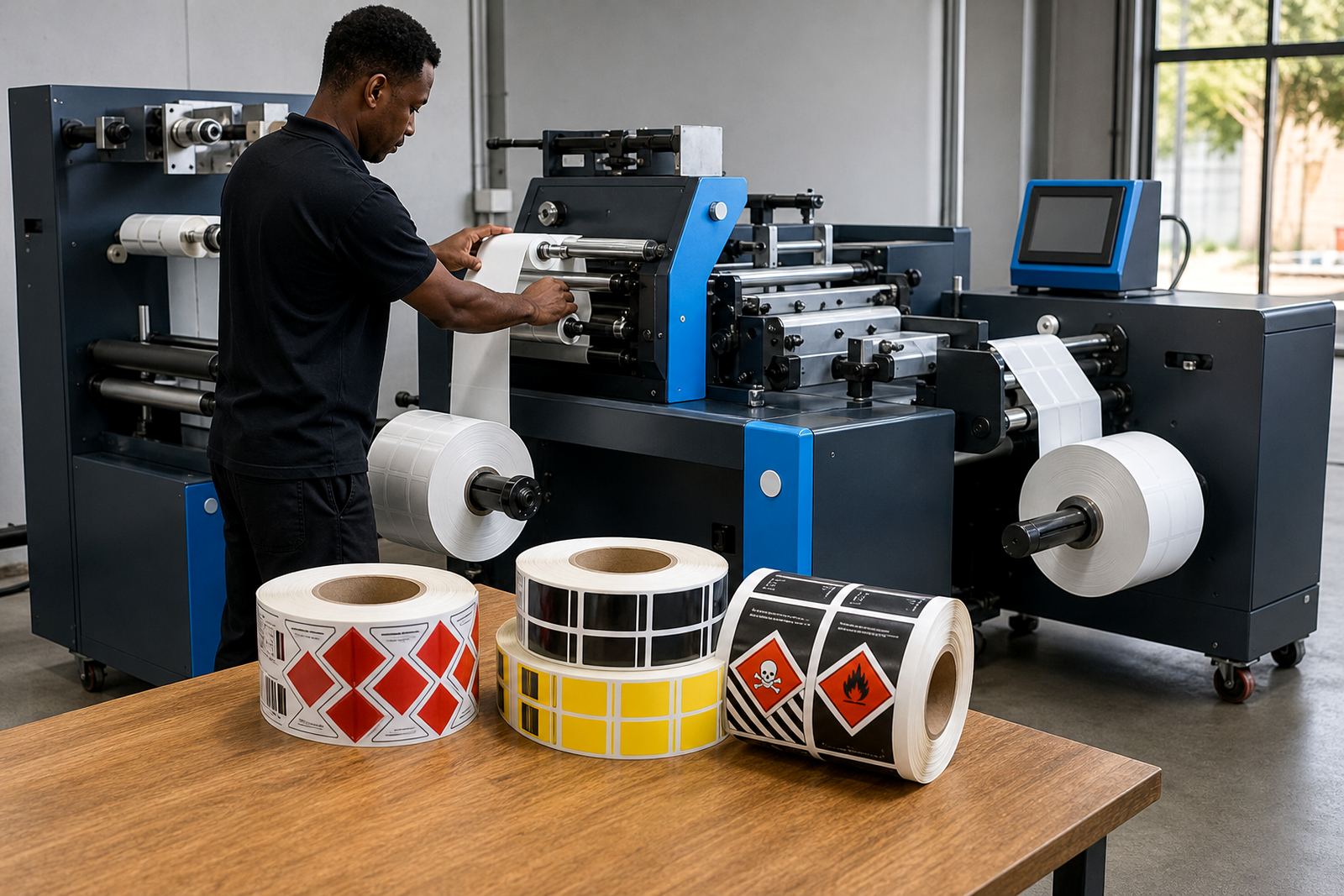
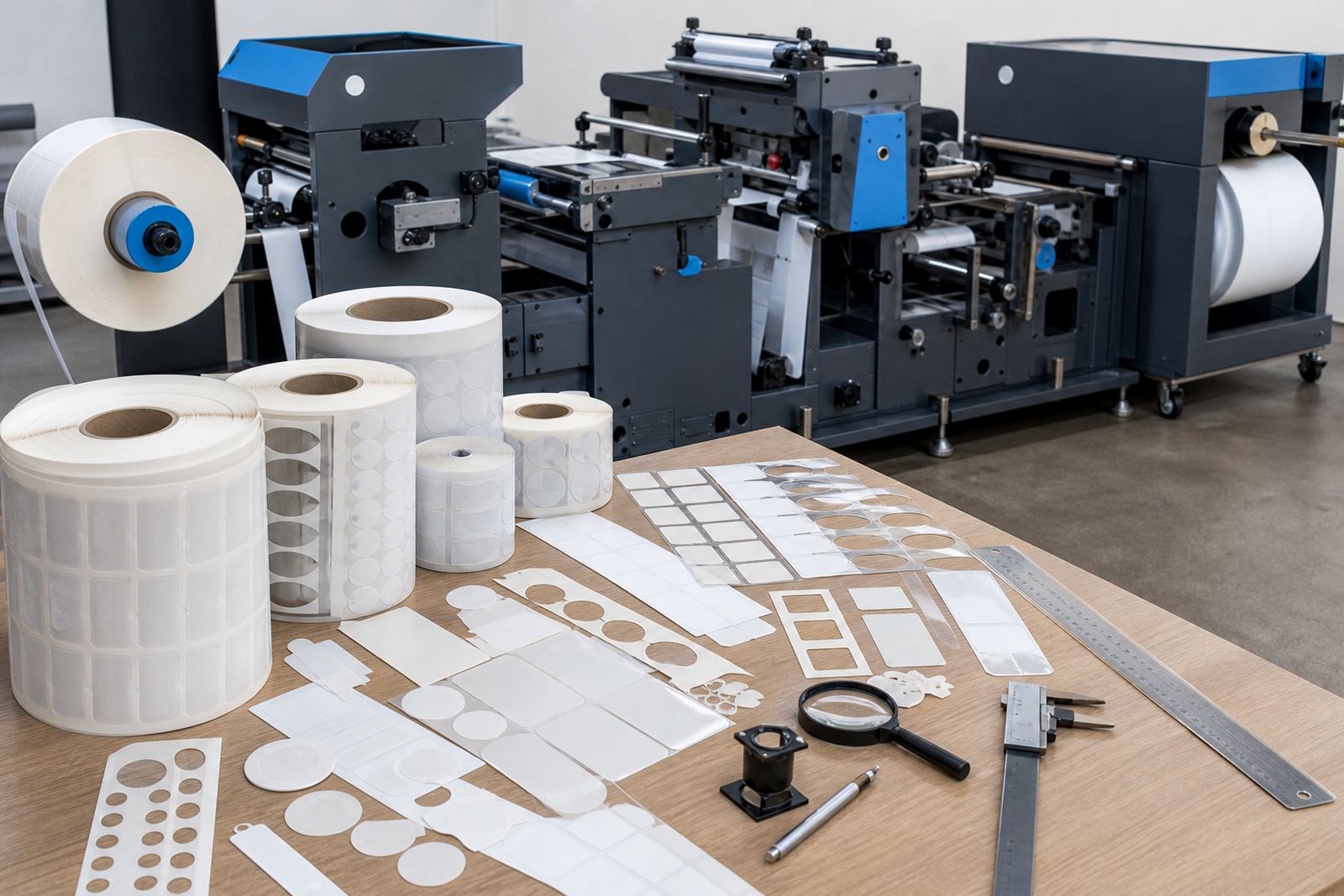
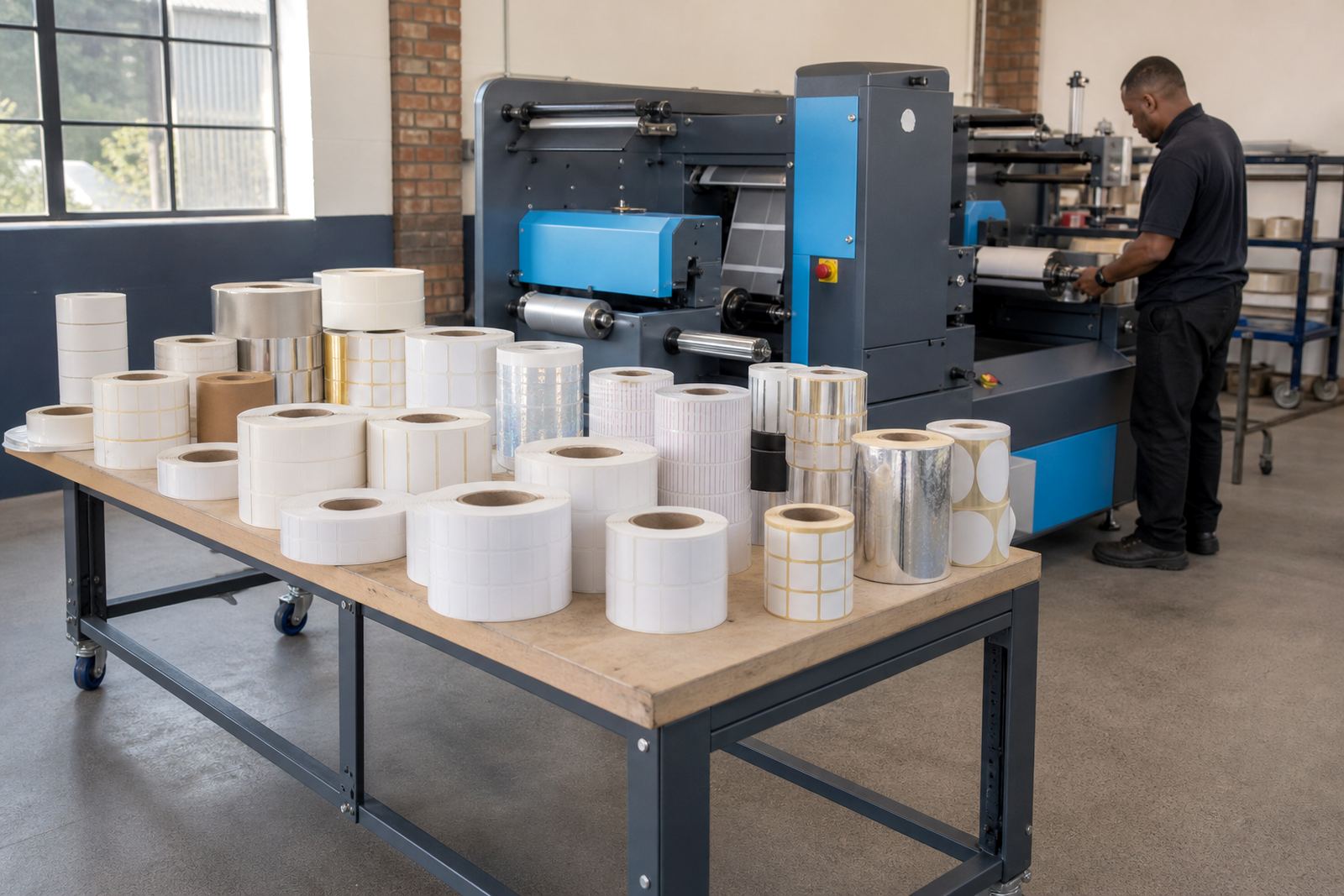
Retail labels and product pack labels need the cut to match the face stock, adhesive and backing paper without dragging the web off line. When the roll is handled well, the labels unwind evenly, the waste matrix lifts cleanly and the finished rolls stay ready for the next process.
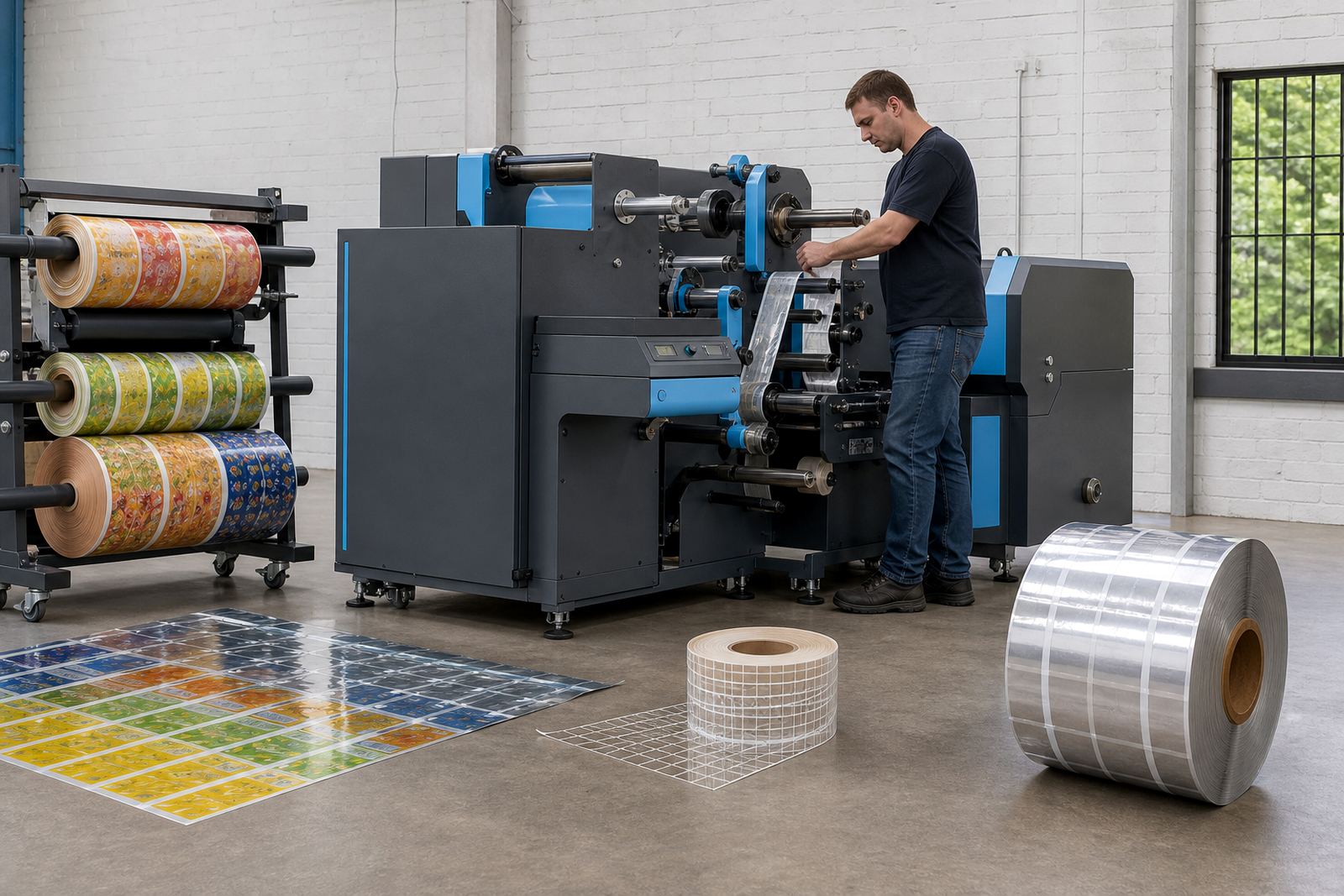
Finishing choices here often include lamination for scuff resistance, varnish for surface protection and slitting where one wide web is split into narrower lanes. In humid coastal areas, roll handling matters even more, because curled edges and soft adhesive behaviour can upset feeding if the line is not set correctly.
- Food and beverage packs
- Household and personal care labels
- Carton and pouch labels that need consistent unwind
Special shapes, windows and tighter registration work
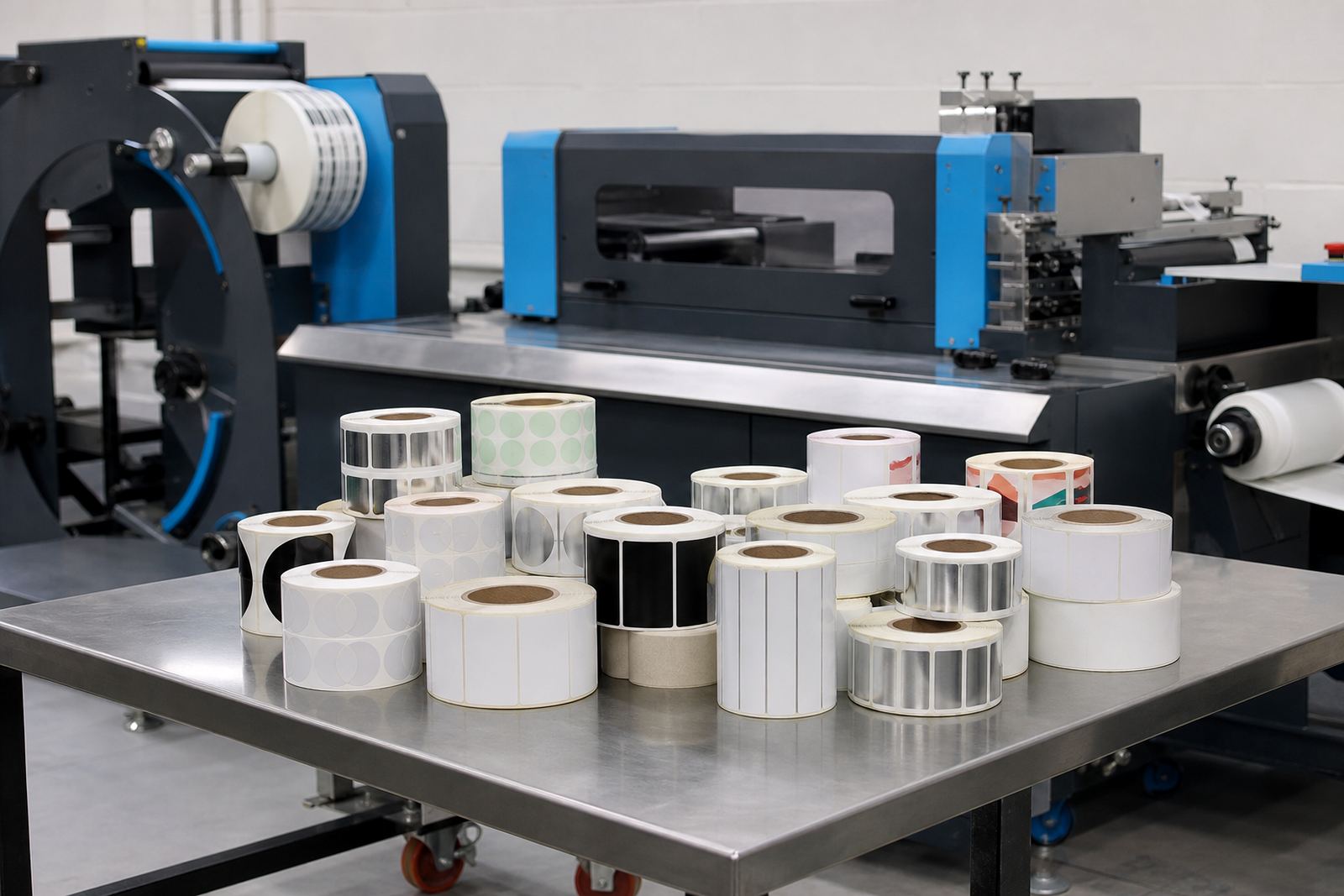
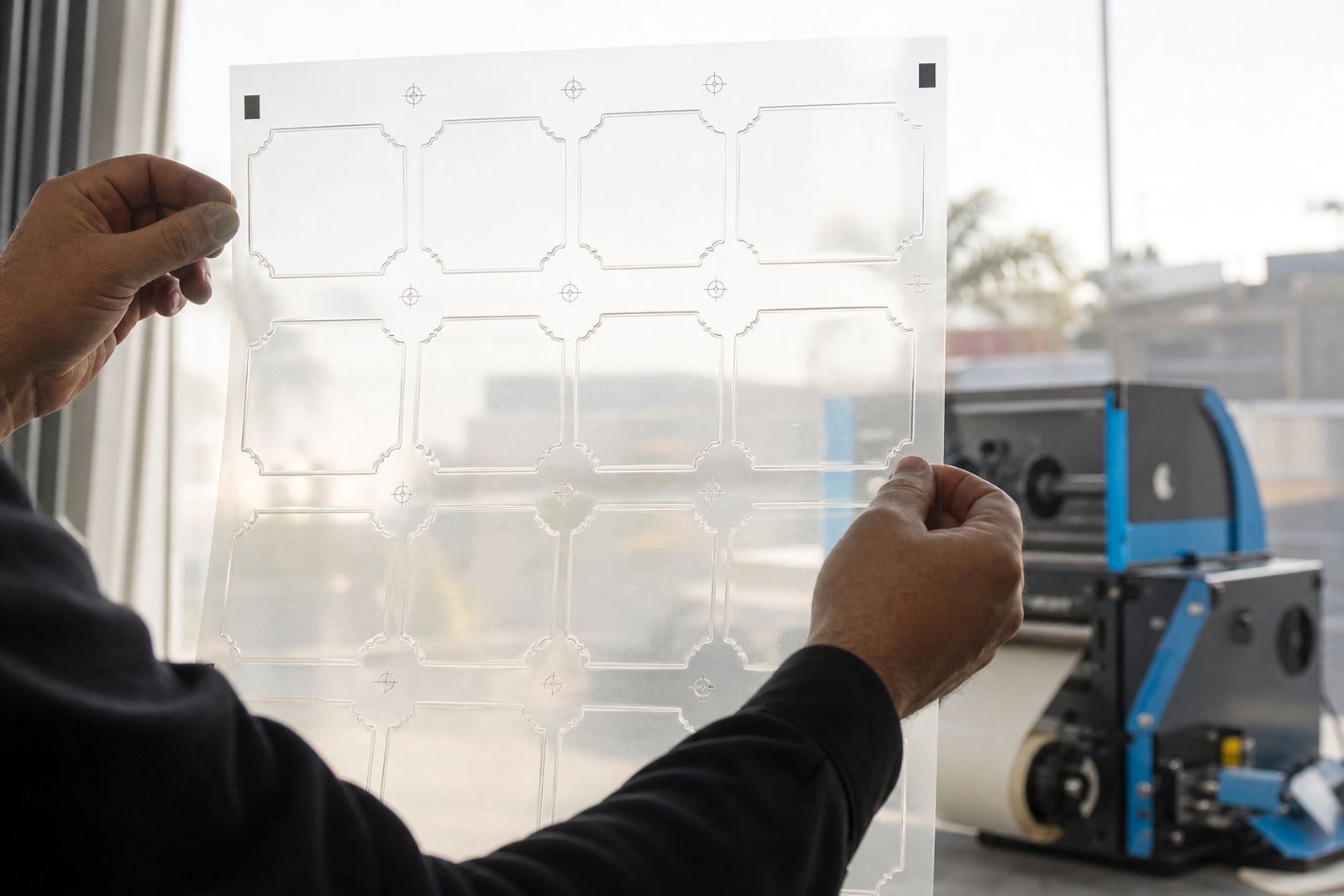
Some labels are not about volume at all, they are about shape control. Window decals, rounded corners, shaped sleeves for secondary packaging and security labels all ask for accurate registration marks and a stable feed path. If the mark drifts, the cut lands off centre and the waste path becomes untidy.
We set up machines for die setup help, registration calibration and repeatable cut depth so the finished rolls stay usable on the next line. For tighter artwork, semi-rotary systems and flexible dies can give a strong balance between speed and control, while laser cutting suits more variable patterns and smaller geometry changes.
Lamination, varnish and surface protection jobs
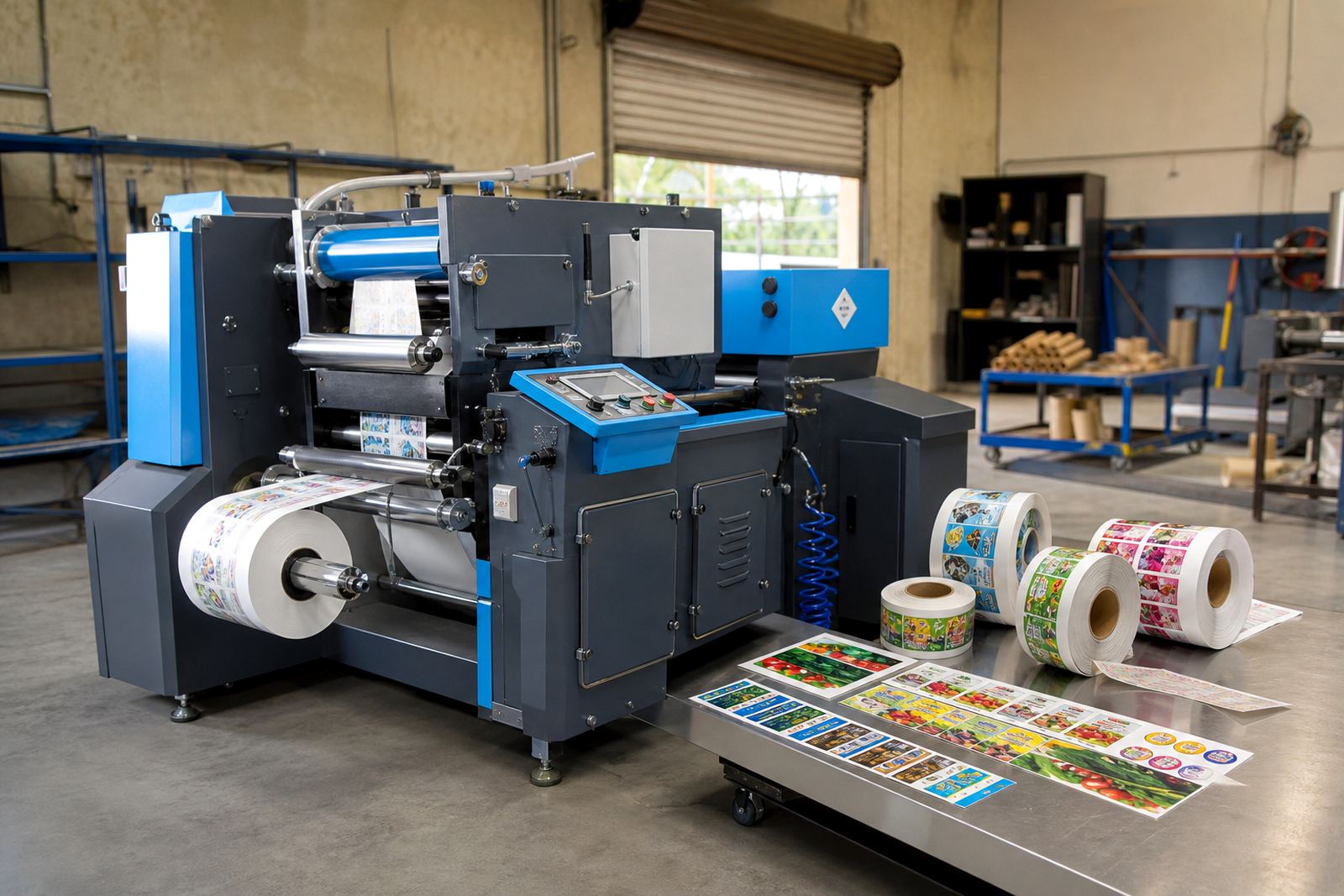
Not every label job ends at the cut. Many need an overlaminate, a protective varnish or a top layer that helps the print survive handling, rubbing and moisture. Those jobs need the right web path, the right nip pressure and enough drying or set time before the reel is wound tight.
We work through jobs where the finish must stay readable on bottles, cartons or outer packs, including labels that face frequent handling in warehouse and retail settings. Roll size matters too, because wide parent rolls can behave very differently from narrow finished rolls once the web is laminated and slit.
Matrix stripping, slitting and rewinding duties
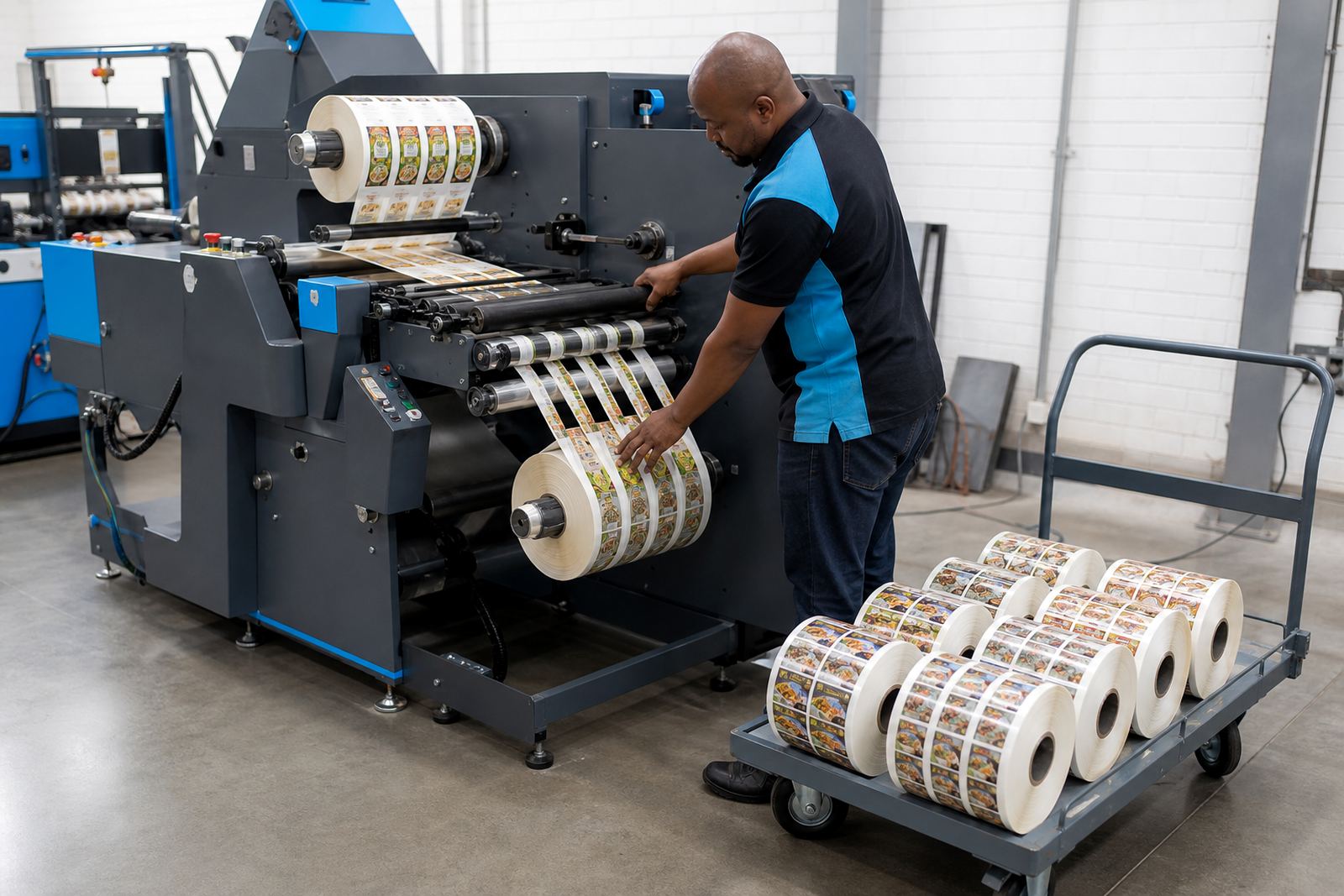
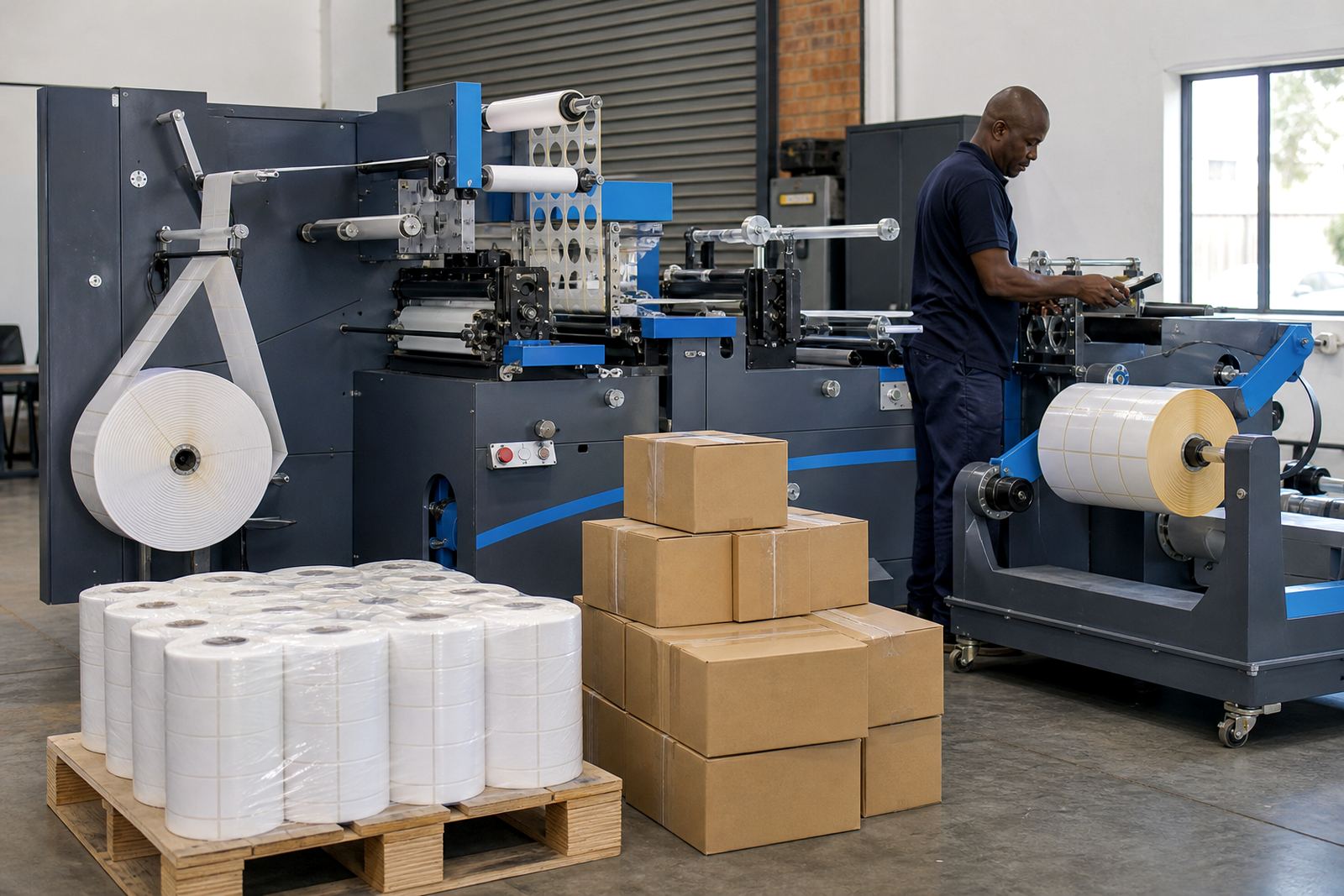
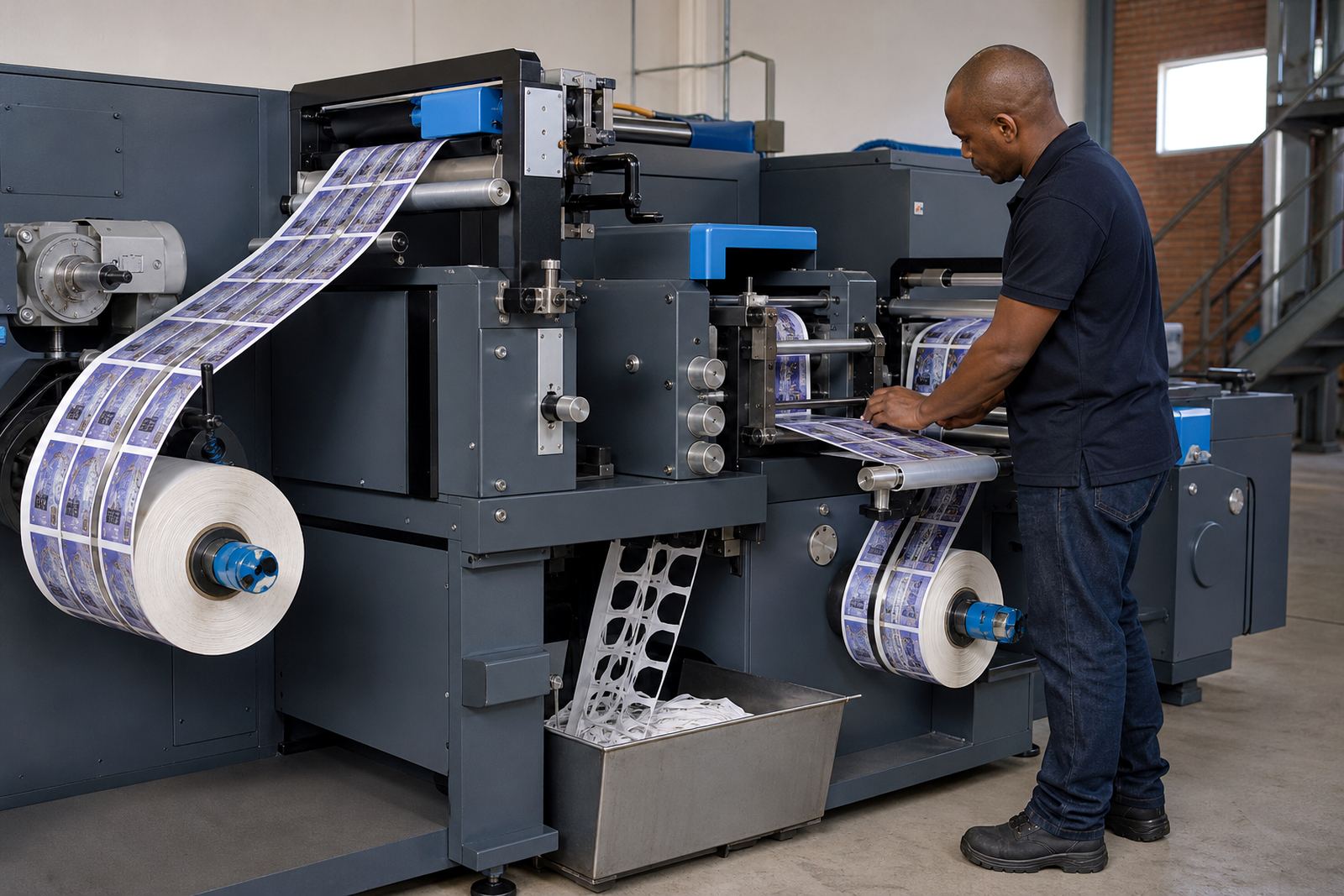
Good finishing is often decided after the cut. Matrix stripping has to lift the waste cleanly, slitting must leave a straight edge and rewinding must keep the roll firm without crushing adhesive or distorting the web. If any one of those steps is out, the next press or applicator pays for it.
- Waste matrix removal for self-adhesive labels
- Slitting into finished roll widths for applicators
- Rewind setup for tidy cores and stable tension
These jobs are common in label print rooms and packaging plants where a few millimetres make a difference. The same line can often be adjusted for different roll diameters, core sizes and web widths, provided the setup is handled with care.
Jobs that need setup, training and a steady hand
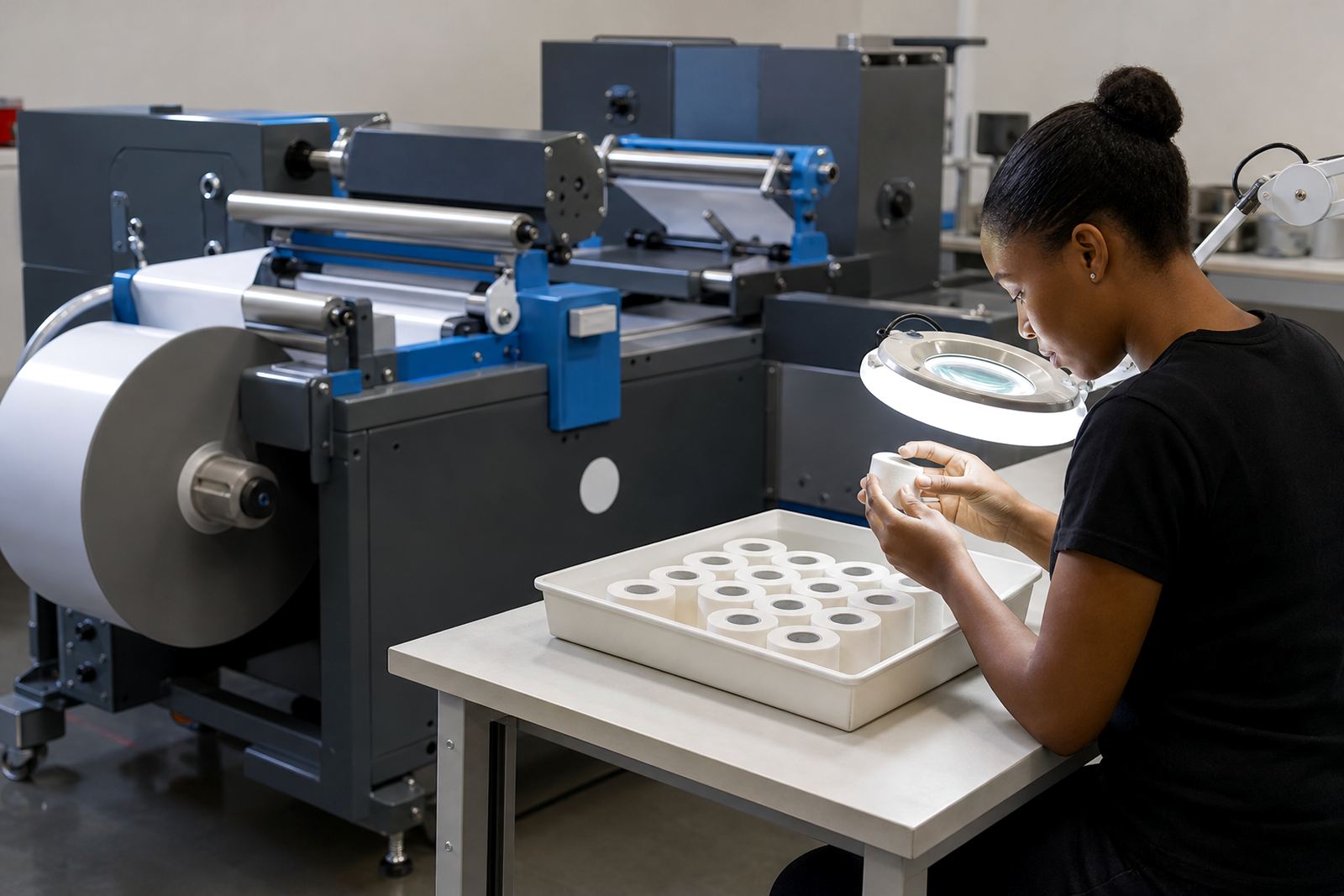
Some finishing work is straightforward, some needs a trained operator who can read the web, the mark and the waste path at once. That is where installation, line commissioning and operator training matter, along with preventive maintenance and spare parts supply for the moving sections that take the most wear.
Our team works from Kya Sand, Randburg and supports label printers and packaging producers across South Africa, including Johannesburg, Pretoria, Durban, Cape Town and Gqeberha. The aim is to keep the machine aligned to the job, whether it is a routine label run or a more demanding multi-step converting line.