

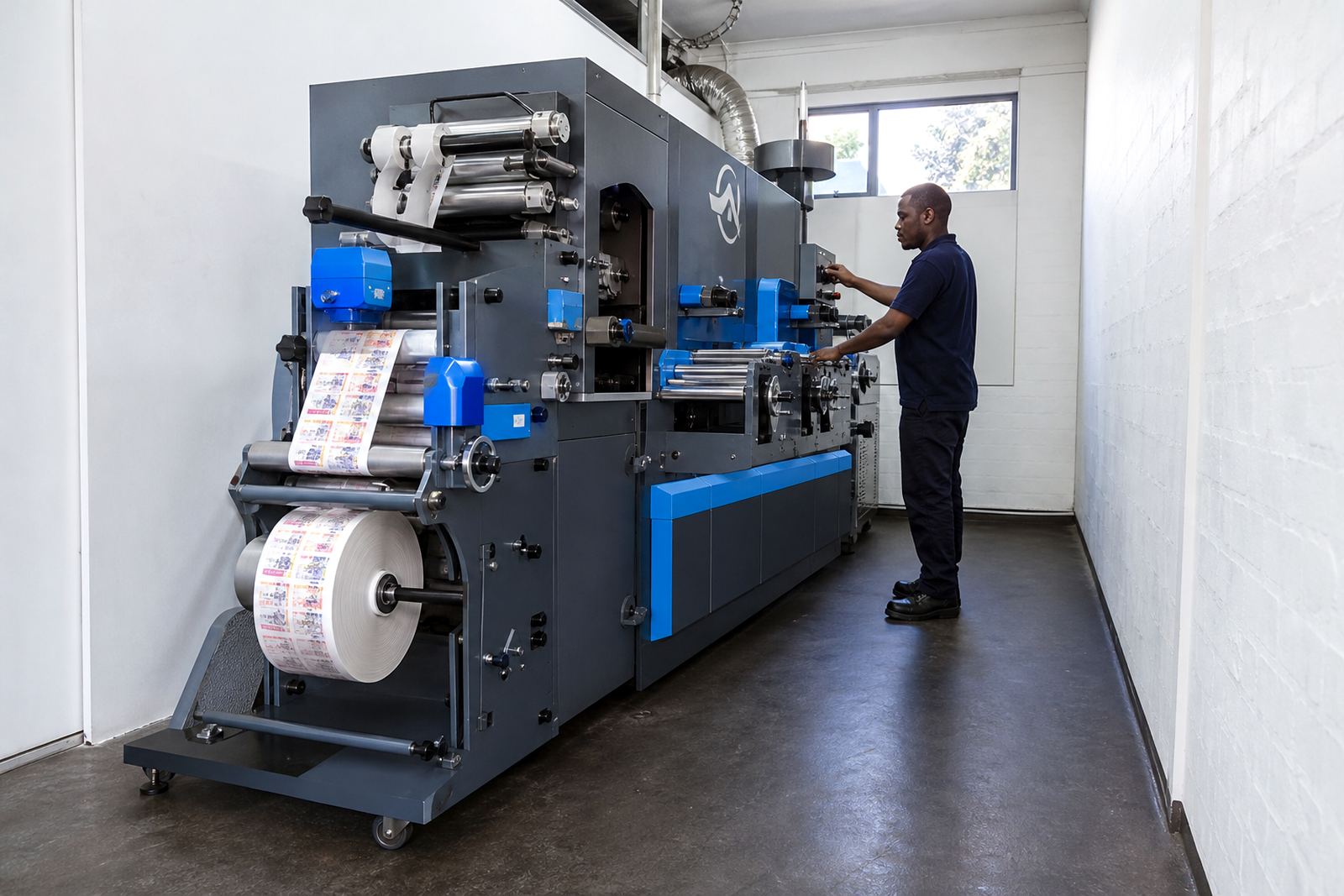
Where a finishing line starts and ends
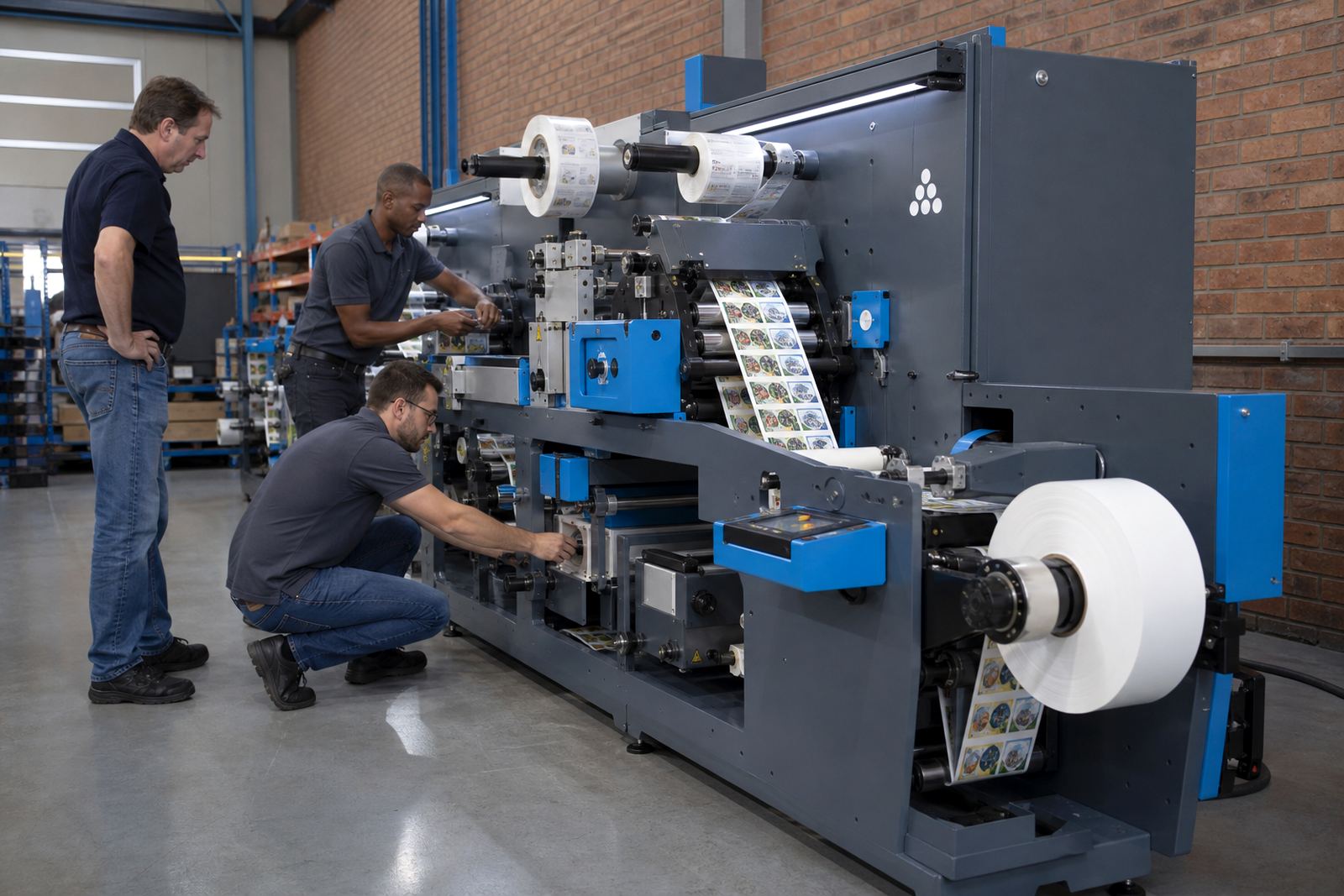
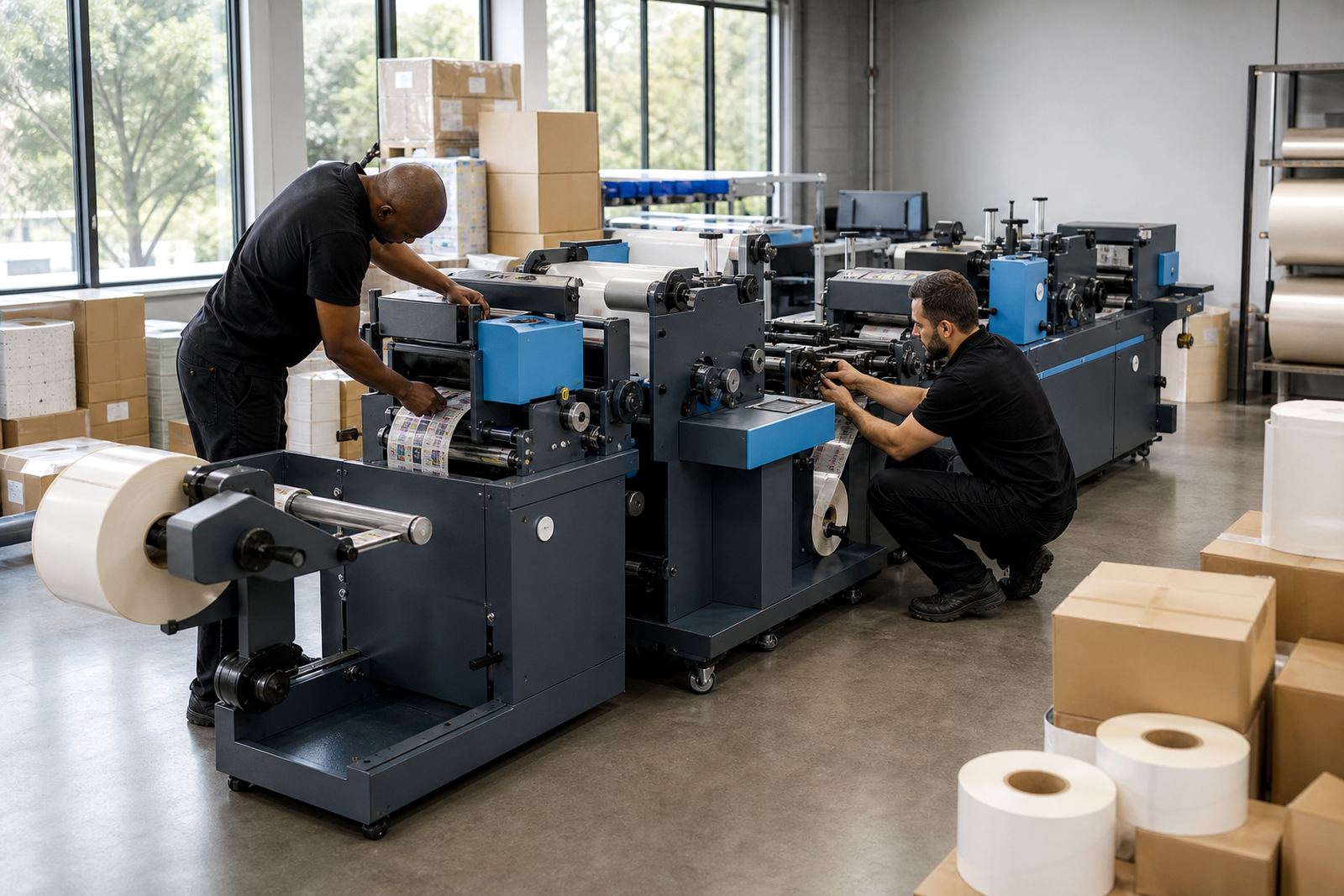
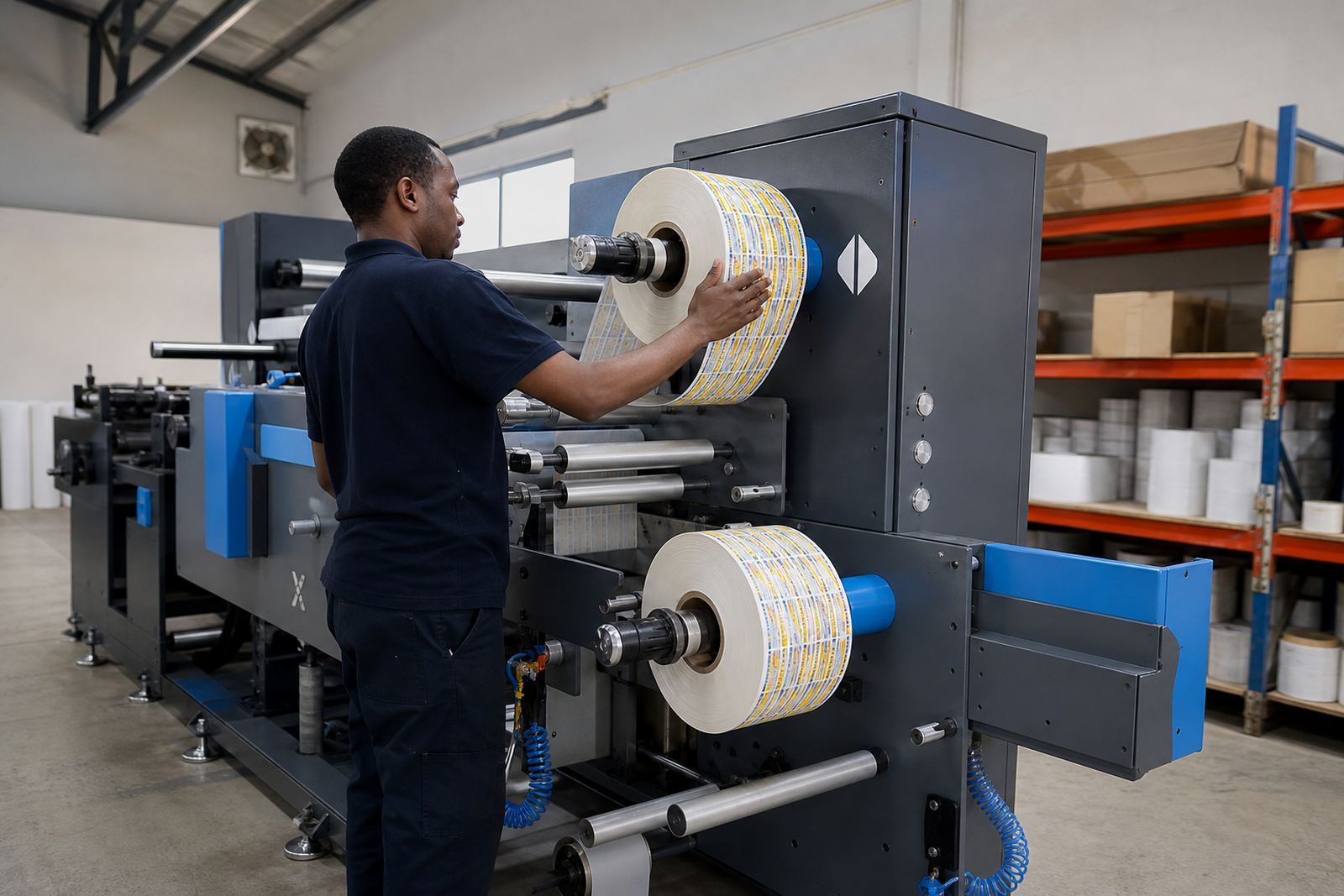
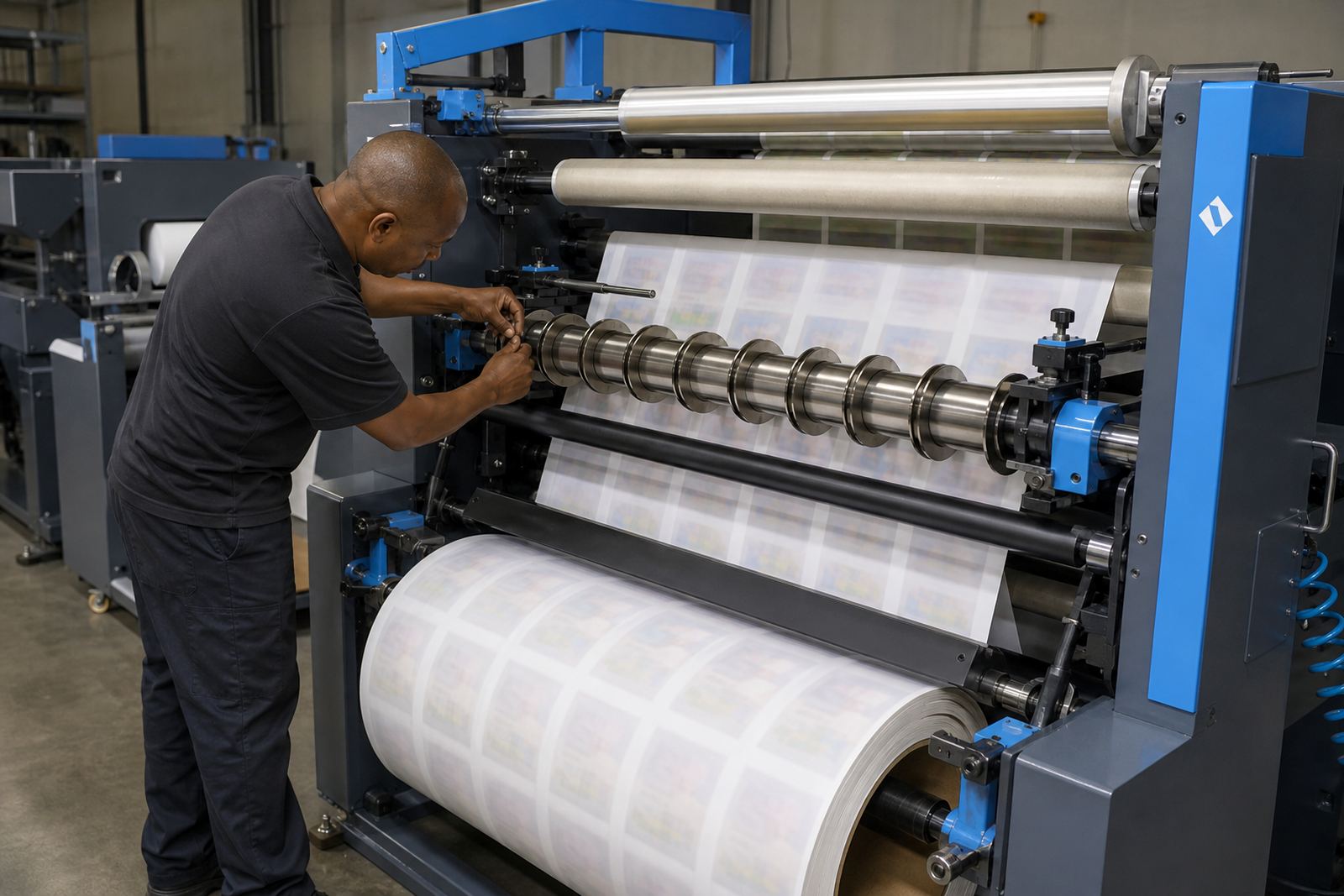
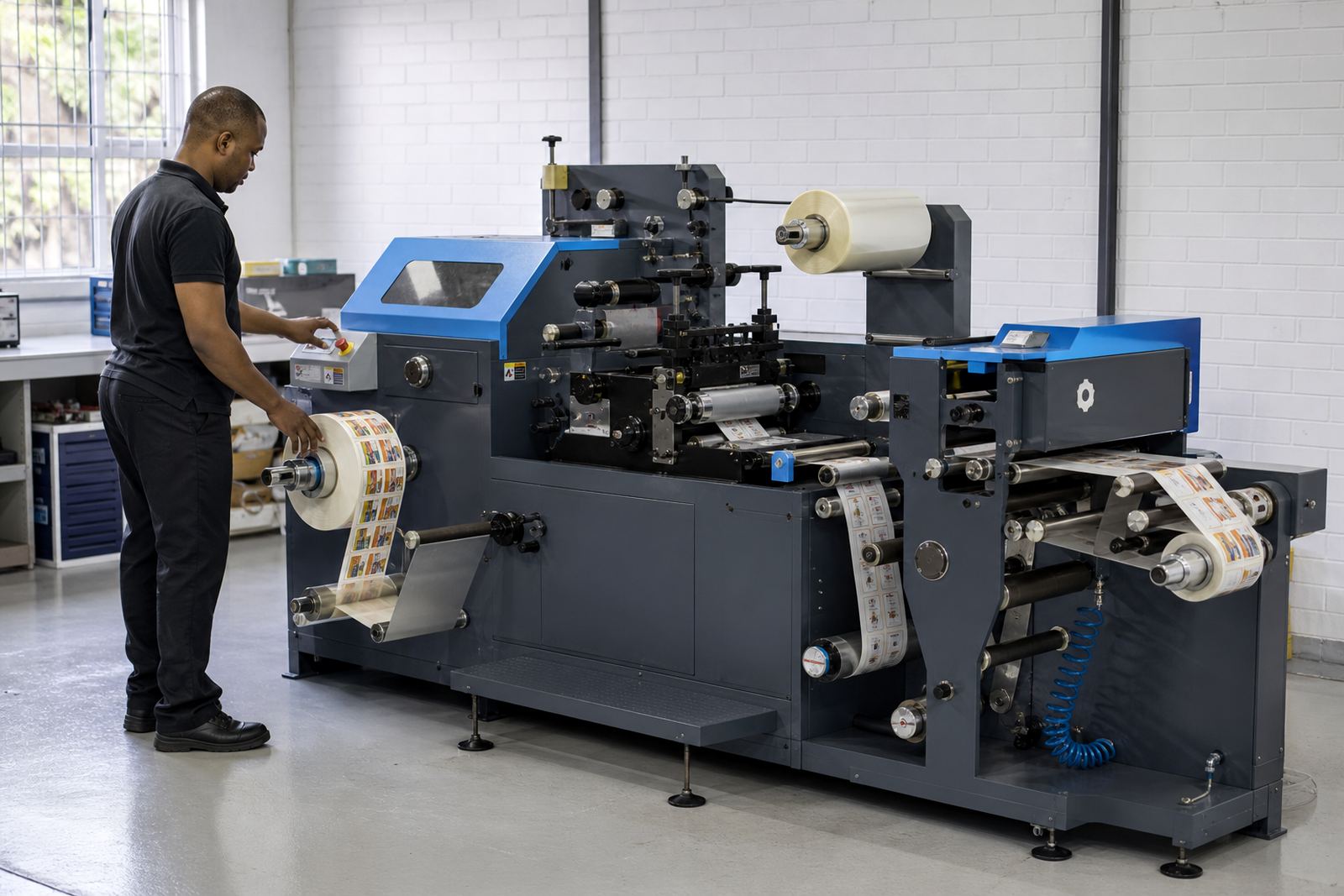
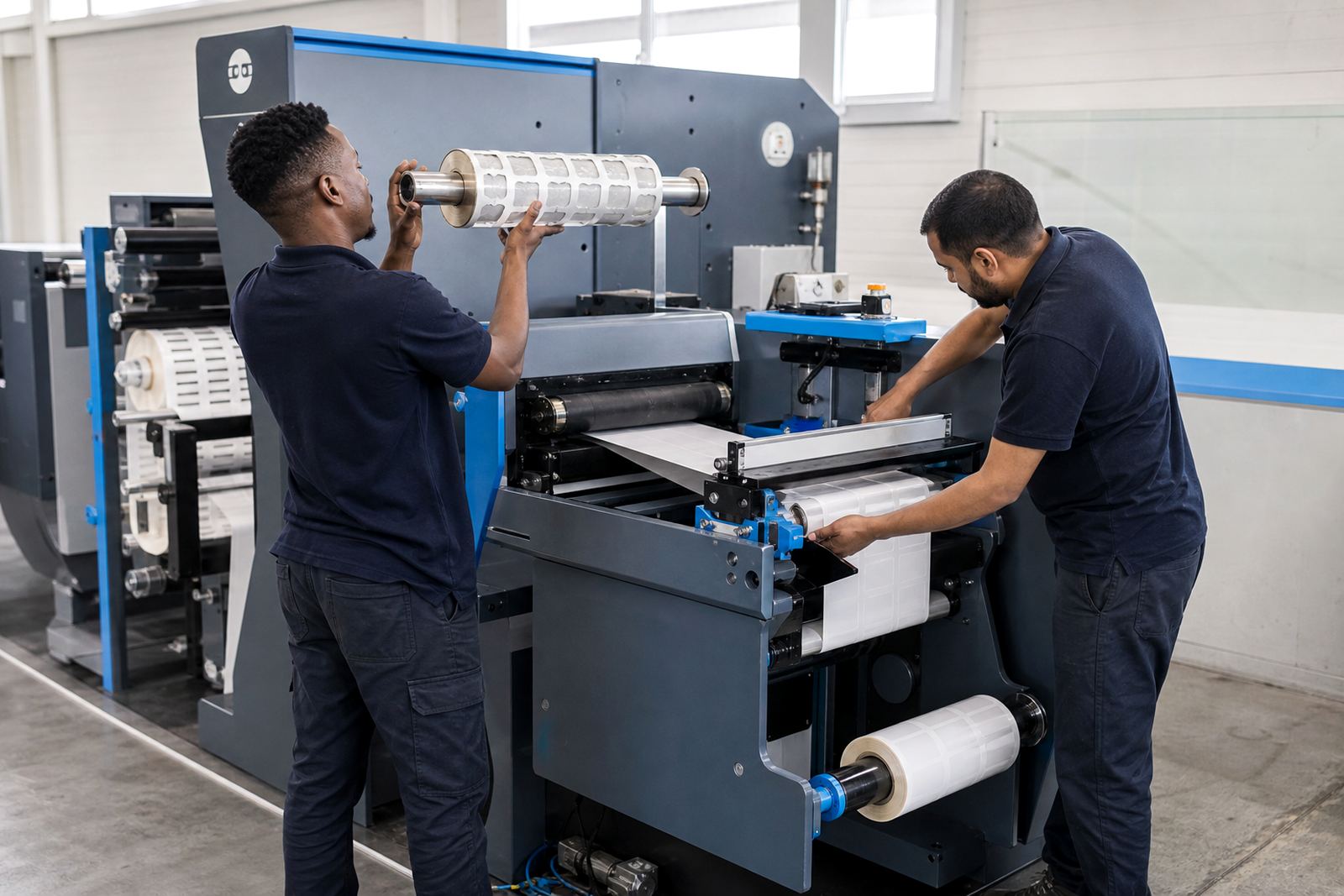
A label finishing line is usually built around the rolls moving cleanly from unwind to finished rewind, with each station doing a clear job. In many rooms the setup needs lamination, varnish, die-cutting, matrix stripping, slitting and winding to sit in one path that suits the floor space and the print method already in use.
Some jobs need a compact line for shorter rolls and frequent changeovers, while others need wider web handling and steadier running for longer production runs. We look at the roll diameters, core sizes, label format, substrate type and the amount of operator handling that sits between printed roll and packed reels.
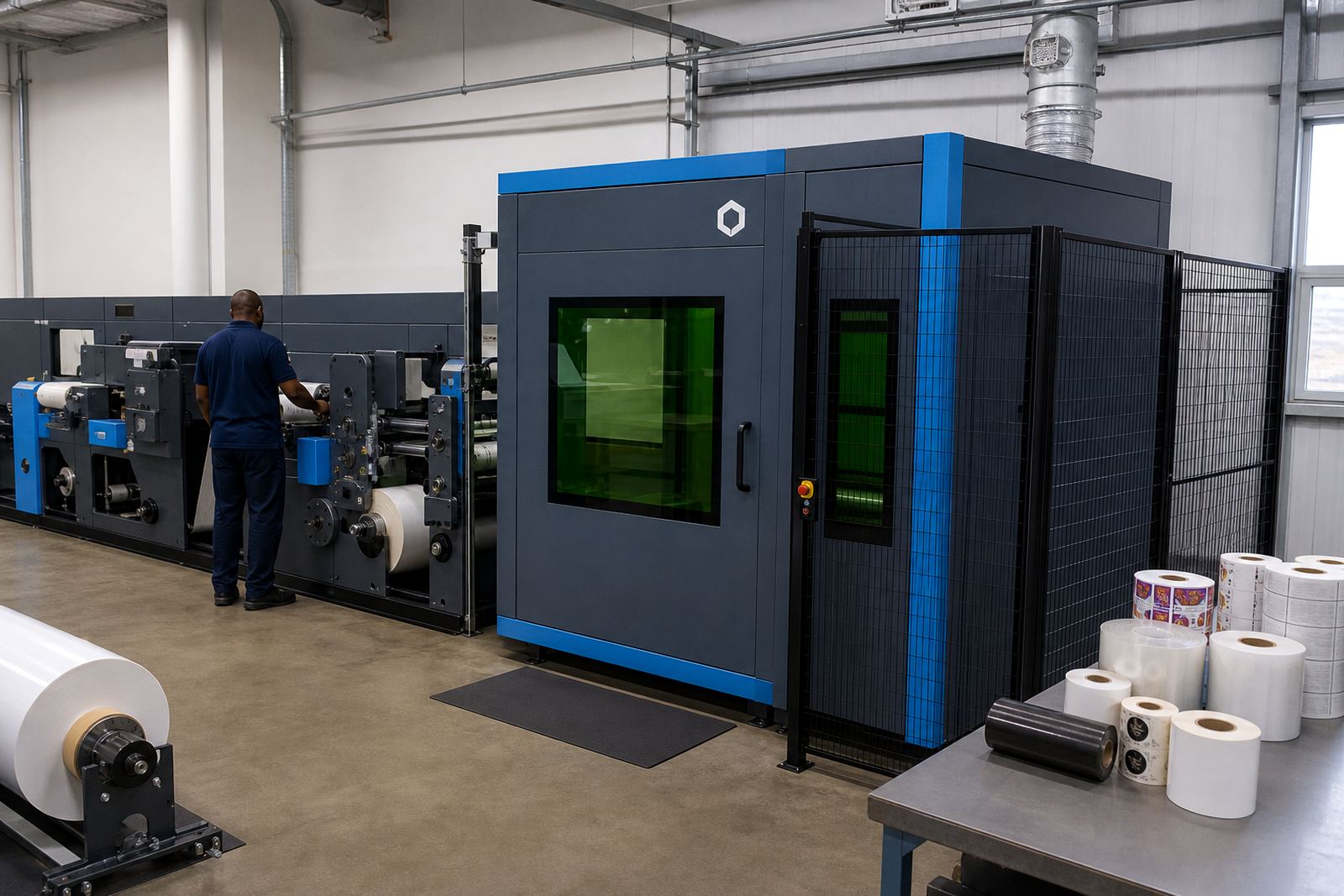
Digital die-cutting choices for short and medium runs
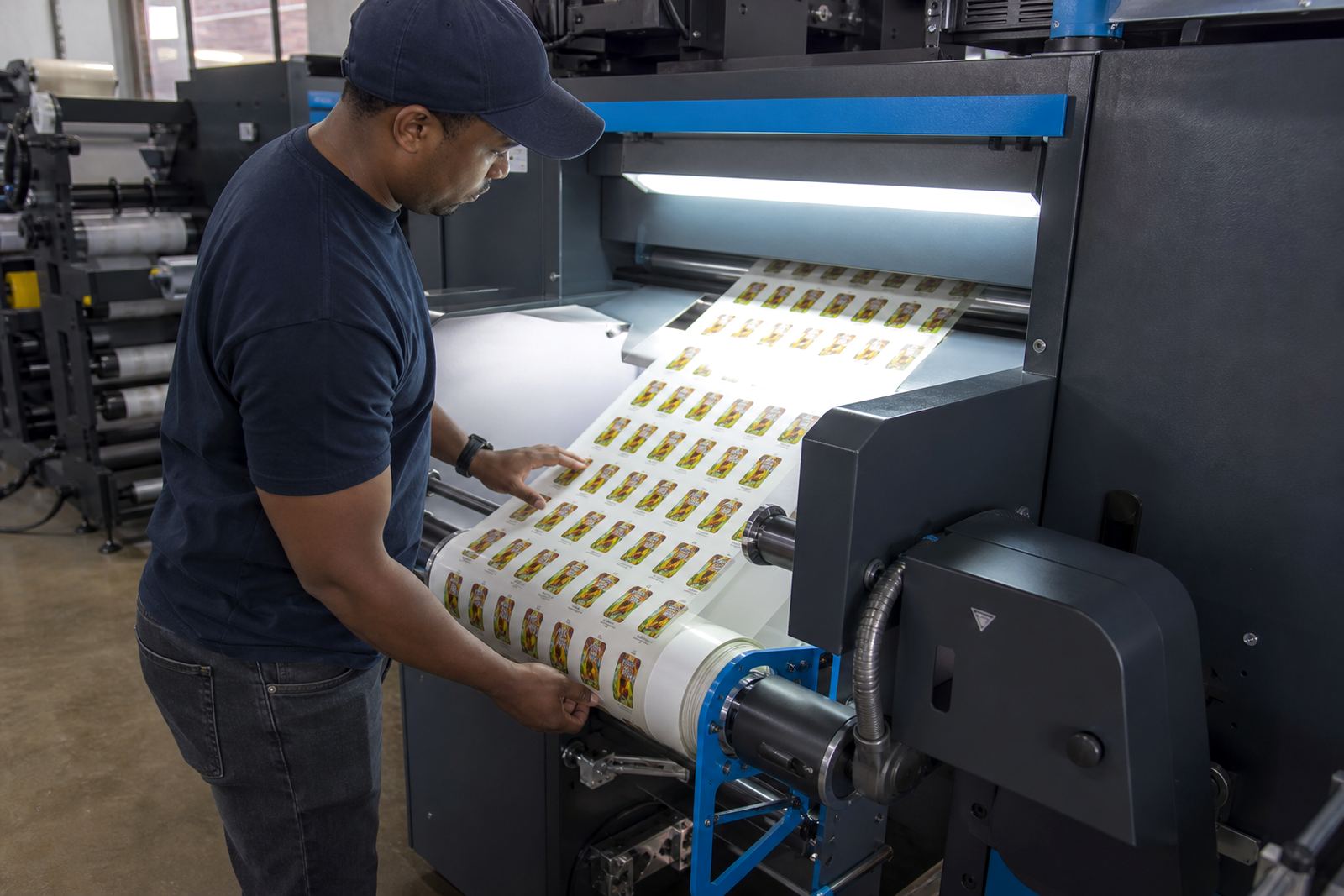
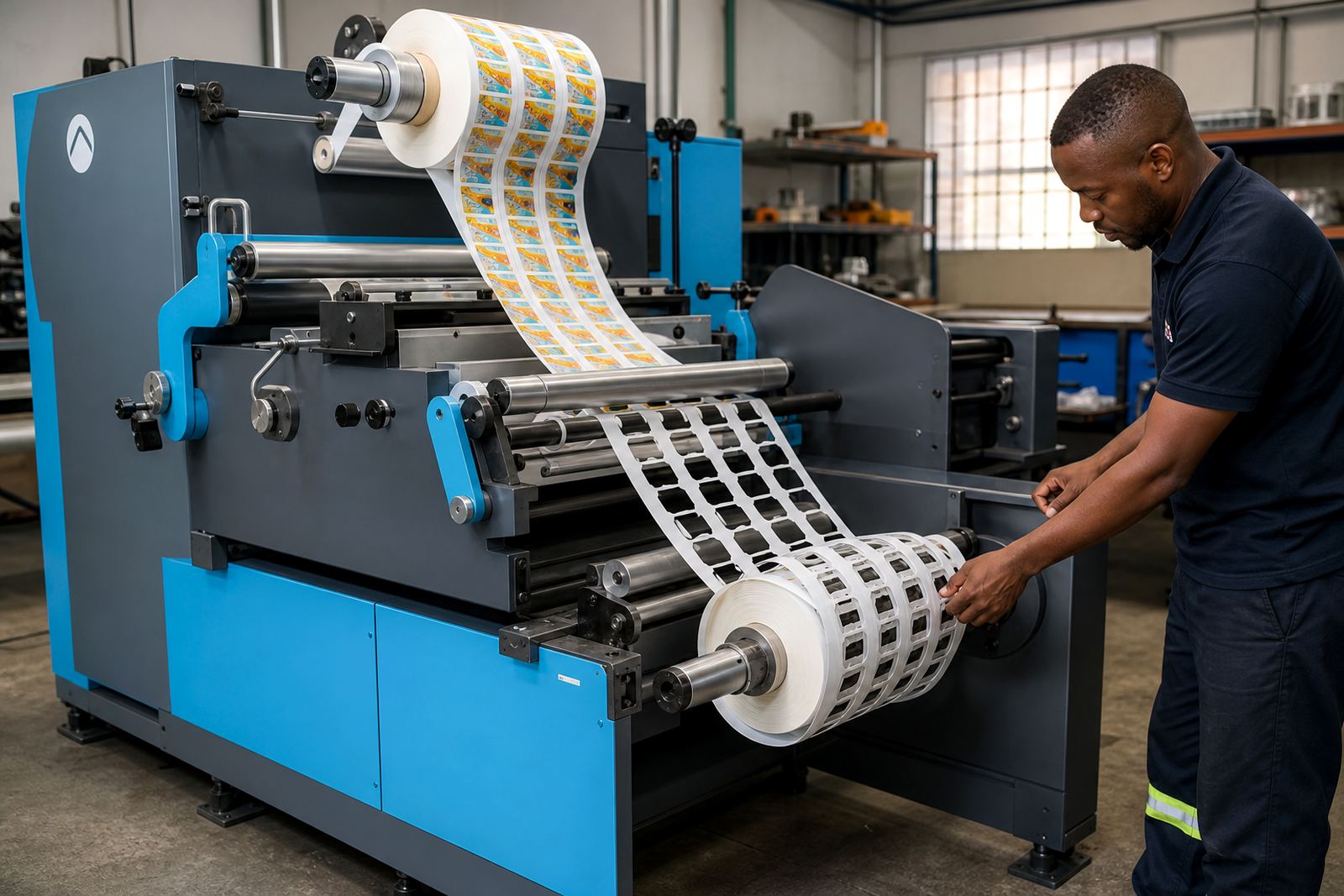
Digital label finishing can use laser die-cutting, semi-rotary die-cutting or flexible dies, depending on artwork mix, material and finishing speed. Registration marks matter when the printed image must line up with the cut, especially on short runs, narrow webs and jobs with mixed shapes on one roll.
- Laser cutting suits detailed shapes and frequent artwork changes.
- Semi-rotary cutting works well where repeat accuracy and speed need balance.
- Flexible dies suit repeat work and stable production volumes.
- Registration calibration keeps print and cut aligned across the web.
- Die setup help matters when the label face stock and liner behave differently.
Extra stations that change the whole line
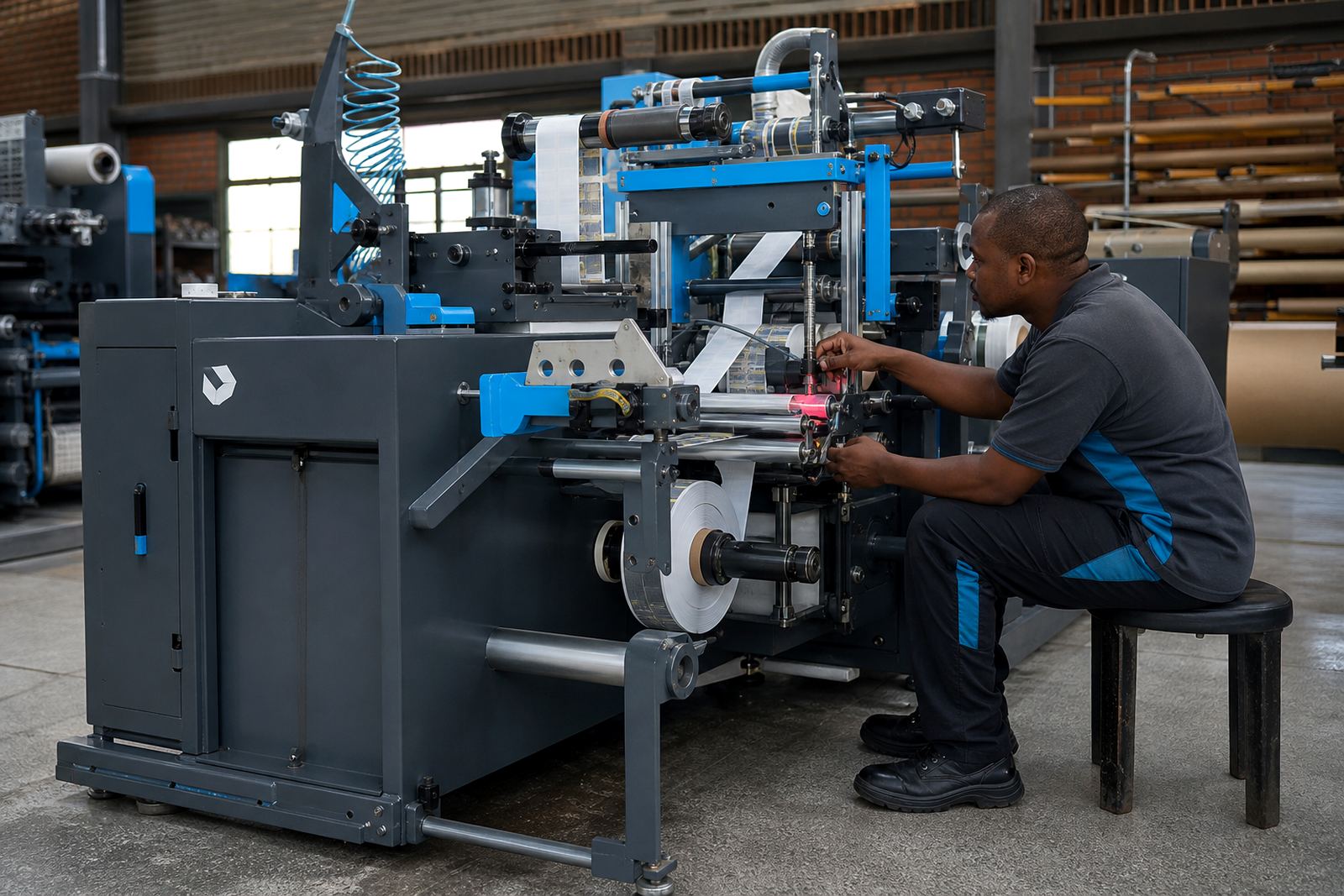
A finishing line often needs more than one cutting head. Lamination can protect print, improve scuff resistance and help on labels used in humid stores or chilled distribution. Varnish stations may be added where the brief calls for gloss, matte or selective surface protection. Matrix stripping clears waste cleanly, while slitting and rewinding prepare the rolls for packing or the next stage.
When these stations are arranged well, the line runs with fewer stoppages and less manual rework. Poor placement, by contrast, can force the operator to handle rolls too often and that is where edge damage and crooked winding usually begin.
Roll handling that fits the label room
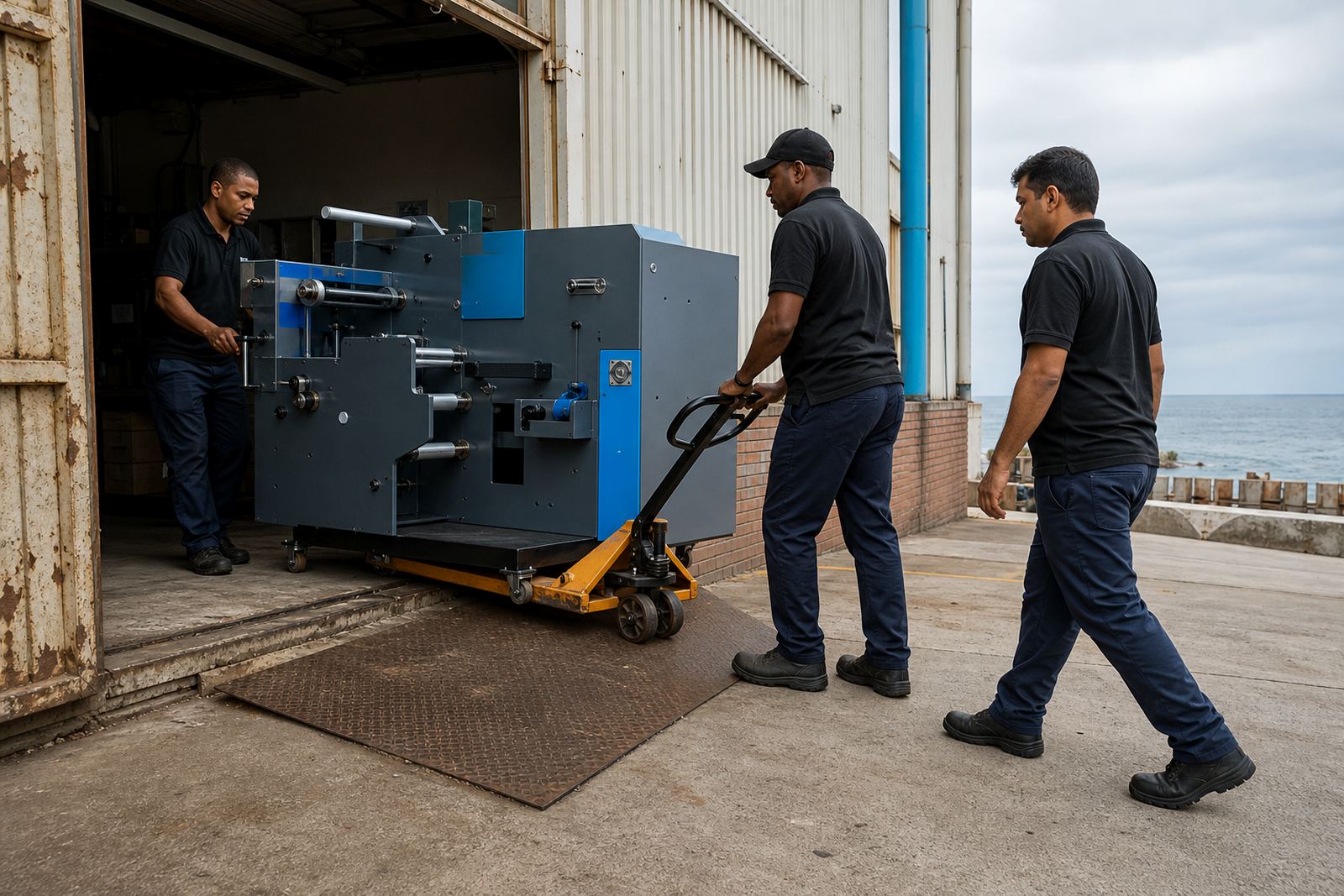
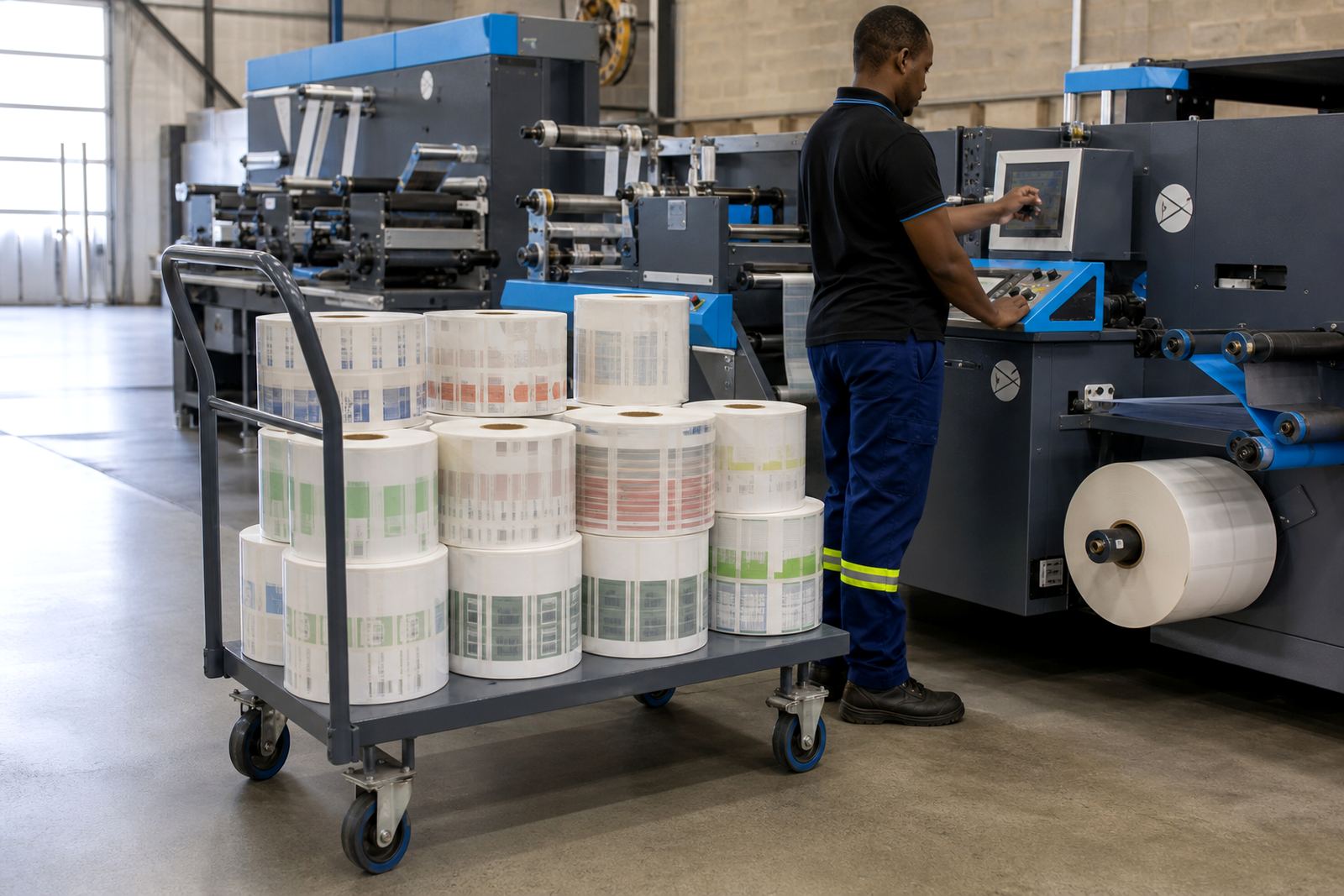
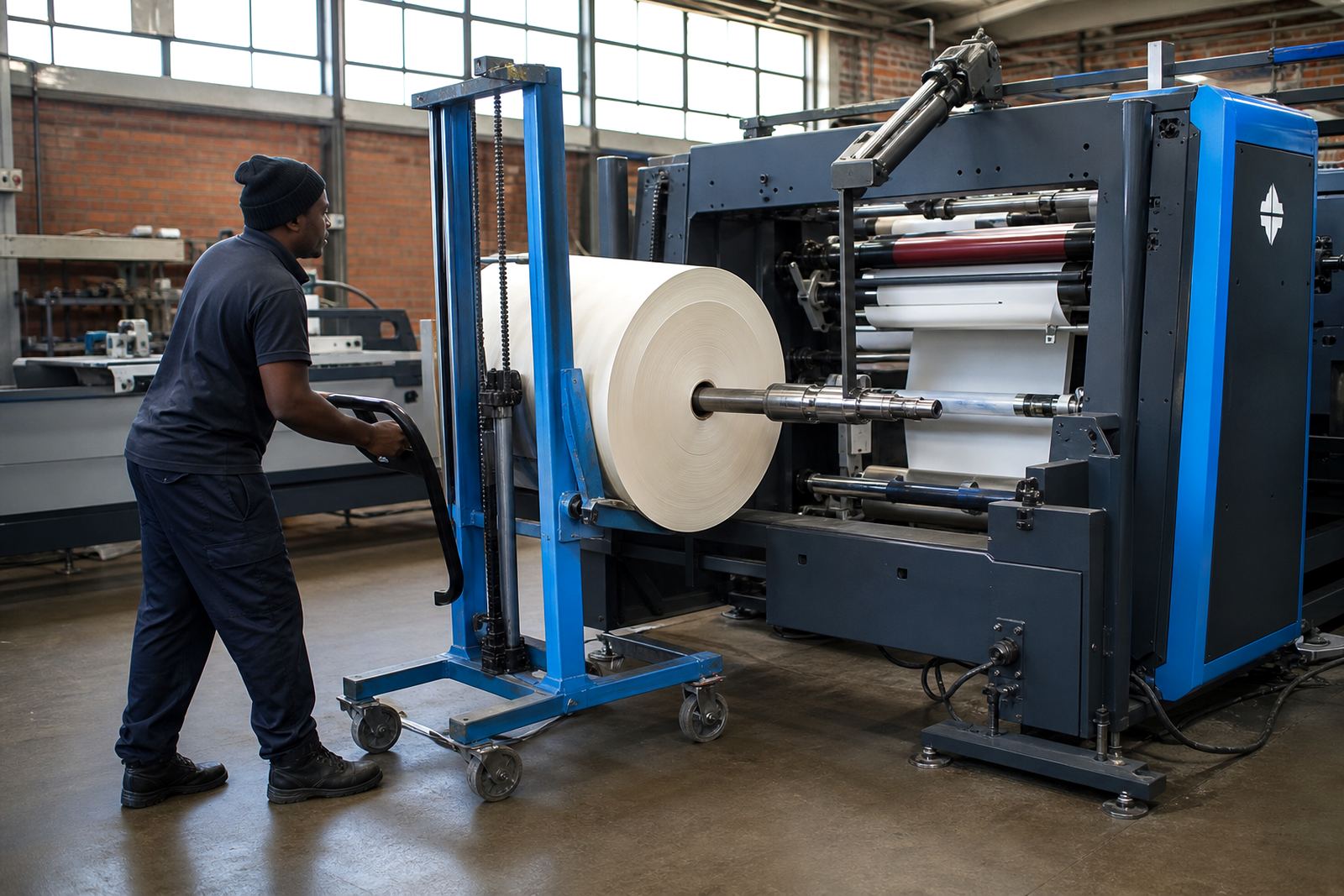
Not every site has the same floor plan. A printer in Kya Sand may need compact infeed and outfeed space, while a packaging plant in Durban may need a heavier line with more room for finished rolls and inspection. The installation should match the available bay width, aisle access and how material moves between print, finish and despatch.
- Unwind stands need stable tension control for neat web travel.
- Rewind sections must hold the finished roll without telescoping.
- Slitting units need enough clearance for the chosen roll widths.
- Inspection and waste removal should sit where operators can reach them safely.
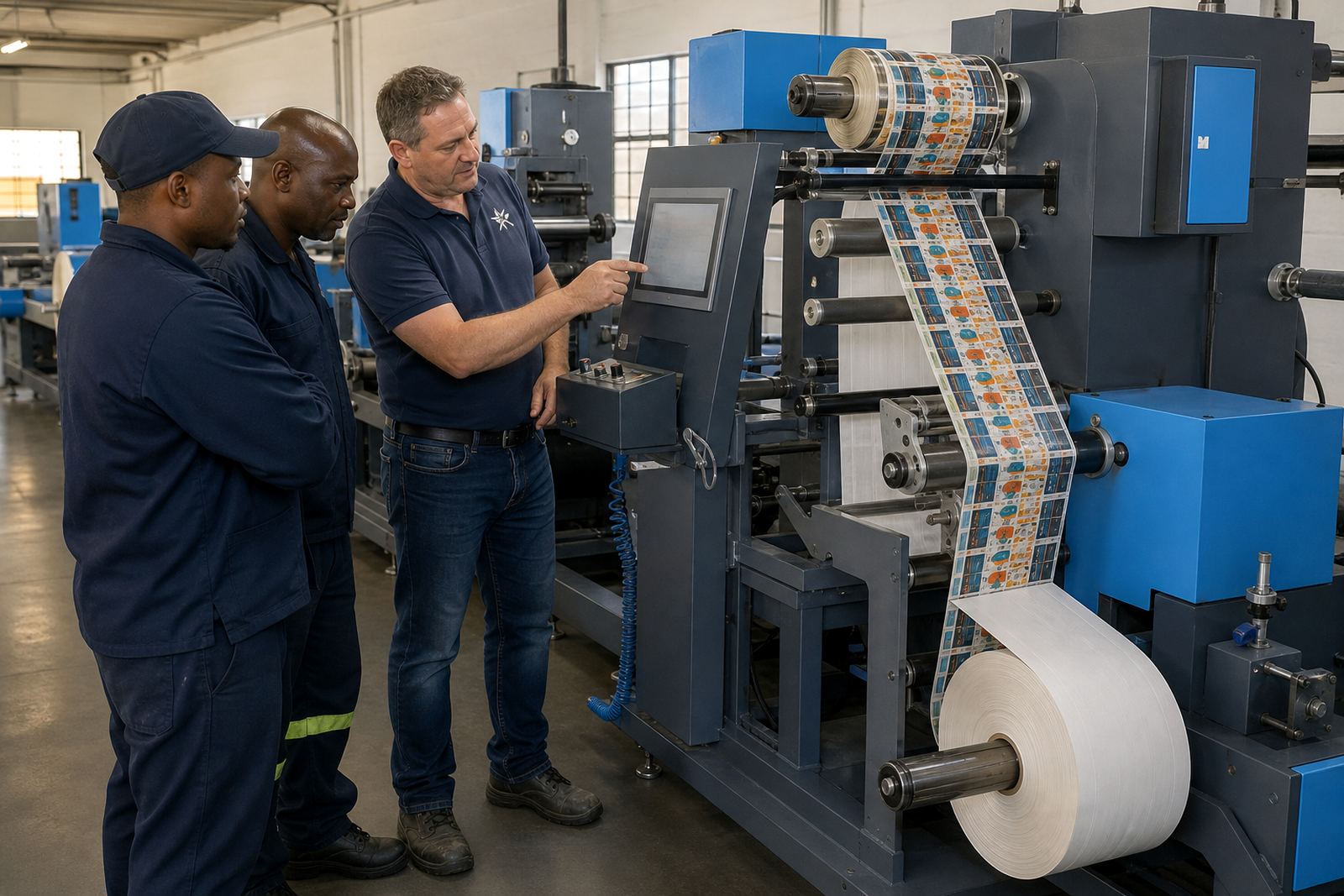
- Training covers the daily settings that affect waste and consistency.
Installation, commissioning and operator handover
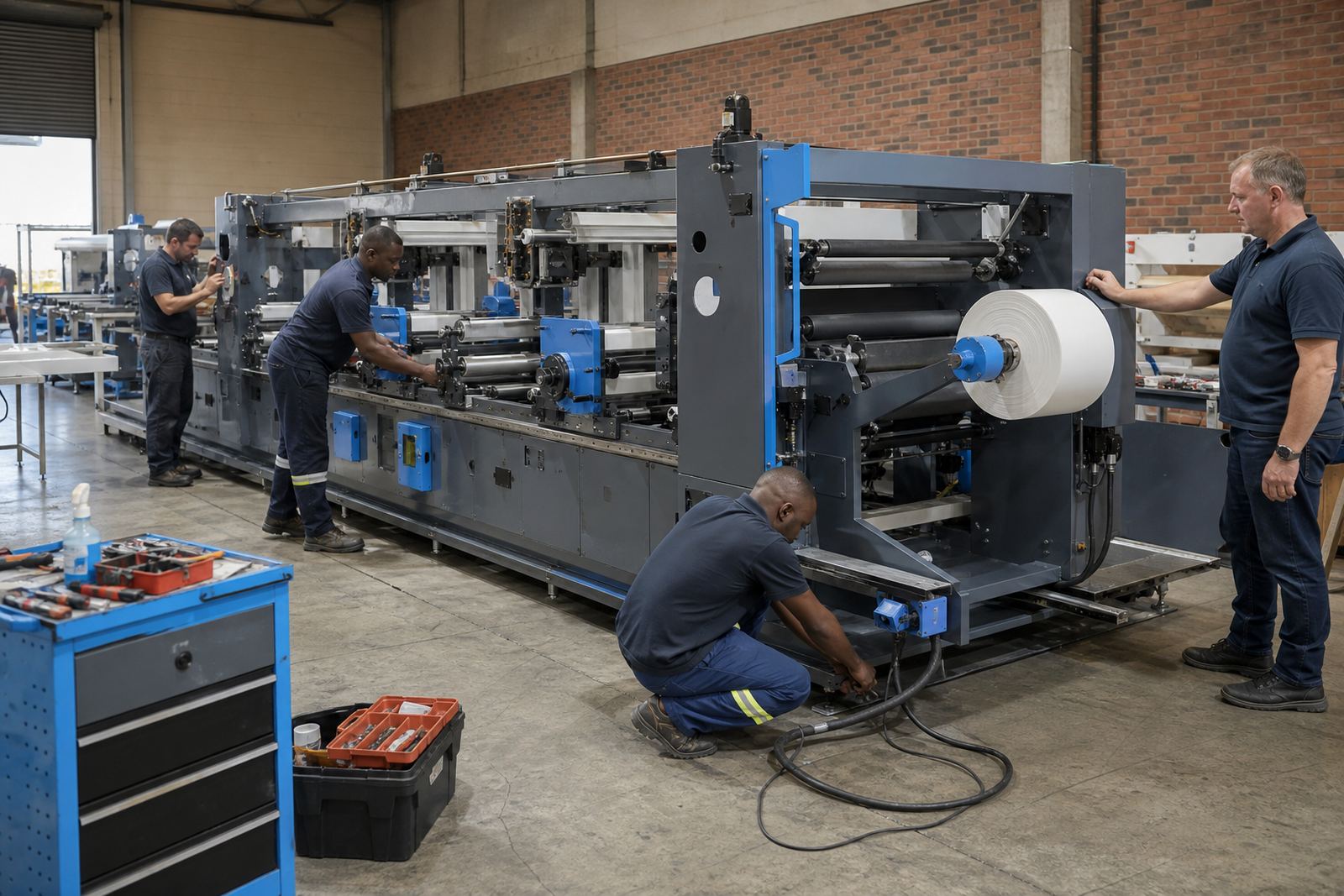
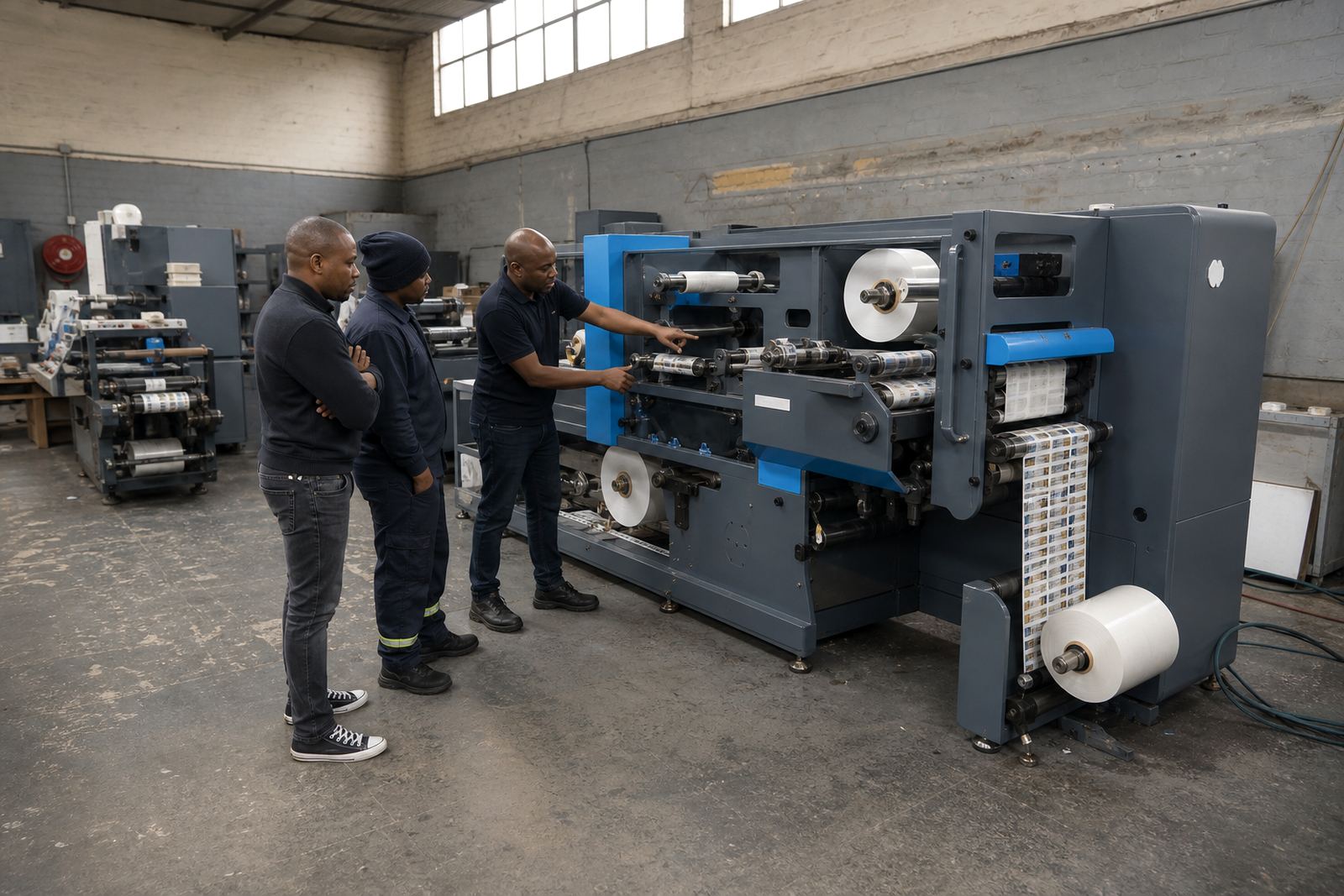
Our installation work includes placement, line alignment, commissioning and basic production checks before the machine goes into normal use. We also cover operator training, so the team can set tension, read registration marks, manage waste stripping and keep slitting and rewinding in step with the print run.
For many sites, the real value is in setting the line up for the products that are made most often. A cosmetic label room, a food packer and a converting plant will not use the same settings, even when the machine family is similar. That is why the handover has to fit the job mix on site, not a generic operating sheet.
Service support after the machine is running
Once the line is working, servicing keeps it in shape for repeat production. Preventive maintenance helps with bearings, drive parts, tension systems, sensors and the cutting section, while breakdown repairs deal with faults that stop the web or spoil cut accuracy. We also support remote troubleshooting, spare parts supply and production optimisation where the line needs better output or cleaner waste removal.
On some sites the issue is a recurring cut drift, on others it is poor rewind build or a lamination wrinkle that shows up after a temperature change. The fix depends on the actual line setup, the substrate and the way the rolls are being handled from one shift to the next.
A useful way to read these project pages
This hub brings together the types of finishing line installations we complete for label printers and packaging producers in South Africa. The pages beneath it focus on the production need, the line layout and the support scope, so it is easier to compare a narrow-web cutter, a lamination line, a waste stripping setup or a full finishing cell.
If the project involves Johannesburg, Pretoria, Durban, Cape Town or Gqeberha, the same questions still matter: what is being printed, how the rolls leave the press, what finish is required and how much operator handling can be removed. That is the thread that makes a finishing line practical instead of awkward.