What sits in the finishing line
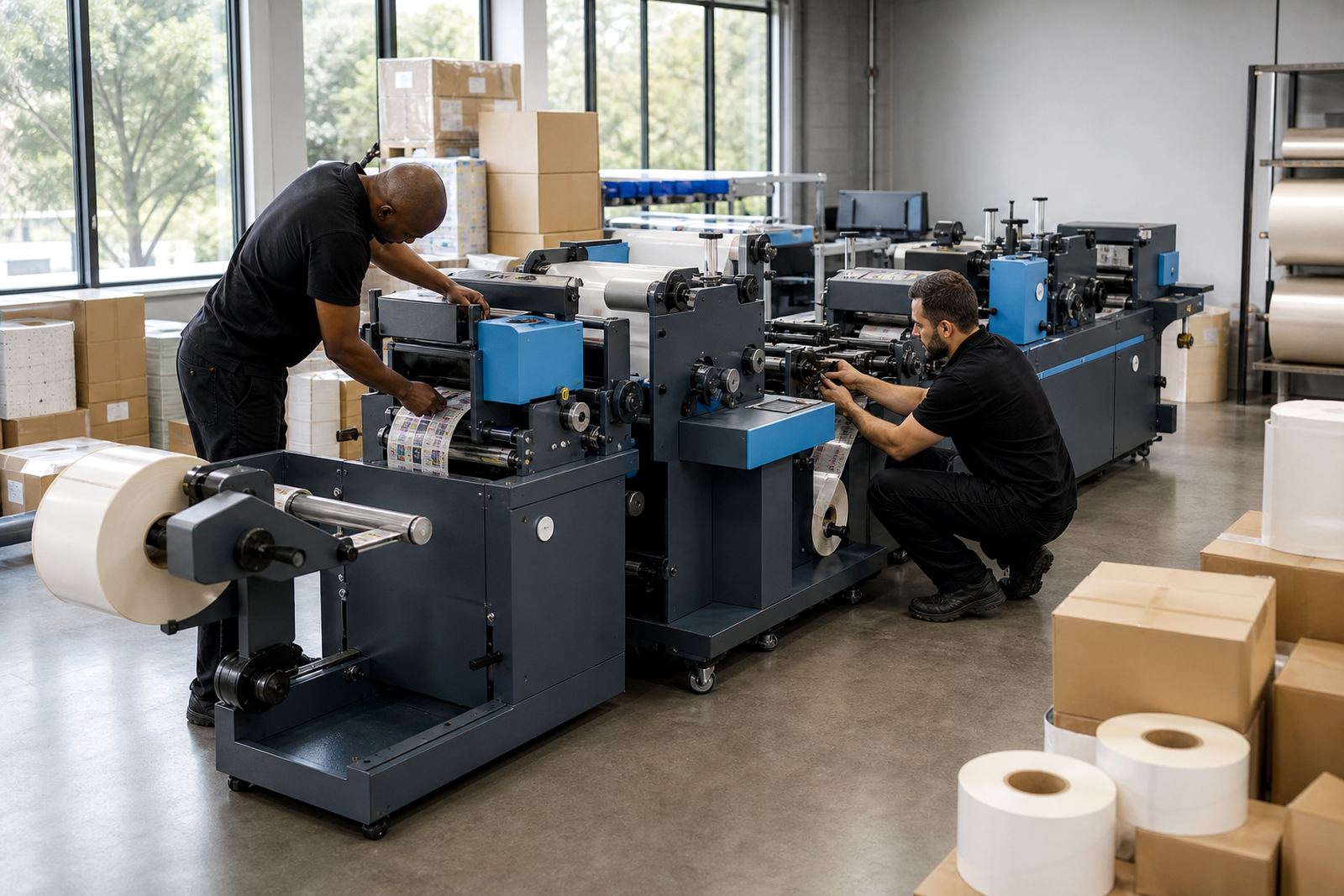
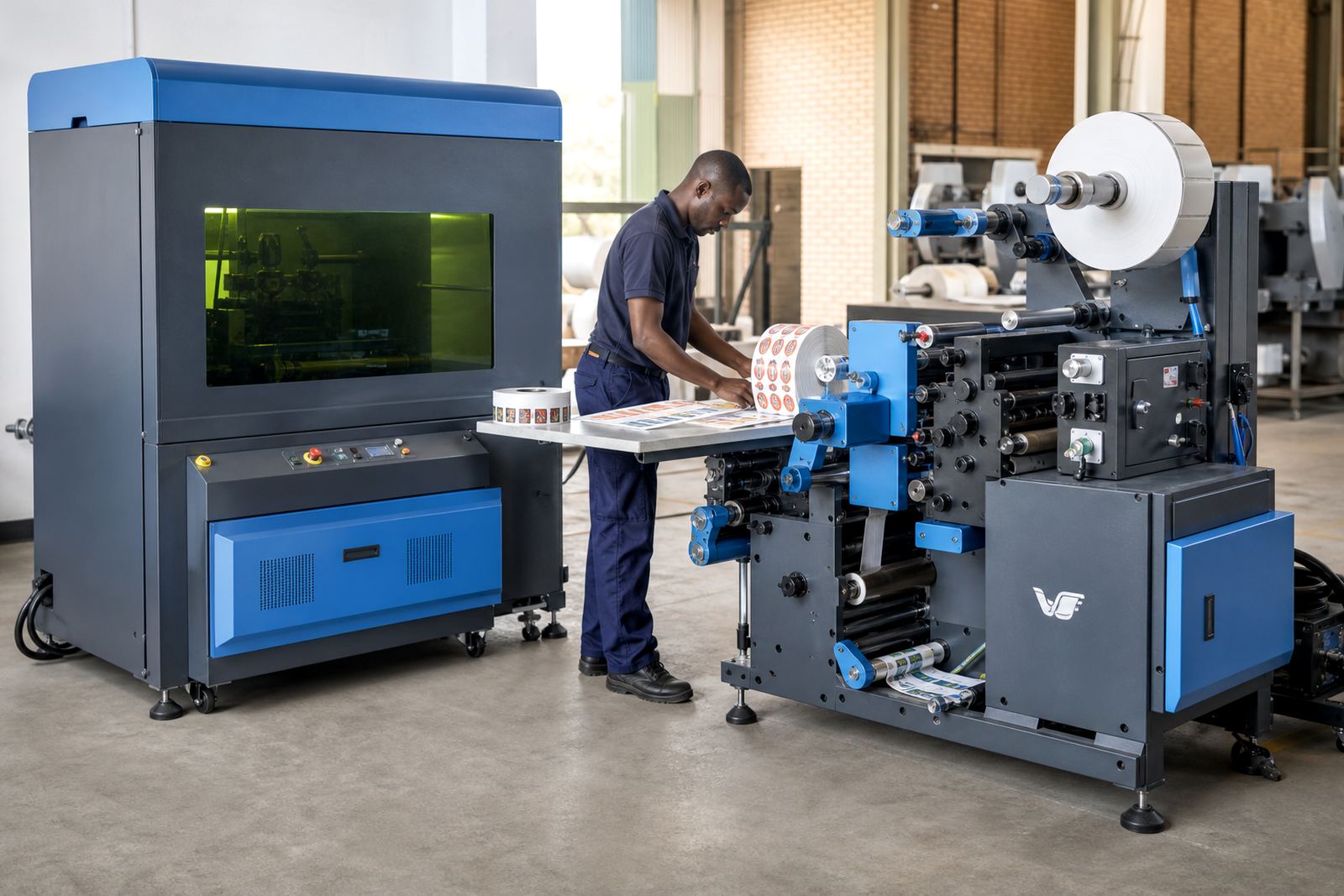
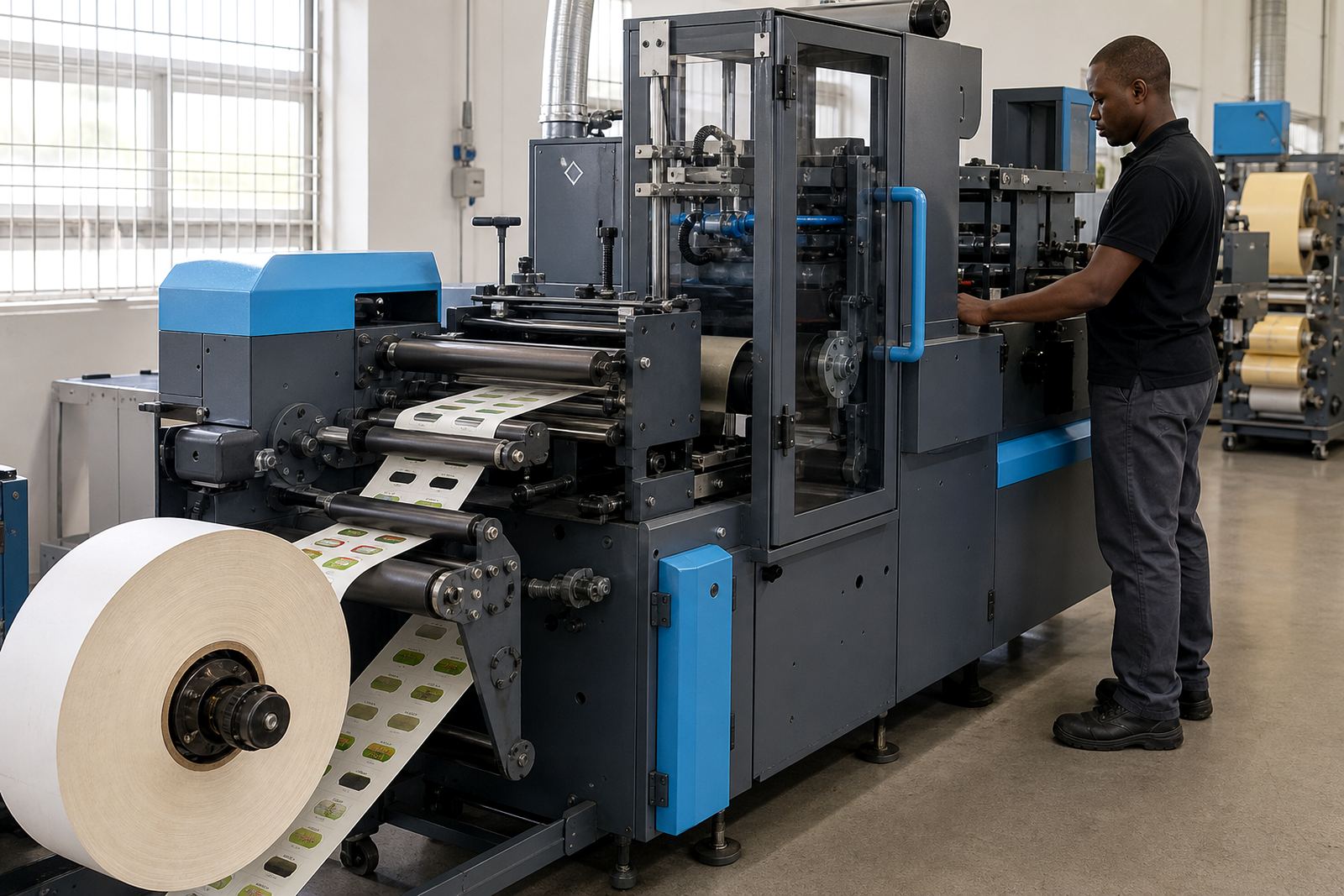
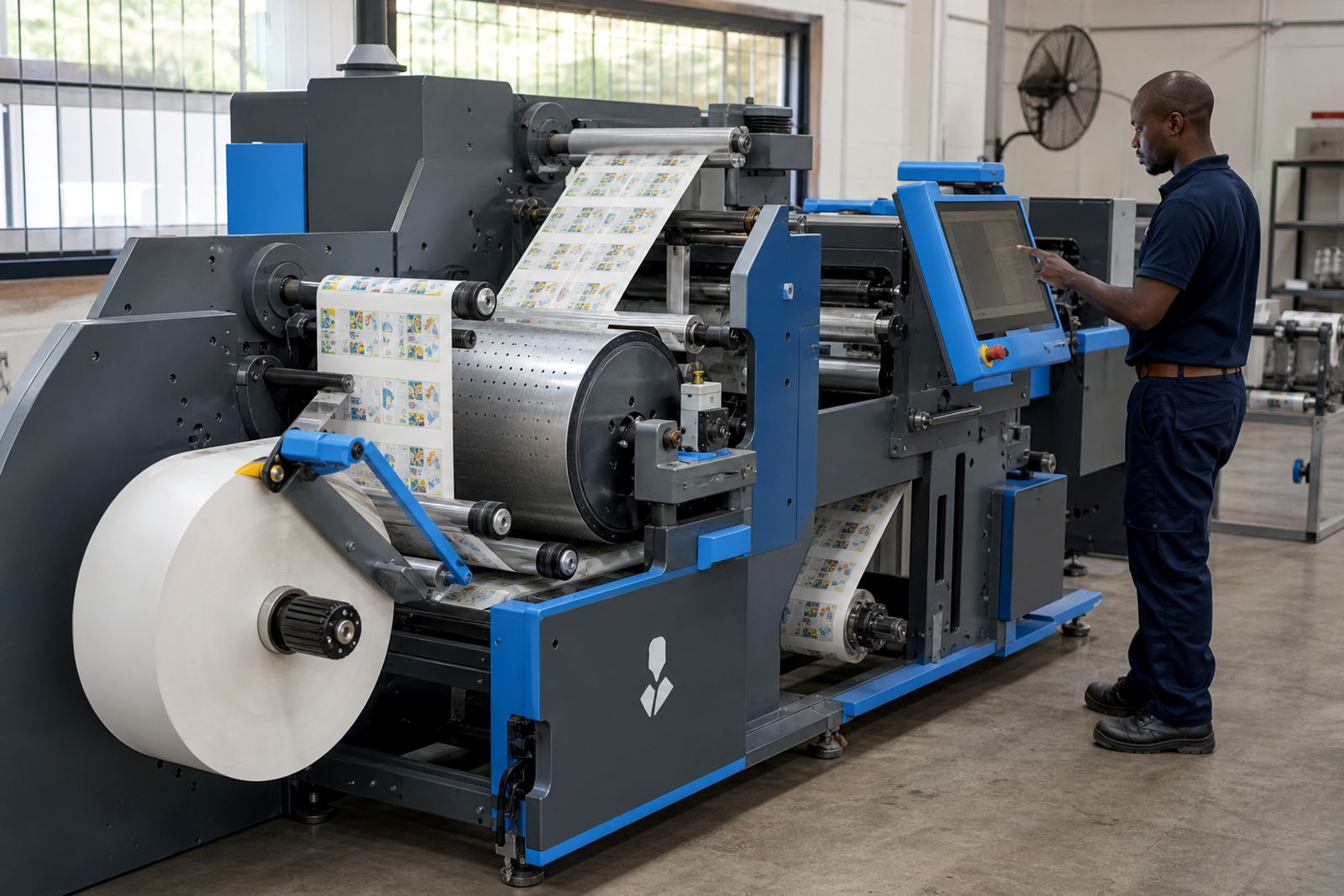
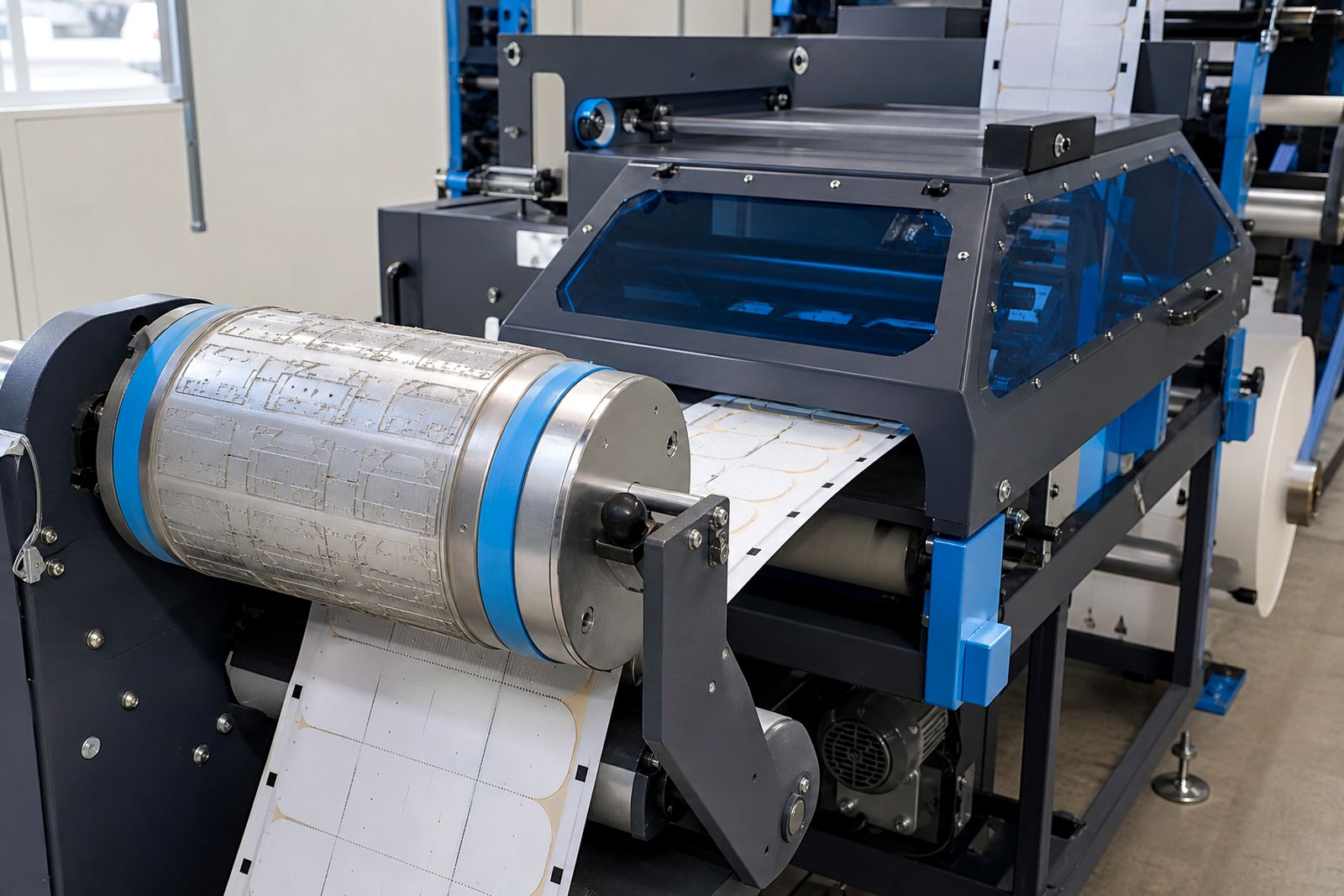
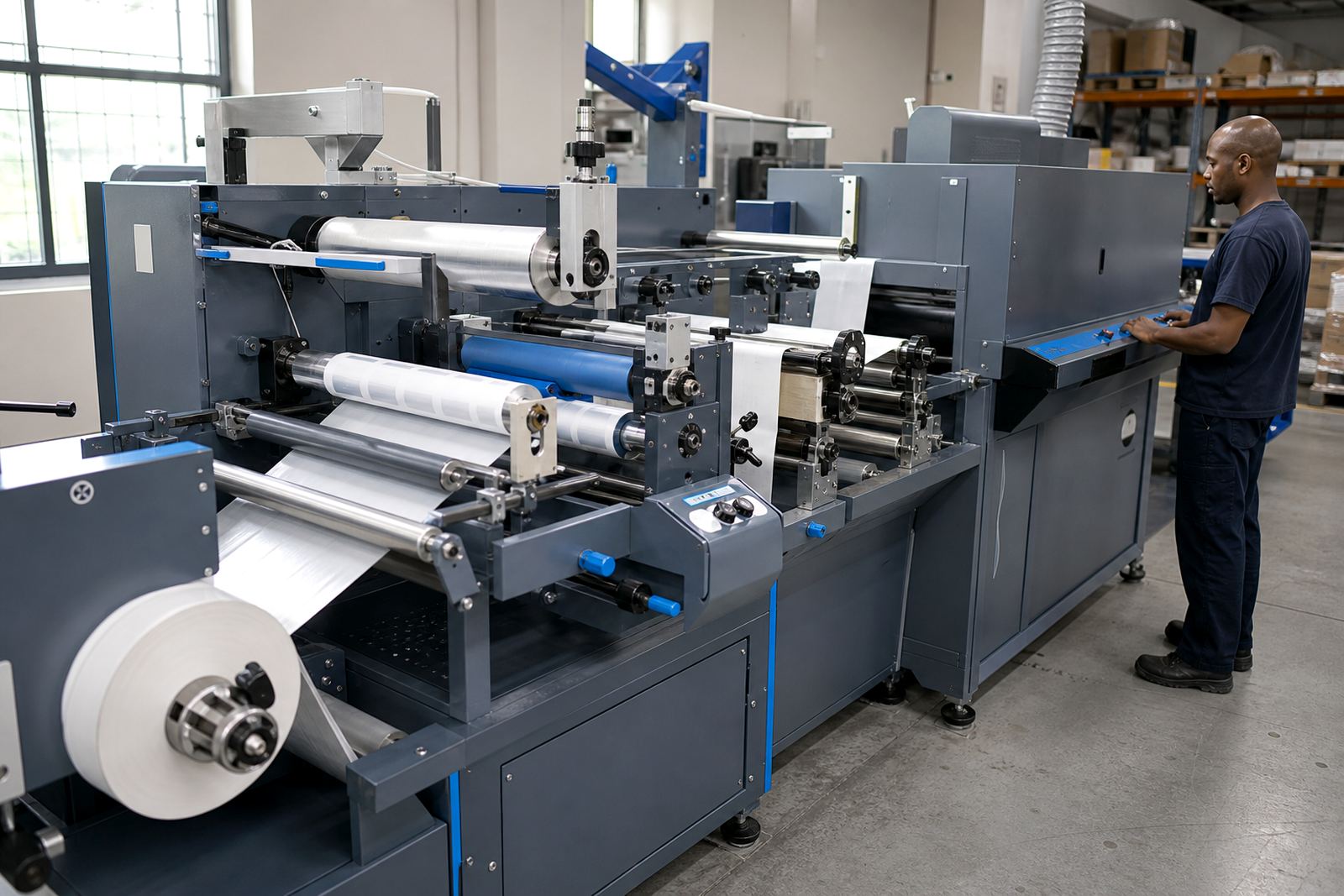
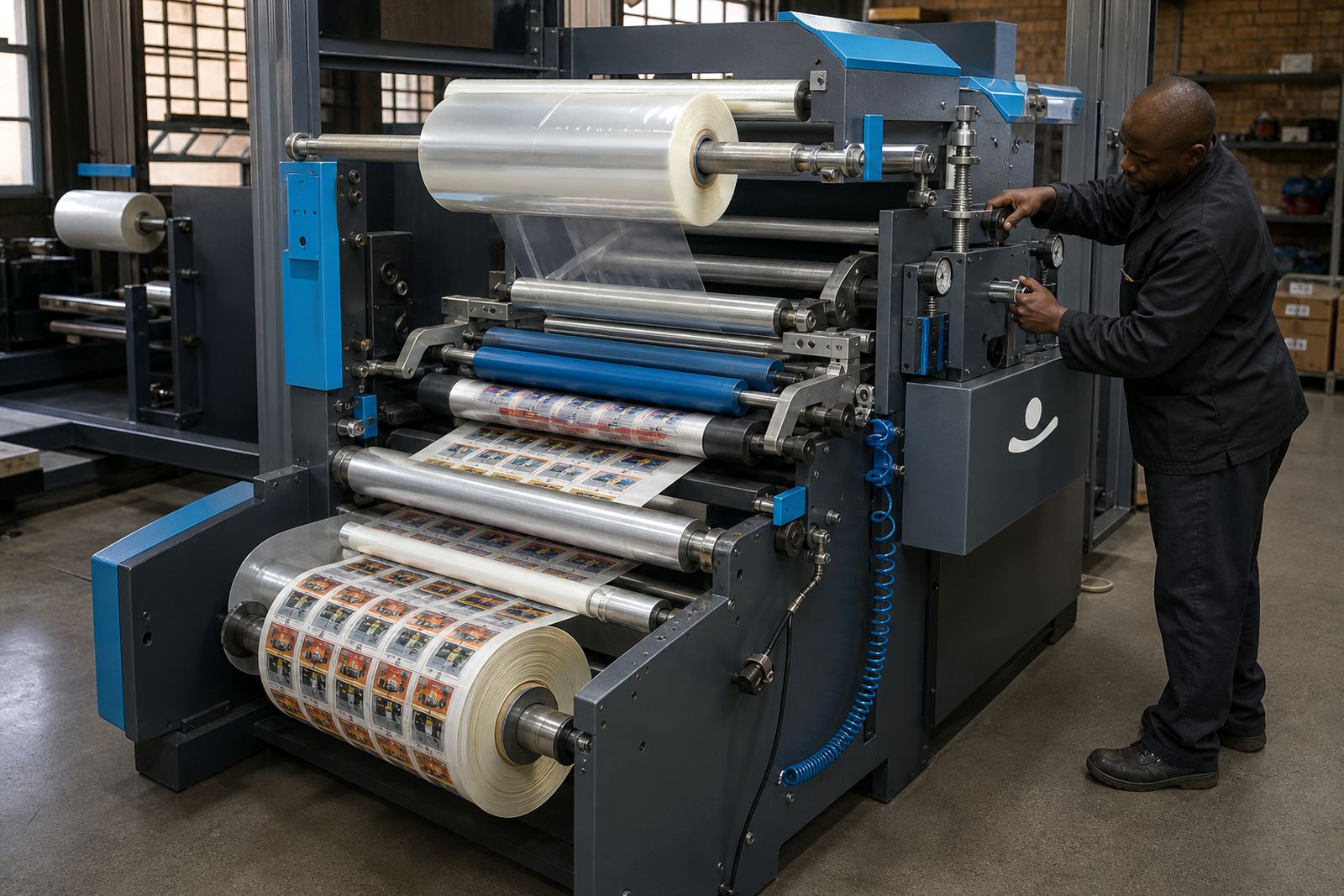
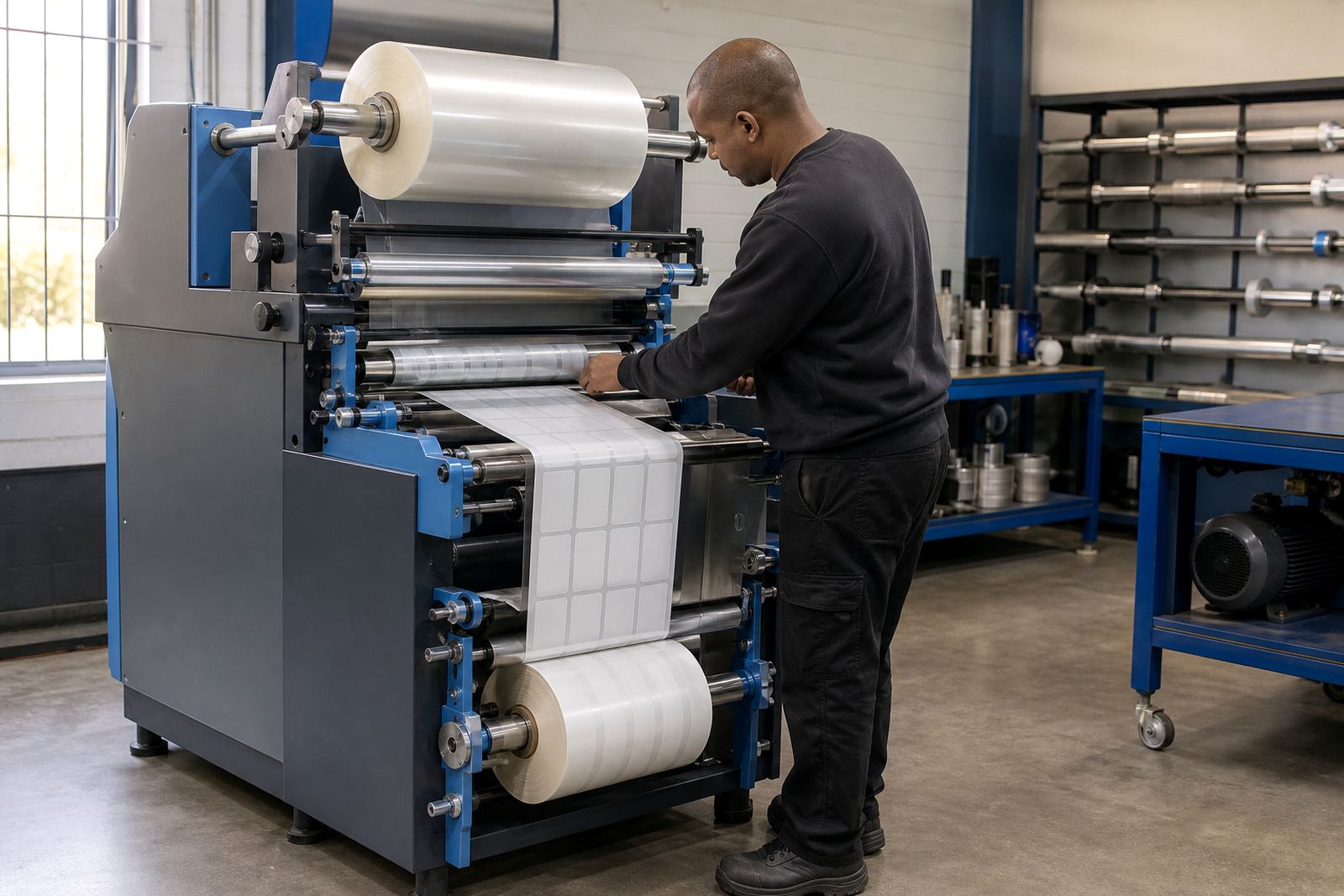
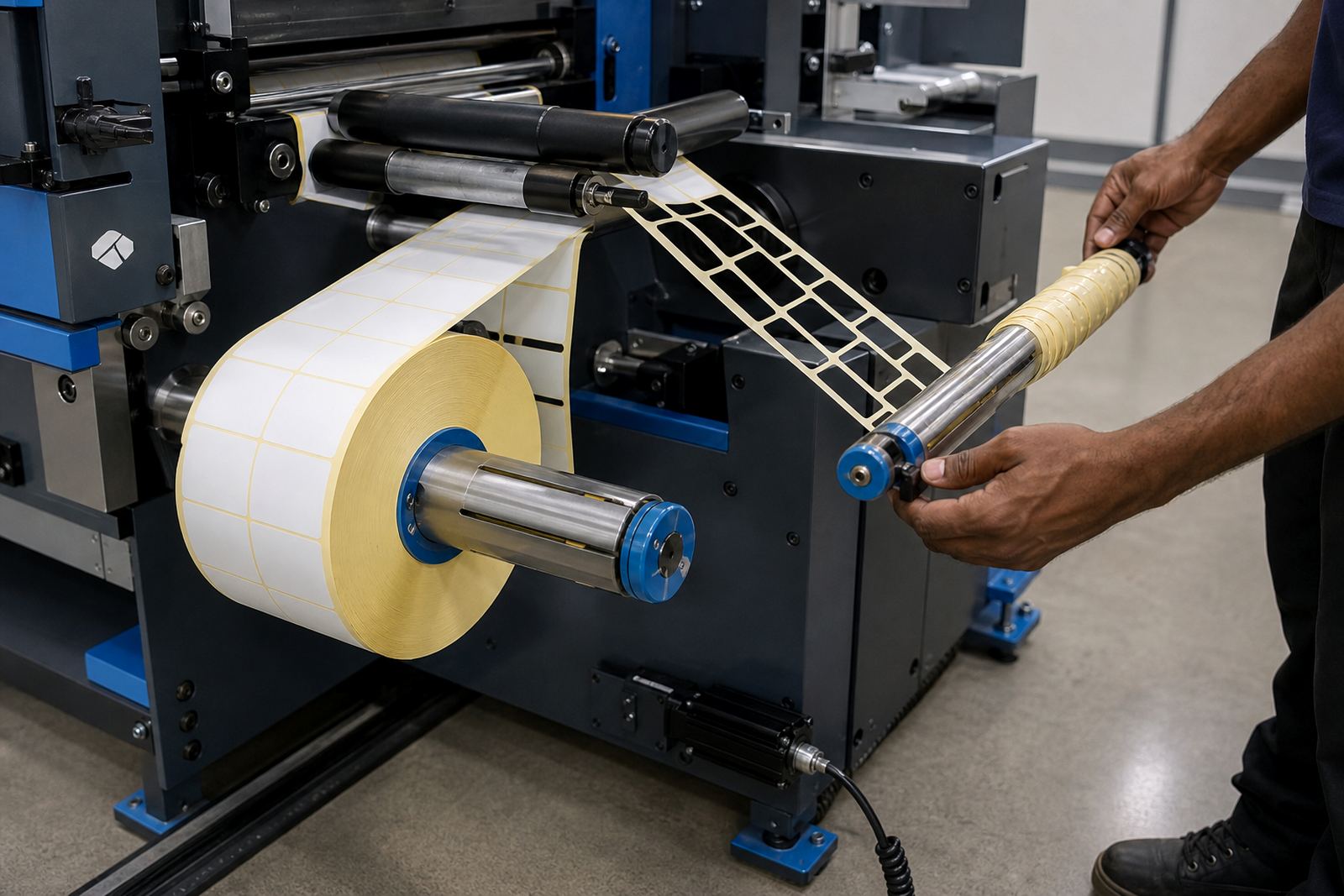
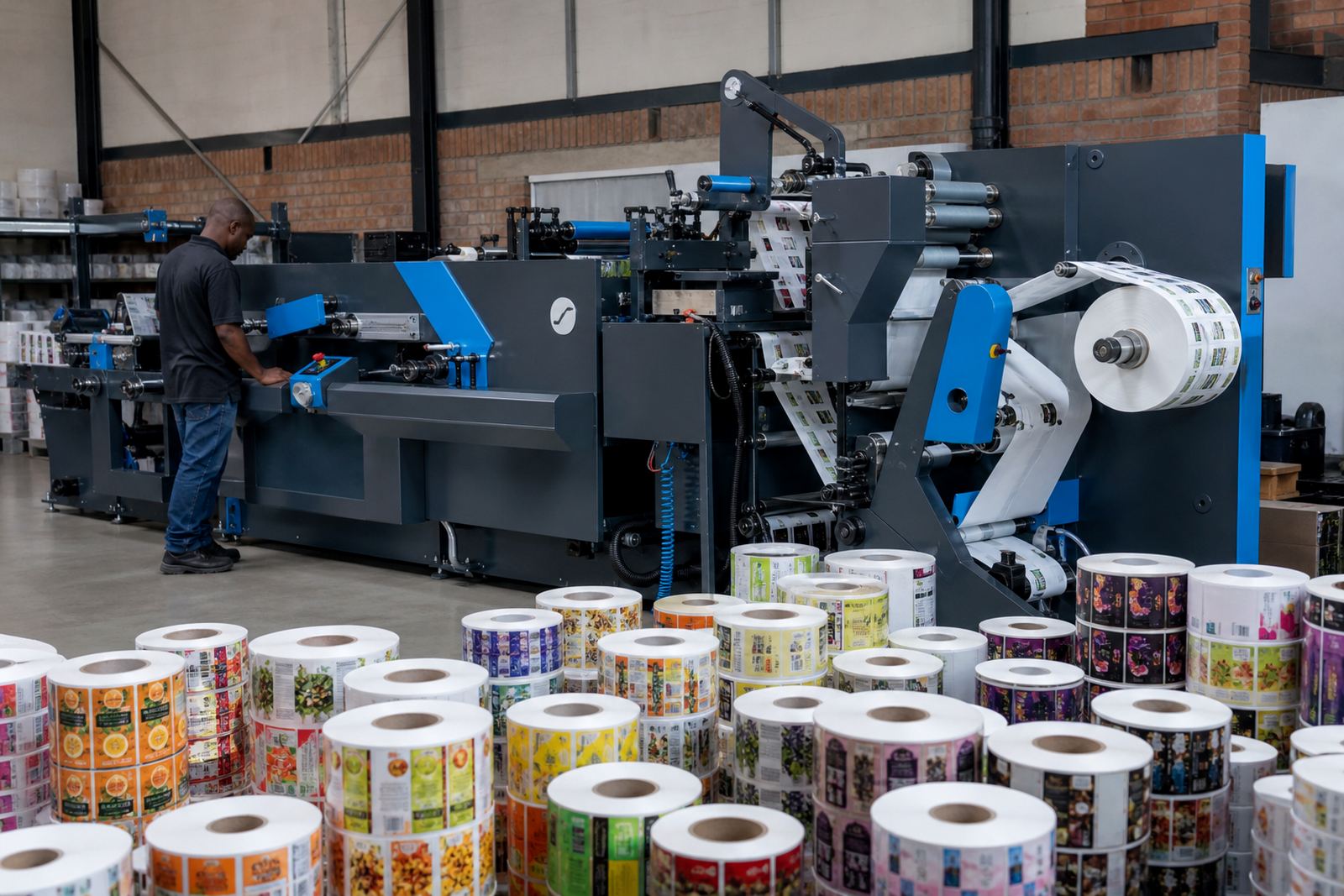
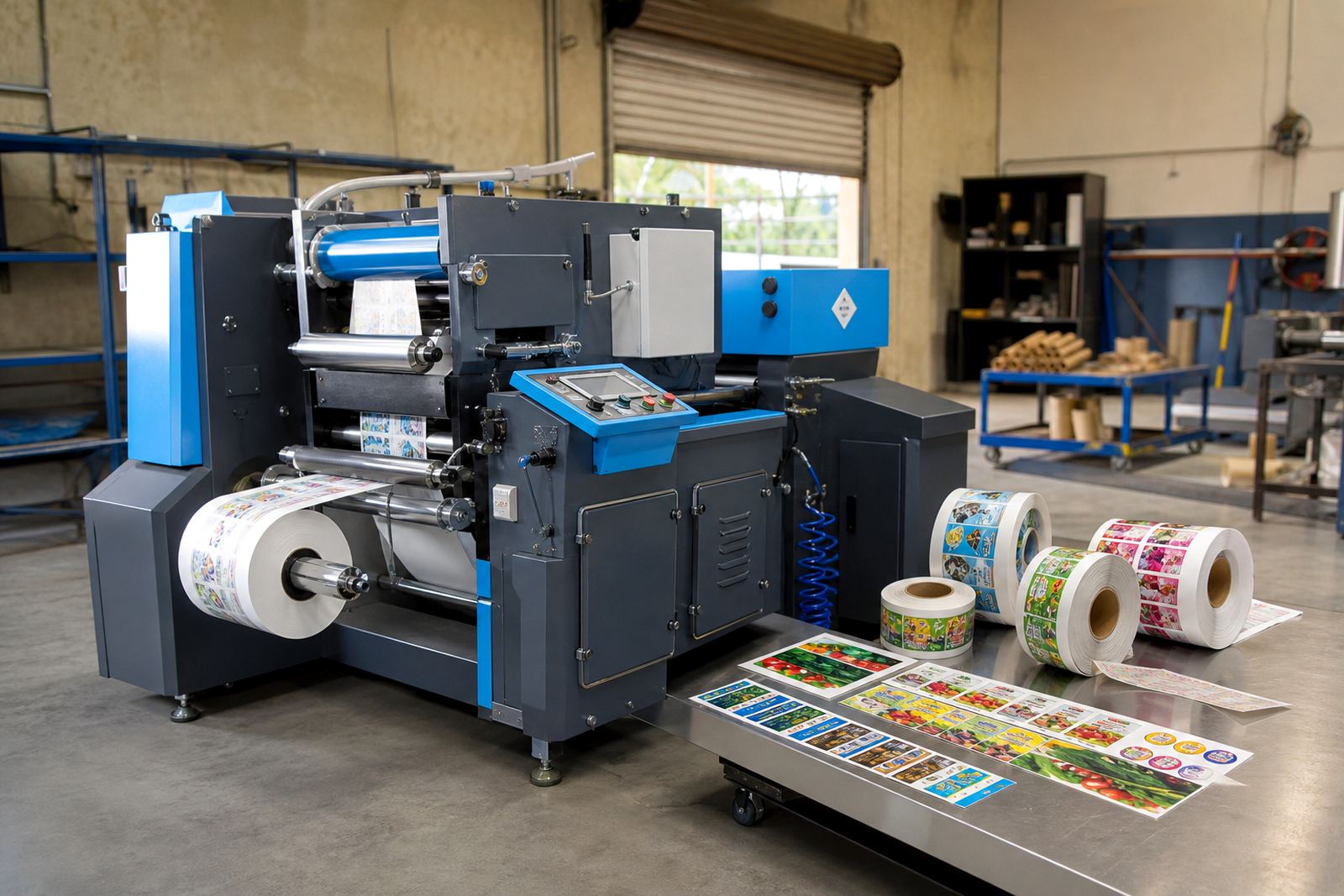
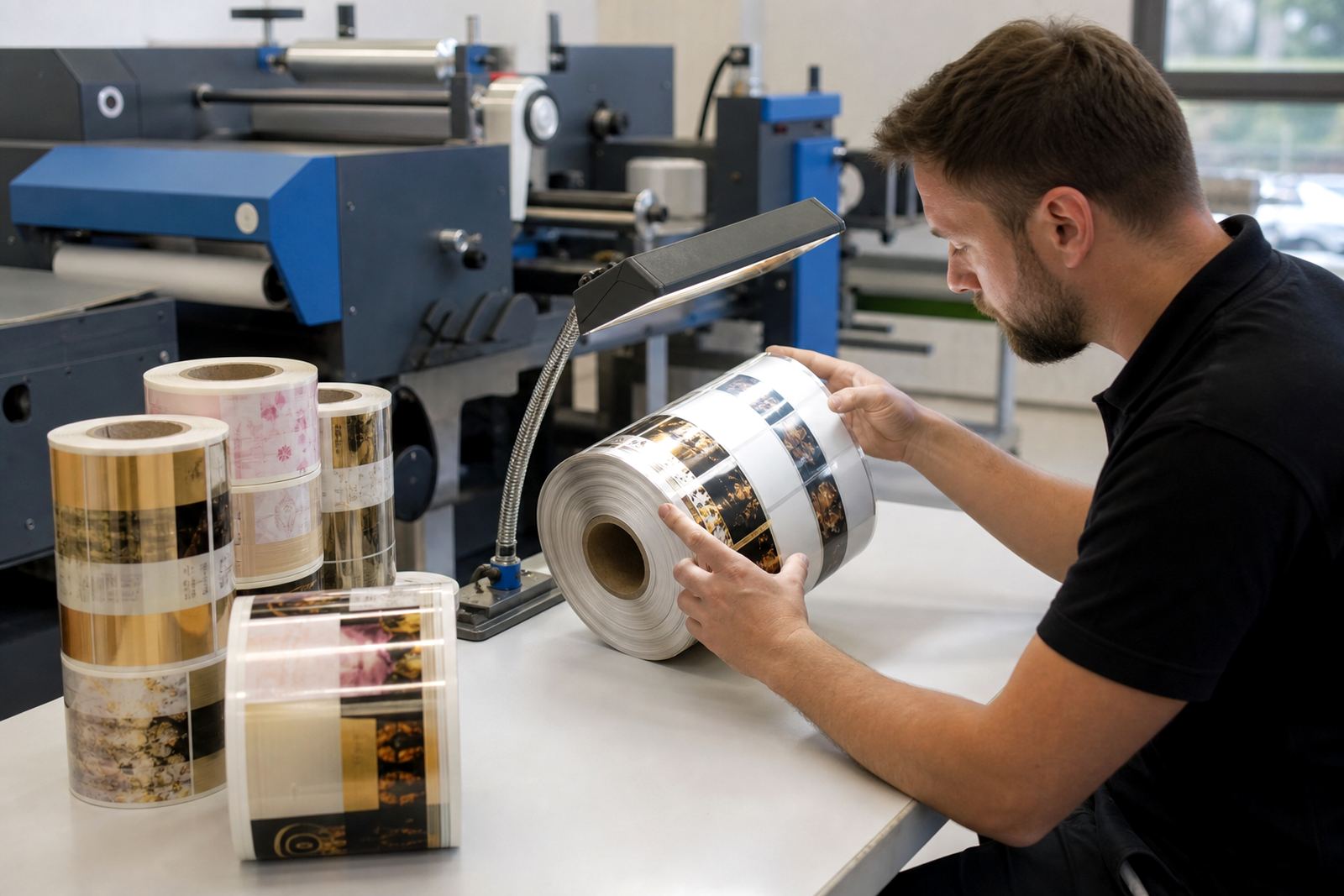
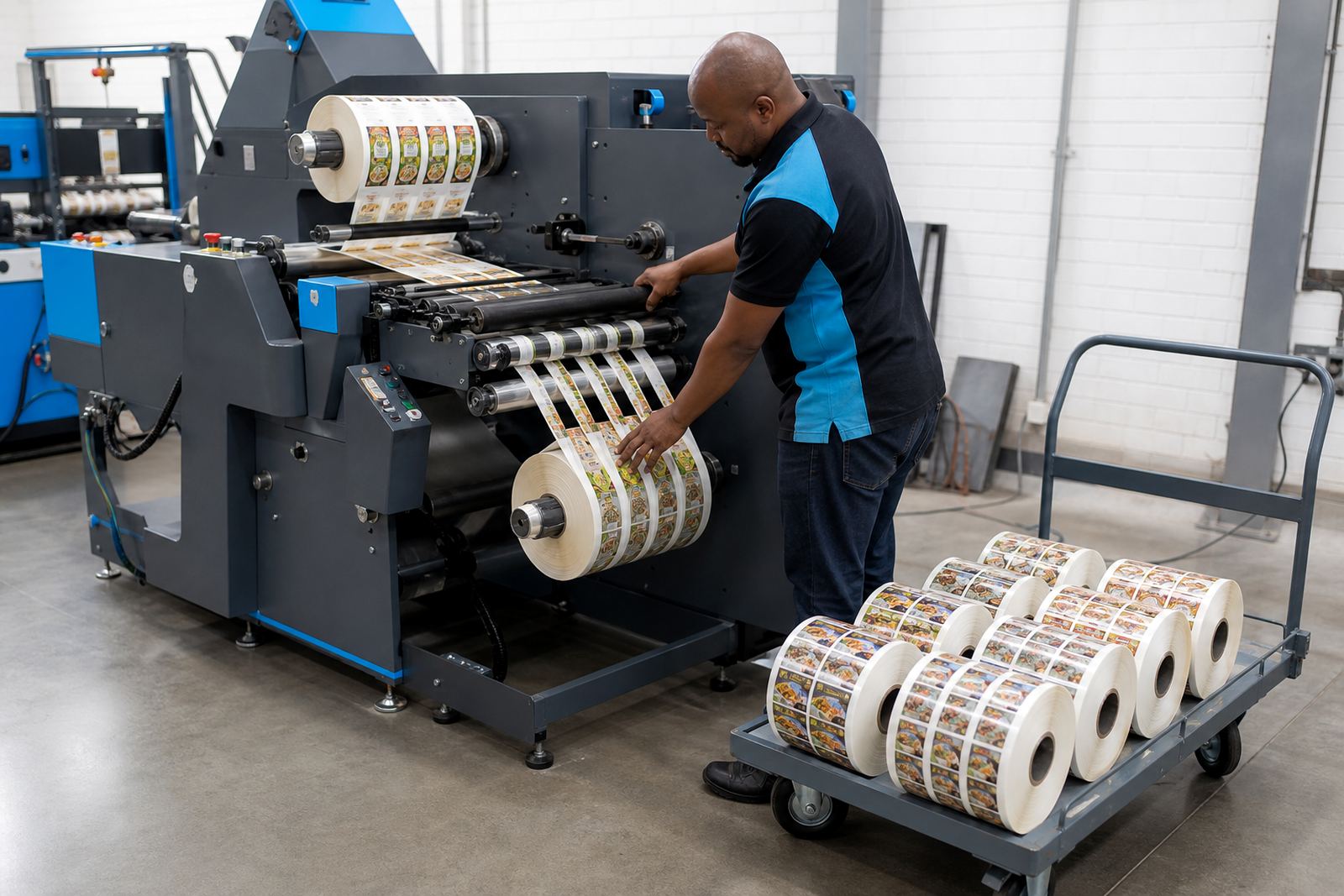
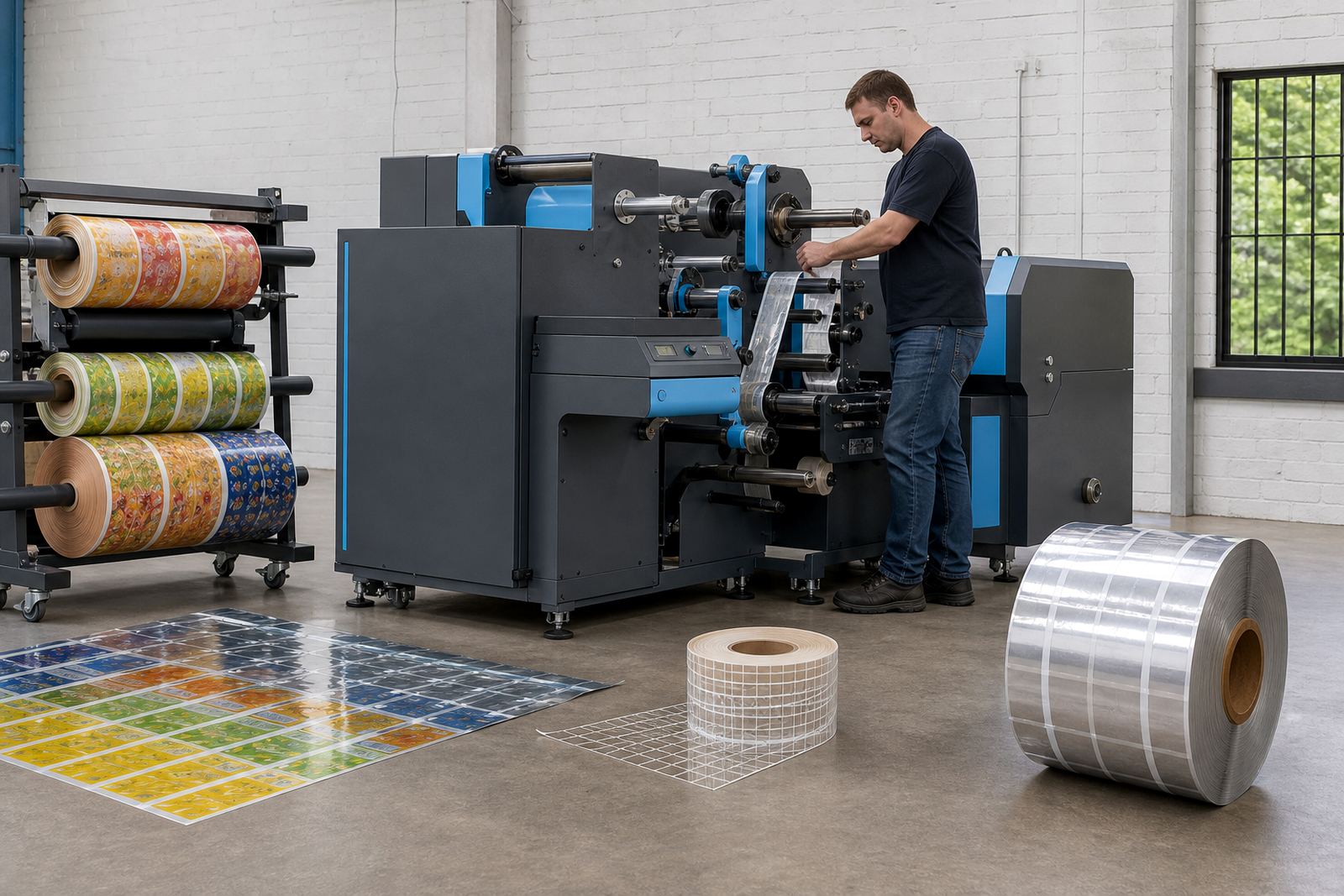
Our work centres on digital label finishing machines that handle the steps after print and before packing. That can mean unwind, lamination, die-cutting, matrix stripping, slitting and rewind control on short or medium label runs. We work with semi-rotary systems for short runs and flexibly tooled lines for labels that need sharper detail, clean release and a tidy reel at the end.
Label printers and packaging producers often need consistent web control more than clever talk. Roll widths, core sizes, repeat lengths and web tension all have to stay in step, especially when the job includes varnish, kiss-cut work or narrow slits on small rolls.
- Lamination for protection, gloss or surface handling
- Die-cutting for pressure-sensitive labels and packaging inserts
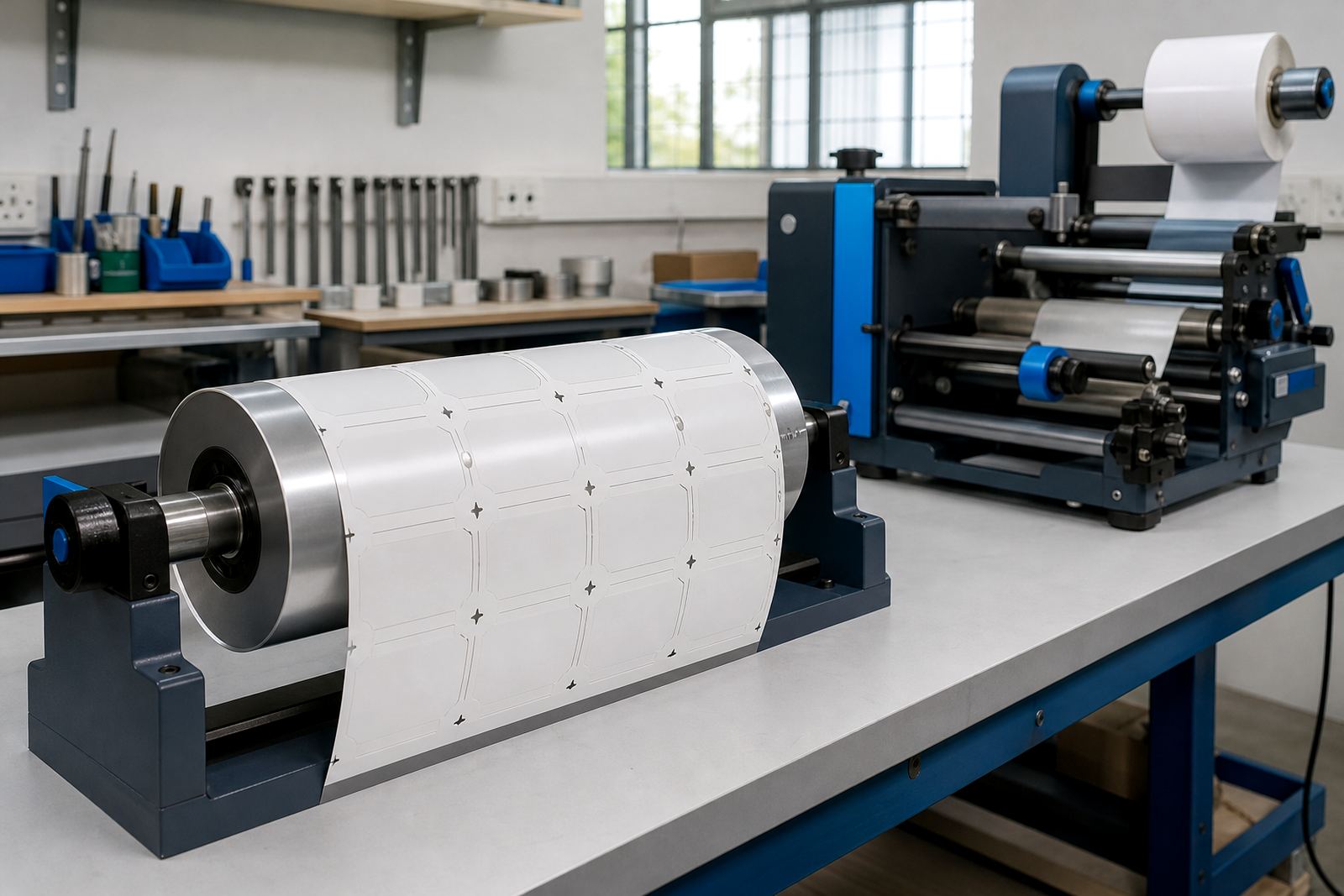
- Matrix stripping to remove waste without tearing the web
- Slitting and rewinding for finished rolls ready for dispatch
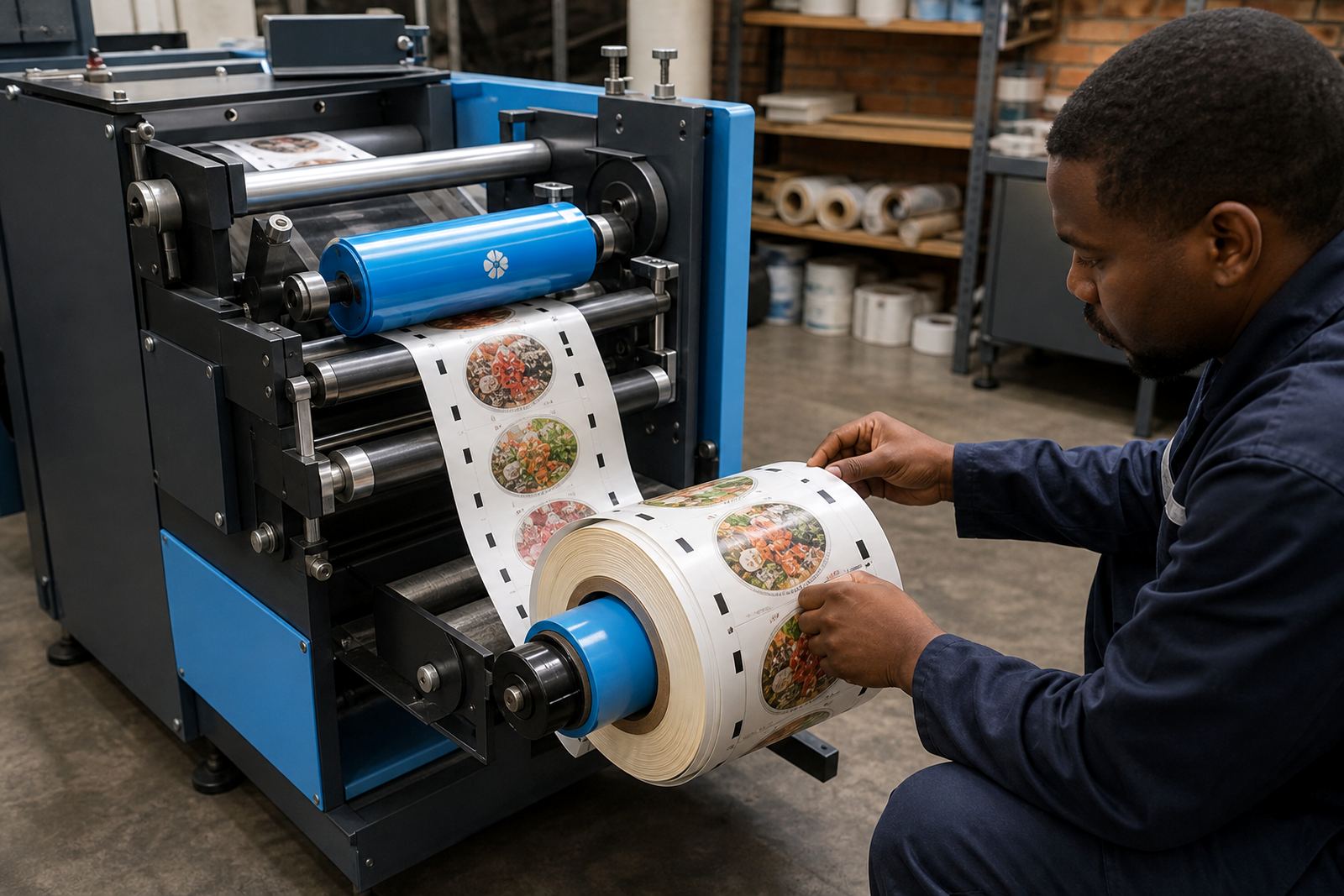
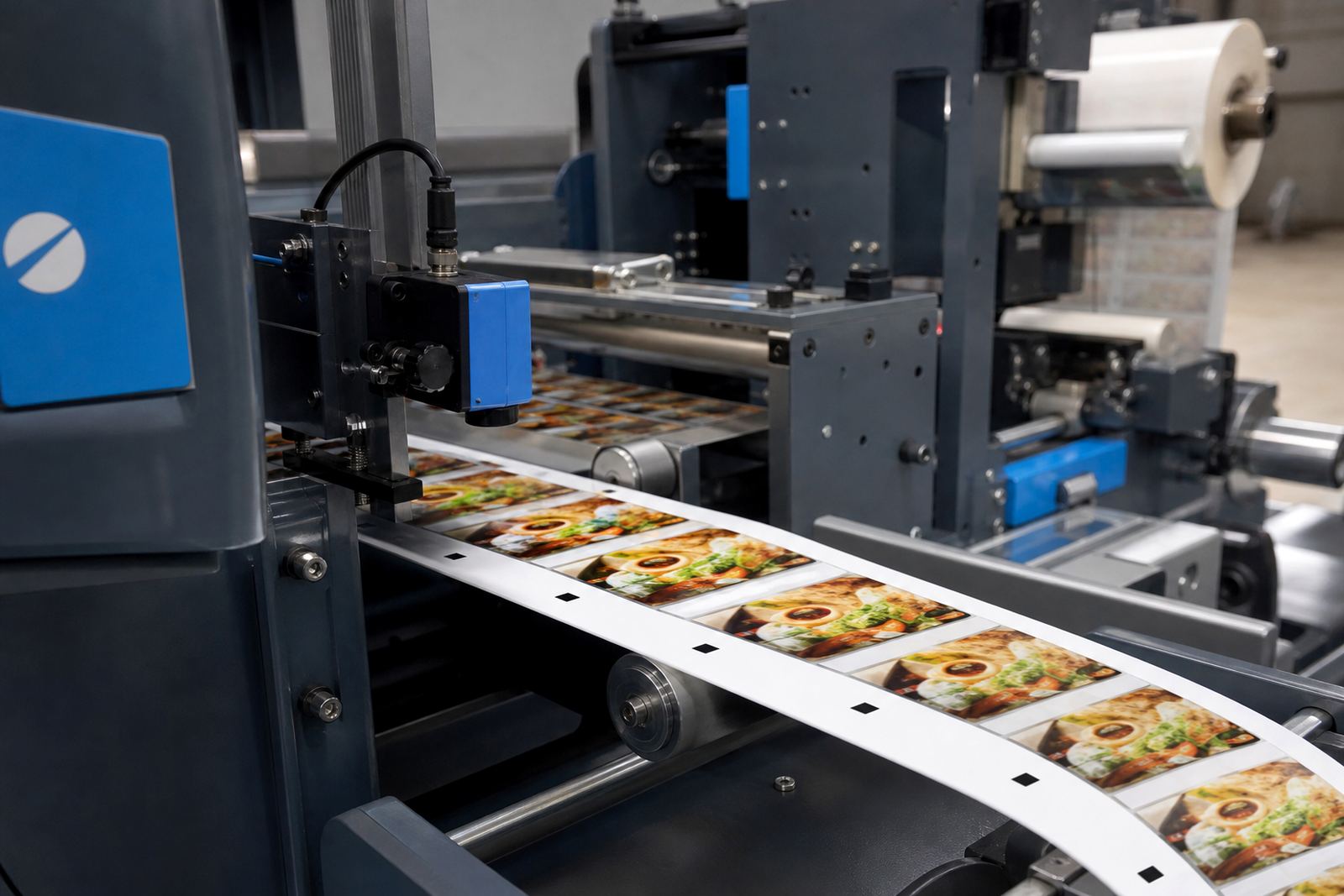
- Registration mark control for printed material that must track cleanly
Built around real label production
Some shops run short promotional labels, others need longer production shifts for wine, food, health or industrial packs. The finishing line changes with the job. One week it may be paper labels on a narrow web, the next week a synthetic stock with varnish and tighter registration marks. Our team works through those differences with practical setup and proper machine settings, not guesswork.
Laser die-cutting, semi-rotary die-cutting and flexible dies each suit different volumes and artwork patterns. The right choice depends on the substrate, the amount of waste to strip, the sharpness of corners and the finish the label needs after print. For many lines, a stable rewind matters just as much as the cut itself because the final rolls have to load cleanly on the next stage.
- Short-run and multi-SKU label work
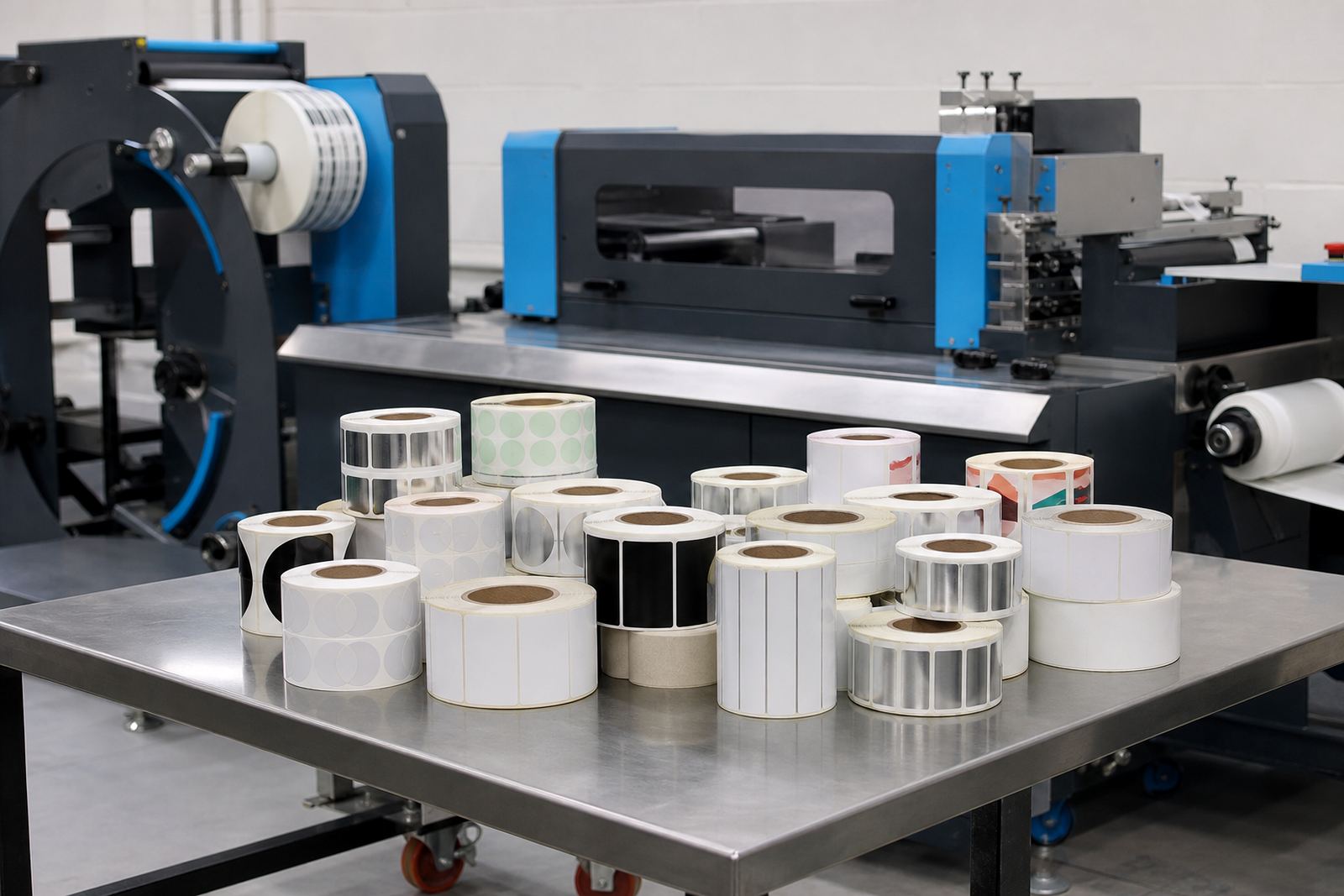
- Pressure-sensitive roll labels
- Varnished and laminated label stocks
- Packaging producers working with printed rolls
How the job is handled on site
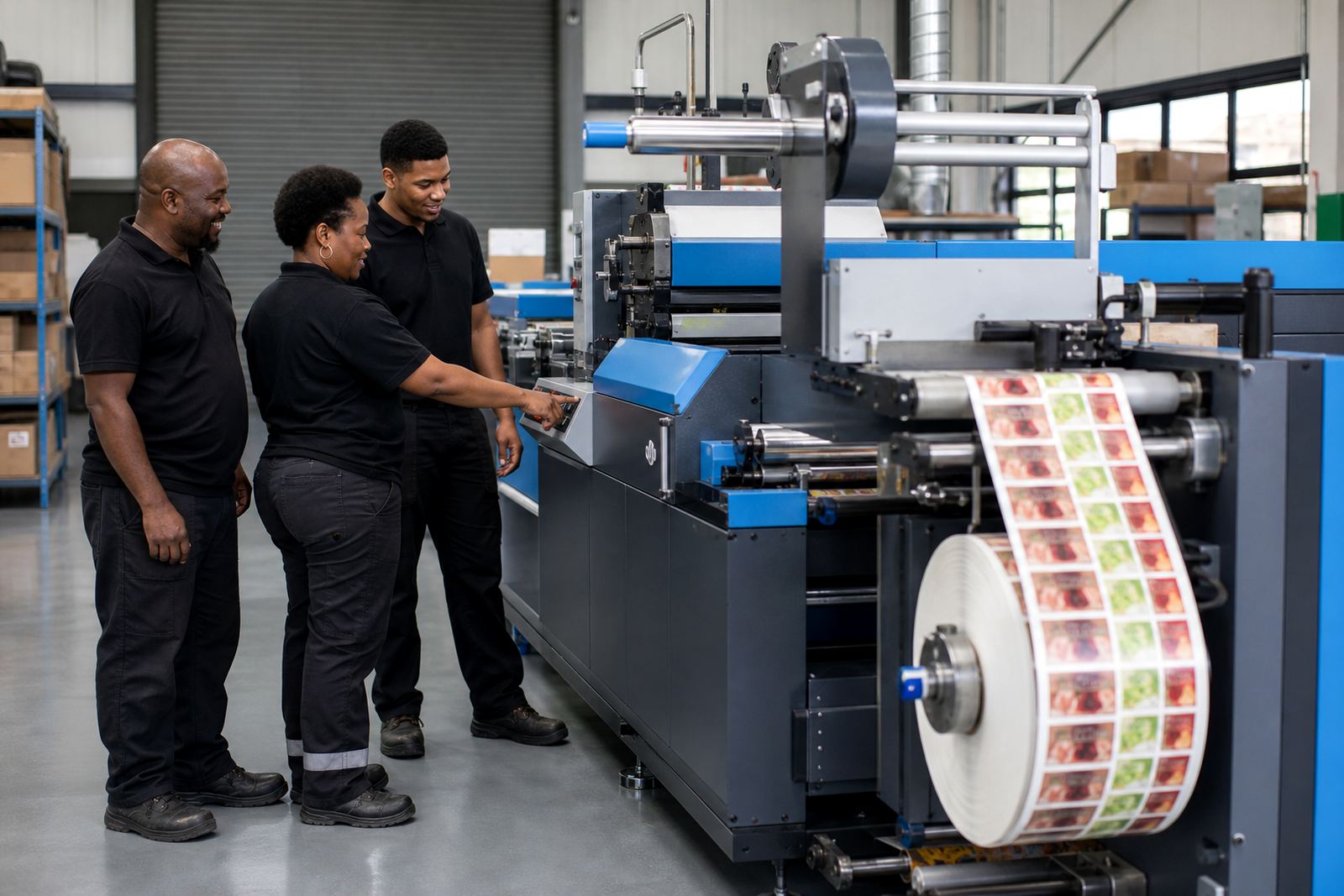
Installation is only the first step. We also handle line commissioning, operator training, die setup help and registration calibration so the machine is matched to the work it will actually do. That means checking unwind and rewind tension, cut depth, waste removal, slitting width and the way the printed mark reads under the sensor.
Thabo Mdlalose leads the business, with Karen Naidoo on sales, Pieter Pienaar on technical matters, Lerato Bhengu coordinating service, Musa Wessels on applications training and Ayesha Shezi on parts and logistics. The point is to keep the work practical on the floor, where a web can wander, a slit can drift or a die setting can be a little off and slow the whole shift.
- Machine installation and line commissioning
- Operator training on setup, threading and inspection
- Preventive maintenance and breakdown repairs
- Remote support where machine faults need guided checks