

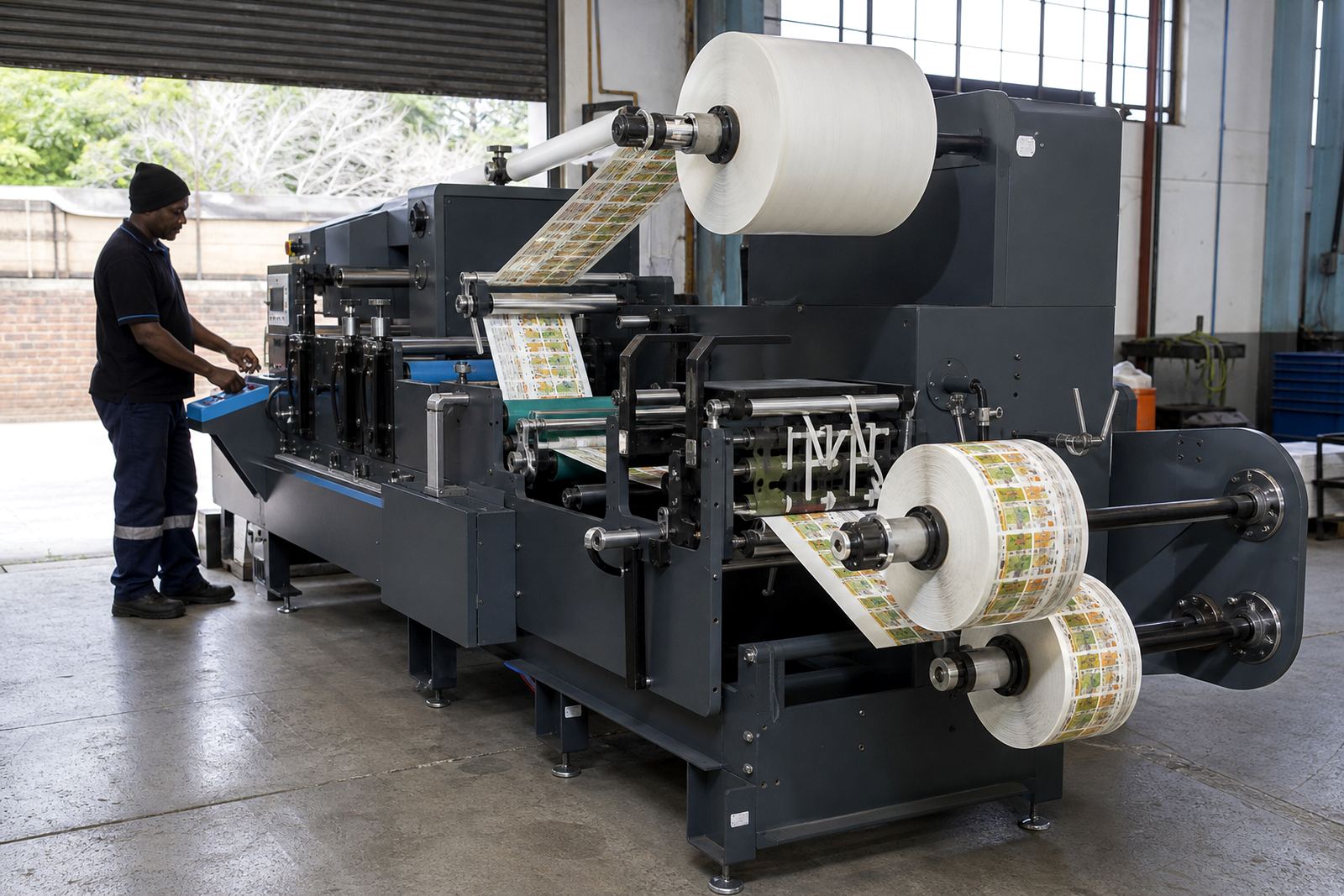
Built for short runs, changeovers and tighter label windows
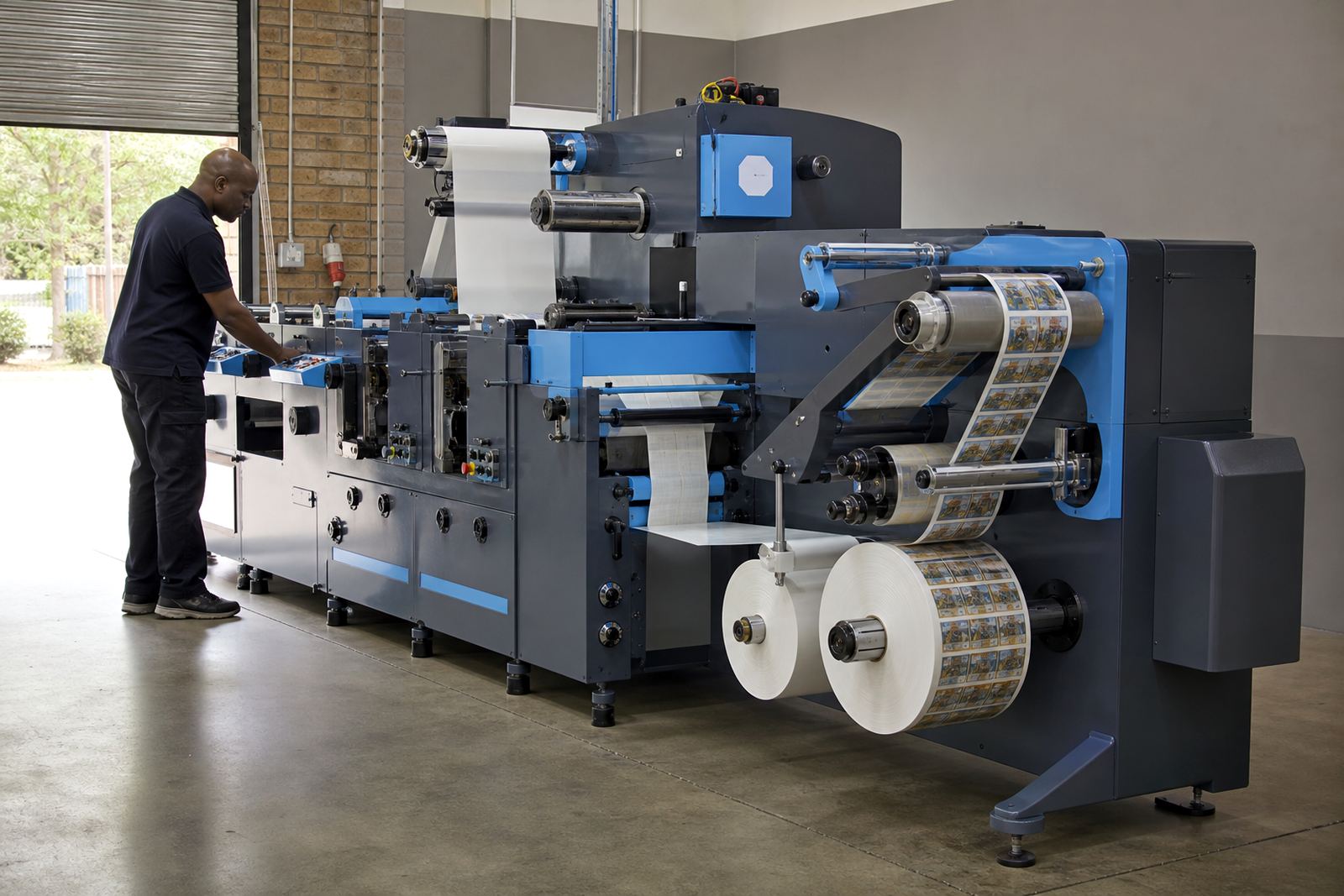
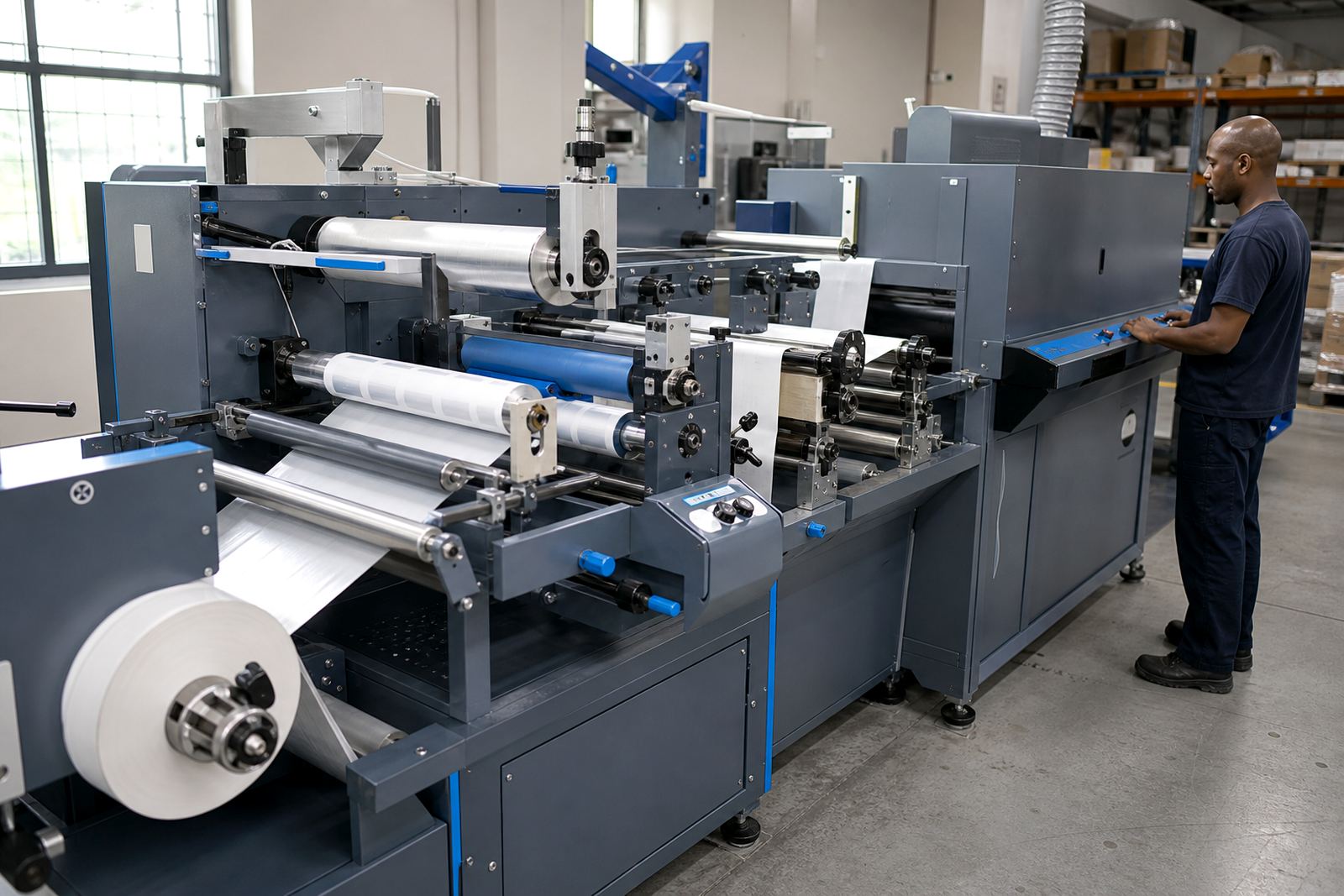
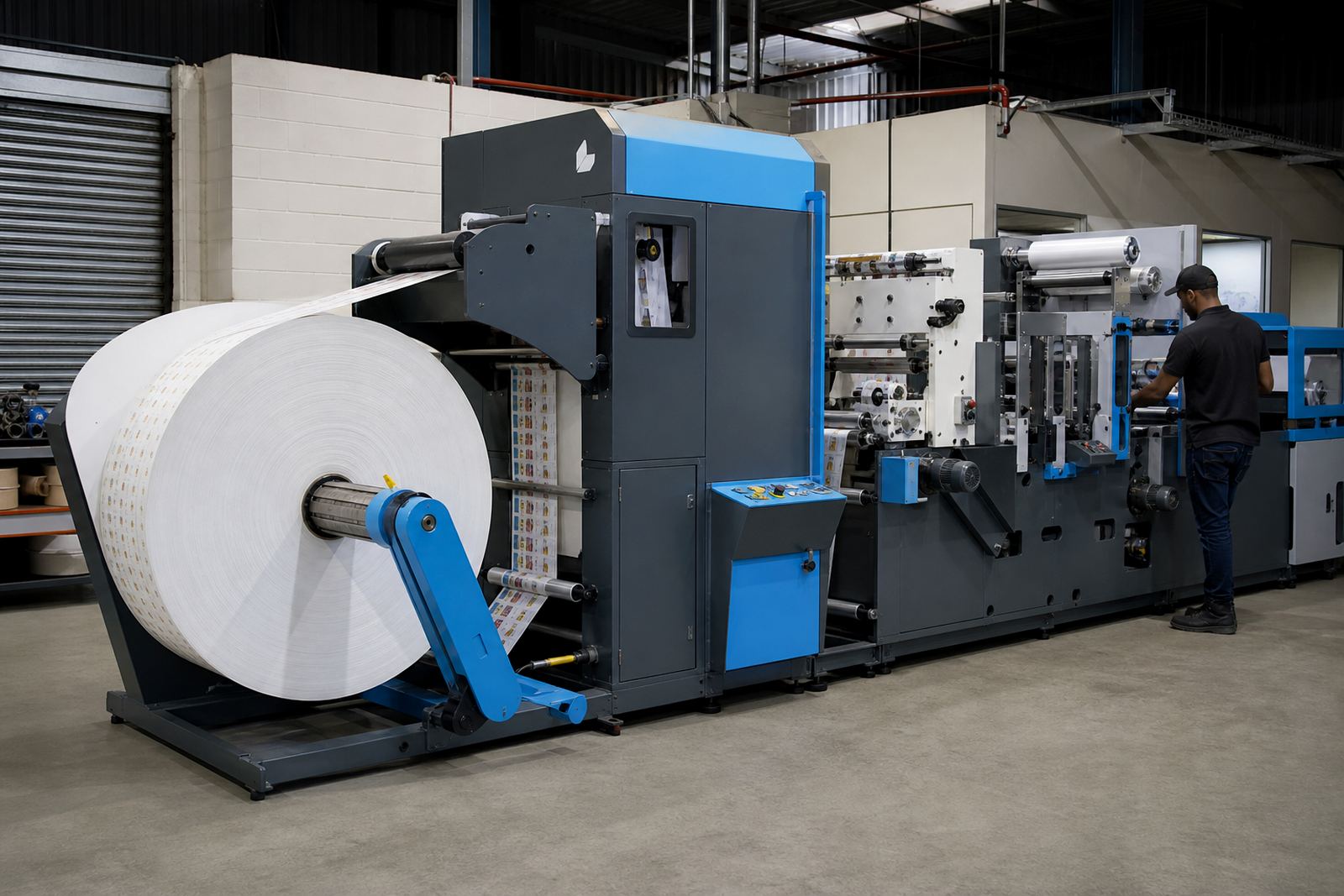
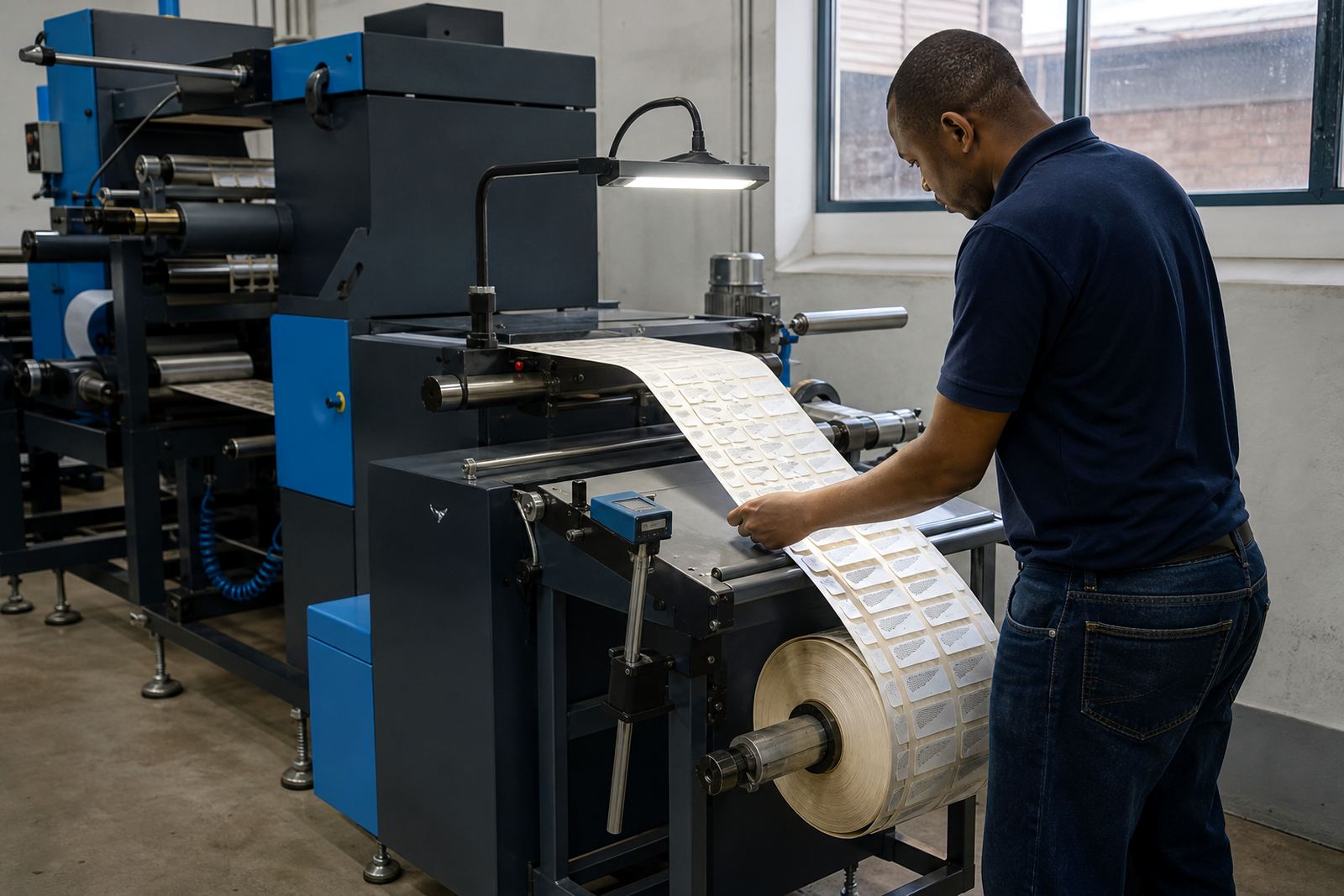
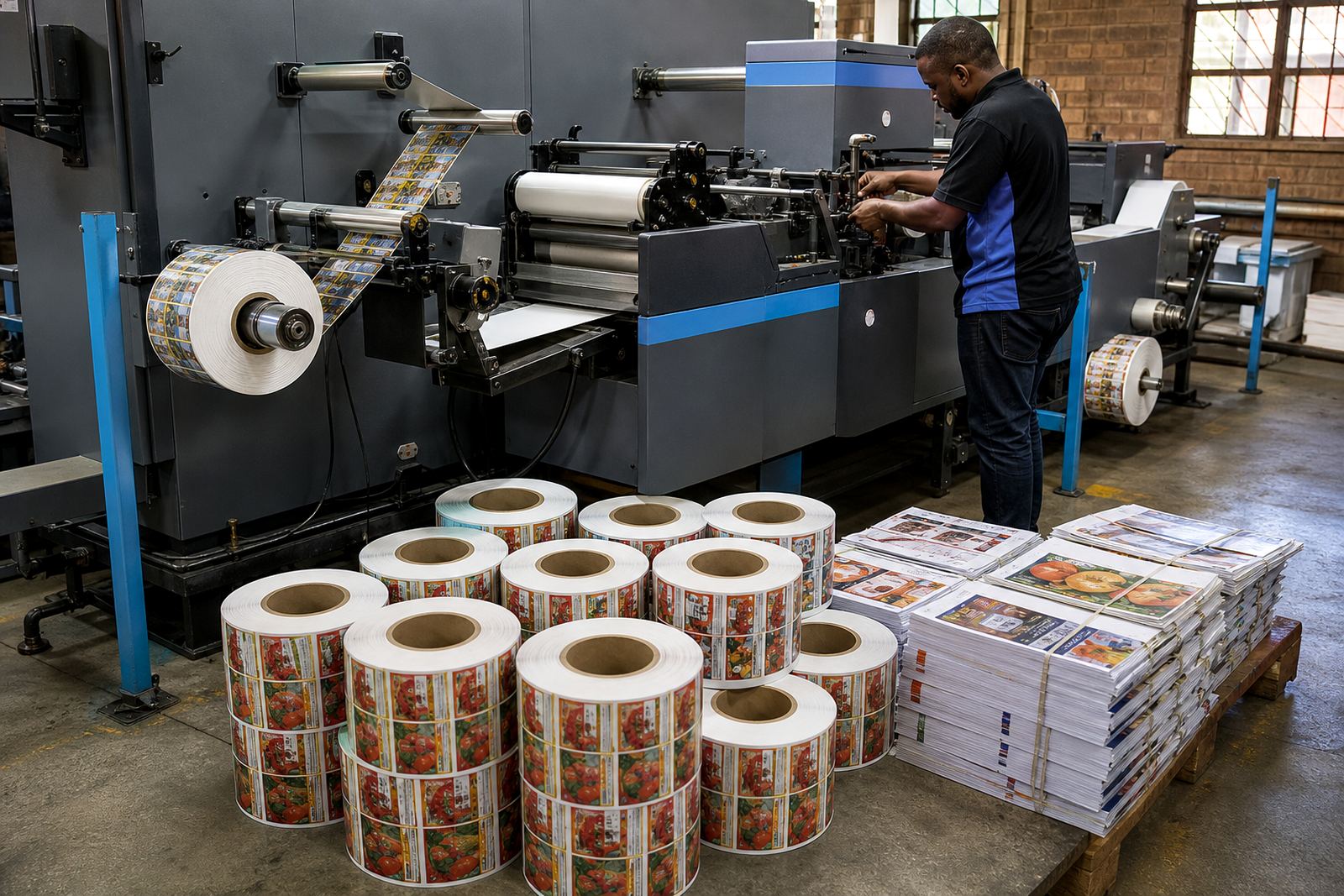
Digital label finishing sits between print and dispatch, and it has to keep pace with mixed work. A good line handles narrow promo labels, longer repeated runs, clear-on-clear stock, textured films and heavier facestocks without making every changeover a fight. In Kya Sand, Randburg we work with printers and packaging teams that need clean registration, repeatable cut depth, and finished rolls that can move straight into labelling or packing.
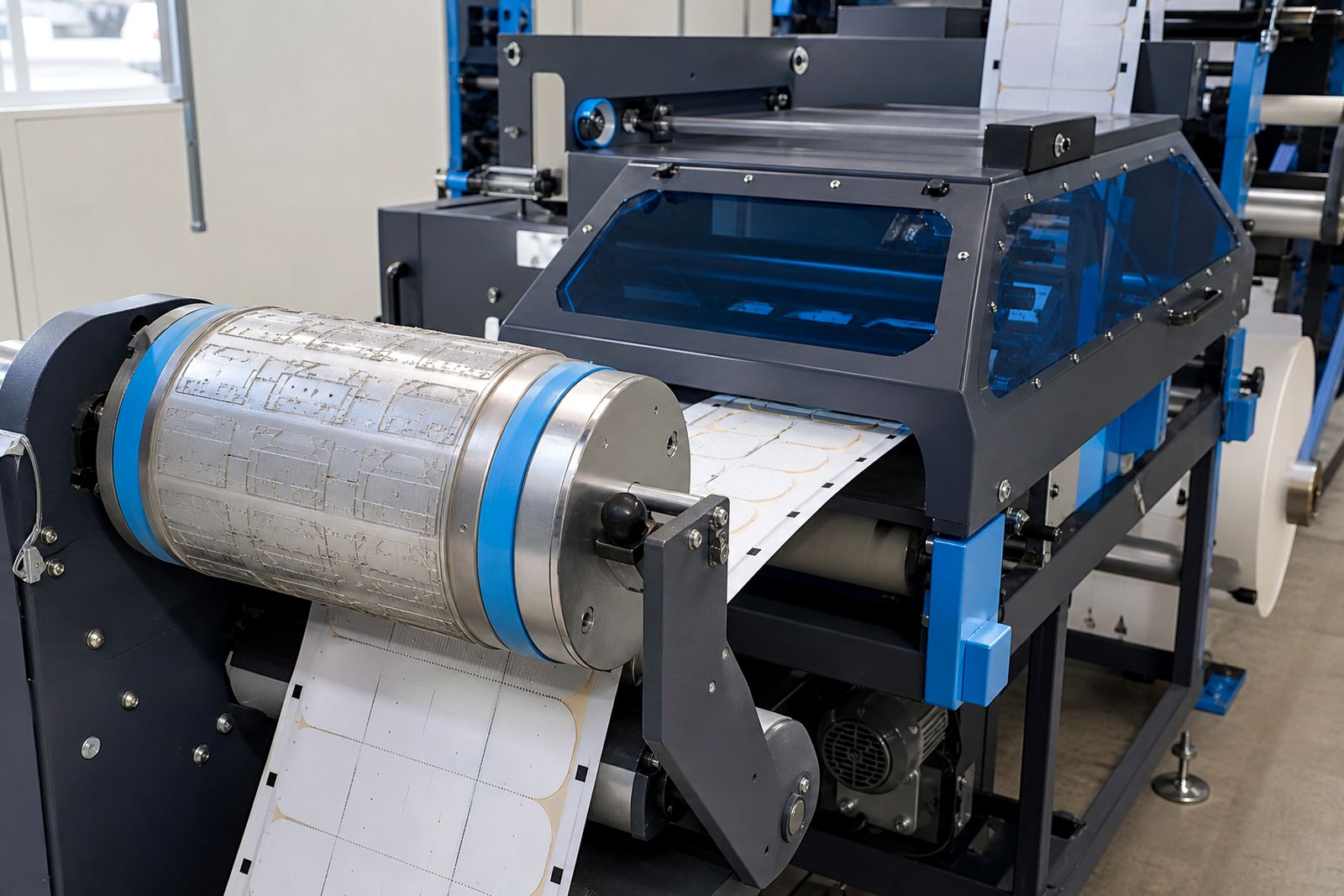
The right machine depends on the stock, the shape of the label, and the output you need from each shift. Some sites want laser cutting for highly variable artwork, while others prefer semi-rotary die-cutting for speed on repeat jobs. Flexible dies still matter where volume, label shape and production discipline line up. We also look at winding direction, roll width, core size and the way the press feeds into finishing, because those details shape the whole line.
What the finishing line is expected to do
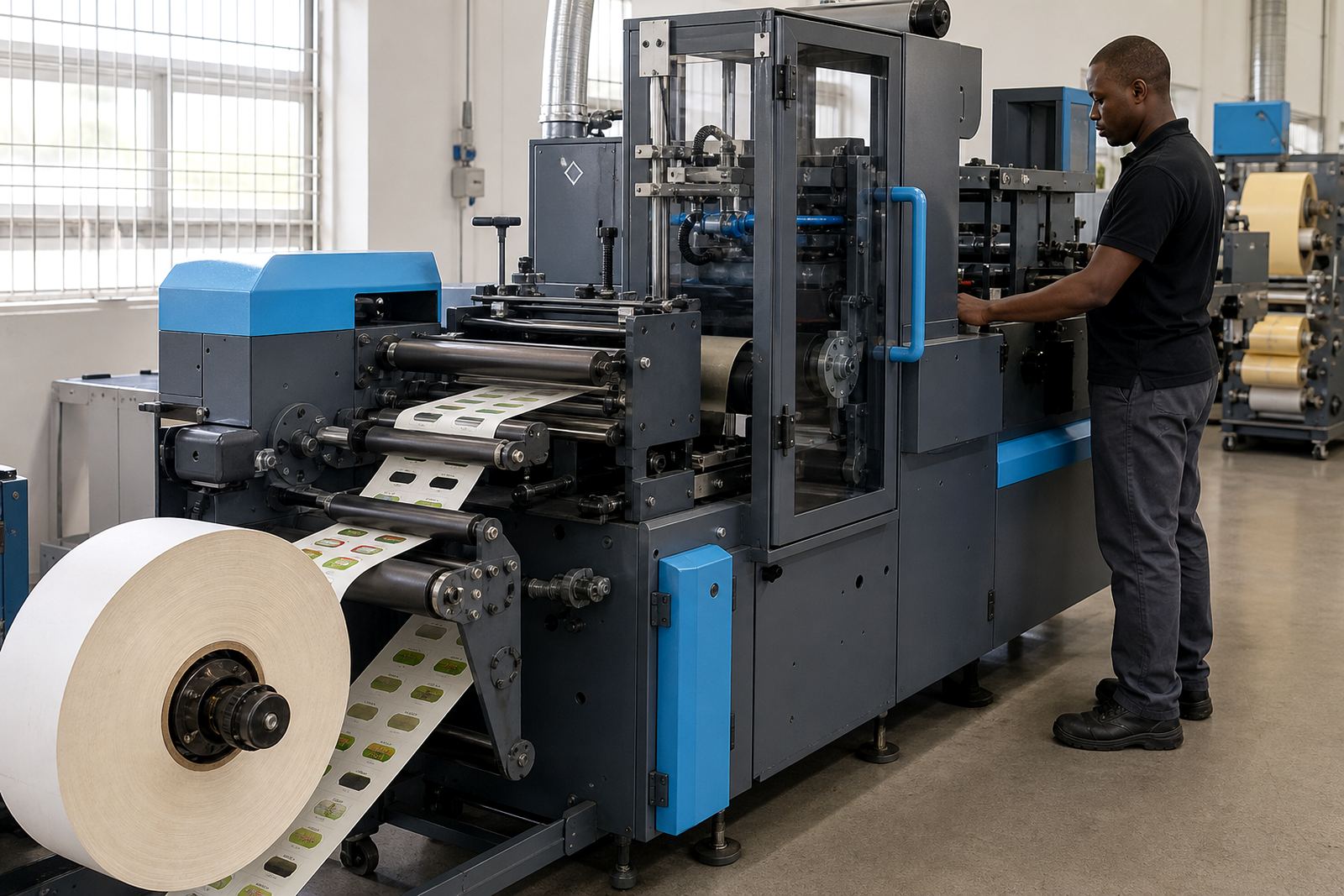
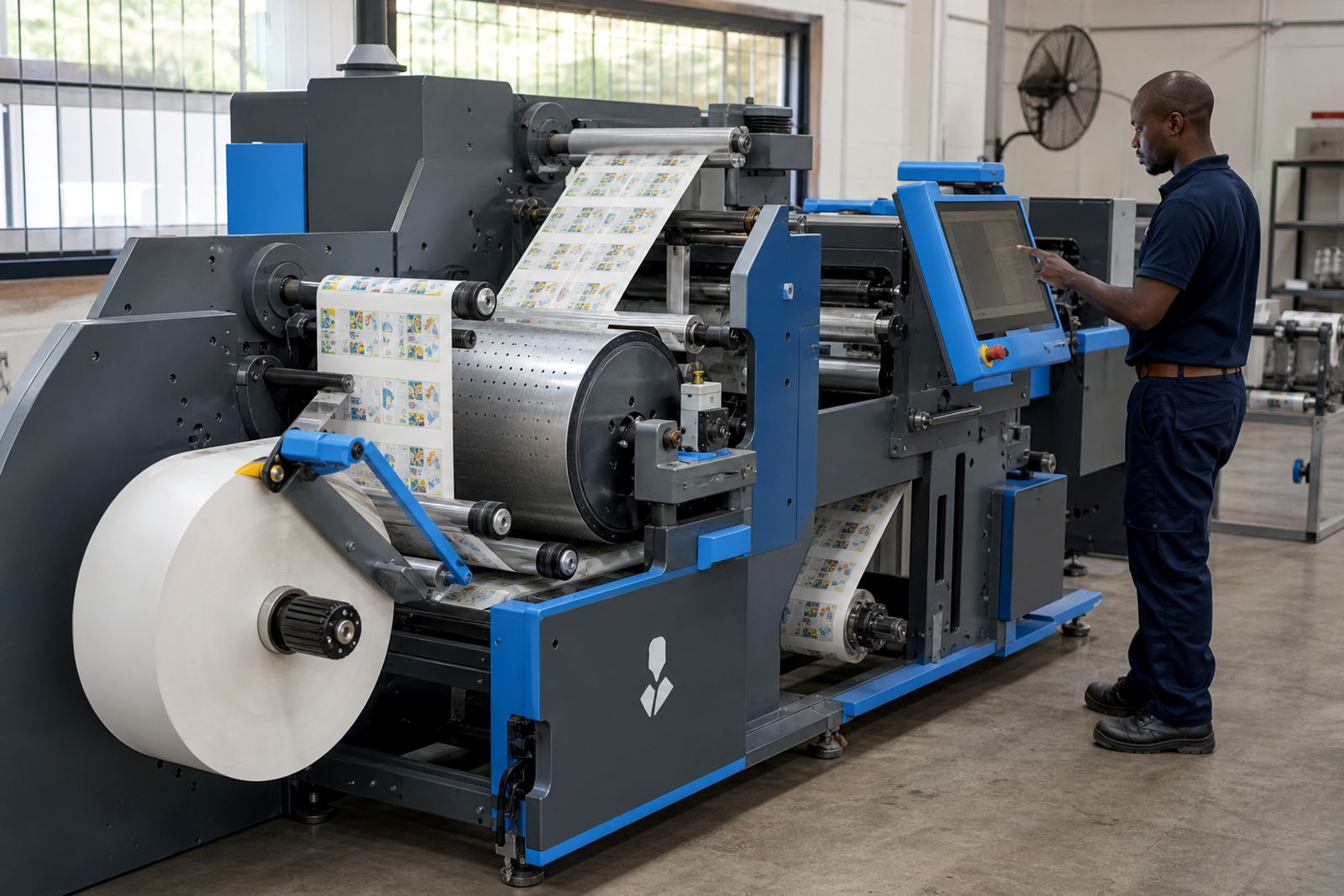
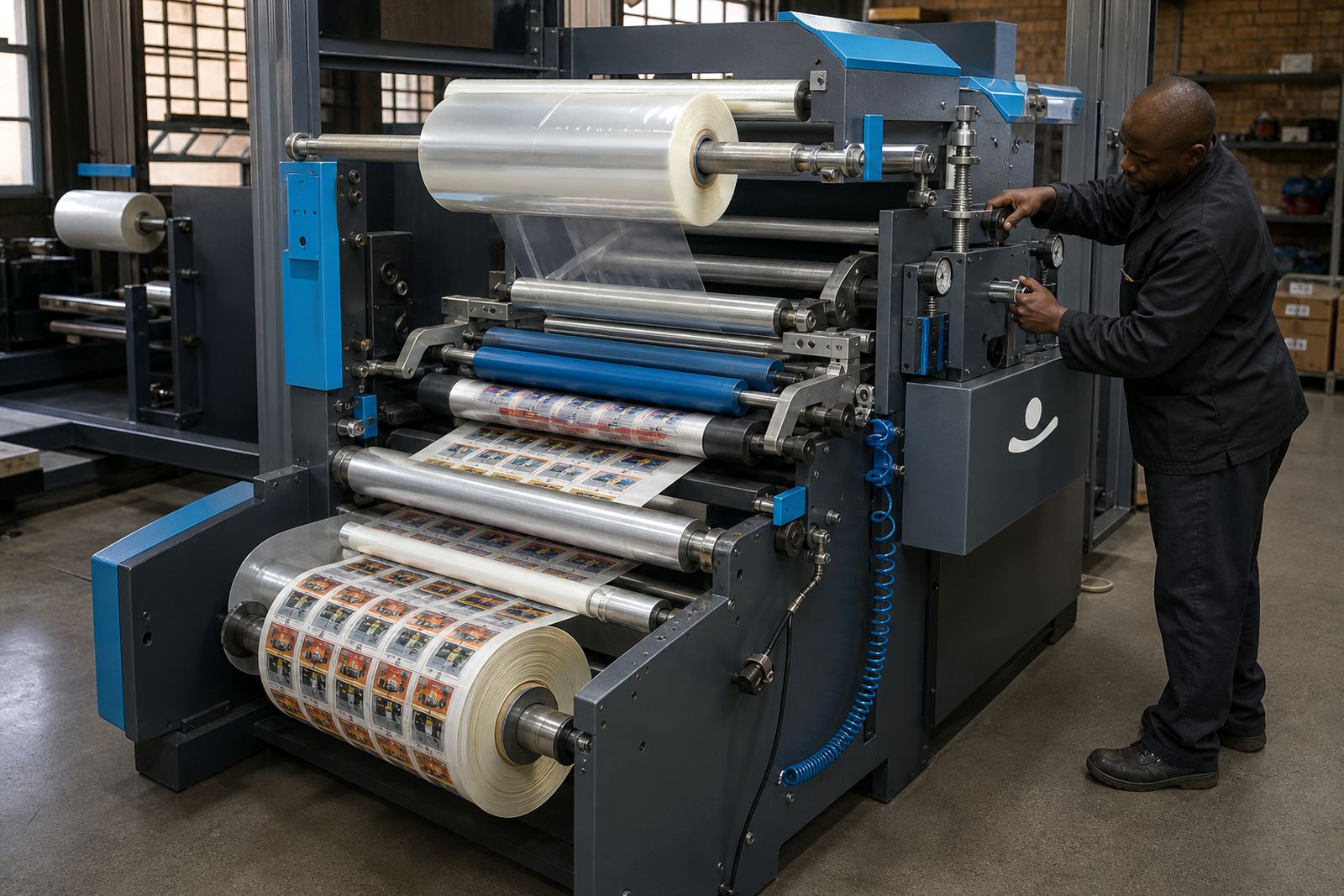
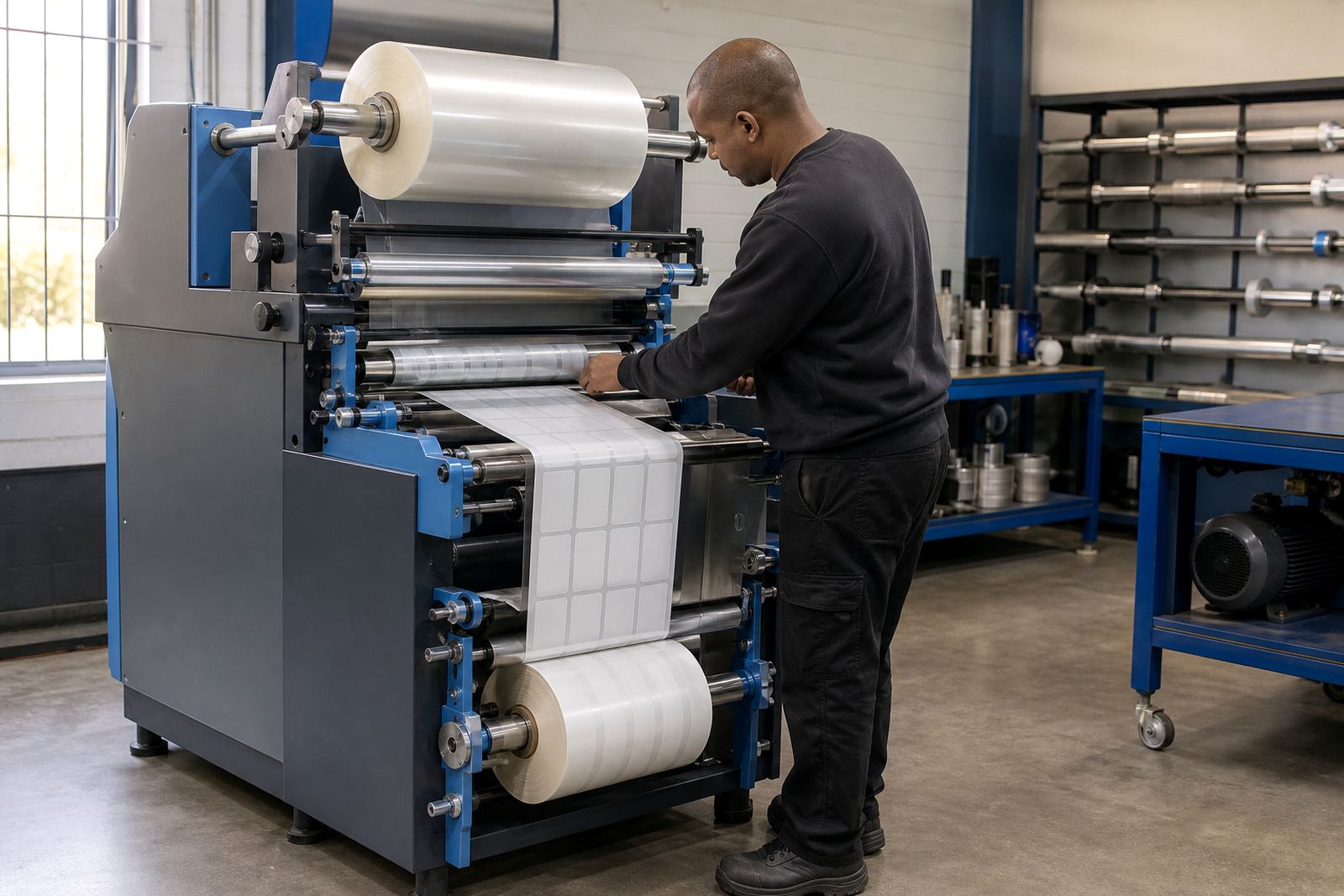
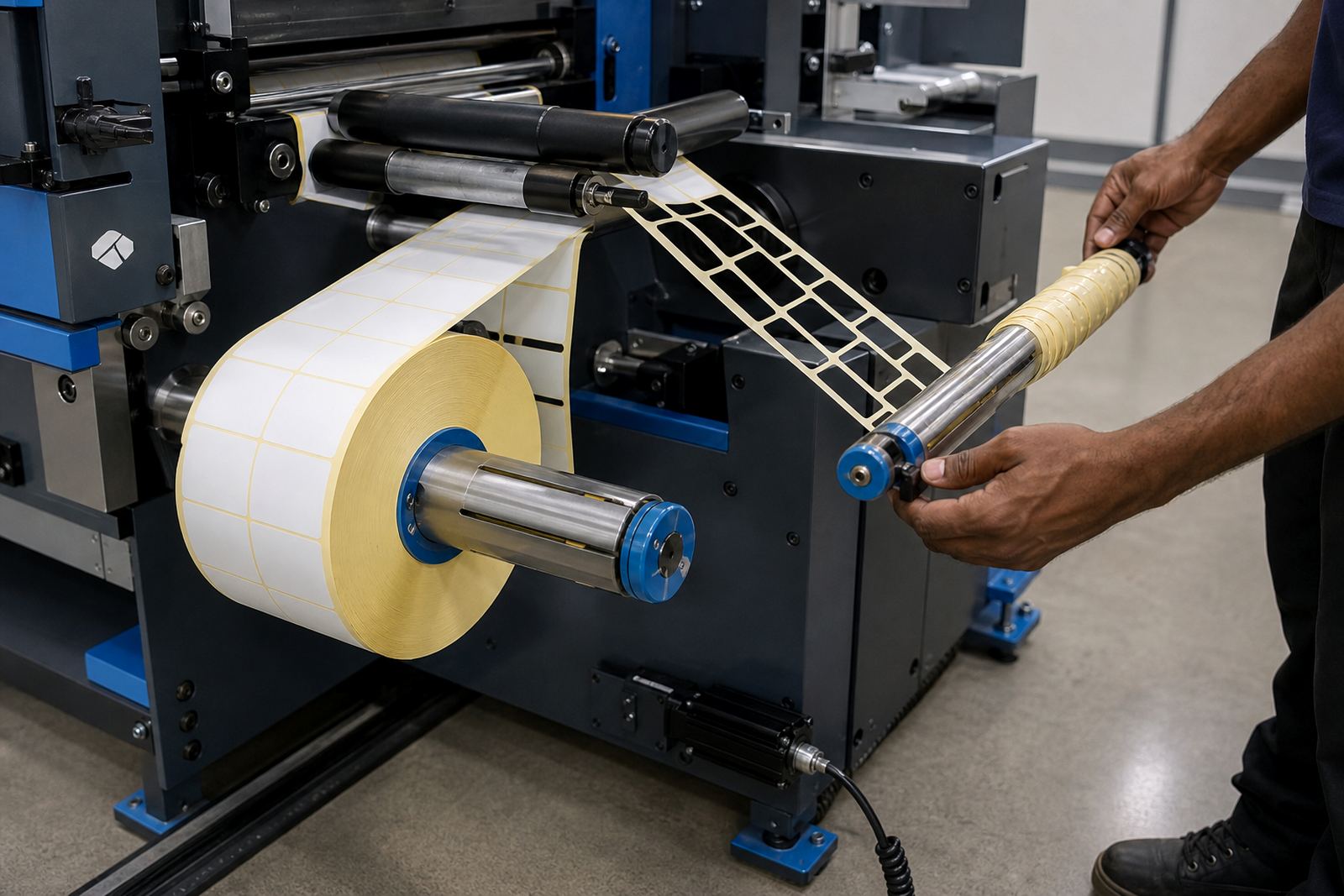
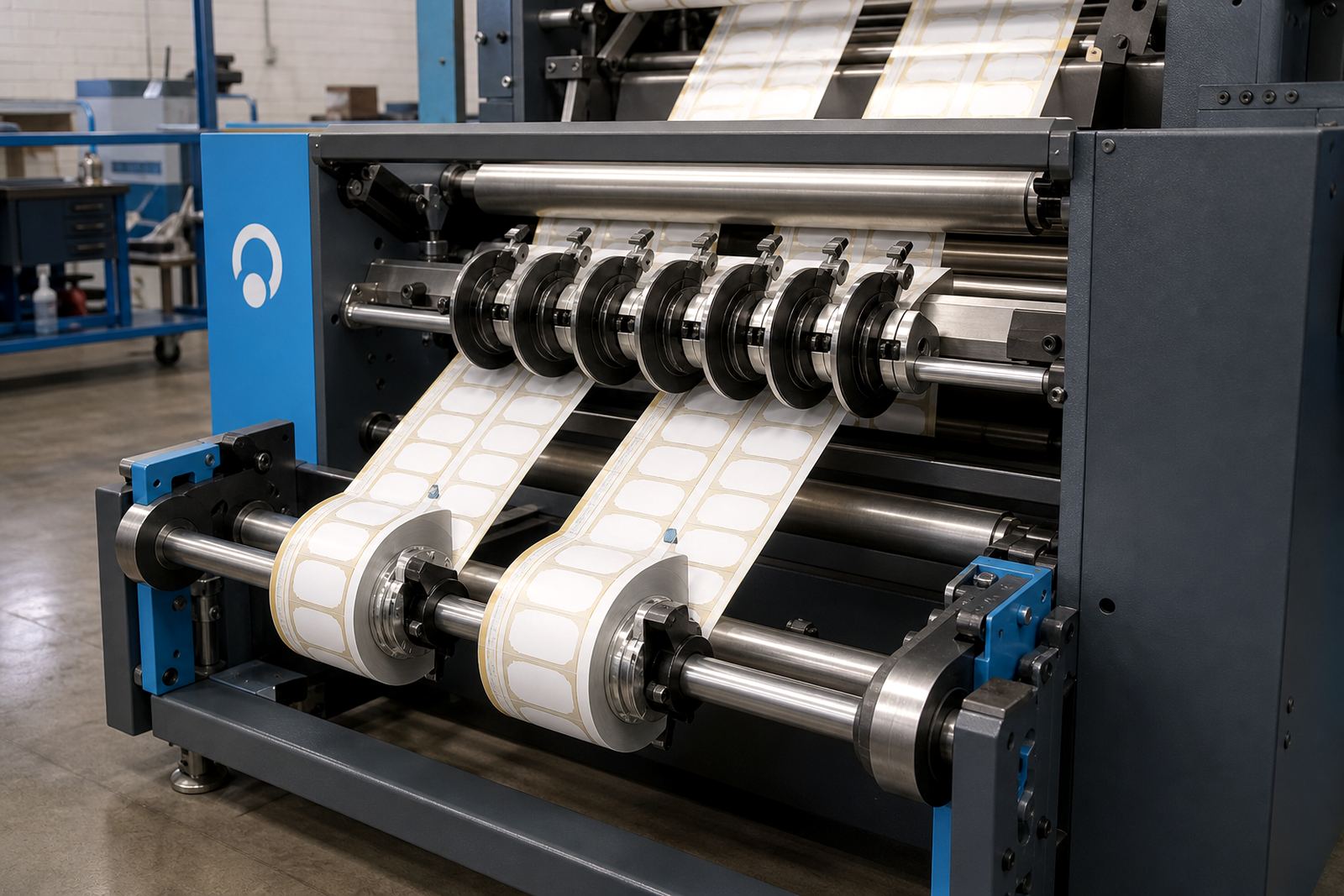
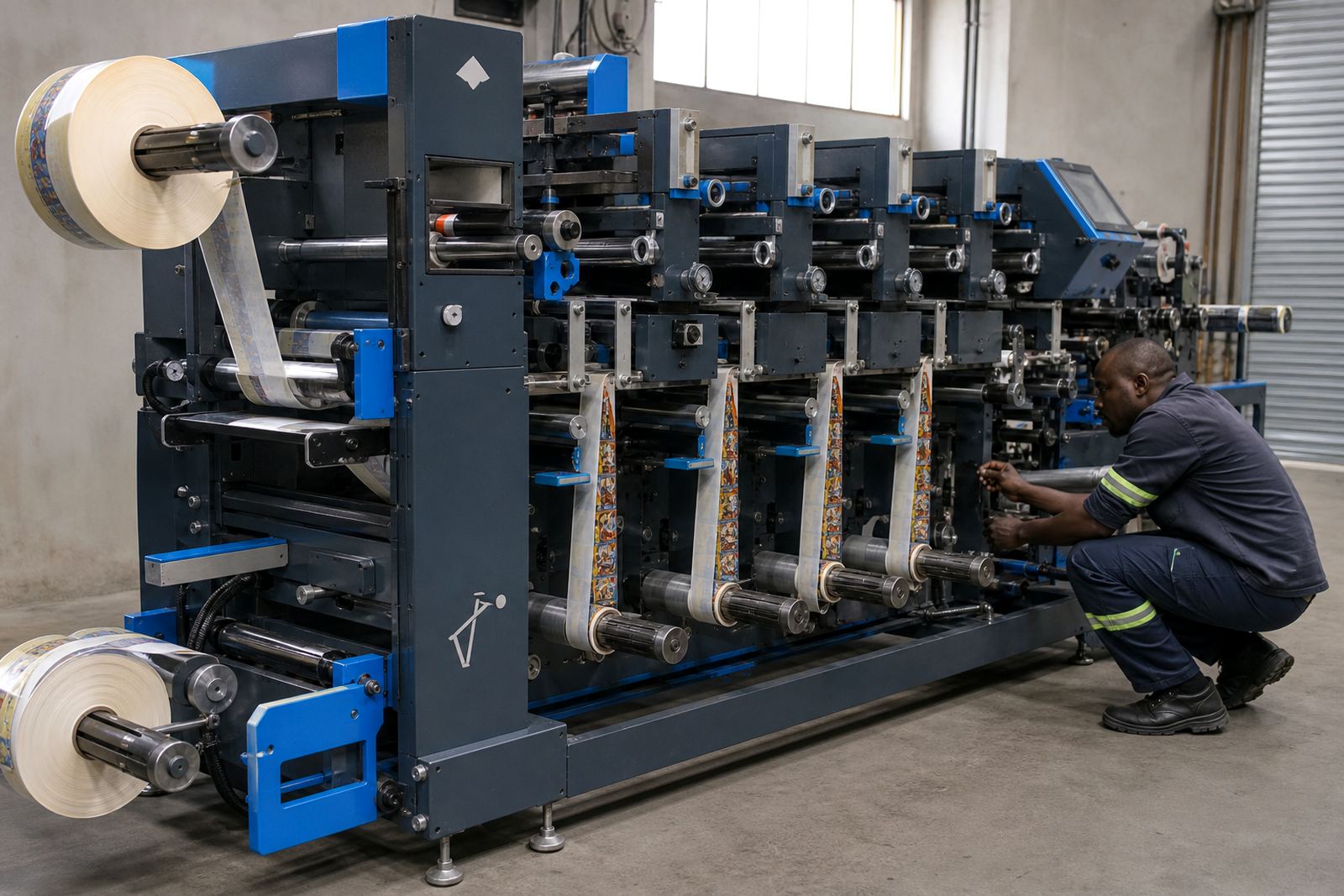
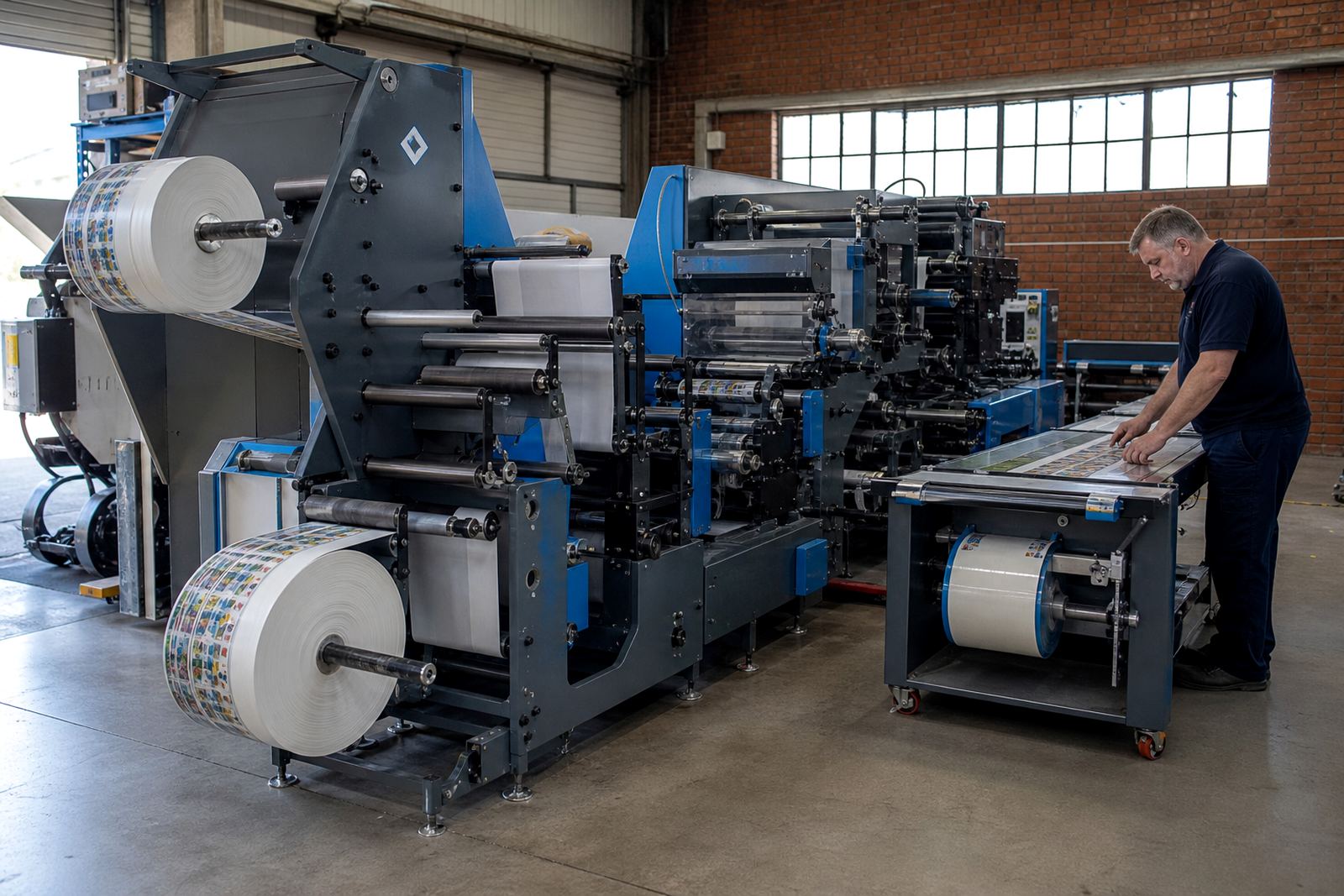
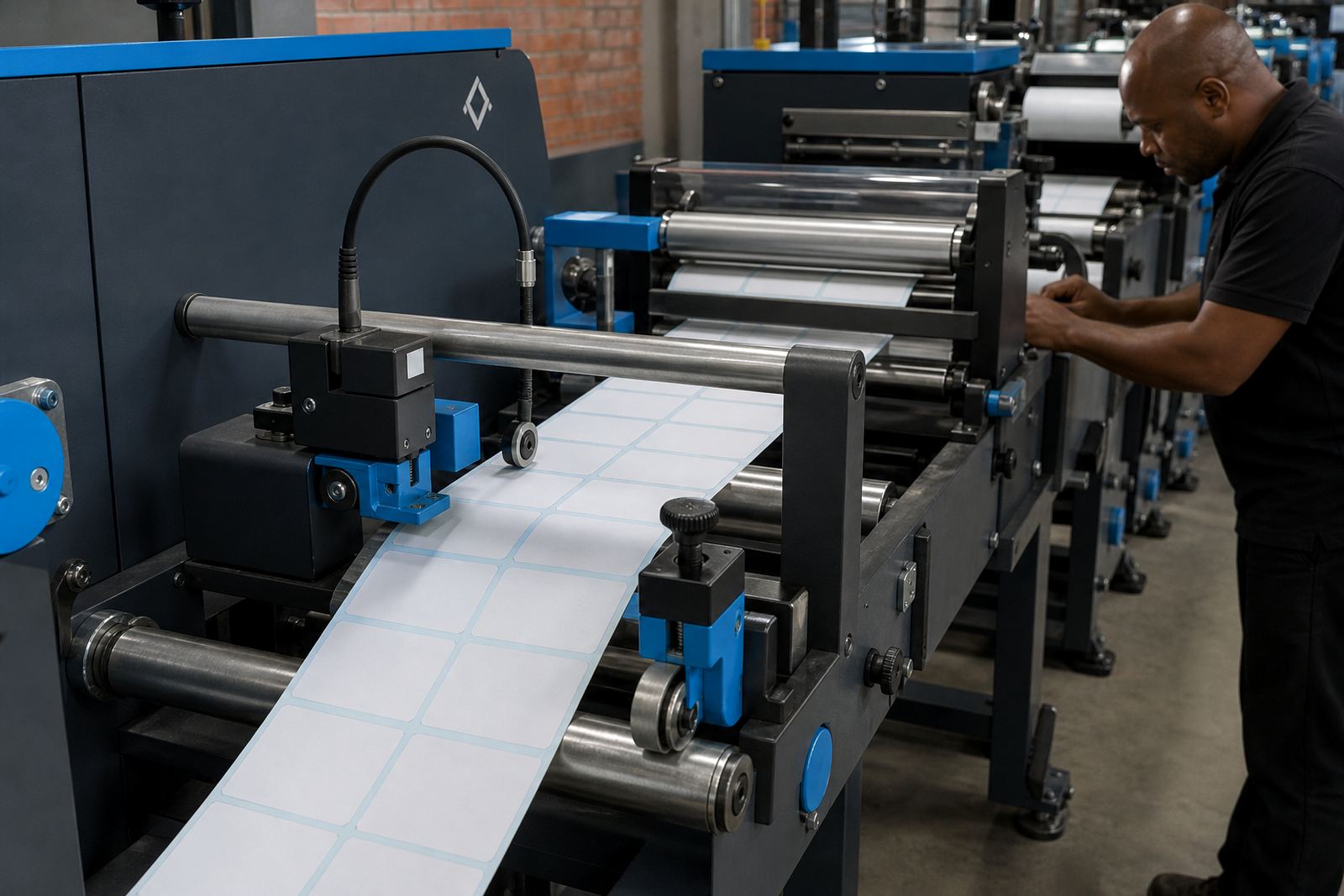
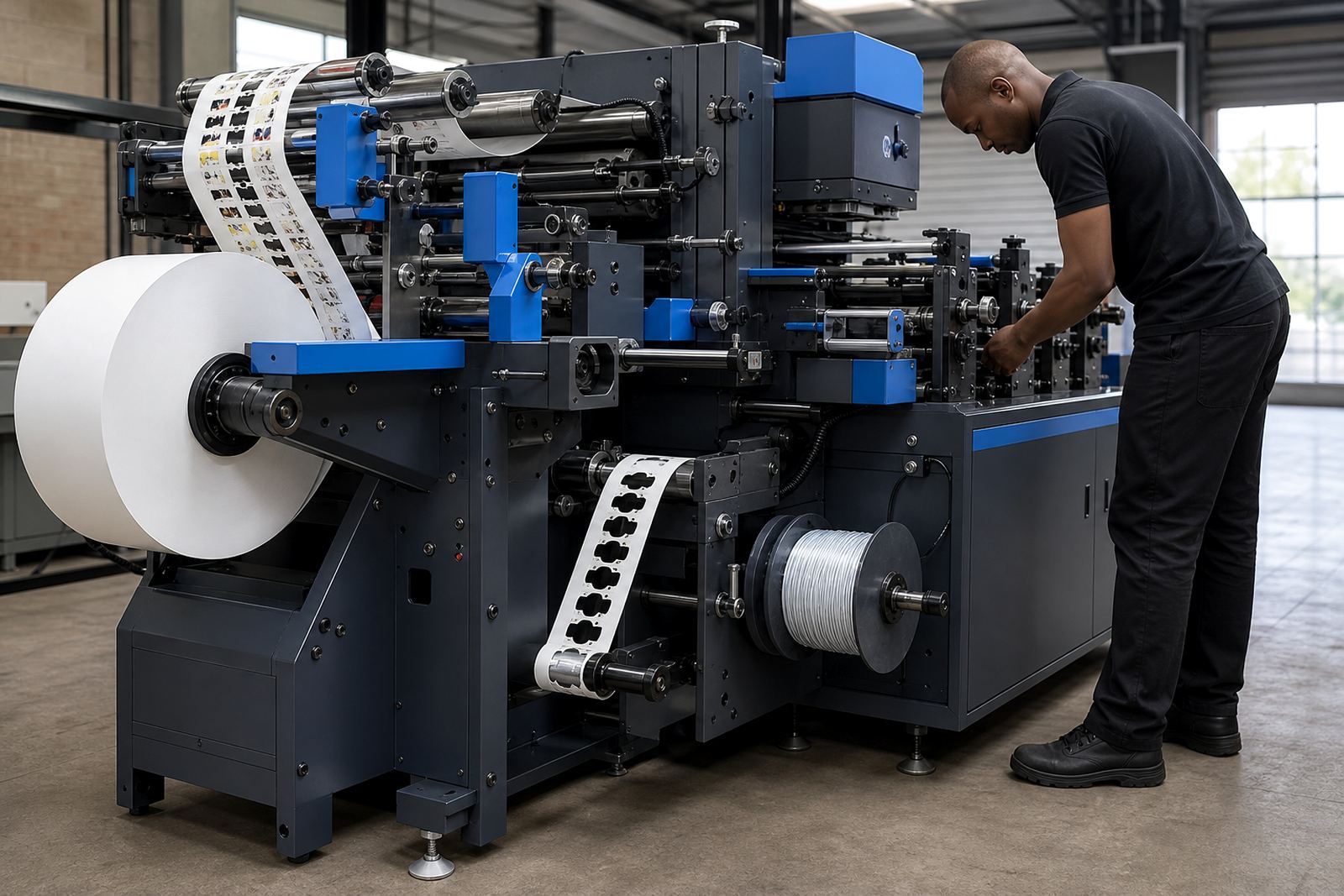
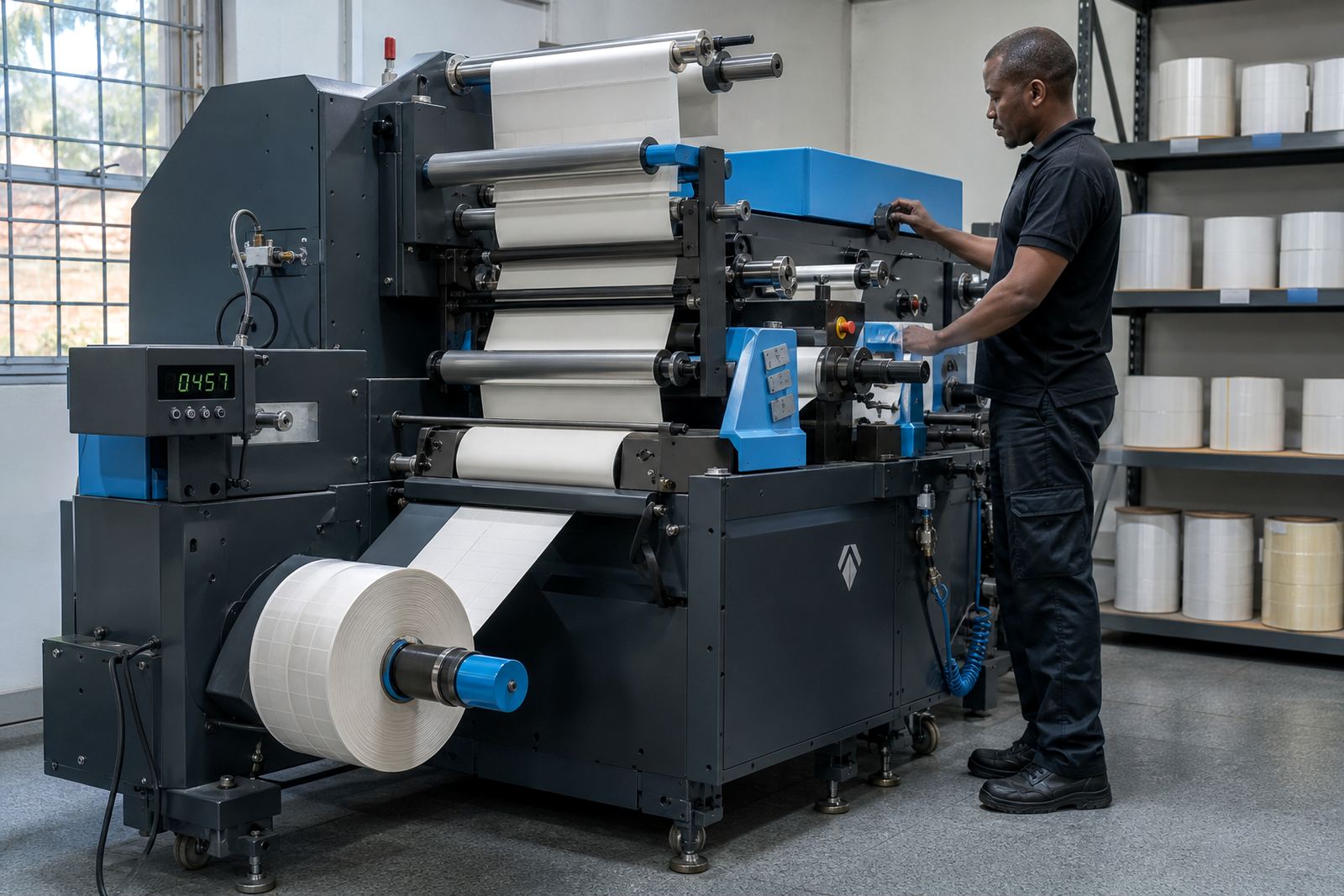
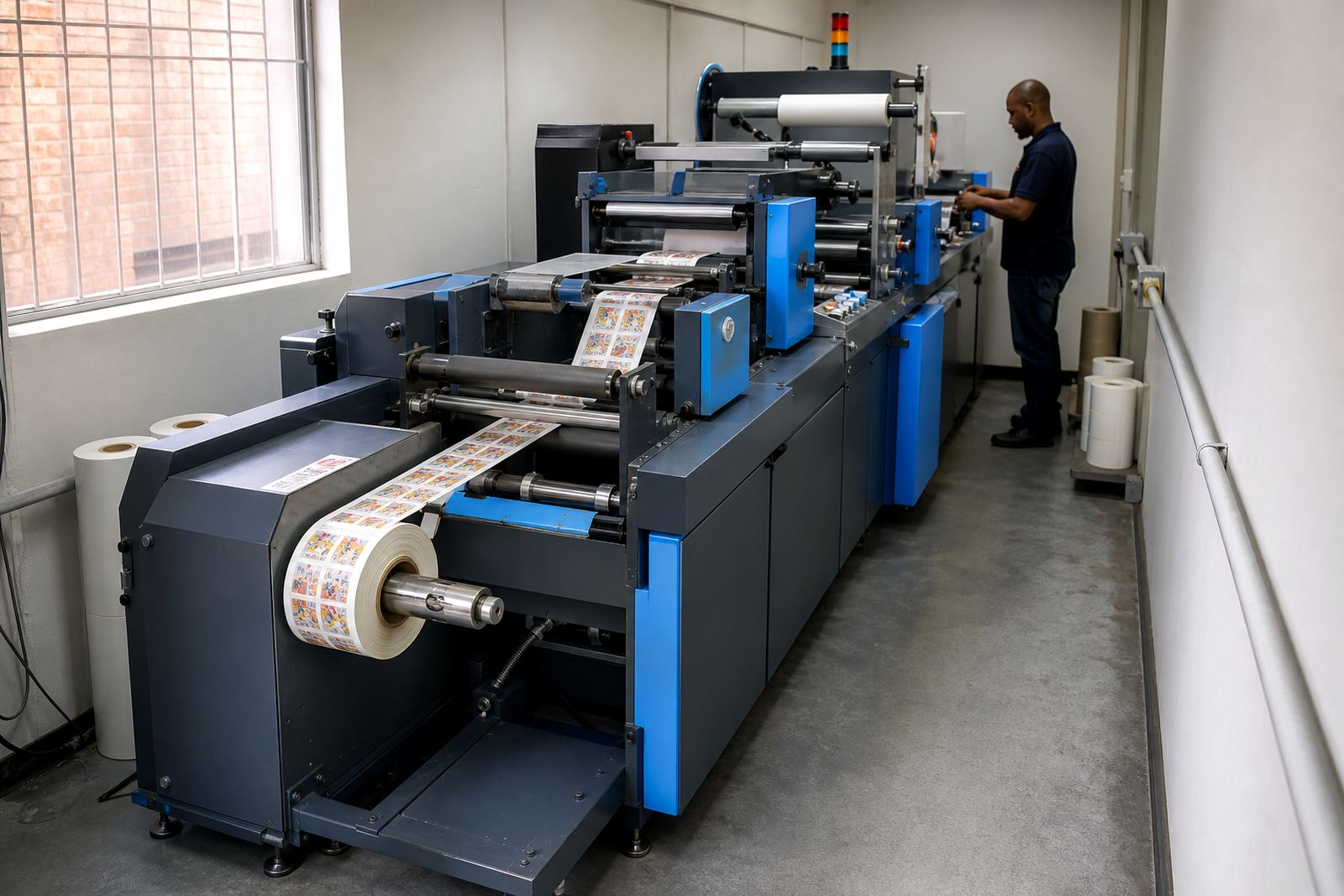
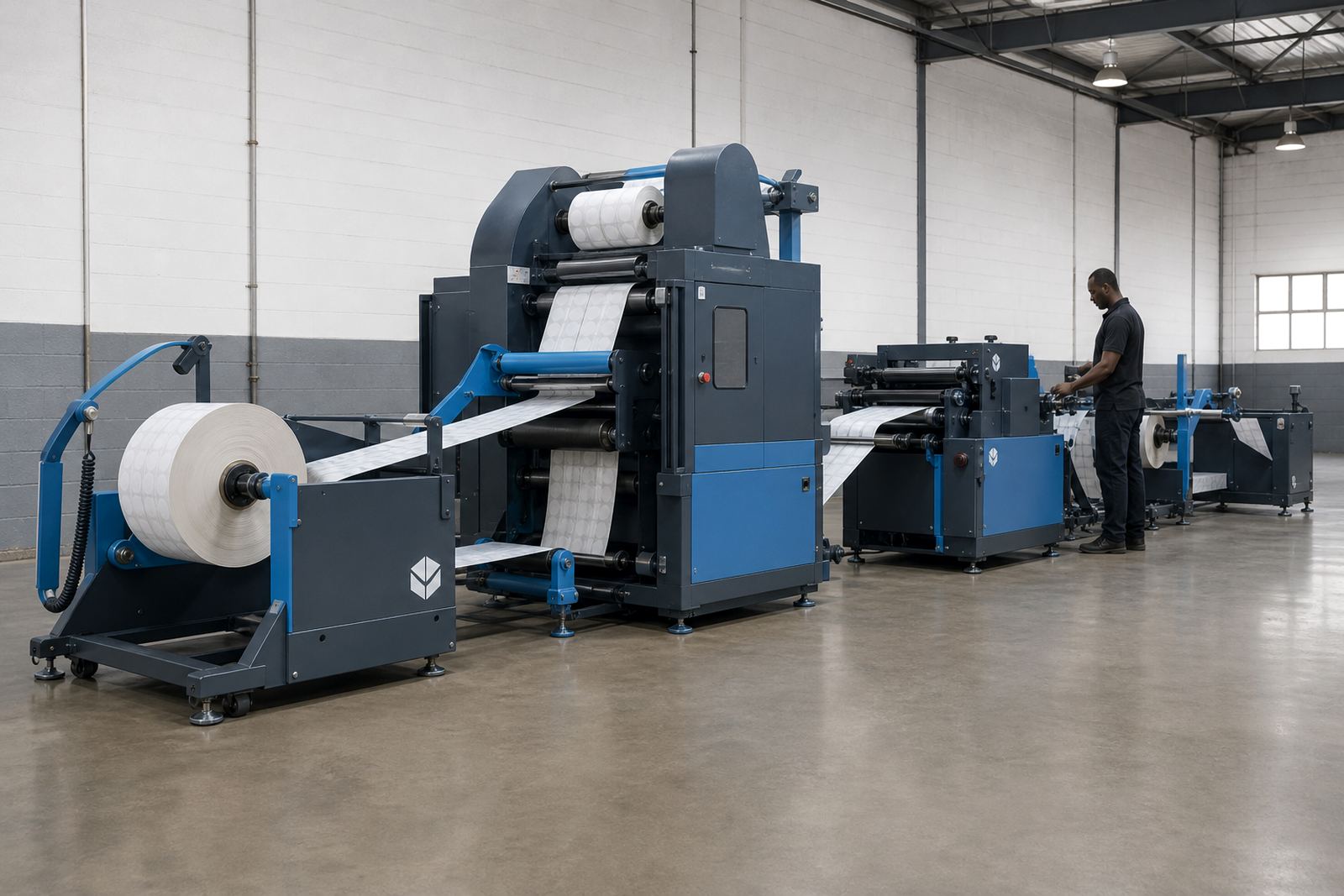
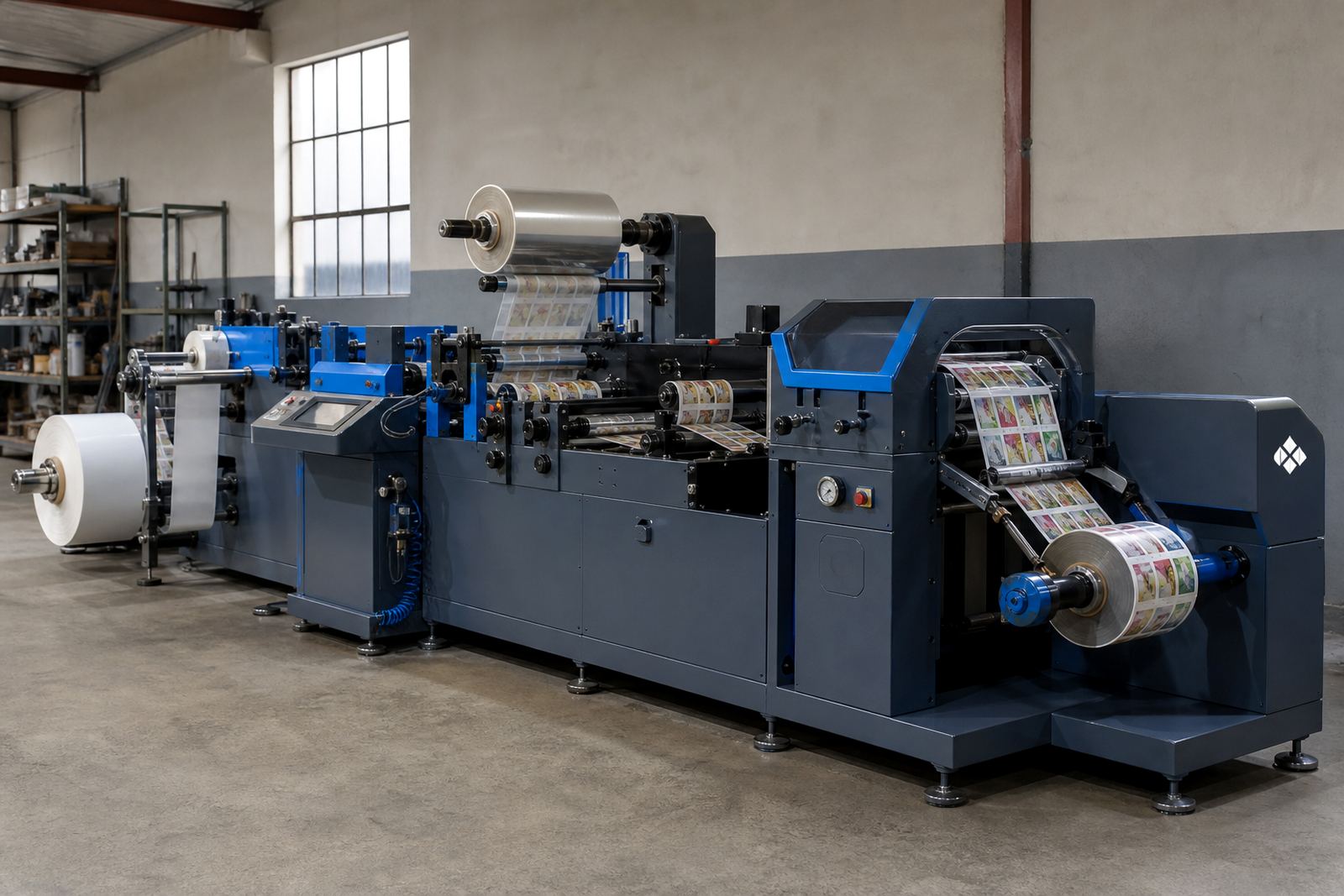
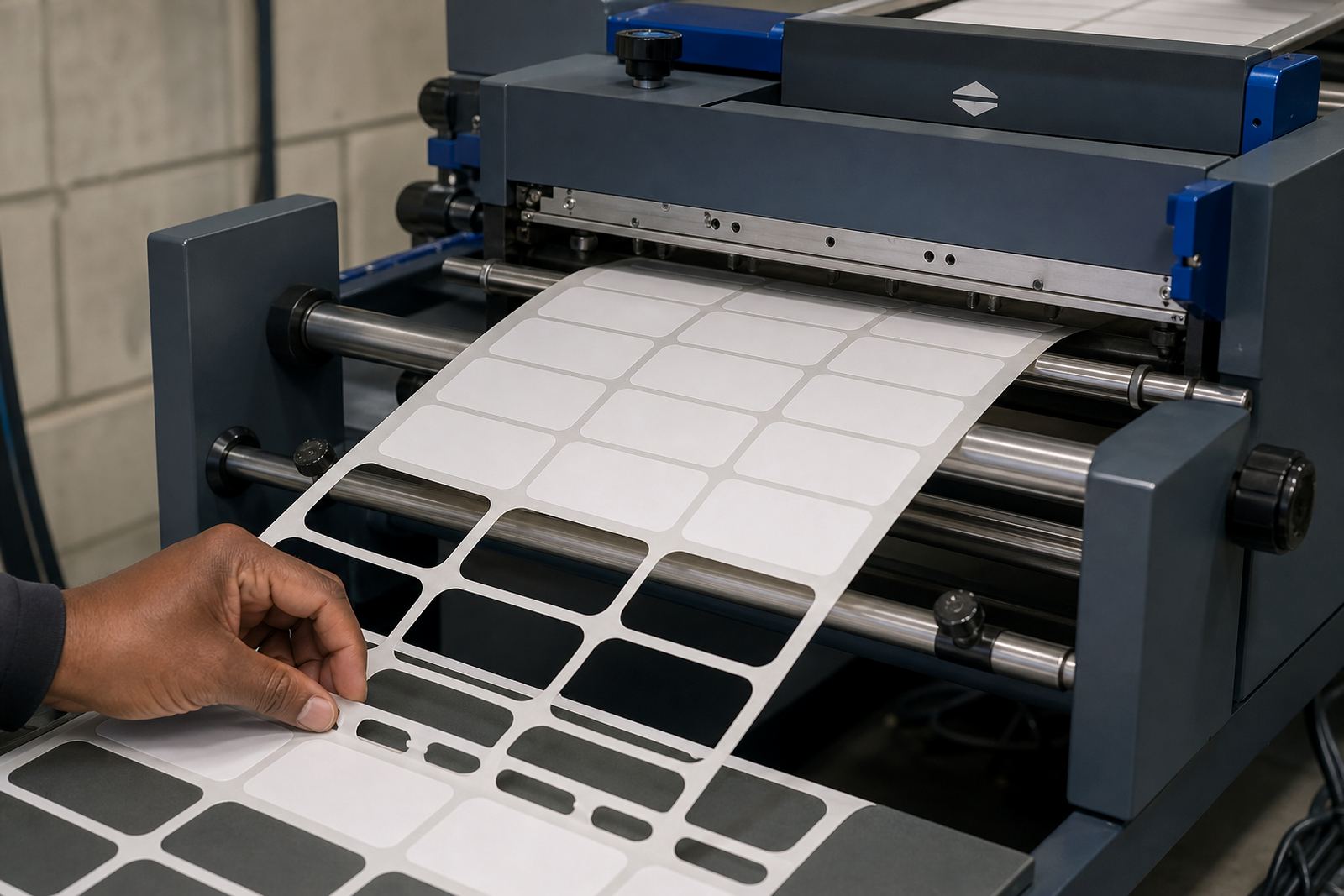
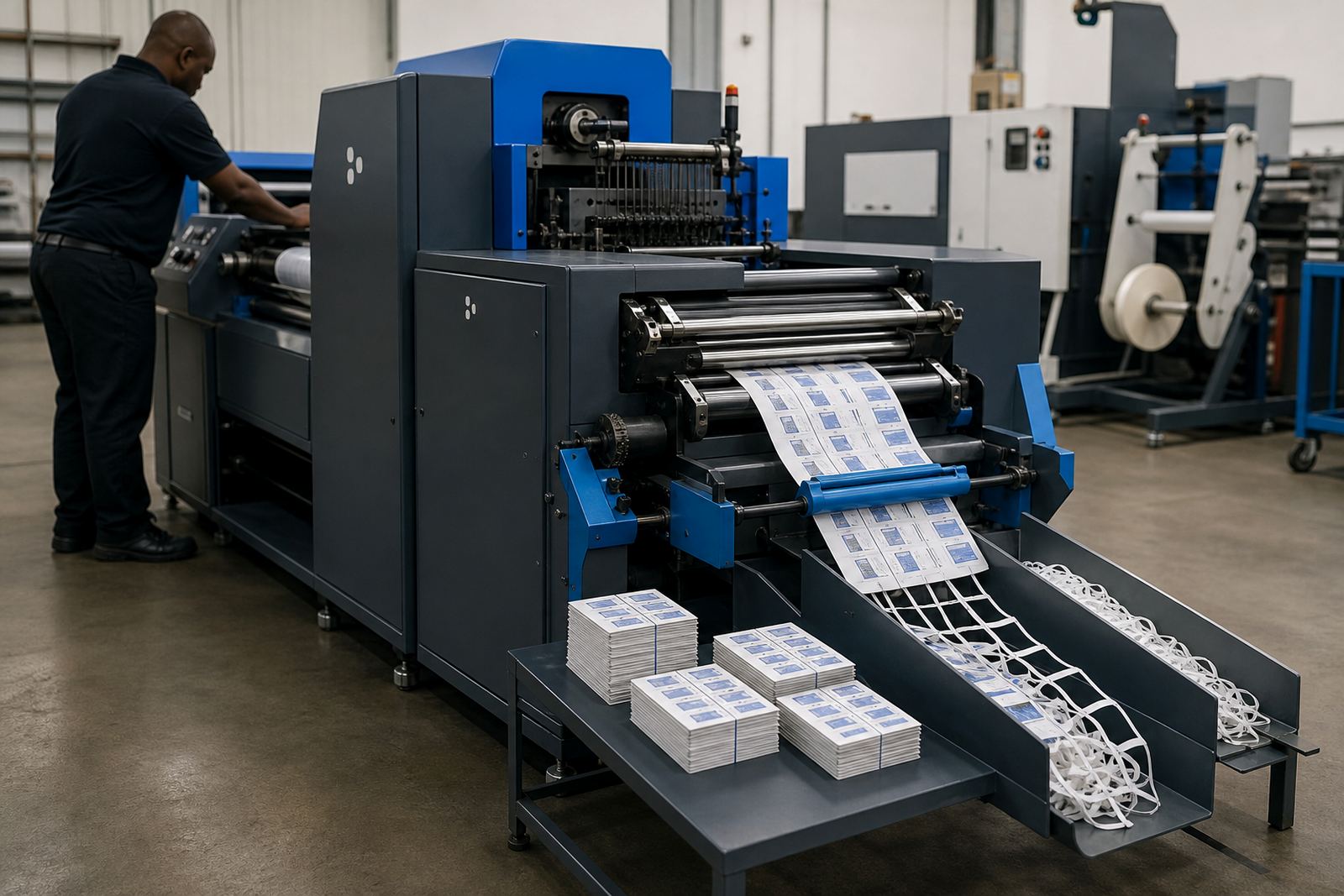
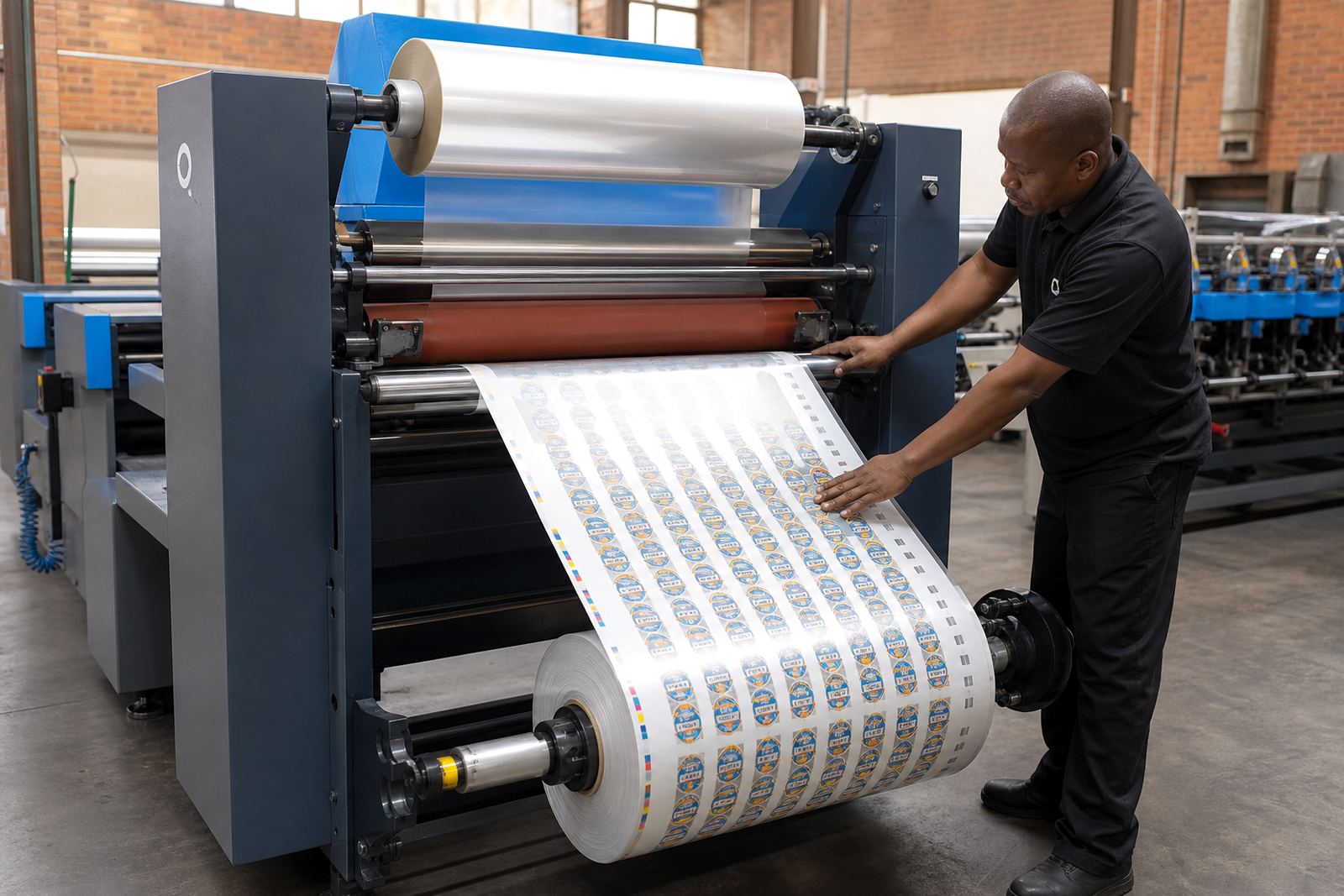
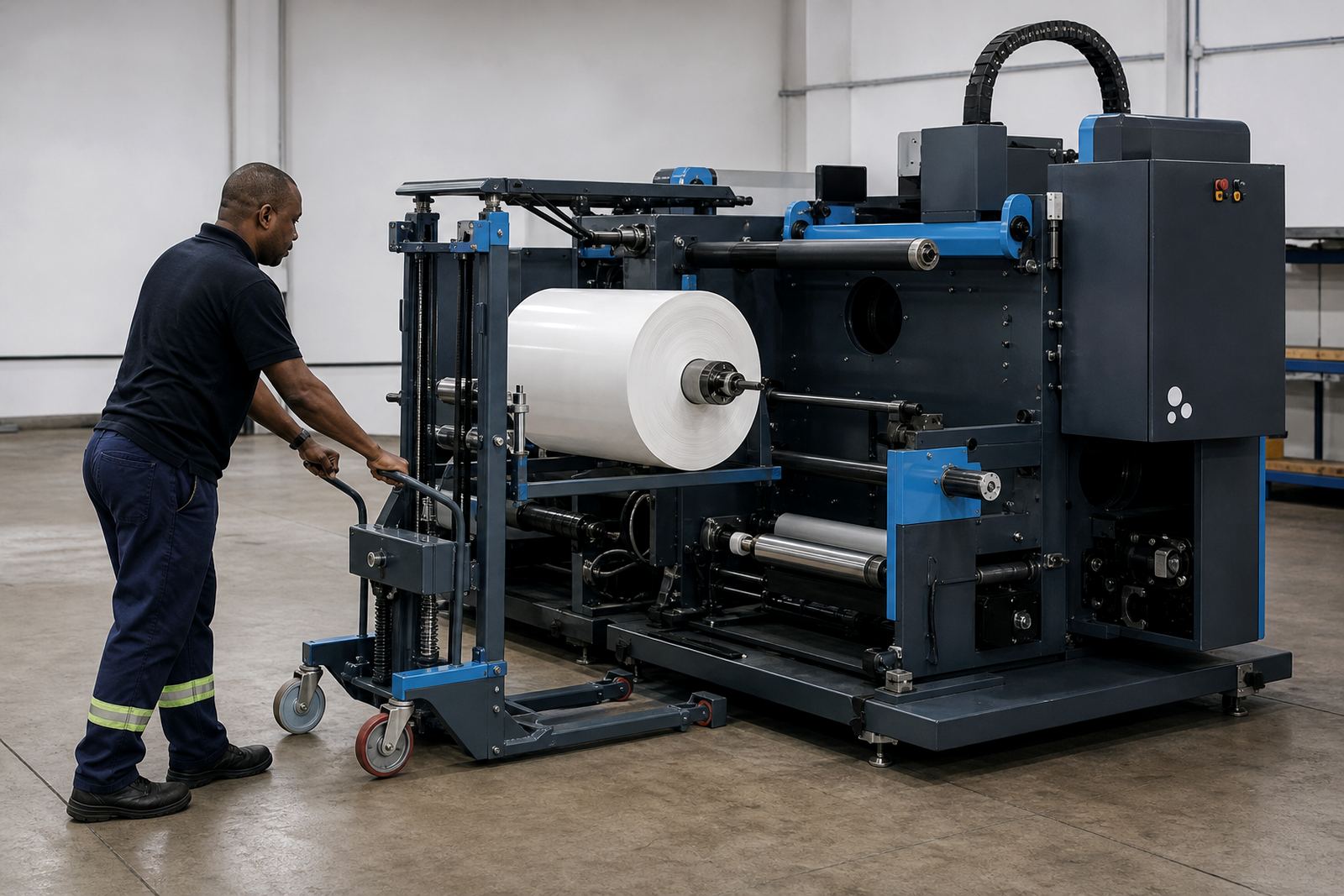
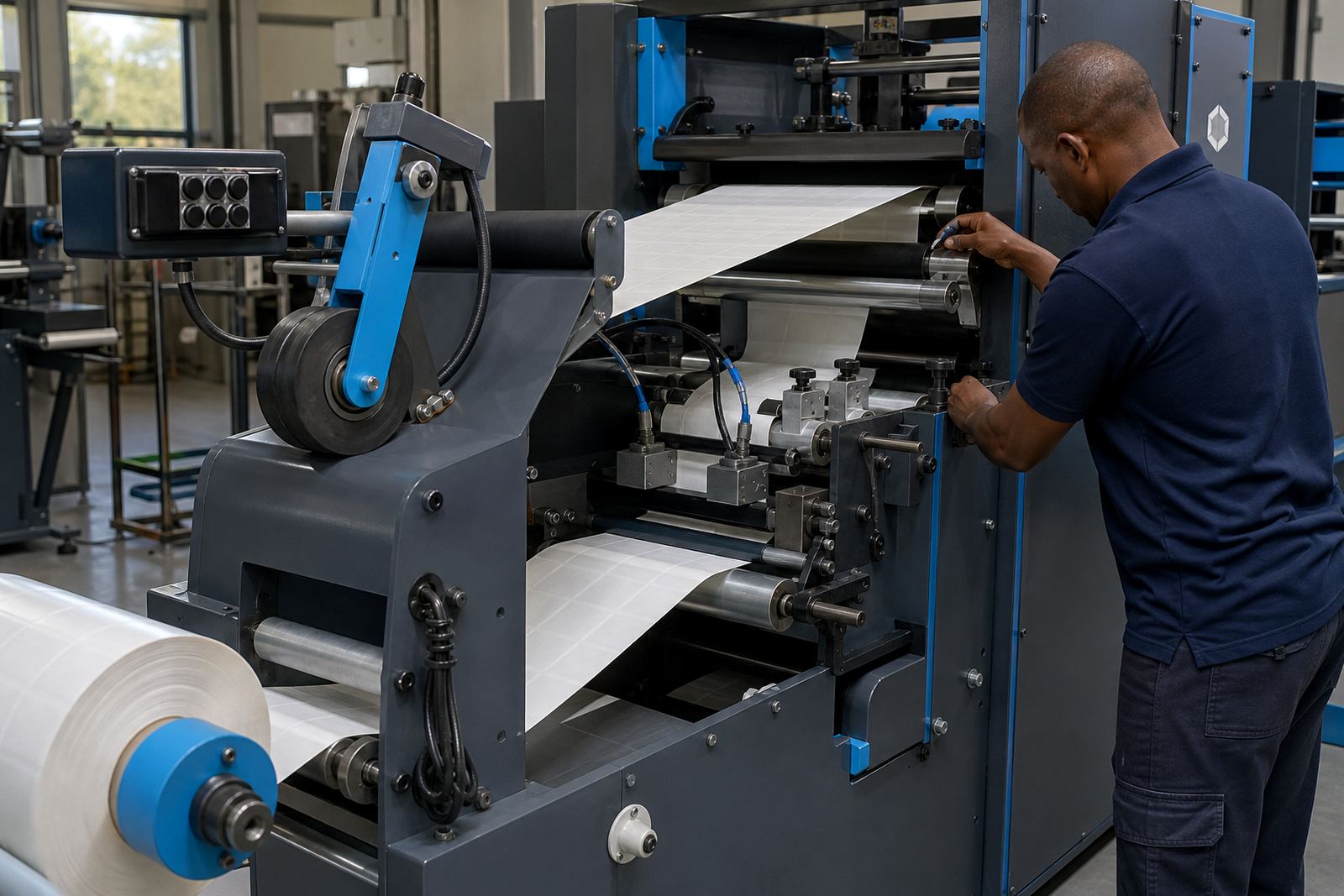
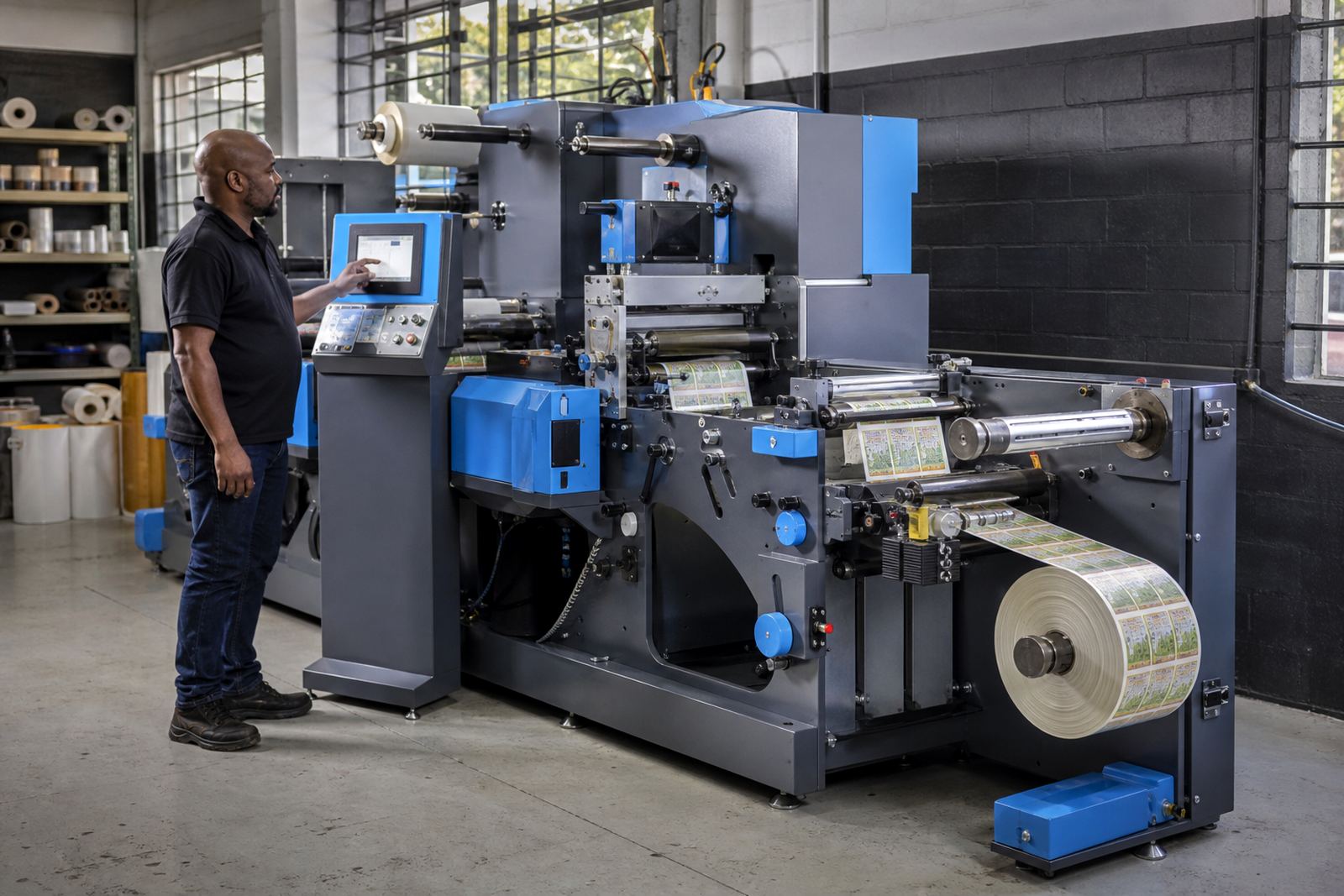
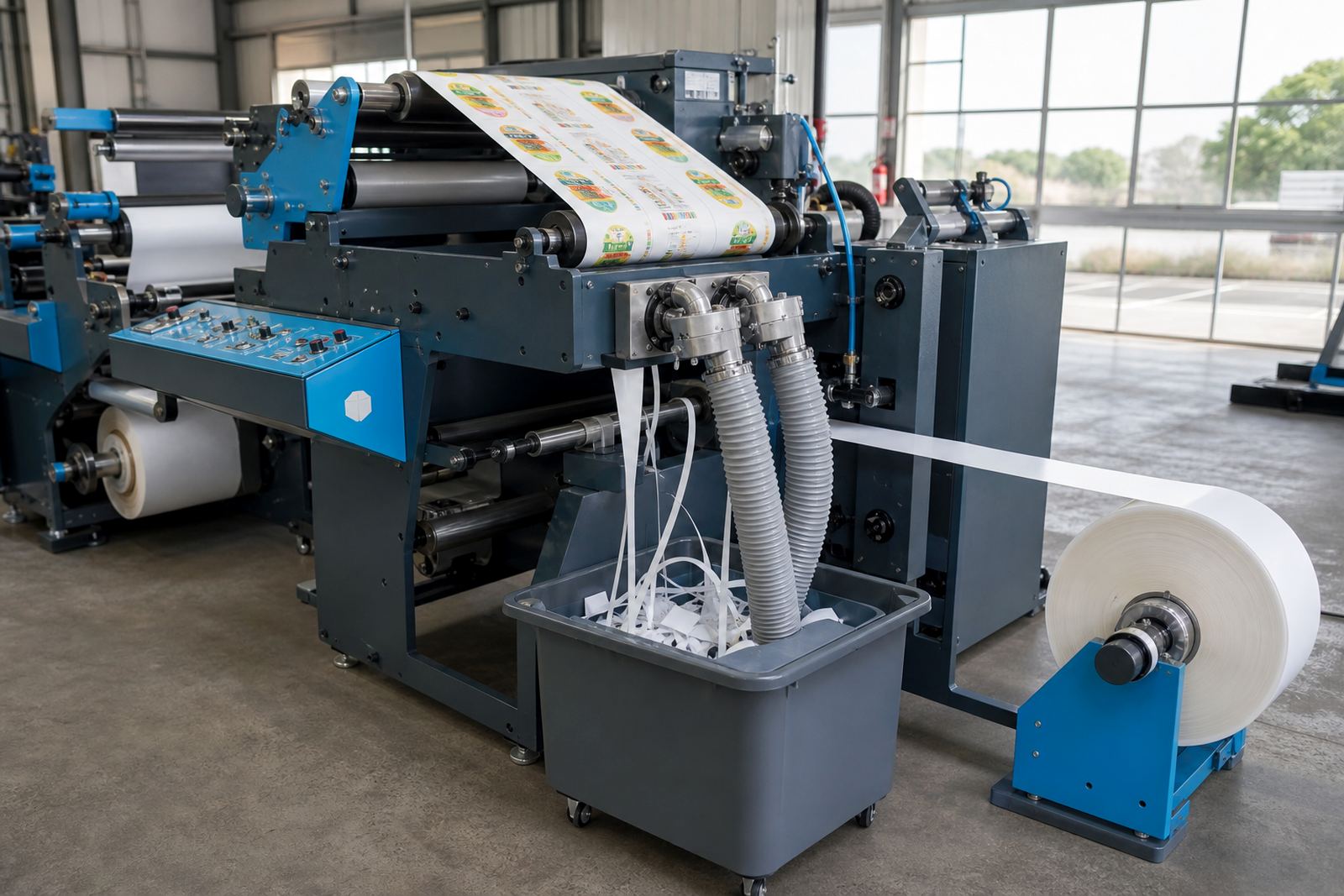
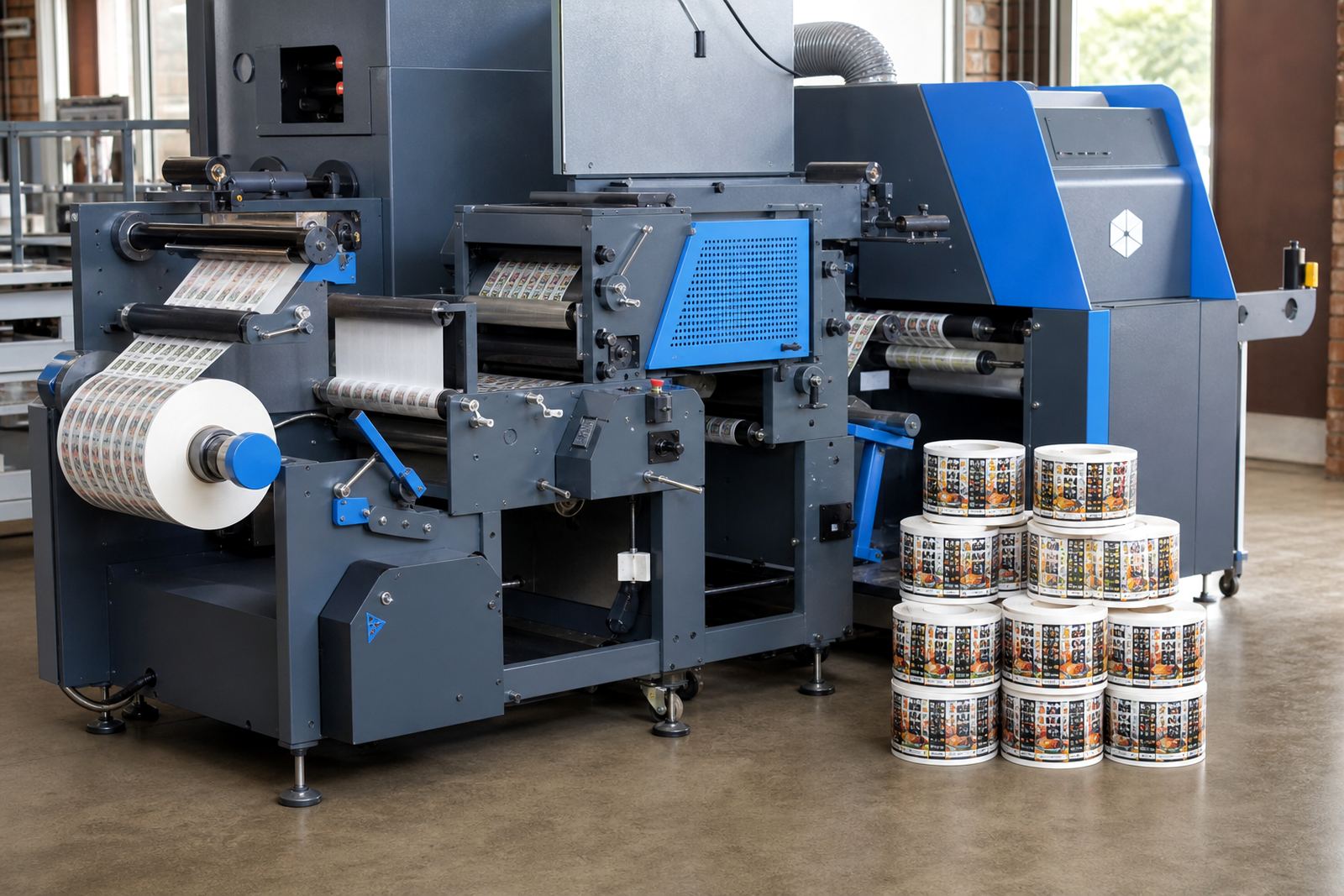
Most label finishing lines combine several steps in one path, and each step needs to stay aligned. Lamination protects print, varnish can add surface protection or a visual finish, and matrix stripping removes the waste around the label face. Slitting splits wider webs into narrower rolls, while rewinding packs the job into neat finished rolls that suit packing and dispatch.
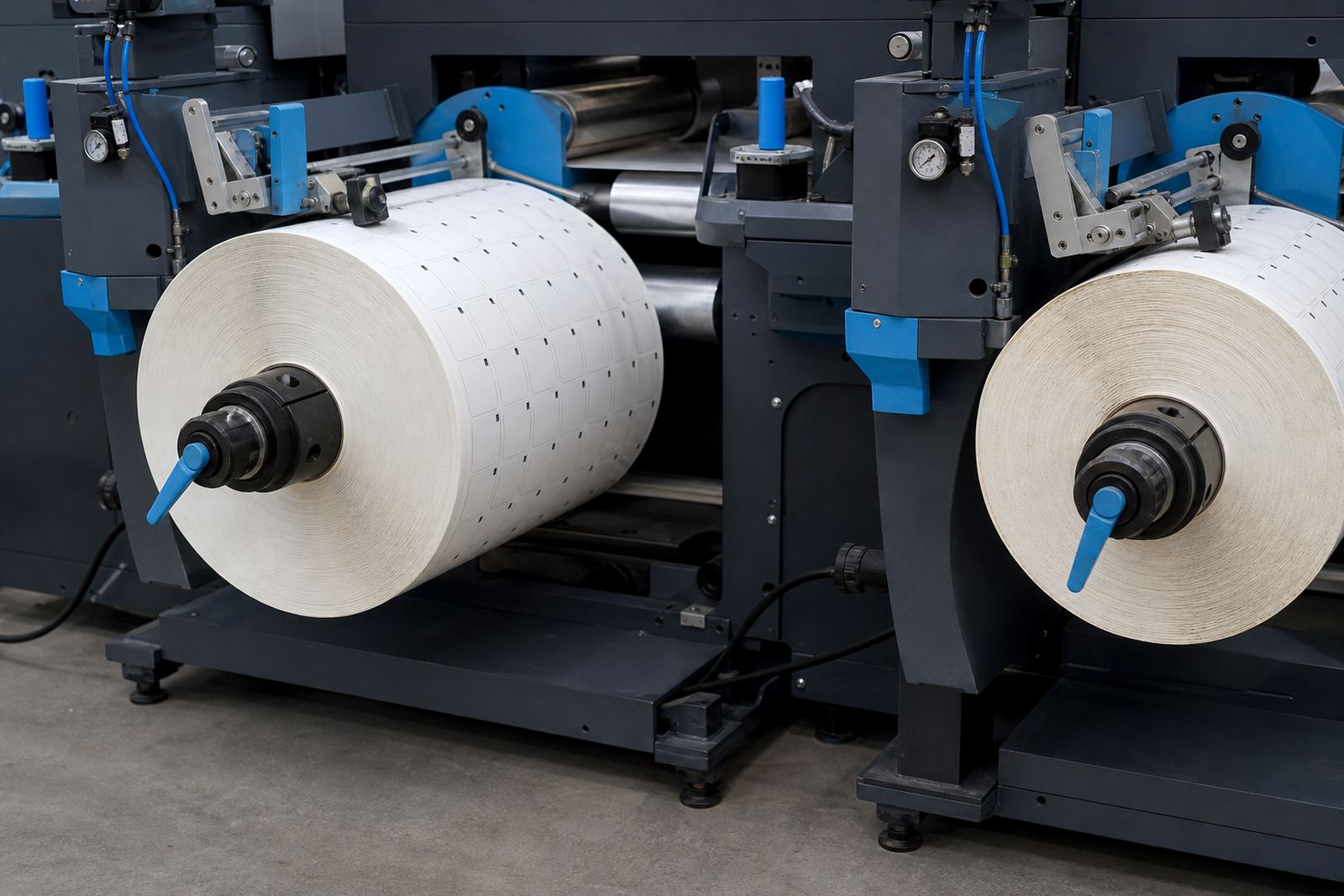
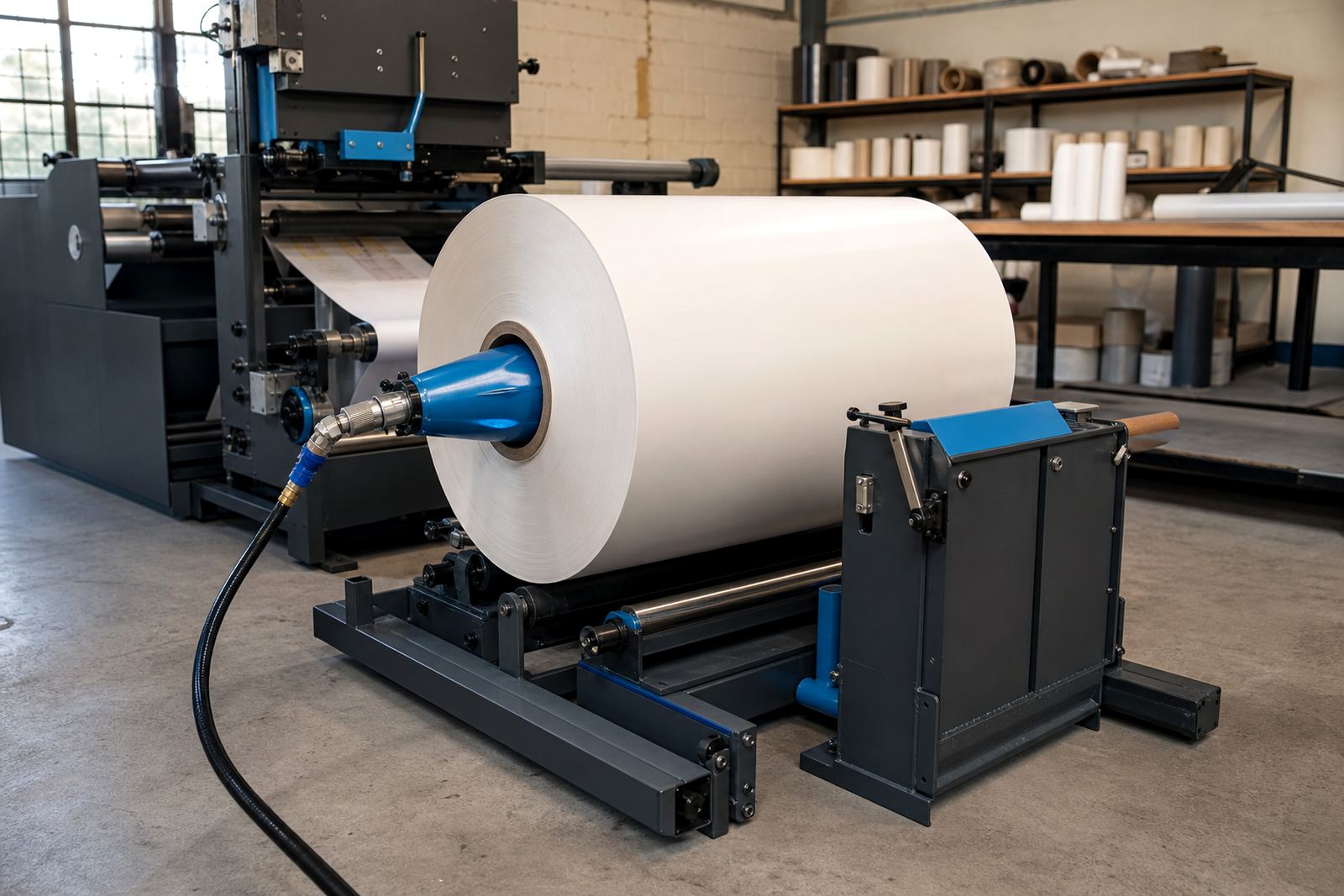
- Unwind stations that keep web tension steady
- Lamination for face stocks that need extra surface protection
- Laser or semi-rotary die-cutting for label shapes and kiss-cuts
- Matrix stripping for cleaner waste removal
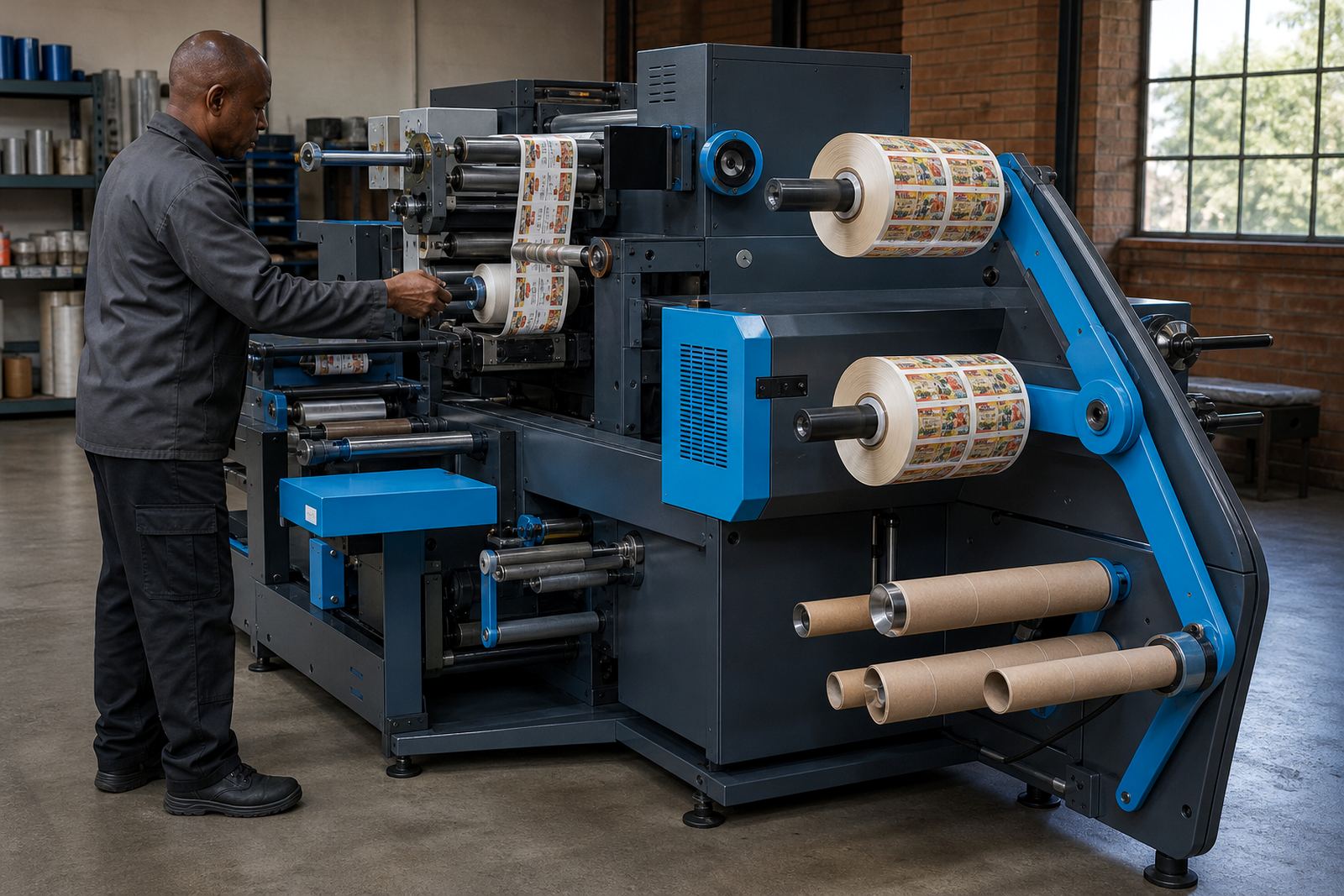
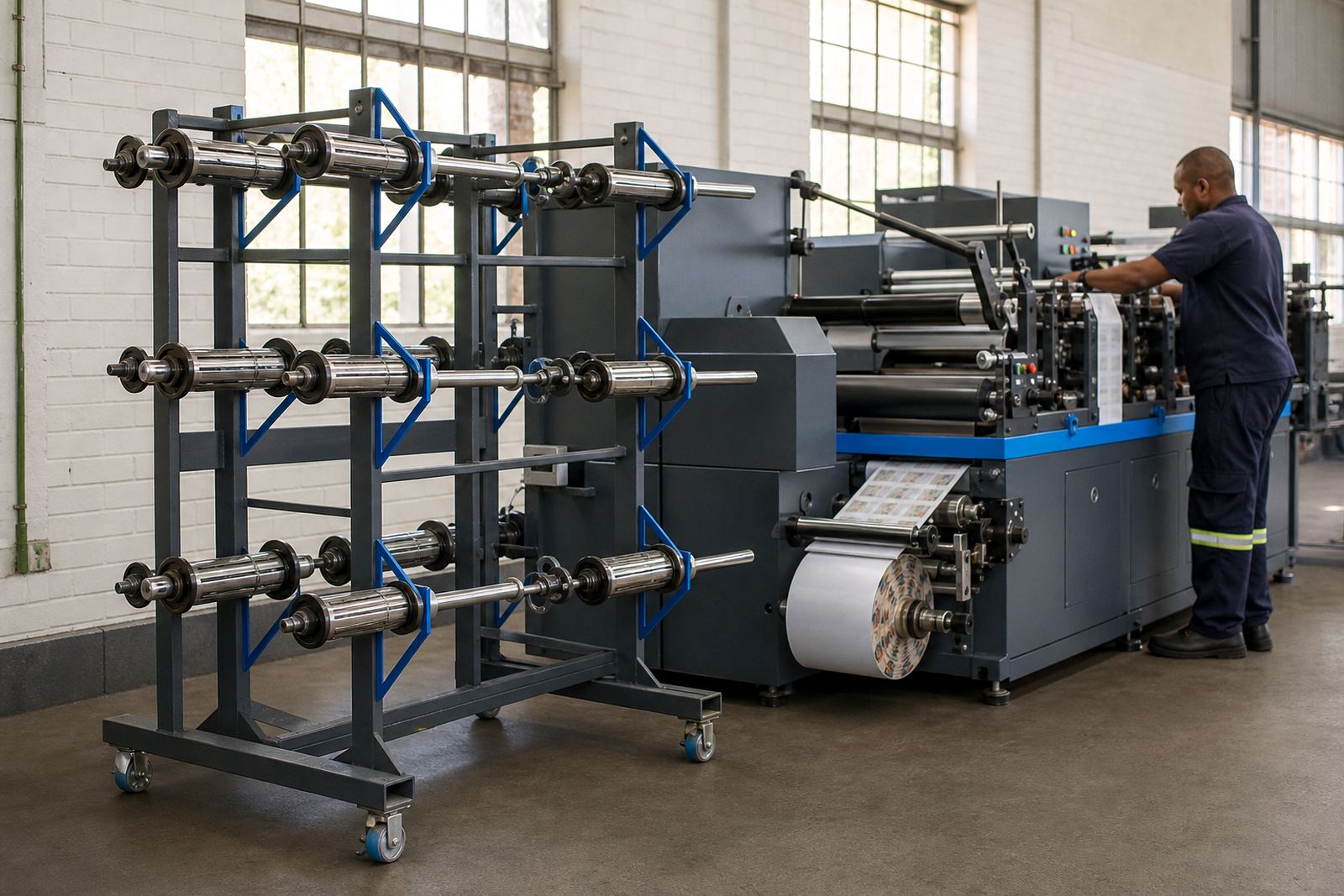
- Slitting and rewinding for multi-up output
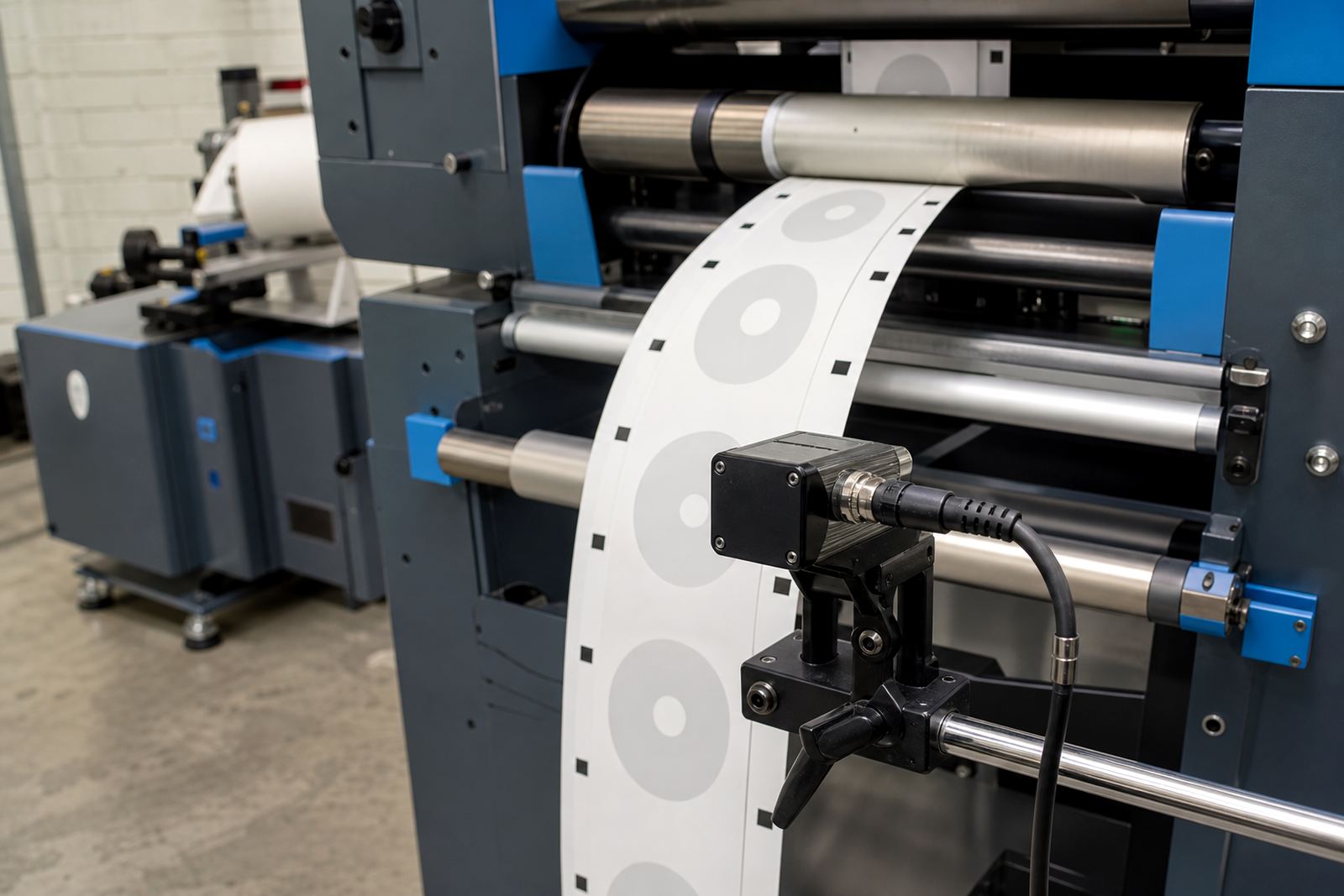
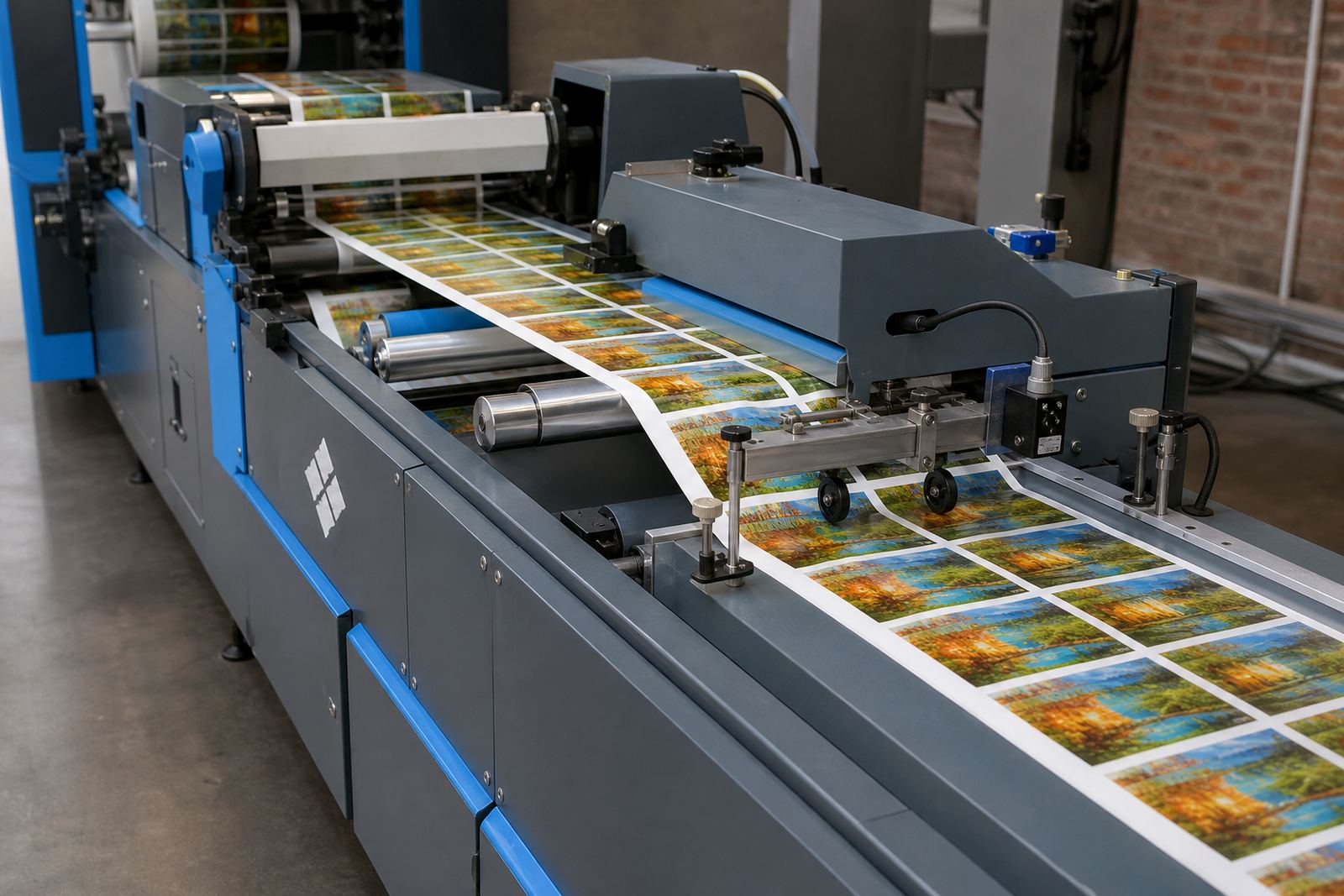
Registration marks matter on digital work because the printed image must meet the cut line properly. If the mark reading drifts, waste rises and the label edge can look rough or uneven. That is where setup, not just machine size, makes a real difference.
Choosing between laser, semi-rotary and flexible dies
Different finishing methods fit different kinds of production. Laser systems suit short runs, frequent artwork changes and labels with complex shapes, especially where tooling changes would slow the day down. Semi-rotary systems are a strong fit where the print line is steady and the job repeats often. Flexible dies still earn their place on straightforward labels, cartons and converted packaging work where speed and cut consistency matter.
We look at roll width, substrate type, image length, cut complexity and the mix of jobs that share the line. A converter in Johannesburg may want fast changeovers for many small orders, while a packaging producer in Durban may care more about continuous output and tidy rewind quality. The machine has to suit the way the floor actually runs.
- Laser cutting for artwork changes and detailed outlines
- Semi-rotary die-cutting for recurring label work
- Flexible dies for fixed shapes and stable production
- Lamination and varnish options where surface finish is part of the job
Installation, calibration and operator training on site
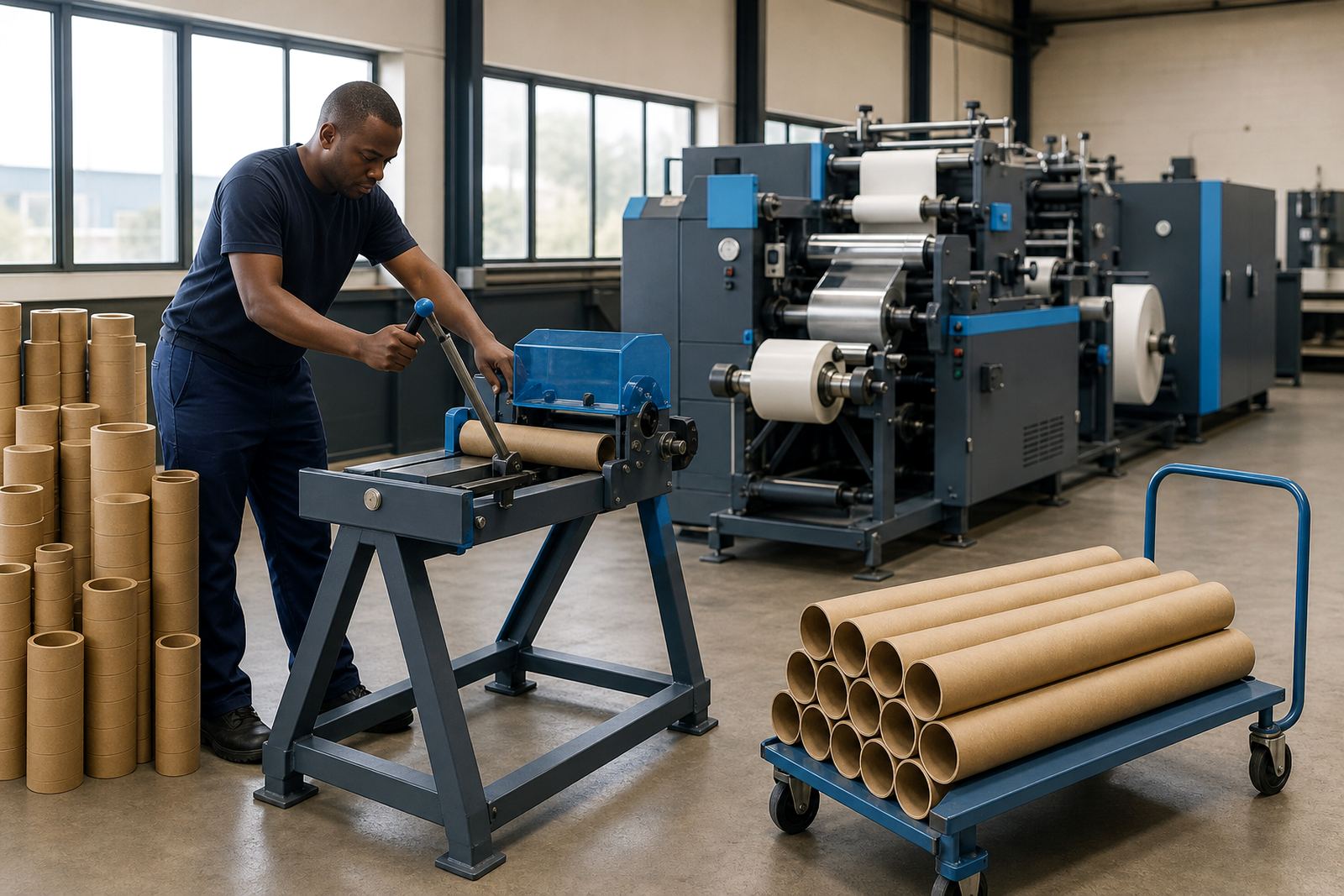
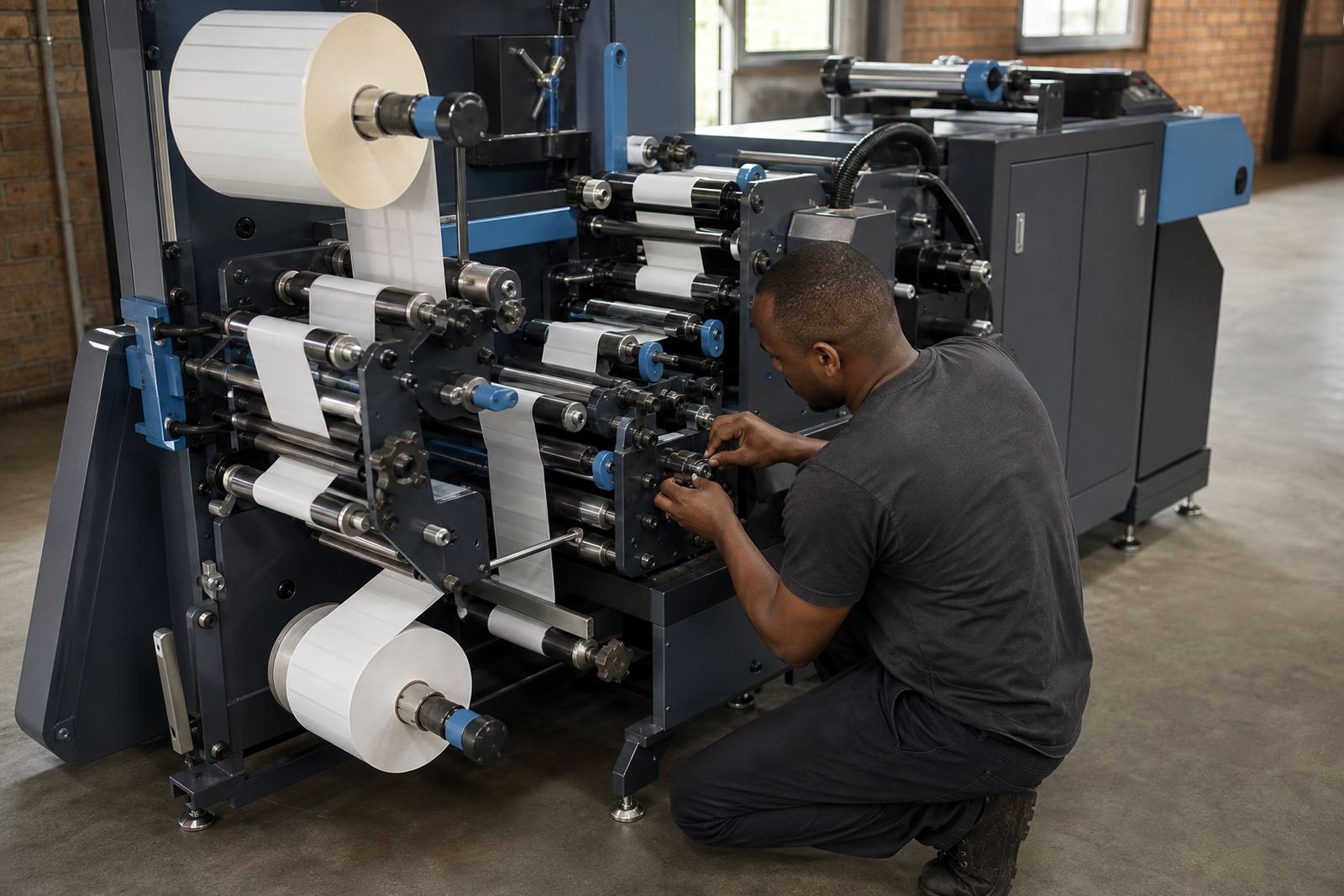
Fitting a finishing machine is not only about placing it on the floor and switching it on. The line needs web path checks, die setup, tension checks, registration calibration and a proper run through on the stock you intend to use. If the machine includes slitting or rewind modules, those settings need to match the finished roll size and the way the operator handles daily production.
Our installation and commissioning work covers new lines and line upgrades, with practical attention to the details that keep production tidy. Operators learn how to load rolls, set the cut position, manage waste stripping and check the finished roll before the job is packed out. The aim is fewer stops, cleaner labels and less trimming after the fact.
Servicing that keeps the line ready for the next shift
Finishing machines stay dependable when the wear points are checked before they become faults. Bearings, drive parts, blades, sensors, guides and rewinding sections all need attention over time, especially on heavier schedules. Preventive maintenance helps limit breakdowns, and when there is a fault, the repair has to be practical, safe and matched to the machine layout.
We support sites across Randburg, Johannesburg, Pretoria, Durban, Cape Town, Gqeberha, Midrand and Kempton Park. That includes spare parts supply, die setup help, production optimisation and remote support where the issue is mainly setup or calibration. For some sites the main need is a stable rewind. For others it is cleaner slitting, better waste stripping or a more accurate registration path.
A straight way to narrow the right machine set
When you are comparing label finishing machines, start with the jobs that fill your week. Count the web widths, note the common label shapes, and list the materials that give you trouble. A line that handles 50 metres one hour and 500 metres the next is useful only if the cutting, slitting and rewind sections stay controllable through both.
If your work includes short digital runs, clear stock, pressure-sensitive labels and frequent artwork changes, the finishing setup should give you control without slowing production to a crawl. If the work is heavier and more repeat-led, the line can lean toward mechanical consistency and simpler changeovers. Our contact form is the way clients reach us for machine selection, installation planning and service support.
- Common roll widths and core sizes
- Cut method: laser, semi-rotary or flexible die
- Need for lamination or varnish
- Level of matrix stripping, slitting and rewinding required
- Training, servicing and spare parts support across your sites