

Setup work that matches the label line
A finishing line has to suit the press output, the substrate and the roll size that reaches the slitter. We look at web width, core size, roll build, registration marks and the way matrix waste moves through the machine before any commissioning work starts.
That matters whether the line uses laser cutting, semi-rotary die-cutting or flexible dies. A tidy setup helps the operator keep tension steady, align cuts and avoid waste bunching around the rewind station.
What installation covers on site
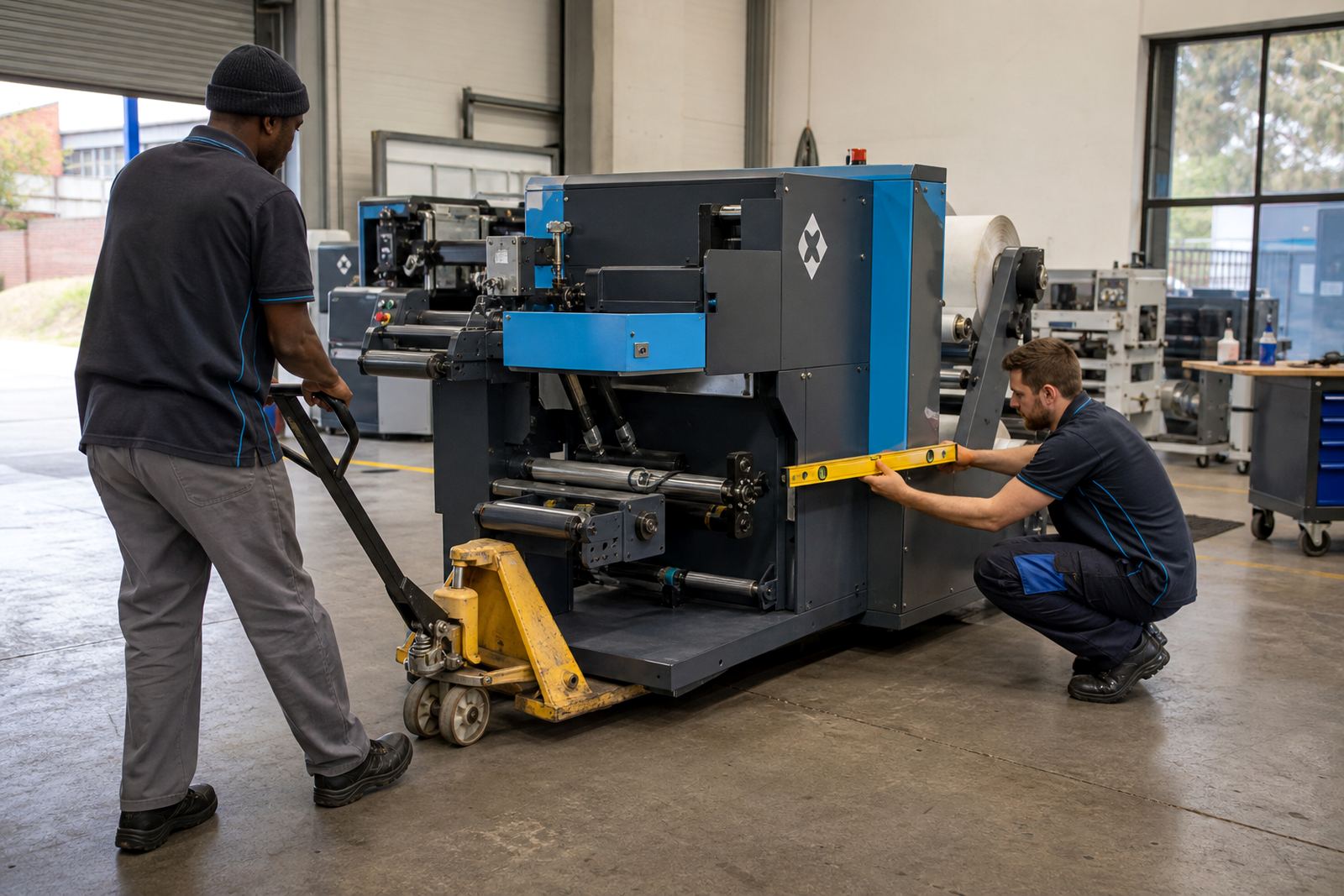
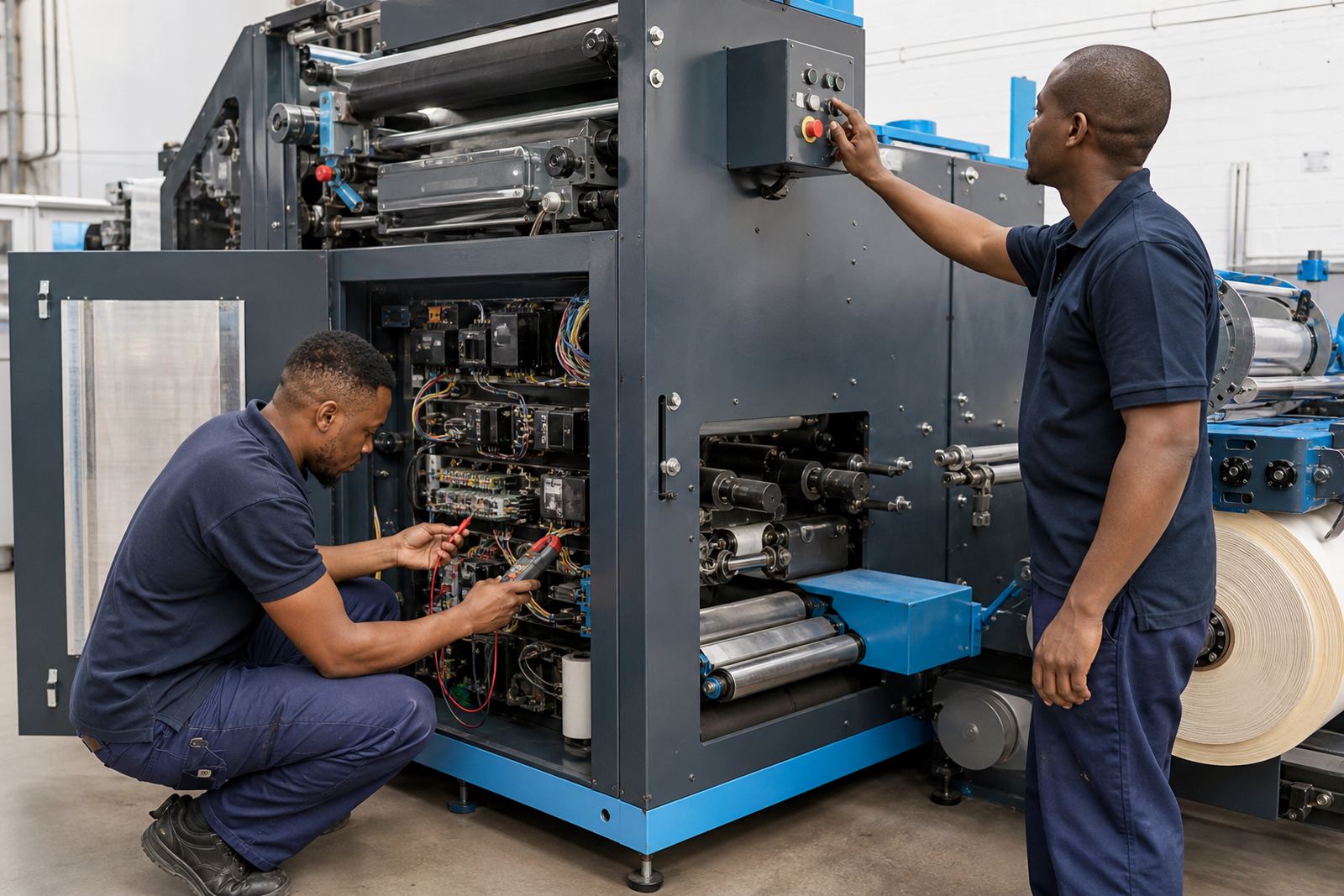
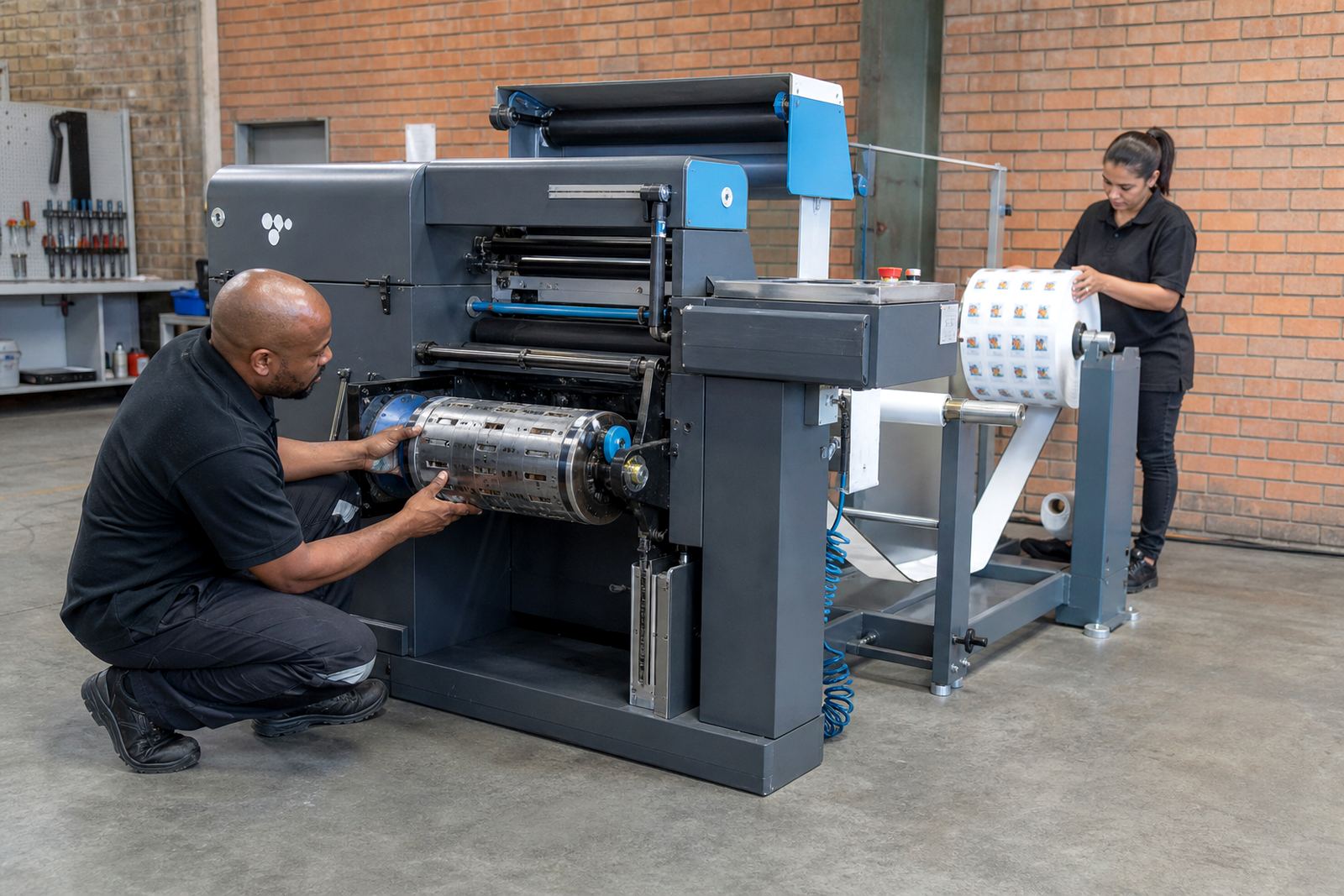
Installation is more than placing the machine and switching it on. We handle line positioning, electrical checks, web path setup, registration calibration and the first pass through lamination, varnish, die-cutting, stripping and slitting.
- Machine placement and alignment
- Web path and tension setup
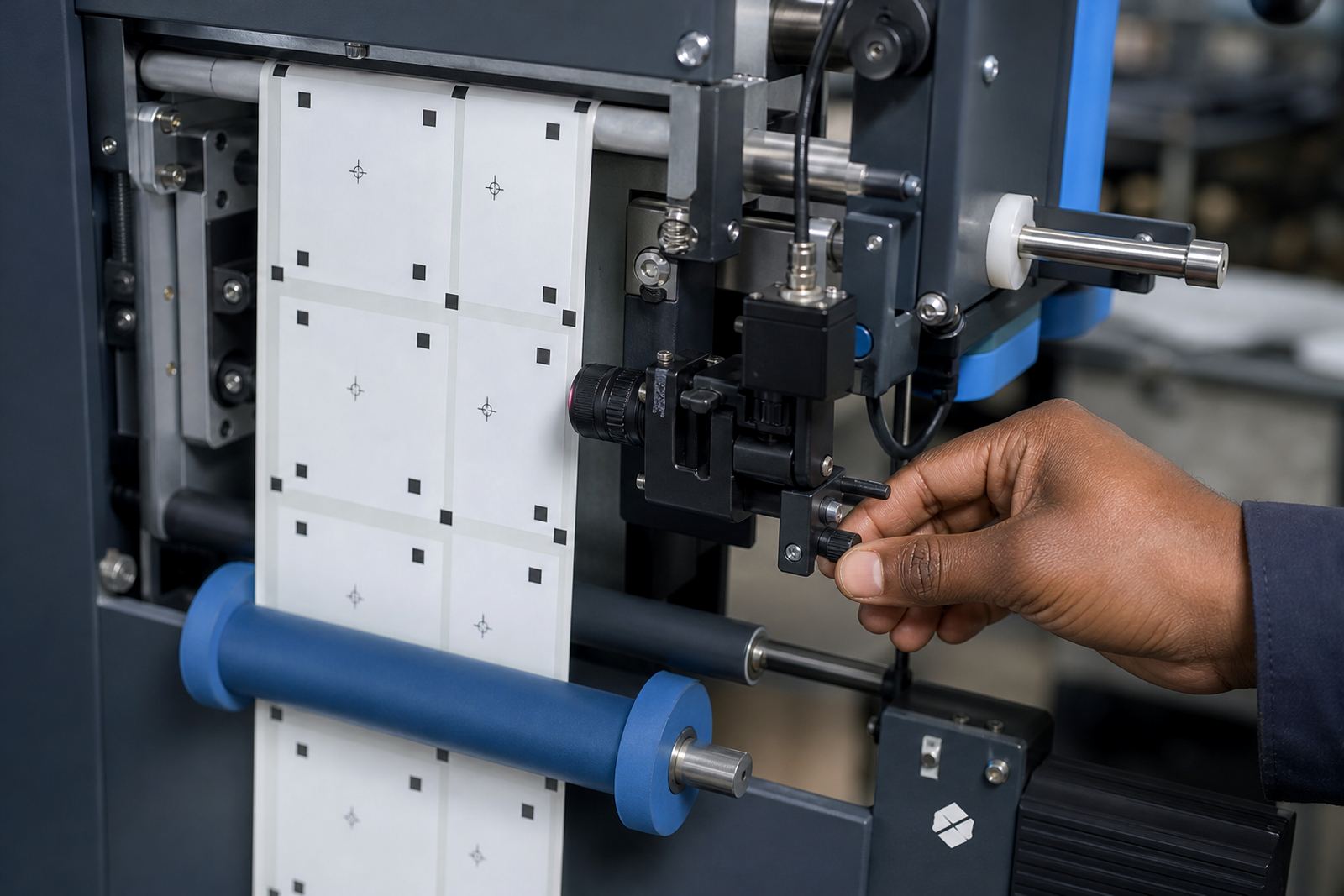
- Registration mark calibration
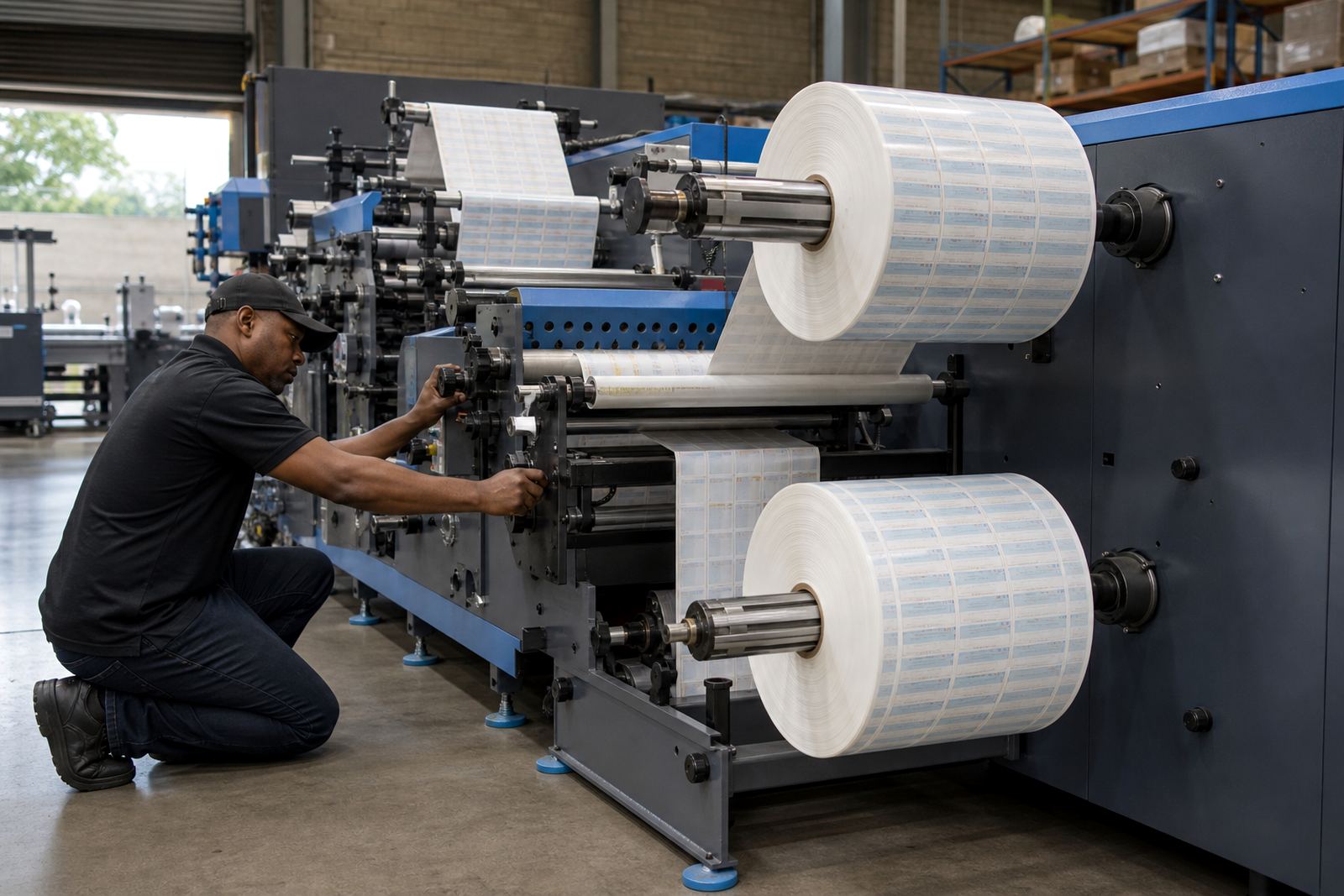
- Rewind and slit configuration
- Matrix stripping and waste routing
Training for operators who run real jobs
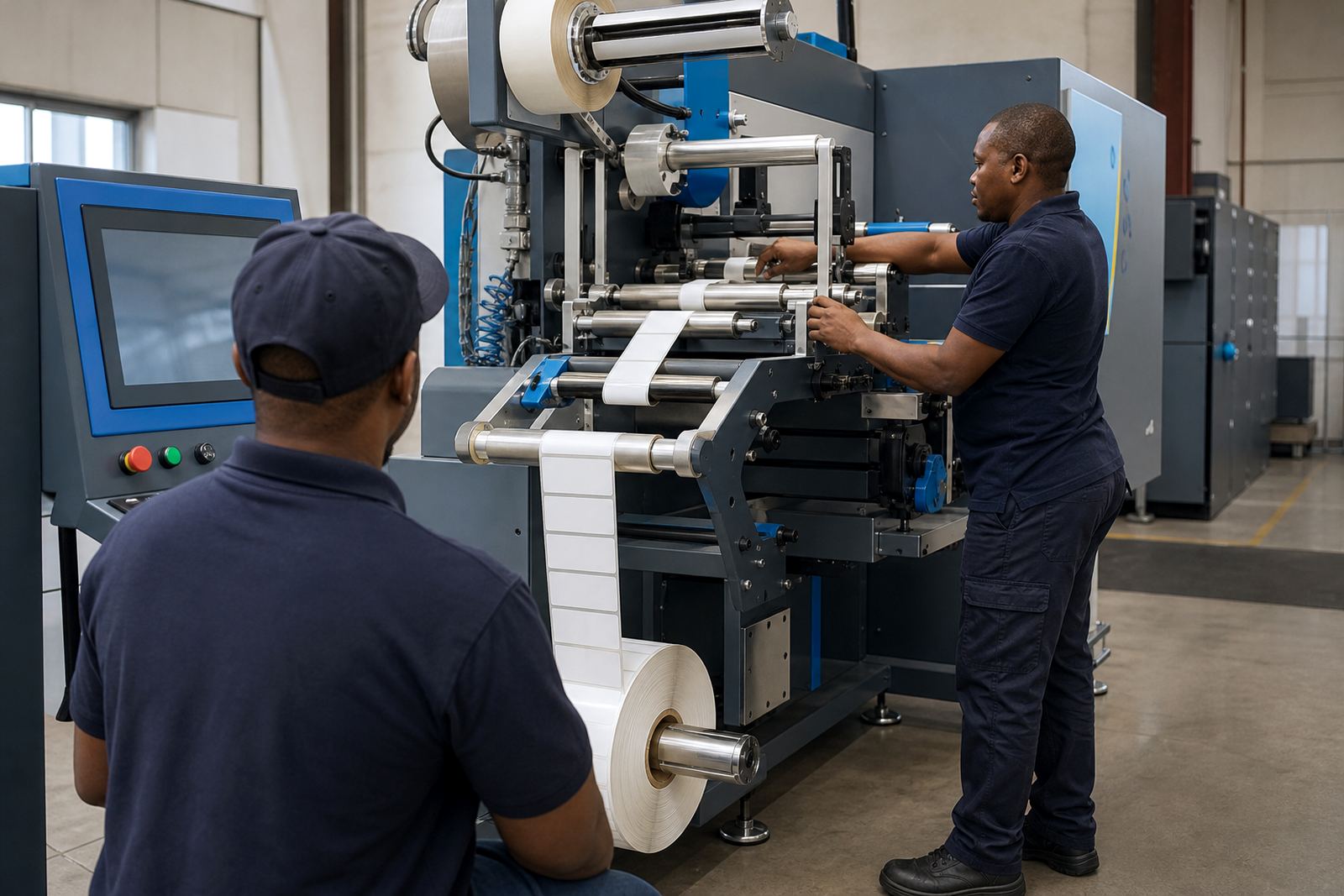
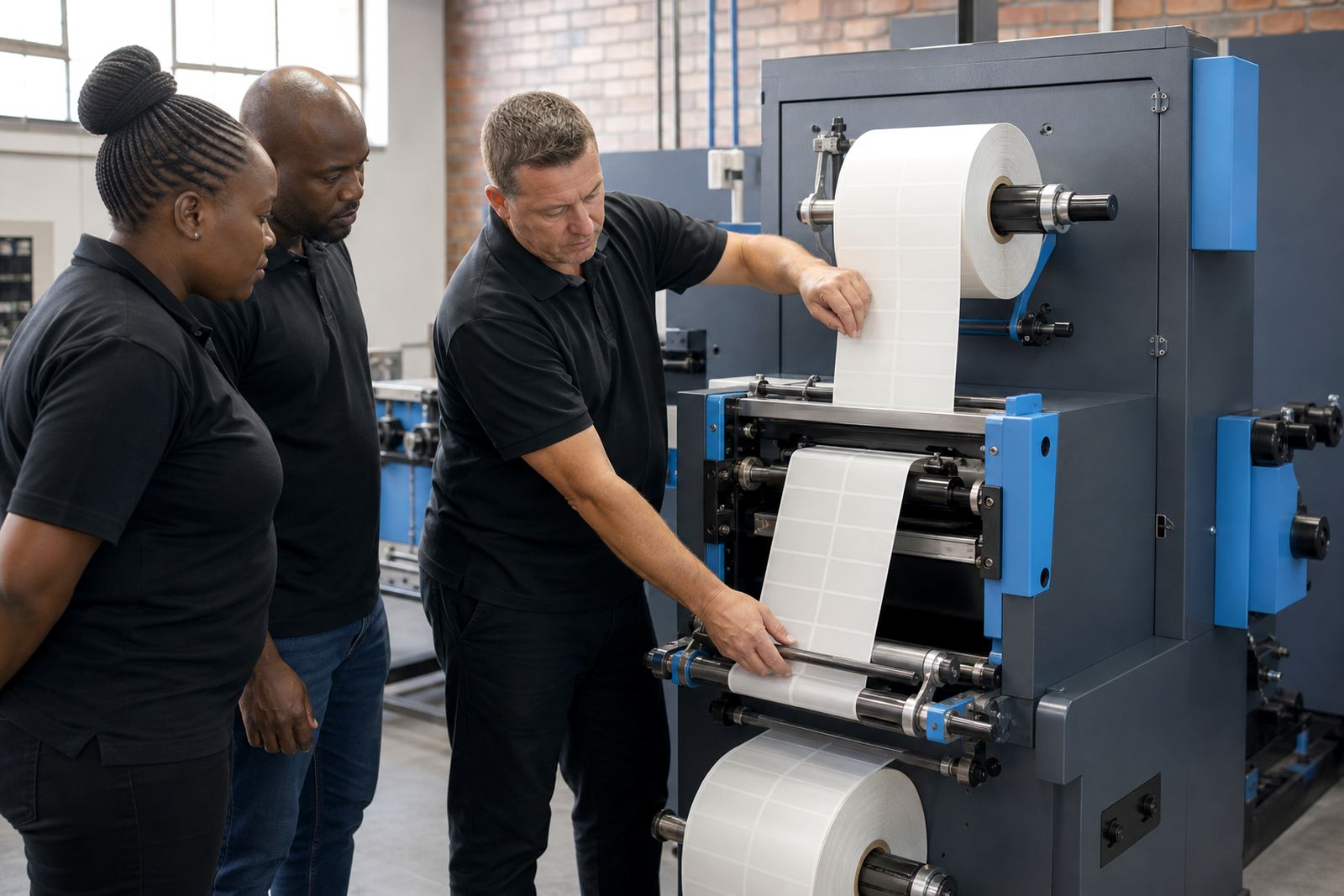
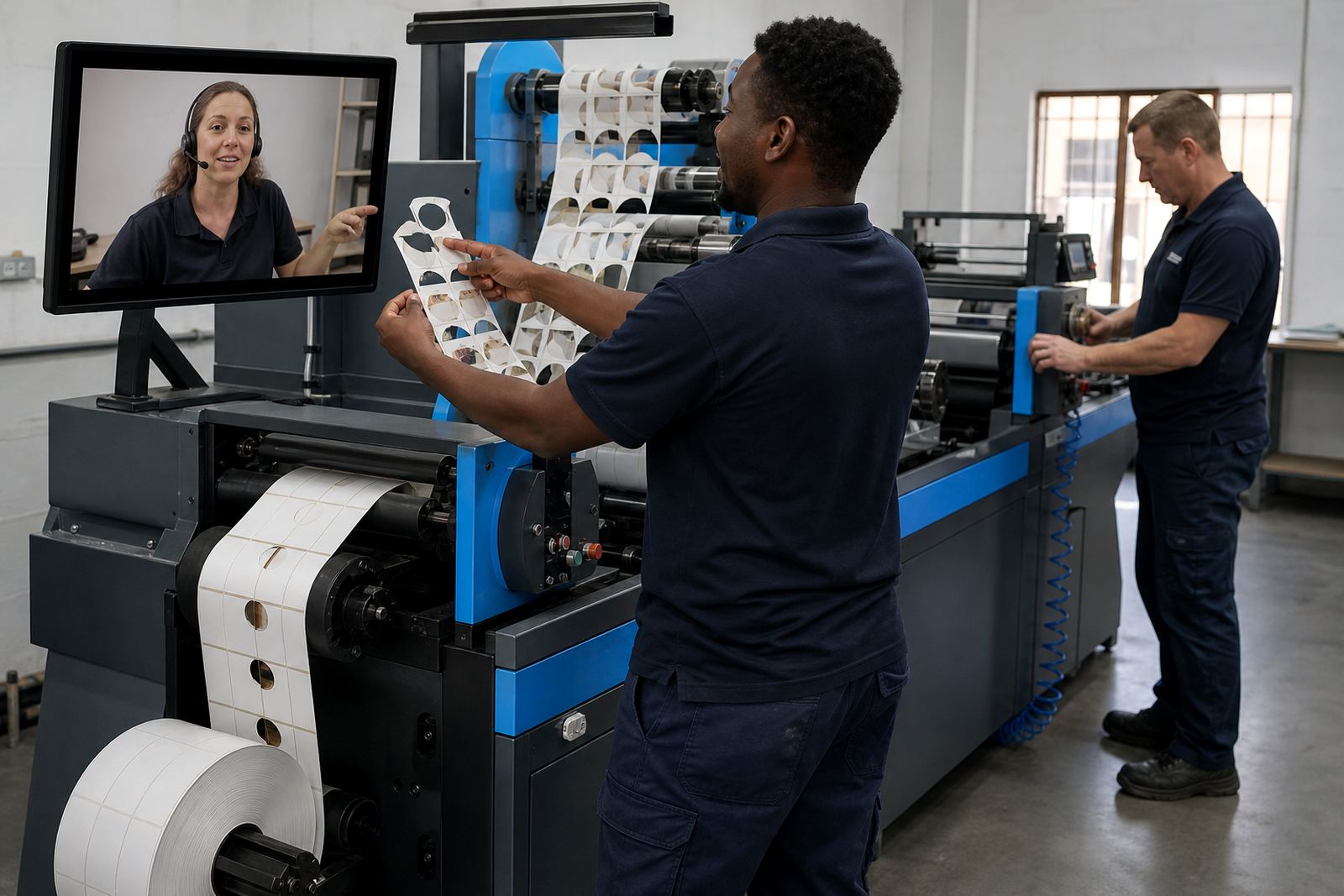
Operator training is practical and tied to the jobs that usually land on the floor. We cover setup for different label stocks, changeover steps, inspection points and the settings that affect cut depth, stripping quality and rewind neatness.
Teams also learn how to read the machine during a run. A small shift in tension or registration can show up as wasted material, edge curl or a misaligned cut, so the operator needs to spot it early.
Maintenance that keeps finishing consistent
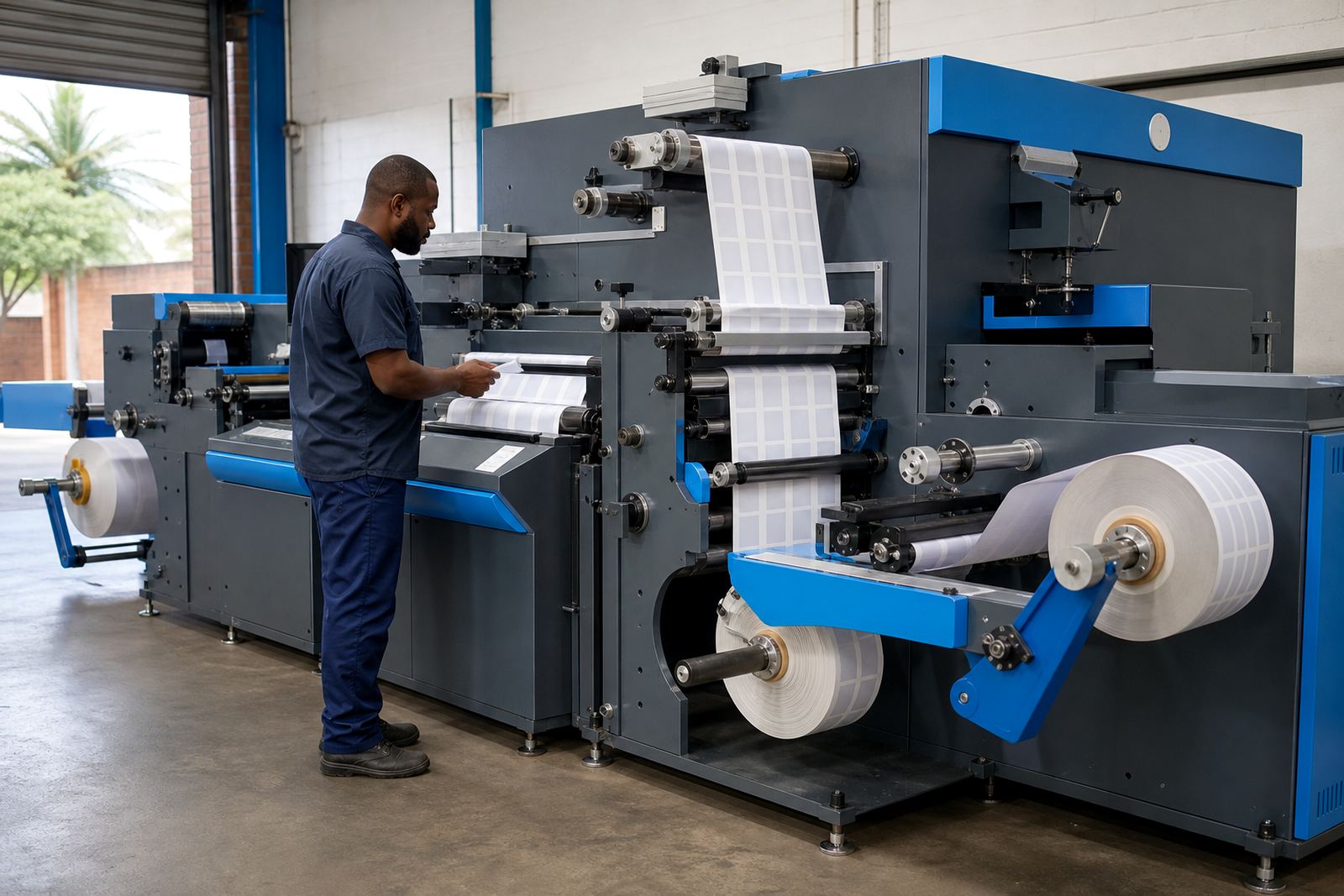
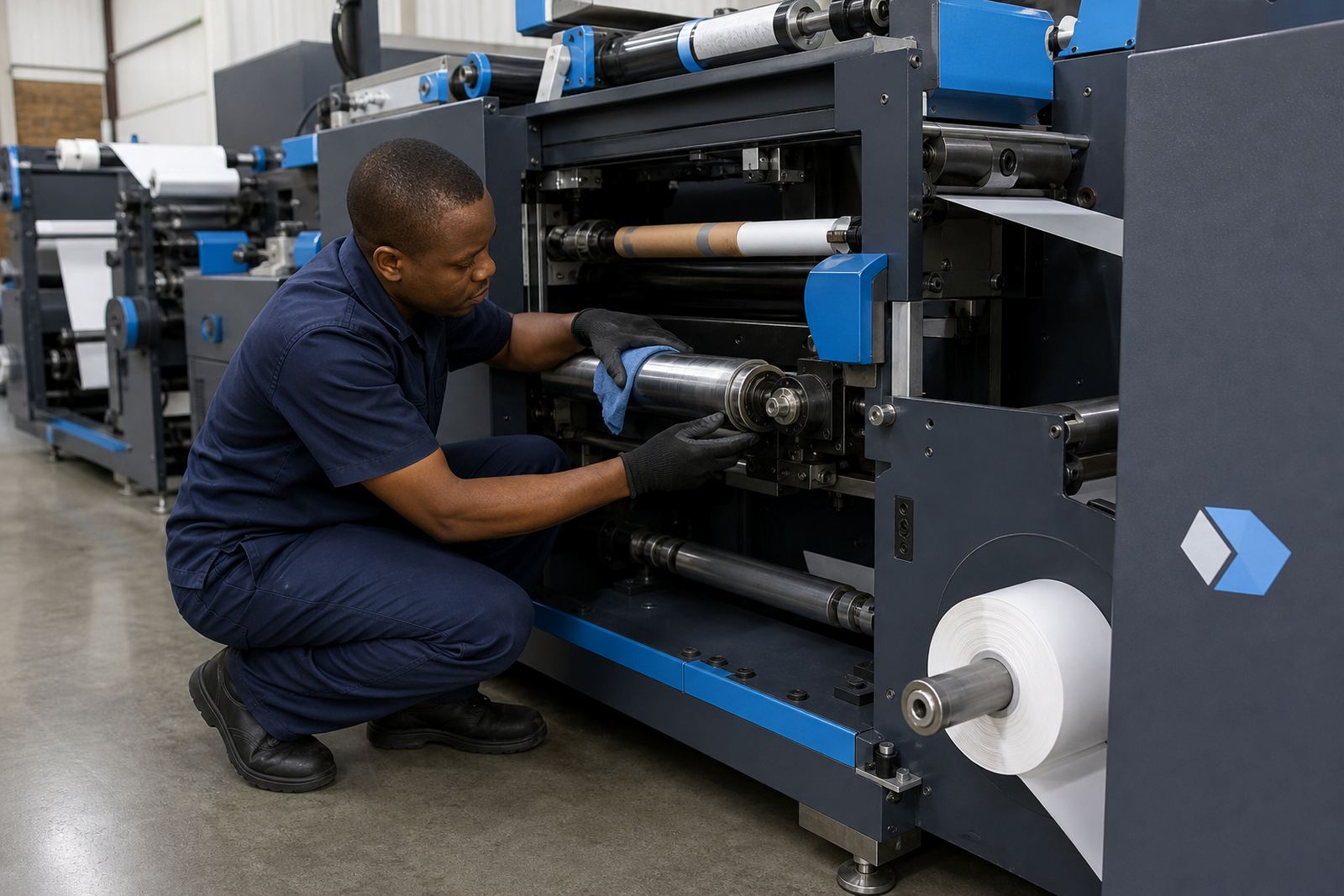
Finishing lines work under steady mechanical load, dust and adhesive build-up. Preventive maintenance keeps the machine clean, checks wear parts and protects the parts that guide, cut and rewind the web.
- Routine inspections and cleaning
- Wear part checks and replacement
- Drive, sensor and guide review
- Die and slitting station checks
- Rewind tension and alignment checks
In humid coastal areas, labels and rolls can behave differently from inland work, so maintenance notes need to reflect the local conditions on the floor.
Repairs, parts and line recovery
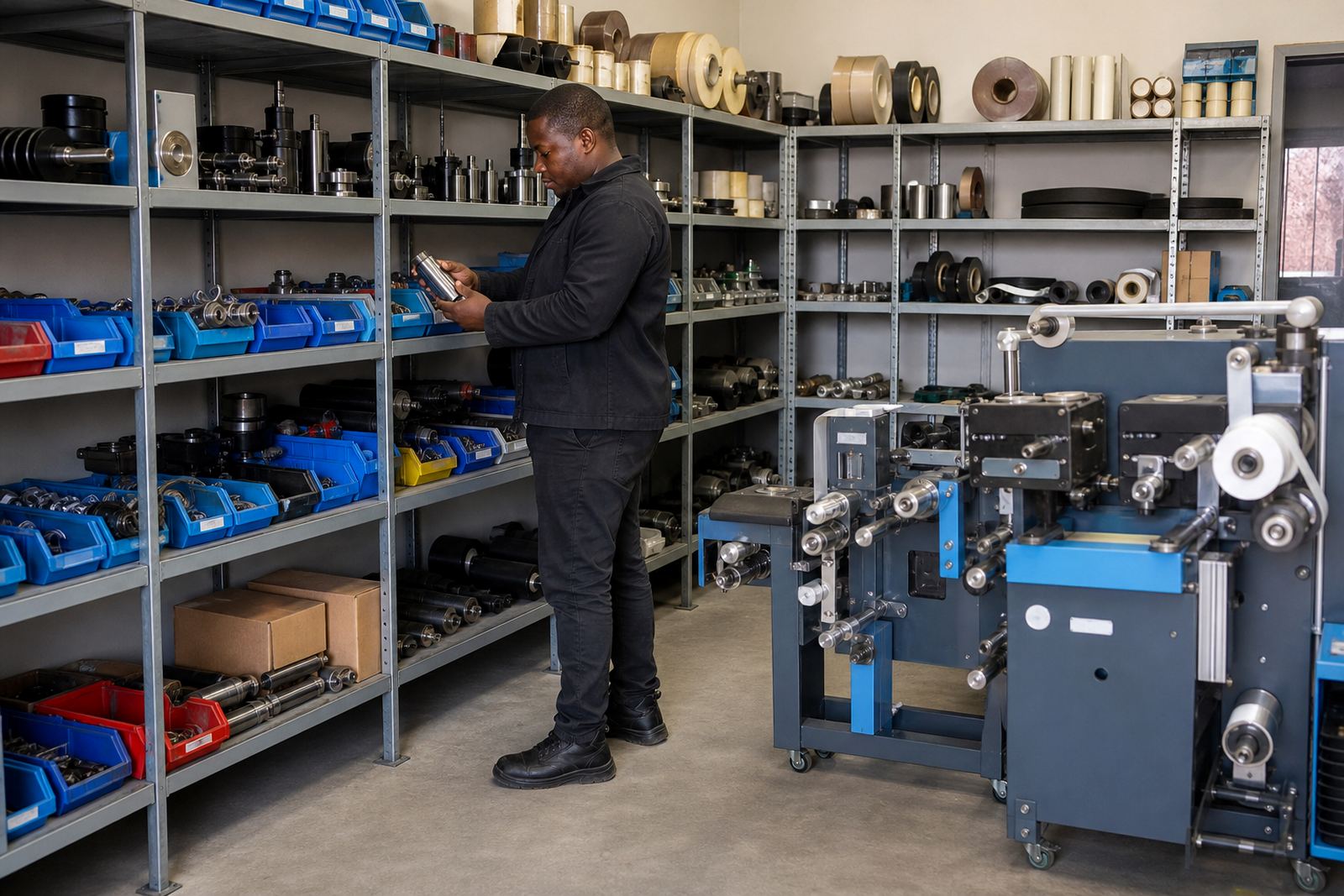
When a line stops cutting cleanly or the waste strip breaks, the issue is often mechanical, electrical or set-up related. We handle breakdown repairs, diagnose the fault and supply spare parts that suit the machine layout in use.
That support also includes die setup help, registration calibration and rewind setup when a job is not tracking as it should. The aim is to get the line back to a usable state without guessing at the settings.
Choosing the right support for your floor
Different sites need different levels of support. A high-mix label printer may need regular training refreshers and tighter calibration checks, while a packaging plant running longer repeat jobs may place more weight on preventive maintenance and parts planning.
Use the service mix that matches the work in front of you.
- New line: installation, commissioning and operator training
- Busy production floor: maintenance, calibration and optimisation
- Fault recovery: repairs, remote support and parts supply
- Repeat jobs: slit, rewind and die setup checks
Support across South African sites
Our base in Kya Sand, Randburg supports label printers and packaging producers in Johannesburg, Pretoria, Durban, Cape Town and Gqeberha, with area coverage that also includes Midrand and Kempton Park. Work ranges from first setup to seasonal maintenance visits and on-site fault tracing.
Clients reach us through our contact form when they need machine installation, line commissioning, operator training or spare parts supply. The same service structure applies whether the line is compact, wide web or built for mixed label volumes.