Gqeberha lines that need steady finishing control
Gqeberha operations often run mixed label work, from short promotional runs to repeat production for food, beverage, chemical and personal care packs. That mix places pressure on registration, web handling and waste removal, especially where labels need clean cuts and tidy rewind rolls for packing and dispatch.
Our support in the area focuses on the finishing side of the line, where a small setup error can show up as poor cut depth, lifted edges, loose matrix waste or rolls that track badly on the rewinder. We work with equipment used for digital label die-cutting, lamination, varnish, slitting and rewinding, including systems that rely on flexible dies or laser cutting where the job calls for it.
The local mix of coastal humidity, warehouse dust and changing substrate stock can affect liner release, adhesive behaviour and static control. That is common in seaside operations, so setup checks need to cover tension, registration marks, unwind stability and the way waste is removed before the roll goes to the next stage.
- Pressure-sensitive labels on paper and film stock
- Short-run and repeat jobs with variable artwork
- Finishing lines that need clean matrix stripping
- Rolls prepared for packing, carton work or dispatch
What our Gqeberha visits usually cover
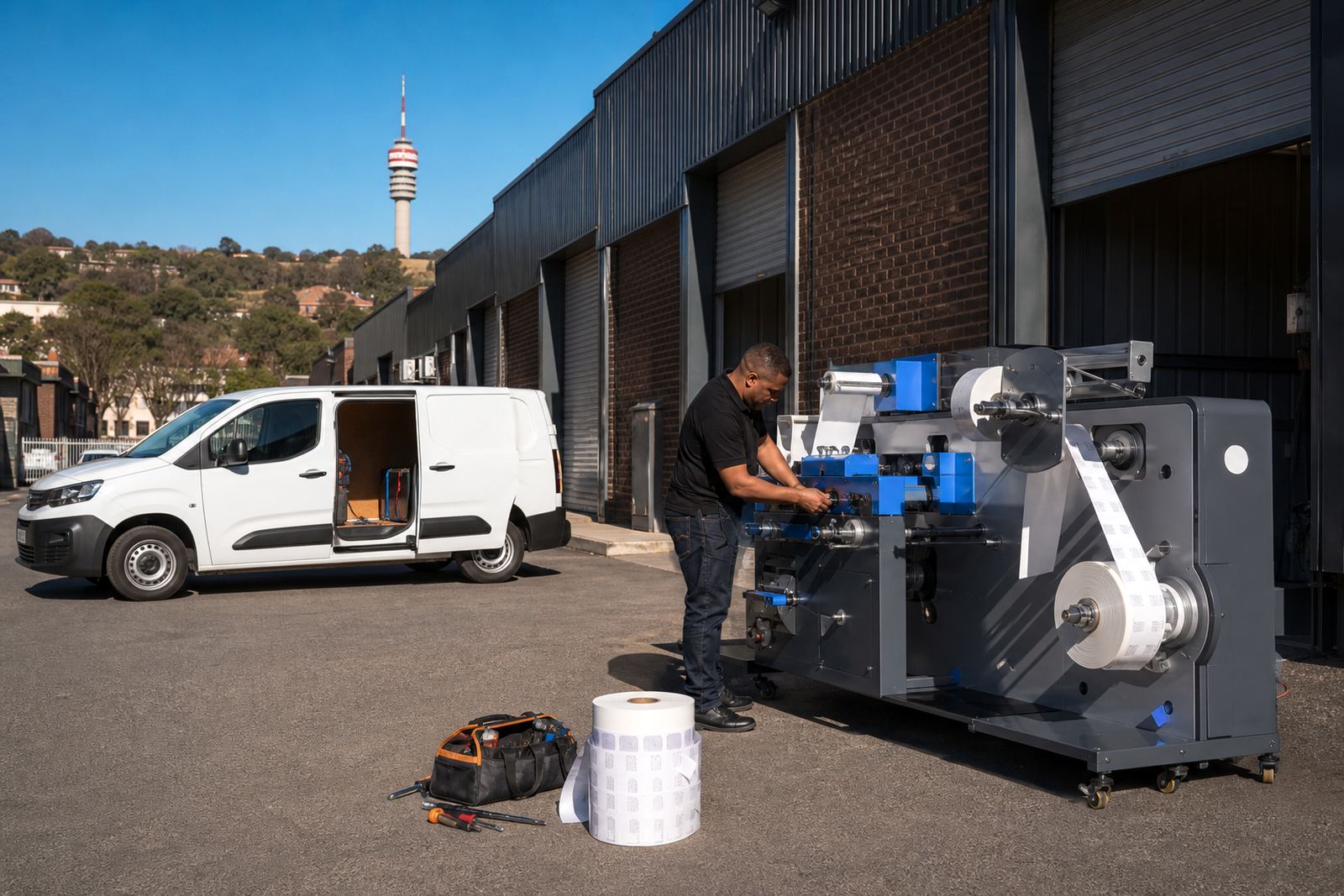
Visits in and around Gqeberha may start with a new installation, a line move or a machine that has drifted out of spec after heavier production. We check how the unwind, laminate section, die station, strip waste path, slitter and rewind section work together, then correct the settings that affect cut quality and roll finish.
Where the job includes line commissioning, we map the basic production path and set the machine to suit the material widths, core sizes and roll diameters the team uses most often. If the operator needs better control of die setup or registration calibration, we work through the actual job format rather than leaving the settings to guesswork.
For plants running on tighter dispatch windows, a neat first pass matters. A label roll that feeds smoothly, holds tension and lands with even edges is easier to pack, count and store in a humid coastal facility.
- Machine installation and line commissioning
- Operator training on setup and daily checks
- Preventive maintenance for regular production lines
- Breakdown repairs and fault tracing
Nearby areas and the work patterns we see
We support sites in Gqeberha itself, plus nearby industrial areas where label and packaging work often sits close to warehousing, converting and pack-off activity. Some customers run compact finishing rooms, while others have broader print and converting lines that need the label section to keep pace with upstream output.
Typical users include label printers, packaging producers, converters and teams that finish rolls for in-house packing. In practice, they need clean setup on slitting widths, stable rewinding tension and reliable waste matrix removal so the machine does not leave ragged edges or jammed trim.
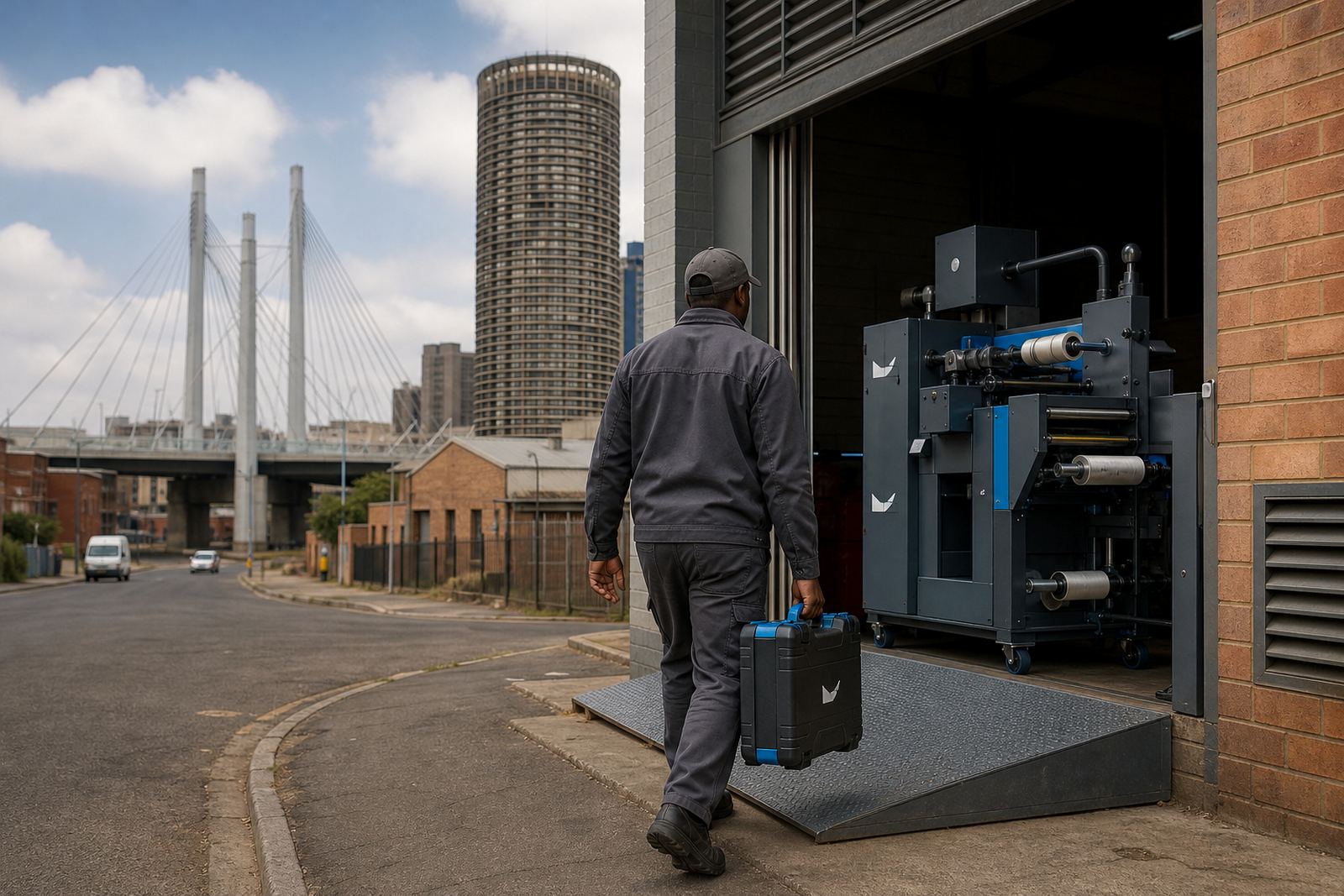
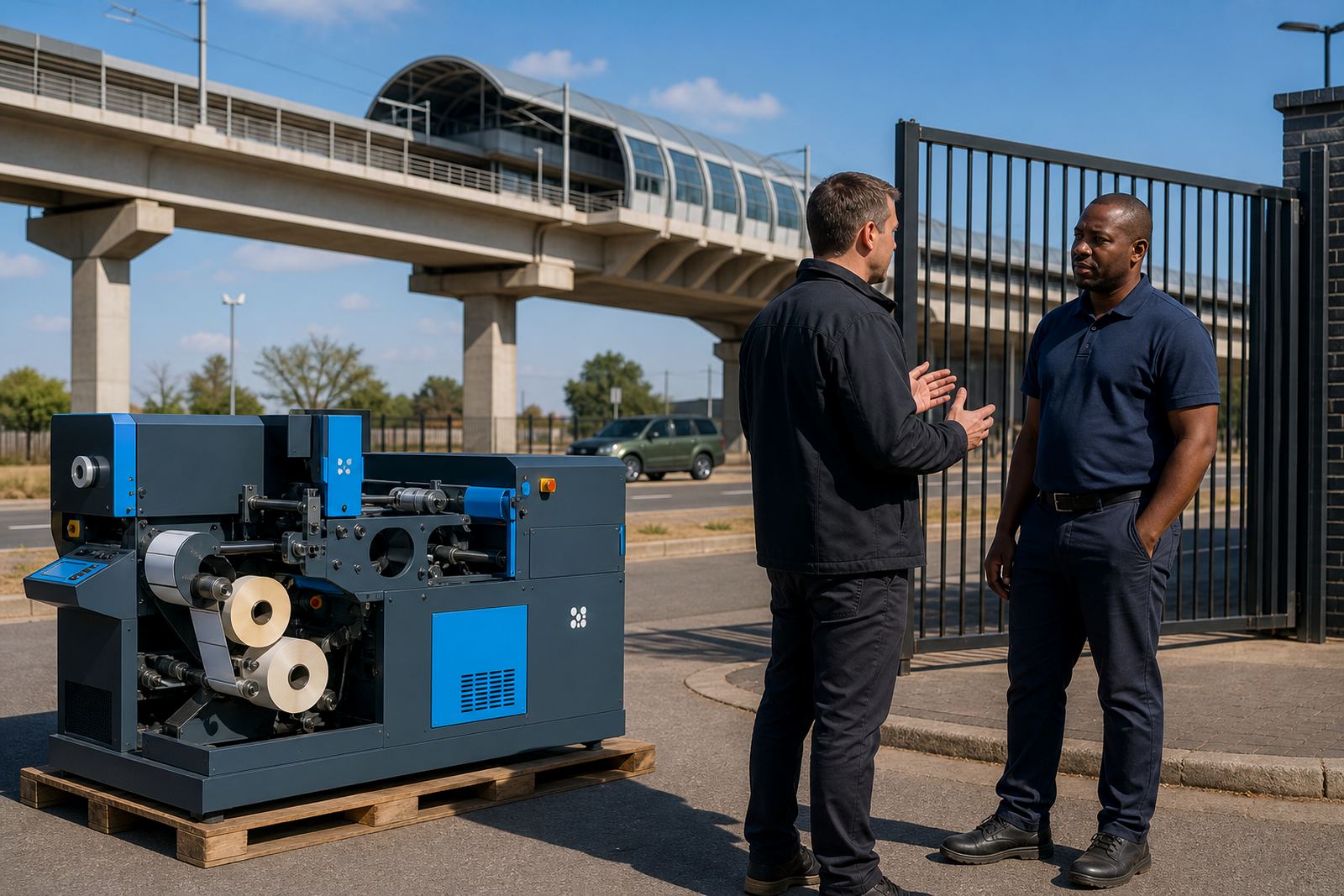
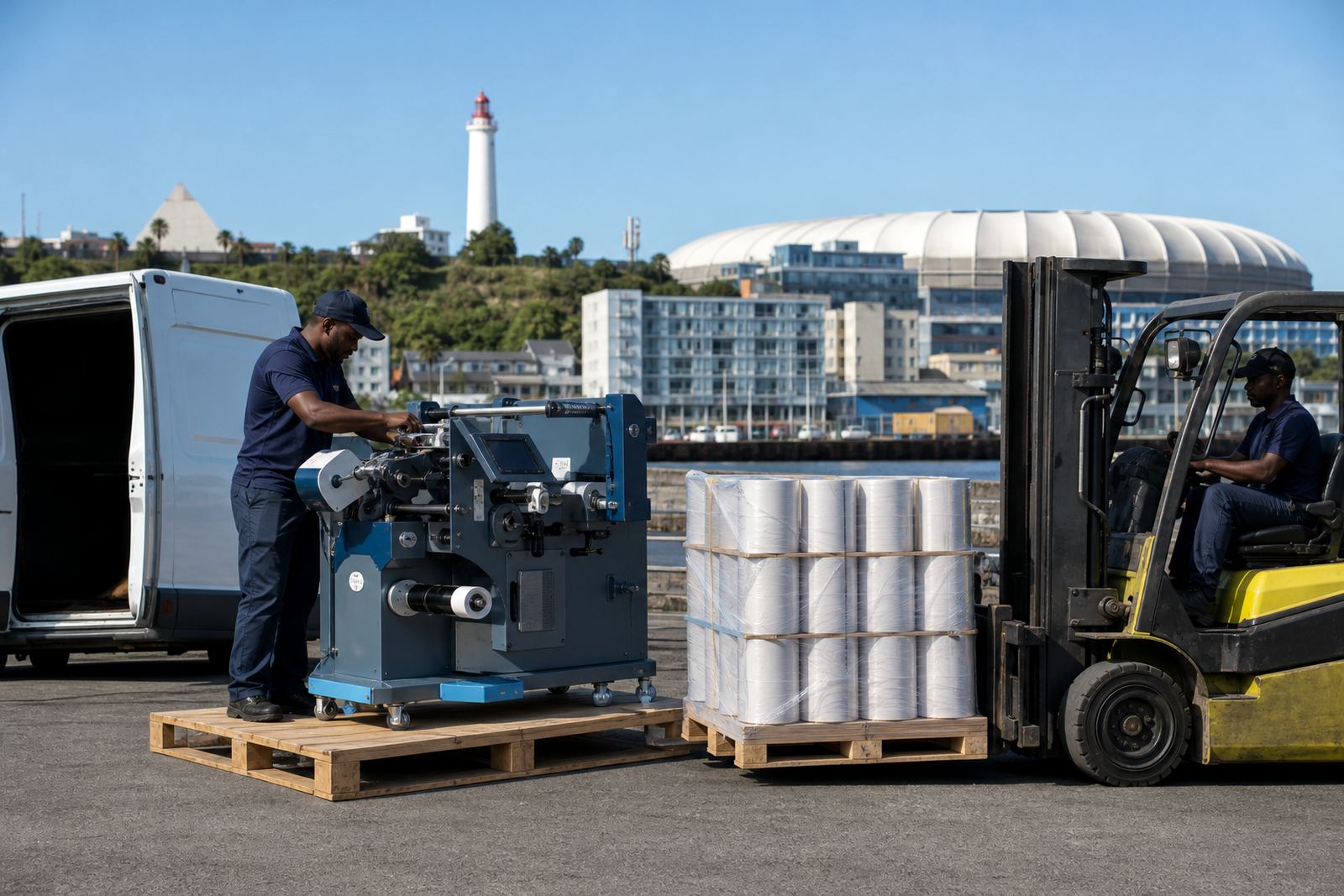
Transport planning around the Metro is straightforward for field visits, but the practical issue is often machine access on site. Narrow aisles, shared dock space and limited floor room around the unwind and rewind stands can affect the way a service visit is carried out, so we plan for the space that is actually available.
- Industrial and warehouse sites around Gqeberha
- Label finishing rooms inside packaging plants
- Converting teams handling short and medium runs
- Facilities needing support on a mix of jobs
Parts, setups and consumables we keep in mind
A finishing line only works well when the smaller parts are in order. On support calls we look at items such as blades, guides, bearings, belts, sensors, web path hardware and the tools used for die setup. If a machine is using a flexible die system, the mounting and pressure settings need as much care as the cut station itself.
We also help with registration mark calibration where digital print and finishing need to stay in step. That matters on jobs with fine text, small repeat lengths or multiple label variants on the same substrate. On the slitting side, blade condition and alignment affect edge quality, while the rewind section needs correct tension so the finished roll does not telescope or loosen in storage.
Stock support is handled through our parts and logistics team, with common wear items identified against the machine and application. It saves time on the practical side of servicing because the right item can be matched to the line instead of being guessed at on site.
- Wear parts for unwind, slit and rewind sections
- Guides, sensors and tension related components
- Tools used for die setup and calibration
- Consumable items linked to daily production upkeep
Training that matches the way the line is run
Operator training in Gqeberha is most useful when it reflects the real jobs on the floor. A team may need help with registration marks on one shift, then lamination tracking or matrix stripping on the next, so the session should cover the machine in a working state rather than only from a manual.
We show operators how to read the signs of a line that is drifting, from poor rewind build-up to waste that starts tearing instead of stripping cleanly. The aim is practical control of setup steps, not a neat theory lesson that disappears once production starts. Minor faults often show up in the first few metres, then spread across the roll if no one stops to check them.
Teams handling multiple SKUs also need a dependable way to repeat settings for recurring jobs. That includes note-taking on core size, roll width, cut depth, slitting layout and the sequence used during changeover.
- Daily start-up checks and web path inspection
- Cut depth, slitting and rewind setup
- Handling registration on digitally printed work
- Basic fault spotting before damage spreads
How support is handled from Kya Sand to the coast
Our base in Kya Sand, Randburg coordinates support visits across South Africa, including Gqeberha and the surrounding Eastern Cape routes. For field work, the plan depends on the machine condition, the job urgency and whether the site needs installation support, a repair call or a maintenance visit with parts on hand.
For sites further from Johannesburg, it helps when the customer shares the machine type, the problem area and the kind of labels being run. That allows the right engineer or trainer to be lined up with the task, whether the issue sits in lamination, waste stripping, rewinding or the registration system.
Enquiries for Gqeberha support go through our contact page form. That is where a business can send the site details, equipment list and the kind of service needed, so the right team member can work from the actual production setup rather than a broad description.
- Support for new installs and existing lines
- Visits arranged around site access and production flow
- Remote help for setup questions and basic fault checks
- Parts matched to the machine and application