Pretoria lines that need clean register and tidy rolls
Pretoria plants often run mixed label work, from short promotional runs to steady packaging orders, so the finishing line has to keep registration tight and the output neat. We support equipment that handles digital die-cutting, lamination, varnish, matrix stripping, slitting and rewinding, with settings matched to the stock and the way the rolls are handled on the floor.
Humidity shifts, dust in loading bays and paper variation all affect the final roll, especially where a printer moves between coated paper, film and textured label stock. Around Pretoria East, Midrand and the industrial belts near Rosslyn, we often see operators needing better setup for waste removal, slit width consistency and the rewind tension that keeps cores square.
Coverage across Pretoria and the wider corridor
Our Pretoria support area covers the city and the routes that feed it, including Menlyn, Centurion, Silverton, Waltloo, Rosslyn, Hammanskraal and the corridors toward Midrand and Kempton Park. Work in these areas often sits inside larger print rooms, folding carton plants or label departments that need finishing machines to stay in line with changing production plans.
- Machine installation for new finishing lines
- Line commissioning after relocation or upgrade
- Operator training on setup, changeover and safe running
- Preventive maintenance for rollers, knives, web paths and controls
- Breakdown repairs, remote support and parts supply
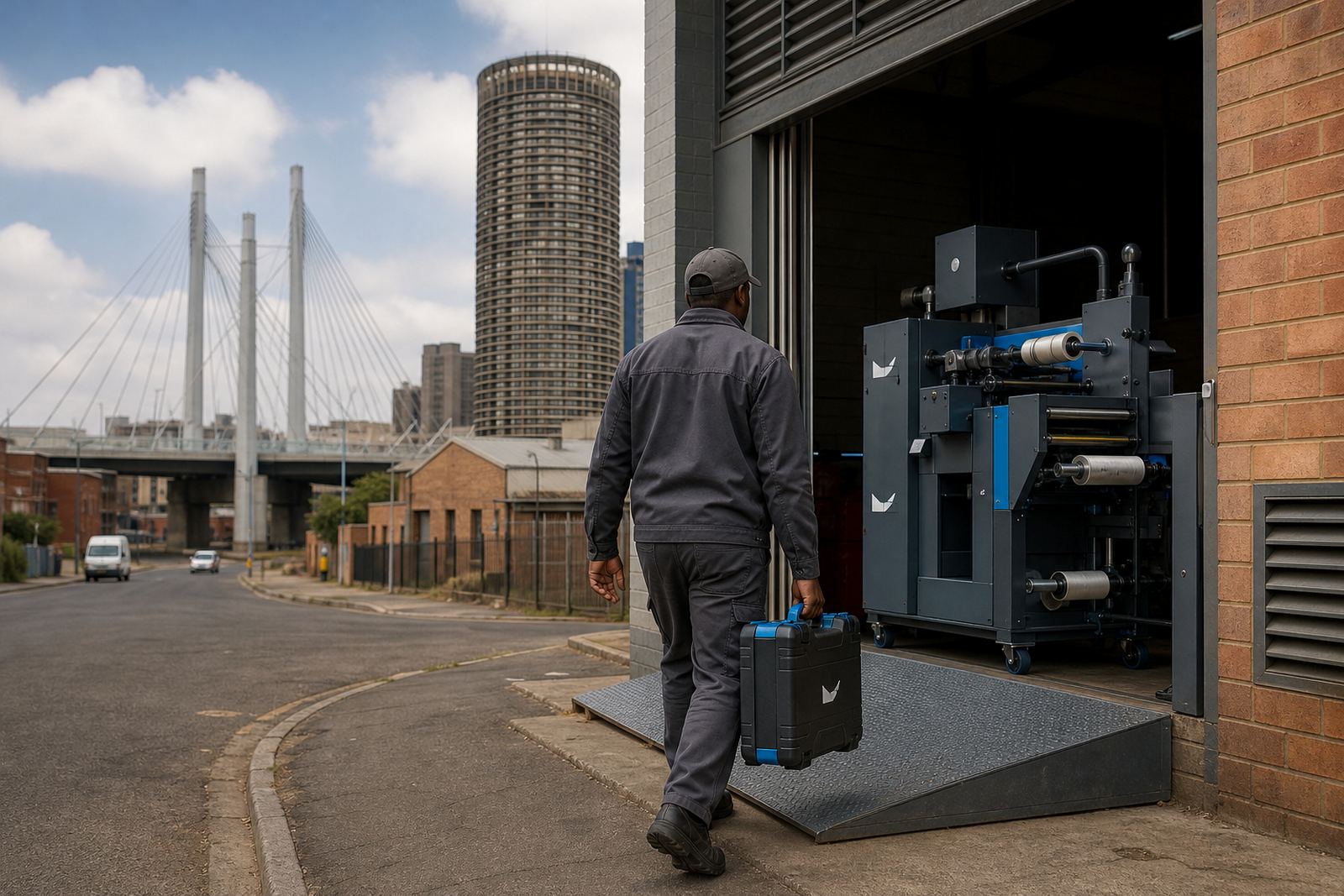
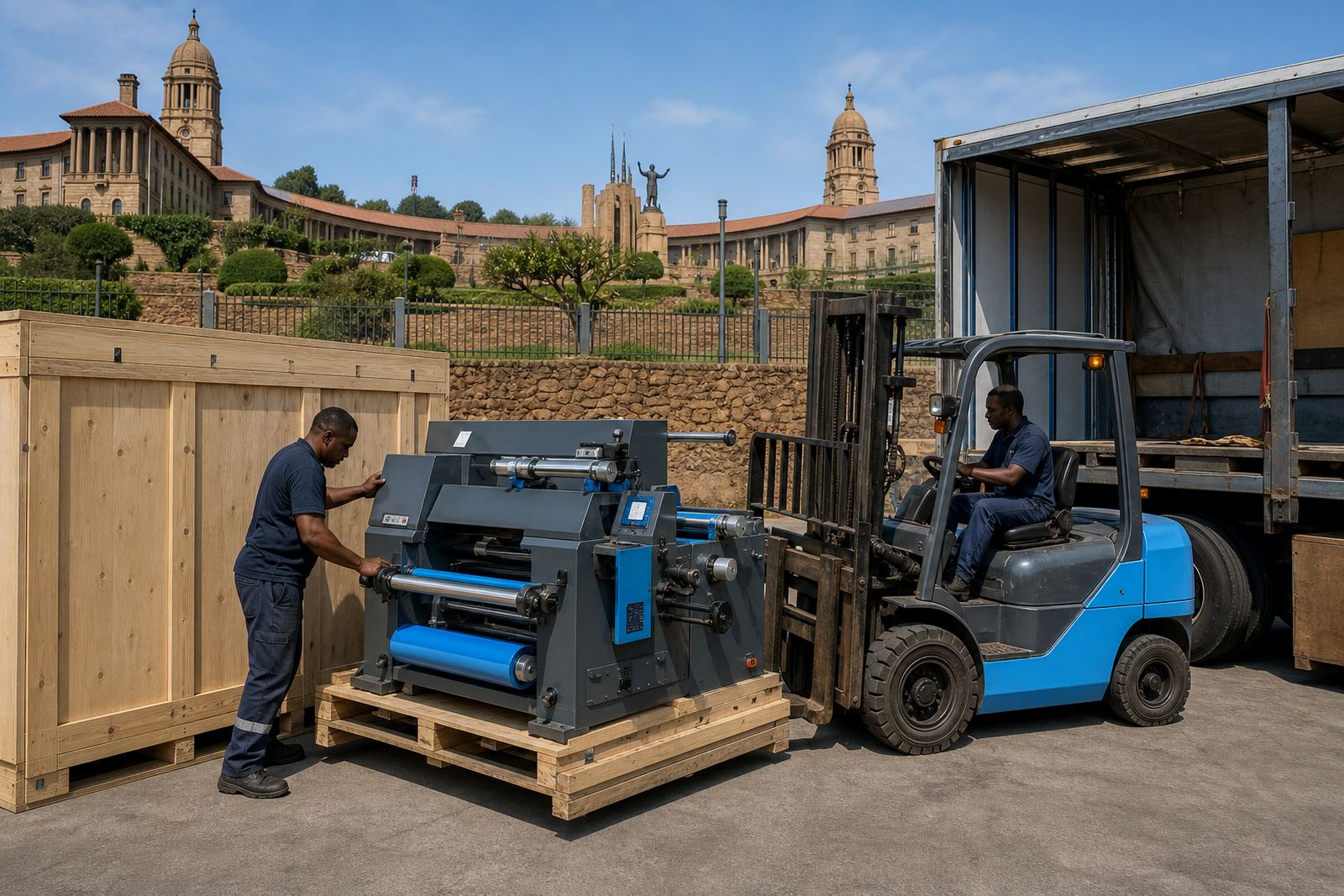
Where access is tight or the machine sits inside an existing print room, we plan around dock doors, pallet movement and the path from stock room to floor. That keeps the site work orderly and reduces the stop-start that can slow a busy shift.
Flexible dies, laser cutting and semi-rotary work
Pretoria users often need more than one finishing method, because some jobs suit flexible dies while others need laser cutting or semi-rotary die-cutting. We support setups that hold registration marks properly, keep the cut depth consistent and allow the operator to move from label web to finished roll without dragging waste or damaging the liner.
For narrow web production, the practical issues are usually small but important: web tracking, pressure balance, blade wear, heat on film and the point where the matrix starts lifting cleanly. If a line also includes varnish or lamination, the feeding and rewind settings need to match the added thickness so the roll does not telescope or wander on the core.
- Registration calibration for short repeat work and longer label runs
- Die setup help for different label shapes and film grades
- Rewind setup for tight rolls, wide rolls and split lanes
- Slitting setup for multiple finished widths from one parent roll
Spare parts and setup support without the guesswork
When a finishing line is under pressure, the small parts matter just as much as the larger frames and drives. We cover the consumables and service items used in label finishing, including knives, blades, rollers, belts, sensors, bearings and components linked to unwind and rewind sections.
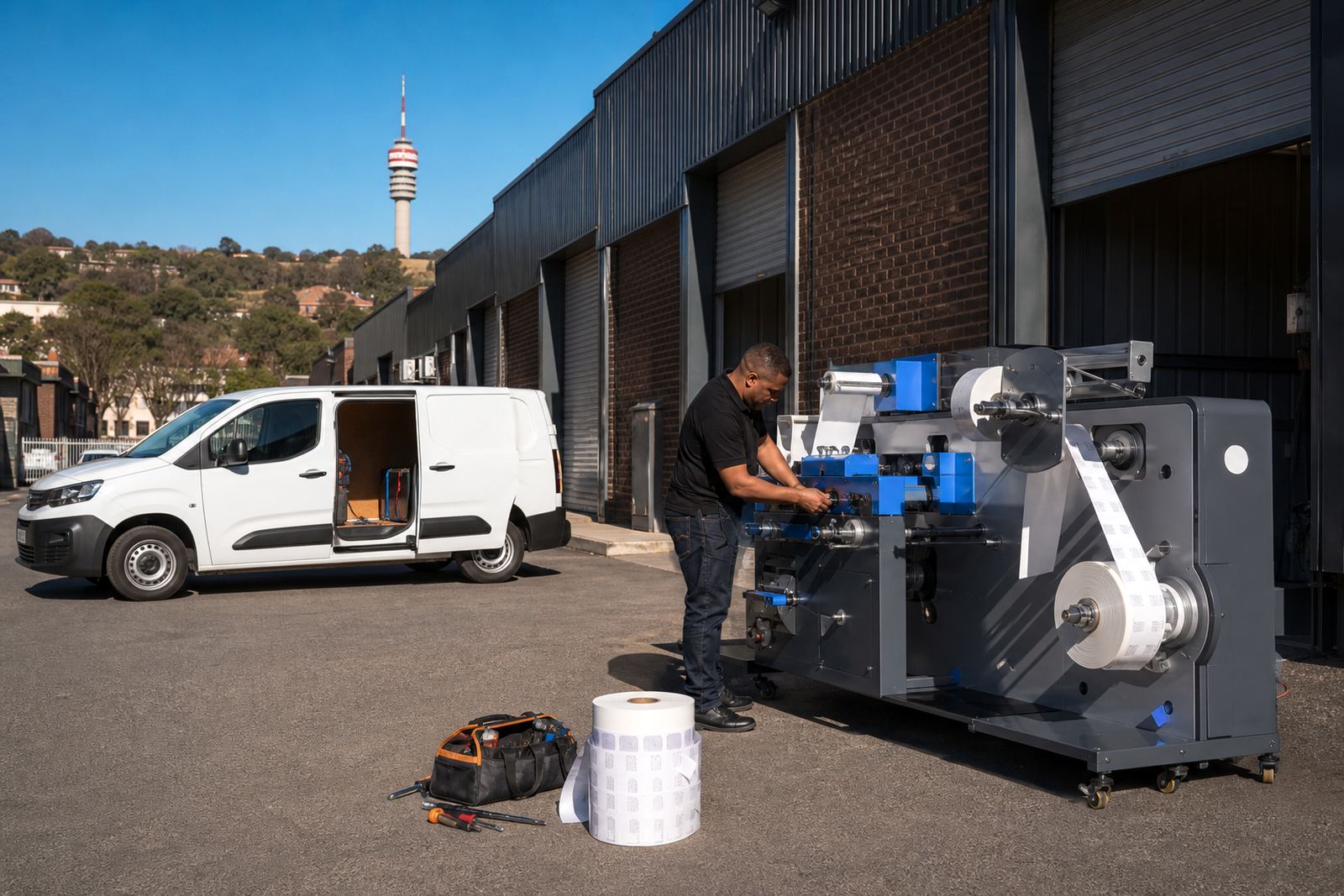
Our Pretoria support also covers practical setup tasks that are easy to overlook until the line starts drifting. That includes checking the guide path, confirming the unwind tension, watching for matrix waste build-up and making sure slitting leaves a clean edge that stacks well for dispatch.
In more demanding rooms, especially where film labels or varnish-heavy jobs run back to back, the machine needs a consistent handover between stages. A neat lamination pass, a stable cut and a controlled rewind are what keep the roll usable when it reaches packing or dispatch.
Training for operators and production supervisors
Training in Pretoria usually works best when it is tied to the actual jobs the team runs each week. We show operators how to load rolls, read the registration marks, set the cut depth, check matrix stripping and judge whether the rewind tension is building the roll properly or pulling it out of shape.
Supervisors often want the wider view as well, so we cover how a finishing line should be handed over between shifts, what to watch during a changeover and which settings need to stay written down for repeat work. That matters in teams where one person handles setup and another takes over after lunch, or where the machine supports several product lines in a single day.
- Basic operator coaching for new staff
- Hands-on line familiarisation for production teams
- Job change notes for repeat label work
- Practical guidance on safe cleaning and wear checks
How Pretoria sites tend to run the work
Many Pretoria clients work inside broader packaging or print operations, so the label finisher must fit into a wider production flow rather than sit on its own. That means the machine has to deal with different roll sizes, different substrate weights and more than one finished format without creating a pile-up at the end of the line.
We see a lot of mixed conditions in this area: dry indoor rooms, dusty yard access, and some sites where stock moves in and out through side entrances that are not ideal for large equipment. On jobs like that, the installation plan matters as much as the machine itself, because the path to the floor, the final levelling and the first test runs all affect how the line settles.
Label-Cutter works from Kya Sand in Randburg and supports Pretoria through planned visits, service calls and parts supply linked to the equipment in use. If your site needs machine installation, breakdown repair, production optimisation or help with a troublesome rewind, use our contact form and send the machine details with the job type, roll width and the issue on the line.