Training built around the actual finishing line
Our operator training suits label printers and packaging producers running unwind, laminate, die-cut, strip waste, slit and rewind lines. The session is shaped around the machine on your floor, the label stock you run and the roll formats you handle day to day.
We work with paper, film and laminated stocks, plus pressure-sensitive labels that need steady web control and clean edge quality. The aim is to help operators handle setup without wasting material or chasing the same fault twice.
- Loading parent rolls and setting core sizes
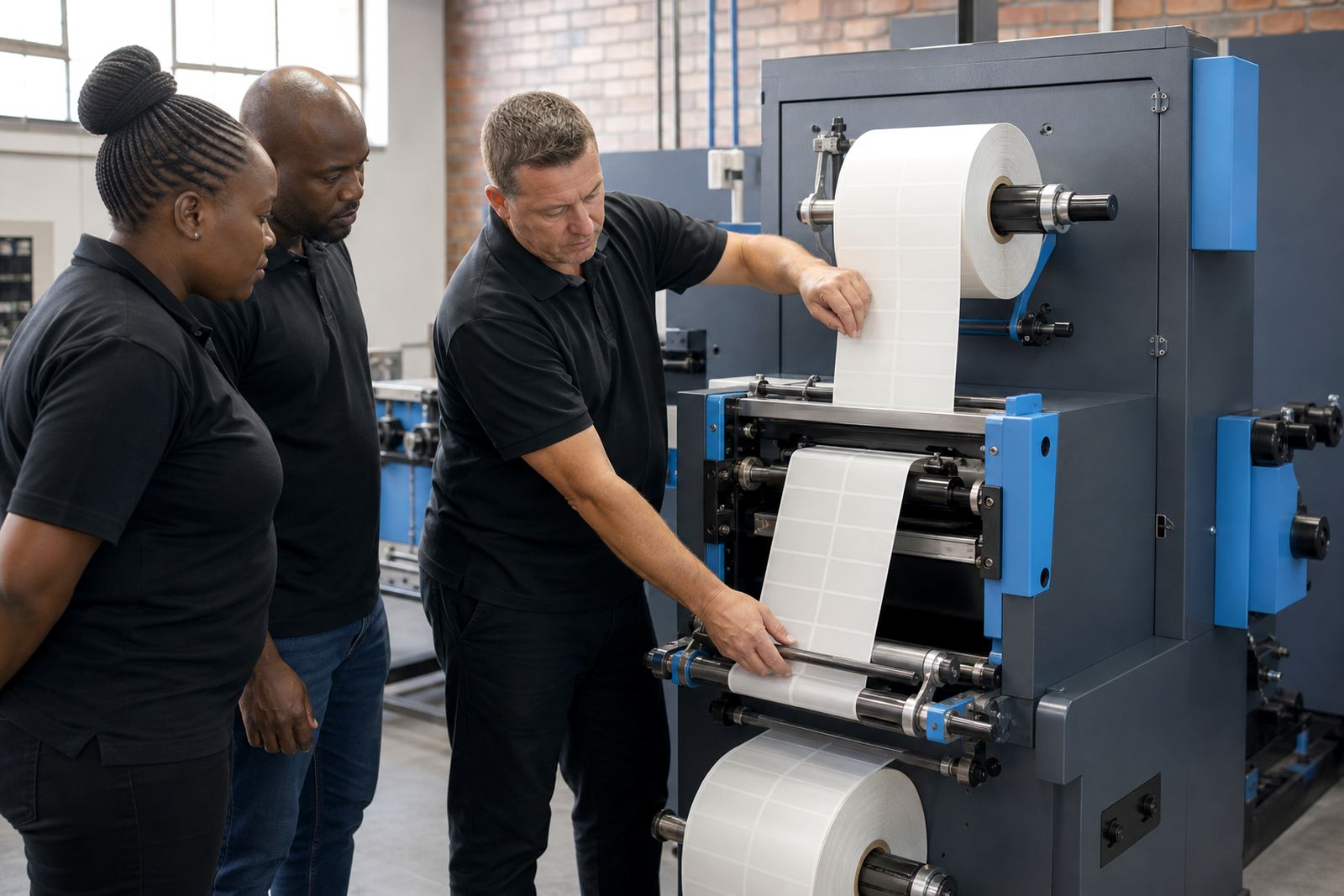
- Threading the web through guides, rollers and slitting sections
- Reading registration marks and keeping print to cut aligned
- Changing jobs without damaging the web path
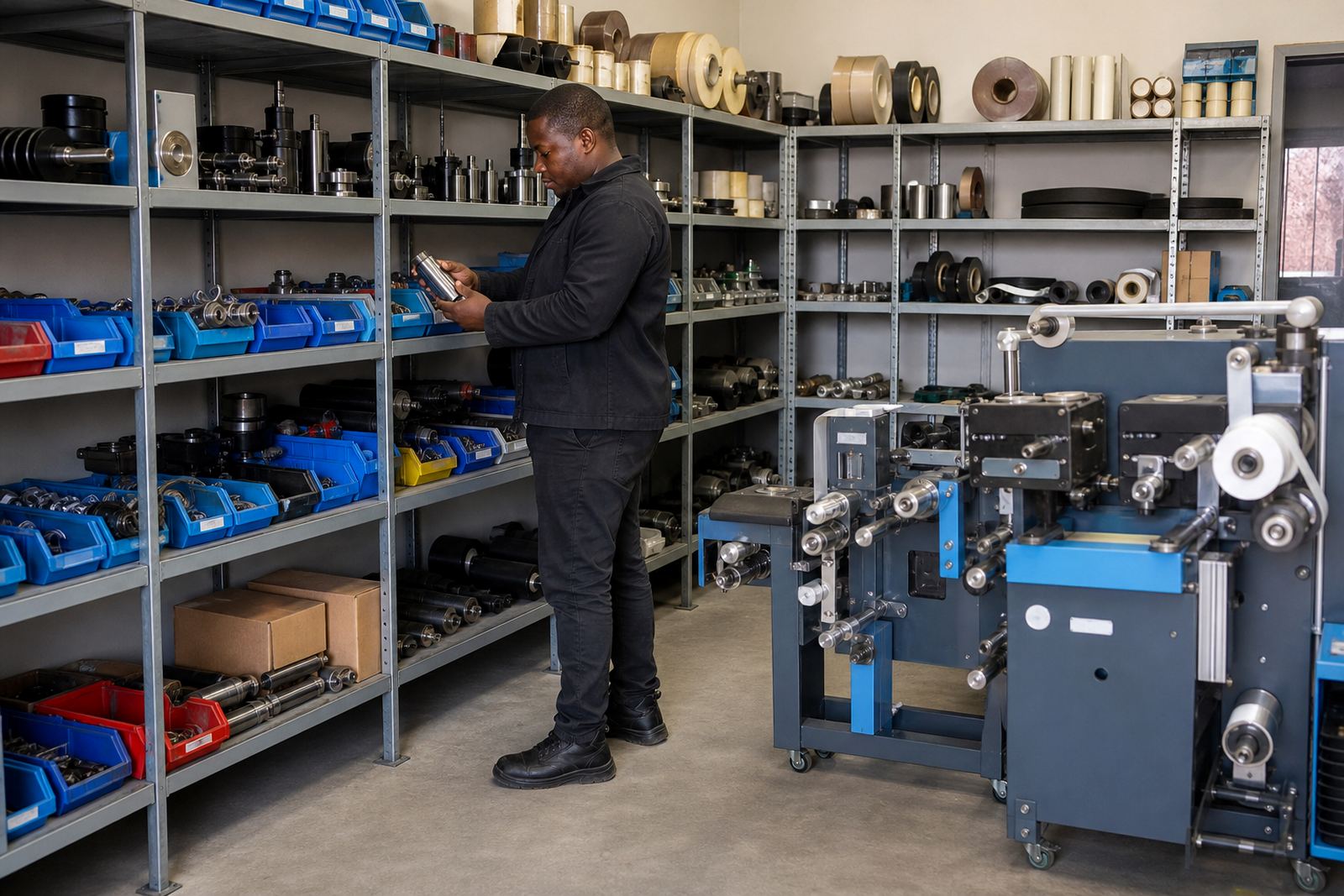
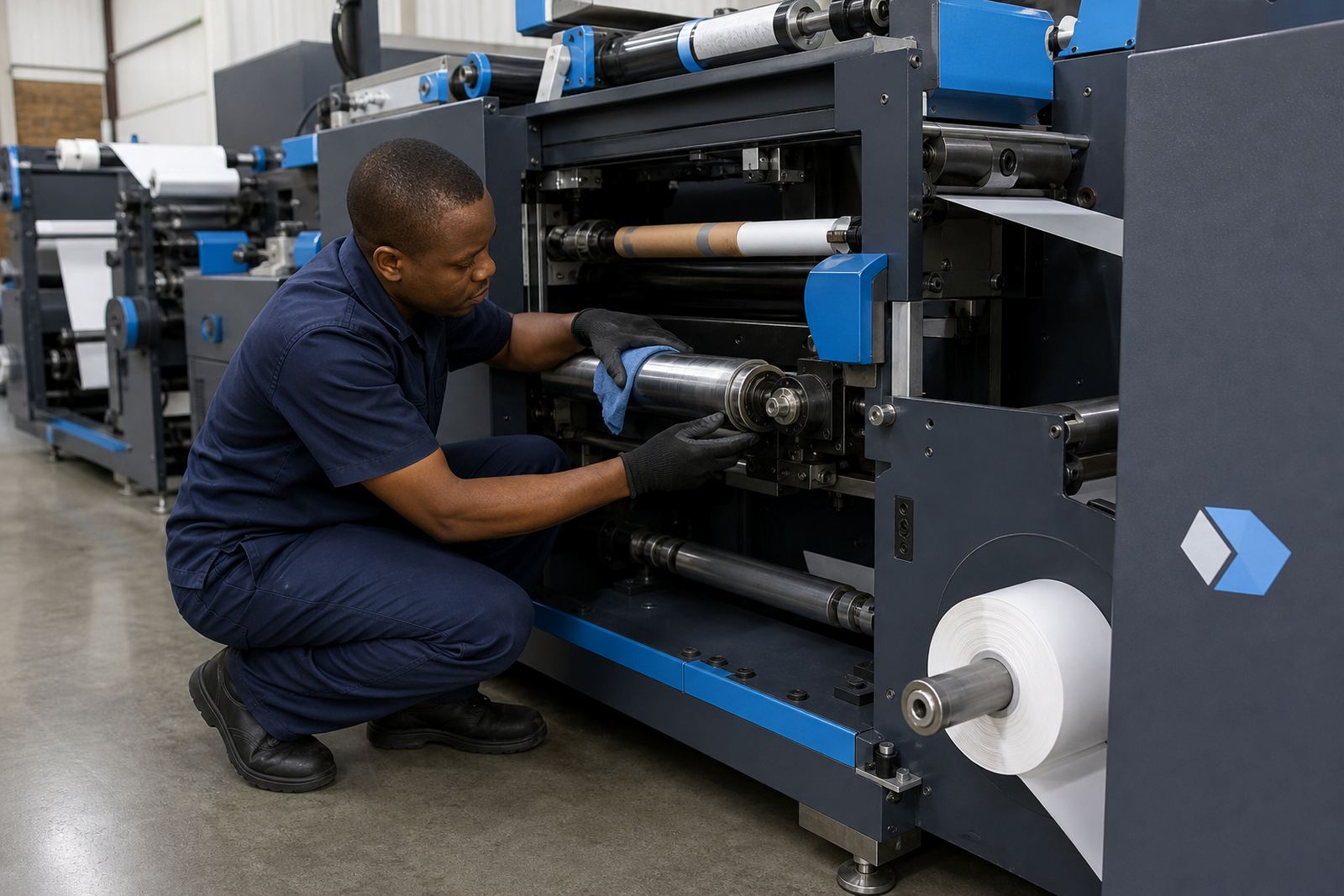
- Routine cleaning of sensors, rollers and waste paths
What the operator covers on shift
The training covers the daily actions that keep a line moving. Operators learn how to check roll width, set tension, confirm web direction and watch for drift on repeat runs. On semi-rotary units, we also cover cylinder setup and the way repeat length affects changeover.
For laser or digital finishing units, we explain how artwork marks are read, how cut paths relate to the print image and what to do when a label is out by a fraction. Where flexible dies are in use, we cover die handling, fitment and the cleaning that helps the blade hold a clean edge.
- Registration marks and camera or sensor checks
- Lamination pressure and web laydown
- Matrix stripping and waste path control
- Slitting knife spacing and rewind tension
- Handling small rolls, long runs and mixed job batches
How the session is structured on site
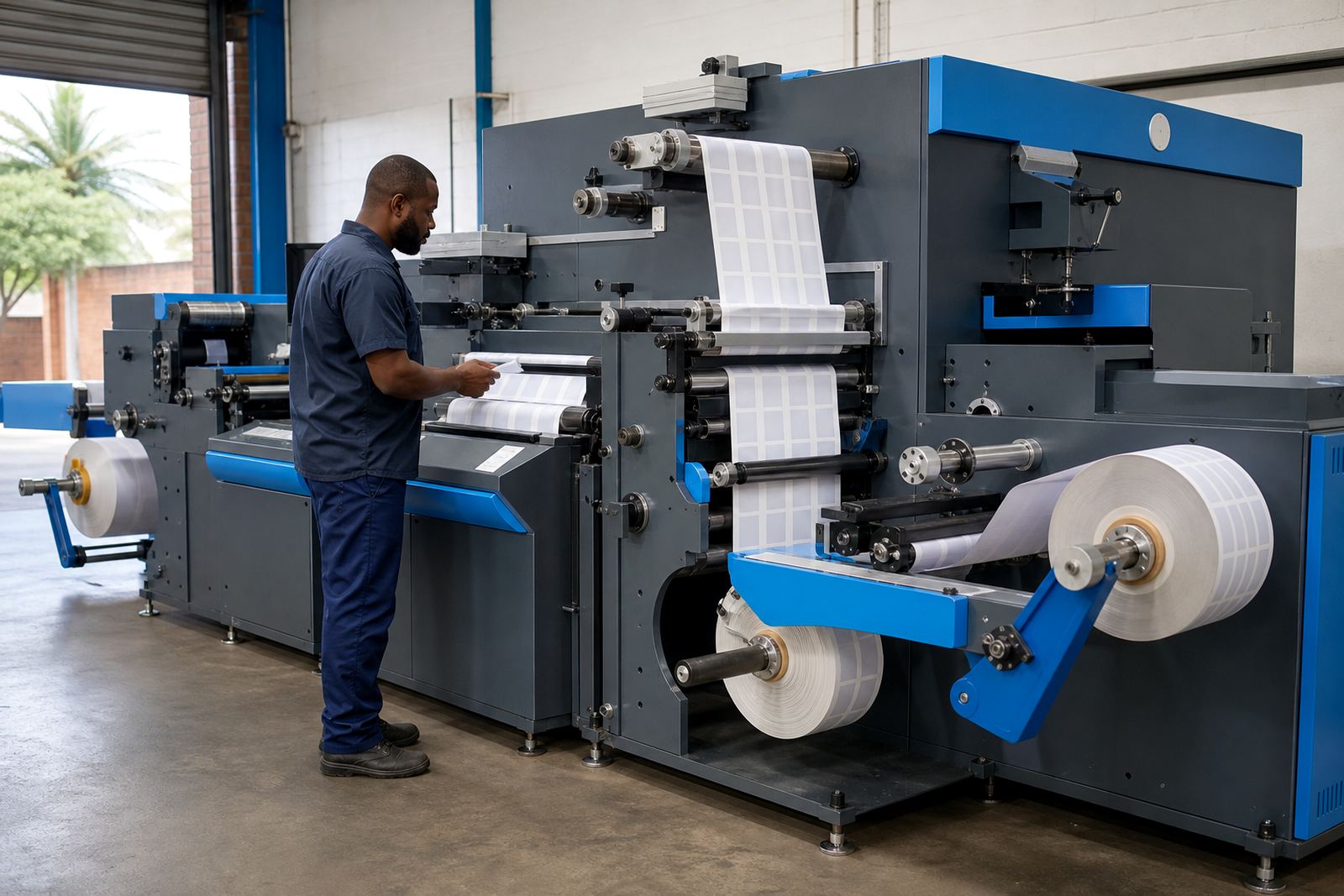
Training usually begins with a short walk through the machine, the control panel and the finishing path. We then move into live operation, so the team can see how loading, threading and job setup work on the actual equipment they use.
From there we move into a guided run with the operator, followed by a supervised handover on a second job where possible. The last part is practical fault finding, because that is where many production delays begin, not at the start of the shift but after the first label is already moving.
- Machine overview and safety checks
- Job setup and web path preparation
- Live production run with correction points
- Fault isolation for alignment, waste and rewind issues
- Operator notes for future use on the floor
Turnaround, booking and pricing approach
Training can be arranged as a one-machine session or as a larger floor session for a print room with more than one line. The scope changes with the machine type, the number of operators and whether we are dealing with label rewind only or a full finishing line with lamination, slitting and waste removal.
Pricing is based on the job scope, travel to your site and the time needed for hands-on instruction. If parts, setup changes or calibration support are added, those are costed separately so the training brief stays clear from the start.
We work across Randburg, Johannesburg, Pretoria, Durban, Cape Town, Gqeberha and surrounding industrial areas. That covers both compact label rooms and larger packaging plants with more demanding roll handling.
Aftercare for the weeks after training
After the session, we stay focused on the practical side of production. If an operator meets the same threading issue, cut registration drift or rewind tension problem on a later job, our service team can talk through the fault and the likely cause.
We also help with job notes, setup marks and the kind of short floor instructions that keep different shifts working in the same way. Where a plant changes stock thickness or moves from short runs to longer repeat work, we can review the setup and adjust the method to suit.
- Support for repeat setup faults and operator questions
- Guidance on keeping registration stable across different stocks
- Help with slitting, rewind and matrix handling issues
- Practical notes for shift handovers and mixed teams
Machines and production details we train on
Our training covers the specification points that matter during production. That includes web width, unwind and rewind capacity, roll diameter limits, repeat length, sensor type and the cutting method used on the line. Where the process includes varnish, lamination or extra finishing, the operator is shown how each stage affects the final label roll.
We train on both digital label die-cutting and finishing machines and the support equipment around them. That can include stripping waste, slitting into narrower rolls, rewinding finished labels and checking that the output is neat for packing or further converting.
- Web widths and roll diameter limits
- Repeat length, registration method and cut accuracy
- Laminate, varnish and finish compatibility
- Die type, laser path or semi-rotary setup
- Waste removal, rewind quality and slit width control
Key facts
| Machine focus | Digital label die-cutting and finishing |
|---|---|
| Training format | On-site operator training with live machine setup |
| Core topics | Loading rolls, threading webs, reading marks, job changes, routine care |
| Process coverage | Unwind, laminate, die-cut, strip waste, slit and rewind |
| Application scope | Label printers and packaging producers |
| Service areas | Kya Sand, Randburg plus major South African centres |