What we check before wear turns into stoppages
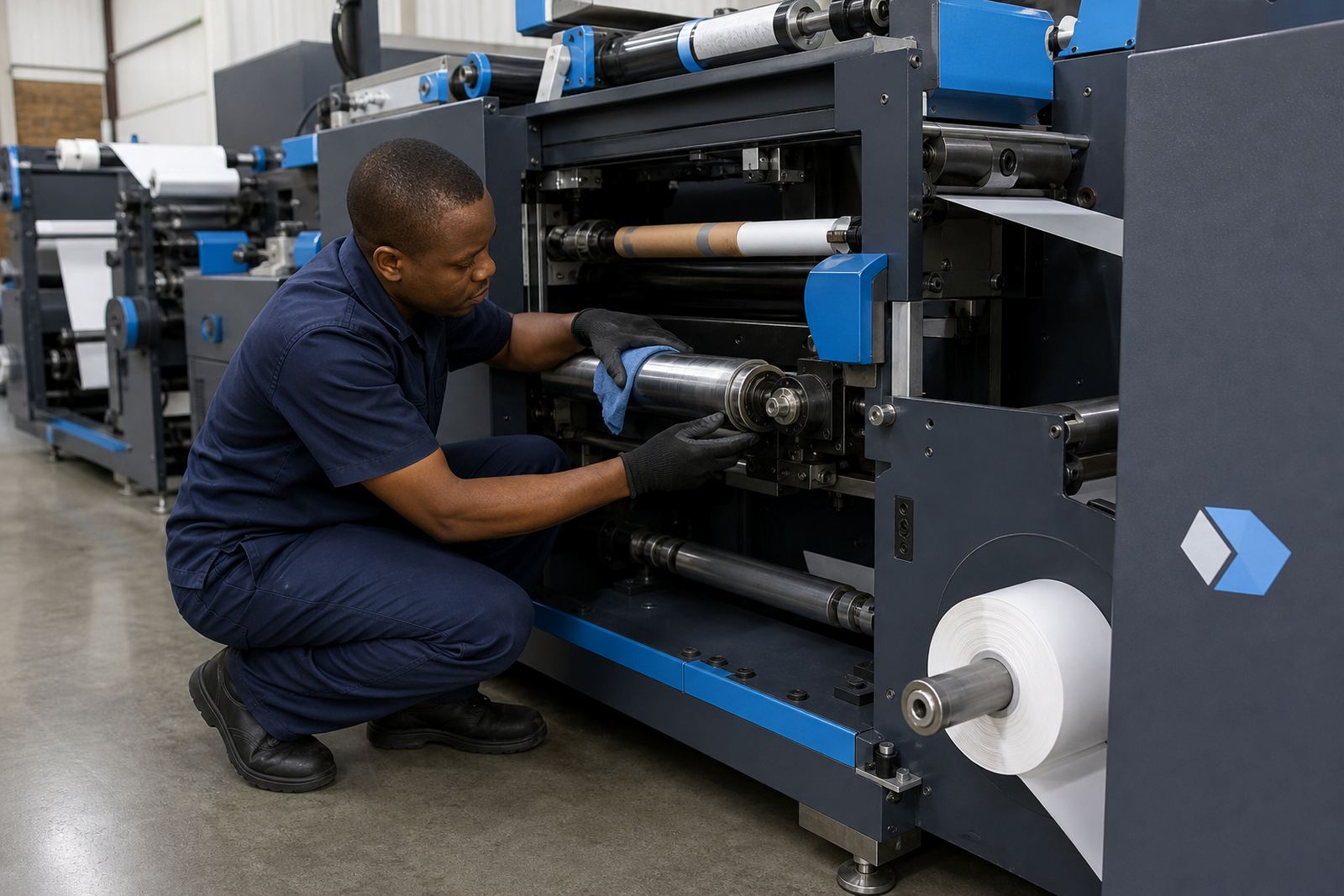
Preventive maintenance covers the parts of the line that carry the load every day: unwind stands, web guides, laminators, die stations, stripping units, slitters, rewind shafts and the controls that keep them working in sequence. We look for drift in tension, scoring on rollers, loose fasteners, sensor misreads, bearing noise, adhesive build-up and small alignment shifts that can upset a clean job. On machines running narrow labels or wider rolls, those small shifts show up fast in edge quality and waste. Our work is practical, with an eye on repeatability rather than shiny theory.
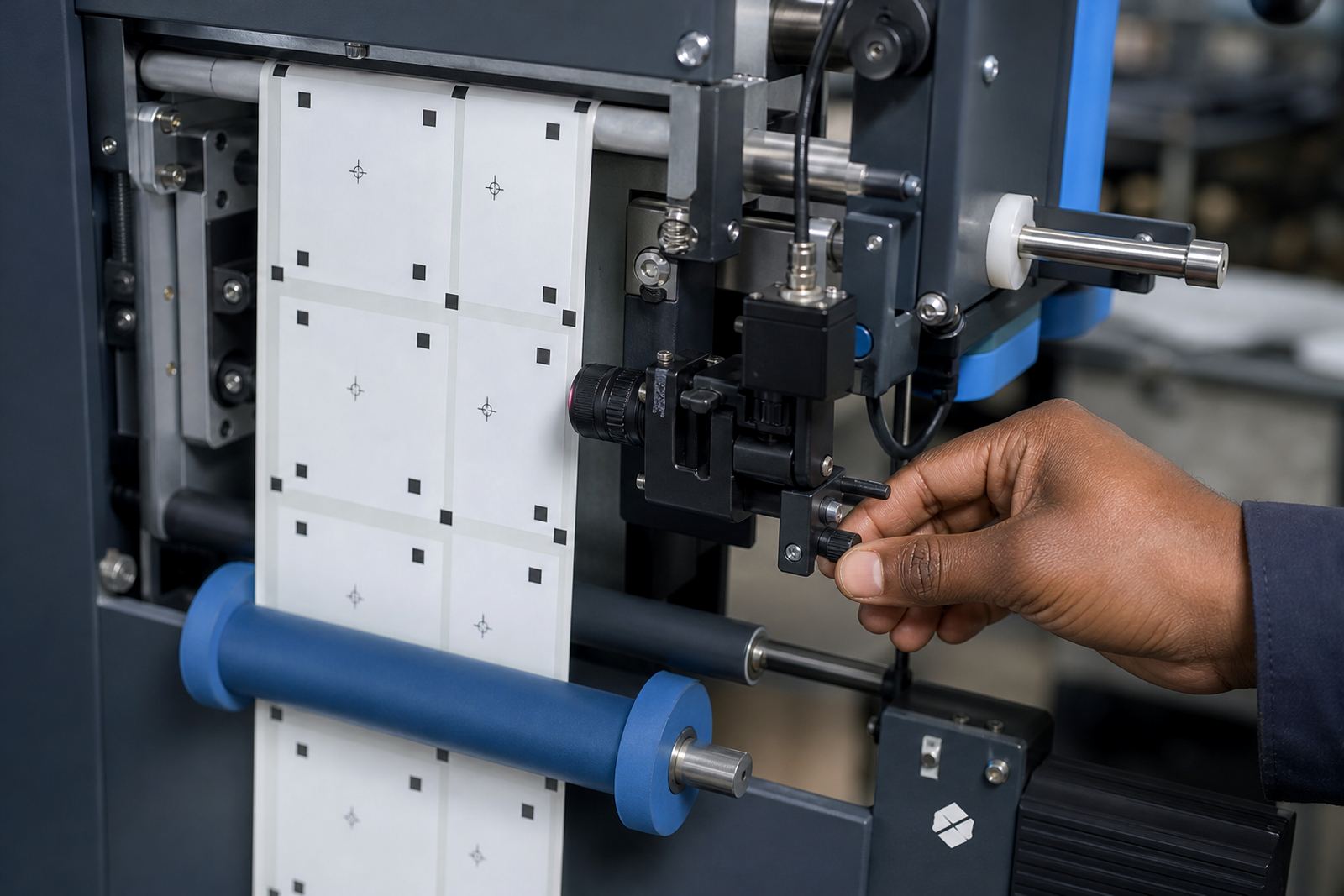
We also check the job handling side, because a machine can look fine and still give trouble when registration marks wander, flexible dies are not seated cleanly or the matrix starts tearing instead of stripping. Where a line carries varnish or lamination, we inspect pressure, nip condition and web path tracking so the coated stock stays flat and moves evenly through the station. That matters on paper, film and other self-adhesive label stocks, especially where humidity changes or the room is busy with constant changeovers.
What the service covers on the machine
Preventive maintenance is tailored to the equipment on site, but the service usually includes cleaning, inspection, adjustment and function checks across the finishing line. We confirm that the unwind and rewind sections hold the roll correctly, that slitting blades are tracking cleanly, and that die-cutting depth stays consistent from start to finish. Where the line uses laser die-cutting or semi-rotary cutting, we check the setup points, sensor response and registration control rather than treating every unit the same.
- Web path inspection on unwind, laminate, die-cut, slit and rewind sections
- Tension checks and alignment correction where stock is drifting
- Cleaning of rollers, guides, sensors and waste stripping points
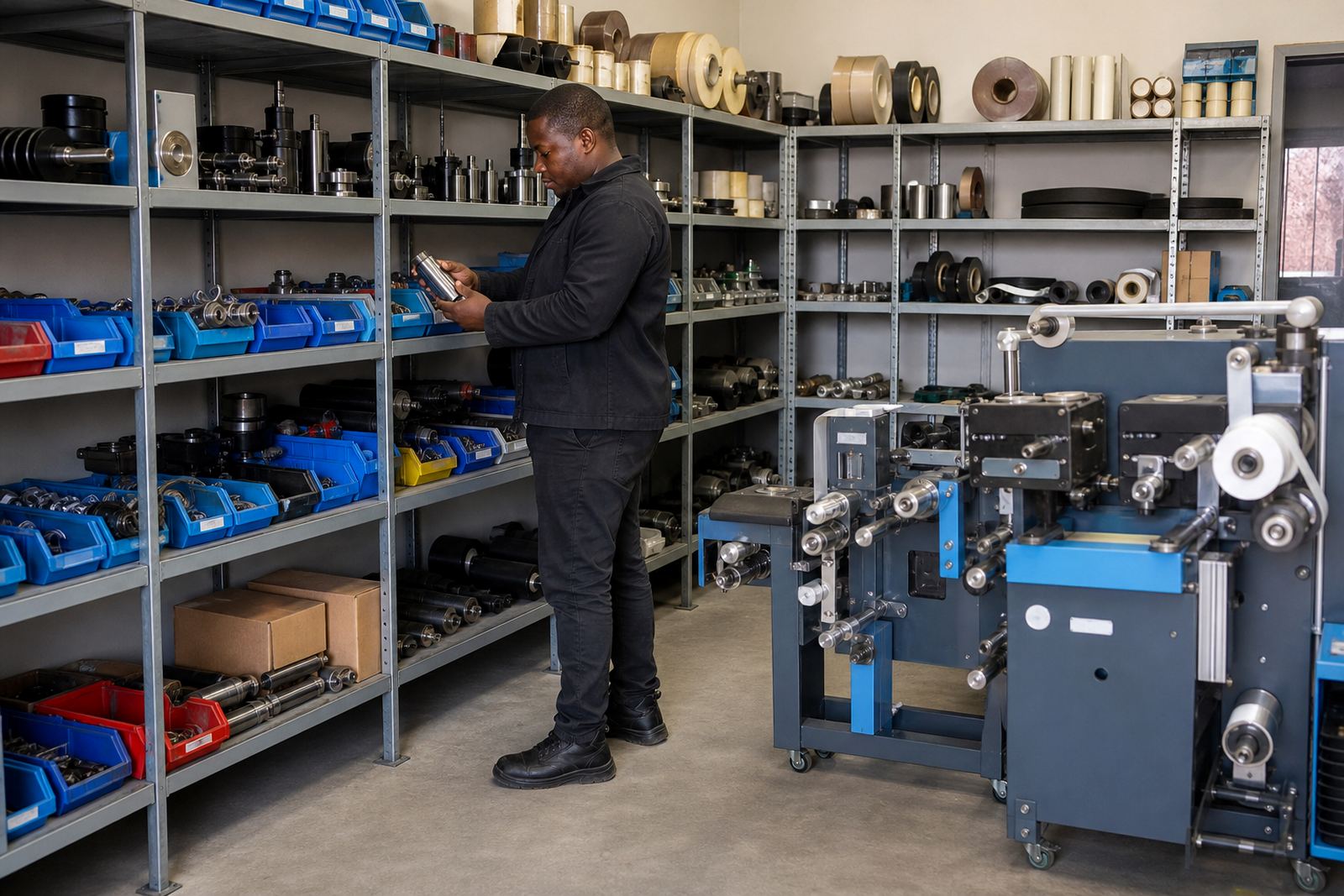
- Inspection of flexible dies, cutting tools and changeover hardware
- Registration calibration for repeat cuts and accurate label spacing
- Lubrication and basic mechanical adjustments where required
- Operational test run with notes on performance and wear points
For lines that run matrix stripping, slitting and rewinding in one pass, we also check how the waste exits the machine and whether the rewind is holding the finished roll neatly. A tidy roll matters when the next step is packing or dispatch. If the tail lifts, the slit is rough or the tension is off, the machine wastes material and the operator spends more time sorting faults than producing labels.
How the visit is carried out on site
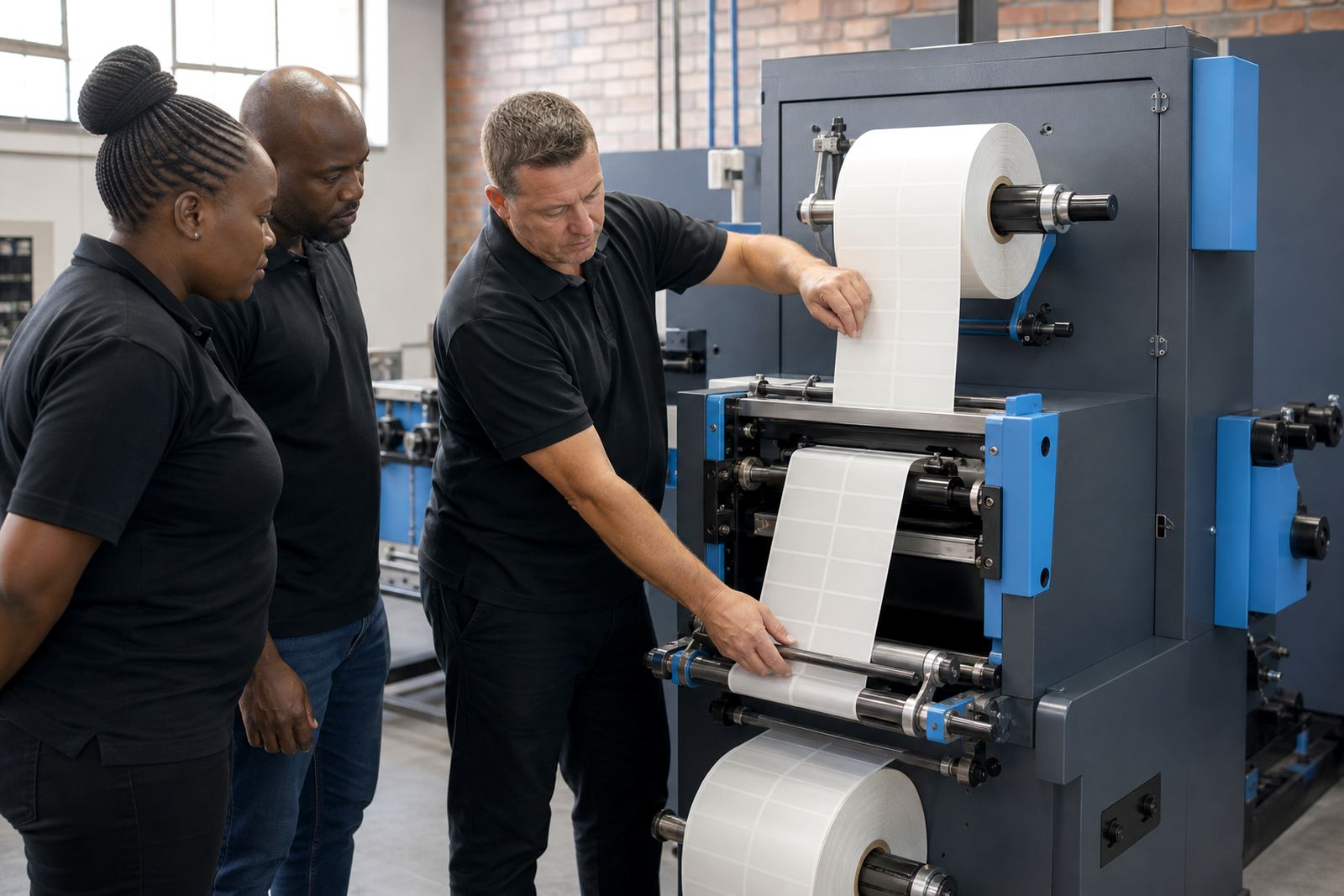
We start with the machine in its working state, not stripped down and not assumed to be fine. The technician reviews the symptom history, looks at the current setup and traces the process from unwind to rewind. If the line is producing labels already, we use that job as the basis for checks so the notes reflect real stock, real speed and real register conditions. That approach is useful on machines handling short runs, mixed label sizes and frequent changeovers.
When adjustments are needed, we make them in sequence so the cause and the effect are clear. A web guide moved too far can create another fault down the line, so each step is checked as it goes. Where parts are showing wear, we flag them before they fail. If a unit needs closer attention, our service coordinator and technical team can plan the next visit around the condition of the machine and the parts on hand.
- Initial condition check and fault trace
- Cleaning and setup corrections
- Calibration of registration, slitting and rewind sections
- Test run with operator observation
- Service notes, parts advice and follow-up actions
Turnaround on the work and how the visit fits production
Preventive maintenance is usually planned around production gaps, stock changes or a quieter shift so the machine can be checked without rushing the work. Some visits are short and targeted, others take longer when the line has been running with dust, adhesive or tired components for a while. The scope depends on the machine type, the width of the web, the condition of the cutting section and whether extra setting work is needed after the inspection.
We handle support from Kya Sand, Randburg and assist sites in Johannesburg, Pretoria, Durban, Cape Town and Gqeberha, with other South African locations covered by arrangement. On multi-unit lines, a full check can include more than one finishing stage, especially where a printer feeds directly into a die-cutting and rewinding path. The practical aim is steady output, less scrap and a cleaner start when the next production order lands on the floor.
Pricing shaped by the machine, not a flat guess
Preventive maintenance is priced according to what the visit has to cover. A basic inspection on a compact finishing unit is not the same as a full line check on a machine with lamination, die-cutting, matrix stripping, slitting and rewinding in one path. We look at the type of equipment, the number of stations, the access needed, the parts condition and whether the job needs calibration, setup help or extra labour on site.
That means the pricing approach is tied to the actual machine condition and the scope of work. Where the service reveals worn rollers, blades, bearings or sensor issues, those items are handled as separate parts or repairs, not hidden inside a vague bundle. It keeps the quotation readable and avoids confusion when the machine needs more than a surface clean. For planning purposes, our contact form can be used to share the model type, roll width, finishing steps and the issue you want assessed.
Aftercare once the machine is back in routine use
After the visit, we leave notes that help the operator keep the line stable between services. That can include setup pointers, cleaning points, wear items to watch and correction notes for registration or rewind quality. If a machine is prone to edge wander, static build-up or waste strip problems, we make that clear so the next production run starts with the right checks. Small habits matter, especially on label work where one bad roll can throw off packing, dispatch and customer sign-off.
Our service team can also support spare parts supply, die setup help and remote guidance where a quick check is enough to narrow the fault. The point is not to bury the operator under theory. It is to keep the finishing line predictable, whether the job uses flexible dies, semi-rotary cutting, laminating, varnish, slit rolls or rewound reels ready for packing.
- Operator notes for routine checks
- Parts advice for wear items and consumables
- Guidance on registration marks and clean strip-out
- Support for follow-up corrections after the visit
Key facts
| Service focus | Preventive maintenance for digital label finishing machines |
|---|---|
| Machine types | Laser and semi-rotary die-cutting, slitting, rewinding, lamination lines |
| Typical checks | Tension, alignment, registration, waste stripping, rollers, sensors |
| Roll handling | Narrow and wider roll formats, unwind to rewind |
| Outputs supported | Cut labels, stripped matrix, slit reels and finished rewinds |
| Coverage | Kya Sand, Randburg and major South African production centres |