What commissioning covers on a label finishing line
Commissioning is the stage where the machine moves from delivery to actual production behaviour. We set the line for your roll widths, core sizes, label pitch and chosen finishing method, then test how each section works together under load.
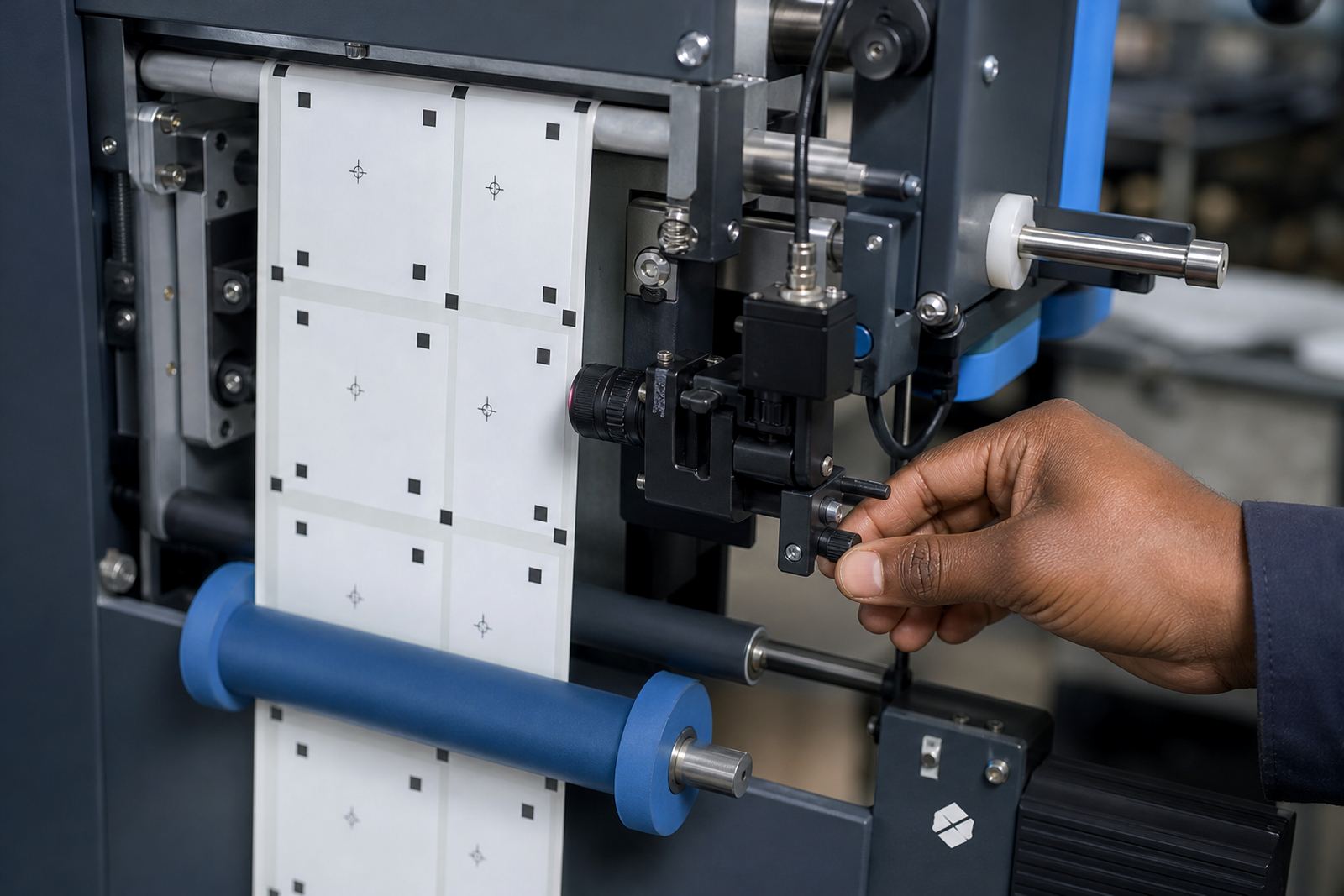
The job usually includes web threading, unwind and rewind setup, tension setting, registration mark reading, die-cut depth checks, matrix stripping, slitting alignment and any lamination or varnish path that forms part of the process. On digital label work, small faults show up quickly, so the settings need to hold steady across a full roll and not only on a short sample.
- Unwind and rewind alignment for the roll format in use
- Registration checks against printed marks or sensor targets
- Tension balancing through lamination, cutting and rewind
- Matrix stripping set for clean waste removal
- Slitting and rewind checks for finished roll width
The commissioning sequence on site
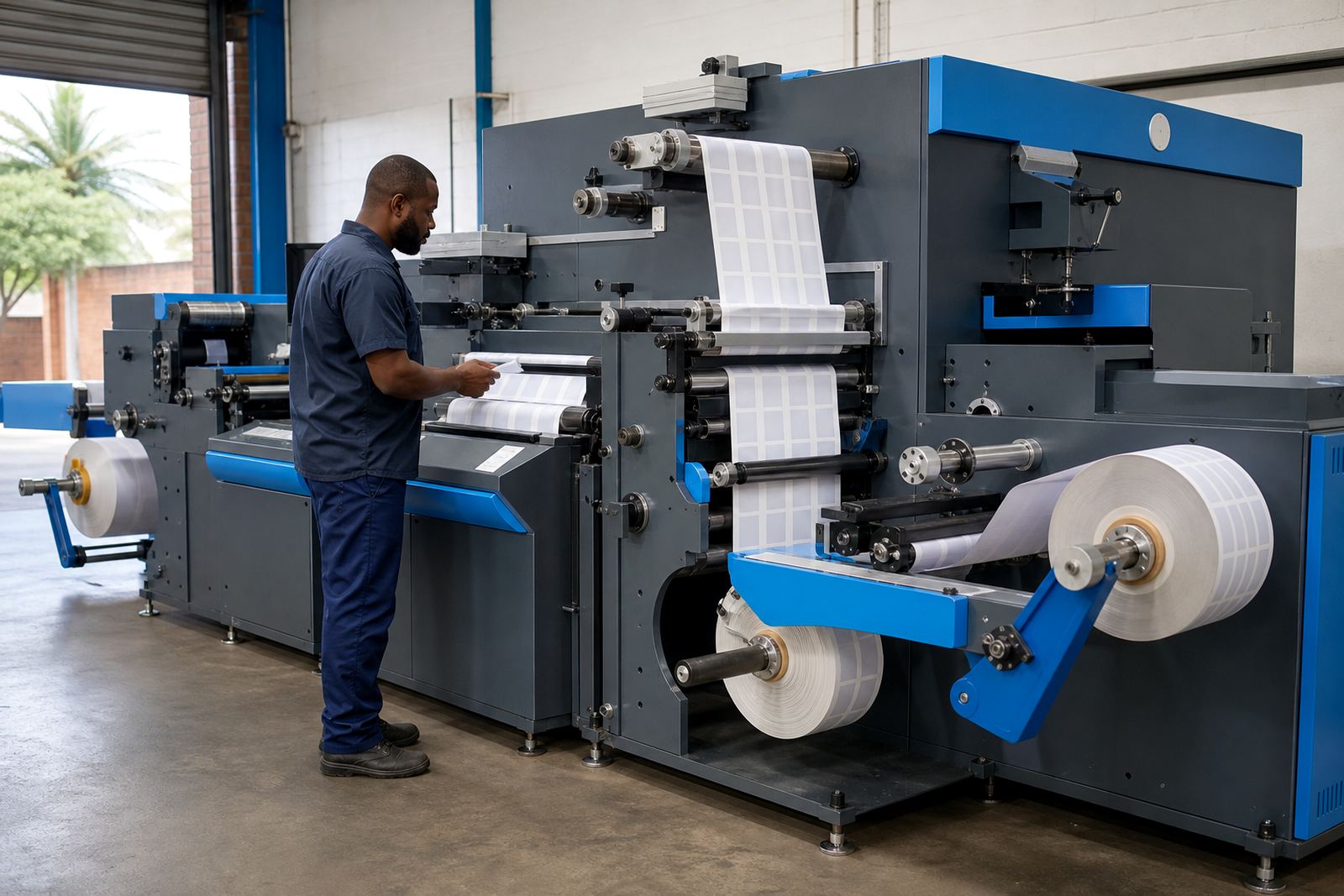
We start with a practical inspection of the installed line, then move through a set sequence so faults are traced in the right order. If a machine has a laser station, a semi-rotary die unit, a flexo varnish module or a cold lamination section, each part is checked in the order it affects the web path.
Test runs are done with your own labels where possible, because substrate behaviour changes between paper, film and textured stock. We look at registration drift, edge control, waste take-off, label spacing, roll build and the repeatability of the cut. If the line includes a slitter, we verify knife position and finished roll widths before production is signed off.
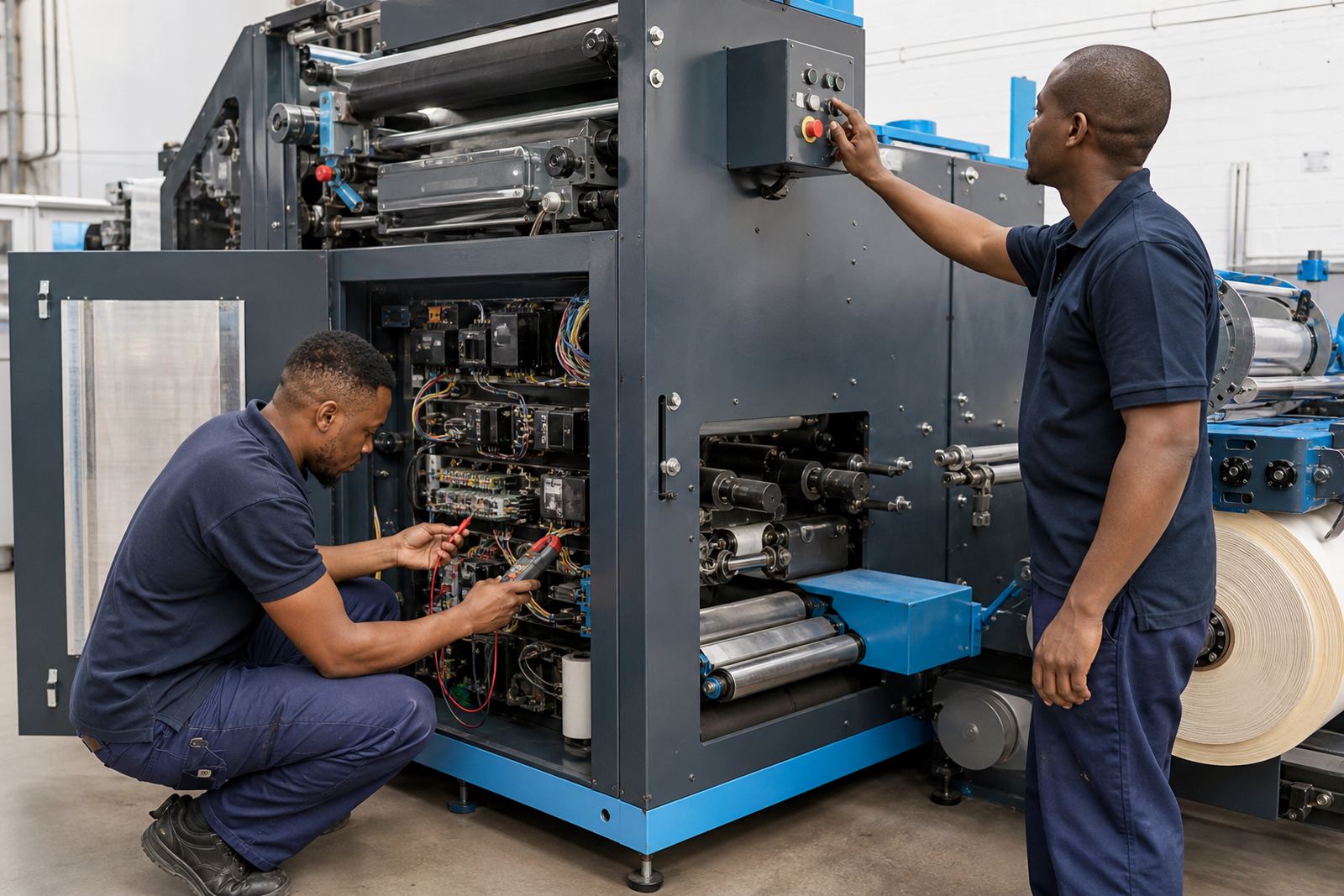
- Mechanical checks on guards, bearings and web path components
- Electrical and control checks linked to the machine setup
- Sensor calibration for mark reading and repeat positioning
- Trial runs with the stock and labels you plan to run
- Production sign-off once the finished rolls hold spec
Machine types and finishing specs we work with
Line commissioning is relevant to a wide range of digital label finishing equipment. Some lines are built for laser finishing and variable shape cutting, while others use semi-rotary tooling with flexible dies. Many setups also include lamination, varnish, matrix stripping, slitting and rewind in one pass.
Typical production details we set around include roll widths from narrow label rolls through to wider parent rolls, core sizes used by the print room, label repeat length, registration mark placement and the finished rewind tension. We also work around coated paper, clear film, synthetics and moisture-sensitive stock where roll stability matters more in humid coastal conditions than in a dry inland room.
- Laser and semi-rotary cutting setups
- Flexible die registration and depth control
- Lamination paths for gloss, matte or protective layers
- Varnish modules where the print process includes coating
- Slit widths, rewind direction and finished roll firmness
How the setup work moves from arrival to sign-off
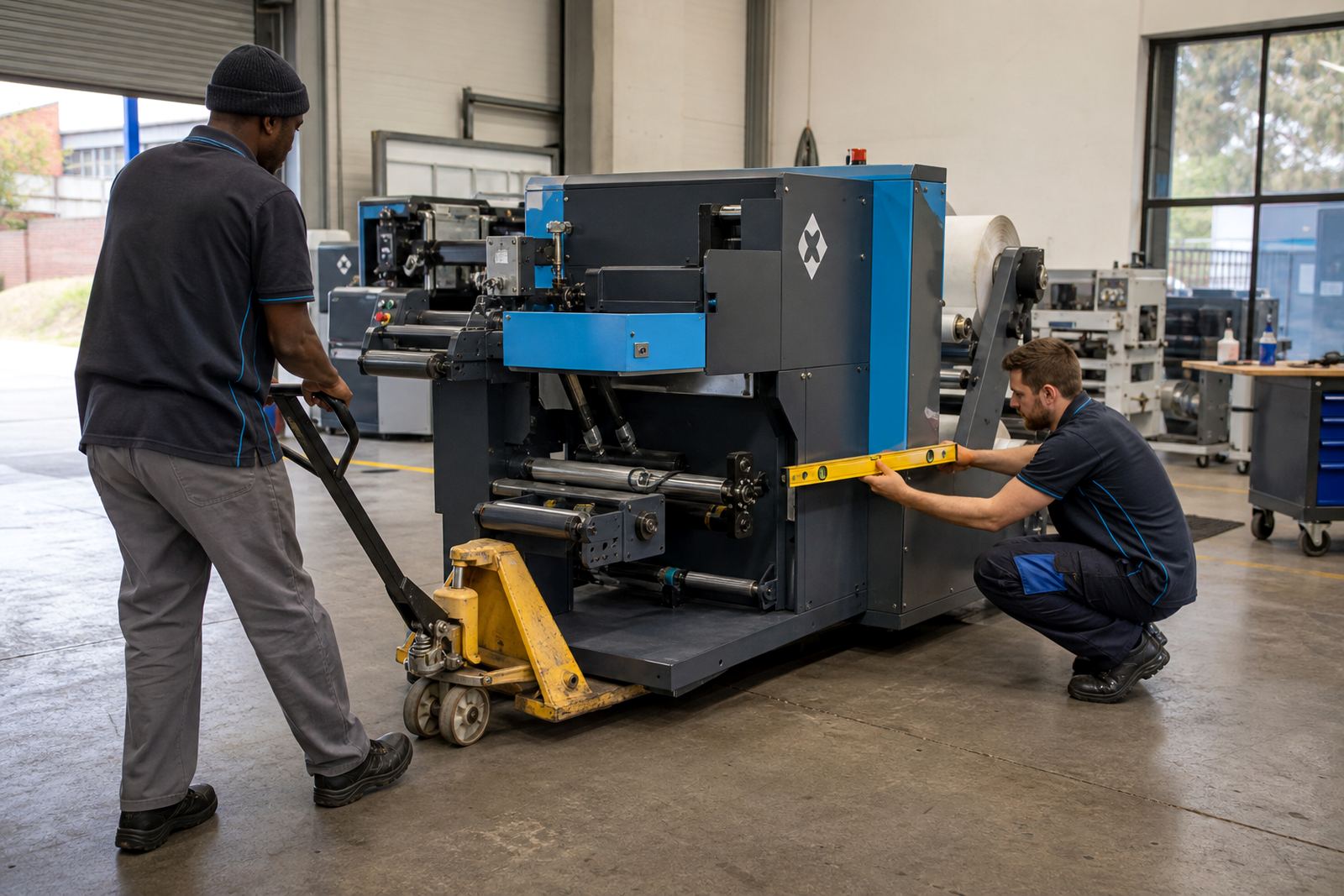
Once the machine is on site, the first task is to confirm the line layout and the web path against the room conditions and the operator flow. We then move into calibration, test pieces and a controlled production run that reflects the labels you actually intend to send out.
Operator training is built into the handover, because commissioning only holds value if the team can repeat the settings without guesswork. The session covers start-up order, setting tension, reading the control panel, checking registration marks, handling waste strip and spotting the signs of a drifting web before it starts wasting material.
- Site review and machine placement checks
- Calibration of the register and web control systems
- Test output for cut quality, strip quality and rewind build
- Operator walkthrough on controls and safety points
- Final handover notes for normal production use
Pricing approach for commissioning jobs
Commissioning is priced around the real scope of the line, not a flat number that ignores the details. A compact finishing unit with one cutting stage is different from a longer line with lamination, slitting, rewind and multiple registration checks. Travel, site access, machine complexity and the amount of set-up time all shape the quote.
If the line needs extra die setup help, a second round of registration calibration or extended production optimisation, those items are priced into the scope before work begins. The same applies where a customer wants commissioning to include operator training for more than one shift. Clear scope matters, especially when label stock, web width and production targets are not all the same from job to job.
- Machine configuration and number of finishing stages
- Whether the line uses laser, semi-rotary or flexible die tooling
- Travel from Kya Sand, Randburg to the site
- Any extra calibration or production optimisation work
- Training time for the operators assigned to the line
Aftercare once the first rolls are in production
After commissioning, the line should keep producing the same label quality without constant rework. Our aftercare covers breakdown repairs, remote support, preventive maintenance planning, spare parts supply and follow-up checks when the production run changes to another stock or label size.
For teams in Johannesburg, Pretoria, Durban, Cape Town and Gqeberha, that support is useful when a machine is moved, the format changes, or a new operator takes over the run. We also help with rewind setup, slitting setup and registration calibration if the finished roll starts drifting from the original sign-off.
- Support for format changes and new stock types
- Spare parts supply for the installed line
- Remote guidance for control and setup queries
- Follow-up checks after production changes
- Service coverage across South Africa from our Randburg base
Where the service team works from
Our base in Kya Sand, Randburg supports customers across Gauteng and beyond. The team handling line commissioning includes Thabo Mdlalose, Karen Naidoo, Pieter Pienaar, Lerato Bhengu, Musa Wessels and Ayesha Shezi, with support areas that include Randburg, Johannesburg, Pretoria, Midrand, Kempton Park, Durban, Cape Town and Gqeberha.
That spread matters when a production line has to be set for a label printer in an inland warehouse or a packaging site close to the coast where humidity can affect film handling and rewind behaviour. The same machine can run well in both places, but the settings and material handling need to respect the room, the stock and the pace of the print room.
- Base: Kya Sand, Randburg
- Coverage: South Africa wide
- Main cities: Johannesburg, Pretoria, Durban, Cape Town and Gqeberha
- Support areas: Randburg, Midrand and Kempton Park
Key facts
| Service | Line Commissioning |
|---|---|
| Machine focus | Digital label die-cutting and finishing lines |
| Finishing methods | Laser cutting, semi-rotary die-cutting, lamination, varnish, matrix stripping, slitting and rewind |
| Typical roll factors | Roll width, core size, label pitch, rewind tension and registration mark position |
| Coverage | Kya Sand, Randburg and South Africa wide |
| Included support | Installation checks, operator training, servicing and follow-up production support |