When the mark moves, the whole line feels it
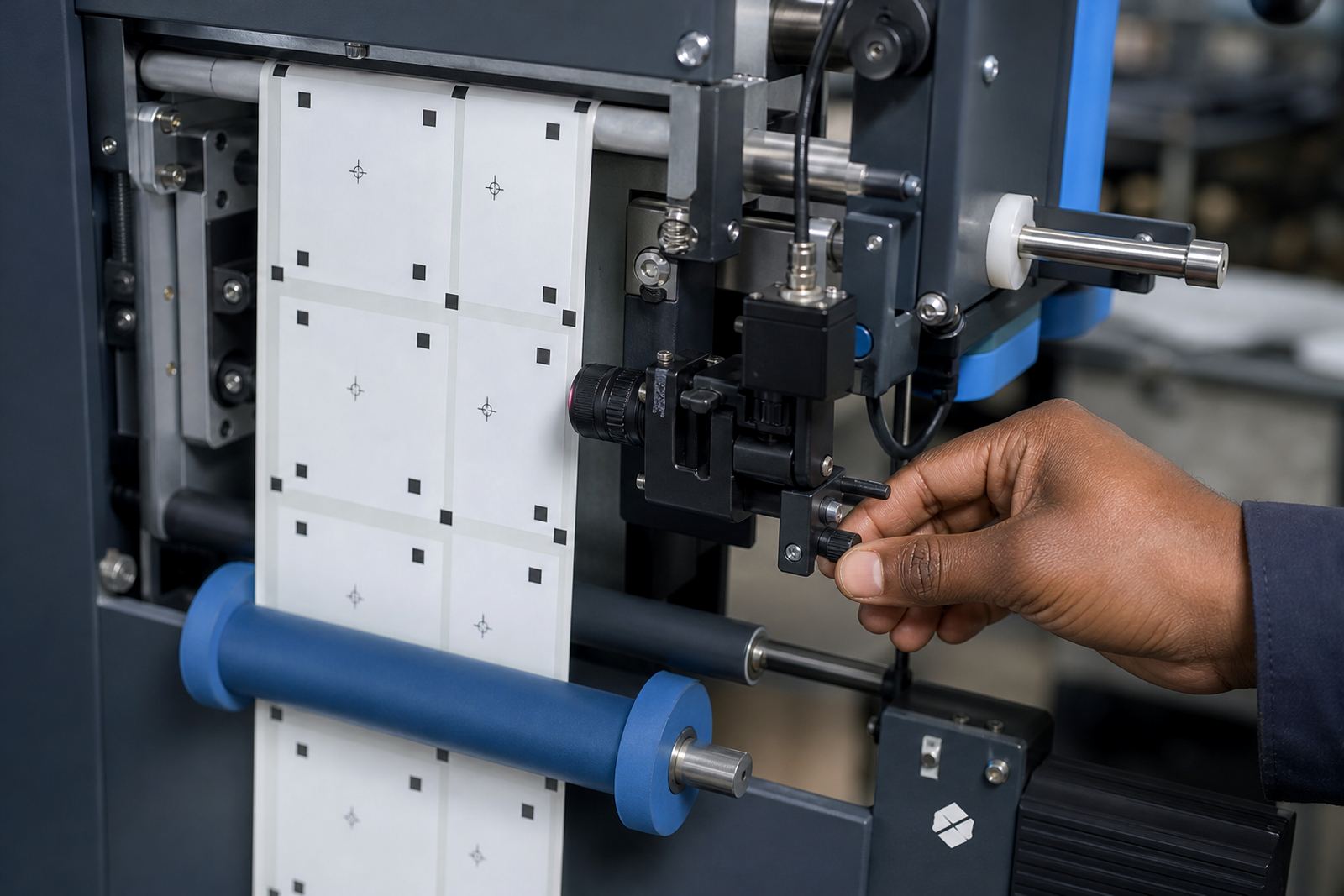
In digital label finishing, a small reading error shows up fast. Cuts drift, matrix stripping starts to tear, slitting lines wander and the rewind builds uneven edges. Our registration calibration work focuses on the point where the sensor sees the mark, not just where the mark was printed on the roll.
We check the sensor position, signal stability, trigger timing and the relationship between print repeat and die-cut repeat. That matters on short runs, mixed substrate jobs and rolls that carry gloss, varnish or clear film. A label line can look fine at the first roll end, then show a shift when humidity, tension or roll diameter changes.
- Sensor alignment for black mark, eye mark or printed register systems
- Repeat setting checks for semi-rotary and digital finishing units
- Review of feed, stop-start and web tension behaviour
- Testing across paper, film and coated stocks
What our calibration visit covers on the machine
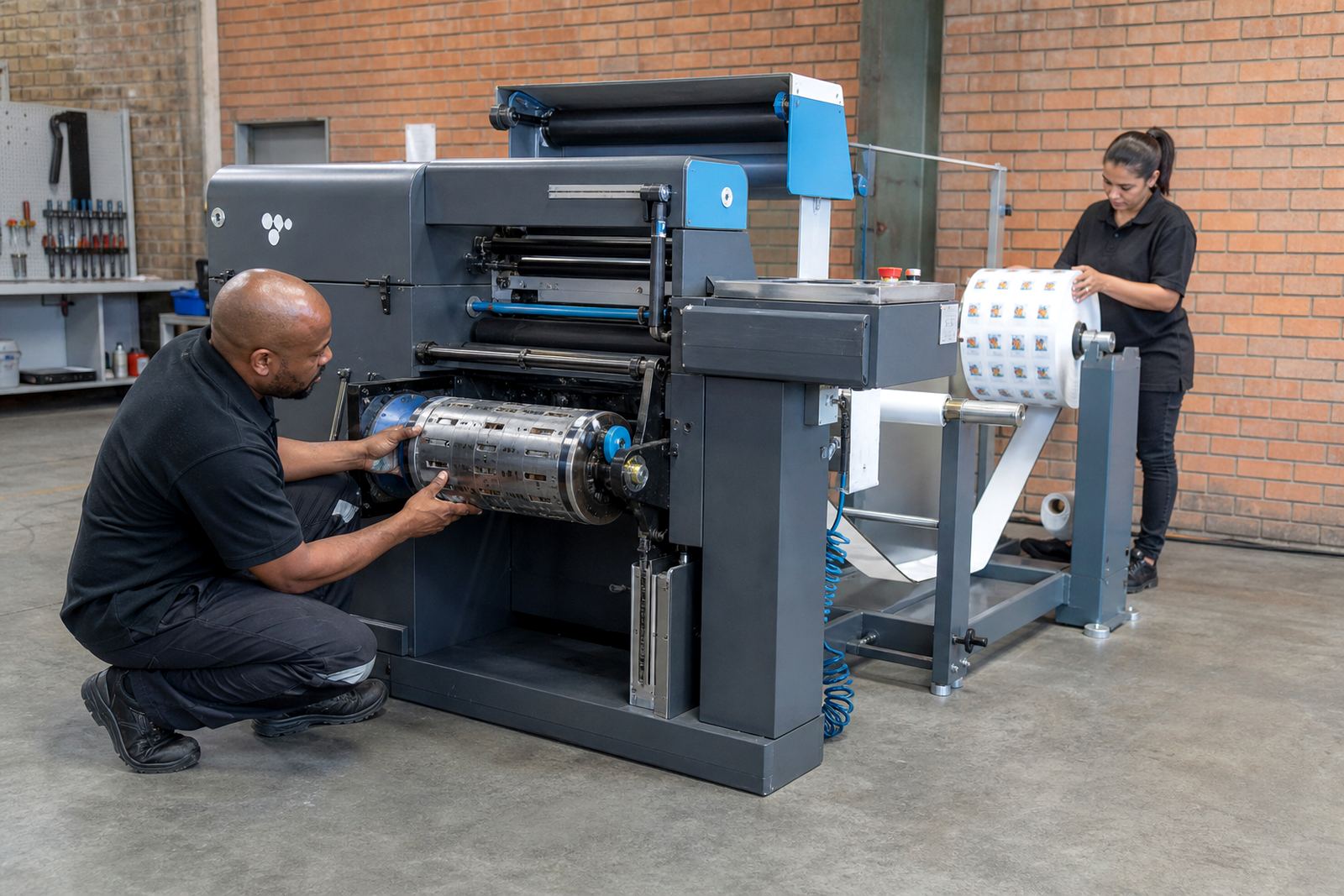
We work through the sensing path from the unwind through to the rewind, because registration errors are not always a sensor-only problem. A loose guide roller, worn idler, dirty lens or unstable edge guide can make the mark read correctly on one pass and drift on the next.
The service suits lines that use laser die-cutting, flexible dies or semi-rotary tooling, and it is useful where lamination or varnish changes the way the mark is seen. We also check whether the artwork repeat, sensor sensitivity and cut length are matched to the actual label length. That prevents short or long cuts from creeping into the run.
- Cleaning and setting of registration sensors
- Fine adjustment of mark detection thresholds
- Calibration of cut-to-print repeat lengths
- Review of rewind tension and roll build quality
- Trial runs with the substrate used on the job
Step by step on a live production line
We start with the machine condition, the material being used and the fault pattern the operator is seeing. Some lines drift only after the first few hundred labels, while others lose position after a roll change or when a different print finish is loaded. The checks follow that pattern, not a fixed script.
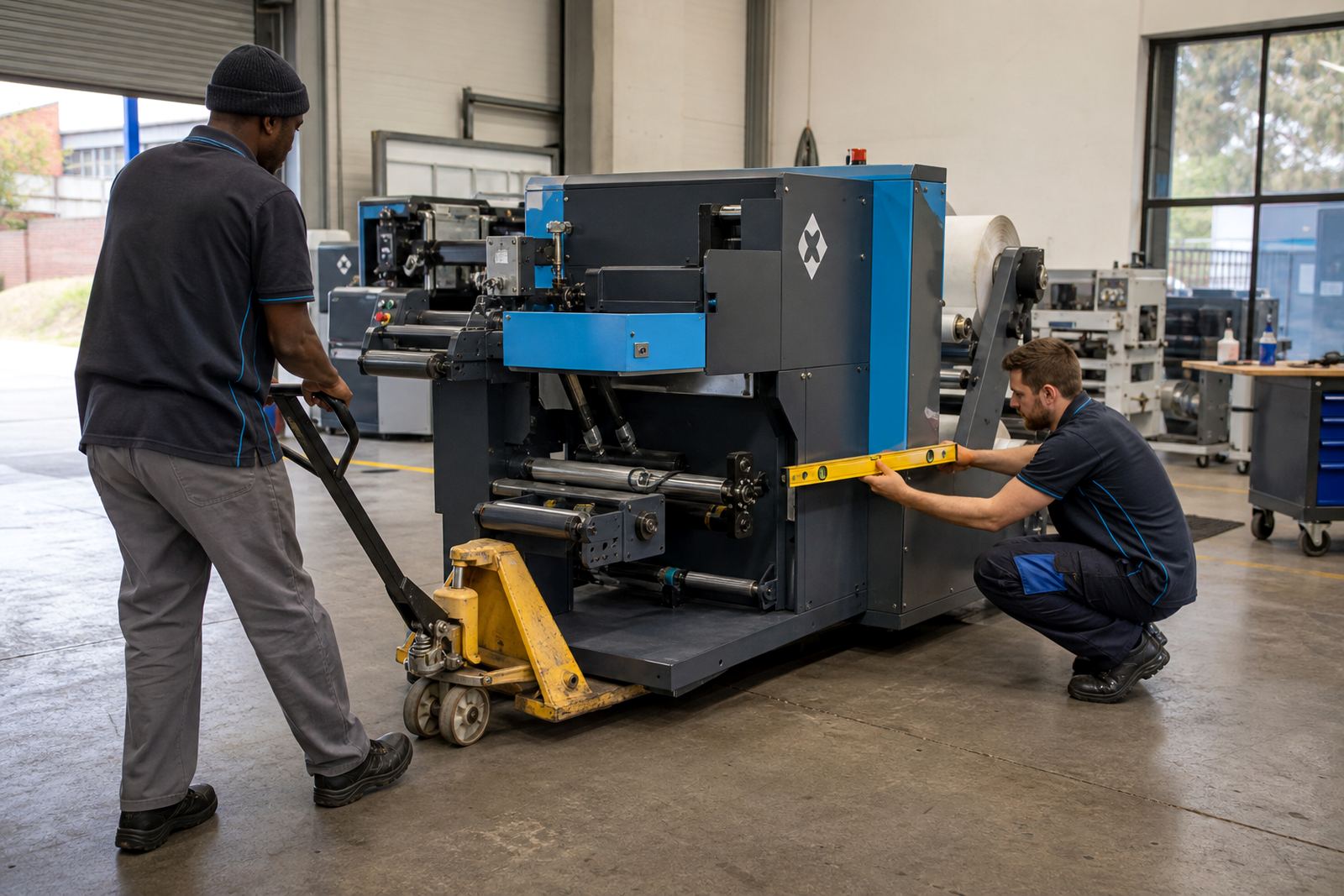
First we inspect the sensor path and the registration marks on sample rolls. Then we test detection at working speed, confirm the stop position and compare the cut, slit or rewind point against the printed repeat. If needed, we adjust the web path, sensor bracket, timing settings and rewind setup so the line holds register without chasing it all shift.
- Initial fault check with operator input
- Sensor, guide and timing inspection
- Mark reading test on supplied material
- Calibration changes and repeat verification
- Run-off check before handover
Materials, roll sizes and print styles we calibrate around
Registration behaves differently on paper labels, clear film, metallised stock and heavier packaging grades. Gloss coatings and varnish can reduce contrast, while flexible dies and semi-rotary systems need repeat settings that suit the exact label pitch. A setup that reads cleanly on one job may struggle on another if the substrate stretch or roll build changes.
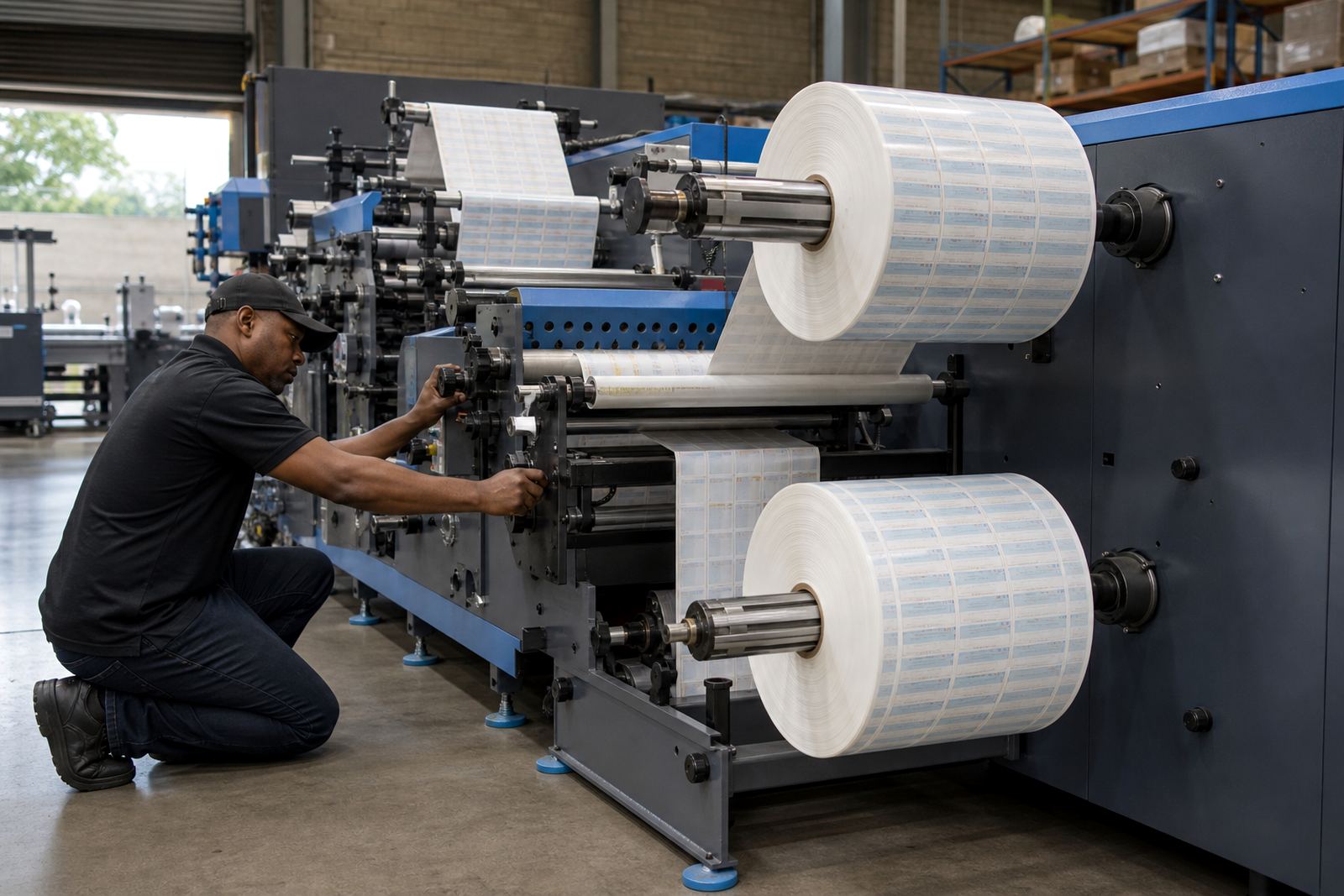
We work with roll-fed machines used for label printers and packaging producers, including narrow web lines and wider finishing formats. Where the job includes laminate, slitting and rewinding in one pass, the sensor setting needs to hold through the whole sequence. That is especially important on longer rolls, because a small error early on becomes waste at the end.
- Paper, film and coated label stocks
- Clear, matte and gloss printed finishes
- Short, medium and long production rolls
- Black mark and printed registration systems
- Jobs with lamination, varnish and matrix stripping
Pricing built around the line, not a fixed guess
Pricing depends on the machine type, the number of stations involved and whether the work is a straight calibration or part of a broader production fault. A single sensor reset is not the same as a full registration correction across unwind, die-cut, slit and rewind sections. We quote from the actual line condition and the material being used.
Where a job needs parts, extra setup time or follow-up testing on more than one substrate, those items are shown clearly. If the machine is in Kya Sand or nearby Randburg, the visit may be planned differently from a site in Durban or Cape Town, because the line condition and support scope can differ. The aim is to keep the cost tied to the work needed on that specific machine, not a broad estimate.
- Machine type and finishing method
- Number of calibration points required
- Need for parts, brackets or sensor changes
- Site location and access to the line
- Whether testing is on one or more materials
Aftercare once the register is holding properly
Once the calibration is complete, we leave the operator with the settings that were used, the mark style that worked best and any notes on material behaviour. That makes it easier to reset the line after a roll change or a new print batch. We also flag worn parts, unstable tension points or sensor issues that may cause the same fault to return later.
Aftercare can include remote support, spare parts supply, preventive maintenance and production optimisation if the line needs a wider review. Our team works across Johannesburg, Pretoria, Durban, Cape Town and Gqeberha, with support in Midrand and Kempton Park as well. For a machine that keeps drifting on registration, it helps to look at the whole web path and not only the mark reader.
- Setting notes for the operator team
- Fault points to watch during the next run
- Remote support where a quick check is enough
- Parts advice for sensors, rollers or guides
- Follow-on work for broader line stability
Key facts
| Service area | Kya Sand, Randburg and sites across South Africa |
|---|---|
| Machine types | Digital label finishing, laser and semi-rotary systems |
| Calibration focus | Registration marks, repeat length and sensor stability |
| Materials | Paper, film, coated stock and varnished labels |
| Typical line elements | Unwind, laminate, die-cut, strip waste, slit and rewind |
| Support options | Installation, training, servicing, parts and remote help |