Unwind feed that stays steady under changing roll loads
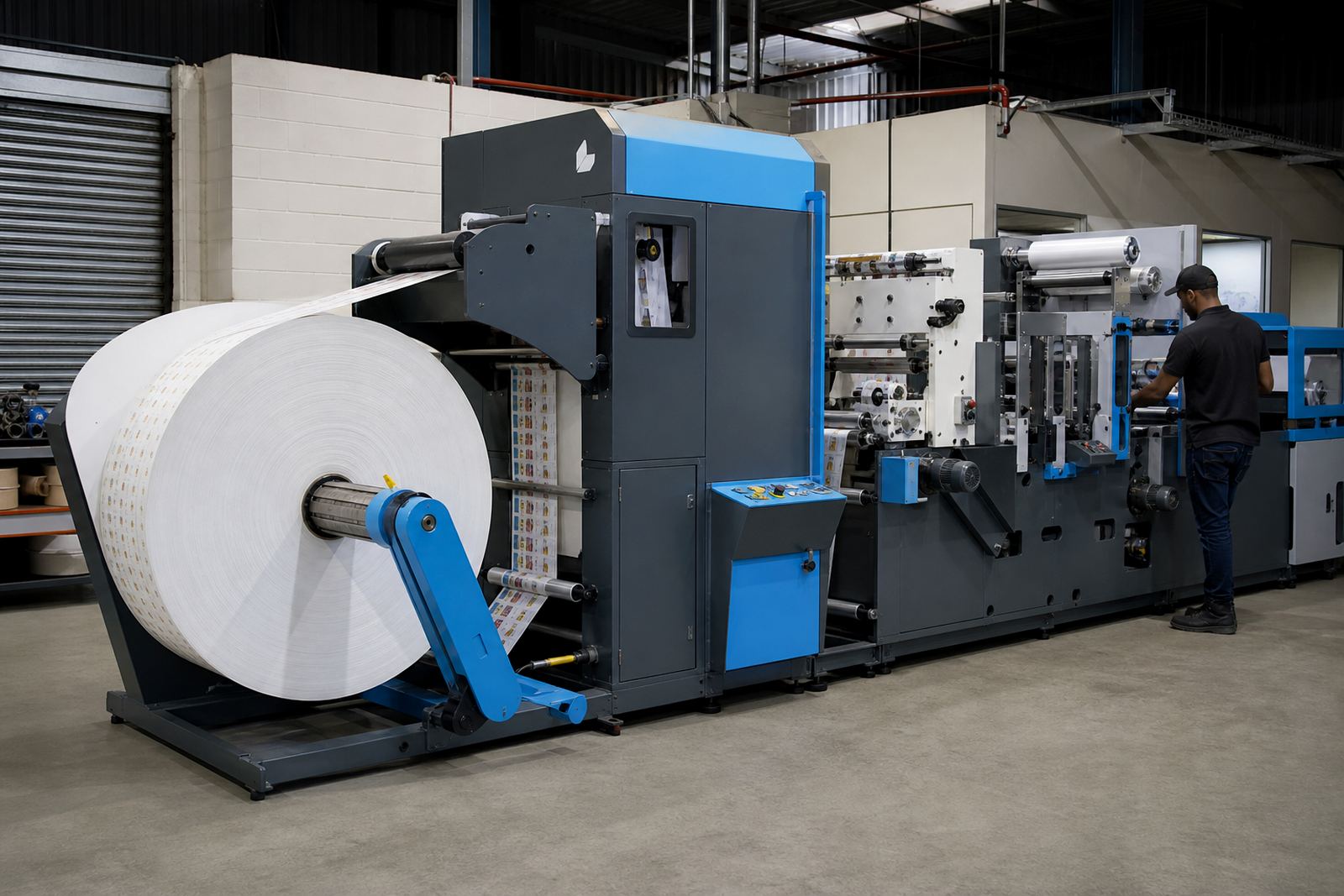
An independent unwind stand carries the parent roll on its own frame and feeds web into the next process at a controlled pace. In label finishing, that matters when a line has to hold registration marks, protect print quality and keep the web flat through lamination, varnish or die-cutting. The stand gives the operator a more predictable unwind path, which helps with roll runs that vary in diameter, face stock weight or core size.
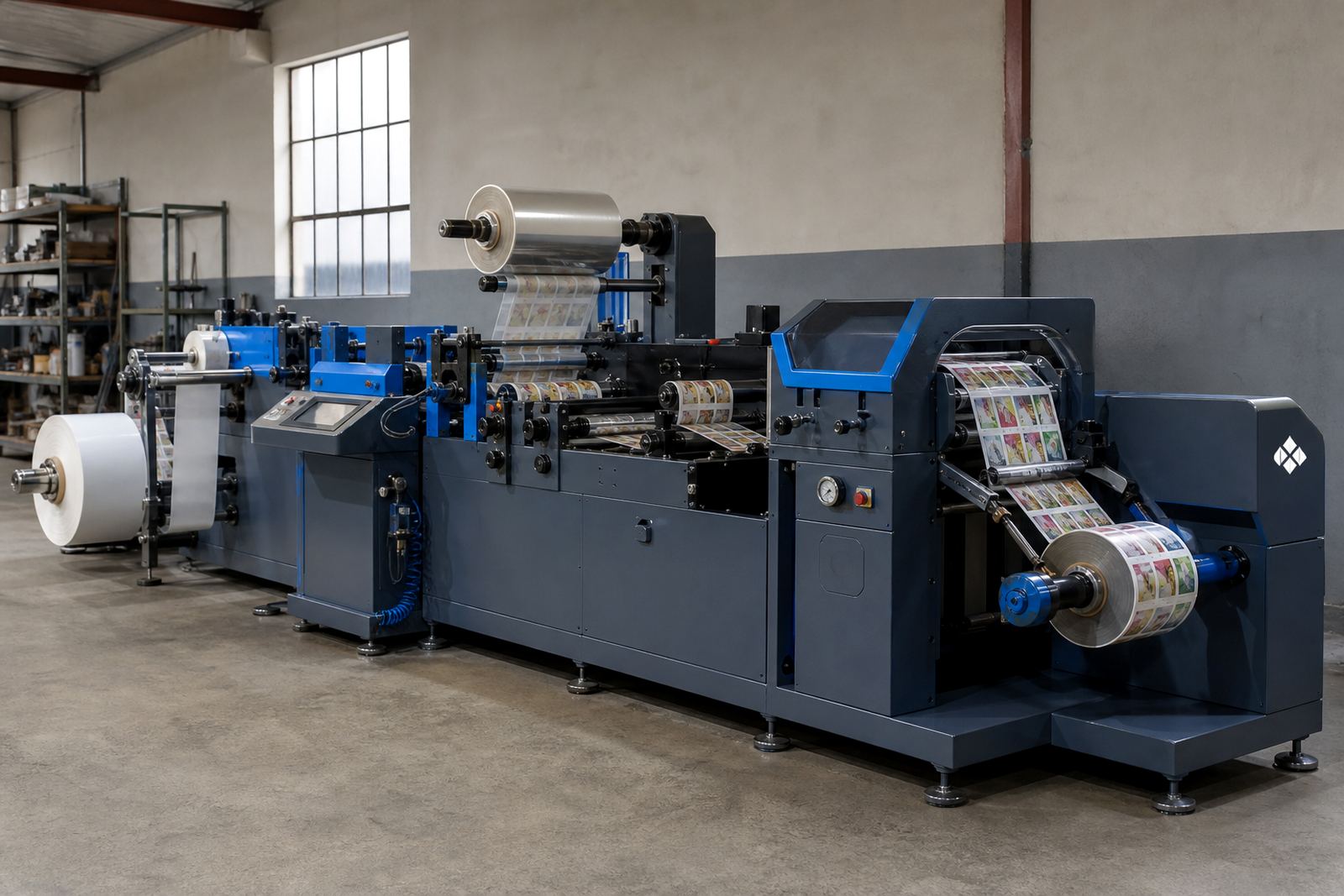
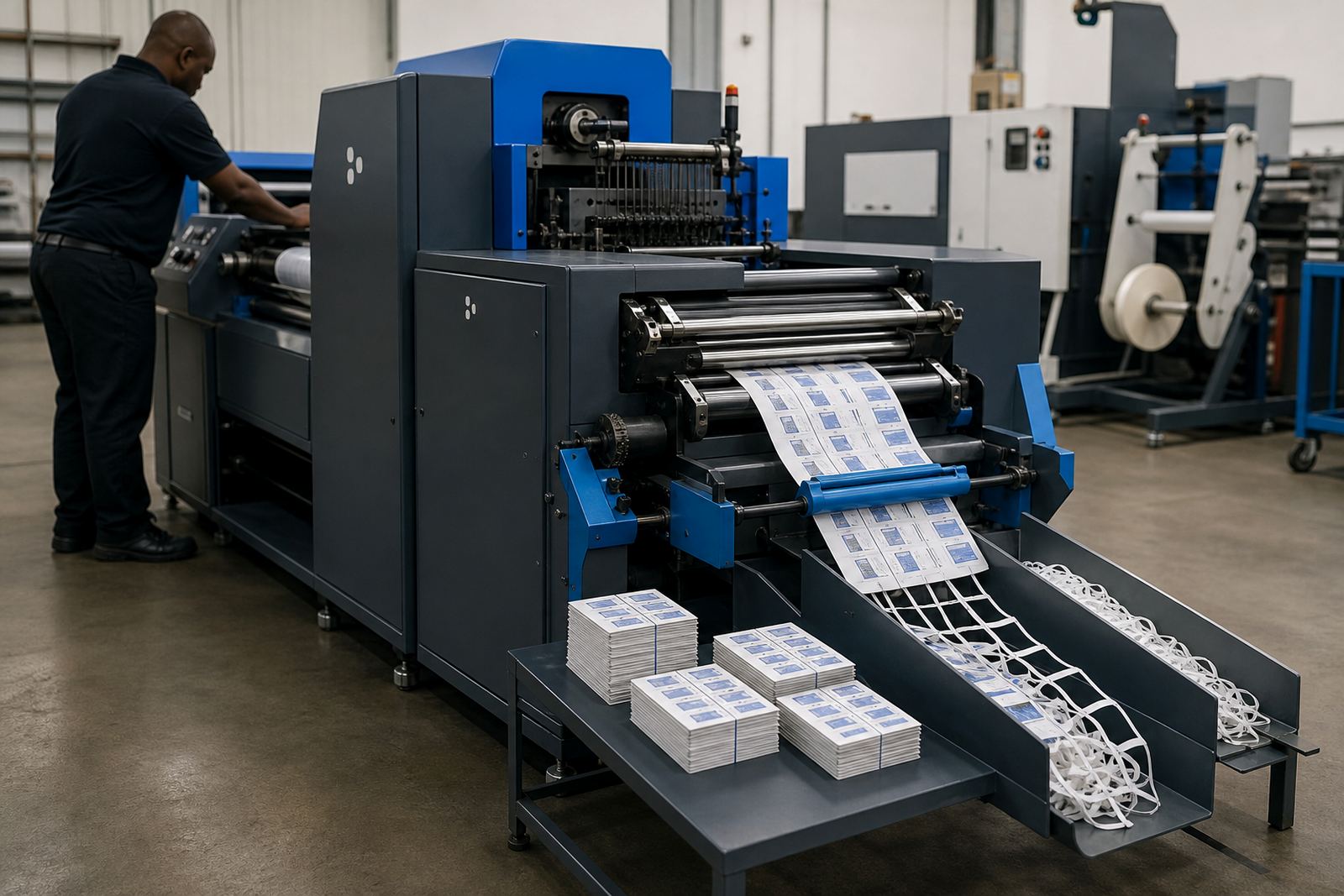
For digital label work, the unwind stand is often the first controlled station before a lamination module, laser or semi-rotary die-cutter, matrix stripper, slitter or rewind. It is used where the press output needs a cleaner handover into finishing, especially on short runs, mixed jobs and repeated changeovers. A well set unwind reduces wandering web edges, helps the tension stay even and gives the rest of the line a better chance of holding register on small graphics and fine cuts.
- Supports continuous feeding from rolls with different outer diameters
- Helps keep web tension more even across the line
- Can be paired with dancer control or brake control
- Useful before lamination, varnish, slitting and rewinding stations
Sizes and control options that match the roll room
Independent unwind stands are selected around roll width, roll diameter, core size and the speed of the finishing line. A narrow stand may suit compact label production, while a wider frame is better for larger webs and heavier parent rolls. In many finishing rooms, the practical choice is not only about width, it is about how the stand carries the load and how smoothly it feeds into the next module.
Control options can include mechanical brake adjustment, pneumatic braking, dancer arms or sensor-based tension control, depending on the line build. Some setups use a manual core chuck arrangement for simpler work, while others need a shafted unwind for better support on larger rolls. Where the material is sensitive or the line runs faster, operators usually want finer control over unwind pull, edge tracking and roll stability. That keeps the web calmer at the point where registration marks must stay readable and the cut path must stay true.
- Common roll widths: 250 mm, 330 mm, 450 mm, 600 mm and wider builds
- Core sizes can be set for 76 mm and other common formats
- Options may include brake control, dancer control or sensor feedback
- Frame and shaft design can be matched to heavier or lighter rolls
Where the stand earns its place on a real line
An independent unwind stand suits label printers, converters and packaging producers that need a stable feed before finishing. It is useful where printed roll stock arrives from a digital press and must move into a finishing line without hesitation. Sites in Johannesburg, Pretoria, Durban, Cape Town and Gqeberha often use this kind of station when they are building a finishing line around variable jobs, short production cycles and regular setup changes.
The stand also fits lines handling self-adhesive labels, shrink sleeve work, flexible packaging webs and other roll formats that need measured feeding. It can sit ahead of a lamination section, a coating head, a die station or a slitting and rewind section, depending on the process sequence. When the line needs less drag variation from the front end, the unwind stand becomes part of the stability that holds the whole job together. For coastal work in Durban or Gqeberha, frame finish and bearing protection are worth confirming, because moisture and salt air can affect exposed parts if the equipment is not specified properly.
- Suitable for digital label finishing rooms and packaging converters
- Works well before lamination, die-cutting and slitting stations
- Useful for short-run production and repeated job changes
- Can be specified for inland or coastal operating conditions
Fitting, alignment and line commissioning details
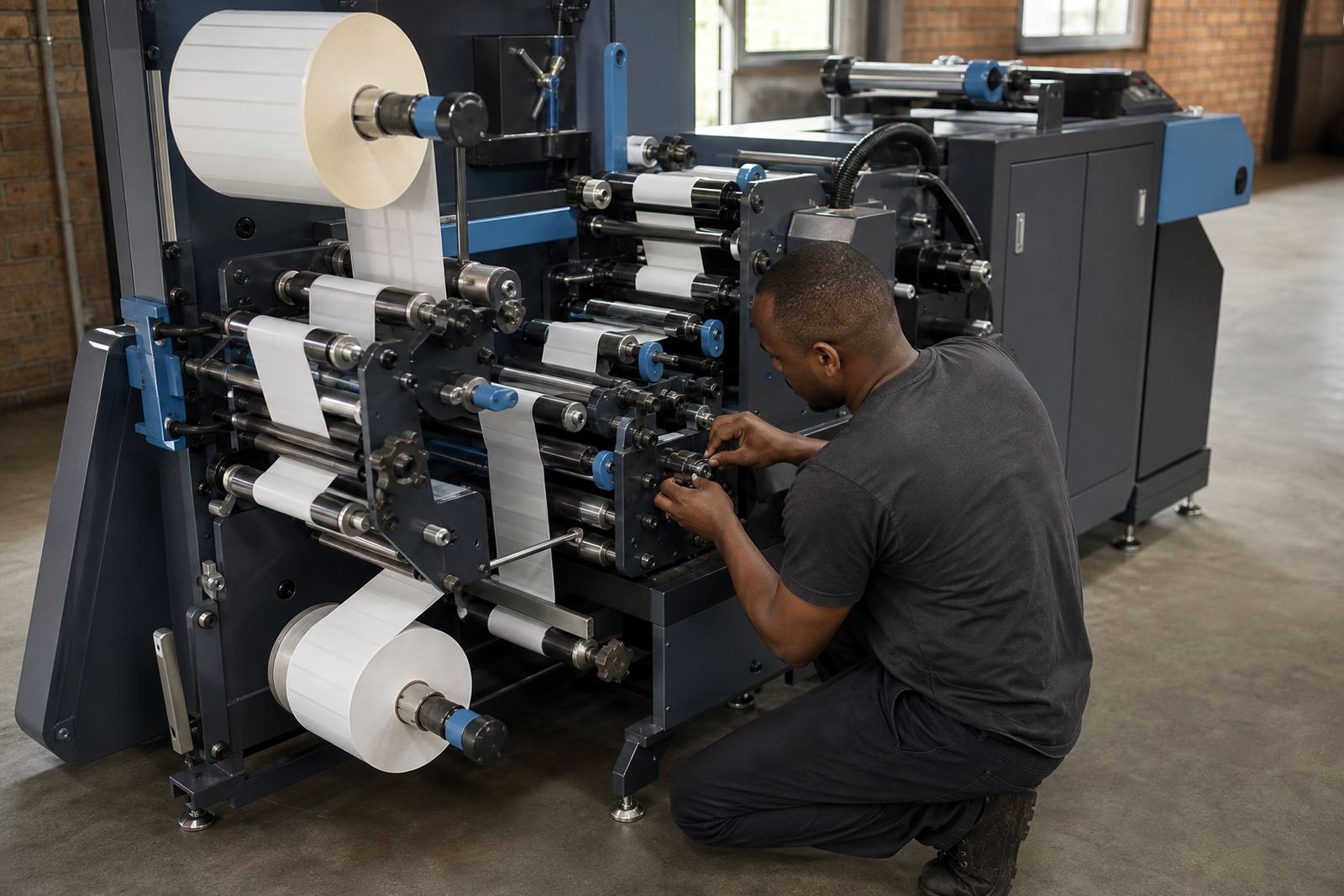
Installation starts with the footprint, web path and centreline of the finishing line. The stand needs to sit square to the next module, with enough clearance for roll loading, side access and maintenance. If the unwind feeds into a web guide or register system, the alignment has to be accurate enough for the material to enter cleanly. A poor setup here shows up later as edge wander, tension spikes or difficulty holding marks through the rest of the process.
Electrical or pneumatic requirements depend on the control method chosen. A powered brake, sensor package or tension control system may need a proper supply and neat cable routing, while a mechanical stand can be simpler to place but still needs careful adjustment. During commissioning, the operator team should check roll direction, brake response, dancer movement and the way the web travels under normal production load. That is also the point to confirm how the stand behaves with a full roll, a smaller roll and a core that is nearly finished. The first setup is where small faults show themselves, and it is easier to sort them there than after a line has started running jobs.
- Confirm line centreline and machine footprint before fitting
- Check roll direction and unwind path during setup
- Test brake response under full and reduced roll diameters
- Align the stand with any downstream register or web guide system
Care that keeps the unwind behaving properly
An unwind stand works best when bearings, shafts, brake surfaces and moving parts are kept clean and checked on a routine basis. Dust from board, adhesive trace, paper fibre and coating residue can settle around the moving section of the stand and affect how smoothly it runs. On a production floor, the operator should watch for uneven drag, wobble in the roll mount, scoring on shafts or unusual noise from the brake assembly.
Preventive maintenance usually includes inspection of wear parts, tightening of fixings, lubrication where required and checks on tension response. If the stand uses sensors or dancer control, the signal path should be verified during service, because a drifting sensor can affect the entire line. On older or busier equipment, spare parts planning matters too, especially for chucks, bearings, brake parts and control items that are used often. A stand that is serviced before it starts to wander keeps the web feed calmer and reduces pressure on the rest of the line.
- Keep shafts and bearing areas clean from adhesive and fibre build-up
- Inspect brake response and dancer movement during routine checks
- Replace worn parts before they start affecting web control
- Track spare parts for high-wear items such as chucks and bearings
Details to pin down before the order is placed
A proper order starts with the roll size, web width and the way the line will run. The unwind stand must match the material format, the maximum roll weight and the operating speed that the finishing room expects to handle. If the line includes lamination, varnish, slitting, matrix stripping or rewinding, that sequence should be named clearly so the unwind is matched to the right duty. The more exact the information, the easier it is to set the stand up for the actual job rather than a loose guess.
It helps to confirm core diameter, outer roll diameter, unwind direction, web tension range and whether the stand needs manual or controlled braking. The finish type matters too, because sensitive printed stock, thicker label material and wider webs do not all behave the same way on the feed path. If installation, operator training or servicing is part of the project, it is useful to note the site location and the rest of the line equipment so the right support can be planned around the machine layout. Our contact form is the place to send those details when you are ready to start the discussion.
- Roll width, outer diameter and core size
- Maximum roll weight and expected running speed
- Unwind direction and tension control preference
- Downstream process list, including lamination, die-cutting or slitting
Key facts
| Type | Independent unwind stand for roll-fed label finishing lines |
|---|---|
| Supported roll width | Typically from 250 mm up to 600 mm or wider, depending on build |
| Core size | Commonly 76 mm, with other formats available by specification |
| Control method | Mechanical brake, pneumatic brake, dancer control or sensor-based tension control |
| Integration | Can feed lamination, die-cutting, slitting, stripping and rewind sections |
| Typical use | Label printers and packaging producers needing steadier web feed and line stability |