Trim, strip and rewind in one controlled pass
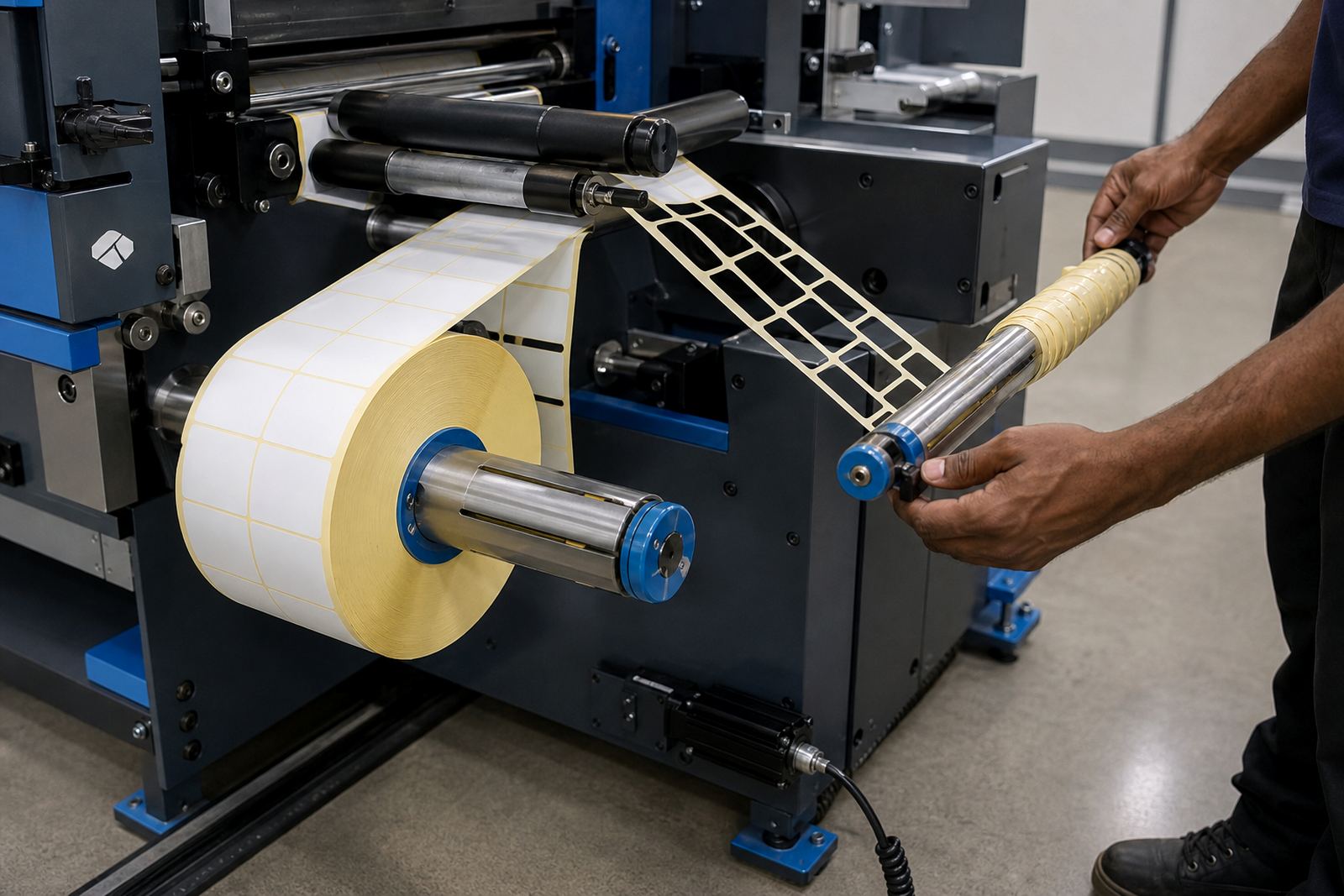
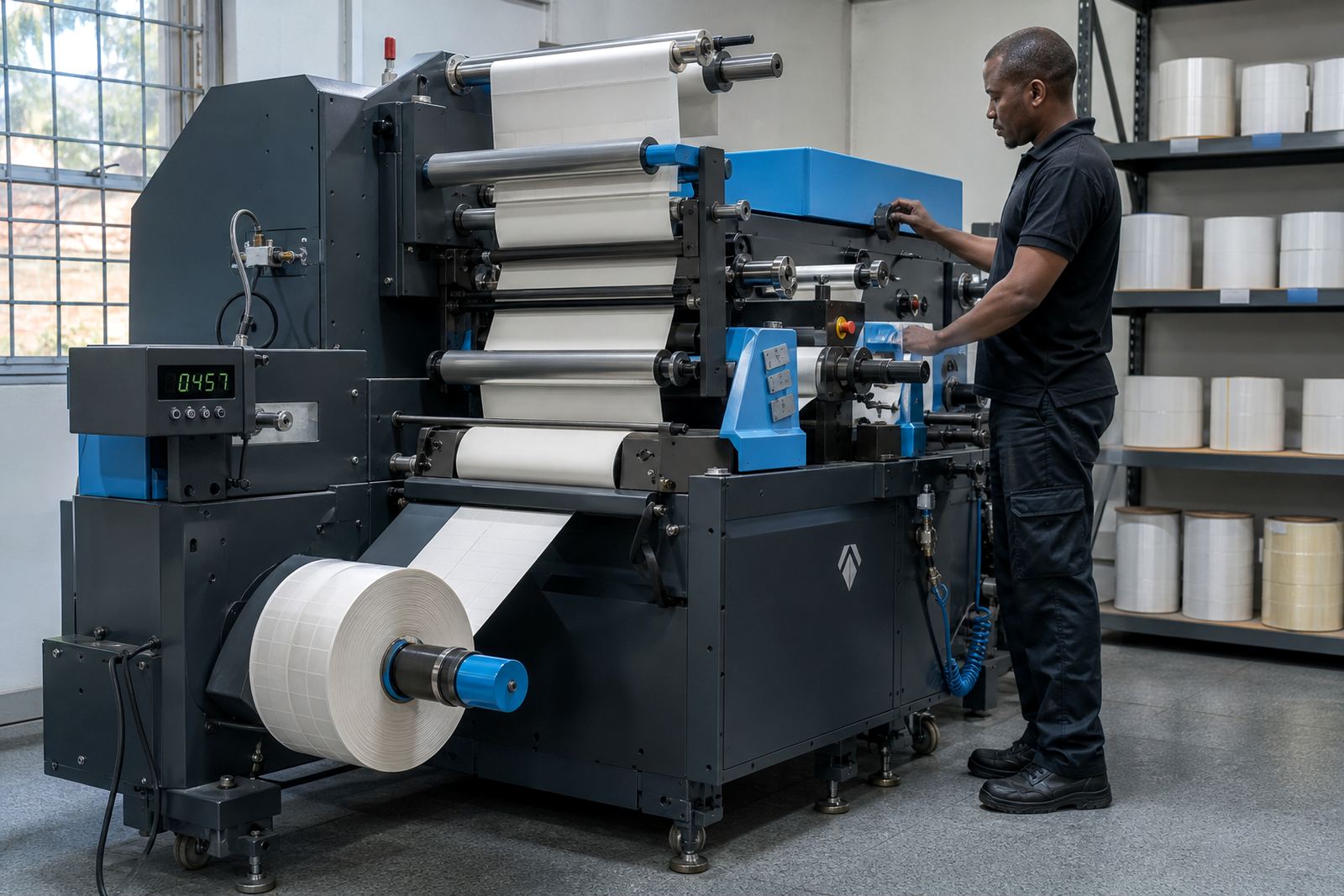
This unit brings together the finishing steps that matter after print. The web can be unwound, laminated or varnished, then die-cut, matrix stripped, slit and rewound into neat finished rolls. For work with registration marks, the cutting head tracks the print image so label shapes stay aligned on the web, even when artwork changes from job to job.
On smaller roll widths, the value is in control. Narrow web handling reduces wandering at the edges, keeps tension steadier and makes it easier to hold a clean rewind on light self-adhesive stock. That matters on short labels, security labels, bottle labels and other pressure-sensitive work where the margin for drift is small.
- Unwind section with tension control for narrow rolls
- Laminate or varnish station where the job calls for added surface protection
- Laser or semi-rotary die-cutting option depending on the production format
- Matrix stripping for waste removal before rewind
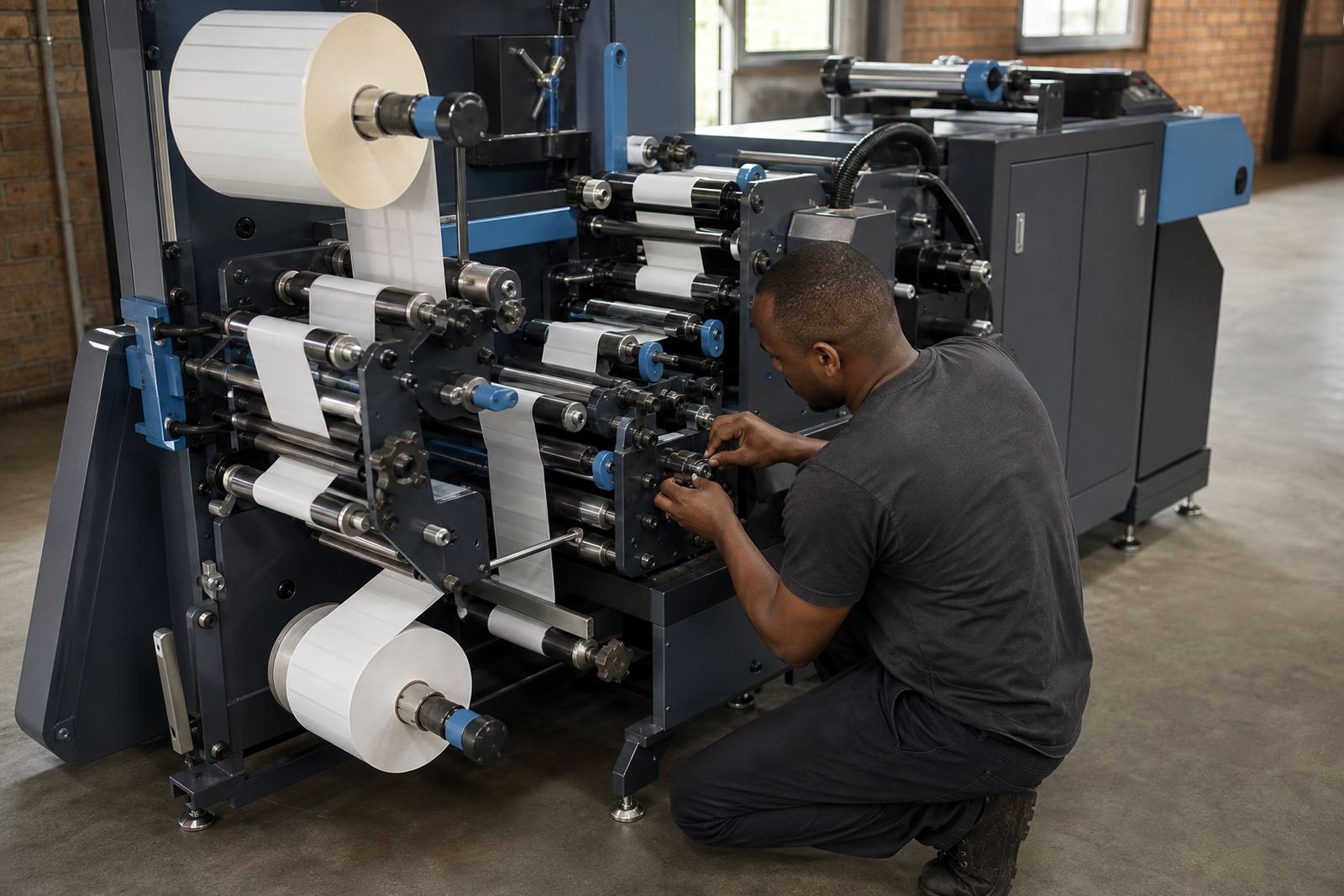
- Slitting knives for lane splitting or multiple roll outputs
Sizes and build options that suit narrow web production
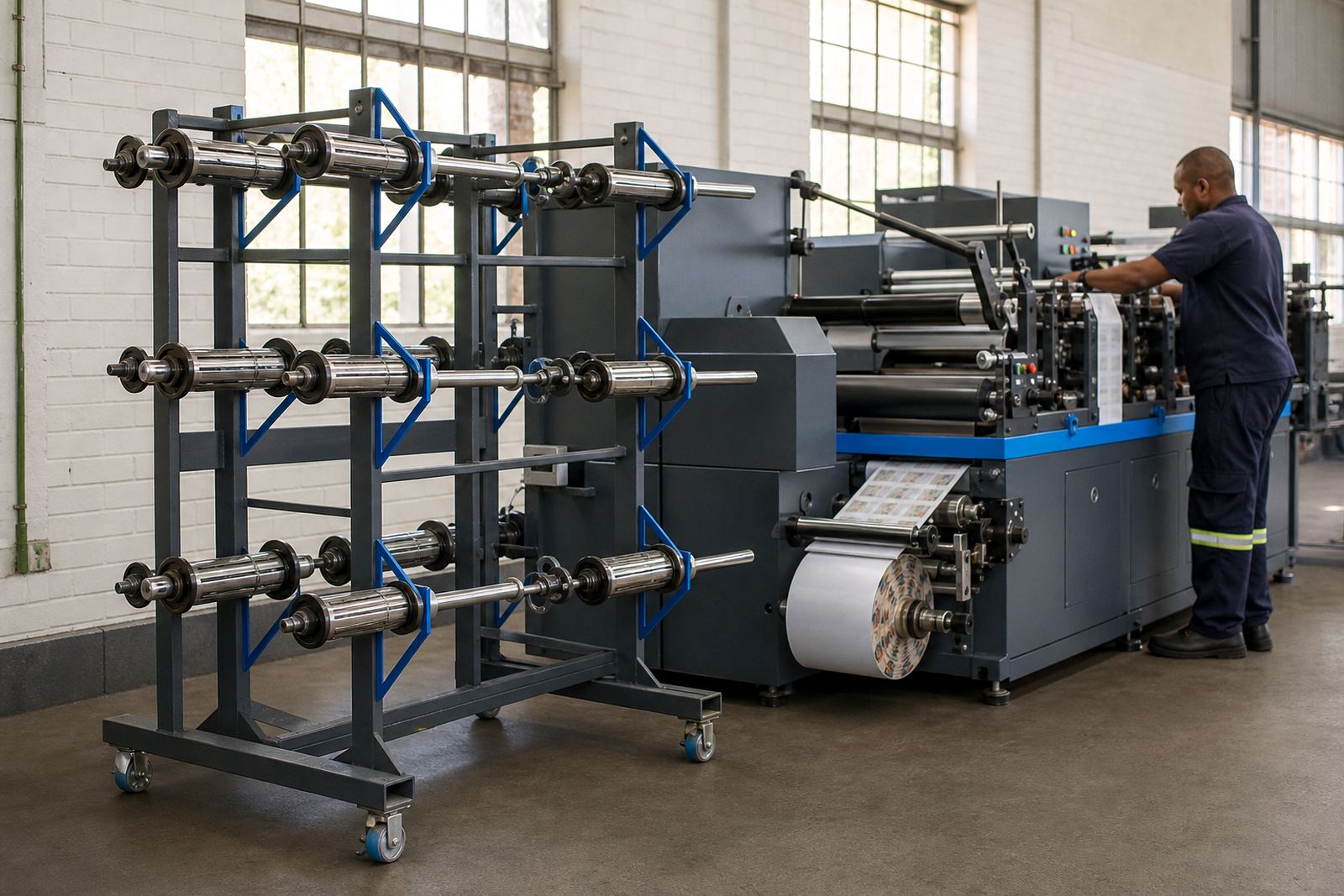
Narrow web finishers are commonly specified with roll widths around 200 mm to 350 mm, although the exact working width depends on the print line and label format. Roll unwind and rewind diameters vary by build, with core sizes often chosen to match the printer, cutter or slitter already in the plant. The machine frame, guide setup and register system are selected around the stock width and the repeat length, not a generic one-size approach.
Options may include semi-rotary tooling for jobs that need repeat cutting across flexible dies, or laser cutting for artwork changes that need no physical die changeover. Some setups include web guides, inspection lighting, edge control and static management where the material or room conditions demand it. For narrow labels, the practical benefit is fewer handling steps and a cleaner path from printed roll to packed roll.
- Working widths commonly set for narrow label webs
- Flexible die or laser cutting configurations
- Single or multi-lane slitting arrangements
- Rewind options for tight finished rolls or split rolls
- Guide systems for registration-sensitive work
Where the unit fits into real label production
This machine suits shops producing pressure-sensitive labels for food packs, personal care items, chemical drums, bottles and cartons. It also fits packaging producers who print small to medium label runs and need finishing without sending work out for separate cutting and rewind stages. In operations with mixed substrates, the unit helps keep the finishing line moving across paper, film and specialist label stocks.
It is often used where artwork changes often, where short rolls are needed for packing, or where job control matters more than very high web widths. Narrow web finishing is also useful for test runs, seasonal labels and private label work where a neat edge and consistent rewind are part of the job spec. When the printed image carries registration marks, the cutter can track the repeat and keep the die line in step with the print.
- Pressure-sensitive label printers
- Packaging plants with in-house label output
- Short-run and mixed-artwork production
- Specialist label work needing close registration
- Roll outputs for packing, storage or dispatch
Installation, commissioning and operator handover
Installation starts with the floor space, electrical supply and web path. A narrow web finisher needs a stable position, enough room for unwind and rewind access, and clear service space around the cutting and stripping sections. Where the setup includes laser cutting, the room layout and extraction arrangement are checked as part of commissioning. For semi-rotary work, the die setup, pressure settings and register controls are tested on the actual stock used in production.
Operator training covers threading, tension control, register adjustment, slitting, waste removal and safe changeover between jobs. The team also goes through basic checks on web tracking, knife condition, die wear and rewind quality so the machine stays predictable in daily use. If the finisher is part of a wider print line, the line speed, repeat length and rewind build must be matched carefully or the finishing stage starts to pull against the print stage.
- Site check for power, floor space and access
- Commissioning on live stock and production settings
- Operator training for threading and register control
- Cutting setup for flexible dies or laser workflows
- Integration with print and rewind equipment where required
Routine care that keeps the web clean
A narrow web finisher works best when the moving parts stay clean and the web path stays free of adhesive build-up. Matrix stripping areas need regular clearing because label waste can drag across the roll and affect the finish if it starts bunching. Slitting knives should be checked for sharpness and alignment, while guide rollers and tension parts need cleaning to prevent dust or glue from marking the stock.
For machines using flexible dies, careful storage and proper setup help protect the cutting edge. Laser systems need optics kept clean and the cutting area inspected for residue. Rewind quality should also be watched closely, because a tight reel with uneven edges can cause handling trouble at packing stage. Coastal humidity in Durban and Gqeberha can affect some stocks and adhesive behaviour, so stock storage and machine settings should be reviewed when the weather shifts.
- Clean adhesive residue from rollers and guides
- Inspect knives, dies and matrix paths regularly
- Watch rewind tension on every job change
- Store spare dies and knives in dry conditions
- Check web tracking after stock or artwork changes
The job details to confirm before ordering
Before a narrow web finisher is specified, the roll width, repeat length, material type and target output need to be fixed. The machine also has to match the finish required, whether that means laser cutting, semi-rotary die-cutting, lamination, varnish, slitting or a combination of those steps. Roll core size, unwind diameter, rewind diameter and any registration mark style should be confirmed with the print format, not guessed after delivery.
It also helps to know whether the work is pressure-sensitive labels, linered stock or another narrow-web format, because the tension and stripping settings change with the substrate. If the line will feed from a press or sit as a separate finisher, that affects control needs and operator workflow. For South African production, voltage, installation access and service coverage also need to be aligned with the site before the machine lands on the floor.
- Web width and repeat length
- Stock type, adhesive type and liner style
- Cutting method needed for the job mix
- Unwind, rewind and core size requirements
- Registration mark format and line integration needs
Key facts
| Product type | Narrow web label finishing unit |
|---|---|
| Typical working width | Around 200 mm to 350 mm, subject to build |
| Finishing functions | Unwind, laminate or varnish, die-cut, strip waste, slit and rewind |
| Cutting options | Laser cutting or semi-rotary flexible die cutting |
| Web control | Registration-guided tracking with tension control |
| Typical use | Pressure-sensitive labels and compact roll production |