Built for wider rolls and larger format work
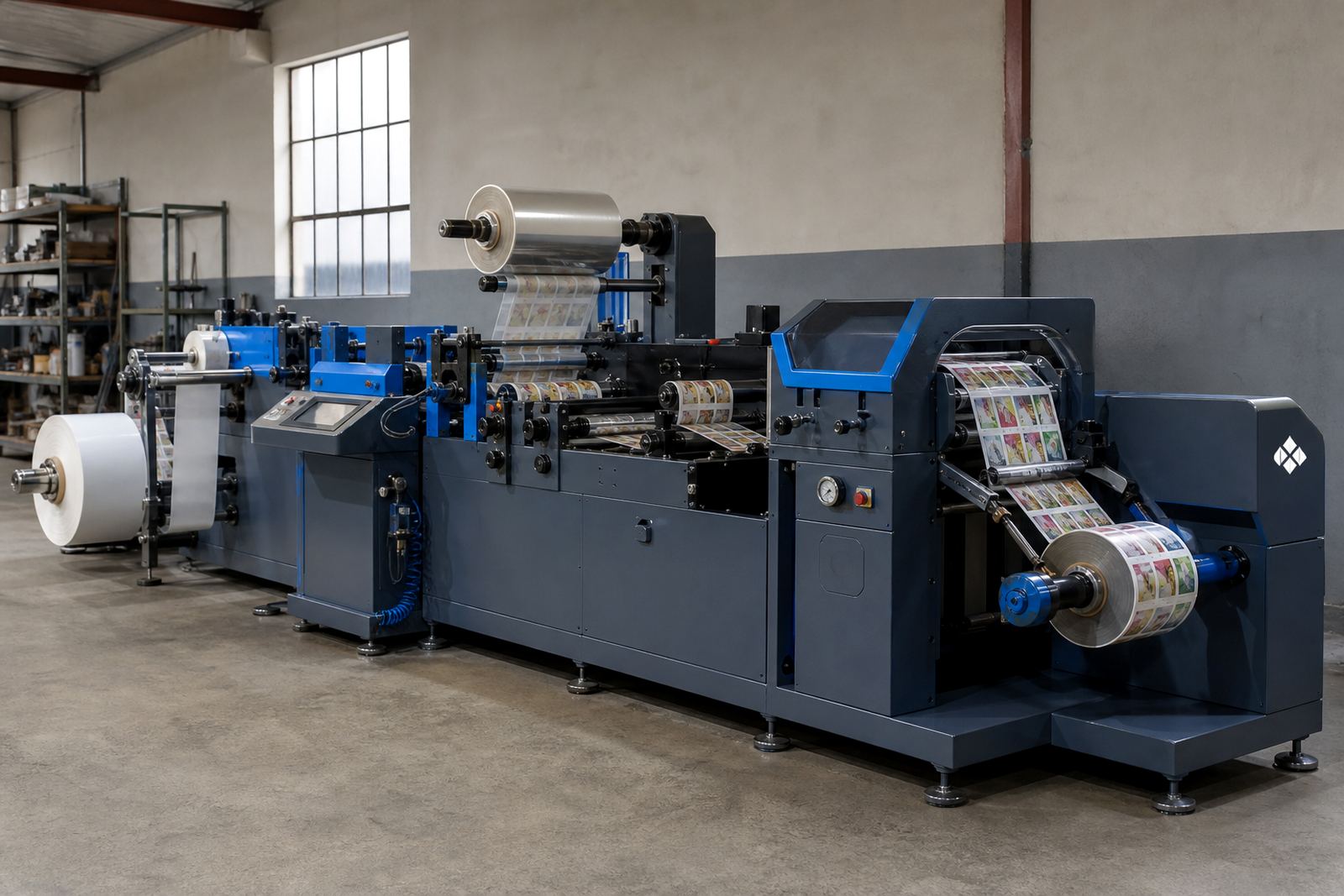
The Mid Web Finisher is used where a narrow label path is not enough and the line has to carry broader material cleanly through each stage. It is suited to pressure-sensitive label stock, packaging labels and mixed-run work where registration matters and the finish must stay consistent from the first metre to the last.
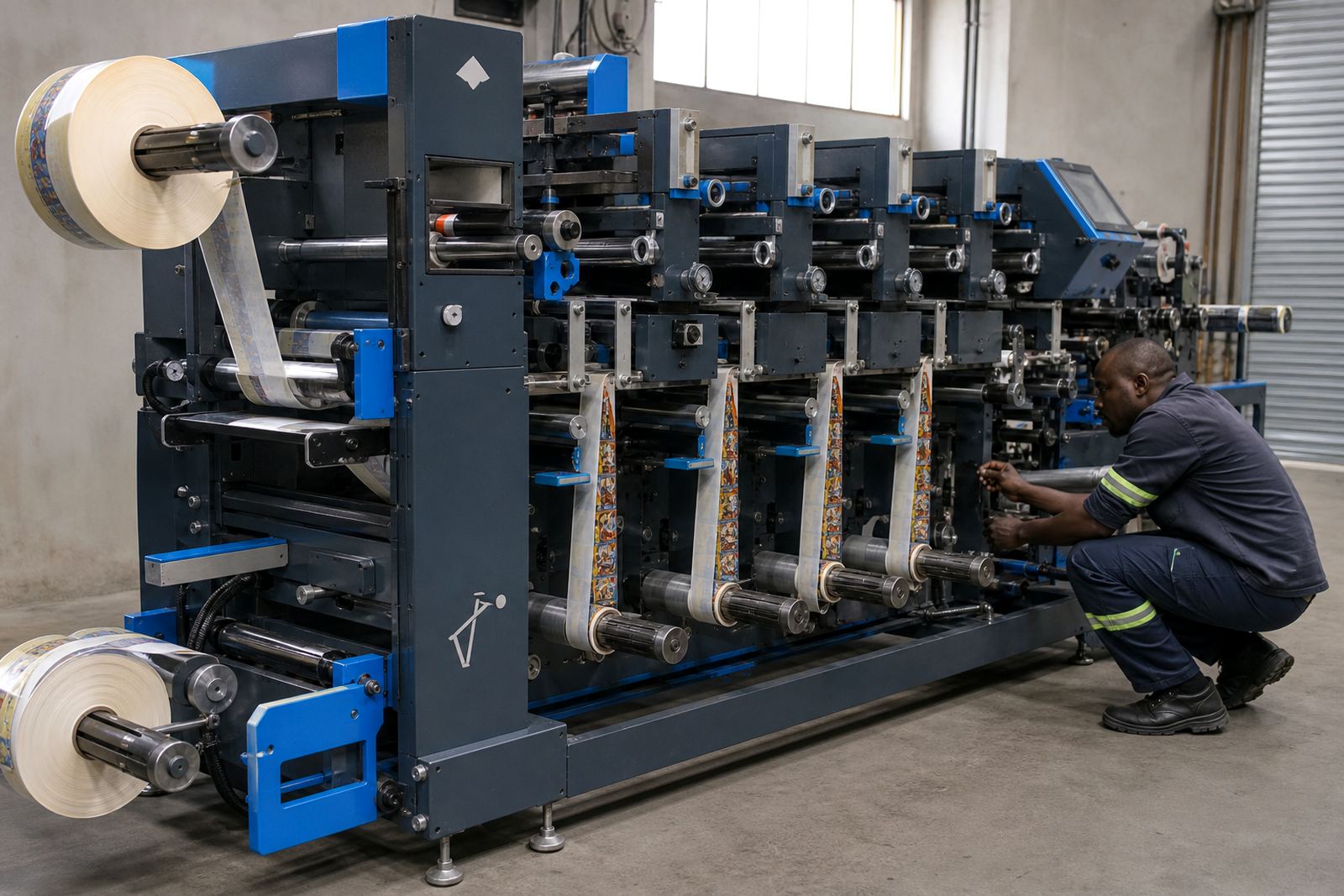
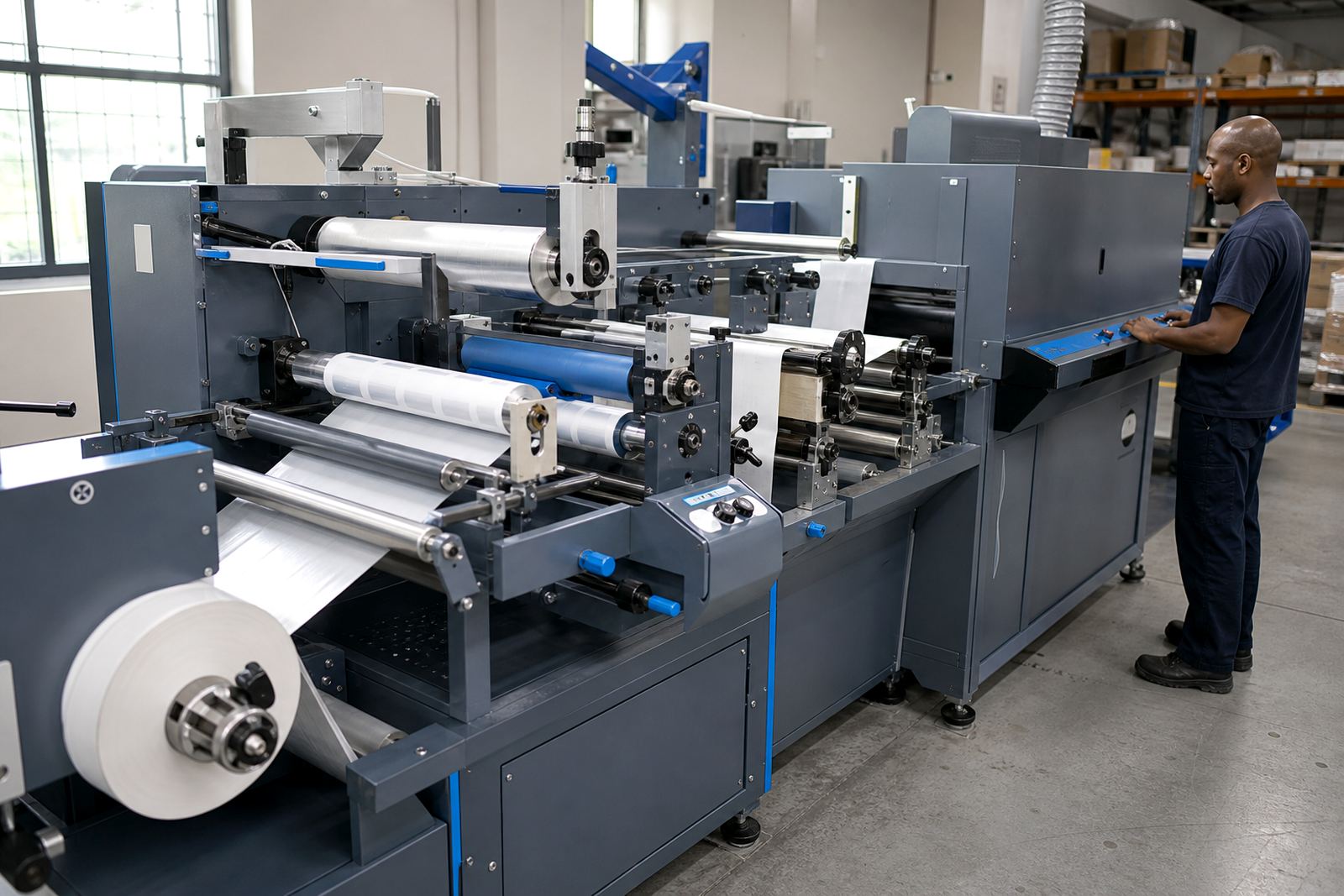
In practical terms, the machine takes a printed web, brings it under tension, and moves it through converting steps without rough handling of the face stock or liner. It can be set up for digital label output with registration mark sensing, so the cutter follows the print position rather than guessing the cut path. That matters on short runs, variable data work and label formats with tighter tolerances.
The layout is a mid-web format, so it handles broader roll widths than compact units while still staying manageable on the floor. That makes it a good fit for print rooms that want more throughput and fewer hand-finishing steps. A careful operator can keep the web tracking straight, the matrix lifting cleanly and the finished rolls winding neatly for packing or the next process.
Cutting, stripping and rewind control in one pass
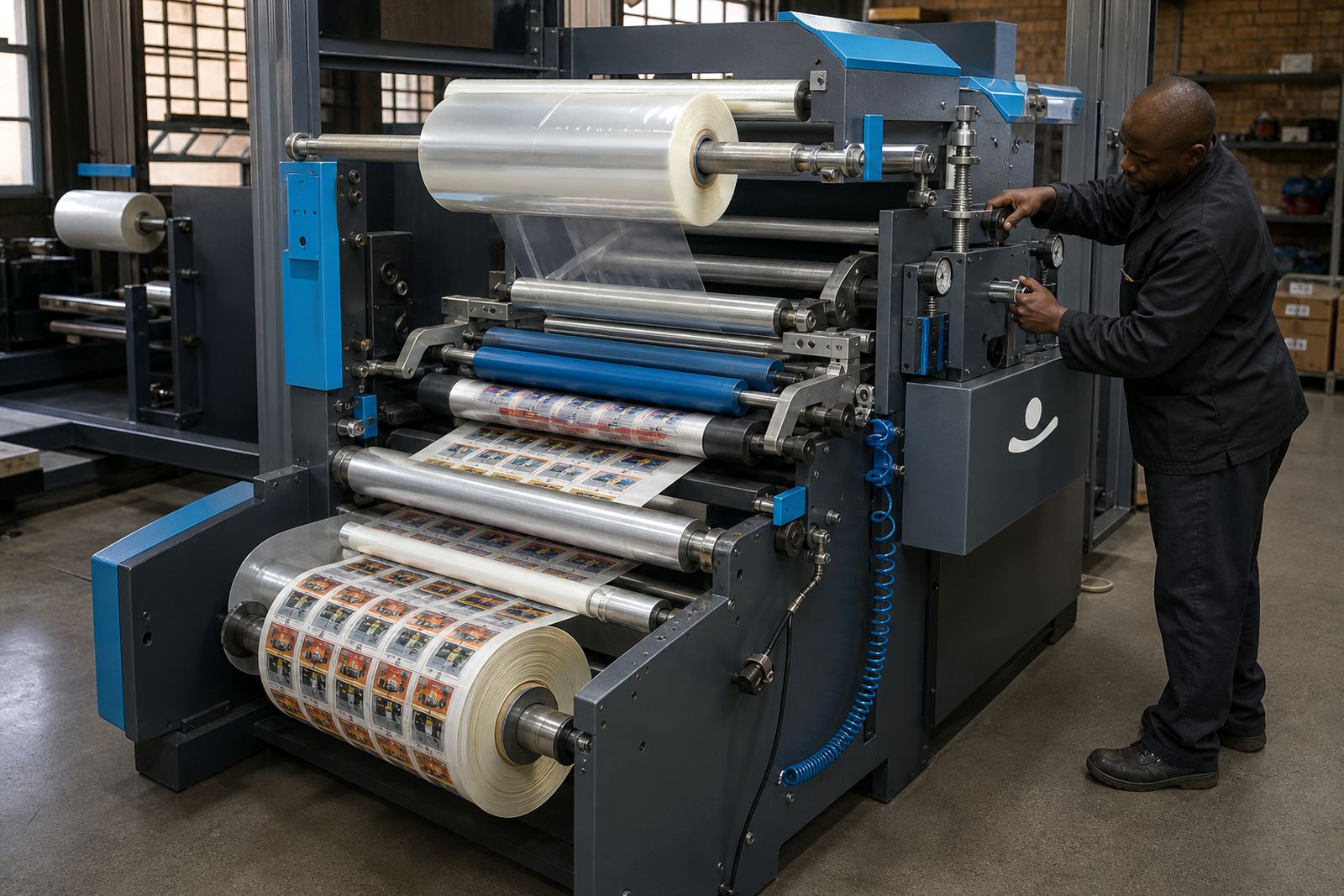
This machine is normally specified with a combination of finishing stations, depending on the label structure and the type of print being converted. Laser finishing is used where very fine contour work is needed, while semi-rotary die-cutting suits repeat work with flexible dies and controlled repeat lengths. The web can also pass through lamination, varnish handling, matrix stripping, slitting and rewind sections.
For packaging work, the ability to remove waste cleanly and split the web into finished lanes is often the difference between a tidy roll and a roll that needs extra handling. Slitting helps when one printed parent web must be turned into several finished widths, while rewind control keeps tension even so the rolls stay firm and square. Registration marks are read during the cycle, which helps the cut stay aligned with print on jobs that carry fine text or shaped panels.
- Laser or semi-rotary cutting, depending on the application
- Flexible die support for repeat label shapes
- Lamination and varnish paths for protected finishes
- Matrix stripping for clean waste removal
- Slitting and rewinding for narrower output rolls
Where the Mid Web Finisher earns its place
Label printers use this format when the job mix includes broad label panels, multiple-up work or roll widths that need more web support than a compact finisher can give. Packaging producers also use it for short and medium production runs where the printed stock needs converting, not only trimming. The extra width gives room for practical layout changes, especially when different SKU sizes run across the same shift.
It also suits operations that want to keep finishing close to printing rather than moving rolls between several separate steps. On jobs with coated stocks, clear facestocks or heavier liner grades, the web path needs steady tension and good roller alignment. Coastal humidity can affect some materials, so clean handling and sensible storage remain part of the workflow, especially for rolls that sit before finishing.
- Broader label formats with more print area
- Packaging labels needing conversion after print
- Short runs with frequent artwork changes
- Plants that need both slitting and rewind control
Installation, setup and operator handling
Installation for a Mid Web Finisher normally starts with floor position, power supply, web direction and the handling route for infeed and outfeed rolls. The machine must sit square, with enough clearance for roll changes, waste removal and service access. Once in place, line commissioning checks web tracking, sensor reading, die registration, tension settings and rewind build quality.
Operator training covers the practical side of the job, including threading, station changes, die setup help, registration calibration and rewind setup. A line that is not set correctly at the start tends to waste stock, so the first hours on the machine matter. If the finishing line forms part of a broader digital print workflow, the print marks and the web path need to be matched carefully so the cut stays true across the roll.
For workshops in Johannesburg, Pretoria, Durban, Cape Town and Gqeberha, the same setup discipline applies. The machine can be installed as a stand-alone finishing line or as part of a wider production cell, depending on floor space and the daily label mix.
Care points that protect output quality
Routine care keeps the machine steady and helps the finished rolls hold their shape. Roll guides should stay clean, sensors must remain free of dust, and cutting sections need checking for wear or adhesive build-up. Matrix stripping works best when the waste path is clear and the liner tension is not drifting, because a small drag can disturb the whole line.
Preventive maintenance usually includes roller inspection, drive checks, alignment verification and a close look at rewind tension control. On wider rolls, a slight misalignment can show up faster than on narrow work, especially when the job carries dense print or long repeat lengths. If the finishing line is used daily, it is sensible to treat the service routine as part of production, not as an afterthought.
- Keep sensors, rollers and guides free of residue
- Check tension settings after format changes
- Inspect slitter knives and die stations regularly
- Watch waste strip paths during longer runs
Details to pin down before ordering
To specify the right Mid Web Finisher, the main points are web width, repeat length, material build and the finishing steps needed on the line. Some jobs need lamination and a clean matrix strip, others need slitting and rewind control more than anything else. The die format also matters, whether the work uses flexible dies or a laser cut path linked to print registration.
The roll size, core size and unwind and rewind diameter should be confirmed before the machine is selected, because these values affect tension, changeover handling and final roll presentation. It also helps to know whether the line will work with coated facestock, clear film, paper labels or heavier packaging materials. When the job is sensitive to fine registration, the mark layout on the print should be set out clearly so the sensor can read it without hunting.
For South African plants, it is also worth noting the local handling route, service access and where spare rolls, cores and waste bins will sit during a shift. That small bit of planning saves a lot of awkward movement once the machine is live on the floor.
Key facts
| Machine type | Mid-web digital label finishing line |
|---|---|
| Web width range | Broader roll widths for larger label formats and packaging work |
| Finishing options | Laser or semi-rotary die-cutting, lamination, varnish, matrix stripping, slitting, rewinding |
| Register control | Optical registration mark sensing with calibration support |
| Material types | Pressure-sensitive labels, clear films, coated papers and packaging label stock |
| Typical support | Installation, line commissioning, operator training, preventive maintenance and parts supply |