Coat the label, then cut on register
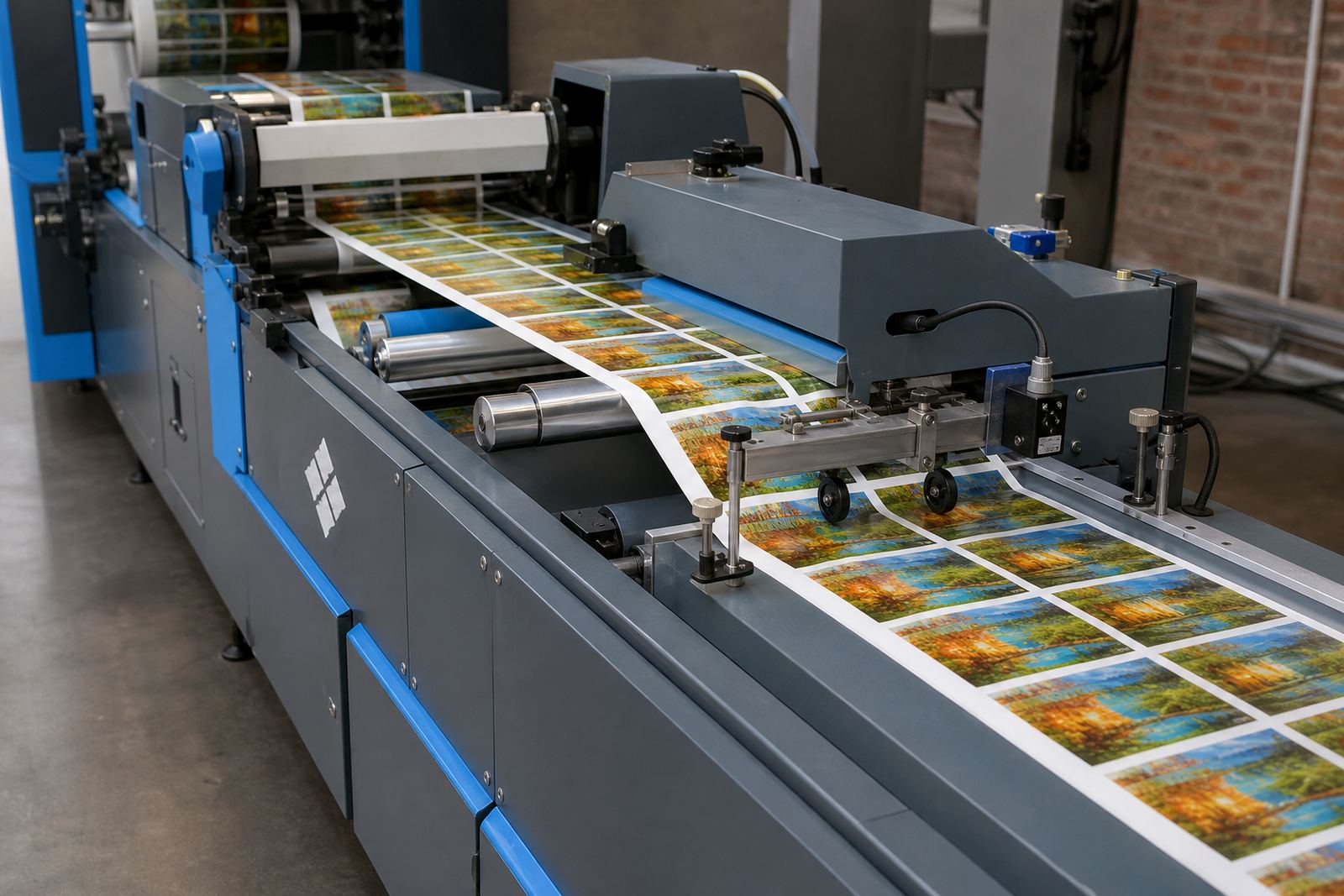
A varnish and cut line applies a protective or decorative coating and then cuts the label shape with registration control, so the printed image and the finished outline stay aligned. In digital label work, that matters on short runs, mixed artwork and jobs where the cutter must follow a printed mark without wandering across the web.
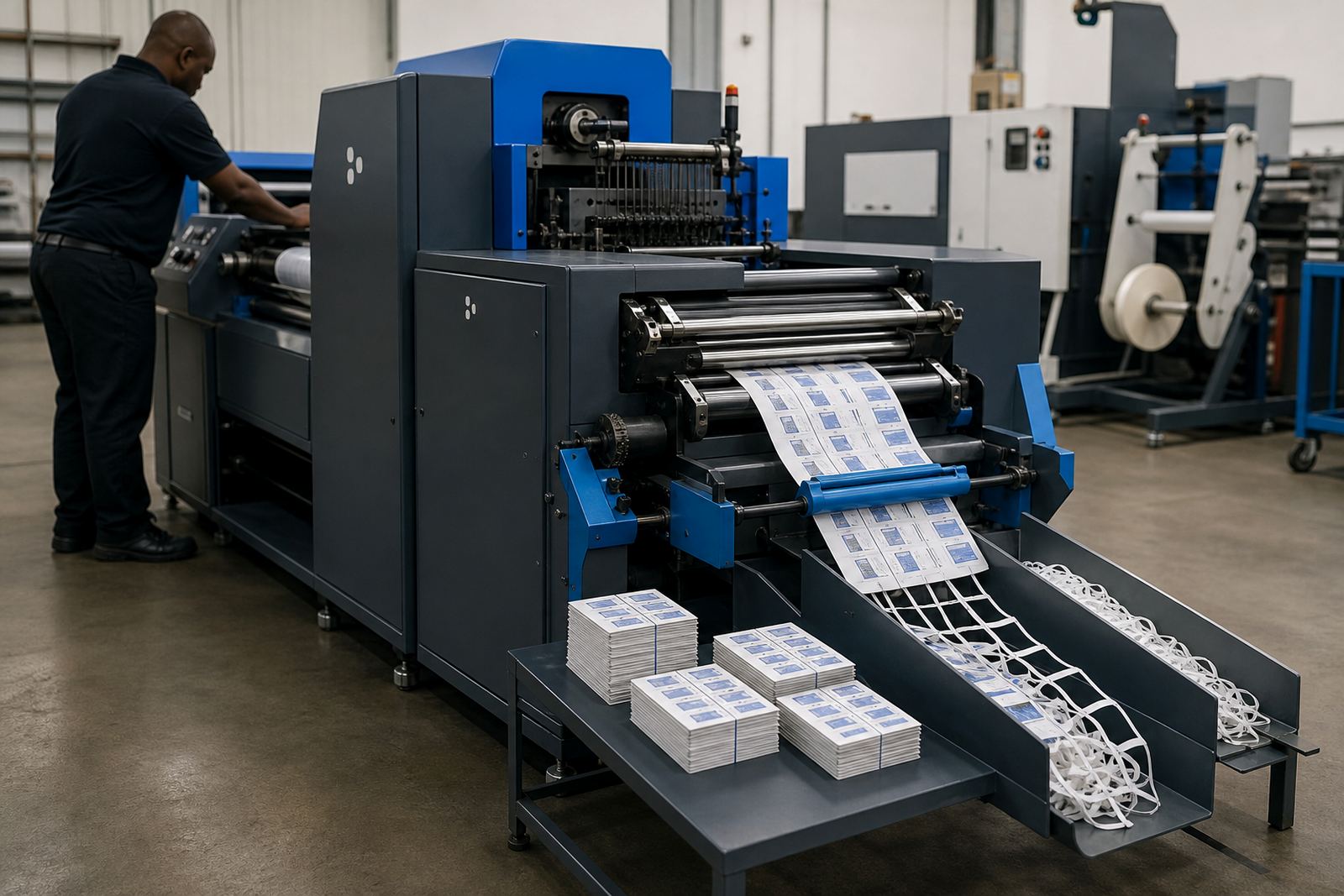
The line can be set up with unwind, web guide, coating station, drying or curing section, die-cutting unit, matrix stripping, slitting and rewind. Depending on the build, the cutting stage may use semi-rotary tooling, flexible dies or laser cutting, while the coating stage may apply flood varnish, spot varnish or a clear protective layer over the print.
- Registration control keeps the cut matched to the printed mark
- Coating can be full coverage or placed only where the artwork needs it
- Matrix stripping removes waste so finished rolls stay tidy
- Slitting and rewinding prepare the labels for packing or press feeding
Size ranges and web paths that fit real label work
Varnish and cut systems are selected around web width, roll diameter and the style of labels being finished. Smaller studio lines may handle narrow rolls for cosmetics, food or laboratory labels, while wider machines suit larger pressure-sensitive rolls and heavier production from packaging plants.
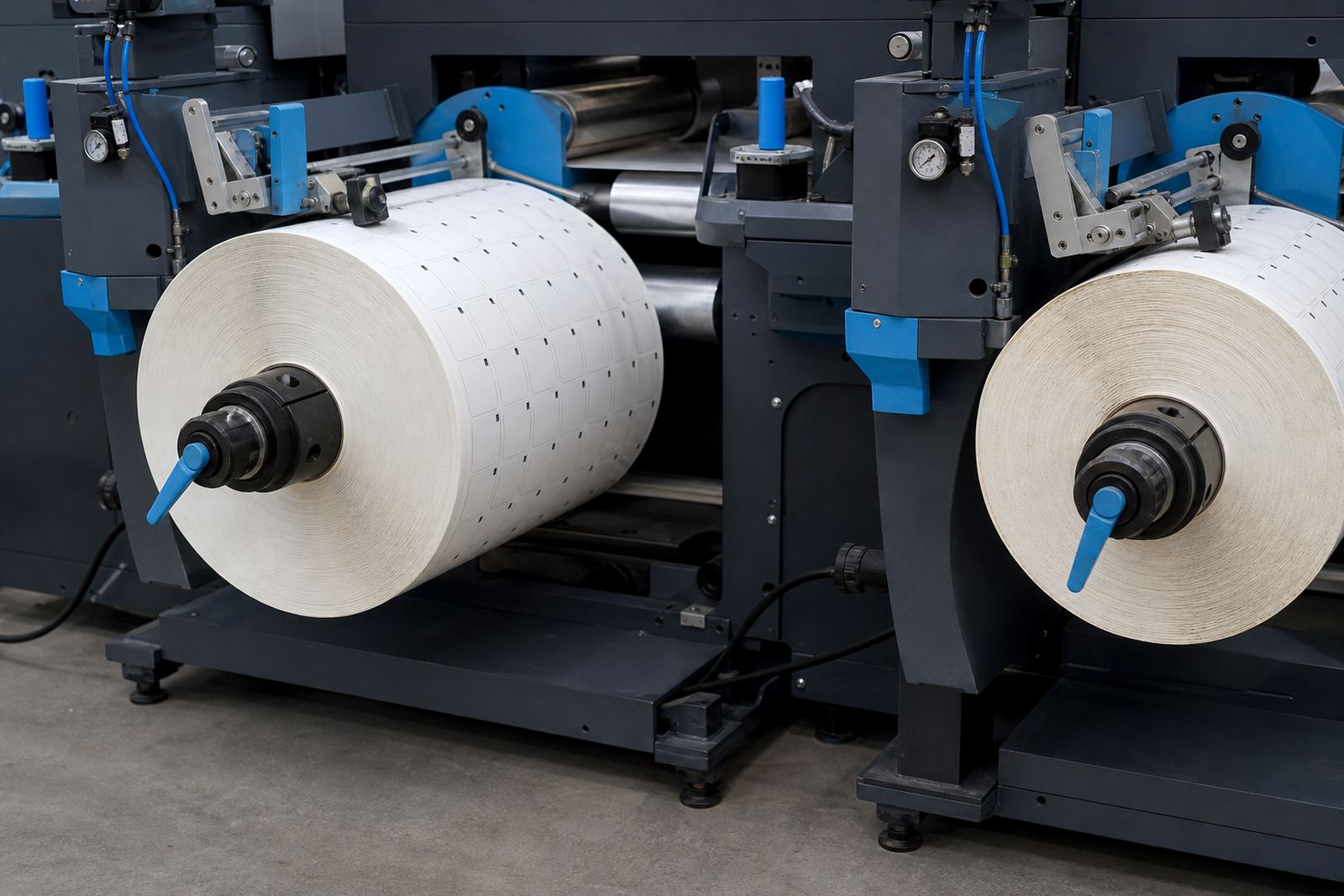
Typical configurations cover web widths from about 250 mm to 450 mm, with unwind and rewind stations sized to suit the roll build. Many lines are arranged for core sizes around 76 mm, though other core sizes can be specified where the converting room already works on a different standard.
- Web width matched to the print width and trim allowance
- Roll diameter set for the unwind, rewind and storage handling space
- Core size chosen to suit existing label production habits
- Guide rollers and tension controls set for light or heavier label stock
Where varnish and cut earns its keep
This setup suits label printers and packaging producers that need printed rolls to leave the finishing side ready for application or packing. It is a strong fit for work with fine type, small barcodes, variable data and graphics that need a clean edge and a tougher surface finish.
Food labels, personal care labels, bottle labels, chemical labels and short packaging runs all benefit from a line that can finish in one pass. If the job needs gloss, scuff resistance or extra handling protection, the varnish station adds value without changing the basic artwork flow.
- Short-run label work with frequent artwork changes
- Labels that need a gloss or matt protective surface
- Rolls that must be slit into several finished widths
- Print jobs where registration marks must stay easy to read
Cutting methods, coating choices and control points
The cutting section can be arranged around the method that suits the plant. Semi-rotary die-cutting is useful where repeat work is common and the tooling must be changed over with care. Flexible dies are often chosen for repeat shapes and stable finishing. Laser cutting is used where detailed contour work or fast changeovers matter, especially on artwork with complex outlines.
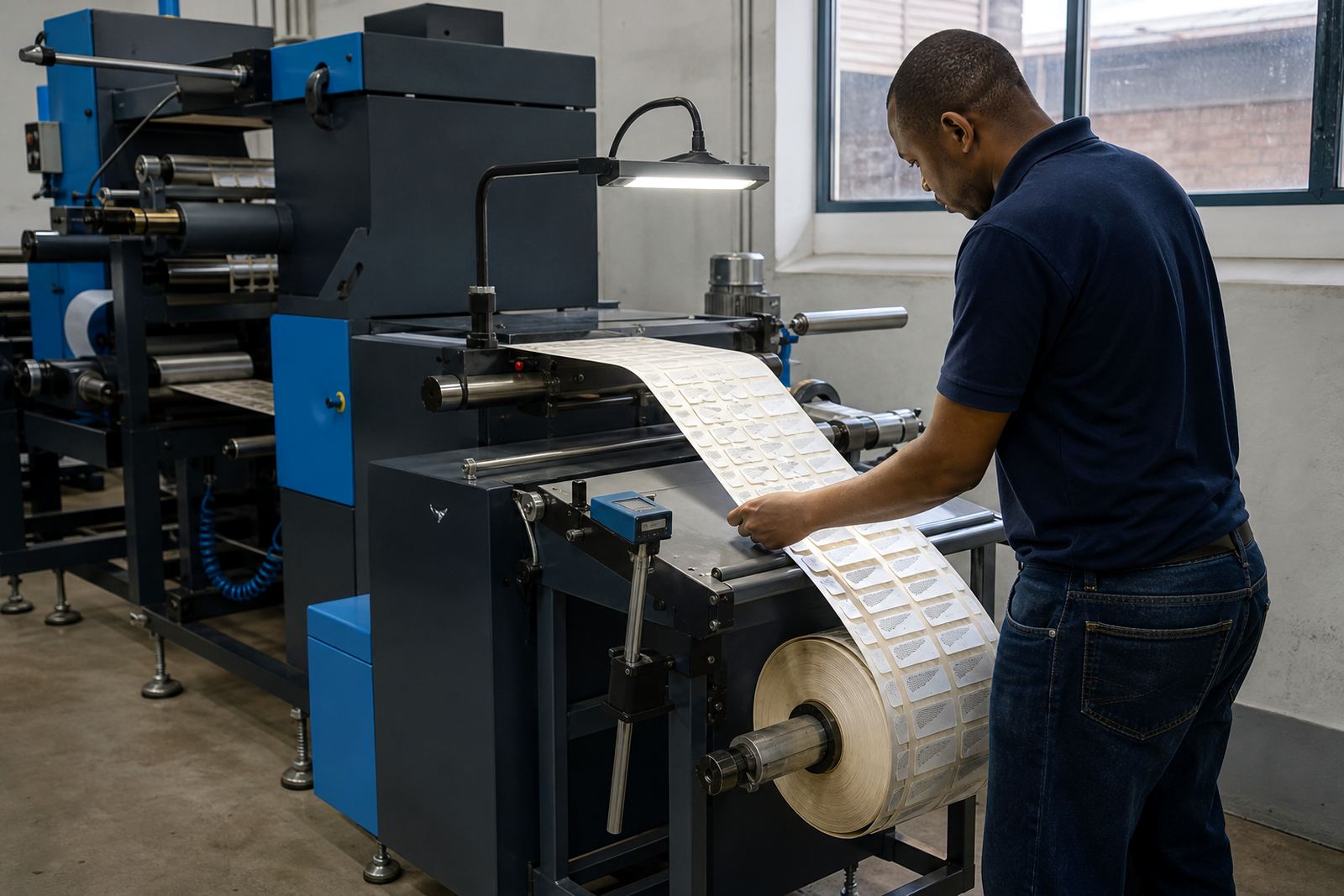
On the coating side, the machine may apply a clear varnish that dries or cures before the cut, helping protect the print from scuffing and handling marks. Some lines can also run spot coating where only selected areas receive finish. The operator then checks the register marks, coating coverage and cut depth before moving into stripping and rewind.
- Semi-rotary cutting for repeat label shapes
- Flexible dies for steady finishing on standard artwork
- Laser cutting for complex contours and shorter setup work
- Clear or spot varnish where surface protection is required
Installation, setup and line alignment in the shop
Varnish and cut machines need careful placement, especially where the line includes drying, web handling and rewinding in a tight production area. The floor should stay level, with enough room for roll loading, access to the cutting station and safe removal of waste matrix and finished reels.
During installation, the team checks web tracking, registration sensors, tension settings, slitting position and rewind build. Where the machine includes electrical curing or drying, the supply must suit the line rating and the installation needs proper earthing and a clean route for cables and controls. In a busy Randburg or Johannesburg production room, small alignment errors can show up fast on the roll, so the setup work has to be exact.
- Level machine placement for stable web tracking
- Power supply matched to the coating or drying section
- Access space for roll changes and waste removal
- Registration calibration before production starts
Care, cleaning and the details to confirm
Keeping a varnish and cut line in good shape means regular cleaning of rollers, sensors, coating heads and cutting parts. Varnish residue and dust from matrix stripping can build up on guides and affect web movement. Operators should watch edge quality, coating laydown, slit width and rewind firmness, then stop small issues before they affect a full batch.
When asking for a machine or line specification, confirm the print width, minimum and maximum roll diameter, core size, substrate type, coating style and the level of register control needed. It also helps to note whether the plant wants semi-rotary, flexible die or laser cutting, and whether the line will sit in a single room or alongside other converting equipment.
- Substrate type, including paper, film or synthetic stock
- Print width, finished label size and trim allowance
- Minimum and maximum roll diameter on unwind and rewind
- Cutting method, coating type and register mark format
Key facts
| Machine type | Digital varnish and cut finishing line for printed labels |
|---|---|
| Functions | Coating, registration control, die-cutting, matrix stripping, slitting and rewinding |
| Cutting options | Semi-rotary die-cutting, flexible die cutting or laser cutting |
| Web width range | Typically around 250 mm to 450 mm, depending on configuration |
| Roll handling | Unwind and rewind stations sized to suit production roll build and core size |
| Control features | Registration sensors, web guide, tension control and slit positioning |