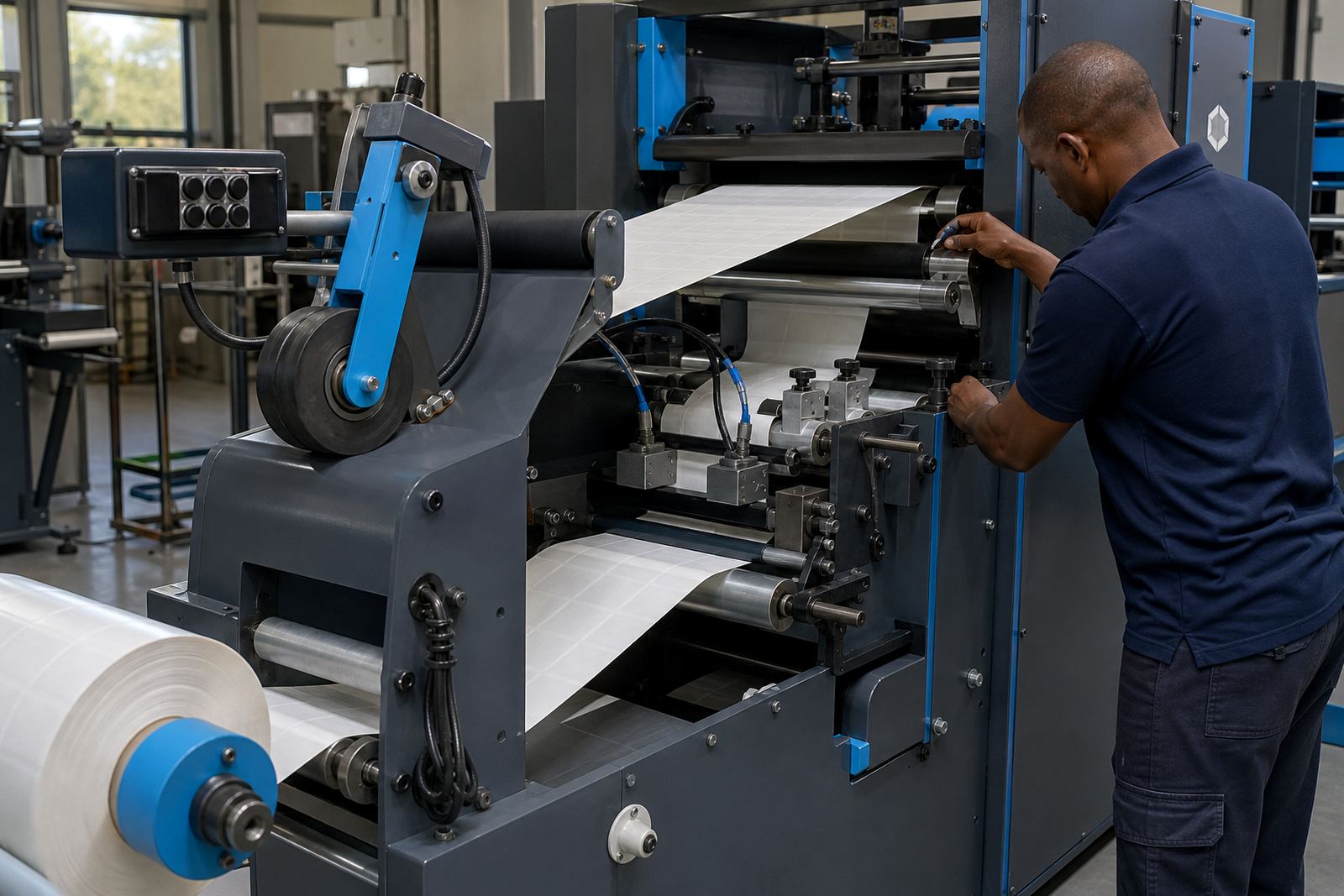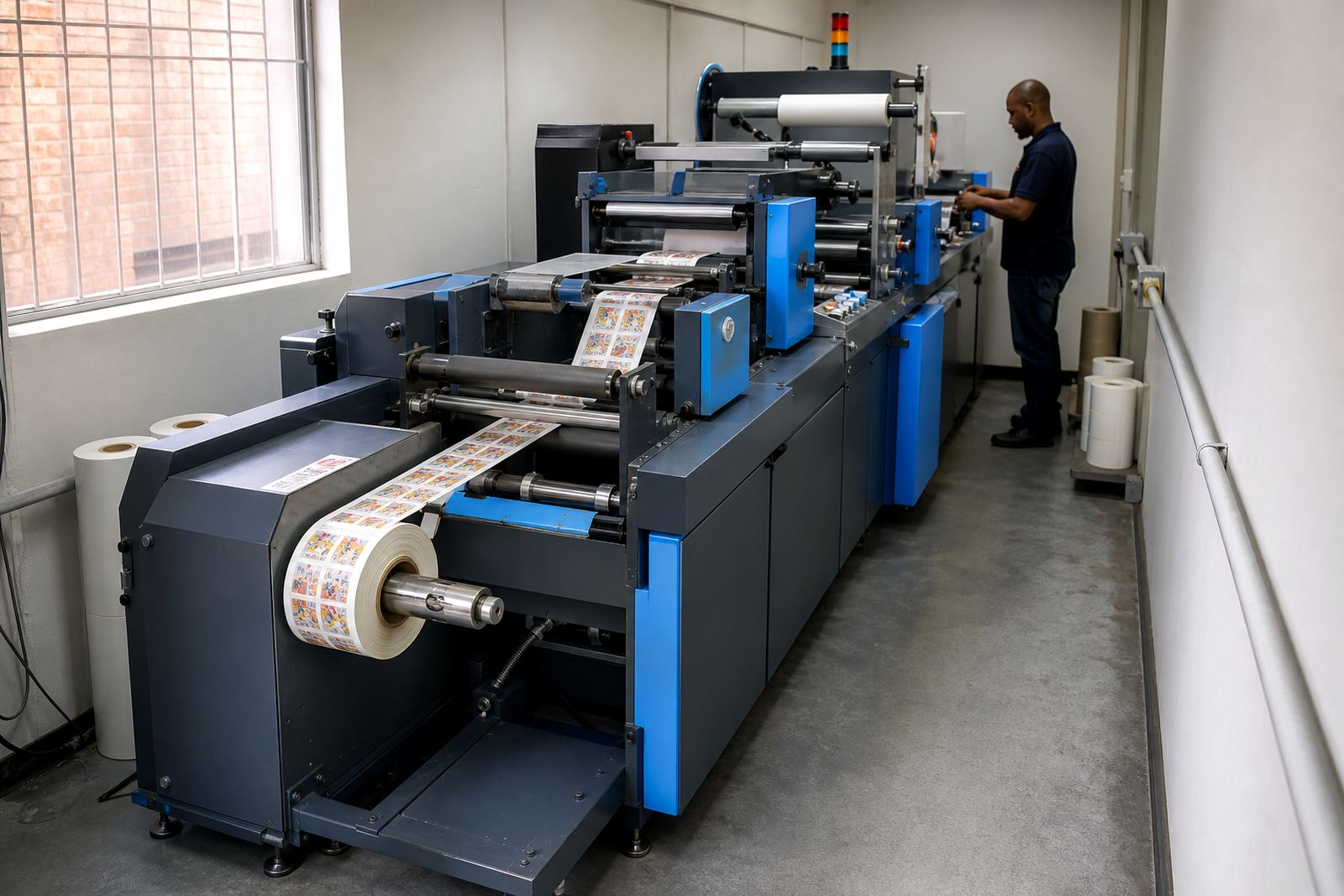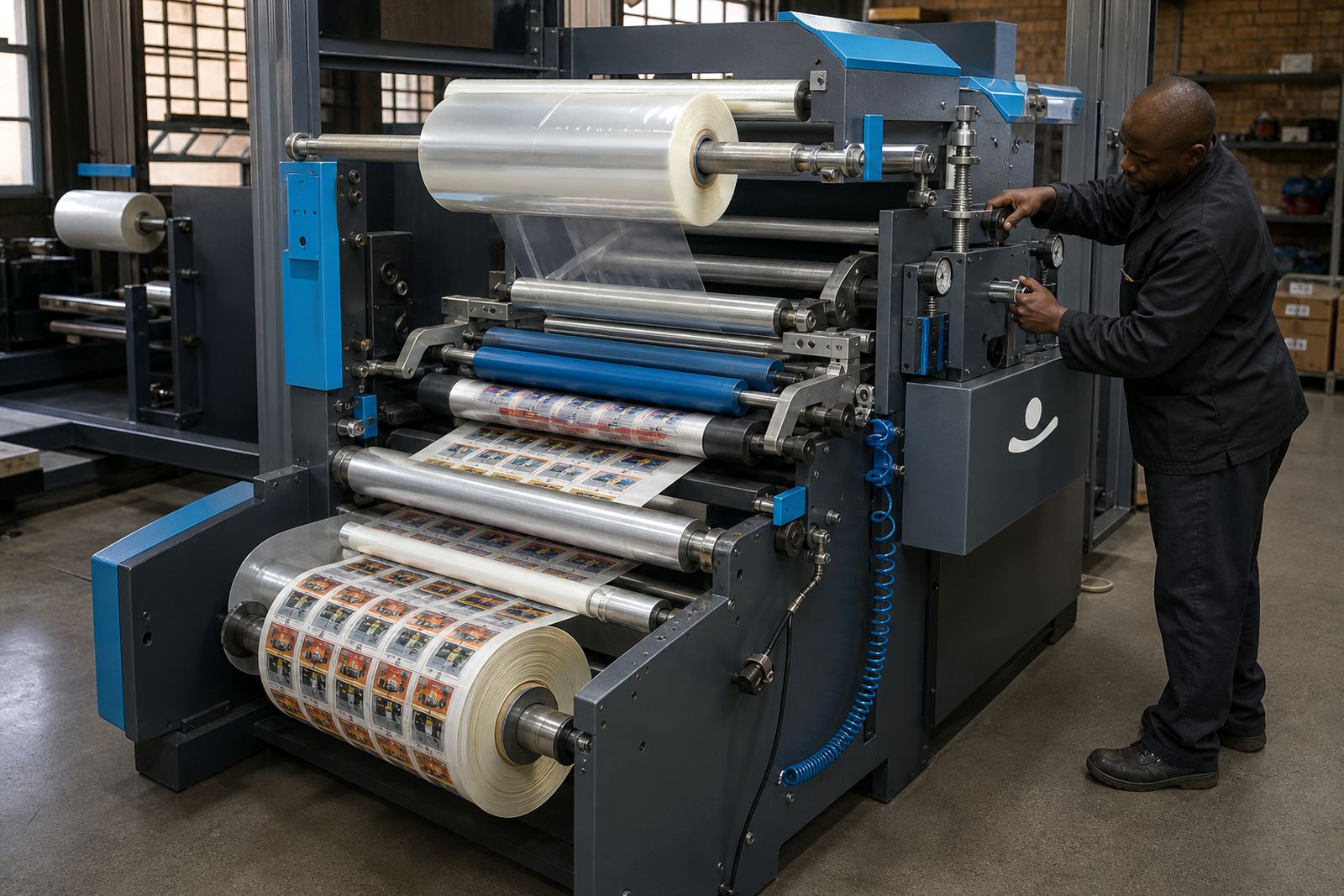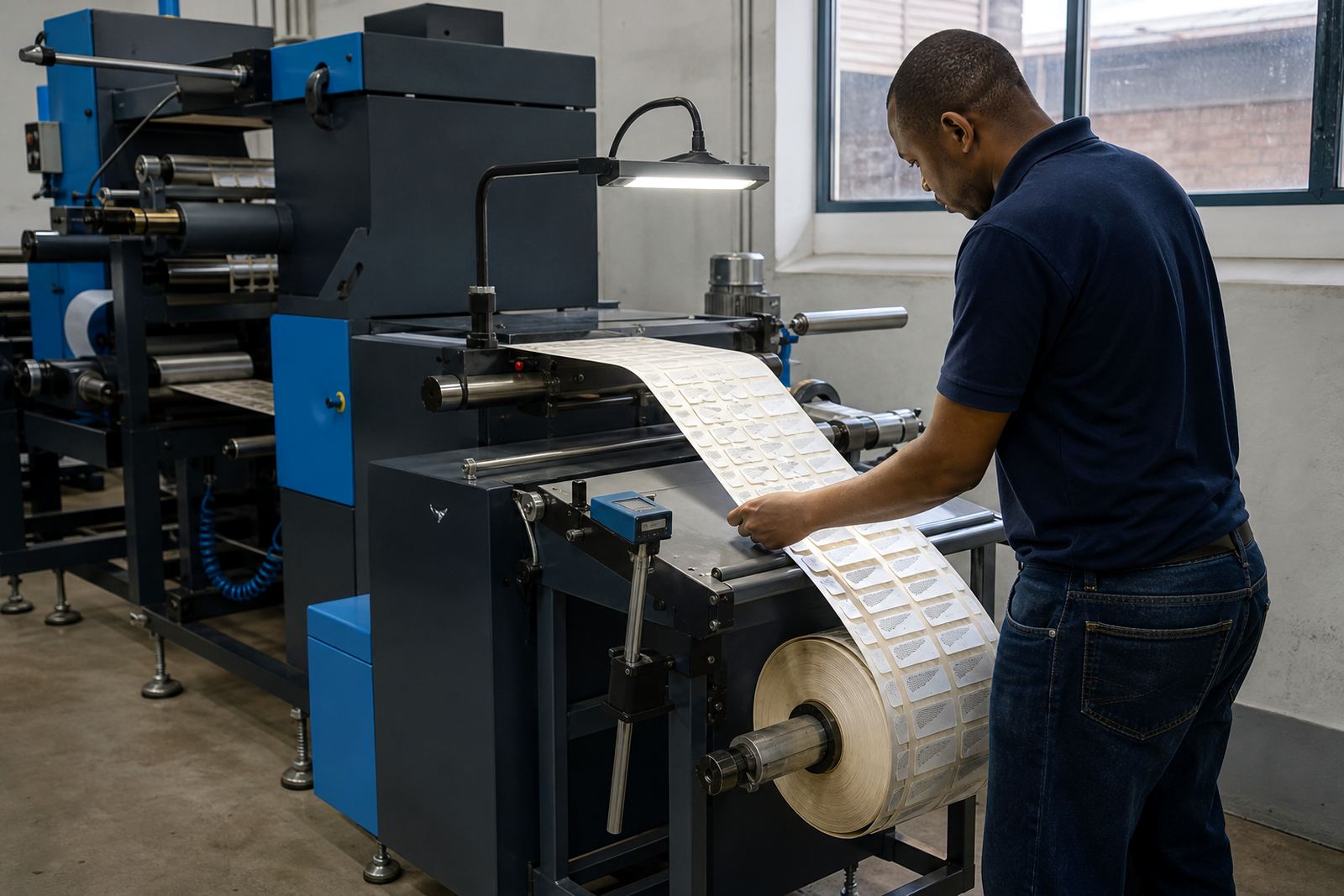
A rewind table made for label inspection work
An inspection rewind table is used after printing and finishing, when the label roll needs a final check before it leaves the machine room. The web is threaded through the unit, passed over an inspection zone, then rewound onto a fresh core while the operator watches for missing print, colour shifts, damaged patches and splice points.
In digital label work, that step matters because short runs often move from one artwork version to the next with very little margin for error. A table with a stable unwind section, controlled rewind tension and clear web tracking helps the operator keep the roll neat, while faults are marked and removed without disturbing the rest of the job.
- Used for printed label rolls after slitting or before final packing
- Supports visual checking of registration marks, varnish, foil and variable data
- Helps isolate splice points, damaged metres and contamination on the web
- Can be set up to handle roll-to-roll inspection or rewind only work
Where this unit earns its keep
This machine suits label printers, packaging producers and converting rooms that need accurate roll checking before dispatch or before a job moves into pouching, carton application or storage. It is especially useful where a roll may include multiple artwork changes, barcodes, variable data or short production runs that must be checked by eye.
It also fits work where slitting has already taken place and the customer wants tidy final reels with no loose edges or damaged overlap. In humid coastal areas, labels that have been stored for too long can pick up curl or tack, so the operator may need tighter control on rewind tension and web path to keep the finish consistent.
- Label printers with digital presses and offline finishing lines
- Packaging producers handling self-adhesive or printed film labels
- Converters checking long rolls for splice points and print faults
- Operations that need inspection before packing, couriering or store room release
Fitting, power and line integration notes
Inspection rewind tables are normally installed as fixed shop-floor equipment, with a suitable power supply and enough clearance for loading, threading and operator access. The unit should sit level, with space for unwind, inspection and rewind sides, plus a clear path for roll movement and waste handling around the machine.
When we install or commission a unit, the focus is on web route, tension setting, edge control and operator practice. If the line includes a slitting stage or a matrix stripping path before the table, the setup must keep the web flat and stable so the finished roll does not telescope or crease on rewind.
- Plan floor space for roll loading, inspection and offload handling
- Match power requirements to the machine specification and local supply
- Check core hold, shaft size and unwind direction before fitting
- Allow room for training on threading, fault marking and rewind settings
Care that keeps the inspection station steady
Regular care is mostly about cleanliness, alignment and wear checks. Dust, adhesive mist and paper fibres build up on rollers and guides, while worn belts or bearings can make the web drift. The inspection zone should stay clean so the operator can see faults clearly, especially on fine text and barcoded labels.
Routine servicing should include checking safety stops, counter accuracy, sensor function, tension control and shaft grip. On busy lines, small adjustments are worth doing before the roll starts to wander, because a slight tracking issue can turn into edge damage or uneven rewind tension by the end of the reel.
- Clean rollers, sensors and guides with suitable non-abrasive materials
- Check edge guides and tension settings before each production shift
- Inspect shafts, bearings and belts for play or wear
- Keep spare cores, tape and marking tools close to the station
Details to confirm before the machine is ordered
When ordering an inspection rewind table, the most useful details are the web width, roll diameter, core size, substrate type and the kind of faults you need to check. It also helps to know whether the work is inline with print finishing, or an offline inspection step after slitting and rewind.
The team will usually ask about the maximum roll weight, the rewind direction, the finish on the labels and whether the table must handle very narrow webs or wider packaging labels. If the line uses registration marks, variable data or fine barcode work, those points affect the lighting, speed control and inspection view that is needed.
- Maximum web width and maximum roll diameter
- Core size, winding direction and roll weight
- Substrate type, adhesive type and finished label face
- Need for edge guide, splice check, counting or marking functions
Key facts
| Machine type | Inspection rewind table for printed label rolls |
|---|---|
| Web width range | Typically 50 mm to 330 mm, subject to configuration |
| Core size options | Common 25 mm, 40 mm and 76 mm core centres |
| Roll diameter | Set to suit the job and unwind capacity |
| Functions | Inspection, rewind, fault spotting, splice viewing, tension control |
| Common use | Digital label finishing, barcode checking, short runs and final roll control |