Two rewind shafts, one cleaner finishing flow
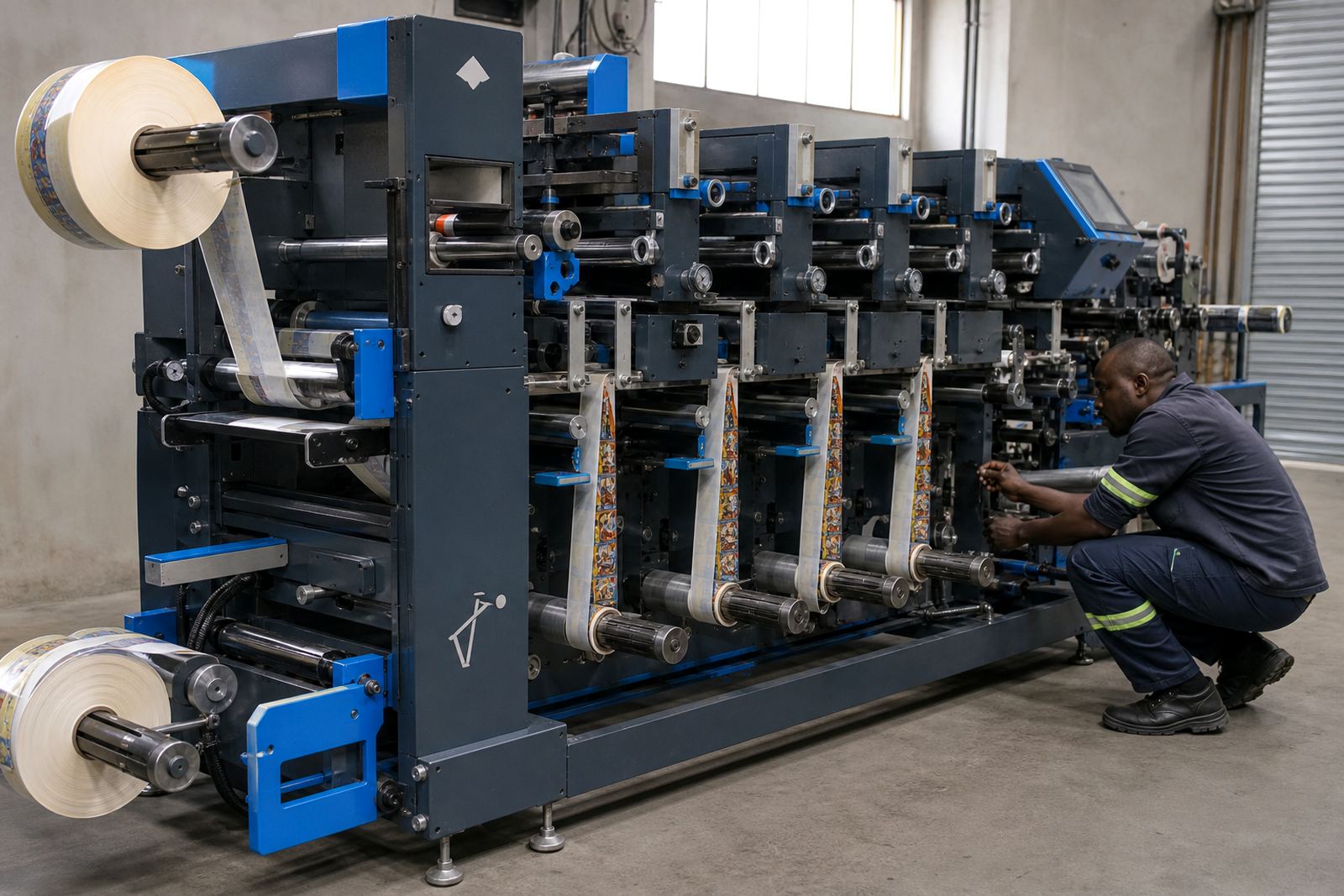
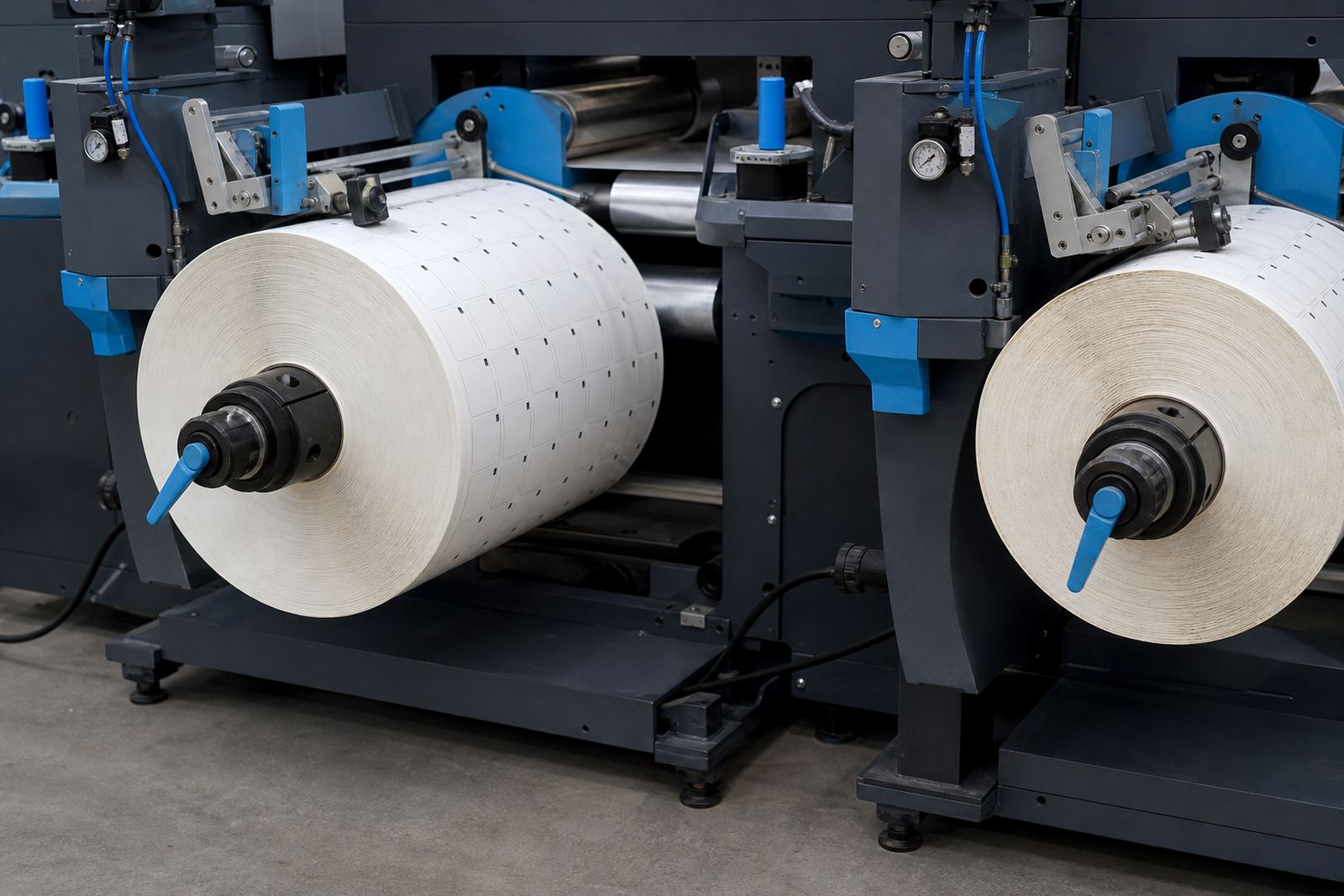
A dual rewind system is fitted after slitting or die-cutting to collect finished material onto two shafts instead of one. In practical terms, that lets an operator divide a wide web into two rewound lanes, or build separate finished rolls from the same production pass. For label work, that matters when the job calls for multiple SKUs, different roll counts, or neat split delivery for packing and dispatch.
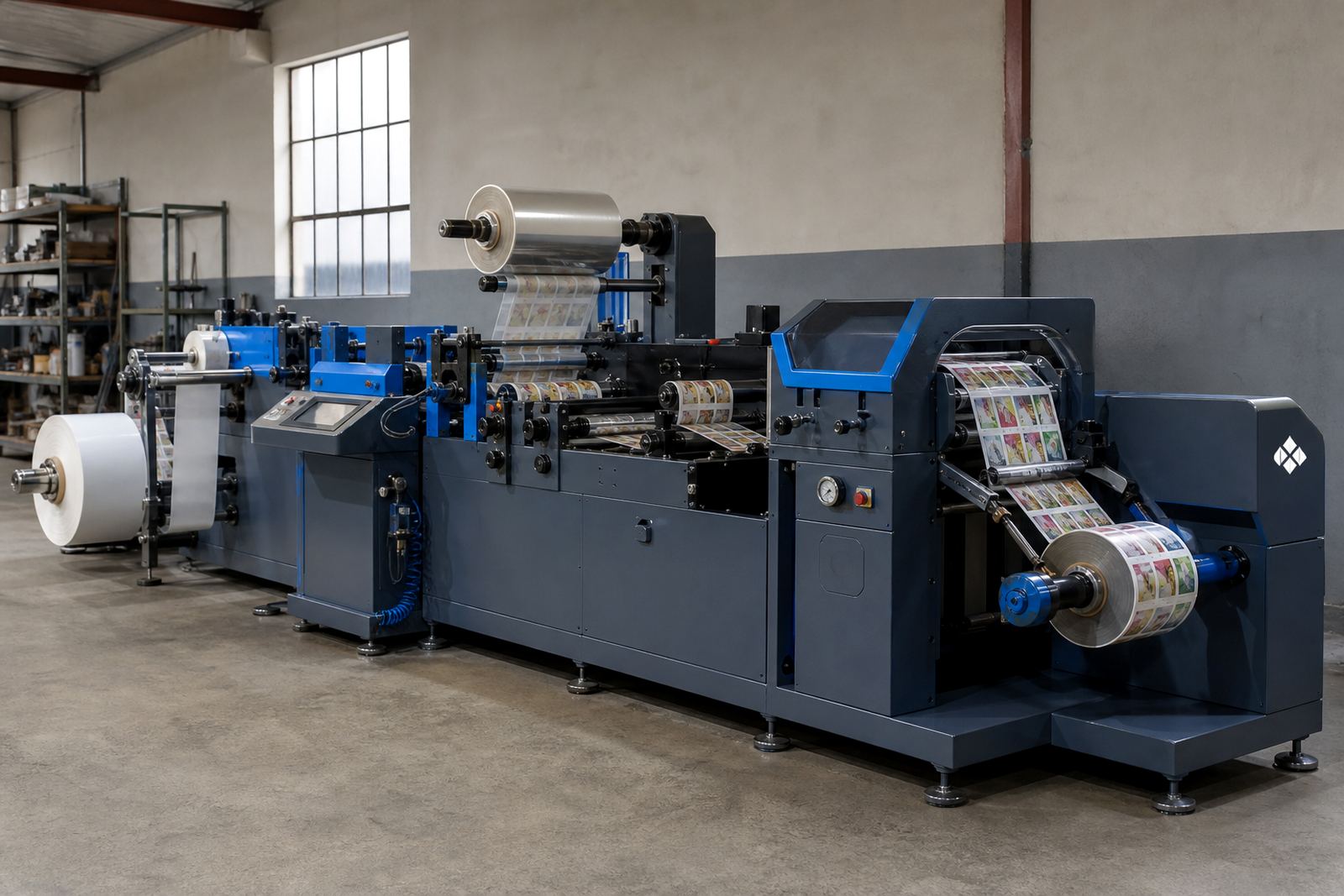
The arrangement can sit behind a digital die-cutting line, a laminating station, a varnish section or a slitting unit. Where registration marks are used, the rewind control keeps the finished lanes aligned and the roll build more consistent. It is especially useful on self-adhesive label webs, short runs with several variants and packaging work that needs tidy roll presentation.
In a busy shop in Kya Sand or on a line in Durban, the value is usually in handling. Finished rolls can be managed in pairs, with better separation between jobs and less manual rework at the end of a run. That keeps the finishing bay neater and makes the next stage easier to pack or label.
Typical build choices for label finishing lines
Dual rewind systems are specified to suit the web width, core size and roll build expected on the line. A common arrangement is two independently controlled shafts with tension adjustment, edge guidance support and a clear path for the web after slitting. On some lines the shafts are fixed in place, while others allow a wider range of core positions for mixed job sizes.
- Web widths commonly start at narrow label formats and move into wider converter widths, depending on the machine line.
- Core sizes are often set for standard label winding cores, with adapters where the job needs them.
- Rewind direction can be set for face-out or face-in collection, depending on downstream use.
- Tension control helps prevent telescoping, loose rolls and crushed edges on lighter films and paper stocks.
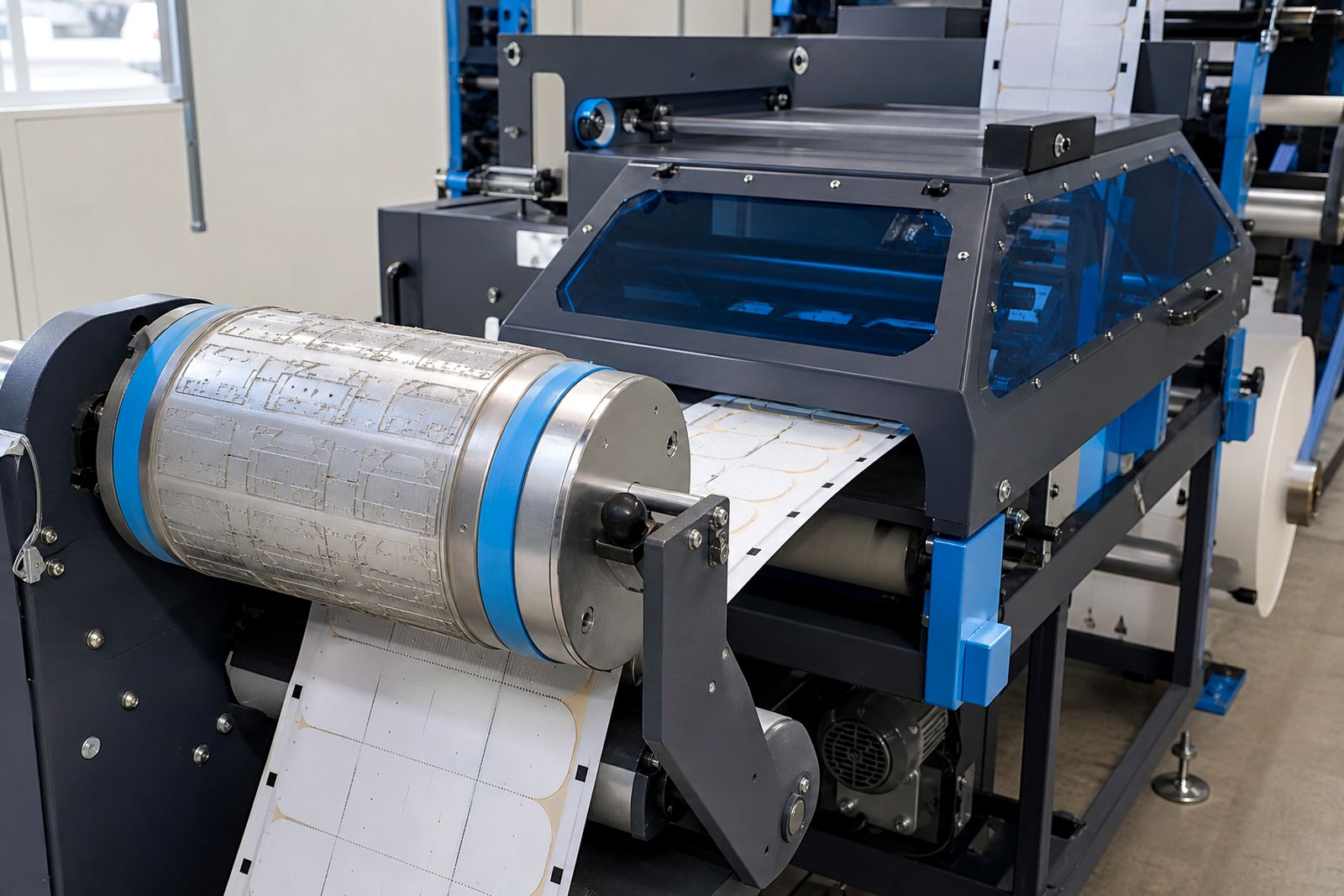
- Registration support matters where the rewind follows laser die-cutting, semi-rotary cutting or printed mark detection.
Some operations want a simpler two-shaft layout for straight job splitting, while others need more control for mixed substrates such as paper, polypropylene or metallised stock. The right setup depends on how the rolls will leave the shop and how often operators switch from one label format to another.
Where the dual rewind earns its place
This setup suits label printers, narrow-web converters and packaging producers that work with multiple finished rolls from one parent web. It is also practical where the line feeds a slitter, a matrix stripping section or a print and finish process that leaves several lanes to collect at once. The more often a job needs split delivery, the more useful the second rewind shaft becomes.
In Gauteng production rooms, the system often supports short runs with several labels per job. In coastal sites, the benefit can be cleaner handling of web stock that has picked up humidity and needs steady winding pressure to stay flat. It is also useful where a customer expects rolls packed in matched quantities, not one large master roll that must be broken down later.
- Short-run label work with frequent changeovers
- Multi-SKU packaging jobs with split roll delivery
- Jobs that follow slitting, stripping or die-cutting in line
- Converter lines that need neater handoff to packing
- Production where roll presentation affects dispatch and storage
Installation and line fitting on real production floors
A dual rewind system needs to be aligned carefully with the rest of the finishing line. During installation, the frame position, web path and shaft height must match the infeed and outfeed equipment so that the material tracks true across both rewind stations. Where the line includes tension control, the settings should be checked with the actual stock, core size and roll diameter the job will use.
Fitting may involve power connections for driven shafts, control wiring for speed matching and integration with the main line controls. On some lines, the rewind is part of a broader finishing cell that includes die-cutting, lamination, slitting and waste removal. A clean installation helps the operator keep the web centred and avoids unnecessary drift between the two collection points.
Label-Cutter supports installation, line commissioning and operator training from Kya Sand, Randburg, with support across Johannesburg, Pretoria, Durban, Cape Town and Gqeberha. The aim is to get the rewind working with the rest of the finishing line, not just turning on its own.
Care, wear points and day-to-day upkeep
Dual rewind systems work best when the shafts, bearings and tension surfaces stay clean. Adhesive dust, paper lint and trim waste can build up around the rewind area, so the line should be checked often, especially after long runs or sticky stocks. If the rewinder is collecting narrow lanes, the operator should watch edge build and roll firmness from the first few metres of the job.
Preventive maintenance usually includes inspection of drive belts, sensor positions, shaft locking parts and any brake or clutch components used for control. If the line runs varnished or laminated labels, the finished surface may be more sensitive to scuffing, so handling should be neat and the roll transfer area kept clear. A clean rewind path helps, but so does steady operator attention during changeover.
When a shaft starts to wind unevenly, the issue is often small at first. A slight tension mismatch, a worn core grip or a misaligned guide can show up as loose edges, bellies in the roll or side creep. Catching that early is better than sorting a damaged batch after the job is complete.
Details that matter before the shaft count is locked in
To specify a dual rewind properly, the line needs a few practical details. The width of the web, the core diameter, the maximum roll diameter and the stock type all affect the setup. It also helps to know whether the rewind must work face-in or face-out, whether it will follow slitting, and whether the operator needs independent control over each shaft or just basic split collection.
- Web width and usable lane width
- Core size and core type
- Maximum finished roll diameter
- Material type, including paper, film or laminated stock
- Desired rewind direction and lane split
- Whether the rewind must match registration marks or printed lanes
For a tighter production fit, it is also worth noting whether the line will handle flexible dies, semi-rotary cutting or laser die-cutting upstream. That affects web stability, speed matching and the amount of operator control needed at the rewind station.
Key facts
| System type | Two-shaft rewind arrangement for split roll collection |
|---|---|
| Typical use | Digital label finishing, slitting and roll handover |
| Materials | Paper, film, laminated and varnished label webs |
| Control | Independent or linked shaft control, depending on line build |
| Compatible operations | Die-cutting, matrix stripping, slitting, rewinding |
| Support | Installation, training, servicing and spare parts from Kya Sand |