Start with the label’s end job, not the film roll
Lamination choices make more sense when you start with the label’s next step. A self-adhesive product label for chilled food needs different surface protection from a cosmetic label, and neither behaves like a wraparound pack for dry goods. If the roll has to pass through die-cutting, matrix stripping and rewinding after the top coat, the finish must support that route instead of fighting it.
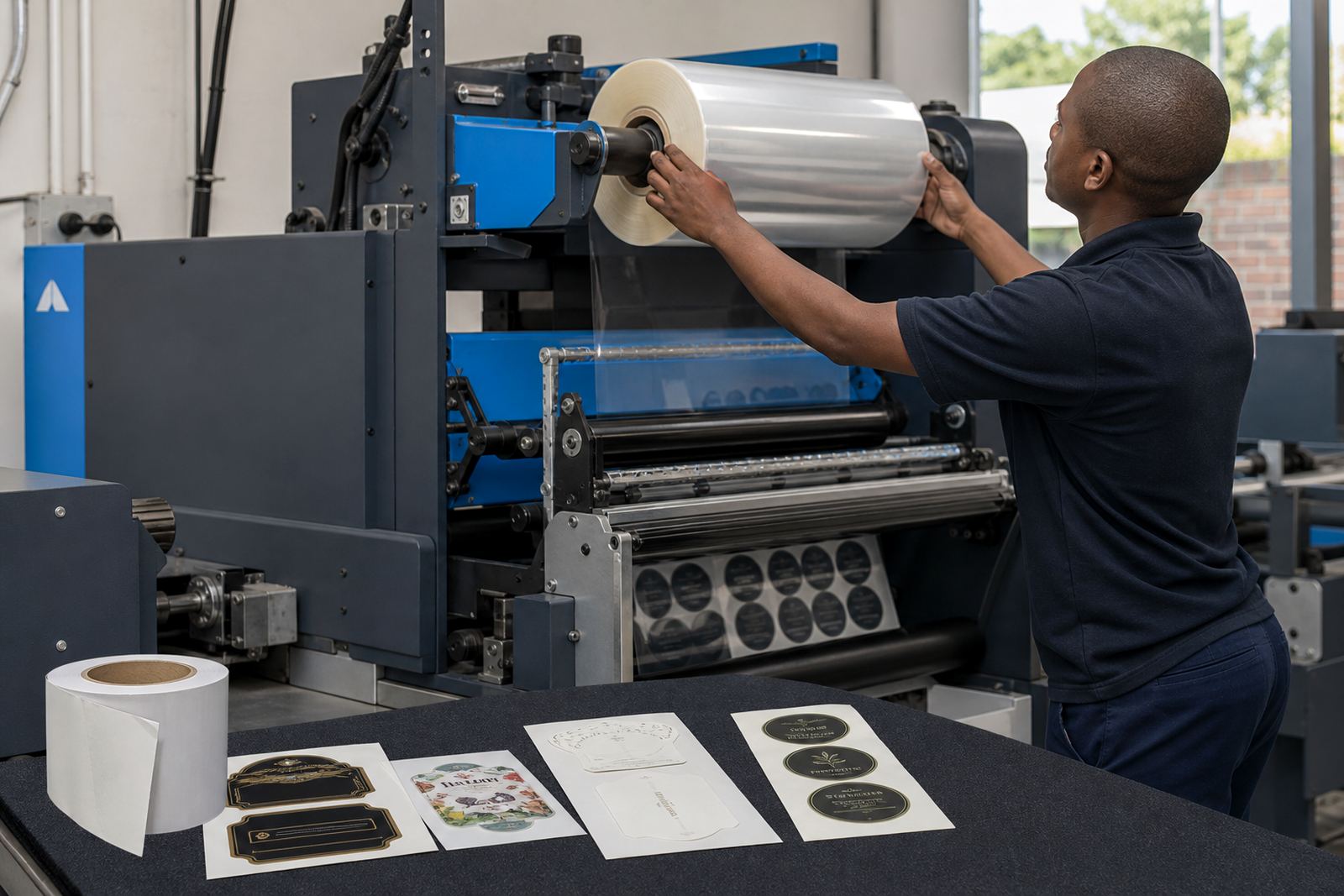
Ask what the label must do on shelf, on a carton or on a bottle after printing. A high-gloss overlaminate can sharpen colour and resist scuffing, while a matt film reduces glare and can hide minor print variation. A soft-touch or textured finish may look strong on a short run, but it can change how a label feeds when the stock is narrow and the web tension is tight.
- Check the final surface appearance first
- Confirm whether the label must resist abrasion
- Allow for the next converting step after lamination
- Test the finished roll in the real application
Questions that matter before you commit to an overlaminate
There is no single film that suits every press line. Overlaminate handling depends on adhesive strength, heat from the web, and how flat the web stays through the nip rollers. If the roll carries registration marks for semi-rotary or laser die-cutting, those marks need to stay visible after the top coat is applied. A film that shifts the contrast can slow down registration setup and create waste at the edges.
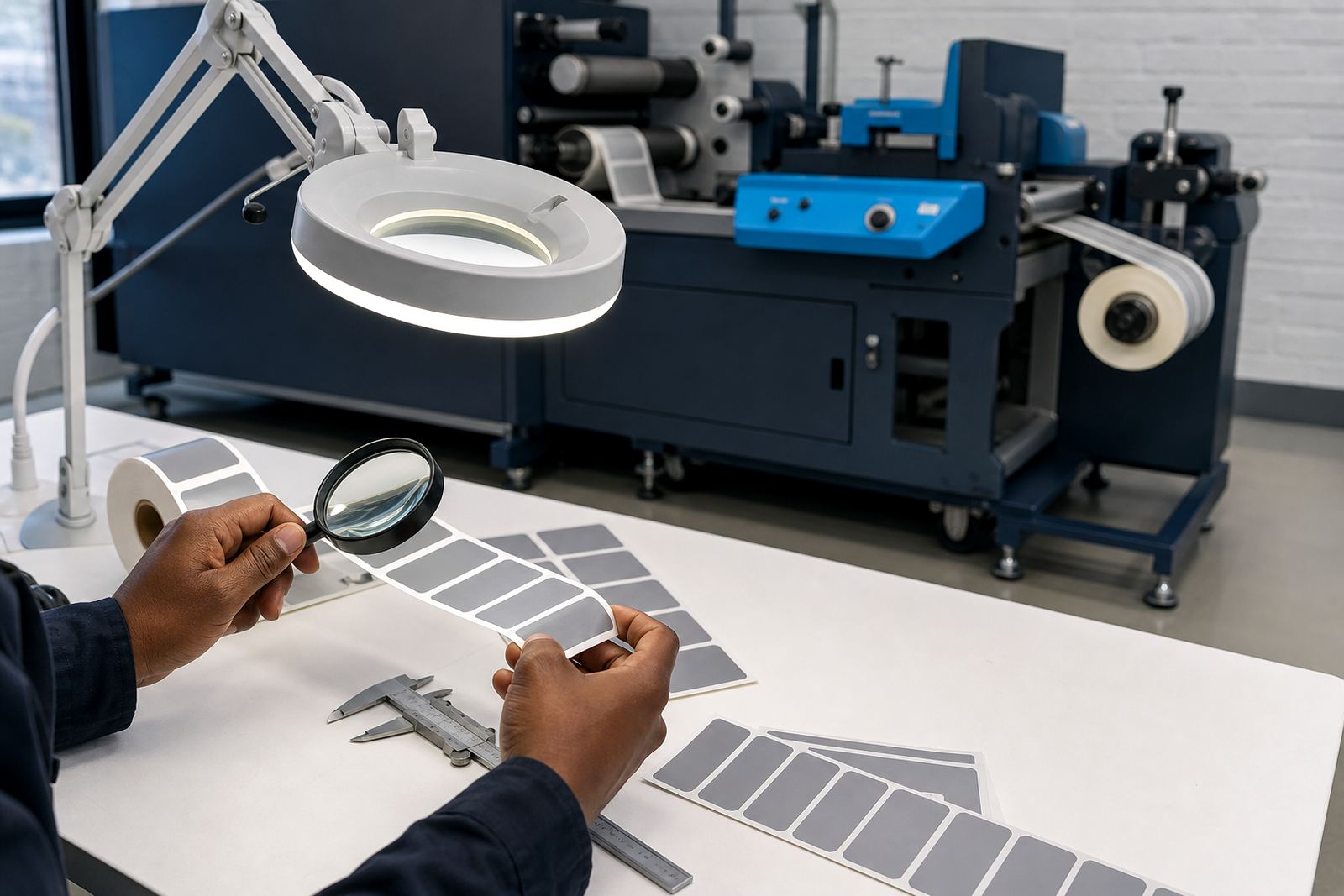
Some printers want a hard, glossy finish because it adds shine and protects the print. Others need a lower-gloss result so a barcode, ingredient panel or variable data remains easy to read under store lighting. If the label carries fine type or metallic areas, compare how each film changes legibility. A good test run should show whether the laminate wrinkles near the edge, lifts at the slitting line or leaves drag marks during rewind.
- Will the film still show registration marks clearly?
- Does the adhesive suit the substrate and print layer?
- Will the finish stay flat through slitting and rewinding?
- Does the top coat affect barcode scanning or small text?
Gloss, matt and varnish each answer a different brief
Gloss overlaminate is often used where colour punch and surface protection matter. It tends to suit labels that need stronger shelf presence, but it can also show scratches more easily under harsh handling. Matt film gives a softer appearance and can reduce reflection on clear or dark labels. That matters in shops with bright lights, where glare can make a pack hard to read at arm’s length.
Varnish is useful when you want added surface control without changing the body of the roll as much as a film does. On some jobs, a varnish layer works better for shorter runs or where the label set includes different print zones on the same web. Still, it does not replace a proper film when the label needs serious abrasion resistance or handling through chilled distribution. The best choice often depends on whether the label is meant to be touched, stacked, wiped or simply seen.
For packaging producers in Durban or Cape Town, moisture and coastal air can influence how a finished roll behaves in storage. That does not mean every label needs the same coating, but it does mean the end use should shape the finish.
How lamination affects die-cutting and waste removal
Once a film is added, the web becomes more layered and can behave differently in the cutter. A semi-rotary die needs consistent lay-flat stock to keep the cut depth steady. A laser system needs a finish that does not create unwanted residue or smoke build-up, especially where the label stock includes coated or synthetic layers. Flexible dies can be a strong option where repeat work and clean edges matter, but the setup still has to respect the overlaminate choice.
Matrix stripping becomes more sensitive when the laminate is stiff or tacky. If the waste web tears, the operator often spends more time correcting tension and tracking. That slows down the line and can affect the next stage of slitting and rewind. The better route is to test the full path, from unwind through lamination and cut, then into waste removal and rewind under the same roll width the customer plans to run.
- Watch for edge lift during matrix stripping
- Check whether the laminated web tracks straight
- Test cut depth on the actual print stack
- Confirm waste removal at the planned speed
Registration, rewind and slitting need one clean path
Registration marks should remain sharp enough for the machine to read after the laminate or varnish is applied. If the finish reduces contrast or changes the surface sheen too much, the cut line can drift and the roll will need extra correction. That matters on short labels, intricate shapes and tight step-and-repeat layouts where every millimetre counts.
Rewind setup also changes with the finish. A smooth glossy film can slide more easily on the core, while a heavier laminate may add bulk and create more spring in the roll. Slitting needs equal attention because laminated stock can show more edge memory after the knives pass through. On narrow label webs, a poor slit can lead to telescoping or a loose outer wrap that looks fine at first and then loosens in storage.
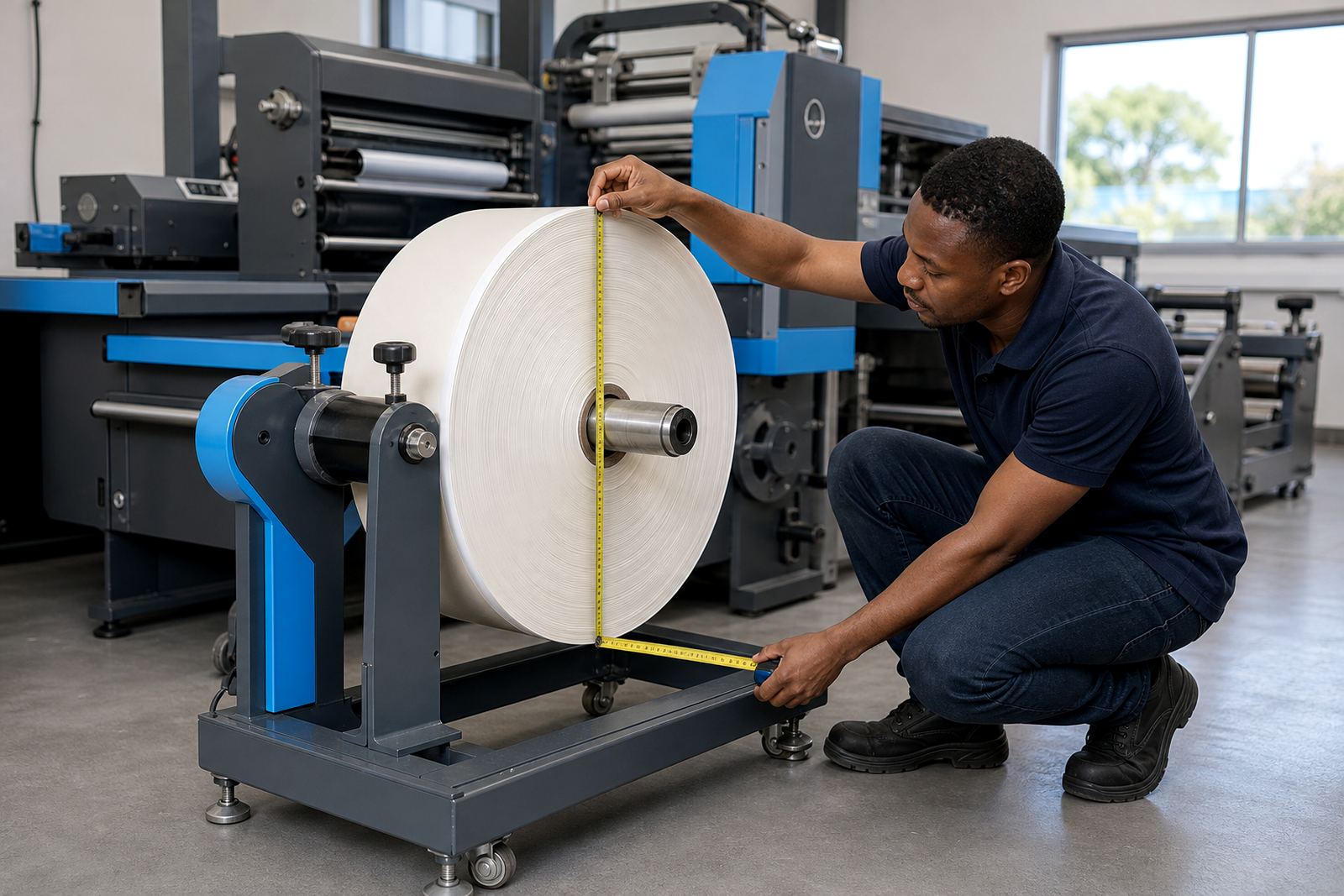
A practical comparison should include finished roll diameter, edge quality and how the roll unwraps after a full shift of production. If you skip that step, you may only discover the problem when the roll reaches converting or packing.
A practical comparison sheet for the shop floor
Use the same questions for every option so the results stay fair. Write down the substrate, print process, label size, roll width and final use. Then compare the finish under light, in handling and after cutting. A good sheet does not need fancy wording, only enough detail to show where one option helps and where it causes trouble.
For teams working across Johannesburg, Pretoria, Durban, Cape Town and Gqeberha, local storage conditions can shift the result. A roll that behaves well in a dry room may not act the same after transport or a few days near a coastal loading bay. Keep the trial small but real, and include the people who will actually run the line.
- Substrate type and surface energy
- Print method and ink or toner stack
- Film type or varnish choice
- Cut quality, strip quality and rewind shape
- How the finished roll looks after handling
Questions that keep the comparison honest
What looks best on a sample sheet can behave differently on a production roll. That is why a side-by-side test matters more than a catalogue description. Compare finish, registration visibility and the way the laminated web moves through the line. If a roll needs repeated adjustment, the finish may be too demanding for that job even if it looks excellent on the shelf.
When the brief includes narrow webs, complex shapes or heavy handling, the finish choice should support the rest of the converting route. Lamination is not only about shine or protection. It also affects how cleanly the die cuts, how the waste lifts, and how the rewind leaves the shop.
Our team handles machine installation, line commissioning, operator training, preventive maintenance, breakdown repairs, remote support, spare parts supply, die setup help, registration calibration, rewind setup, slitting setup and production optimisation from Kya Sand, Randburg.