Map the machine footprint before it arrives
A digital finishing line needs more than the floor space shown on a brochure sheet. Leave room for the main frame, the operator side, the stacker or rewind side and a clear path for rolls, cores and finished output. In Kya Sand and on tighter factory floors in Johannesburg or Durban, this extra space often decides whether the line can be serviced without shifting other equipment.
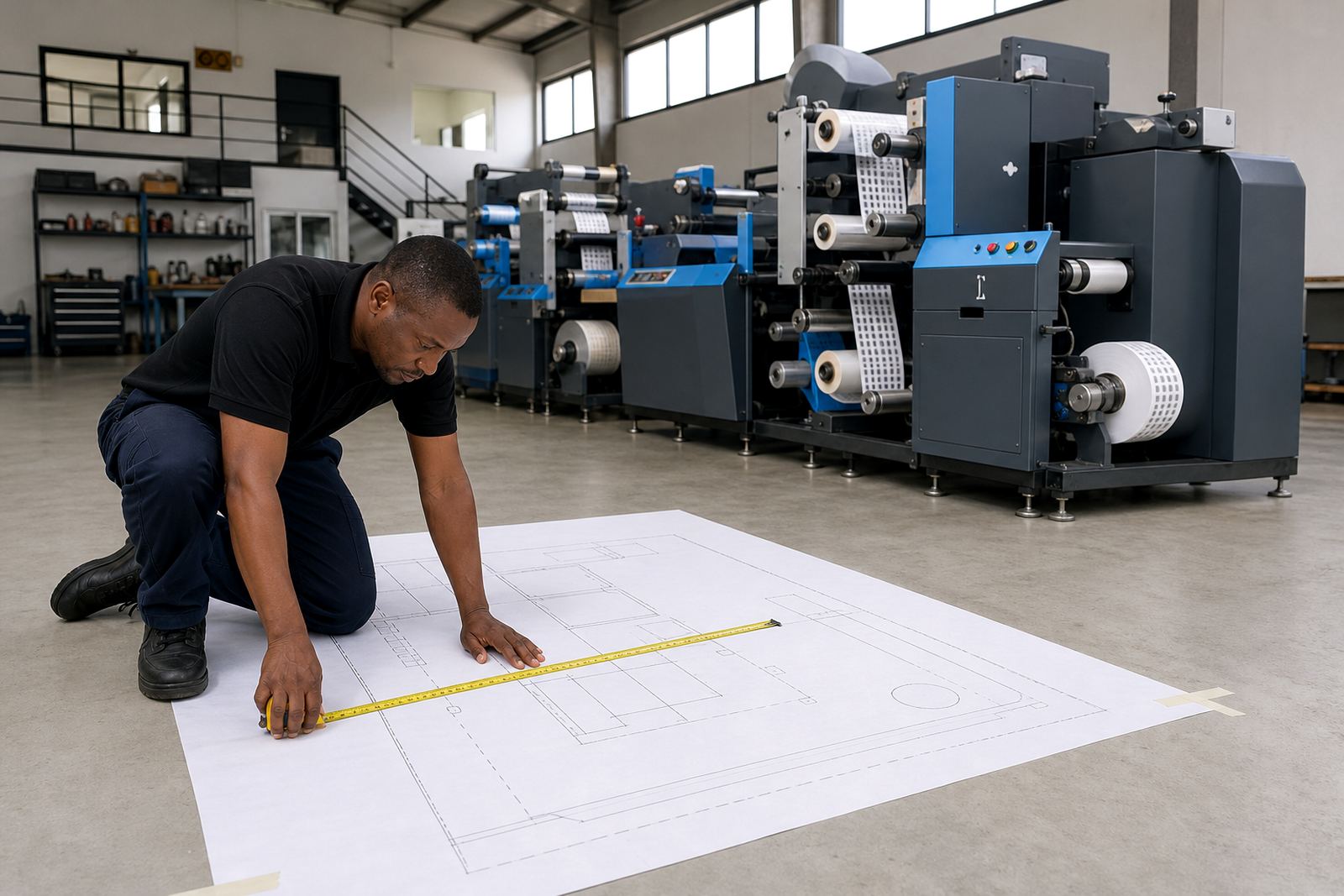
Think in metres, not in guesswork. Measure the doorway, the turning path into the room and the final standing position, then add space for covers to open and panels to swing out. If the machine uses a separate unwinder or inspection table, allow access on both sides. The service team needs to reach the web path, sensors, drive sections and electrical cabinet without kneeling under a load of pallets or climbing over bins.
Good clearance also helps with routine cleaning. Adhesive mist, label dust and trim waste collect around guides and rollers. When there is space to work, the machine stays easier to keep in line and the operator is not forced to work at an angle all day.
- Measure the full machine length, width and service side access.
- Allow space for roll changes, waste removal and core handling.
- Keep the route from the receiving point to the final position open.
- Check that doors, gates and roller shutters clear the machine height.
Plan isolation points where hands must never guess
Any line that uses mains power needs clear isolation points that can be reached quickly and identified without confusion. The electrical isolator should not be hidden behind pallets, wash-up gear or spare cartons. If the machine is part of a larger print room, mark the breaker, the local isolator and any compressed air shut-off in plain sight.
That matters during servicing, emergency stops and fault finding. A technician should not waste time tracing cables through a crowded room while the machine still holds energy in a drive section or rewind. Clear isolation keeps servicing orderly and reduces the chance of a missed restart step after maintenance.
Where a plant has several finishing stations, label each isolate point in the same way. The same logic helps operators during line commissioning and when a breakdown repair calls for the machine to be made safe before covers are opened. In humid coastal areas such as Cape Town and Gqeberha, a tidy electrical layout also makes inspection easier when moisture and dust are both part of the work area.
- Keep local isolators visible and reachable without moving stock.
- Mark the correct breaker for each machine and sub assembly.
- Separate power, air and control isolation in the service notes.
- Test access after installation, not only on paper.
Leave space for rolls, reels and waste paths
Label finishing is a web handling job, so material flow matters as much as the machine itself. Allow enough room for incoming rolls, outgoing rolls, cores, trim boxes and matrix waste handling. If the machine strips waste before rewinding, the waste path needs to stay open or the area becomes cramped very quickly.
For narrow labels, short rolls and frequent changeovers, the operator needs an easy reach to the unwind, the laminate station and the rewinder. If the production room is busy, set a marked holding point for raw rolls and another for finished rolls. That keeps the path clear and avoids damage to labels that are still waiting for packing or dispatch.
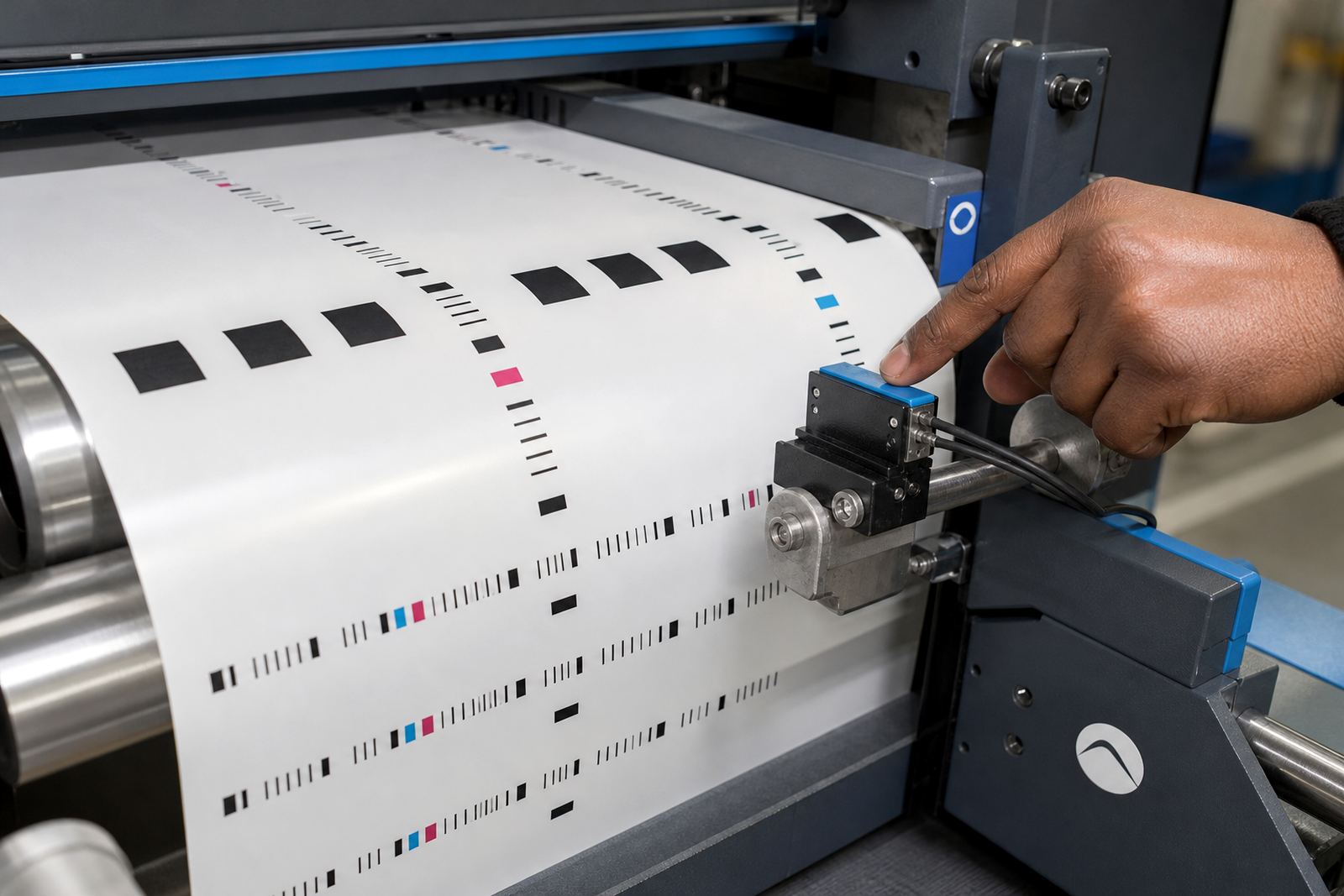
Web tension, registration marks and slit positions are easier to manage when the operator can see the full flow. A line that is forced into a tight corner often suffers from awkward handling, especially where die changes or flexible dies are used and the waste matrix must peel away cleanly.
- Set one area for incoming rolls and another for finished rolls.
- Keep waste bins or boxes close, but not underfoot.
- Leave room for label cores, shafts and spare mandrels.
- Protect printed rolls from dust, sunlight and floor moisture.
Build the service path around the work that actually happens
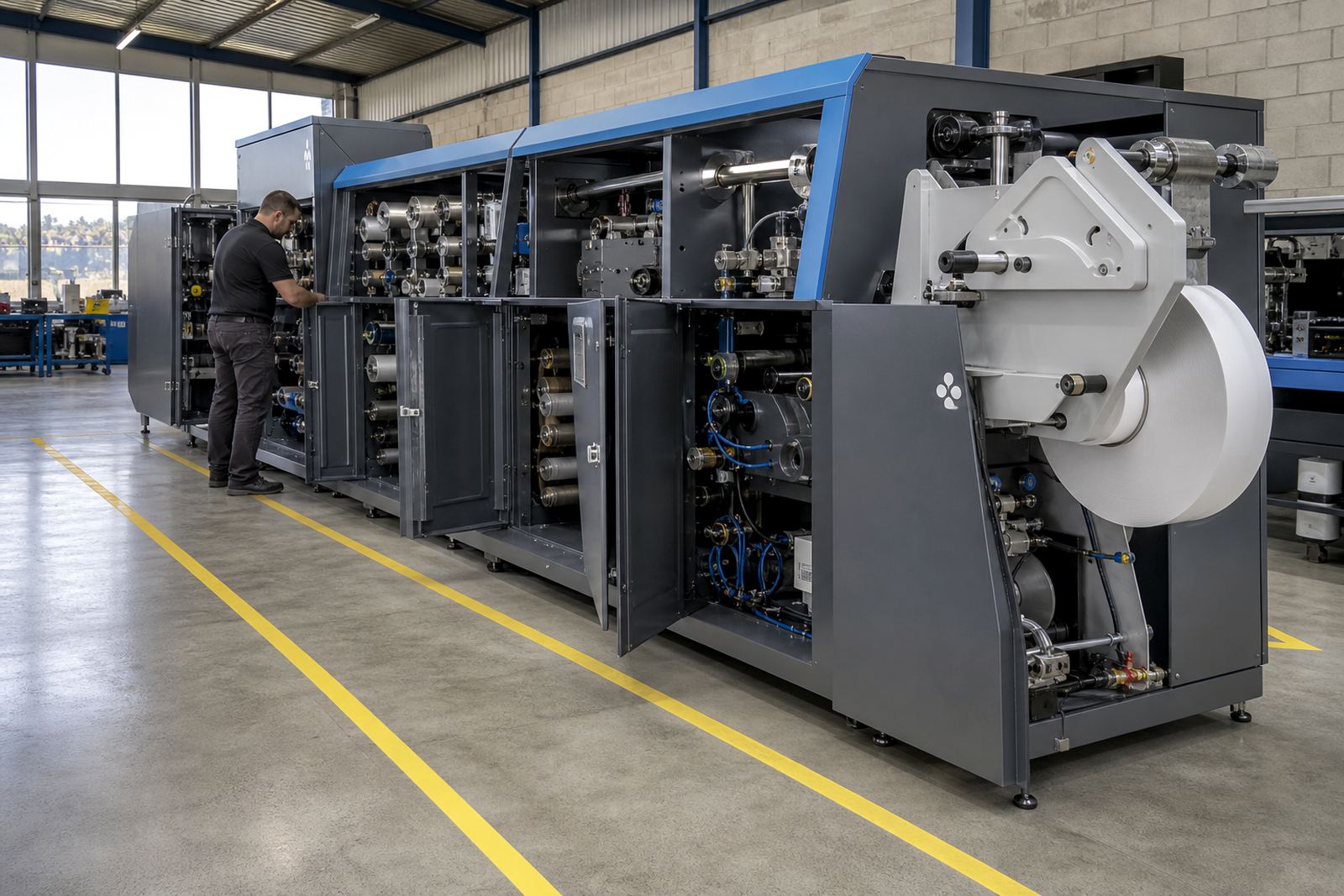
A good maintenance path follows the places where faults usually show up. On a label die-cutting and finishing line, that means the unwind brake, web guide, registration reading point, die section, stripping zone, slitter and rewind. Each of those areas should be accessible without dismantling neighbouring covers or moving another machine first.
When operators and technicians can reach those points quickly, preventive maintenance becomes easier to keep up with. Worn rollers can be checked before they mark the web. Sensors can be cleaned before registration drifts. Slitting knives can be set before they leave ragged edges on narrow label webs. That saves time in the room and reduces unnecessary stops during production.
For plants in Pretoria, Midrand or Kempton Park, where multiple print jobs may run through the same shift, a sensible service path also helps training. New operators learn the order of checks in a real room, not in a tidy diagram that forgets the dust, the trims and the pile of finished rolls waiting to move out.
- Keep the die section open enough for inspection and adjustment.
- Make the stripping zone visible from the operator side.
- Leave room to clean sensors, rollers and guides.
- Store service tools where they do not block the machine doors.
Use a commissioning checklist that fits the room
Line commissioning is easier when the room is checked in the same order each time. Start with access, then move to power isolation, web path, material storage and finally operator movement around the line. A short checklist keeps the installation practical and helps the team spot missing space before production starts.
The details matter. A machine can be perfectly level and still be awkward to service if the rewind side faces a wall or the parts cabinet sits too far away. If the line includes lamination or varnish work, allow room for film handling, coating checks and cleaning tools. Where registration calibration is part of the setup, enough space is needed to test a full web path without squeezing between cabinets.
After commissioning, the same checklist should be used during preventive maintenance visits. That keeps the room consistent and helps the team notice if pallets, cartons or raw roll storage have started to block the service route.
- Confirm the machine can be reached from every working side.
- Check that roll storage does not block access to panels.
- Confirm isolators, air points and control access are visible.
- Make sure waste removal can happen without crossing operator paths.
Keep parts reach close to the line
Parts access is part of service access. If common items such as sensors, belts, rollers, bearings, blades, cores and fasteners are stored far from the finishing line, small jobs turn into long interruptions. A nearby, labelled parts area makes practical sense for a busy print room.
For facilities that run several shifts or serve multiple customers, the parts cabinet should be arranged by machine section, not by habit. Group items by unwind, print detection, die-cut, strip waste, slitting and rewind. That way the service team is not hunting through a drawer while a job waits to be reset. It also helps with breakdown repairs because the right part is easier to identify before the old one is removed.
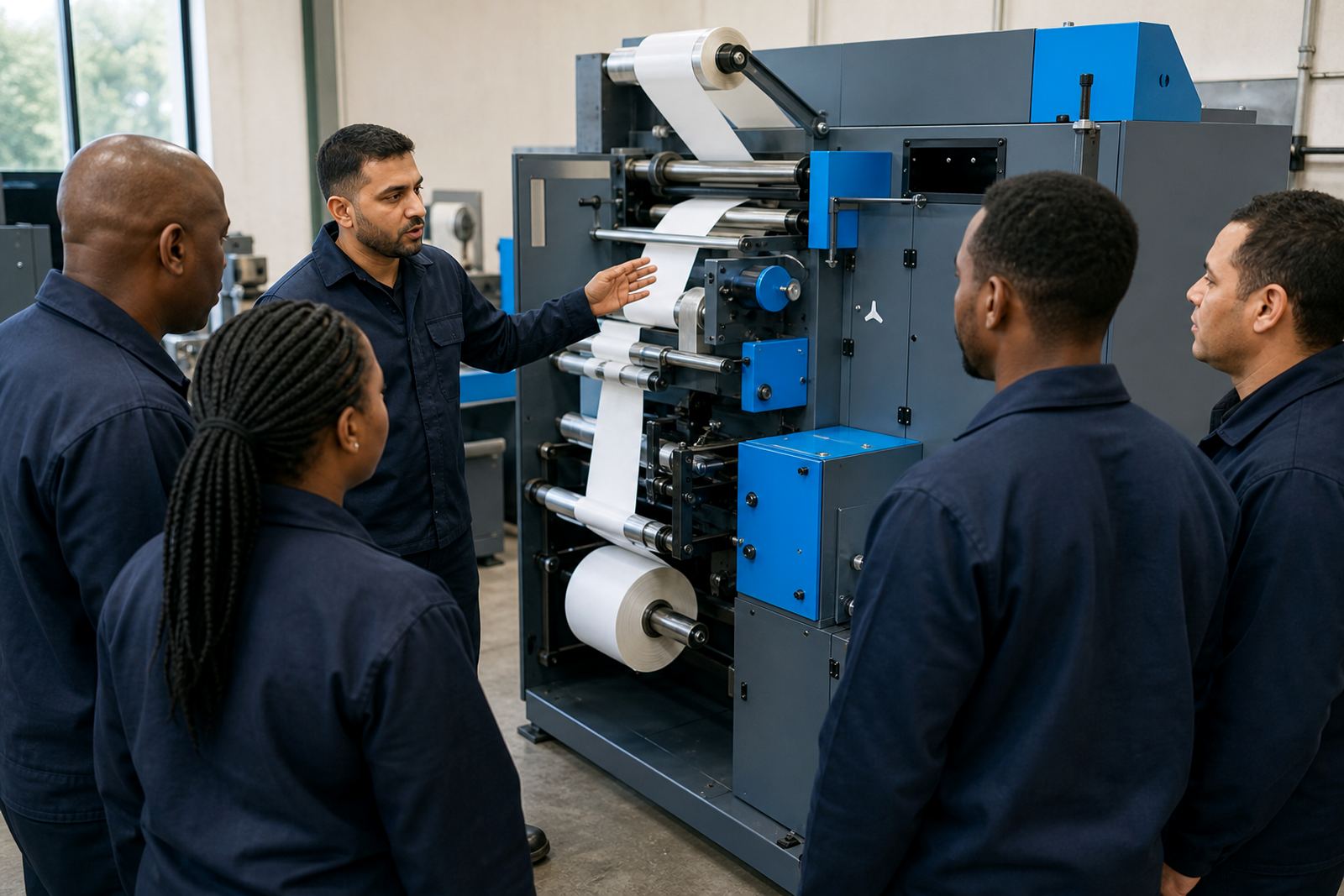
Our team handles machine installation, operator training, preventive maintenance, breakdown repairs, remote support, spare parts supply, die setup help, registration calibration, rewind setup, slitting setup and production optimisation. Those tasks work better when the room layout supports them. Good access is not decoration, it is part of keeping the line useful in real production.
A short room test before the first roll runs
Walk the room as if you were changing a roll, clearing waste and checking registration at the same time. If any step feels awkward in the empty room, it will feel worse under production pressure. A practical access plan is usually visible in the small things, like where a waste box sits, whether a cabinet opens fully and whether the operator can reach the controls without twisting.
Before the first job, the team should test the route from storage to machine and from machine to packing. Try it with a roll in hand, not only with an empty floor. That gives a better picture of real access and shows whether the layout supports the pace of the job. In a humid room or a tight shop floor, even a small obstruction can make maintenance slower than it should be.
For Label-Cutter, service planning is part of the machine conversation from the start. The aim is straightforward: let the line be reached, isolated and maintained without drama, so the finishing work stays practical every day.