Start with the roll that arrives at the machine
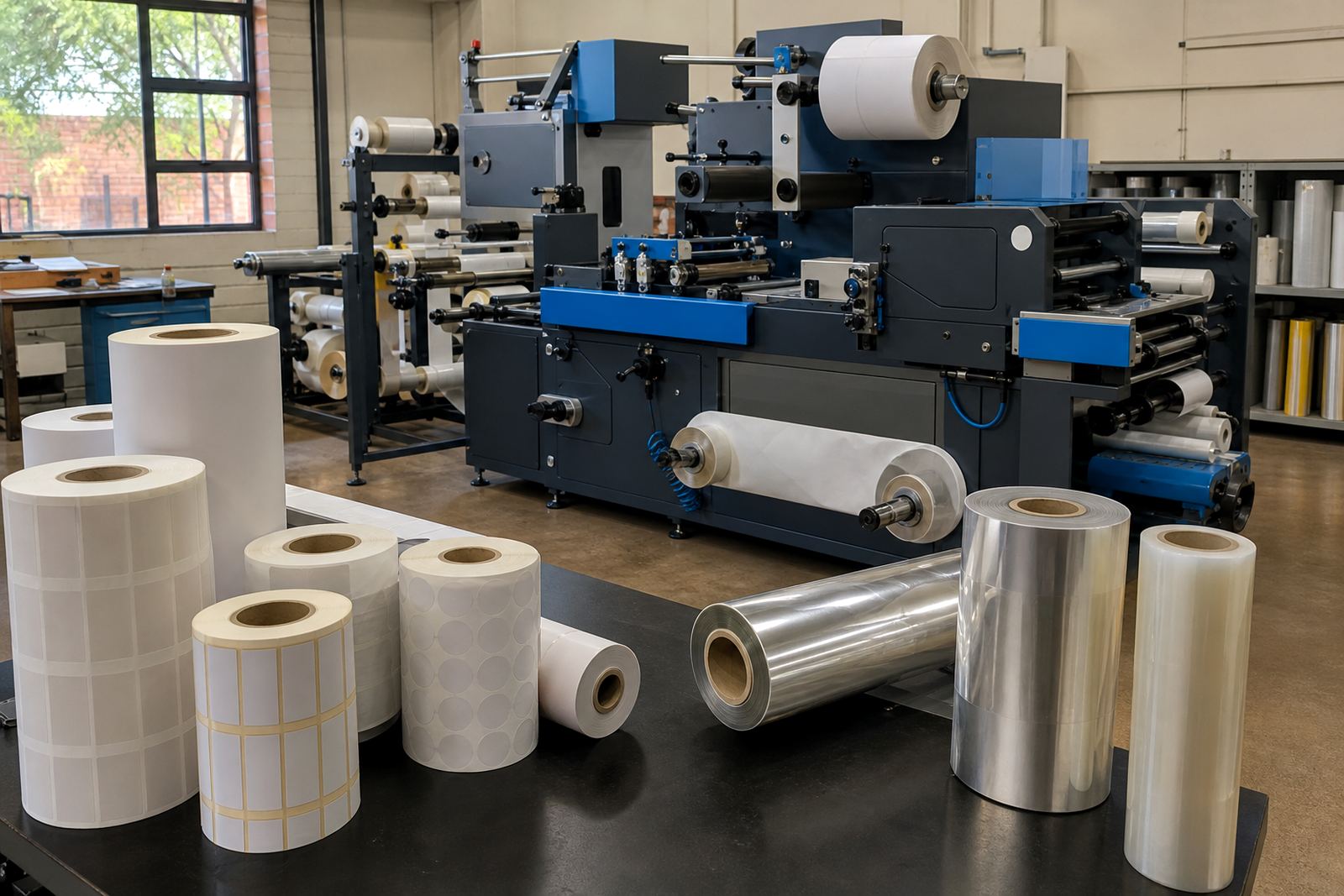
Every job begins with the stock roll, and its outside diameter, core size and web width set the limits for the rest of the line. A roll that is too large for the unwind station needs frequent stops, while a roll that is too small can lead to short changeovers and extra handling in production.
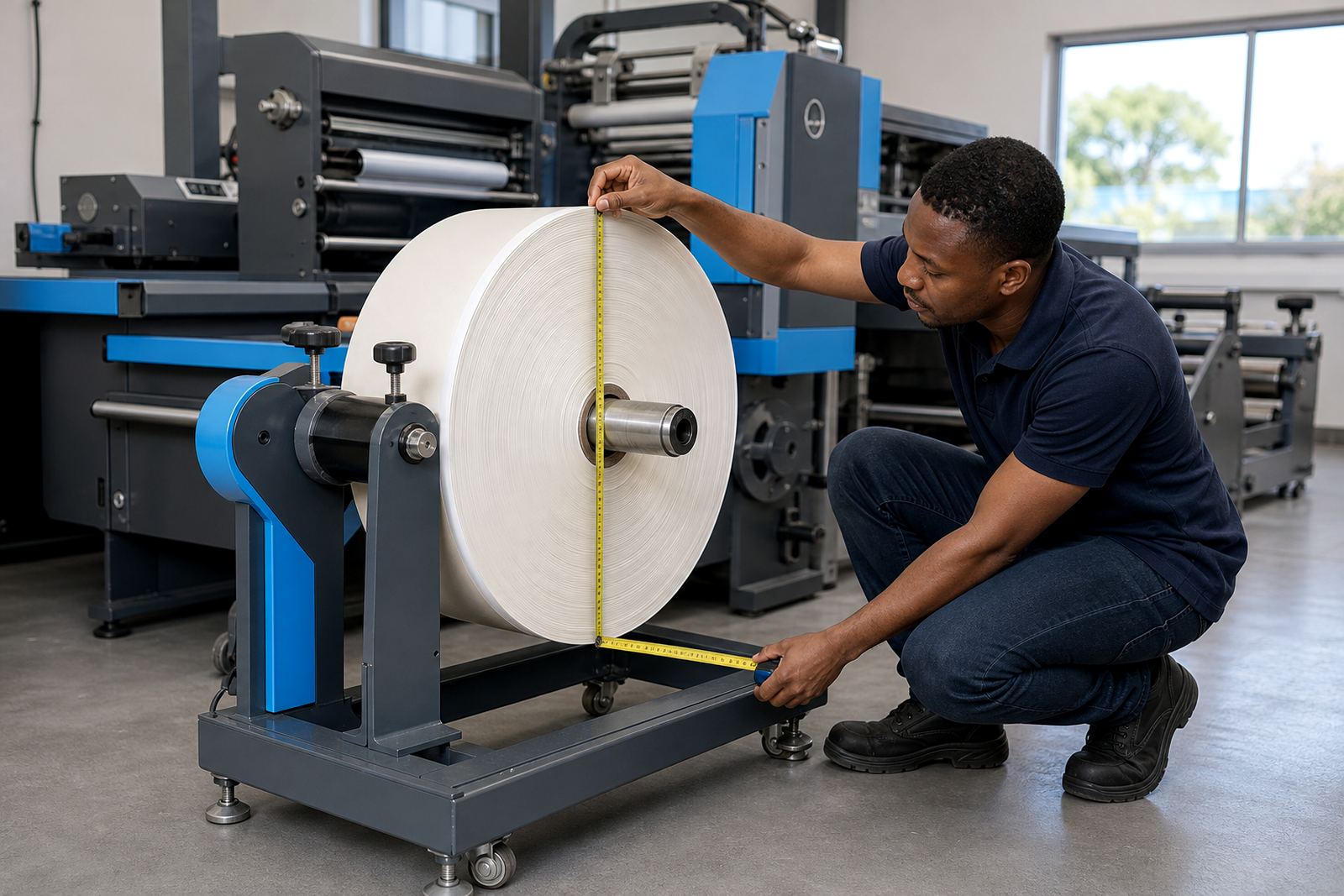
For label printers and packaging producers in Randburg, Johannesburg and Pretoria, the first check is usually the label web itself. Measure the printed width, the repeat length, and the finished roll diameter after print. If the material carries varnish, lamination or a thick face stock, the finished roll can grow faster than expected.
- Measure web width in millimetres, not by guesswork.
- Check core diameter, usually 76 mm or 40 mm on many production rolls.
- Record the outer diameter of both incoming and finished rolls.
- Note whether the substrate is paper, film or a coated stock.
Unwind capacity decides how often the line stops
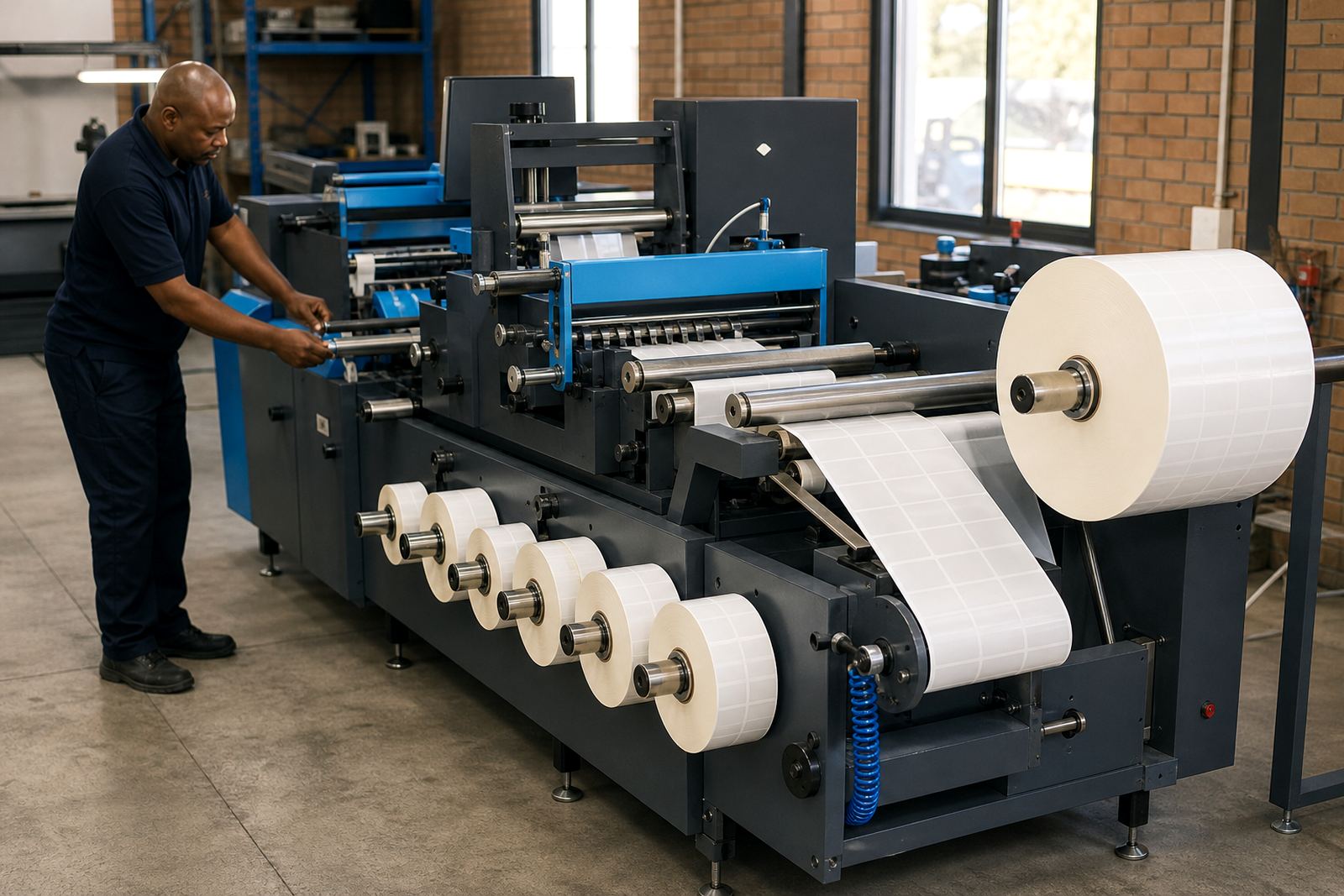
The unwind station feeds material into the machine, so its capacity must suit the roll weight and diameter. Small label runs may sit comfortably on lighter rolls, but larger packaging jobs often need a stronger unwind with proper web control. If the unwind is undersized, tension drifts and registration marks become harder to hold during die-cutting or slitting.
In real work, unwind size also affects handling. A heavier roll needs space for loading, lifting and threading. On a busy shift, this can matter as much as the cutting method itself.
- Confirm maximum unwind diameter and roll weight.
- Check whether the unwind accepts the core size used at print.
- Look at spindle or shaft support for heavier reels.
- Allow room for safe loading around the machine frame.
Rewind diameter shapes the last step of the line
Rewind capacity is just as important as unwind capacity, because the finished rolls often determine how labels leave the finishing room. If the rewind roll is too small, operators stop more often and shift more rolls by hand. If it is too large, the finished packs may not suit packing, boxing or dispatch.
For work that includes matrix stripping, slitting and rewinding, the rewind stage must hold a stable roll while the machine keeps alignment. That becomes more important when the job has narrow lanes, multiple-up slits or higher-speed runs.
- Check the largest rewind diameter the machine can build.
- Confirm the core size required for the final roll.
- Match rewind tension to the label stock and adhesive type.
- Ask how the machine handles narrow slit rolls beside wider ones.
Registration marks and roll growth must work together
Digital label finishing depends on registration marks staying readable while the web moves through lamination, die-cutting and stripping. Roll size changes the way tension behaves, and tension changes the way marks track under the sensor. If the roll is too loose or too tight, the cut can drift off position and waste labels before the job settles.
Roll growth also affects semi-rotary and laser finishing in different ways. Semi-rotary jobs need stable web feed and dependable mark control. Laser finishing still needs the roll to feed evenly, especially where the substrate can curl after varnish or lamination.
- Keep registration marks clear and consistent on the printed web.
- Check whether the sensor sees marks on glossy, matt or clear stock.
- Allow for movement after lamination or varnish.
- Test the web under normal production tension, not just idle feed.
Match roll sizes to the finishing steps you actually run
The right machine setup depends on the full sequence, not only on the die-cut stage. A line that unwinds, laminates, strips waste, slits and rewinds must cope with the extra thickness added by film or varnish. Some jobs also need flexible dies, and those can behave differently from lighter rule-based tools when the web width is close to the machine limit.
When planning a new line or adjusting an existing one, trace the job from print to packed roll. That view shows where the width narrows, where the roll thickens, and where the tension needs attention.
- List every process step in order.
- Note where lamination or varnish increases roll thickness.
- Check the narrowest web the line must handle.
- Separate short runs from long production rolls in the planning stage.
A practical check list before the machine is selected
Use a proper measurement sheet before choosing a finishing machine or changing the layout of a line. The same job can behave very differently on paper stock, film stock or a heavier coated label. A clean set of figures makes installation, operator training and future servicing easier to plan.
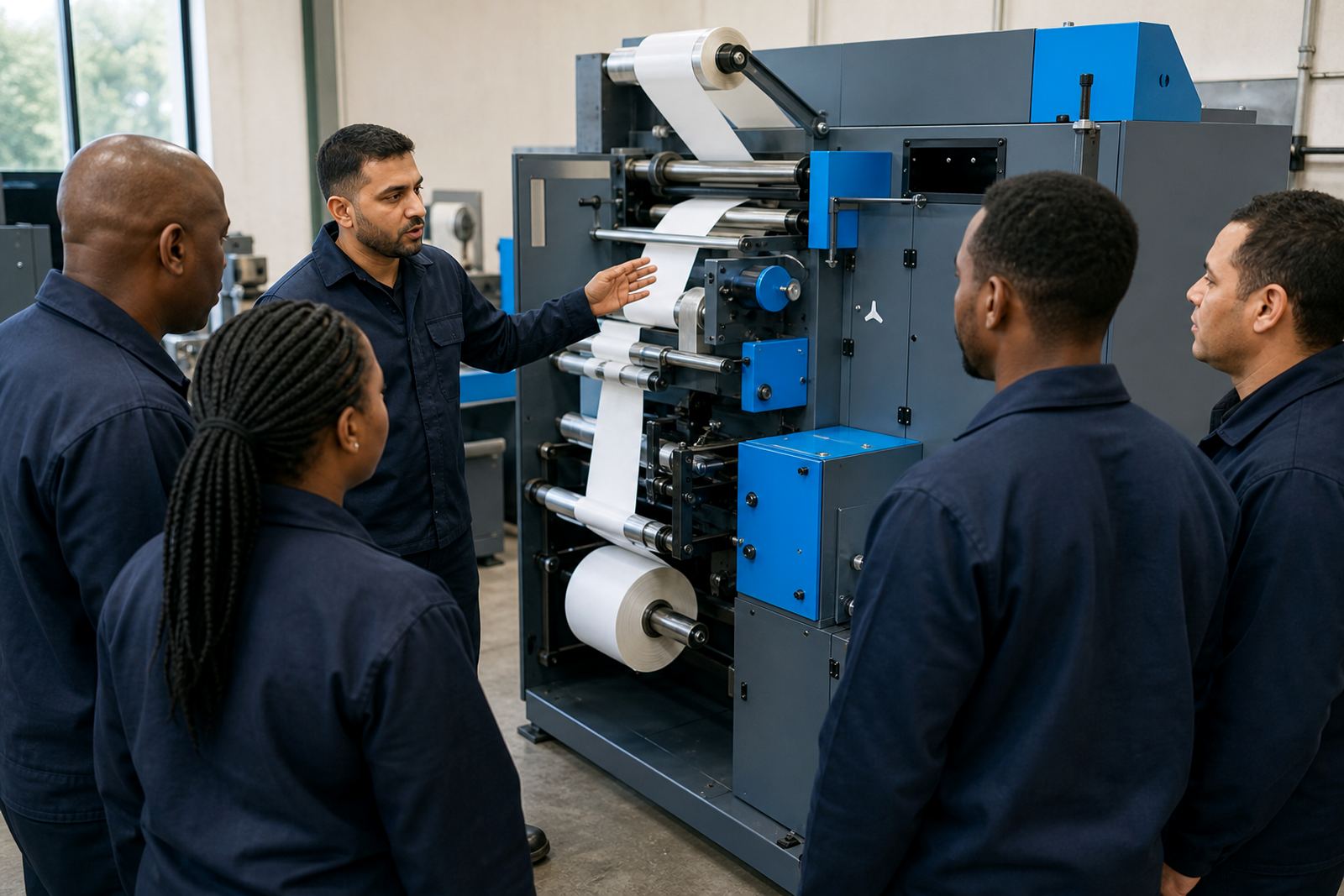
Our team in Kya Sand works with label printers and packaging producers across South Africa on machine installation, line commissioning, die setup help, registration calibration, rewind setup and slitting setup. That makes roll data a practical starting point, not an afterthought.
- Web width and repeat length.
- Incoming roll diameter and finished roll diameter.
- Core size for unwind and rewind.
- Material type, coating, lamination and varnish details.
- Required slitting lanes and final pack format.
When roll data points to a different machine choice
Sometimes the measured roll sizes show that the original plan needs a wider frame, a stronger unwind or a different rewind arrangement. That is normal on label work, especially where production includes mixed roll sizes, frequent artwork changes or tight registration control. A machine that suits one job may struggle on the next if the rolls are too large or too small for the feeding system.
For teams in Durban, Cape Town and Gqeberha, humidity can also affect how webs behave in storage and on the line, particularly with coated labels and film stocks. A solid roll plan helps reduce handling problems before they reach the finishing room.
If the figures are clear, the machine choice becomes clearer too. That is the part that saves time in setup and keeps the workflow steady through the run.