Start with the press output, not the rewinder
A rewind setup should follow the way your labels leave print. Narrow pharmaceutical rolls, wider food labels and short digital promotional runs all behave differently once the web reaches the finishing line. If the print roll exits the press with tight registration marks, stable edge control and a clean matrix, the rewind station can be set with far less correction.
Look first at the printed web width, repeat length and coating mix. Varnished stock, laminated stock and film faces all change the grip on the rewind shaft and the amount of pressure needed at the nip. In humid coastal conditions, a roll that looked fine in the morning may tighten or shift later in the day, so the setup has to respect the material, not just the artwork.
Core size decides more than storage space
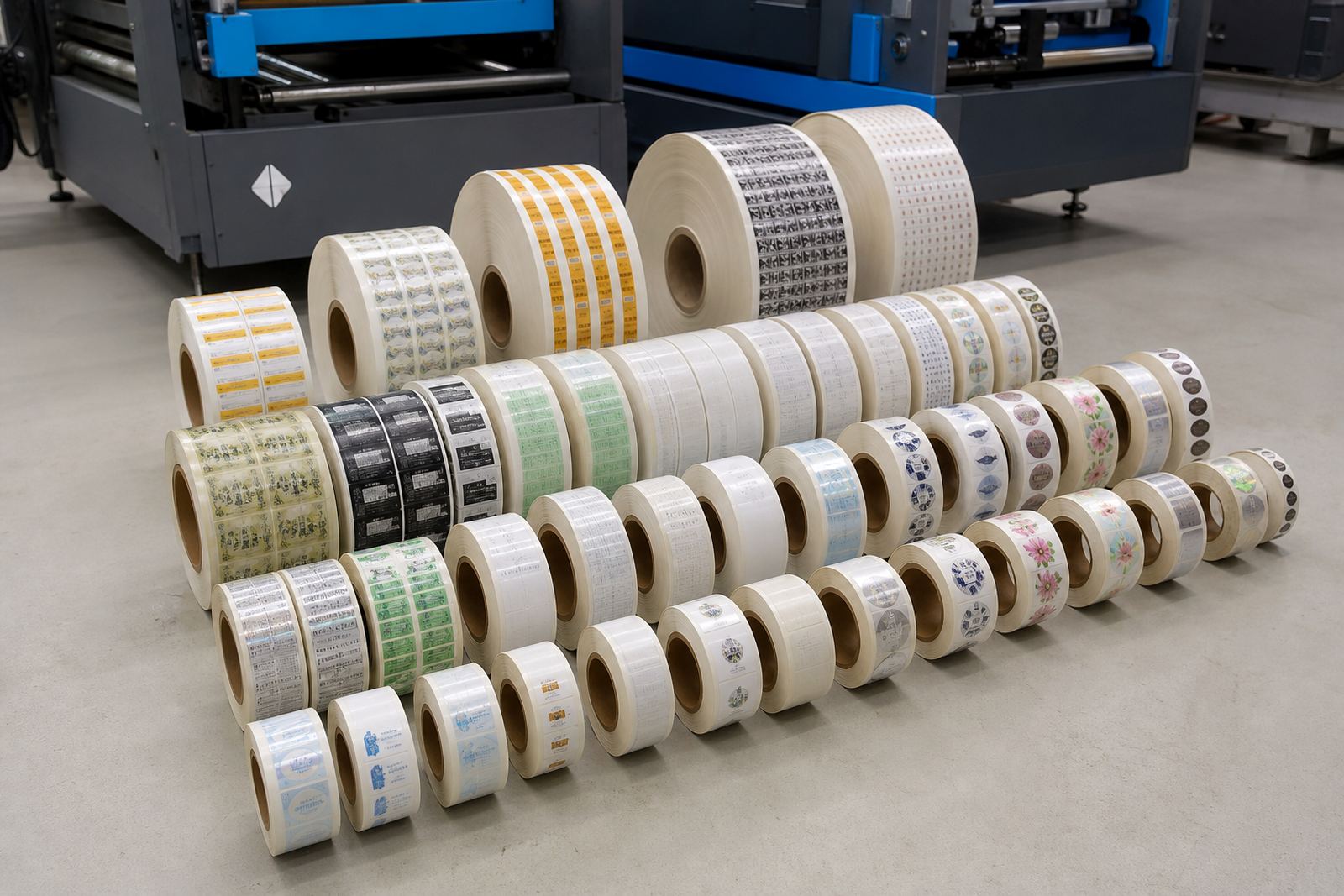
Core size affects how the finished roll sits on the shaft, how it survives packing and whether the roll can go straight to the next process. Smaller cores save shelf space, but they can increase the risk of crush damage on heavy rolls. Larger cores support weight better, yet they take up more room in cartons and on pallets.
- Match the core to the label width and total roll weight.
- Check whether the next step needs a 25 mm, 40 mm or 76 mm core.
- Keep core face edges clean so the rewind starts true.
- Use the same core spec across repeat jobs where possible.
If a roll will be slit into several narrow lanes, the core choice matters even more. Thin lanes can lean or telescope if the core is too light for the web tension. That is where rewind setup, slitting position and shaft grip need to work as one unit.
Roll diameter should suit handling, not just output
Large diameter rolls look efficient on paper because they reduce changeovers, but they can be awkward in dispatch and more difficult to stack safely. Smaller rolls are easier to carry and count, yet they increase roll frequency and can interrupt packing flow. The best diameter is the one your team can handle without squashing the edges or marking the outer wrap.
Think about the full route after finishing. A roll that moves from rewind to bagging, then into cartons and onto a courier pallet, needs a diameter that fits those steps without forcing extra compression. In label printing shops around Randburg, Johannesburg and Pretoria, the practical limit is often set by the carton, not the machine.
- Set a maximum outside diameter before production starts.
- Check carton height and pallet stacking clearance.
- Allow space for protective wrap and roll labels.
- Keep the same diameter for matching SKUs where possible.
Count the rolls the dispatch team must lift
Rewind format should be planned around the number of rolls leaving the machine, not only the metres on the parent roll. A job that produces many short rolls needs more handling, more labels and more packing checks. A job that creates fewer larger rolls may be quicker to count, yet each roll becomes heavier and harder to move without edge damage.
For packaging producers, the dispatch side often decides the final format. Some customers want one roll per carton, others want multiple rolls per outer box with clear count marks. If the team is working with semi rotary die-cutting, flexible dies or laser cut blanks, the rewind plan should leave enough structure in the web for clean separation and neat roll ends.
Set matrix stripping and slitting before rewinding starts
Matrix stripping, slitting and rewinding must be lined up in the correct order. If waste strip tension is too light, the matrix can wander and cut into live labels. If slit lanes are not spaced accurately, the rewind rolls will wander on the core and stack unevenly. Registration marks help the operator keep every lane in step, especially on short repeats and multi-up layouts.
A practical setup check is simple:
- Confirm the waste matrix pulls cleanly without lifting label edges.
- Check that slit blades or flexible die sections sit to the printed lane.
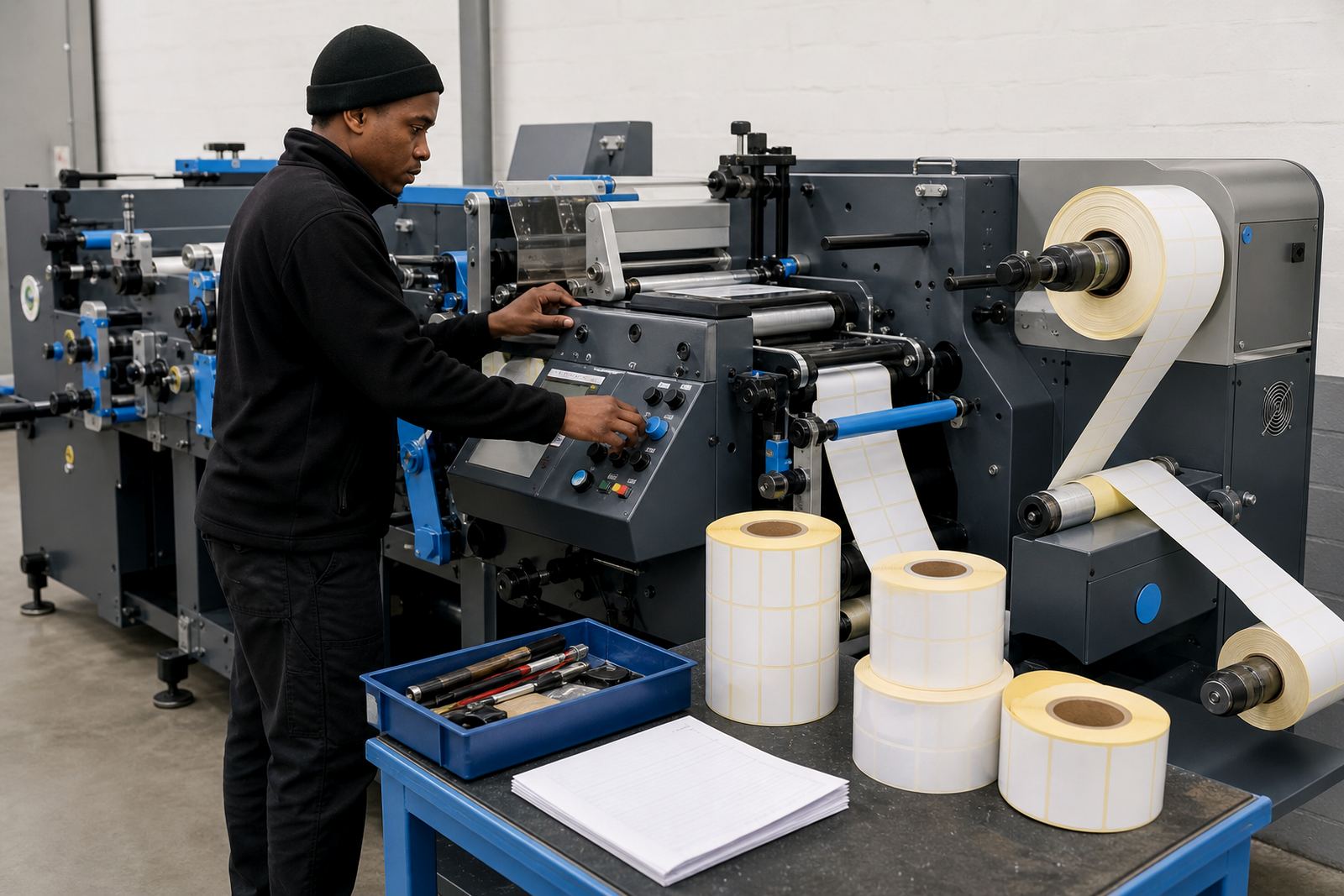
- Inspect rewind tension on each lane before full speed production.
- Watch the first finished roll for telescoping, curl or loose wraps.
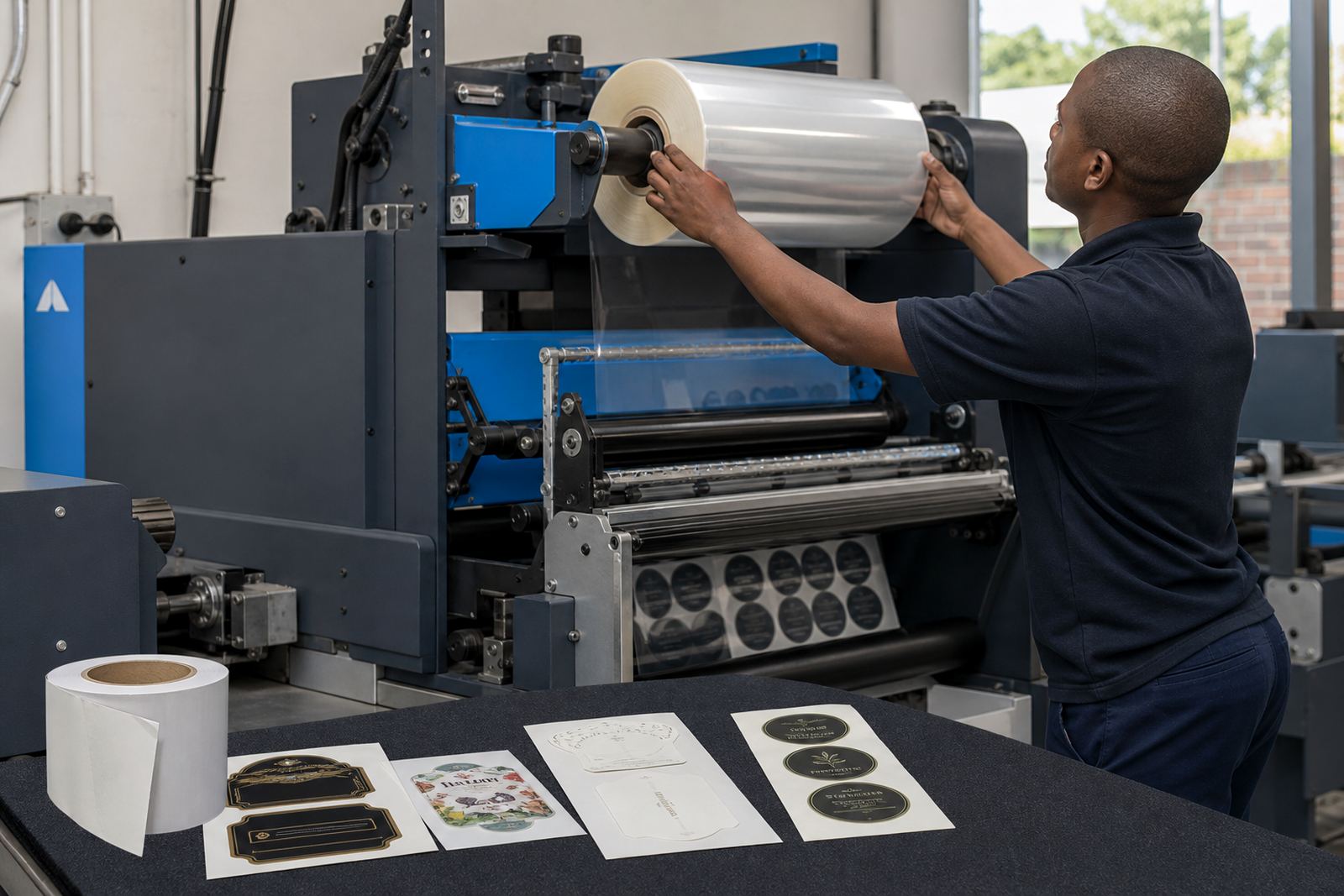
Where varnish or laminate adds slip, the rewind pressure may need a finer touch. Too much grip can mark the face stock. Too little grip can leave the roll soft and uneven, which causes trouble at packing and during machine feeding later.
Dispatch handling starts at the rewind shaft
The finished roll has to survive lifting, counting and storage before it reaches the customer. That means the rewind format should consider core strength, roll edge protection and how the roll is marked once it leaves the machine. A neat roll with firm ends, clear job identification and stable weight is easier to move through a busy shop floor.
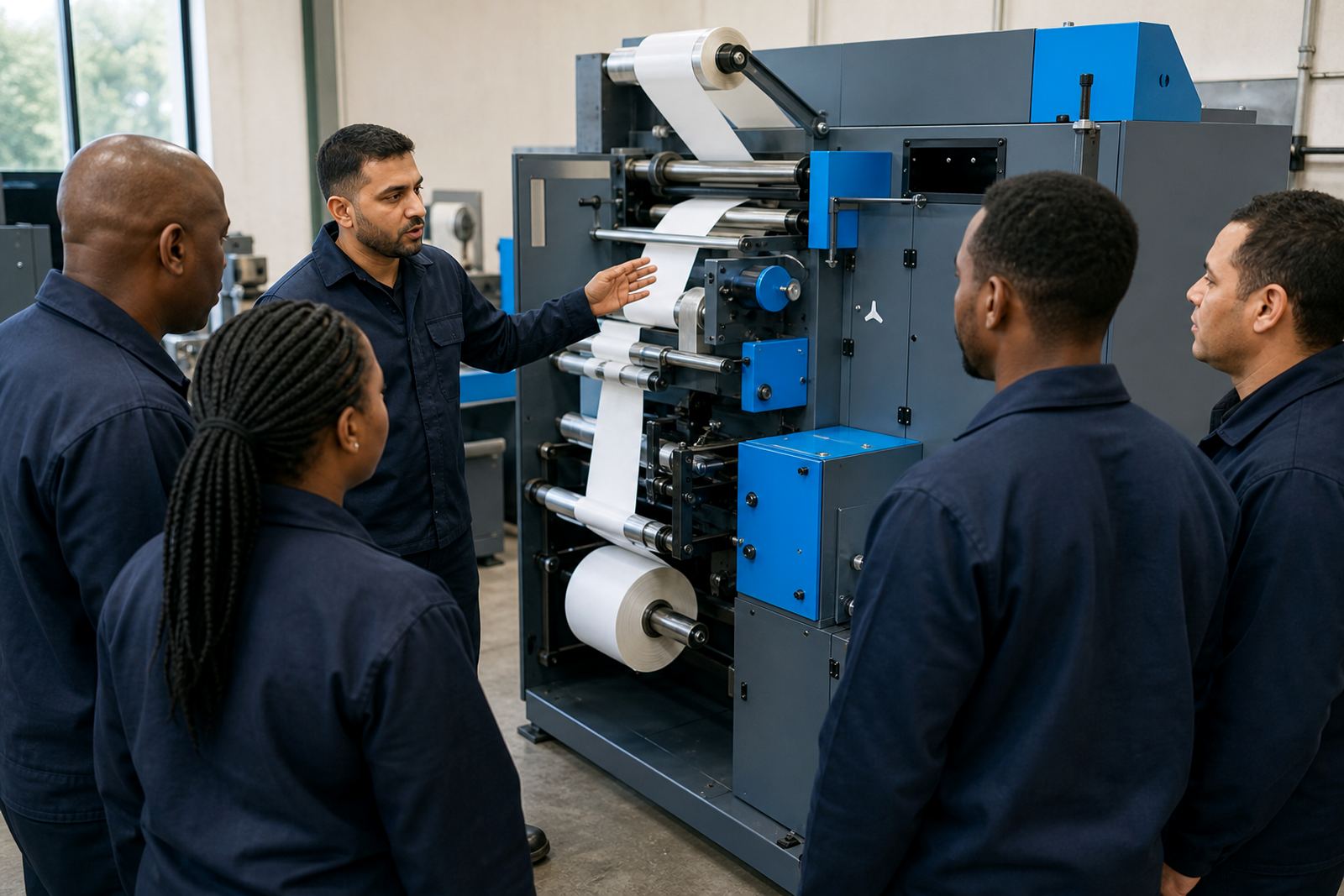
When our team installs or services a finishing line, we look at the full path from unwind to rewind, including operator training, registration calibration, slitting setup and production optimisation. A roll format that works on the machine but fails in dispatch is not a working format. The machine, the carton and the pallet all have to agree.