Read the job through the machine, not only the artwork
Start with the finished label size, substrate, adhesive, varnish or laminate, and the run length. A short run on a narrow web can still take longer than a larger order if it needs new tooling, tighter register, or more slitting passes.
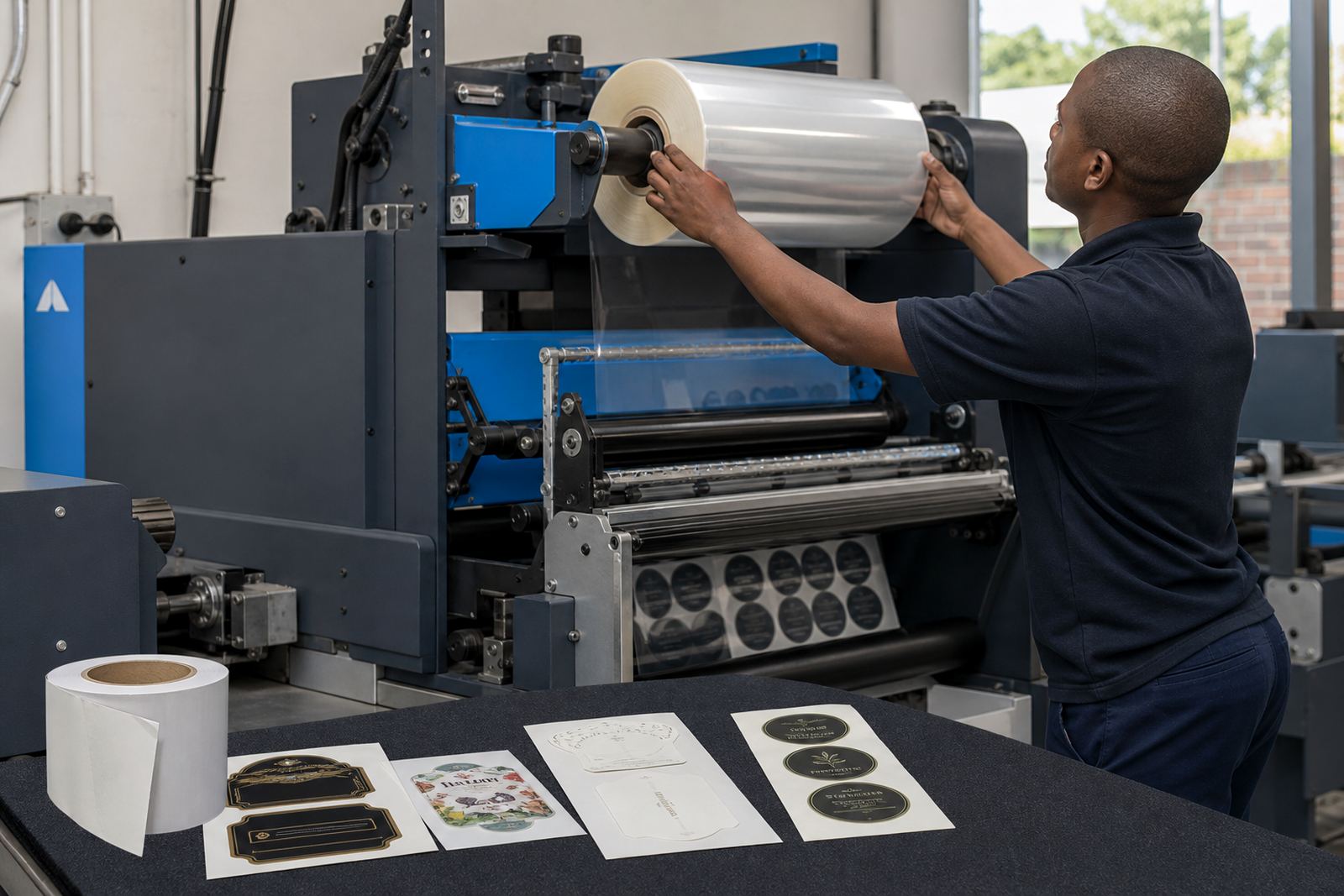
Look at the path the web will follow. A line that unwinds, laminates, die-cuts, strips matrix waste, slits and rewinds has more points where changeover time can build up. If the job has multiple versions, check how many plate, artwork or cut-depth changes sit in the same shift.
Count the parts that move between versions
Every version change has a small list of moving parts. Flexible dies, laser cut files, web guides, slitting knives, rewind cores, tension settings and registration marks all need attention. The more of these that change, the more time the line spends off production.
- New label length or repeat count
- Different roll width or core size
- New laminate or varnish layer
- Fresh die depth or cut path
- Different waste strip pattern
- Extra slit lanes or rewind positions
If the same base artwork runs with only one variable changed, the job is easier to stage. If artwork, substrate and finishing method all shift at once, expect more test pulls and more setting checks.
Check what the roll already tells you
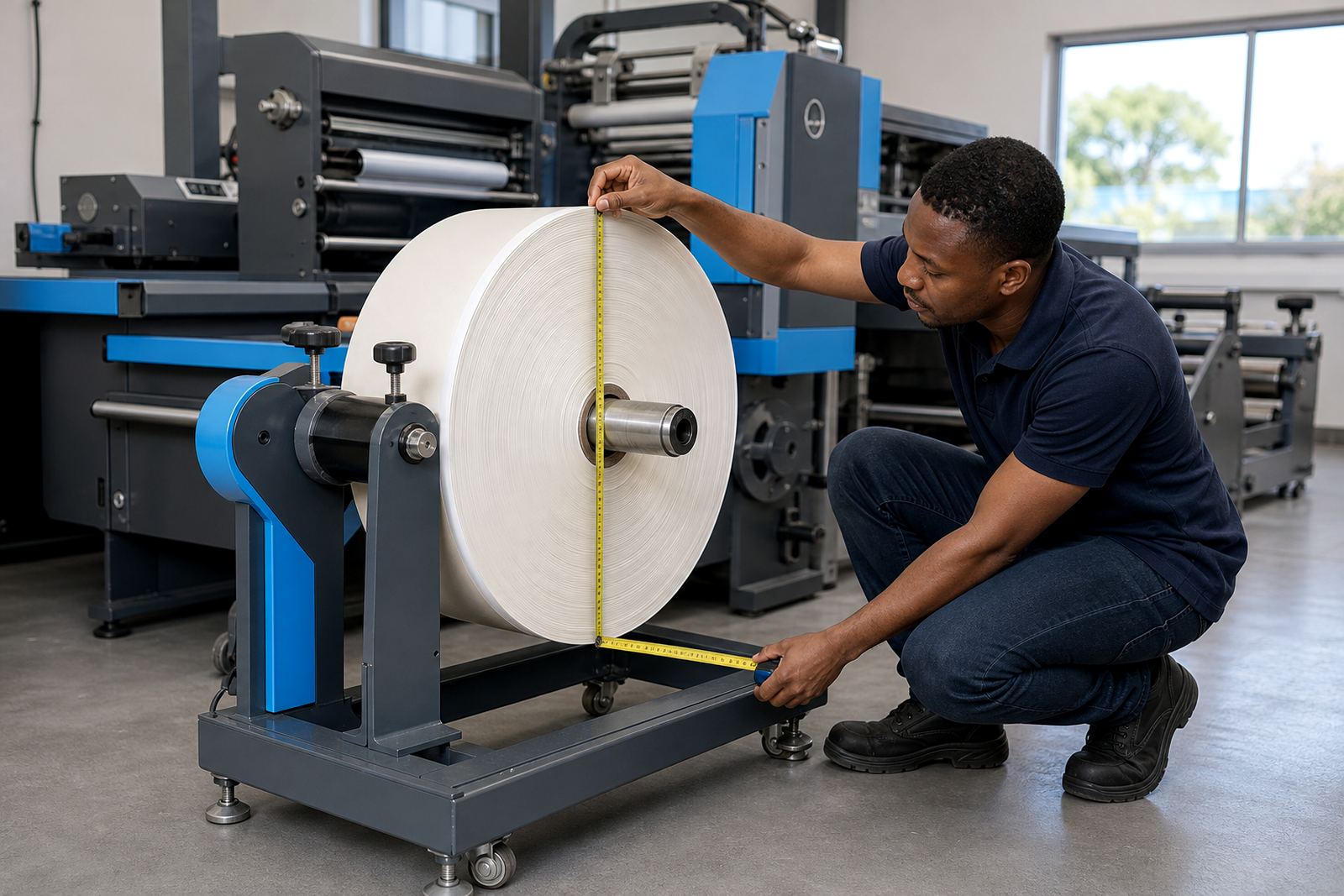
The incoming roll tells more than the job ticket sometimes does. Roll width, roll diameter, core size, web edge quality and unwind direction shape the setup before the first label is cut. In humid coastal sites, curled edges and softer adhesive behaviour can show up too, especially on lighter stocks.
Measure the practical items before the line is loaded. If the roll is close to the machine limit, or the rewind pack-out will be tight, factor in slower handovers and more care at the start of the run. A clean roll saves time later, while a crooked one creates tracking problems that can move into the rest of the shift.
A short changeover checklist for the floor
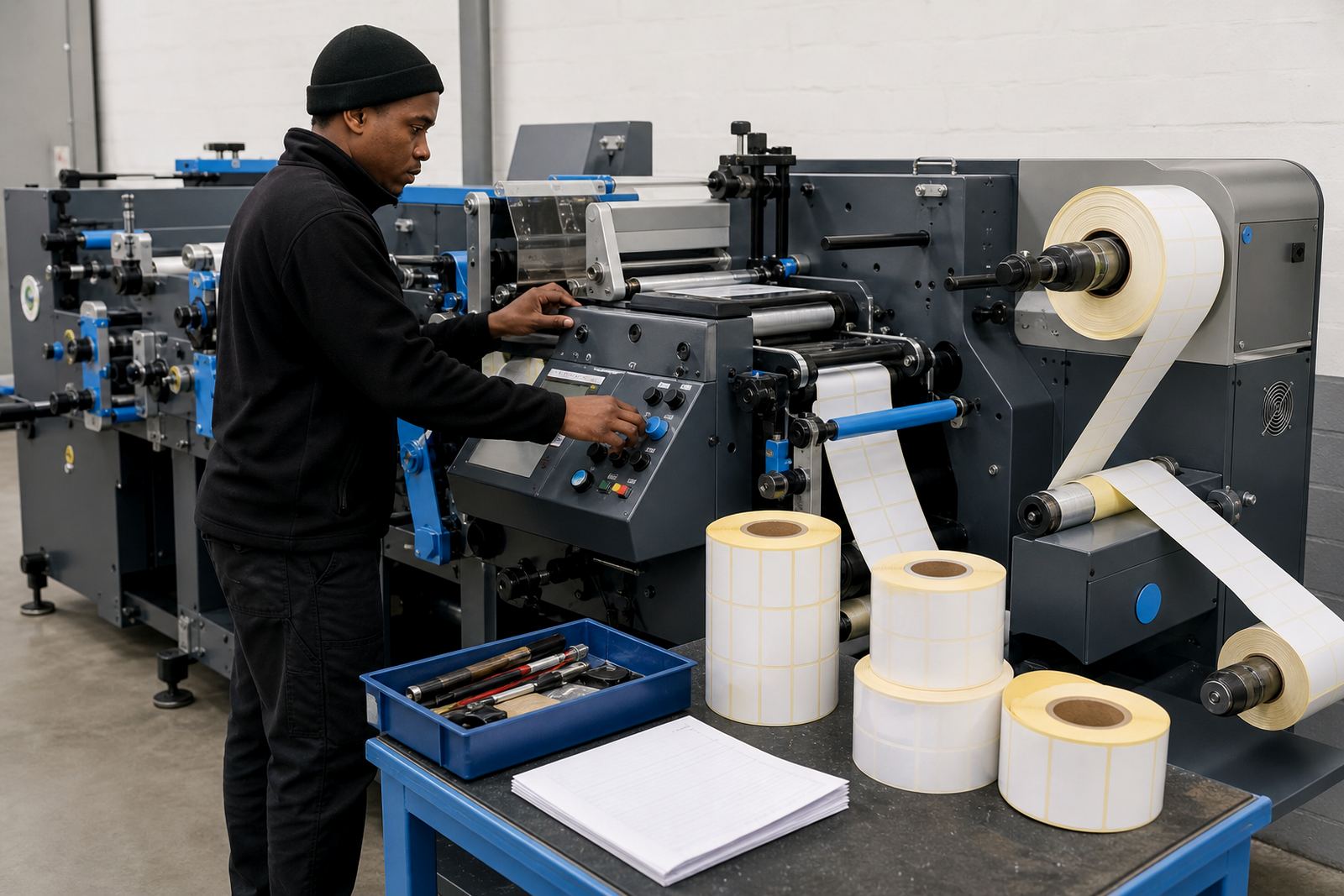
Use a short checklist before the operator starts feeding web. It keeps the sequence steady and makes it easier to compare one job with the next.
- Confirm the label size, repeat length and version count
- Check the unwind, laminate, die-cut and rewind path
- Set registration marks and verify sensor reading
- Load the correct die or cut file
- Set slit positions and waste stripping points
- Check rewind tension and core fit
- Inspect the first good sample before full production
That first sample matters because it shows whether the setup is holding on the actual web, not only on paper. A clean sample before volume starts can prevent a long correction later.
Where the hidden minutes usually sit
Changeover delays are often small, but they stack. A few extra minutes on die alignment, a second pass to clear matrix waste, or a slow rewind reset can stretch the whole handover. Manual adjustments to slitting and registration usually take longer when the team has not run that exact format for a while.
Jobs with mixed labels or seasonal packs can also need more checking of versioning. If each SKU needs its own code or artwork line, the operator needs a clear sequence for loading, verifying and separating the output rolls. The fewer guesses on the floor, the less time is lost to correction.
Plan the line around the real run length
Short runs need a different approach from long runs. When the order is small, a line that takes too long to set up can spend more time changing over than finishing. That is where estimate work becomes useful, because it shows whether one job should wait for a batch, or move with a fast setup package instead.
For frequent job changes, keep the same support points close at hand: spare cores, blades, calibration tools, approved settings and the latest job notes. If the line already has a repeatable setup for laminate, varnish or matrix stripping, it becomes easier to move between jobs without rebuilding the whole sequence each time.
When to ask for technical help on the estimate
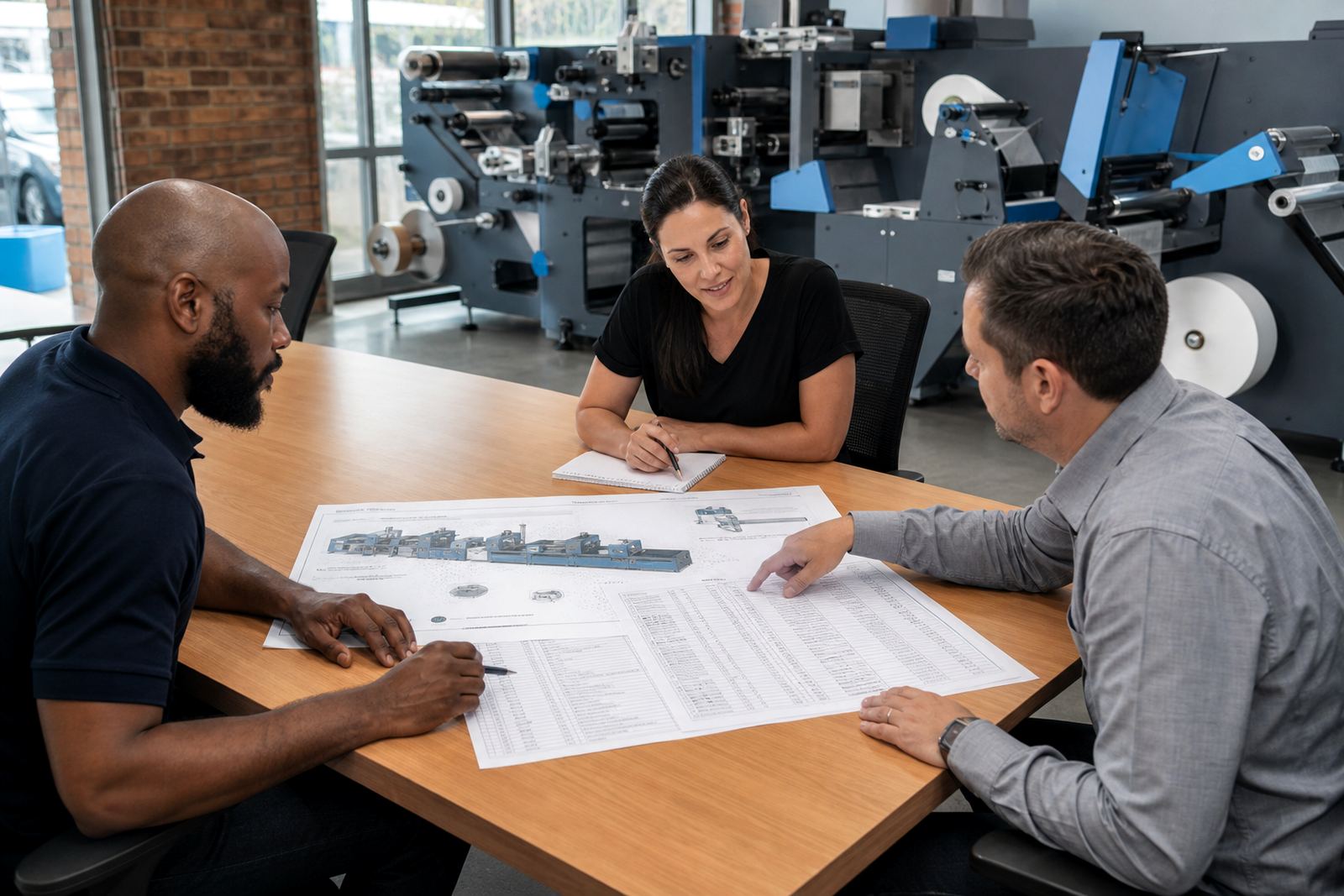
Ask for support when the job mixes several finishing steps, or when the artwork team is changing versions often. A machine setup review helps if registration drifts, slitting is inconsistent, or the rewind pack is not forming cleanly. In a busy shop, these issues can look minor at first and then eat into the full day.
Label-Cutter works with teams in Kya Sand, Randburg and across South Africa on machine installation, line commissioning, operator training, preventive maintenance, breakdown repairs, remote support, spare parts supply, die setup help, registration calibration, rewind setup, slitting setup and production optimisation. For estimates that need a practical line view, clients can use our contact form on our contact page.