Start with the stock you actually print every week
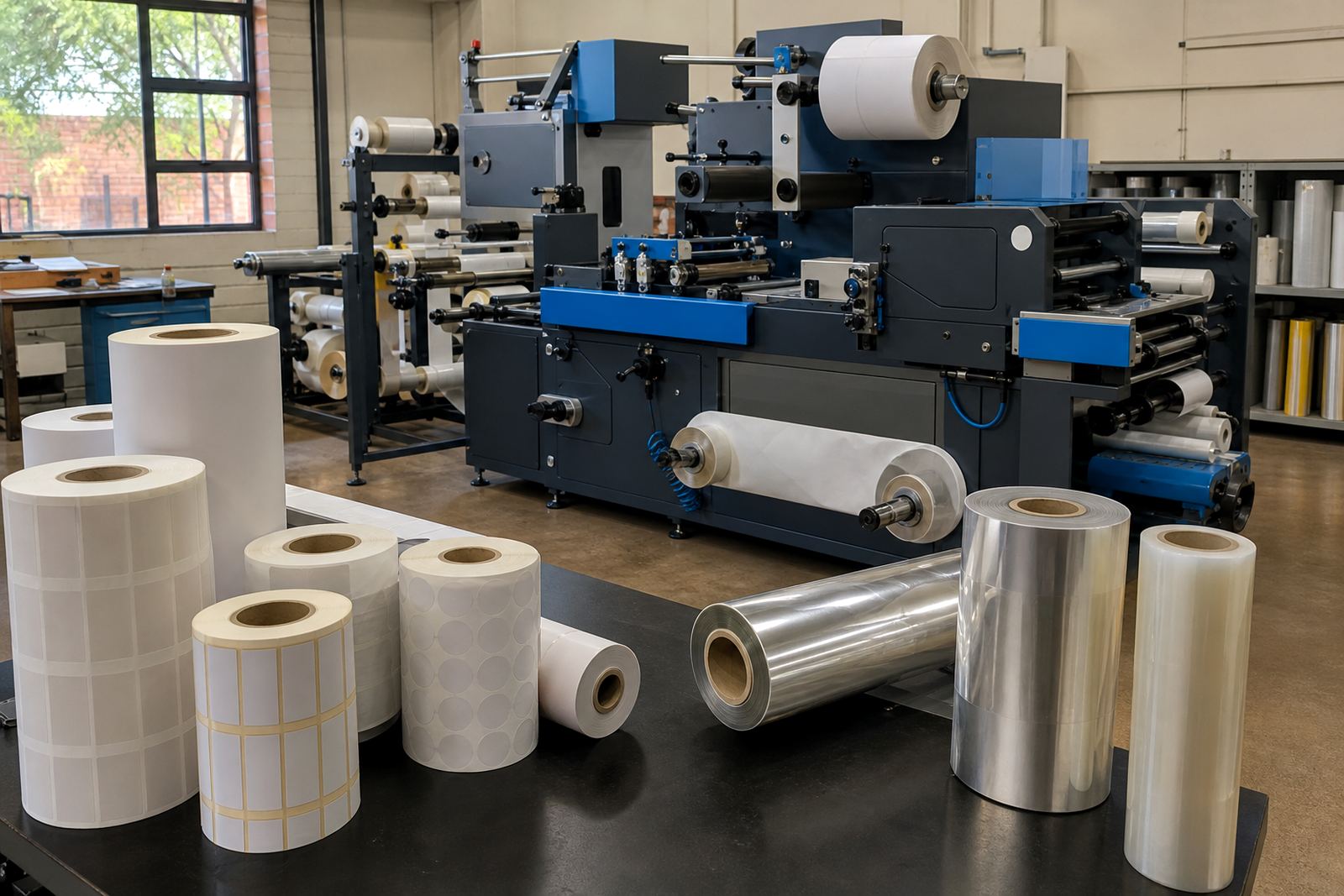
Die-cutting method follows material behaviour. Laser finishing suits short runs, detailed shapes and frequent artwork changes, while semi-rotary or full rotary systems suit recurring labels with a stable repeat length. Flexible dies still have their place on heavier volumes, especially where the substrate is predictable and the shape is repeat daily work.
Film and laminated stock can need cleaner waste release than plain paper, so matrix stripping has to be tested on a real sample. If the label has a hard varnish or a slick laminate, the cutter may need different pressure settings or a different pull angle to stop the matrix from breaking in strips. Registration marks also matter, because clear or reflective material can make mark sensing less forgiving.
- Check whether the artwork repeats are fixed or changing often.
- Test the same job with and without laminate.
- Confirm if registration marks stay readable on the final stock.
- Watch how cleanly the waste web separates at full speed and reduced speed.
Lamination, varnish and coating need their own setup notes
Many label jobs move through more than one finish stage. A line that laminates well on a plain paper label may need more care on a glossy film, especially where edge curl or trapped air can affect the final lay-flat quality. Spot varnish can change surface grip, and that changes how the web travels into the slitter and rewind station.
For mixed work, keep a note on which materials need extra drying time after print, which ones take over-lamination better and which ones hold their shape after the matrix is stripped. Coastal humidity can also change handling, especially on uncoated paper and board-based jobs stored near loading areas or open receiving bays.
- Separate laminated and unlaminated jobs in the schedule.
- Check whether varnish sits flat before finishing begins.
- Store sensitive stock away from damp floors and open doors.
- Keep sample reels from difficult materials for setup reference.
Roll size, core size and unwind control are not small details
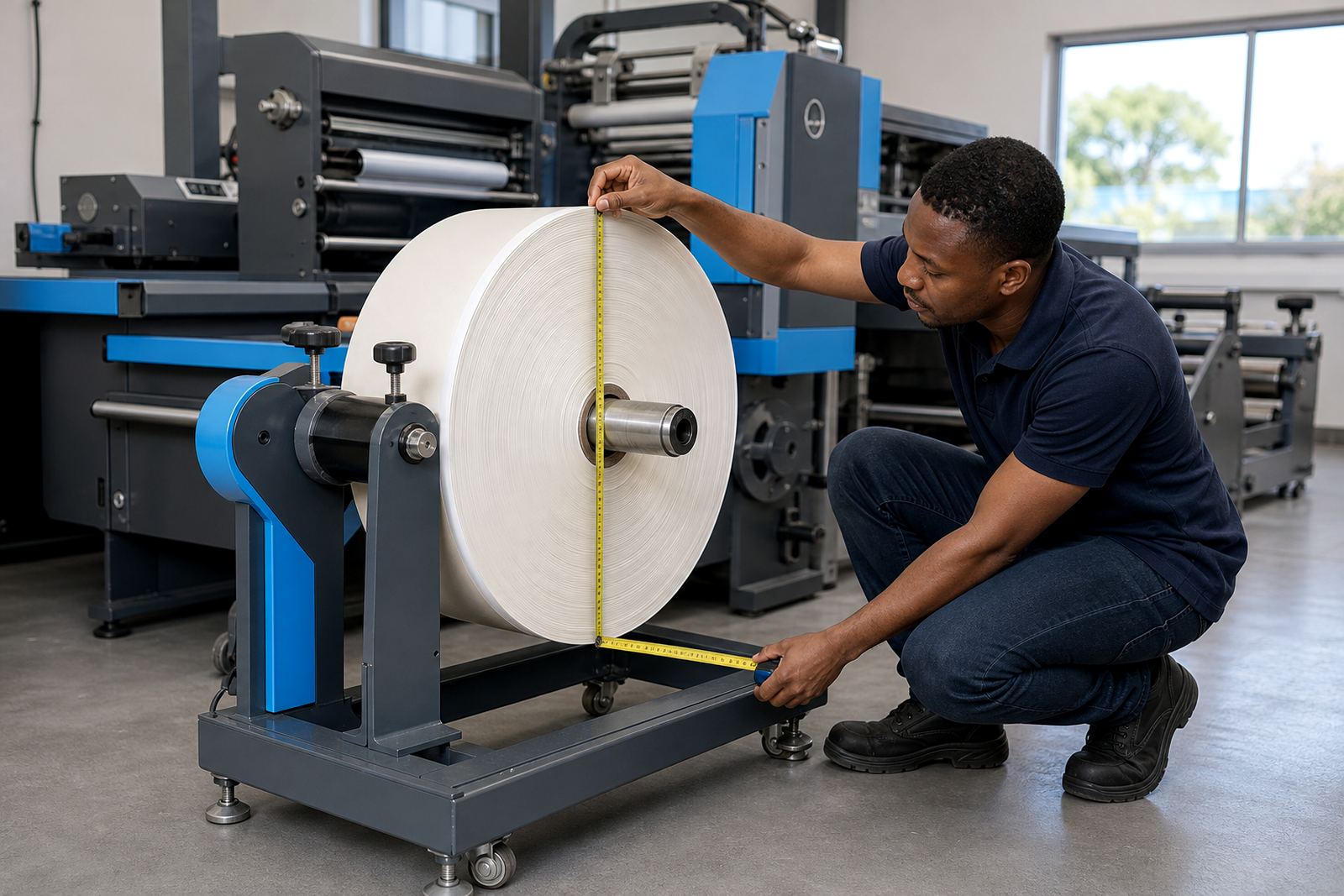
Roll diameter and core size should be matched to the finishing line rather than assumed. A wide master roll with a heavy build may need different unwind braking from a lighter narrow roll, and that affects web stability before the first cut even happens. Poor unwind control can show up as wandering edges, poor registration and waste that refuses to strip cleanly.
In practical terms, the machine has to suit the largest roll you plan to feed, not only the easiest one. If your work includes narrow labels on small cores as well as wide rolls for longer runs, check that the unwind, rewind and slitting sections can handle both without forcing awkward changeovers.
- Measure outer roll diameter as well as web width.
- Confirm core sizes used by your print room.
- Check whether the line can hold tension on light and heavy rolls.
- Keep note of any roll types that tend to telescope or edge-wander.
Slitting and rewinding need the final pack format in mind
Substrate choice changes the end of the line as much as the beginning. A soft paper label can slit cleanly with a different blade pressure than a tough synthetic film, while a laminated job may need a cleaner edge to stop fuzzy trim. Rewind tension also matters because some materials settle tightly and others need a gentler build to avoid curl.
If the finished reels go straight to a label press, packhouse or converting bench, think about how they must arrive. Tight reels save space but can mark delicate face stocks. Loose reels can shift during handling. When the line is planned around the final use, the output is easier to store, count and feed into the next process.
- Set the rewind style to suit the next machine in line.
- Choose blade and spacing settings for each stock group.
- Check reel firmness after slitting, not only before it.
- Mark any substrates that mark easily during handling.
Sample checks to run before you lock the setup
A short test run tells you more than a stack of assumptions. Feed a sample of each main substrate through the complete path, then check the cut edge, waste strip, register hold and rewind quality. If the job includes both plain and coated stocks, repeat the test on each one because a change in coating can alter the whole feel of the run.
For mixed production, keep a setup sheet that notes tension, die position, slitting gap, mark reading and any special handling points. That record becomes useful when a similar job arrives later, especially if the substrate supplier changes the liner or surface finish without much warning.
- Run samples at production speed and at a slower setting.
- Inspect waste release at the matrix edge and in corners.
- Check whether the rewind keeps a straight, even reel.
- Note any substrate that needs a different handling routine.
Questions our team hears from mixed-stock production rooms
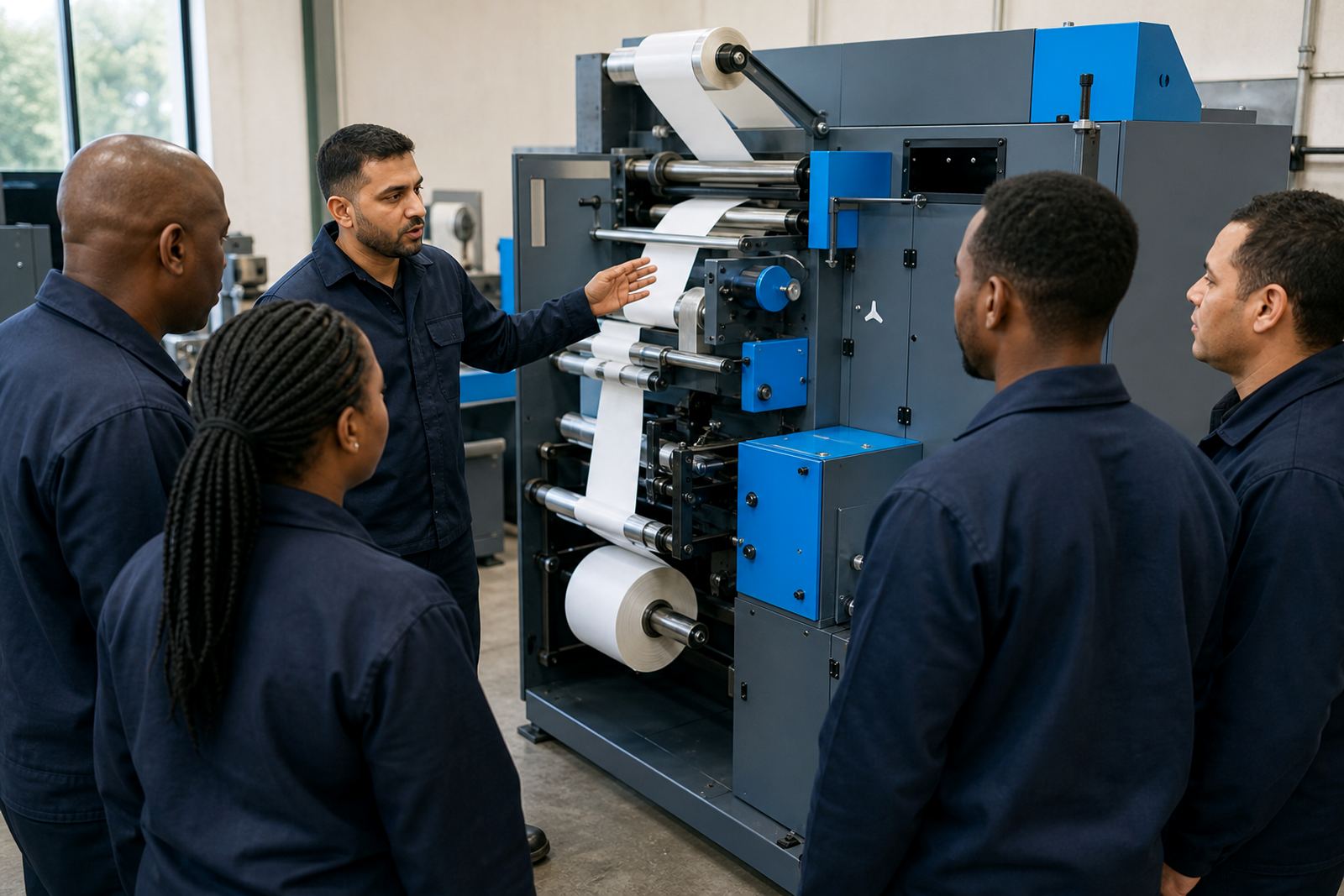
Label printers and packaging producers often need help matching the substrate mix to the finishing line already in the room. That can include machine installation, line commissioning, operator training, preventive maintenance, breakdown repairs, remote support, spare parts supply, die setup help, registration calibration, rewind setup, slitting setup and production optimisation across South Africa from Kya Sand, Randburg.
Our contact form is used for questions on machine fit, substrate behaviour, finishing setup and line planning. The details matter: roll widths, face material, liner type, laminate layer, varnish finish and whether the job is short-run or repeat work. With those notes in hand, the conversation is grounded in the real material mix rather than guesswork.
- Share the substrate names and roll sizes you use most.
- Include whether the job is paper, film, laminated or varnished.
- State if the line must handle laser, semi-rotary or flexible die work.
- List any areas where waste stripping or rewind has been troublesome.