A neat rewind starts before the last metre
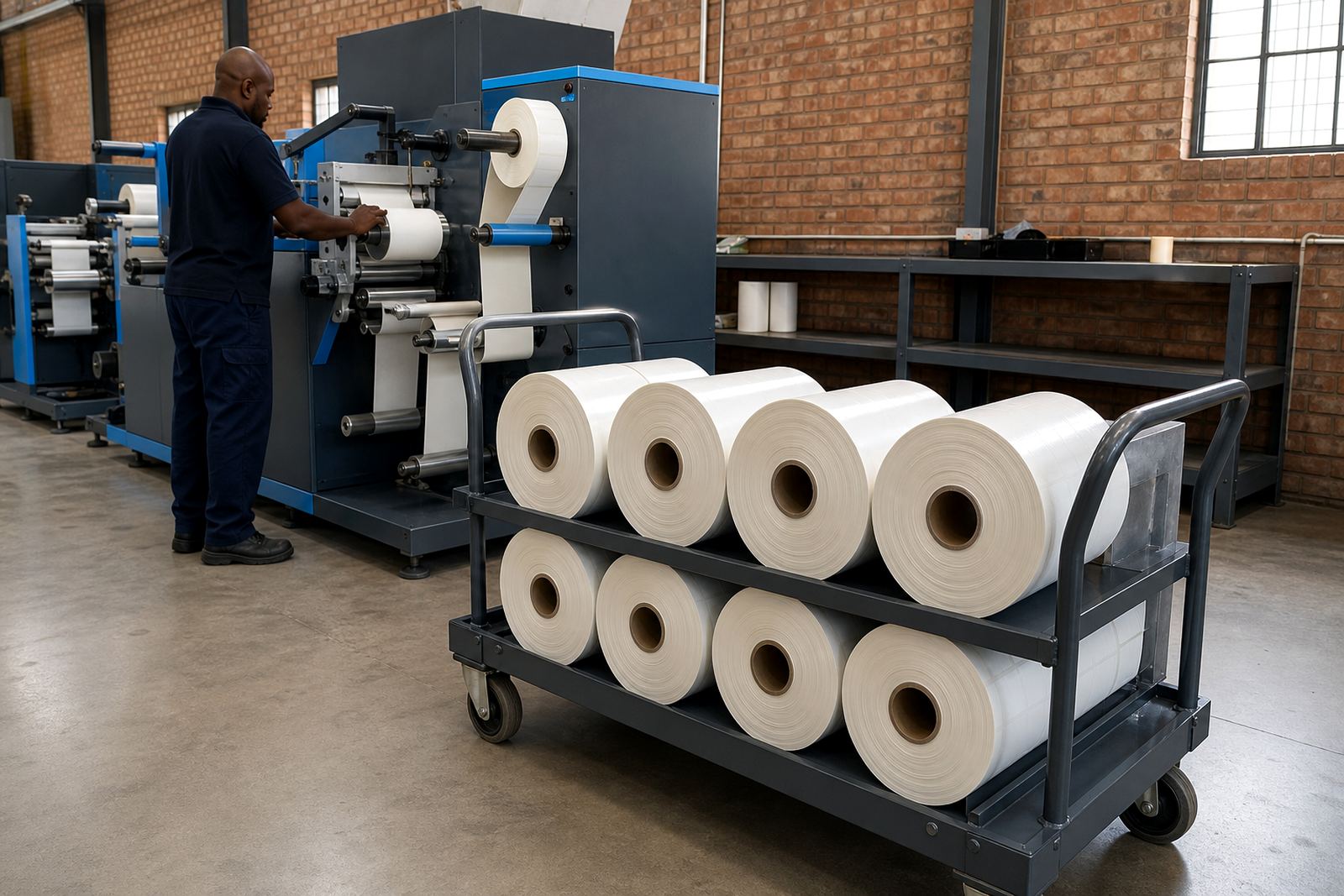
Rewind quality is shaped long before the roll reaches the take-up shaft. If web tension drifts through lamination, die-cutting, matrix stripping and slitting, the final roll can telescope, buckle or show edge wander that is obvious as soon as it leaves the machine.
For label printers in Kya Sand and across Gauteng, the point is not cosmetic only. A poor rewind can slow packing, create waste at the application table and put extra strain on dispatch teams that need rolls to present evenly for counting, boxing and labelling on the next process.
- Keep tension steady through the full web path.
- Match rewind force to the label face stock and liner.
- Check that slit lanes stay true after start-up changes.
Core size and roll build affect the finished bundle
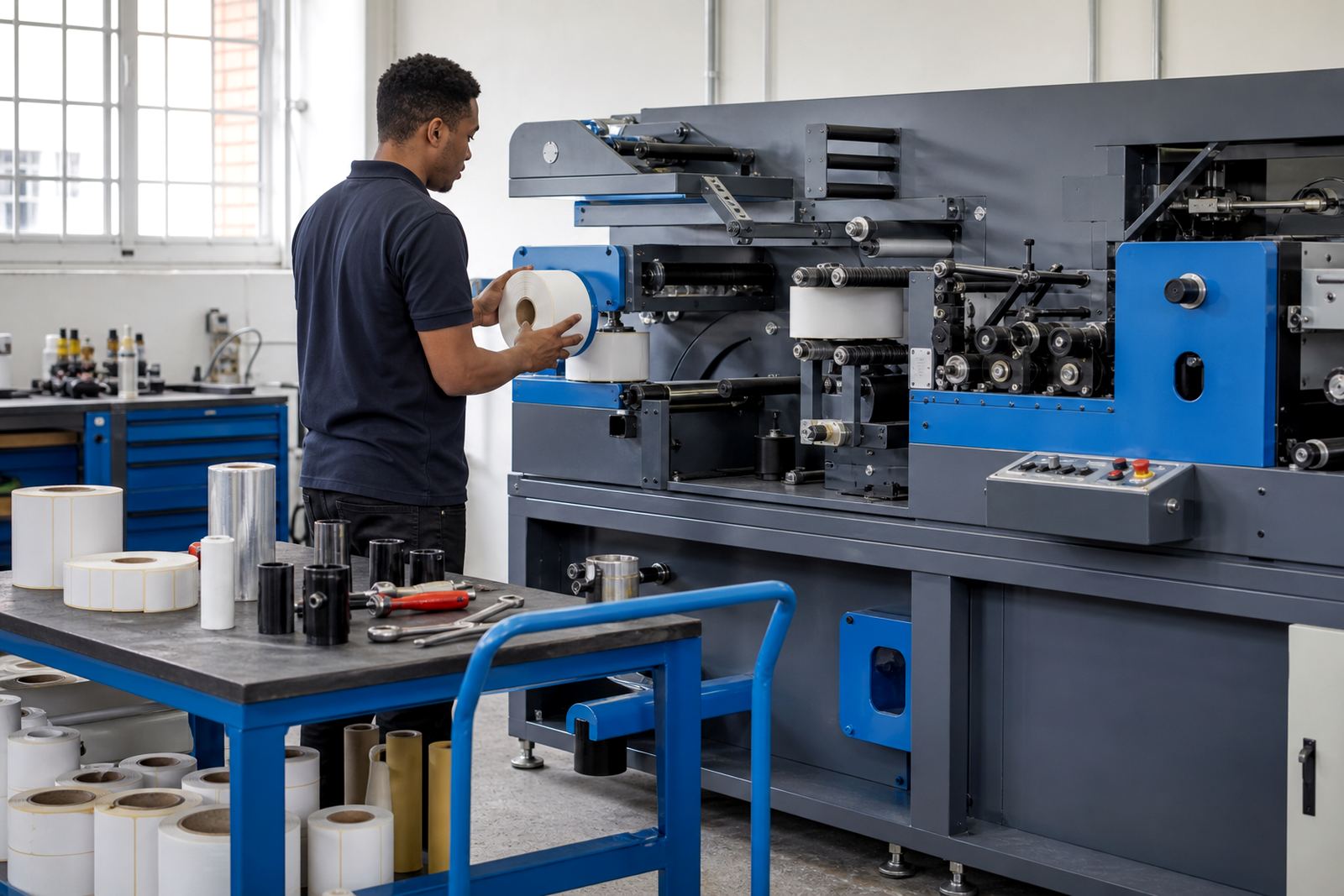
The core is more than a holding tube. Core diameter, wall strength and surface grip all change how the roll sits under tension, especially when labels are narrow, the liner is light, or the finished diameter is large enough to load the rewind shaft heavily.
Small cores can suit compact rolls and tighter dispatch packs, but they need careful control if the web is wide or the matrix is stubborn. Larger cores often support cleaner build on higher volume work, yet they need the right shaft, core chucks and winding pressure so the first wraps do not crush or slide.
- Use a core that matches the product weight and roll diameter.
- Check core alignment before every long run.
- Keep the first wraps firm, not hard.
Lane alignment is where many roll faults begin
When a label web is slit into several lanes, each lane needs to track squarely to its own rewind point. If one lane sits a fraction off, the error builds across the roll and the outside edge begins to step, ribbon or cone. That shows up later when rolls are loaded into applicators or handled in dispatch.
Registration marks help, but they only do part of the work. The machine still needs clean lateral setting, consistent web path geometry and a stable slit line. On semi-rotary systems, the cut must stay registered to the print repeat, while laser finishing still depends on correct web control so the roll does not wander during output.
A practical check is to watch the edge of each lane for the first few wraps. If one side moves in and out, the problem is usually tension balance, slit position or core loading, not the label artwork itself.
What tension changes do to labels and liner
Too little tension leaves a loose roll that can flare at the edges and slip under its own weight. Too much tension can stretch the liner, distort the label shape and make the unwind too tight for the end user. The effect is strongest on narrow webs, thin films and label stock with a glossy laminate or varnish layer.
Matrix stripping also matters. If waste is pulled away unevenly, the remaining web may snake into the rewind. That is common where the matrix is wide and light, or where the stripped waste sticks for a moment then releases in a sudden pull. The roll then shows ridges, edge ripples or a soft centre that feels loose when handled.
- Balance unwind brake and rewind torque carefully.
- Watch for stretch marks on the liner.
- Keep waste stripping smooth and continuous.
A Randburg line example that changed the finish
A packaging producer near Randburg was running multi-lane labels on a line with lamination, die-cutting and slitting in one pass. The print was clean, but the final rolls kept showing stepped edges on two lanes and a soft centre on the outer wind. The issue only appeared after the rolls cooled and were boxed for dispatch.
The fix was not a single setting. The team reduced rewind pressure, adjusted the slit knives, corrected lane spacing and changed the core spec on the widest rolls. Once the registration was rechecked and the matrix path cleaned up, the finished rolls sat flatter and handled better at packing. It saved time at the dispatch bench, which is where the problem had been noticed first.
That sort of job suits measured setup work, not guesswork. A rewind that looks acceptable during the first few minutes can still fail once roll diameter grows and tension has more effect on the outer wraps.
What a careful rewind setup usually checks
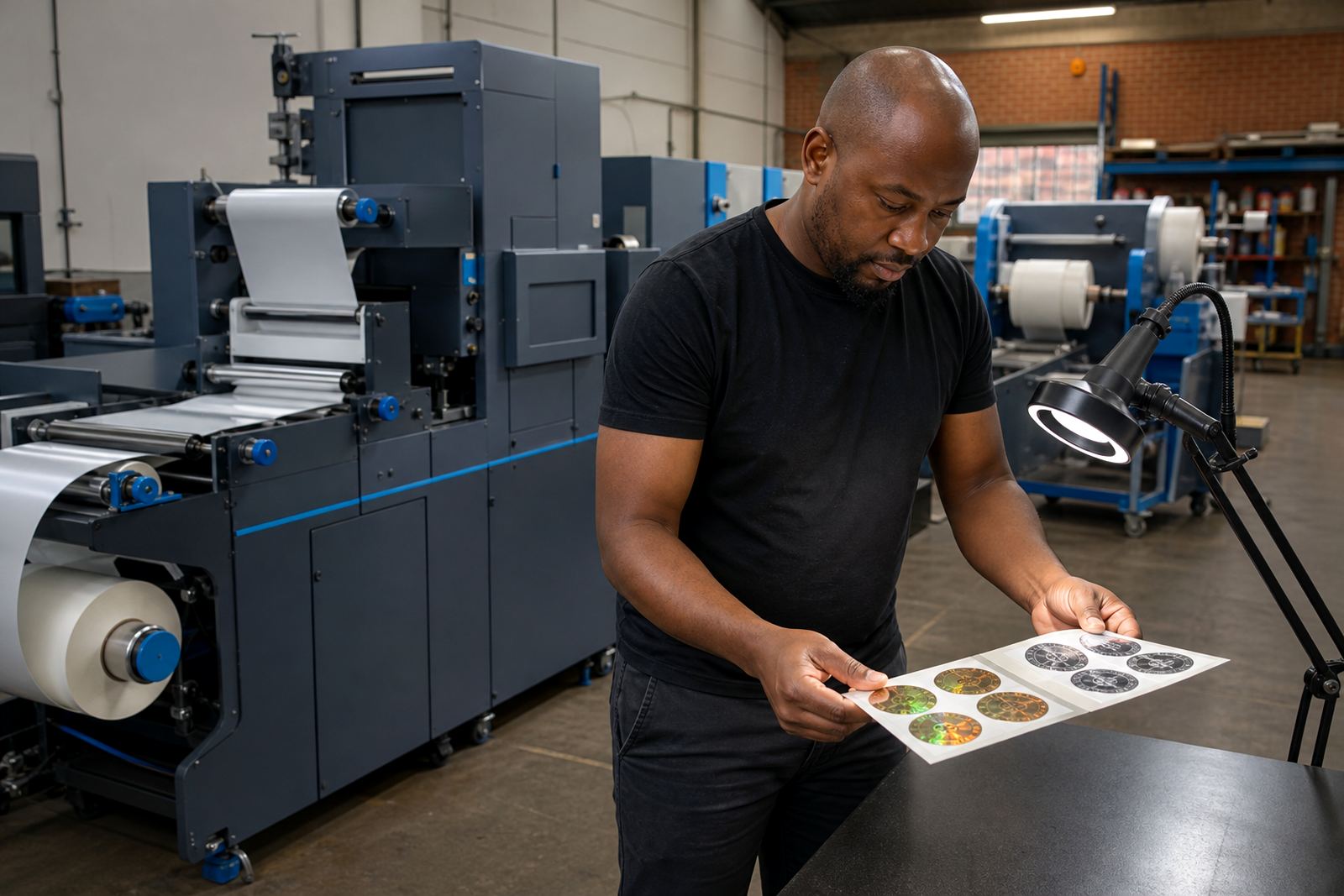
Before a production run is signed off, the rewind station should be checked against the job width, roll size and final use of the labels. The same machine may need different winding behaviour for carton labels, bottle labels or short-run packaging work, even when the print repeat is similar.
- Core condition and diameter.
- Web tension at start, mid-run and full roll.
- Lane tracking after slitting and waste removal.
- Final roll hardness, edge shape and unwind feel.
For digital label finishing lines, the goal is a roll that unwinds cleanly and stays true from the first layer to the last. That comes from matching the take-up force to the material, keeping the lanes aligned and checking the roll build while the job is still live, not after the pallet is wrapped.