Start with a job pack that matches the machine, not the memory
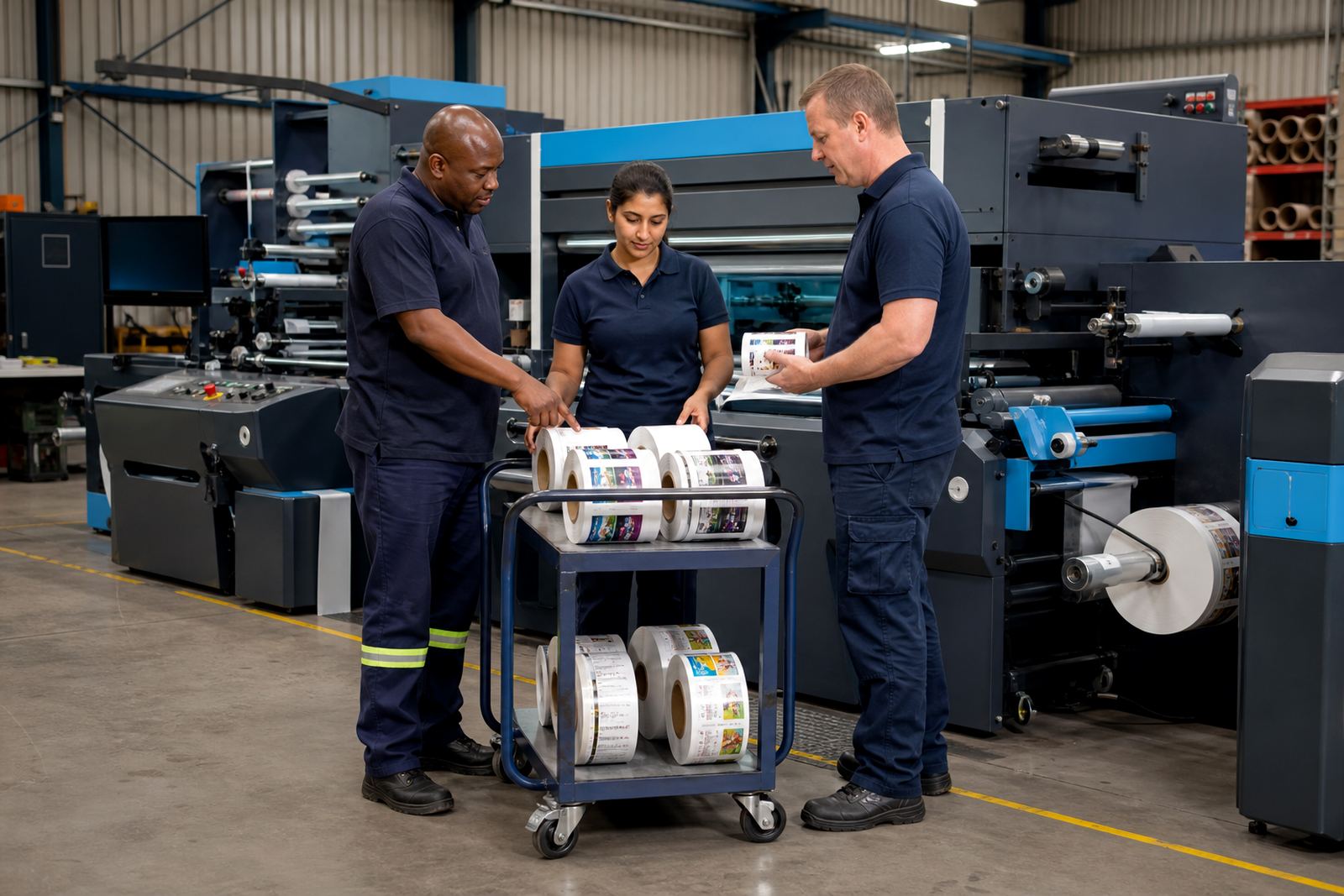
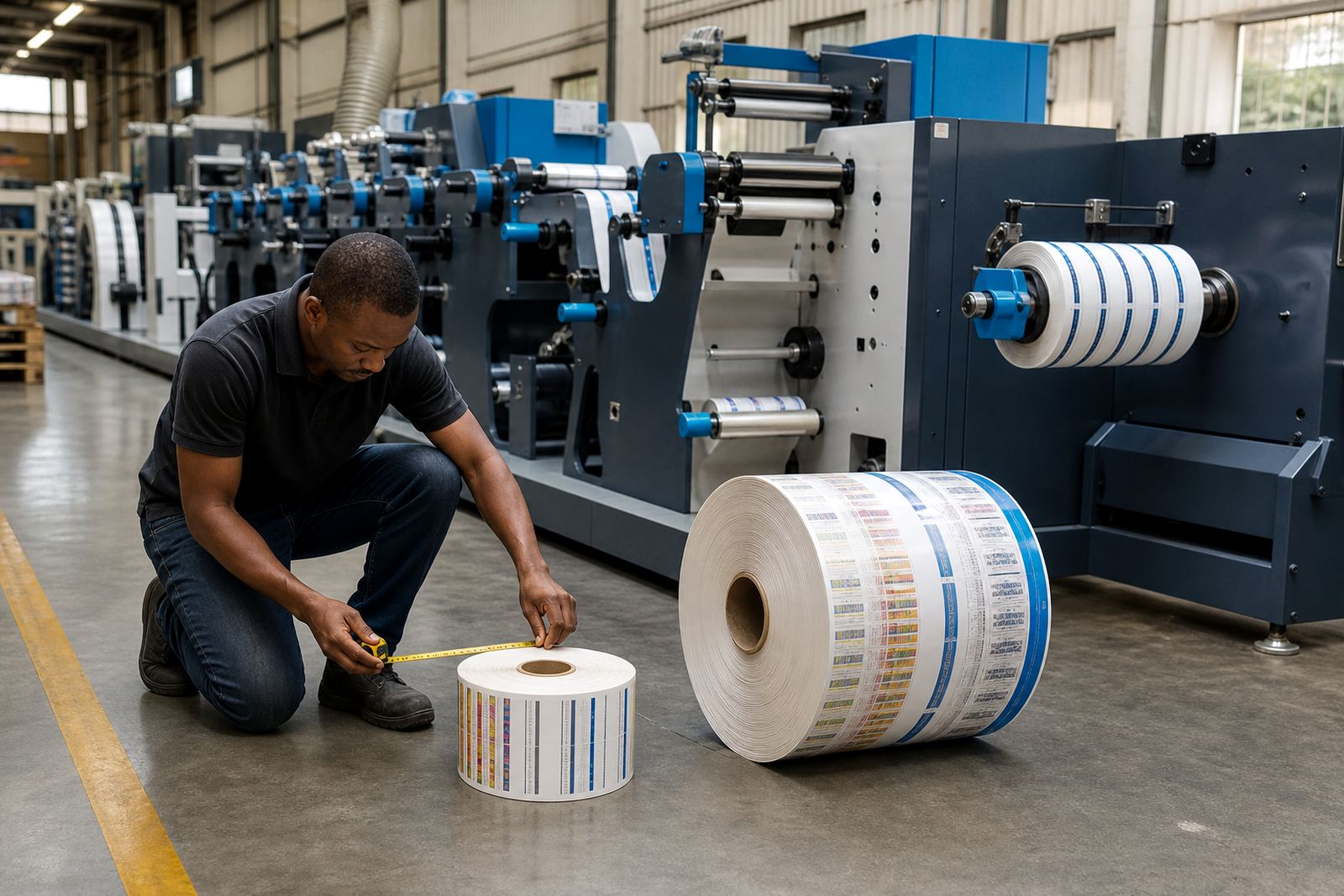
A good changeover begins before the roll leaves storage. The operator needs the substrate spec, finished label size, repeat length, unwind direction, core size and the target roll diameter in front of them, not tucked into someone’s head. When those numbers are written down in the same format every time, the next setup is easier to repeat and easier to audit.
For Kya Sand and the wider Randburg area, we often see wasted minutes come from small gaps in the handover. The design team knows the artwork, the press team knows the print, but the finishing line still gets a last-minute guess on matrix width or slitting positions. A clean job pack removes that guess work and helps the team set the unwind, web path and rewind before the first test length runs.
- Keep finished size, repeat length and core size together on one sheet
- Record whether the job needs full bleed, varnish or lamination
- Note the registration mark style and where the sensor should read it
- List any special die, flexible tool or laser cut pattern needed
Set the web path once, then leave it alone
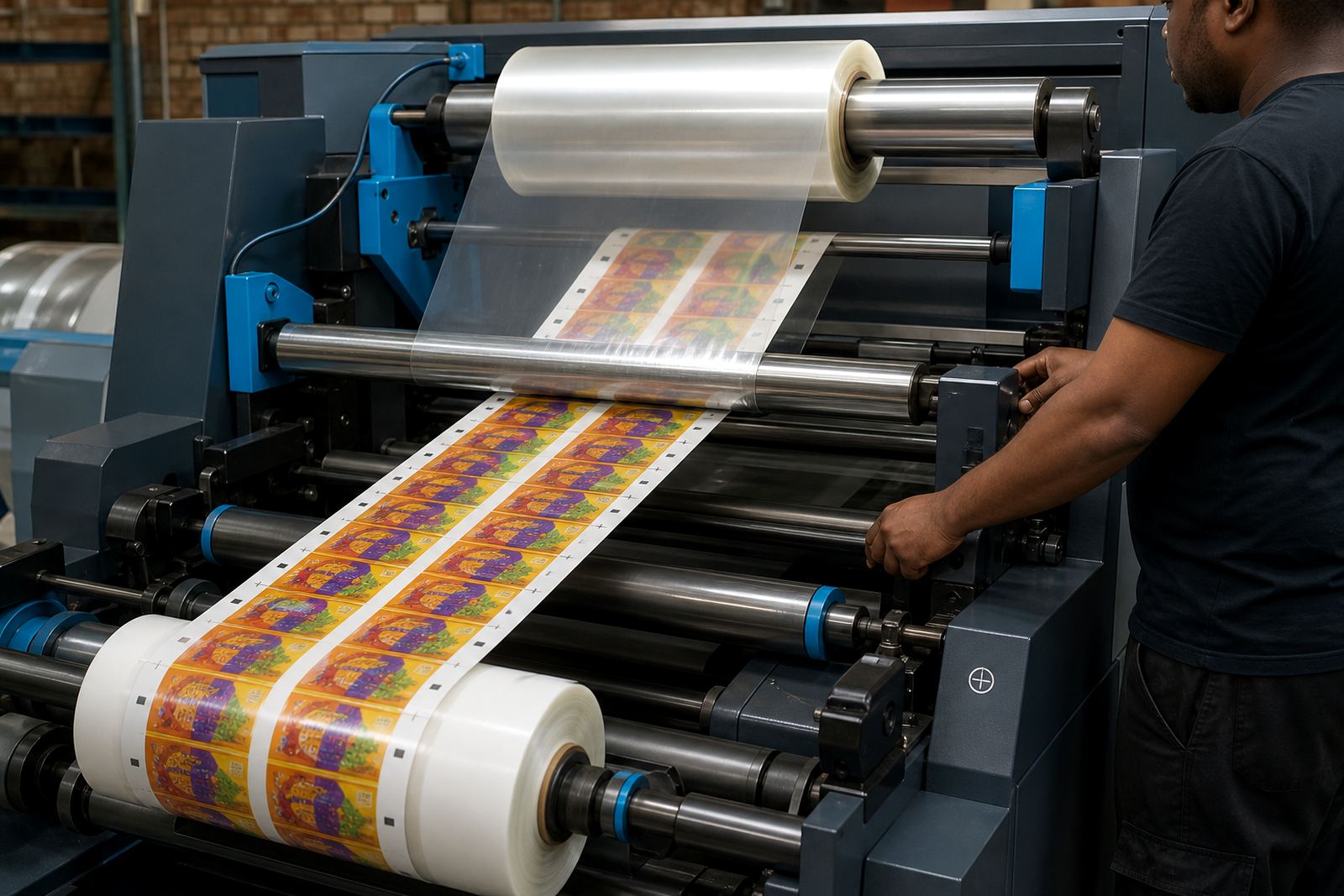
Most finishing time gets lost when the web path changes more than it should. If the film or paper has to move through unwind, laminate, die-cut, strip waste, slit and rewind in a stable line, the path should be cleared and marked in the same order every shift. That means less hunting around the machine for the next guide, brake or roller position.
On a semi-rotary line, stable web handling matters as much as the cut itself. If the tension shifts before the die meets the print, the operator can spend longer correcting the pull than running the job. On laser lines, the same logic applies to web flatness and mark reading, because the cut may be accurate but the sheet still has to track true through the finishing section.
- Check web edges before threading the line
- Keep common roller settings written near the machine
- Match tension to the substrate, not to habit
- Use the same threading sequence for repeat jobs
Use registration marks that the sensor can read cleanly
Registration marks are small, but they decide how much trimming, rework or waste appears on the floor. If the mark is too faint, too close to a varnish patch or buried in busy artwork, the sensor works harder than it should. That slows changeover because the operator keeps testing the same section, trying to get a clean lock on the print.
A practical habit is to agree on one mark style for each label family and keep it consistent across runs. The same applies to varnish and lamination. If a clear window is needed for the mark, build that into the artwork rather than asking the machine to compensate later. At our shop in Kya Sand, Pieter Pienaar often reminds operators that the line reads better when the print is planned for the machine, not just for the label shelf.
Use these checks before the first full run:
- Mark position stays inside the sensor window
- Gloss or varnish does not blind the reader
- Artwork spacing matches the die or laser file
- Mark contrast remains visible after lamination
Keep dies, strips and rewind settings ready for the next job
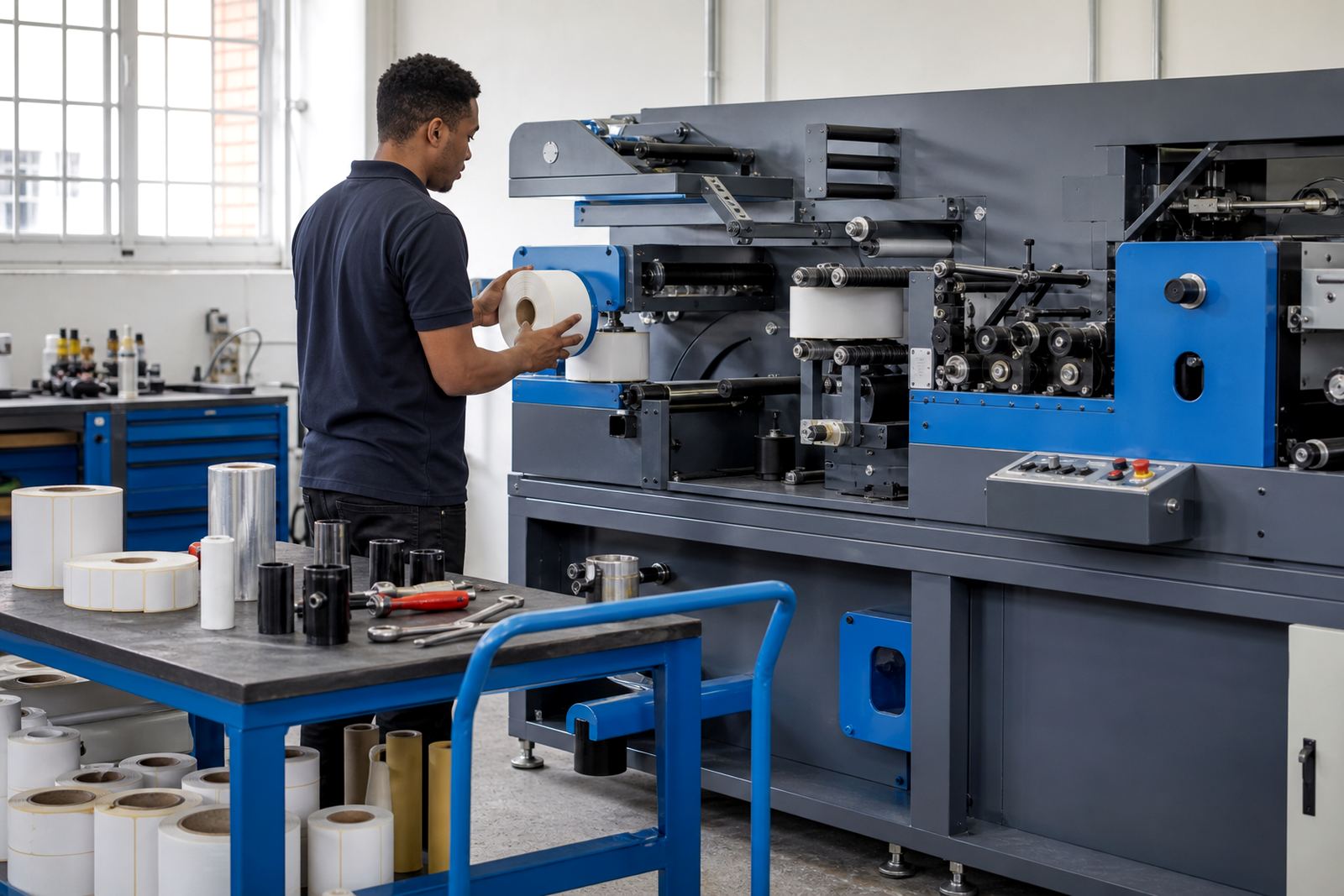
Changeover slows down when tooling is stored loosely or identified badly. Flexible dies, slit knives, stripping plates and rewind settings should each have a place and a label that means something to the operator. If a tool has to be measured from scratch every time, the line is paying for that delay in setup minutes and scrap.
Jobs with matrix stripping need a little more care, especially when the adhesive is aggressive or the face stock is thin. The waste path has to stay open, the peel angle has to be correct and the strip must leave the finished web clean. The same goes for rewinding, where a clean edge on the roll matters as much as the final diameter. If the rewind is set too tight, the roll gets hard to unwind later. Too loose, and the roll looks untidy before it leaves the line.
- Store common tools together by size or job family
- Mark rewind core sizes on the setting sheet
- Keep spare blades and wear parts near the line
- Separate matrix stripping notes from slitting notes
Make the first test length count
A short test length should tell the operator almost everything that matters. The aim is not to run longer and hope the setting will settle on its own. It is to check cut depth, strip quality, slit position and rewind tension before the full roll is committed. That approach saves material, which matters when labels are printed in short runs for food, health or FMCG packaging.
Applications Trainer Musa Wessels often sees the same pattern during operator training: the line is already close to correct, but the team keeps changing three things at once. That usually makes the fault harder to read. One change at a time is slower in the moment, yet it often shortens the full setup because the real issue becomes visible sooner.
Use a short test to confirm:
- Cut depth stays consistent across the web
- Waste matrix lifts cleanly without tearing
- Slits land where the job card says they should
- Rewind edges stay even through the first metres
A Randburg changeover lesson from a Durban label run
A packaging producer sending labels from Durban to Johannesburg once asked for a repeat job on a mixed paper and film order. The finished size stayed the same, but the rewind needs changed because the label roll had to travel further and still look tidy when it arrived. The team shortened the setup by using one job sheet, one tool tray and one set of mark positions for both materials, with only the tension and rewind settings adjusted for the film.
That approach kept the line steady without forcing the operators to improvise. It also helped our service team when they reviewed the settings later, because the record showed what was changed and what stayed fixed. For a business running across South Africa, from Randburg to Pretoria, Cape Town or Gqeberha, that kind of consistency saves time even when the work is not identical.
Thabo Mdlalose often describes it plainly: the fastest changeover is the one you can repeat with less second-guessing. That is not about rushing. It is about making the next job familiar enough that the line can move with confidence.
A final check that protects the next shift
Before the roll is signed off, leave the machine ready for the next operator. Clean the strip path, note any wear on knives or dies, and record the tension, rewind diameter and sensor position that worked best. When the next job starts with those notes in place, the team does not waste time rebuilding the last setup from scratch.
That habit suits busy shops in Johannesburg, Pretoria and Cape Town where several label jobs may move through the same finishing line in one day. The machine can handle the work, but only if the notes, tooling and web path stay organised. Lerato Bhengu and Ayesha Shezi see this every week in service calls and parts planning. A tidy end to one job is often the reason the next job begins smoothly.
- Clean the line before shutting the job down
- Save the settings that worked, with measurements
- Replace worn items before they slow the next run
- Keep the job card with the finished roll
FAQs for tighter label finishing changeovers
Do not force one setup to suit every material. Paper, film and laminated stock all behave differently under cut, strip and rewind pressure, so the settings should move with the substrate. The quickest line is the one that treats those differences as normal, not as a surprise.
If a line keeps losing time on the same job family, the issue is often in the paperwork, the tooling storage or the mark layout rather than the machine itself. A short review of those three items can often remove more delay than another round of trial runs.
Our contact form is the easiest way to send a machine or setup query from Randburg, Midrand, Kempton Park or further afield.