The first split: surface look or real protection
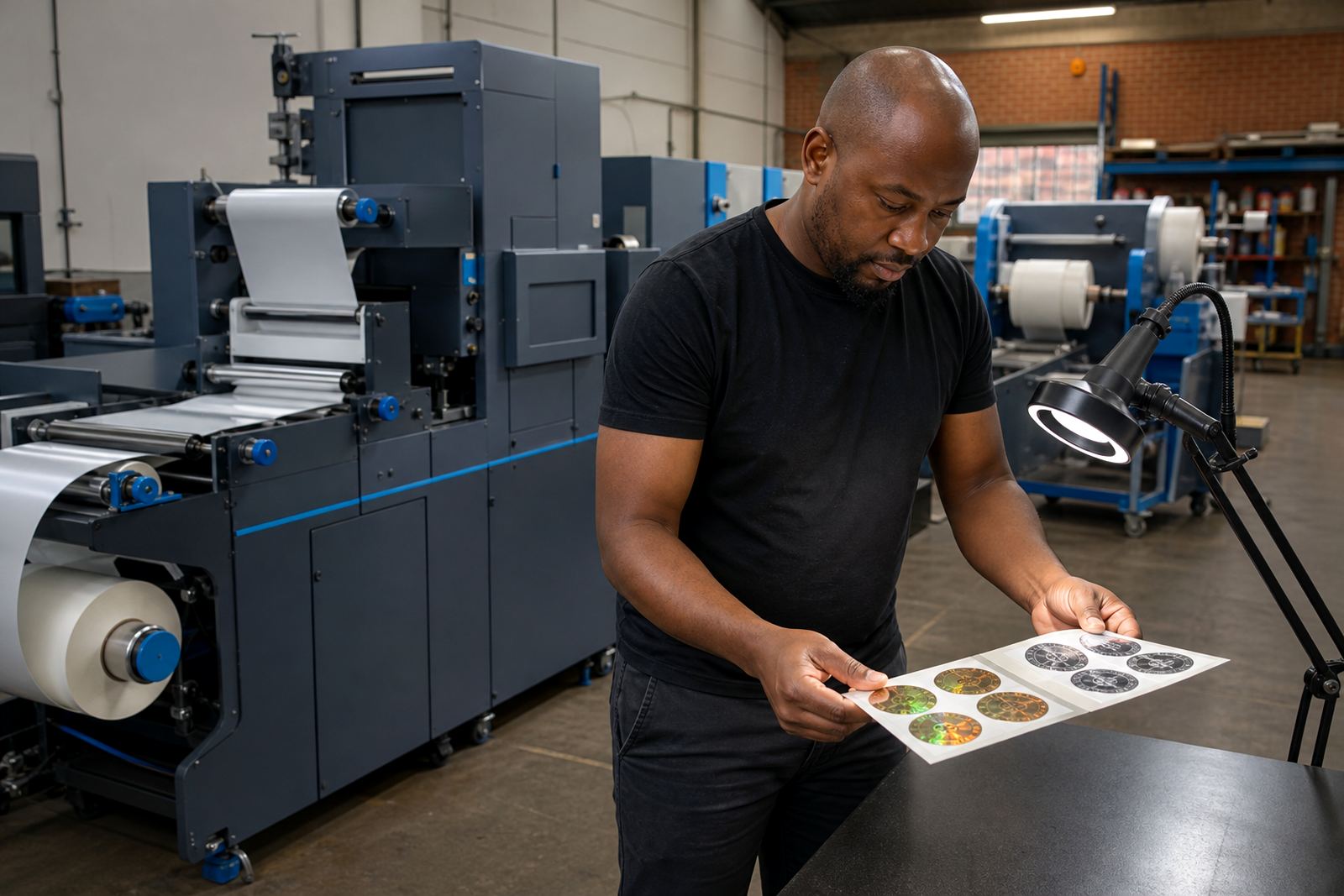
Varnish sits as a printed coating, so it is often the lighter touch. It can give a gloss, satin or matt finish while helping the print feel less open to rub marks. Laminate is a separate film, and that extra layer gives stronger defence against scuffing, moisture, oils and rough handling. In practice, varnish is often the cleaner choice when the label only needs a finished surface. Laminate earns its place when the pack moves through cold storage, hand-applied cartons or busy distribution routes.
On a busy Johannesburg line the first question is rarely about shine alone. It is about whether the label must survive handling after print, after die-cutting and after the roll has been packed for dispatch. If the label faces constant contact, laminate usually carries more weight. If the job is decorative, short-run or meant for easier converting, varnish can be enough.
How each finish behaves at the machine
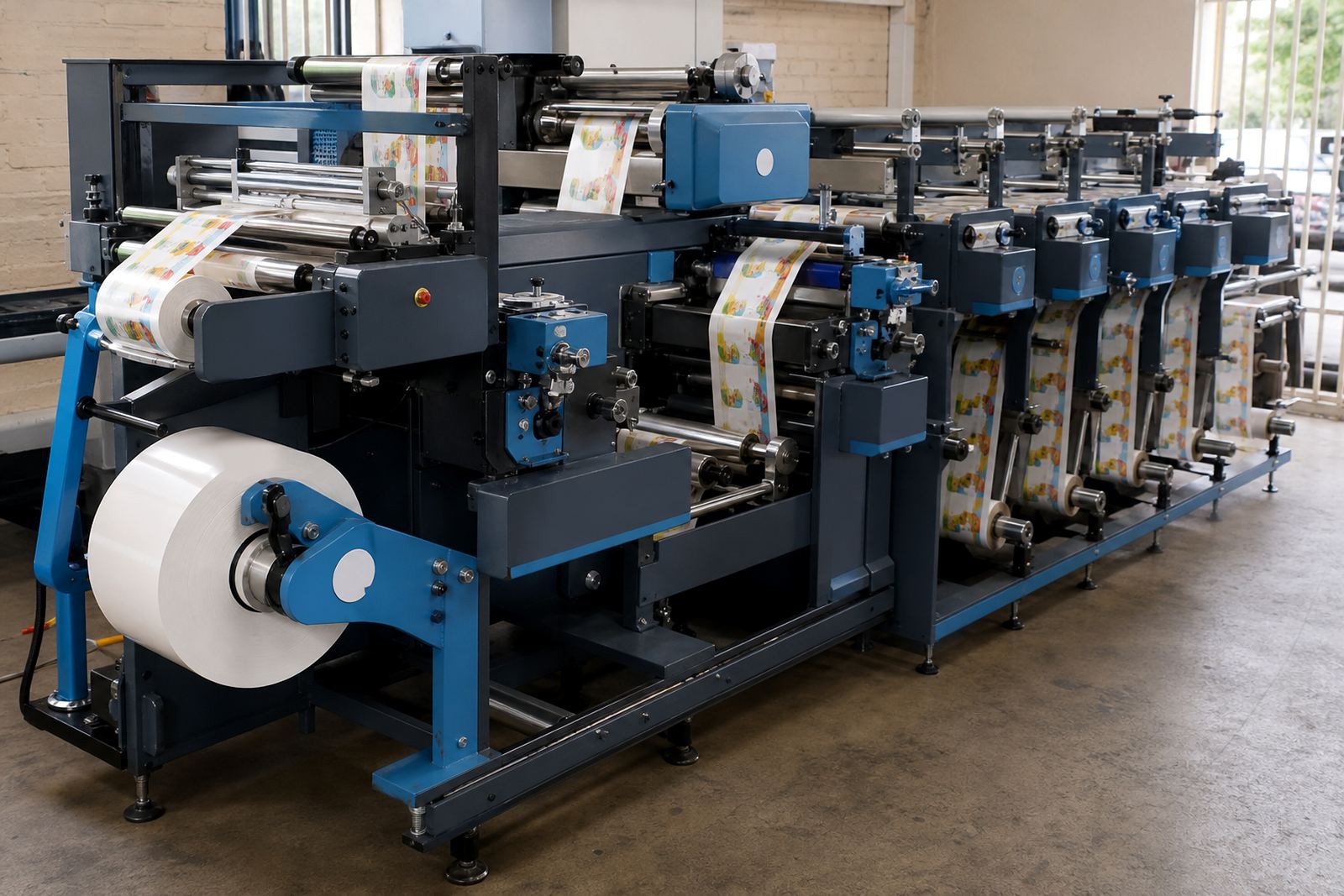
Varnish tends to behave more like part of the print. It can run with less build-up, though the exact coat weight still matters. Laminate adds film thickness, which affects tension, web handling and the way the die-cut section reads the registration marks. That extra body can improve handling on press but it also asks more from the unwind, lamination nip and rewind.
- Varnish usually keeps the web thinner and easier to slit.
- Laminate can improve grip through later packing and handling.
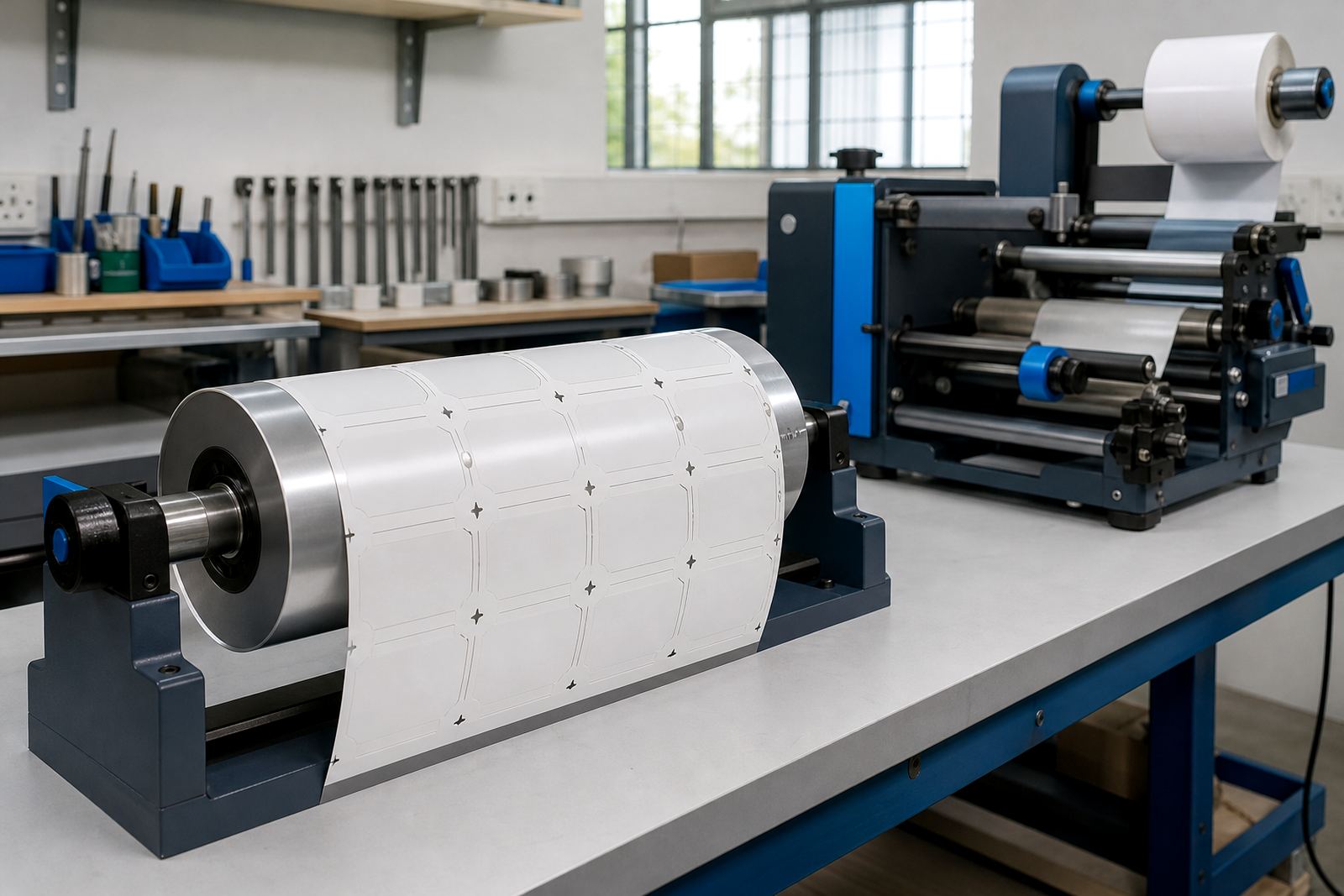
- Both need stable registration if the job is semi-rotary die-cut.
- Film laminate can shift the feel of fine type and barcodes if setup is poor.
When a roll is too loose or too tight, the finish shows it. A well-set varnish line can still produce edge curl if the web tension is uneven. A laminate job with poor nip pressure may trap air or leave a cloudy patch, and that will show up later on the shelf.
Where varnish is usually the practical answer
Varnish suits labels that need a better surface but not full armour. It is often used on paper face stocks, short shelf-life packs and products that are handled carefully after application. It also helps where the printer wants to keep the web lean for faster slitting and tighter rewind build. A varnished label can still look polished without changing the job into a heavier converting task.
For many local print houses, varnish makes sense when the label is going straight into cartons, sleeves or trays and the container is not likely to get wet. It can be a sensible option for promotional runs, internal product labels and packs that are not exposed to chilled condensation. The savings are not only in material, but also in the way the web passes through finishing. Less thickness means less strain on the rewind and less chance of a bulky roll edge.
- Good for decorative work and lighter handling.
- Useful when you want surface protection without adding film.
- Often easier to convert on thinner papers.
- Can be matched to gloss, matt or soft-touch effects.
Where laminate earns its place on shelf and in transit
Laminate is the better call when the label must survive rub, drag and moisture after application. In packaging, that often means chilled product, cleaning fluids, chilled rooms or cartons that are handled many times before reaching the customer. A laminated label can also protect print on bottle labels, chemical packs and items that travel across town and then sit in retail fridges or storerooms.
The extra film changes downstream work. It can improve die-cut edge stability on some jobs, but it also means more care at slitting and rewinding. If the laminate is too stiff for the stock, the roll can telescope or hold memory from the rewind core. On heavier lines in Durban, where humidity can affect certain papers and films, the right laminate helps the label hold its shape where varnish may wear too quickly.
- Better for moisture, handling and surface abrasion.
- Useful where the label will be wiped or stacked.
- Can support a sharper retail finish on demanding packs.
- Needs careful tension, slit width and rewind setup.
What changes downstream after the finish is chosen
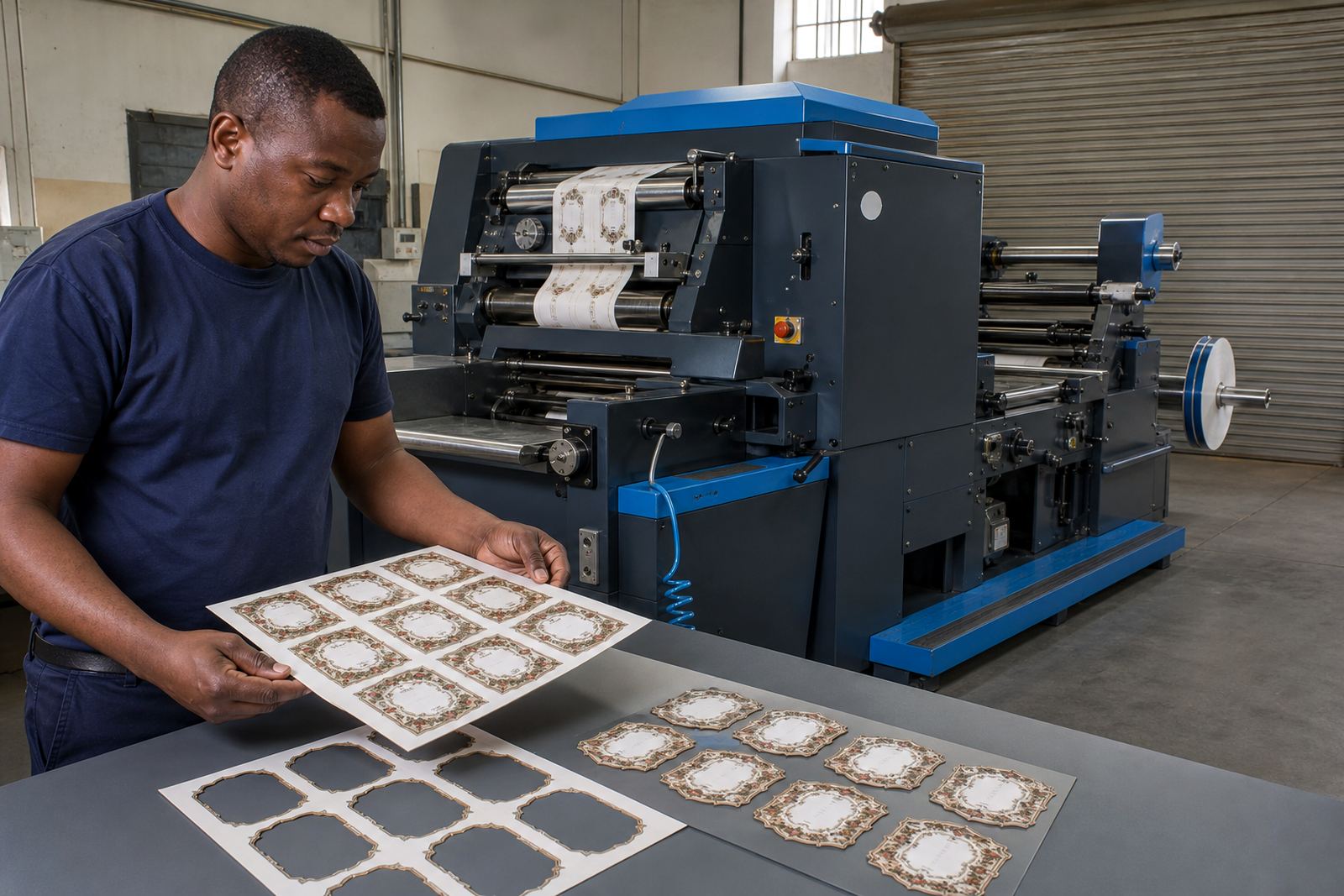
The finish is not the end of the job, it changes the next station. Laminate can affect cutting depth, matrix stripping and the way the waste lifts off the web. Varnish may be lighter, yet it still changes surface slip and how the label stack behaves as the roll unwinds. If the finish choice is made late, the finisher often ends up resetting the machine around it.
That is why operators watch the full path: unwind, lamination if needed, die-cut, strip waste, slit and rewind. Registration marks must stay visible and consistent, especially on semi-rotary systems where repeat length and print drift matter. On a mixed job, a poor finish choice can show up as edge lift, weak matrix removal or a rewind that is too tight for easy despatch.
In Randburg, a packaging producer may test two versions of the same label before running the full order. One version gets varnish for a cleaner paper feel. The other gets laminate for tougher handling after bottling. The better option is usually the one that holds together through the next three steps, not just the one that looks nicest off the press.
A local production call from Kya Sand to the customer floor
We often see the same pattern across Gauteng and the coast. A label printer in Midrand brings in a job that looks fine on press, but the customer complains that the print marks scuff during packing. In that case, laminate may solve the wear issue, provided the machine setup can handle the extra film and the slitting knives are set cleanly. Another run, perhaps for a dry food pack in Pretoria, may only need varnish because the label must look finished but not face heavy abrasion.
Practical decisions usually come down to three things: what the label touches, how the roll will be converted, and what the customer does after application. If the pack lives in a fridge, gets wiped down or moves through bulk handling, laminate is often worth the extra work. If the label is light-duty and the finish is more about appearance than endurance, varnish may be the cleaner route. Either way, the machine setup must match the stock, the repeat and the final rewind spec.
Label-Cutter works from Kya Sand, Randburg with machine installation, operator training, preventive maintenance, breakdown repairs and production support across South Africa. When the finisher is set up properly, the choice between varnish and laminate becomes less guesswork and more a matter of product duty, web behaviour and the final job on the shelf.