Roll diameter changes the whole job, not just the reel
When a finishing machine is sized for one roll format but fed another, the problem usually shows up in tension before it shows up anywhere else. A wide mother roll in a compact unwind stand can start to shift, and a tight rewind can build pressure that affects trim cuts, varnish registration, or the final rewind shape.
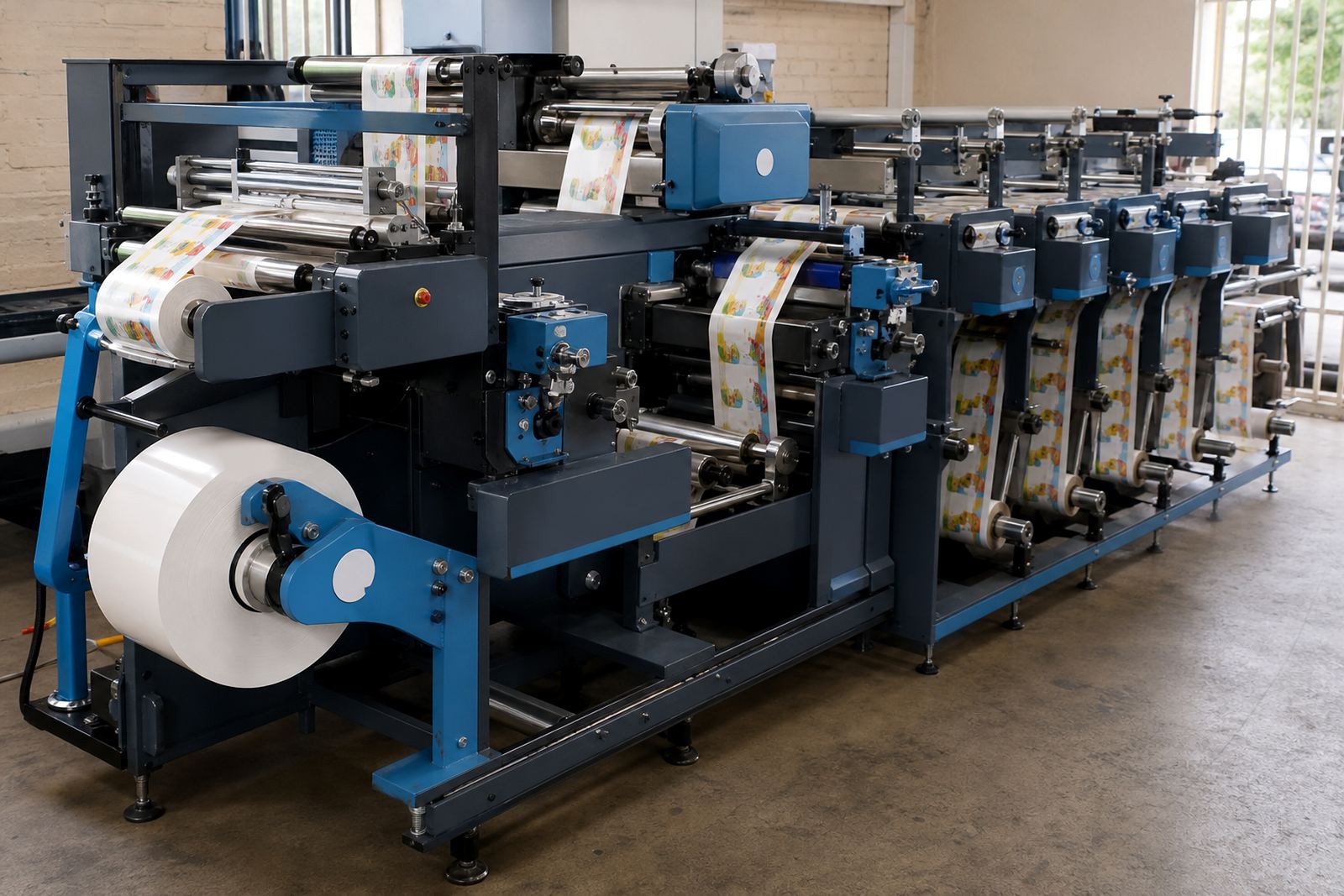
In label finishing, the unwind roll is not just a feed point. It is the starting point for how the web enters the machine, how consistently the registration mark is read, and how much control the operator has when speed changes. The rewind diameter matters just as much because the finished roll must stay firm without crushing the edge or trapping waste inside the roll.
- Large unwind rolls need stronger shaft support and better braking control.
- Small rewind cores can suit short runs, but need steadier tension control.
- Mixed roll sizes often call for adjustable core holders and guided threading.
What unwind size means for web stability
Unwind diameter affects the way the web pays off the roll. As the roll gets smaller, the effective braking force changes and the machine has to compensate. That matters on digital label work because the web may pass through lamination, die-cutting, matrix stripping, slitting and rewinding in one continuous line. If the feed is uneven, the cut depth and registration can drift.
For printers handling short runs across Johannesburg or Cape Town, a machine that can manage different unwind diameters gives more room to handle mixed order books. That includes narrow labels, wider packaging sleeves, or face stock that moves at different tensions depending on coating and thickness.
- Coated papers usually need cleaner tension control than plain substrates.
- Film facestocks can stretch if braking is too aggressive.
- Heavier rolls need enough unwind capacity for safe loading and threading.
When a machine is matched properly, the operator spends less time fighting the feed path and more time keeping the run steady.
Rewind diameter decides how the finished roll behaves
The rewind side deserves its own planning. A label roll that looks neat at the start can become too tight later if the winding force is not suited to the label width, liner strength, and slitting pattern. That is where telescoping starts, and sometimes the outer wraps shift because the rewind core is taking more pressure than the stock can handle.
For packaging producers in Durban or Gqeberha, humidity can also affect how a roll settles after winding. Labels with varnish or laminated stock may behave differently from plain stock, so the final rewind diameter must be chosen with the substrate and storage conditions in mind. A roll that leaves the machine looking perfect still needs to travel, stand, and be handled without edge damage.
- Smaller rewind diameters suit compact finished rolls and tighter storage spaces.
- Larger rewind diameters are useful when longer lengths must stay in one roll.
- Core size and winding tension should match the label width and liner strength.
Lamination, varnish and die-cutting all add their own roll demands
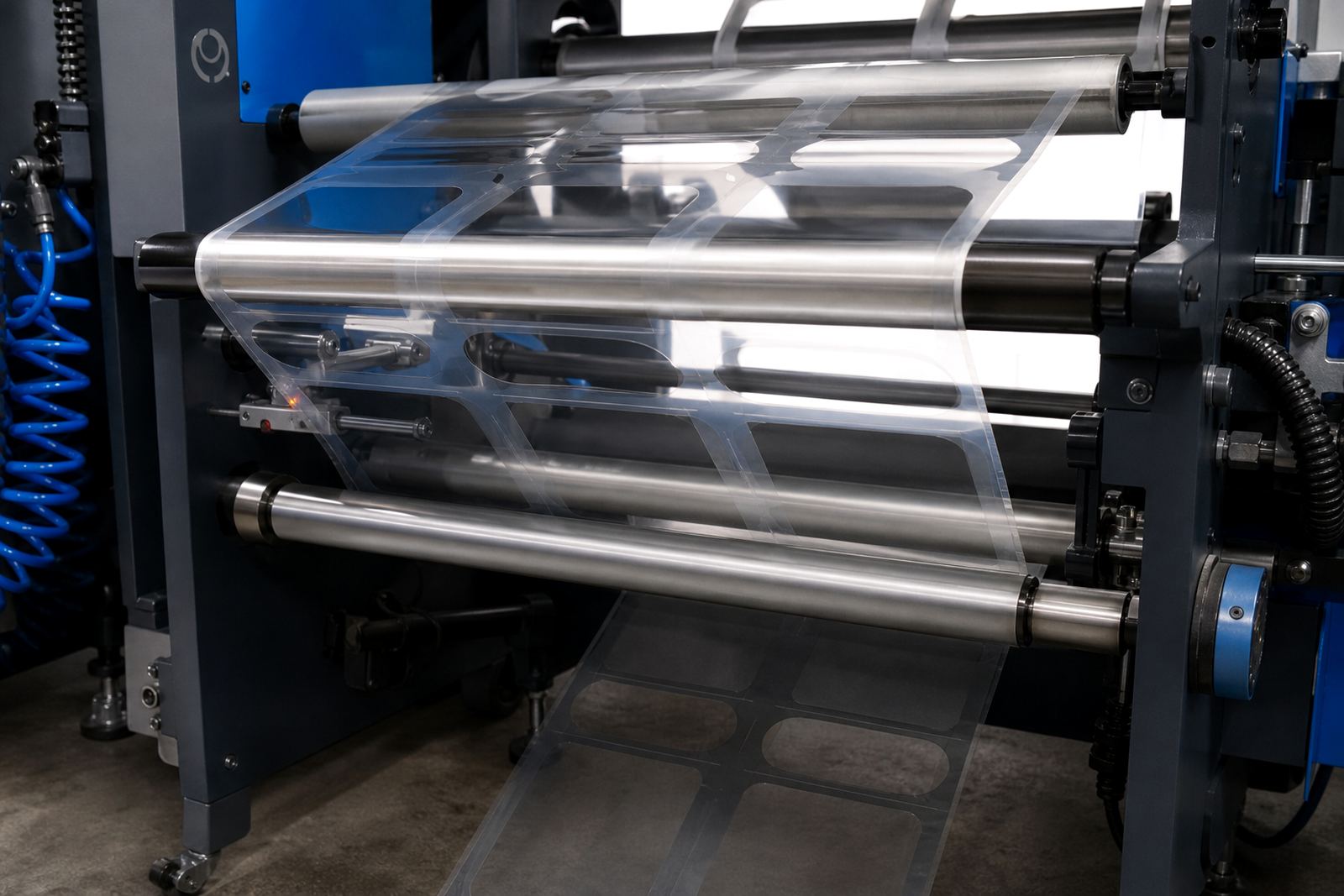
Once the line includes lamination or varnish, roll planning becomes more than a basic feed calculation. A lamination unit adds bulk and changes the way the web runs over rollers. Varnish stations can also change surface slip, which affects how the web tracks through die-cutting and slitting sections. If the roll size is off, those small changes become visible in the cut line and on the rewind edge.
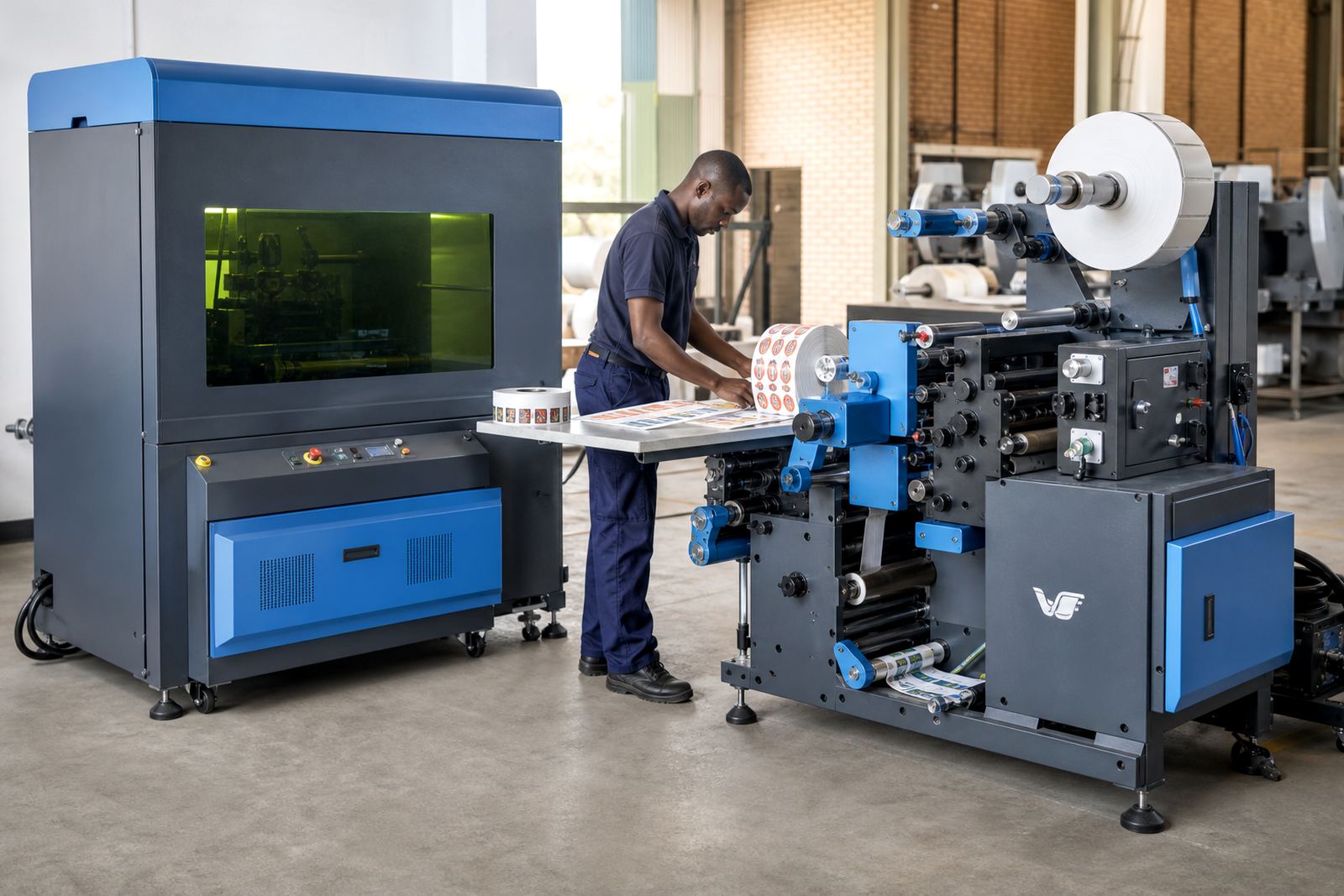
Laser die-cutting and semi-rotary systems do not ask for the same handling. Semi-rotary work depends on stable web support and consistent registration marks, while laser finishing needs clean feeding and predictable movement through the path. Flexible dies also depend on stable tension, especially when the label face is narrow and the matrix is being stripped from a light liner.
That is why unwind and rewind planning has to sit alongside the rest of the process, not after it.
A practical sizing list before a machine is specified
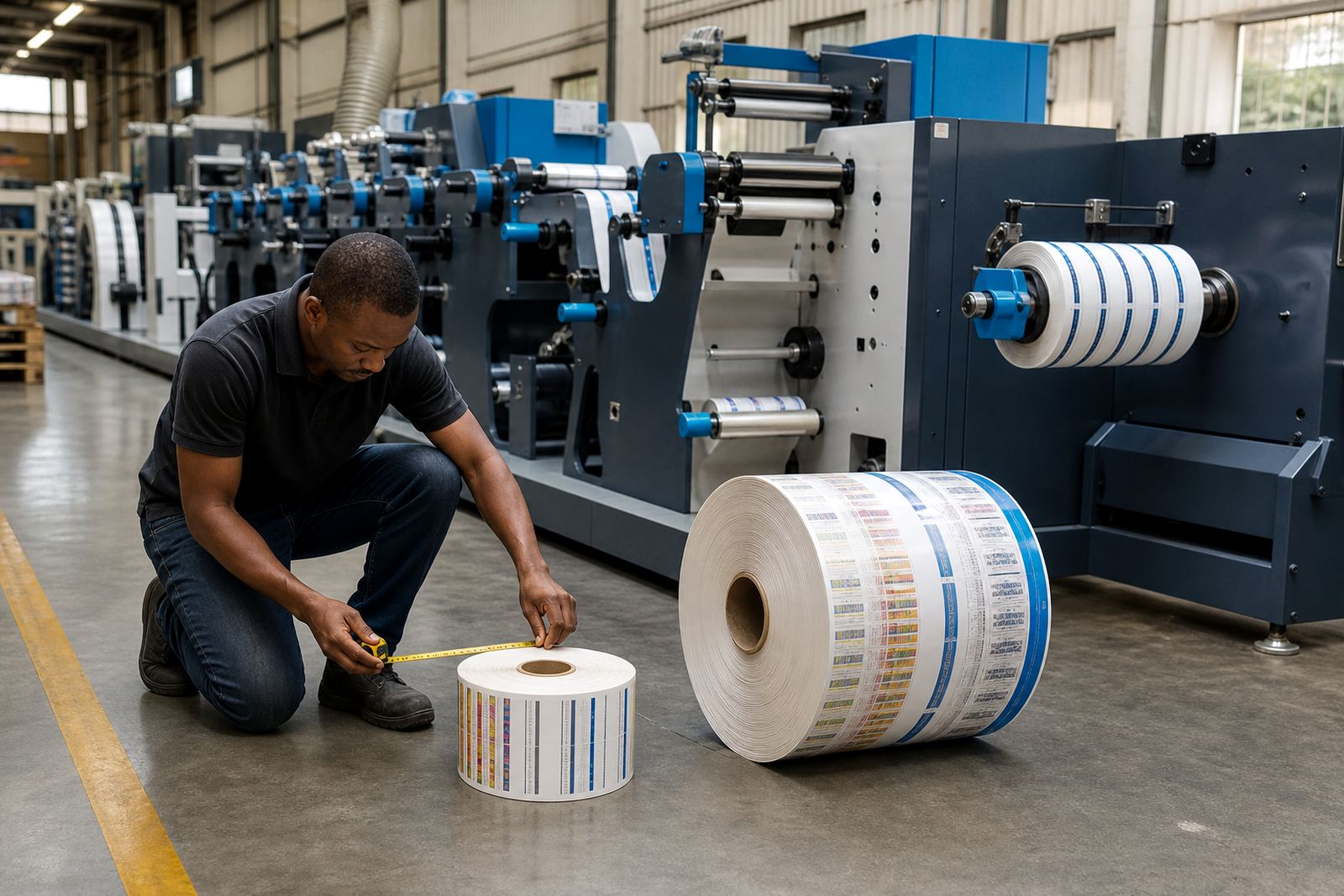
Before a finishing machine is selected, the roll details should be written down in plain numbers. Width matters, but so do core size, outer diameter, stock thickness, and whether the job is running as a straight cut or through multiple finishing steps. A machine that handles the label size on paper may still struggle if the roll is too heavy or the rewind is too tight.
- Measure the largest unwind diameter used in the plant.
- Confirm the smallest and largest rewind diameters needed on finished rolls.
- Check core sizes for both incoming stock and finished reels.
- Note whether the job includes lamination, varnish, slitting or matrix stripping.
- Record the usual registration mark spacing and web width.
That information helps match the unwind stand, rewind station, brake system and web path to the real job, not a best case sample on the floor.
A Randburg example from a mixed label room
A label converter in Randburg may run pharmacy labels in the morning, then switch to food labels and short packaging sleeves later in the day. The first roll might be narrow with a small finished diameter, while the second job needs a heavier unwind and a larger rewind core to keep the roll firm. If the finishing line is not set for that spread, the team spends time making manual adjustments that should have been built into the machine choice.
In that sort of room, operator training matters as much as the machine itself. The crew needs to know how tension changes with roll size, how to line up registration marks after a web change, and when a rewind is getting too tight for the stock. Preventive maintenance also helps, because worn bearings, weak brakes or poor threading guides show up fast when roll sizes vary through the week.
Across our Kya Sand, Randburg base and support areas in Johannesburg, Pretoria, Durban, Cape Town, Gqeberha, Midrand and Kempton Park, the same pattern keeps appearing: roll planning is not a side note. It is part of the finishing method.
The roll plan should match the work, not the wish list
It is easy to specify a machine around one favourite job and overlook the rest of the production mix. A line that handles a neat demo roll may still underperform when the real order has a wider web, heavier liner, or a rewind size that pushes the outer diameter beyond comfort. The better approach is to map the stock and the reel sizes first, then match the unwind, rewind, slitting and stripping functions to that pattern.
For label printers and packaging producers, that usually means asking how the web behaves when it is full, not only when it is fresh on the unwind. It also means checking whether the finished roll must fit a dispatch carton, a shelf space, or a downstream labelling process. Those details shape the machine selection more than most teams expect.
When the roll plan is right, the rest of the finishing line has room to do its work.