Why clear film shows every small mistake
Clear film does not hide much. If the web runs a fraction off centre, the cut can wander into the image area or leave a neat looking reel that still gives trouble on press. That is why operators watch the track, the marks and the tension all at once.
On opaque labels a minor fault can sit unnoticed for a while, but transparent face stocks tend to expose it at the first rewind. Edge fray, cloudy cut lines and uneven gaps between labels are common signs that the setup needs attention.
- Registration marks must stay readable and consistent.
- Web tension needs to stay steady through unwind and rewind.
- Cut depth must suit the film, backing and adhesive.
- Slitter blades must stay square and clean across the width.
Tracking marks, sensors and the repeat length
Transparent film often needs cleaner mark contrast than paper stock. If the registration marks are weak, glossy or buried near artwork, the sensor may hunt for the next repeat and the line starts to wander. That can throw off die alignment on semi-rotary systems and upset laser cut paths as well.
On long repeats the issue can show up as a steady drift, especially when the roll is large and the unwind core has a little runout. A careful setup checks repeat length, sensor position and the point where the film enters the cutting zone, then tests again after the first sample roll.
- Keep marks outside varnish or heavy print zones where possible.
- Test the sensor on the actual film, not only on a sample sheet.
- Check edge guiding before the line builds speed.
- Watch the first and last metres of the roll, not just the centre.
Stripping the matrix without lifting the label
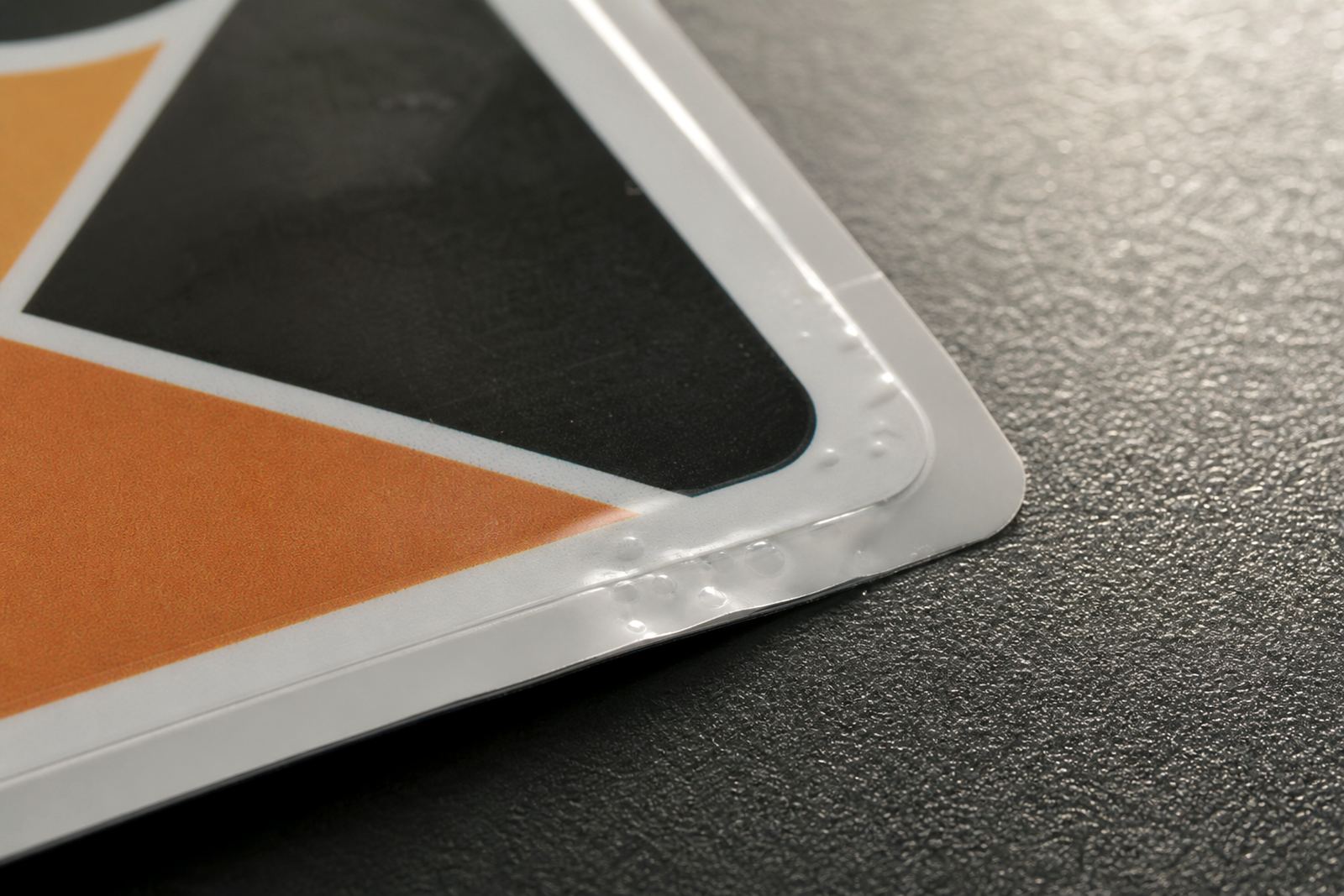
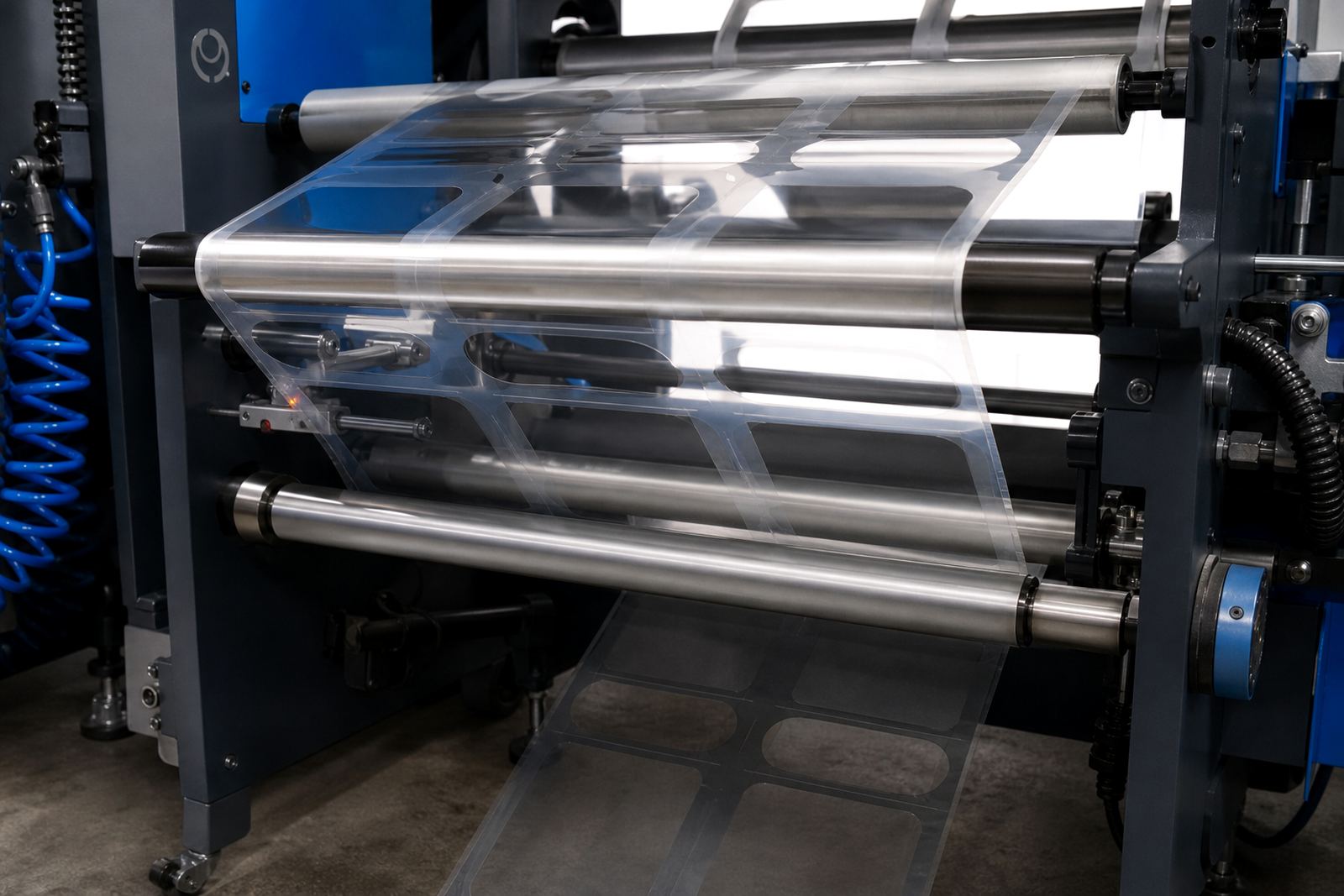
Matrix stripping on clear film is less forgiving than many teams expect. If the adhesive is too soft, too cold or pressed too hard during lamination, the waste web can tear and leave tiny bridges at the corners. That creates snag points and makes the finished roll harder to unwind cleanly.
A good stripping path depends on the shape of the label, the gap between repeats and the angle of the waste path. When the waste carries too much tension, the liner can bow and the labels start to curl at the edge. In coastal humidity that edge curl can worsen during storage if the rolls are packed while still warm.
- Keep stripping bars smooth and free of burrs.
- Set the waste path so it pulls evenly across the web.
- Check corner cut relief on small or narrow labels.
- Let finished rolls cool before tight packaging.
Slitting and rewind quality on the final roll
Slitting on transparent film needs sharper control than many print rooms first expect. A blade that is slightly out of line can leave a feathery edge that looks harmless on the machine but catches later when the roll is handled. Rewind tension also matters, because a roll that is wound too tight can telegraph edge defects right through the layers.
For label printers supplying cosmetic, food and household ranges, the final rewind must sit square and even. A neat roll edge helps on application, but it also tells the operator that the web path stayed stable through the job. On wider webs, even a small slitting offset can show up on every finished reel.
- Match slit positions to the finished roll width.
- Set rewind tension to avoid telescoping.
- Inspect each slit edge under good light.
- Check that cores are seated true before starting.
A Randburg case that kept turning up the same fault
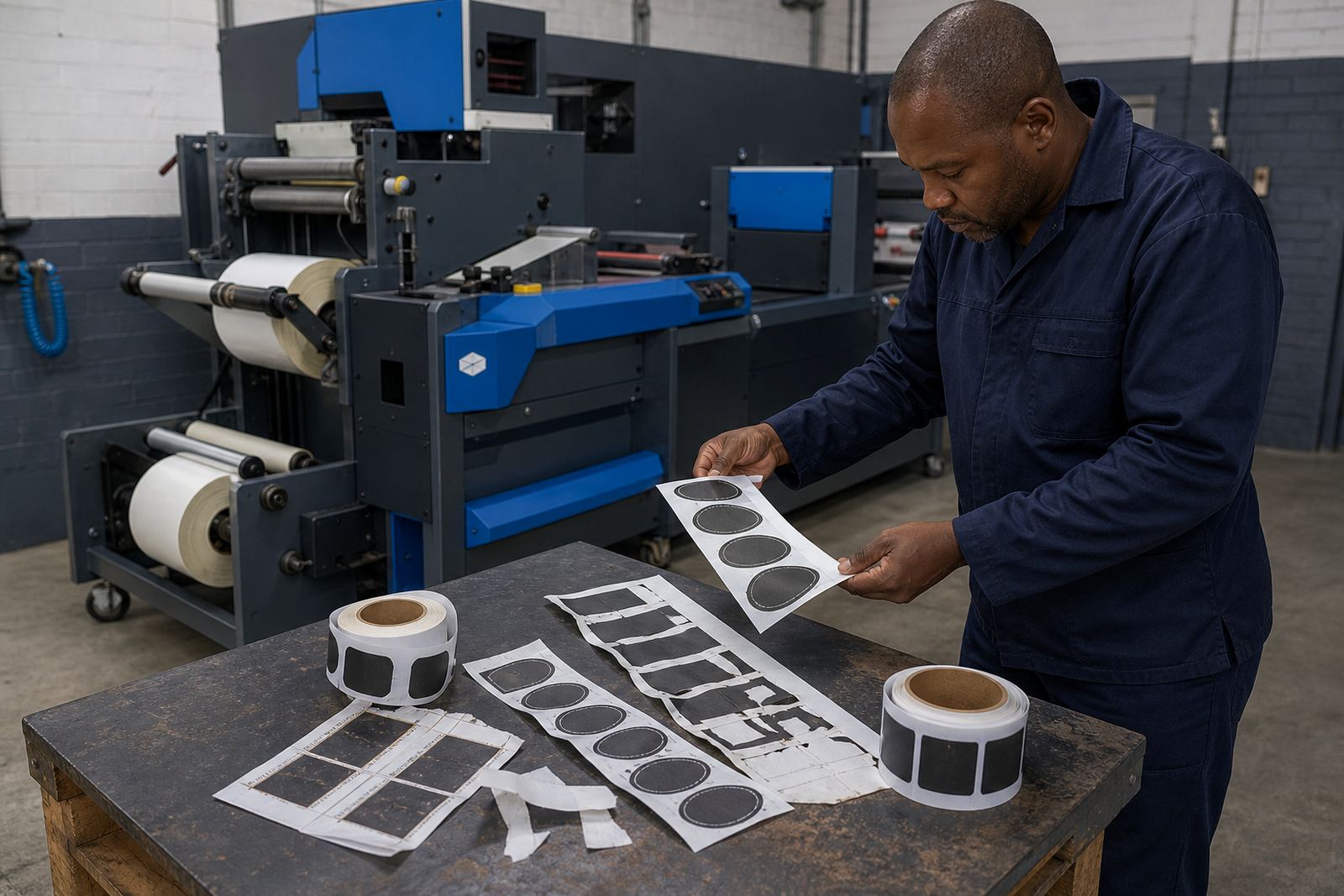
A packaging team near Randburg was running clear film labels for a short promotional range. The printed image looked fine, yet the finished rolls showed drifting cuts and a waste strip that tore near the same point every time. The issue sat in the setup, not the artwork.
After the line was checked, the sensor position was moved, the stripping path was eased and the slit knives were reset to match the actual roll width. The next rolls held their track more evenly and the operator could see the difference at once. That kind of fault is common when clear film enters a line set up for paper labels.
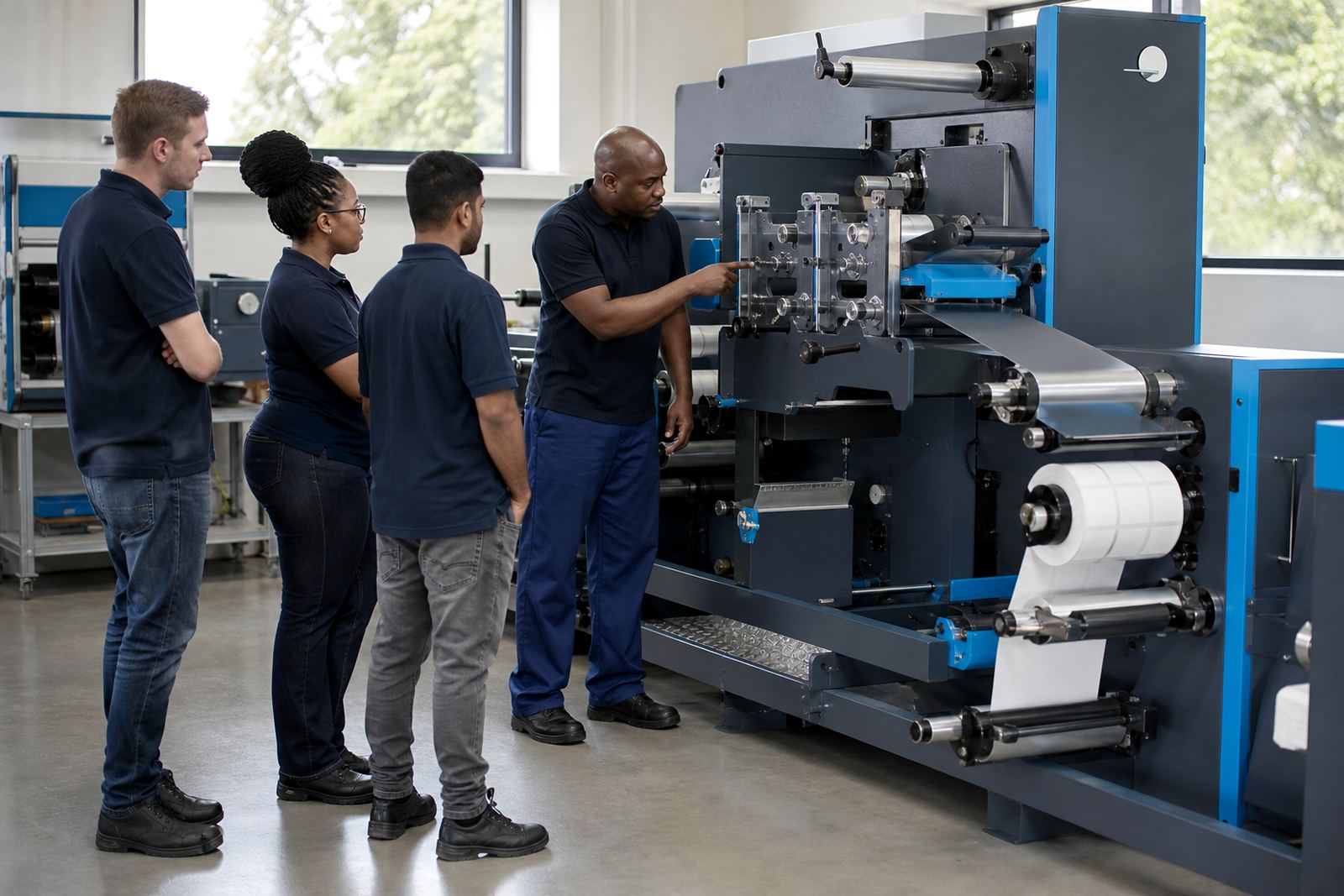
In jobs like this, the machine needs a proper commissioning check, then practical operator training on the exact film, repeat length and roll size in use. That is where a small adjustment can save a noisy afternoon on the floor.
Working methods that help clear film behave
Transparent stocks reward careful preparation. The process is not dramatic, but the details matter. A line that is clean, aligned and properly matched to the film grade gives better repeat control and less waste on setup rolls.
For label printers and packaging producers, the useful habits are often the plain ones. Measure the roll width, confirm the repeat, inspect the waste path and keep the knives and guides in good condition. When the job changes from paper to clear film, the same machine can behave very differently.
- Store film away from dust and excess heat.
- Confirm the roll core and unwind orientation before loading.
- Keep spare blades, sensors and consumables close to the line.
- Review the first sample roll before the full run starts.
Label-Cutter in Kya Sand works with finishing lines that handle lamination, varnish, matrix stripping, slitting and rewind work for South African production rooms. Our team supports installation, line commissioning, registration calibration, die setup help and production optimisation across Johannesburg, Pretoria, Durban, Cape Town and Gqeberha, with spare parts and servicing handled through our contact form and local support areas.