What an operator must read on the roll
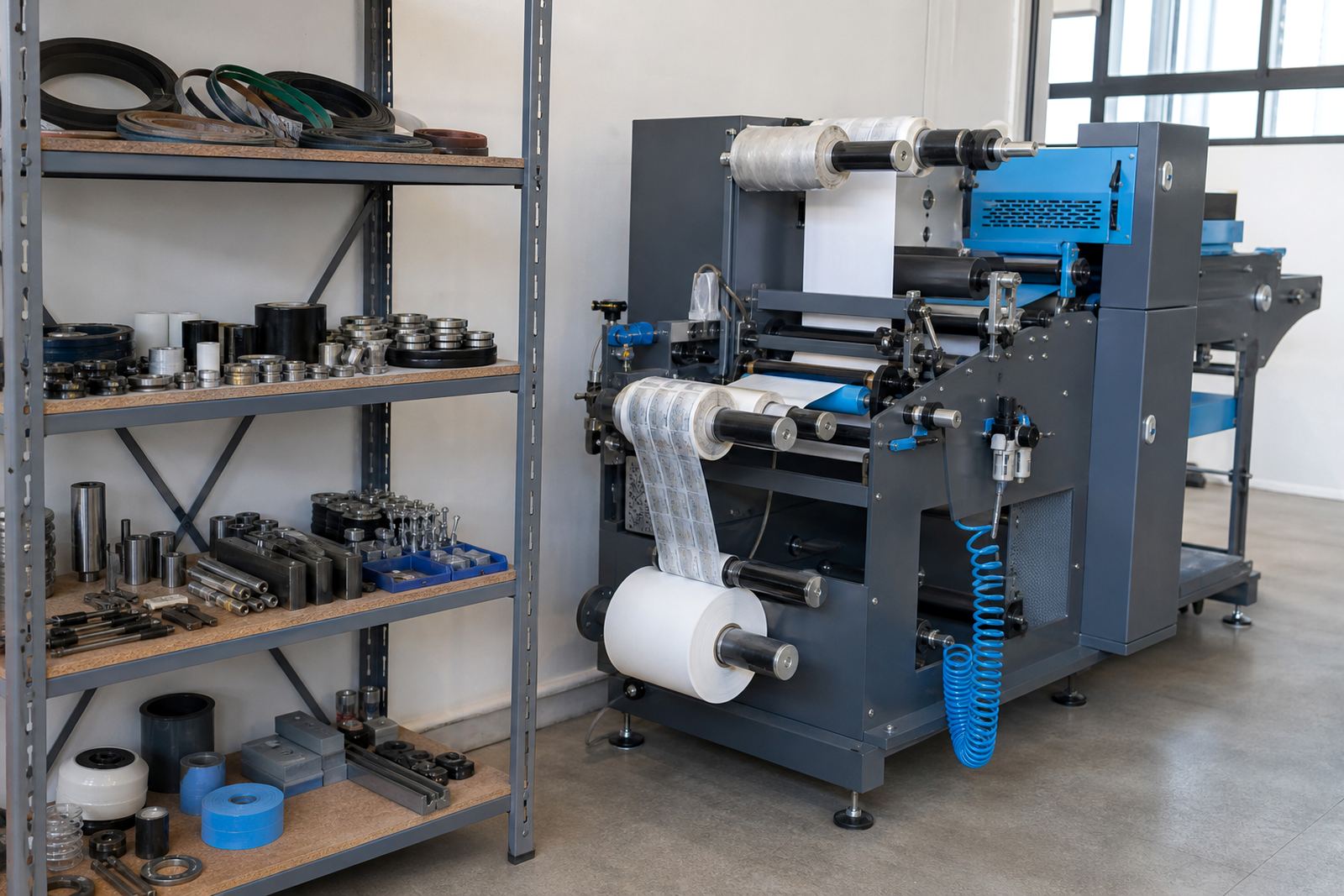
A finishing machine can only do good work if the operator understands what is on the roll before it reaches the unwind. That starts with face stock thickness, liner type, adhesive behaviour and whether the job needs lamination, varnish or a die-cut pass with flexible tooling or a laser head. In humid coastal conditions the roll can move slightly during storage, so the operator has to notice curl, edge damage and tight winding before the first metre runs.
Good training teaches people to read registration marks, check repeat length and set tension for the actual material in front of them, not the one on last week's job sheet. On label work there is no room for guesswork when a narrow web is travelling through unwind, nip, slit and rewind stations all at once.
- Identify the print face, liner and adhesive side correctly.
- Check roll width, core size and winding direction before loading.
- Confirm where the registration marks sit on every repeat.
- Look for curl, telescoping and damaged edges before setup.
Loading, threading and keeping web tension steady
Most stoppages start at the point where the roll is loaded or threaded badly. Operators need to centre the roll, thread cleanly through guide rollers and keep the web flat through the station sequence. If the tension is too high, labels stretch and cut depth changes. If it is too low, the web drifts, folds or wrinkles under lamination and slit blades.
Training should cover unwind brakes, dancer settings, edge guides and rewind torque in plain terms. A good operator can hear and see when the line is under strain. They also know that a 330 mm roll behaves differently from a small narrow-web reel, even when the artwork looks the same on paper.
- Load the roll so the web runs square through the machine.
- Adjust tension gradually, not in large jumps.
- Watch for wandering edges after lamination or varnish.
- Set rewind tension so rolls stay neat without crushing the web.
Register, cut depth and matrix stripping
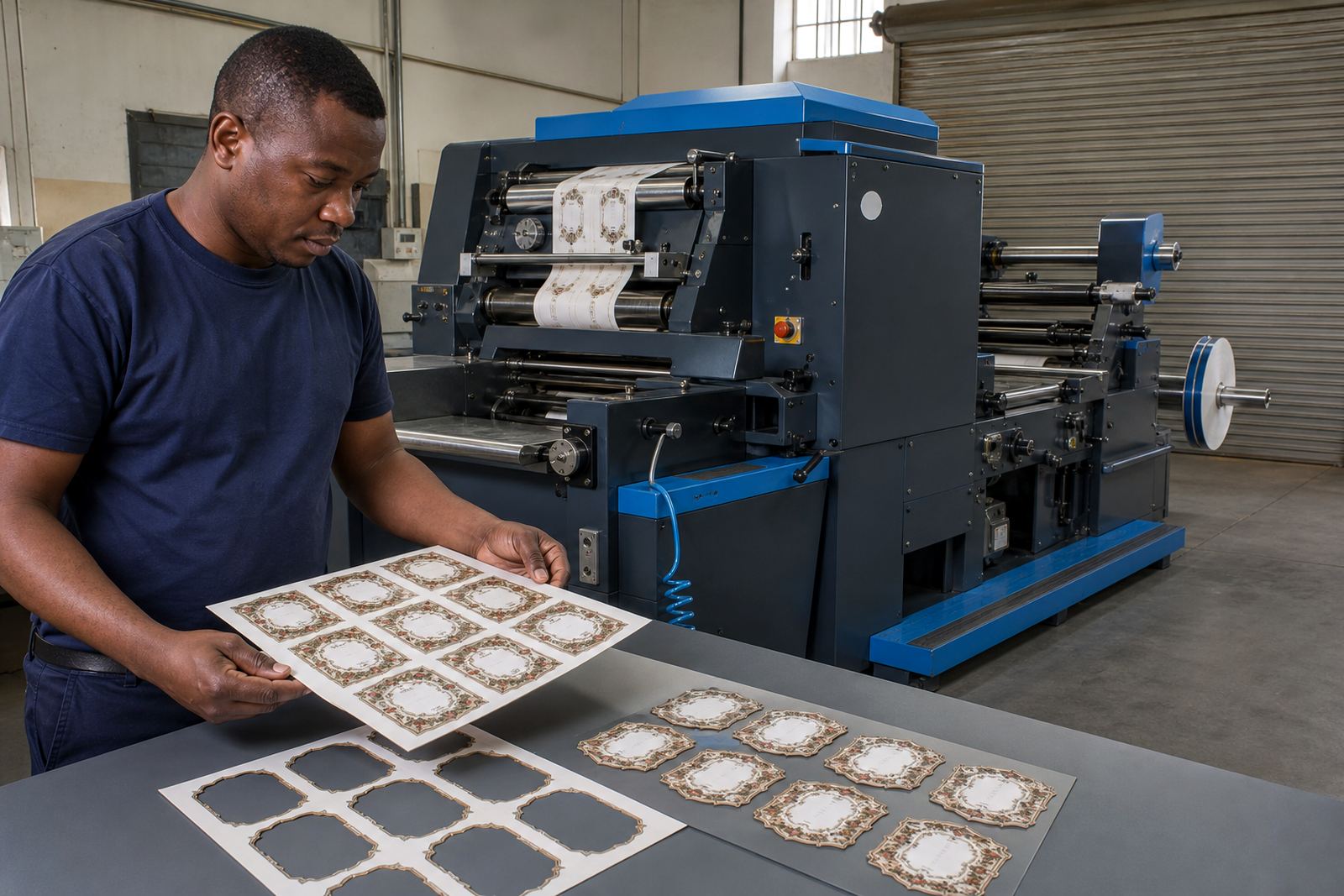
Digital label finishing depends on precise register. The operator must line up the cut path to the print marks and keep that alignment through the full run. Whether the machine uses semi-rotary tools, laser cutting or flexible dies, the result depends on how well the marks are read and how carefully the setup is held. A small drift can leave half-cut labels, broken liners or jagged waste.
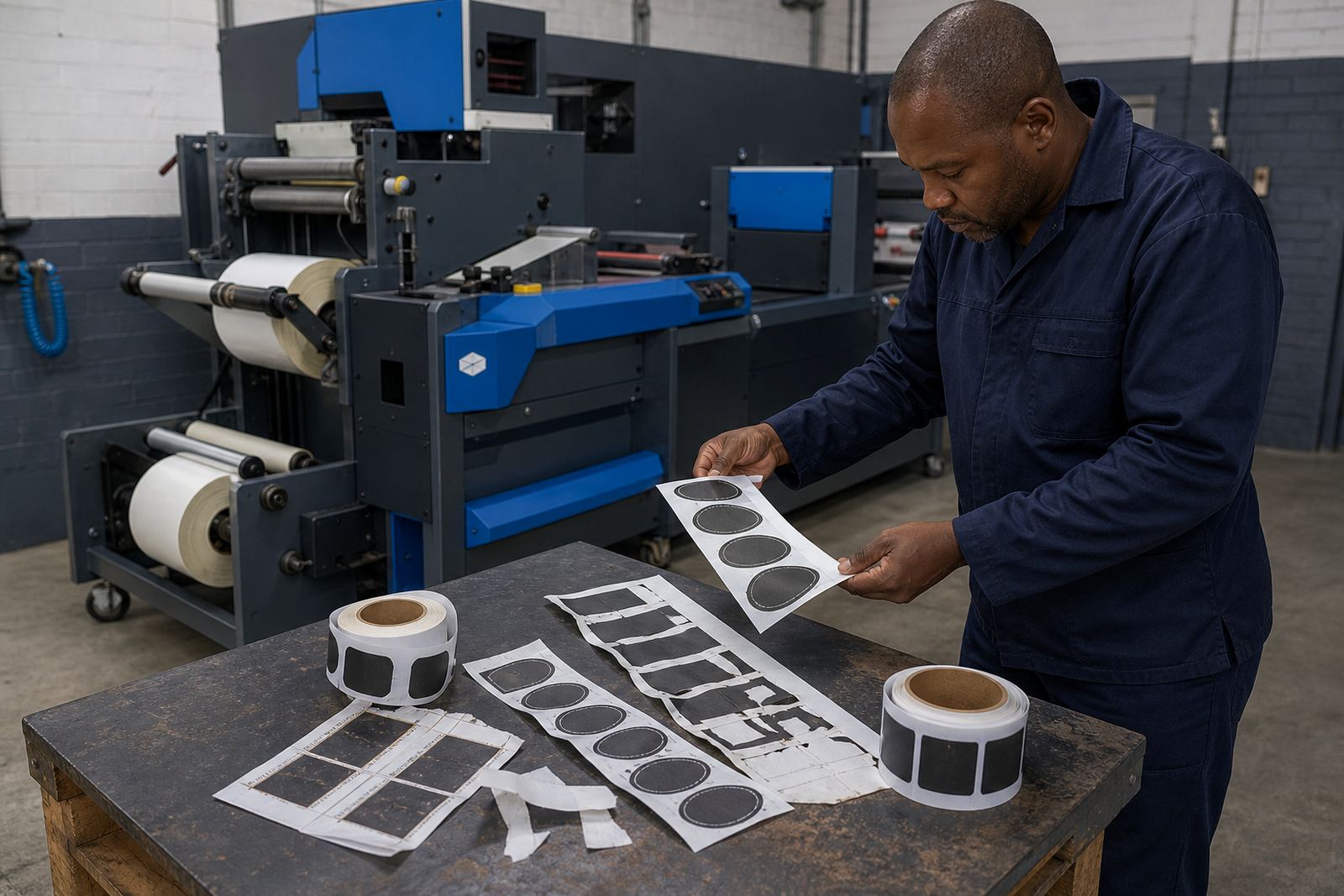
Matrix stripping needs equal care. Waste must lift cleanly, with enough angle and support to stop labels from pulling off the liner. Slitting knives also need the right spacing and pressure. When setup is rushed, the operator ends up chasing problems at both ends of the line instead of holding one clean flow through the whole job.
- Keep the registration sensor clean and correctly aimed.
- Test cut depth before the run reaches full speed.
- Strip waste with a smooth path and no snags.
- Set slitting blades for the actual roll width and layout.
What a training day should cover on the floor
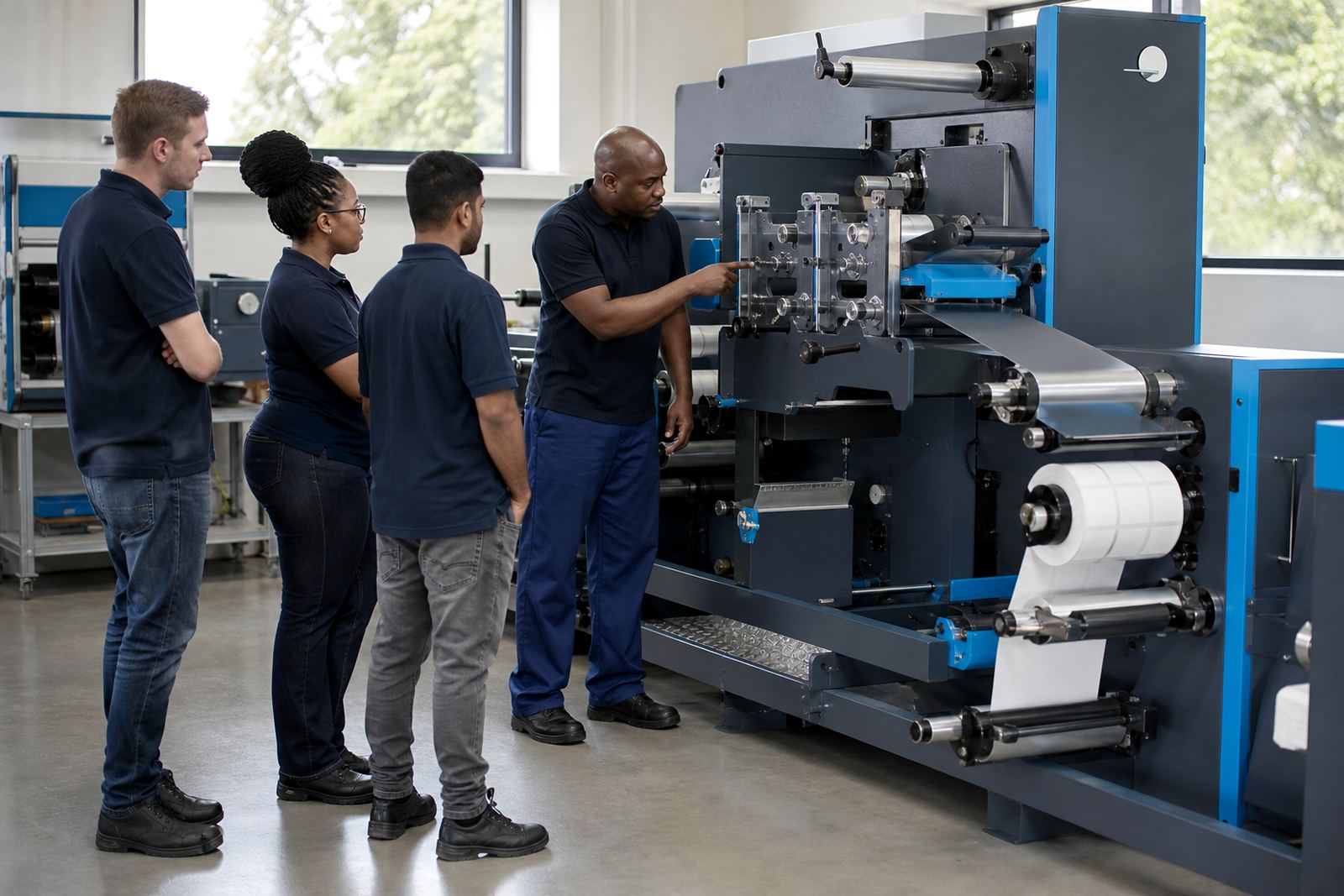
Operator training works best when it happens on the actual machine the team will use, with the same labels, the same rolls and the same order of stations. People need to touch the controls, set the web path, load a rewind shaft and recover from a missed mark without panic. Theory helps, but hands-on repetition is what makes the line steady.
In a Randburg or Johannesburg plant the pressure often sits in short production windows and mixed job types. A training session should therefore cover both changeover work and run control. Operators need to know how to move from one label format to another, then settle the machine again without wasting metres of substrate.
- Machine loading, threading and safe start-up.
- Reading artwork repeats and mark positions.
- Setting rewind, slit and waste removal stations.
- Cleaning sensors, rollers and guides after production.
A Kya Sand example from a busy label shop
Picture a label printer in Kya Sand handling short runs for food packs, household products and warehouse labels. The same line has to deal with laminated work, plain thermal stock and varnished jobs in one week. If the operators have weak training, the machine spends more time being reset than producing saleable rolls. The first signs are usually loose rewinds, cut drift and waste that tears instead of stripping cleanly.
Once the team understands setup discipline, the changes show up quickly on the floor. The operator checks the mark position, centres the web, confirms die pressure and watches the rewind build evenly from edge to edge. That kind of habit saves material and keeps the finishing line usable under pressure, even when orders are split across Johannesburg, Pretoria and Durban.
In practice, the best operator is not the one who touches the most buttons. It is the person who notices a small fault before it turns into a reel of scrap.
Maintenance habits that protect output
Training should not stop at machine operation. Operators also need to know the cleaning and inspection work that keeps a finishing line dependable. Dust, adhesive build-up and small paper fibres can affect sensors, slitting knives and rewind shafts. A machine that is not cleaned properly starts to behave as if the setup is wrong when the real problem is simple grime.
Preventive habits also help the service team, because faults are easier to diagnose when the machine has been cared for. That means checking rollers, keeping guides free of residue and reporting odd noise, vibration or tension changes before the job drifts out of spec.
- Wipe rollers and guides after adhesive-heavy runs.
- Inspect blades, dies and shafts for wear marks.
- Keep sensors clear of dust and label debris.
- Log repeat faults so patterns can be traced.
The questions operators should be able to answer
Good training leaves the team able to think through the job, not only press the start button. They should know how to tell whether a cut is too deep, why a roll is tracking off centre and when a rewind build is getting too tight. They should also know what information the technical team needs when a fault cannot be solved at the machine.
That is the point of structured operator training. It gives label shops and packaging producers a calmer line, better repeat control and fewer interruptions when finishing work is running against production deadlines.
- Is the web tracking true from unwind to rewind?
- Are the marks aligned with the cut path?
- Is waste stripping cleanly without tearing labels?
- Has the roll been wound to a stable finish?