When a roll count stops meaning the same thing
A finished roll can mean three different things in a label room. It can mean the number of labels on the roll, the linear metres wound onto the core, or the number of usable roll units that leave the machine. If those three are mixed up, the stock sheet looks tidy but the dispatch bay tells a different story.
Digital label finishing makes this more noticeable because one master web can be slit, stripped, laminated, die-cut and rewound into several outputs. A printer in Kya Sand may run one artwork across two web widths, then split the job into narrow rolls for hand application and wider rolls for applicator use. The count must match the way the customer will handle the rolls, not only the way the press operator sees the job at the end.
Registration marks, repeat length and waste matrix all affect the true count. A roll that looks full may still have poor yield if the die cut drifts, the rewind tension varies or the strip waste carries labels with it. That is why finishing teams track the output in more than one unit, especially on jobs with small labels and short repeats.
Labels, metres and job units each tell a different story
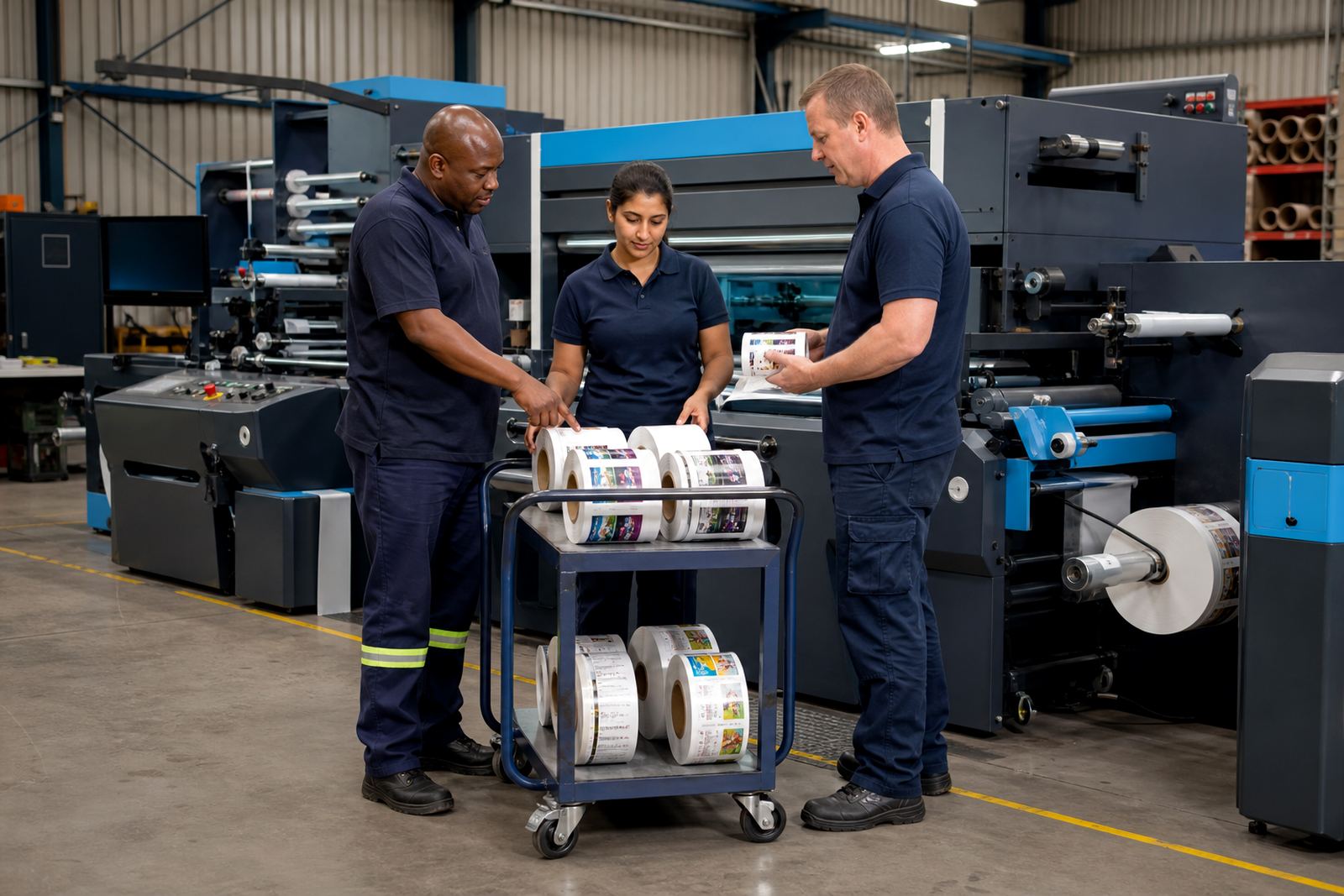
Labels suit jobs where every item on the roll is identical and the customer counts packs or labels per product line. Metres suit web-based planning, especially where a converter wants to compare input web to finished output after lamination or varnish. Job units suit the final handover, because many customers order by roll and not by length.
In practice, a single roll can carry a neat label count and still be awkward if the outer diameter is too large for storage or application. The same roll may also be short on usable metres if the core size, web thickness and varnish laydown changed the winding profile. For packaging producers, that matters when the roll must fit on a rewinder, a cutter or a label applicator with a fixed unwind space.
- Use label counts when the end user counts items.
- Use metres when the production team checks web yield.
- Use roll units when dispatch, storage and invoicing need a clear handover point.
- Keep the repeat length, core size and finished width on the same record.
What changes after lamination, varnish and waste stripping
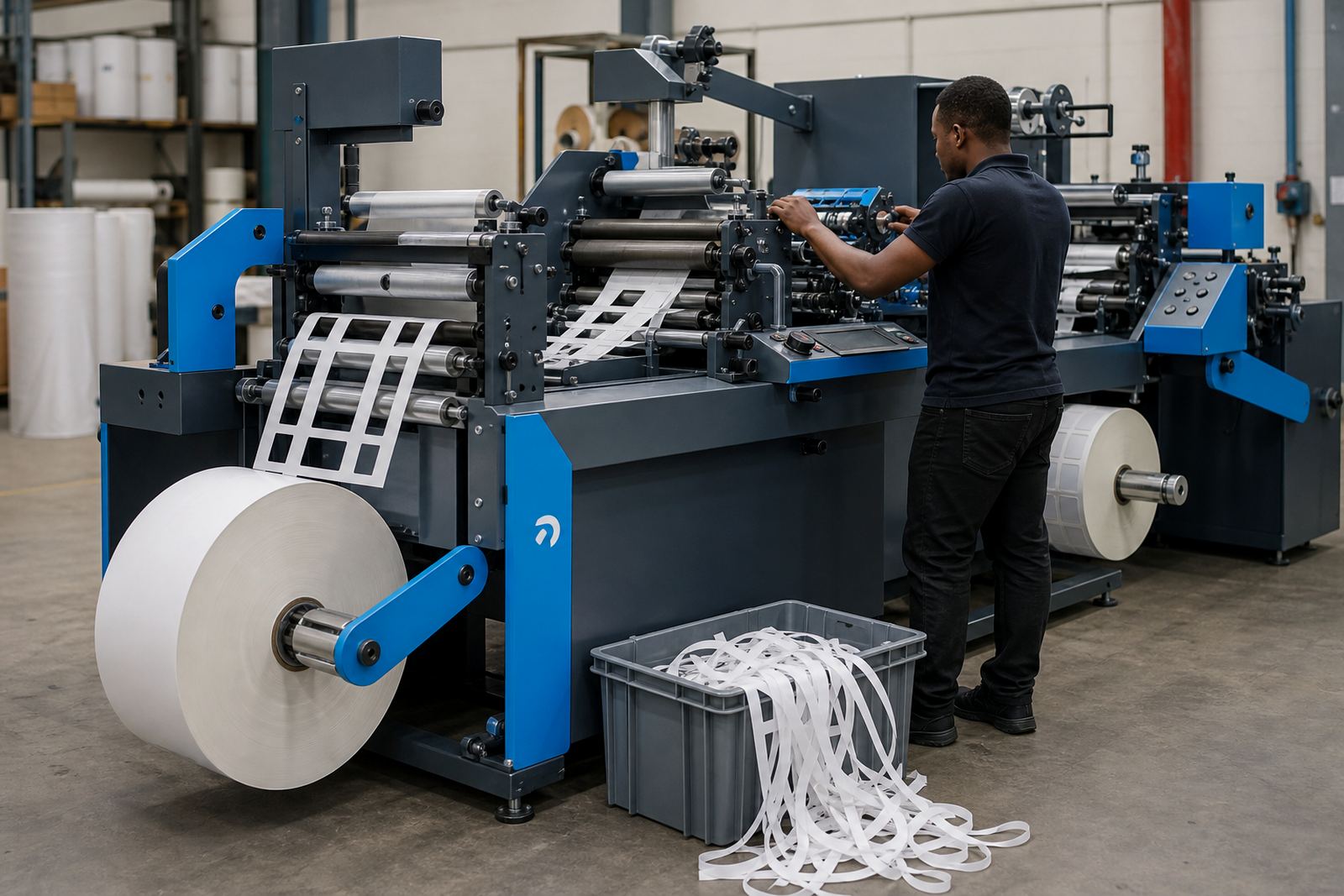
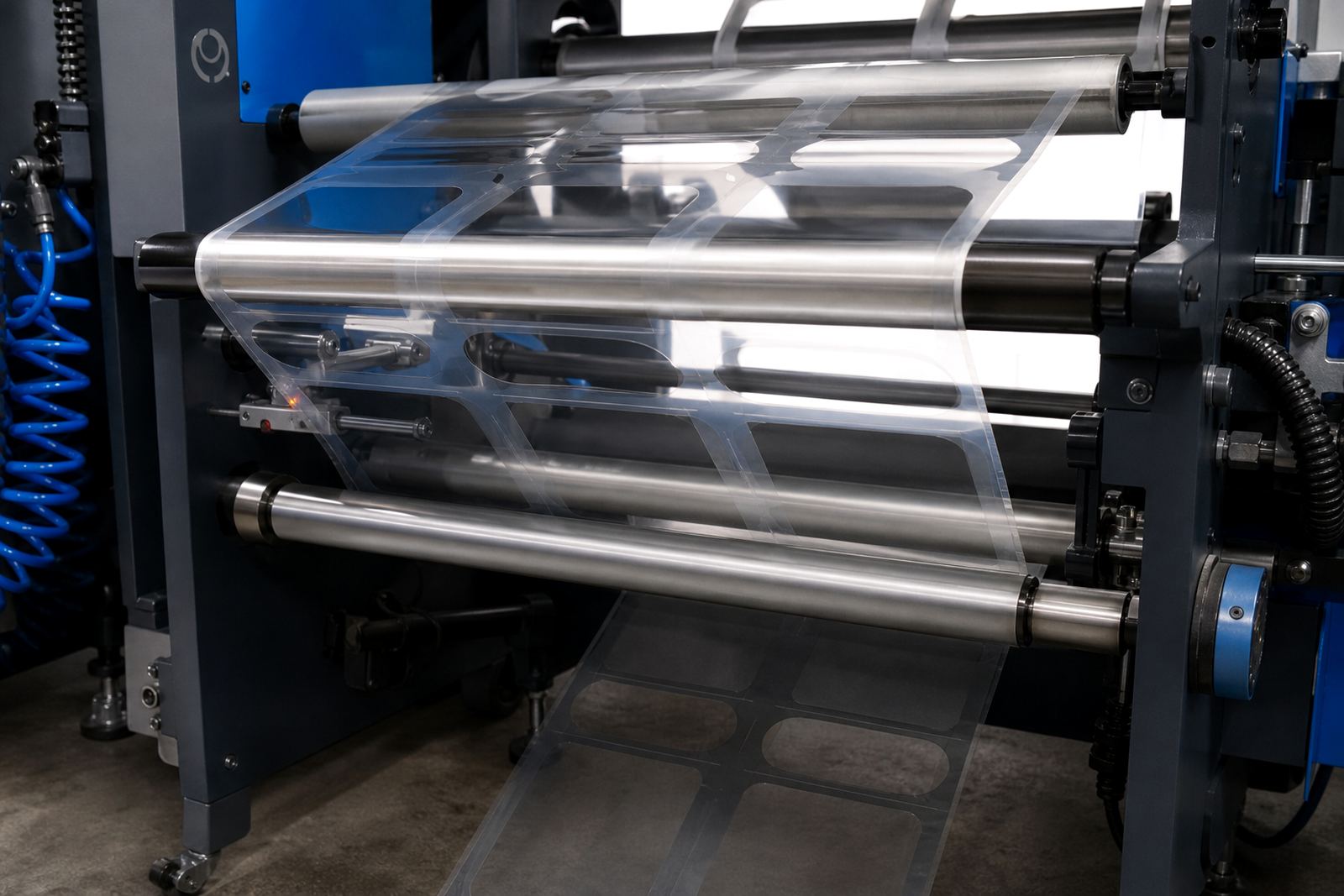
Lamination adds thickness and can change the way the web tracks through the machine. A gloss film, matte film or varnish layer affects curl, slip and rewind tension, especially on narrow labels. Matrix stripping also changes the count because the waste web may pull against the printed face, and a badly set strip can tear labels near the edge.
Where flexible dies or semi-rotary cutting are used, the operator has to watch registration marks and check the cut depth before the full batch runs. If the cut is shallow, labels stay attached and the count falls short. If the cut is deep, the liner can score and the roll may fail in packing or on a customer's line.
For this reason, counting finished rolls is never only a packaging exercise. It is part of machine setting, die setup help and production control. A good count starts while the web is still moving through unwind, laminate, die-cut, strip waste, slit and rewind, not only when the last roll is tied off.
A Kya Sand example: the job looked full, the counts did not
A packaging producer in the Kya Sand area might run a mixed batch for jars, cartons and pouches in the same week. The printed master web is 330 mm wide, then slit into two finished widths. One customer wants 5 000 labels per roll, another wants 1 200 metres wound for automated application, and a third wants six smaller rolls for manual packing.
If the operator only checks outer diameter, the batch can look complete while the true label count is uneven across the rolls. One roll may have a tight centre and another may carry loose wind from a tension change after a blade adjustment. In Randburg, that kind of mismatch often shows up when the work is moving between shift teams and the handover notes are brief.
The better routine is to count by job record, then verify the roll count, length and label tally before the batch leaves the finishing area. It also helps to mark which rolls were slit from the left side and which came from the right side of the web, because edge quality is not always equal across the whole run.
- Check the first finished roll against the artwork repeat.
- Verify slit width before packing the rest of the batch.
- Record any roll with a tension change or splice.
- Keep one sample roll from each batch for reference.
How semi-rotary and laser output change the way rolls are counted
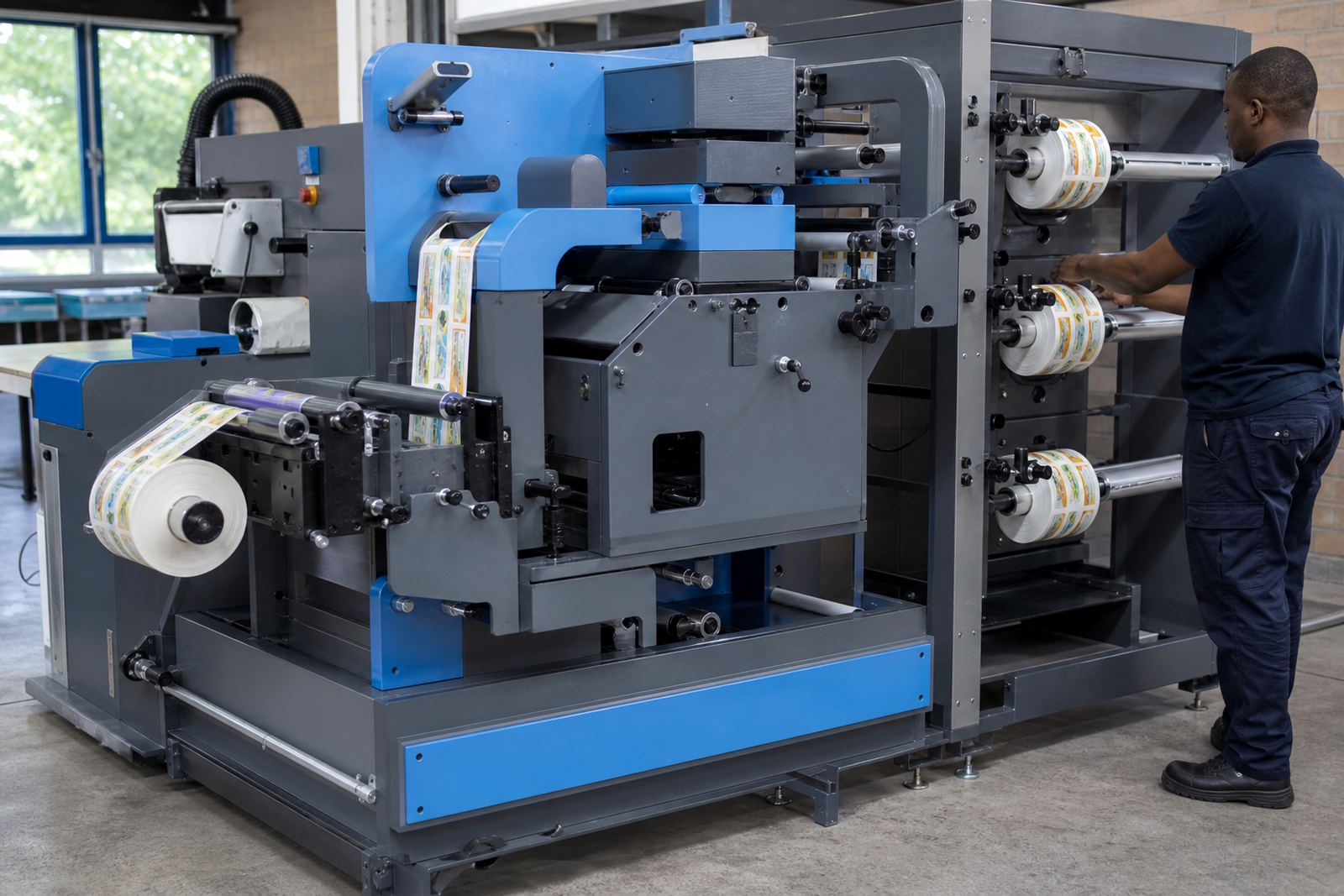
Semi-rotary systems are often chosen for repeat work where flexible dies or registered cutting are part of the setup. They are well suited to repeat lengths that stay consistent across the order, and the roll count can be planned from the die circumference and web length. Laser finishing, on the other hand, is often used where shapes change more often and the cut path is not tied to a physical die.
That difference matters because laser output may give a cleaner shape but still need the same checks on strip waste, slit position and rewind quality. A job finished on laser equipment can still be counted badly if the operator forgets that a longer kiss-cut path creates more waste or takes up more web between labels. The count on paper must follow the way the machine actually finished the roll.
For large South African runs, especially in Johannesburg, Pretoria, Durban, Cape Town and Gqeberha, the shop floor usually needs a simple record that shows the unit used, the batch size and the finishing method. That record helps when the same artwork is rerun in a different width or with a revised liner.
Counting rules that keep dispatch, rework and servicing aligned
A clean count is not only for the accounts file. It helps the service team, the operator and the production manager speak about the same roll without guessing. When a machine is serviced, the next batch should still produce the same roll count if the setup is unchanged. If it does not, the fault is often in registration calibration, rewind setup or the slitting path.
Useful shop-floor rules are simple and practical:
- Count in one unit first, then convert to the others.
- Separate partial rolls from full rolls at once.
- Label every roll with job number, width and count method.
- Keep a note of core size and finished roll diameter.
- Record any web break, splice or restart point.
In a busy finishing room, this kind of record keeps preventive maintenance, breakdown repairs and spare parts supply tied to the real output on the day. It also helps training, because the operator can see how a small change in slitting or tension changes the final count.
The short rule for better roll counts
Count the roll the way the customer will use it, but verify it the way the machine made it. That means labels, metres and job units all have a place, yet none of them should stand alone. Once the team agrees on the unit and writes it on the batch sheet, the finished rolls make far more sense on dispatch and on the next run.
For label printers and packaging producers, that is the real value of a proper count. It keeps the batch honest, reduces argument at handover and gives the finishing line a cleaner start on the next job.