Paper moves like a fibre, not a sheet of plastic
Paper stock does not stretch in the same way as film, but it does shift in response to moisture, pressure and heat from the finishing line. In a Kya Sand shop floor, a stack of paper rolls can feel fine in the morning and then start showing edge dust, curl or slight waviness once the room warms up. That is normal behaviour, but it needs to be allowed for when setting unwind tension and checking the web path.
On paper labels, the cut edge is shaped by fibre structure as much as by the tool itself. A clean die line can still look rough if the material is too dry, too soft or too heavily loaded with coating. When the stock is handled well, registration marks stay readable and the cut follows the print. When it is handled poorly, the stock starts to wander and the finishing line has to work harder than it should.
Cut quality changes once the coating and fibres enter the picture
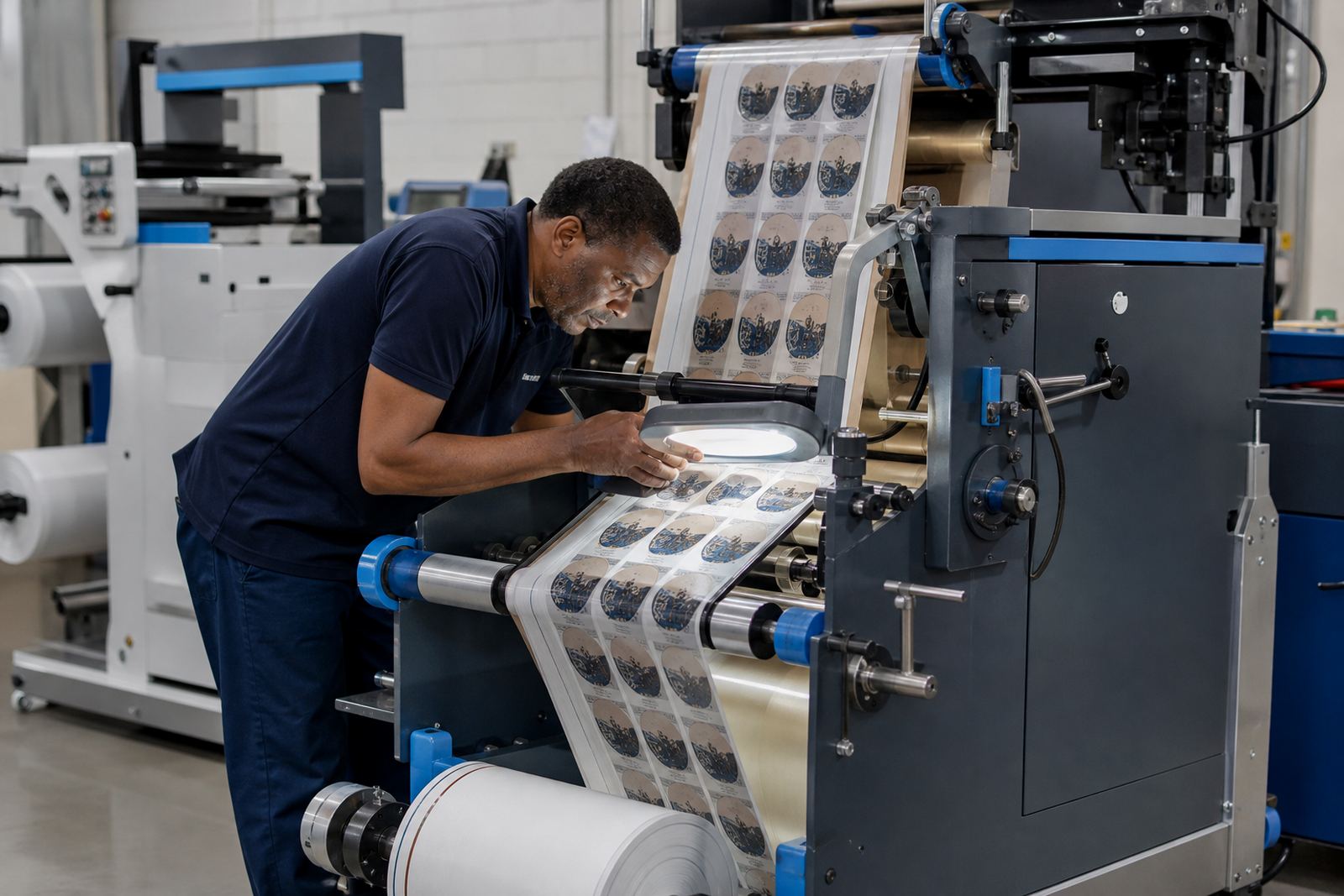
Paper labels often carry clay-coated faces, varnish or other print layers that change how the knife or laser behaves. A coated sheet may slice cleanly on the face but break out on the reverse, while an uncoated stock can shed dust and leave a rougher edge. That difference matters when you are working with intricate shapes, small counters or narrow bridges in the die pattern.
- Heavier coated papers often cut neatly but can show fine cracking at the edge.
- Uncoated papers may need more careful pressure control to avoid fibre pull.
- Soft paper can compress under the cut, which affects the depth of the kiss cut.
- Paper with a strong release liner pairing may strip differently from the face stock.
Where a job includes lamination or a protective varnish, the finishing path should still be checked after print curing. The face may seem stable, yet the added layer can make the cut more brittle and change how the waste matrix lifts away.
Rewinding paper needs calmer tension than most film jobs
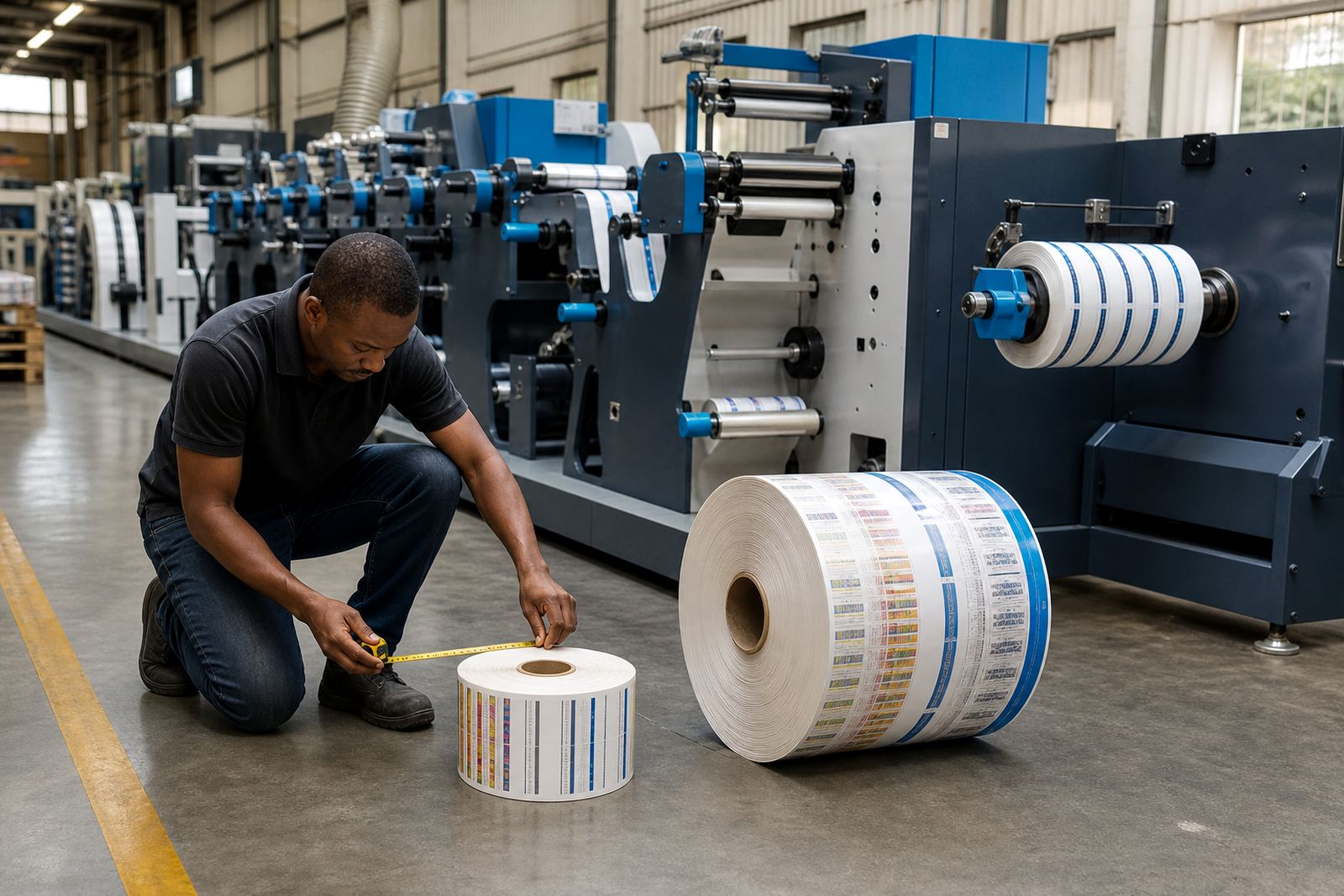
When paper rewinds too tightly, the roll can telescope, buckle or mark at the edge. Unlike film, paper has less forgiveness when pressure builds across the roll pack. A neat finished roll depends on steady tension from the first metre to the last, with the slitting and rewind setup matched to the stock weight and the roll width.
Shorter rolls may appear safe, but paper can still scuff against guide rollers if the line speed is set too aggressively. Once edge dust starts building up, it can travel into the rewind section and make the roll look tired before the job is even packed. That is why operators keep an eye on roll hardness, core grip and the balance between traction and restraint.
- Keep unwind and rewind tension even, not over-tight.
- Use clean guides so dust does not mark the web.
- Watch for curl at the edges after die-cutting or slitting.
- Check core fit before the roll reaches the last section.
Local humidity in Johannesburg and the coast changes the result
Paper stock in Johannesburg, Pretoria and Midrand usually behaves differently from paper used in Durban or Cape Town. Inland air can be drier, which makes some paper grades stiffer and more prone to edge crack. On the coast, humidity can soften the sheet slightly and affect how it wraps on the rewind shaft or sits after slitting. Gqeberha brings its own mix, with weather swings that can change the feel of the roll from one week to the next.
A packaging producer in Randburg once found that the same paper label ran well in the morning but started to show rough stripping after lunch. The issue was not the artwork, it was the combination of room conditions, stock storage and a die setting that was a fraction too heavy for that batch. After the web path, tension and slit width were rechecked, the finish settled down and the roll pack looked much more even.
Settings that help paper run cleanly on a finishing line
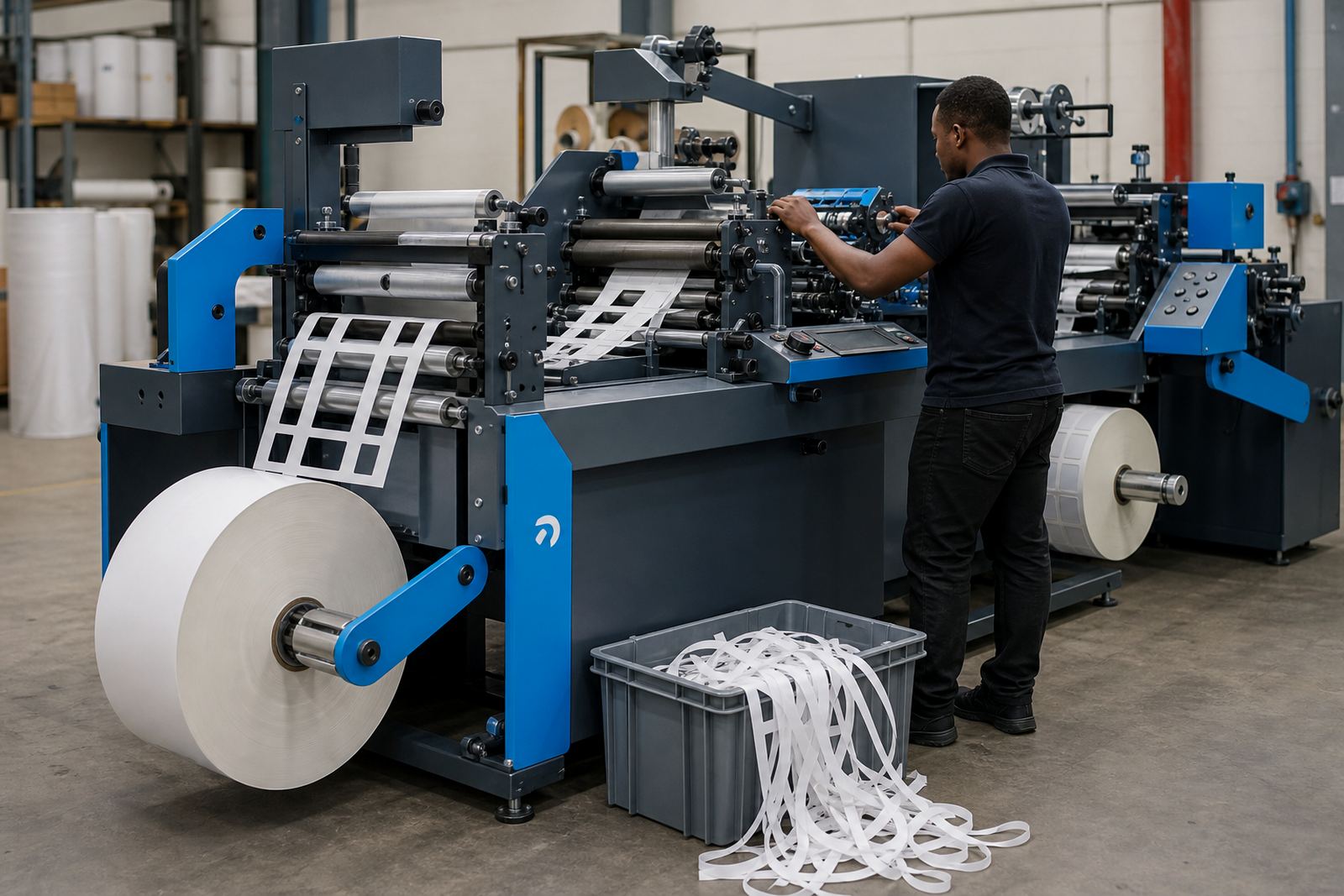
Paper needs a finishing setup that respects its fibre structure. That means close attention to die pressure, registration calibration, rewind alignment and the quality of the slit edges. Whether the machine uses flexible dies, semi-rotary cutting or laser-based finishing, the job has to be set around the stock rather than forcing the stock into one standard setting.
- Set cut depth to leave the liner intact and avoid over-cutting.
- Check that the registration marks stay readable through the pass.
- Keep slit widths clean so the roll edge does not feather.
- Inspect the rewind pack for steps, crush marks or loose turns.
For a printer running mixed work, paper often needs more adjustment than film from one job to the next. A change in coating, weight or liner can alter the whole behaviour of the run. That is why setup notes matter, and why operator training is worth the time on a production line that handles both label stock and packaging work.
What service teams look for when paper labels misbehave
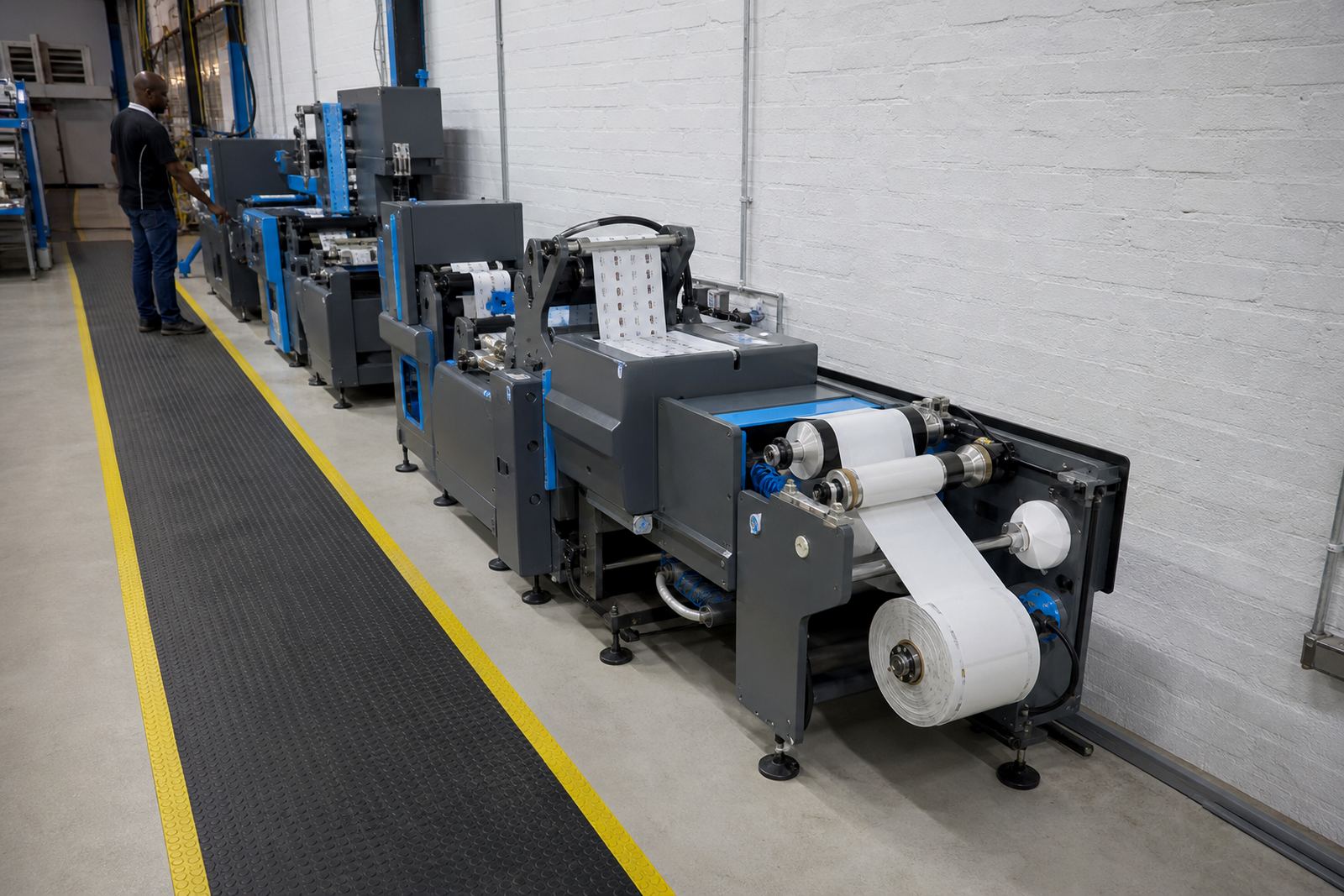
When paper starts tearing, dusting or rewinding badly, the fault is rarely only one thing. A service check usually starts with the unwind, the nip points, the waste stripping path and the rewind section. After that, the cut depth and registration are tested again, because a tiny shift there can explain a lot of what shows up later in the roll.
In our Kya Sand base, the same job can look different on two machines if the paper batch, web width or core size changes. That is why preventive maintenance and production checks matter for label printers and packaging producers. A machine that is clean, aligned and set for the actual stock will handle paper with less fuss, and the finished roll is easier to pack, slit and use at the next stage.