Start with the roll path, not the clock
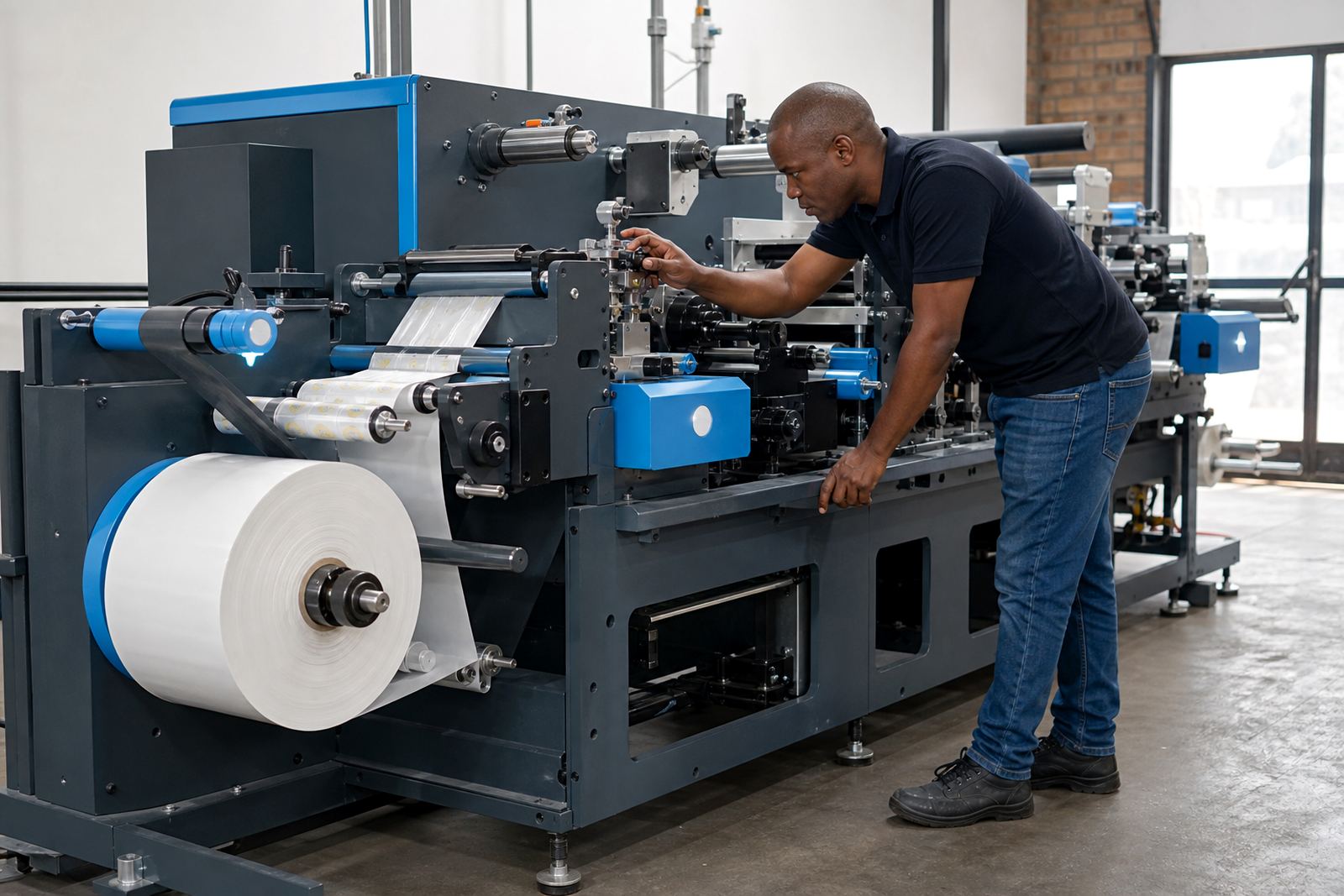
Before any production roll goes in, walk the machine from unwind to rewind and look for anything that changed overnight. A loose guide, a dusty sensor, a nick on a roller or a left over scrap strip can upset the first metres of output and throw off registration before the operator notices what is happening.
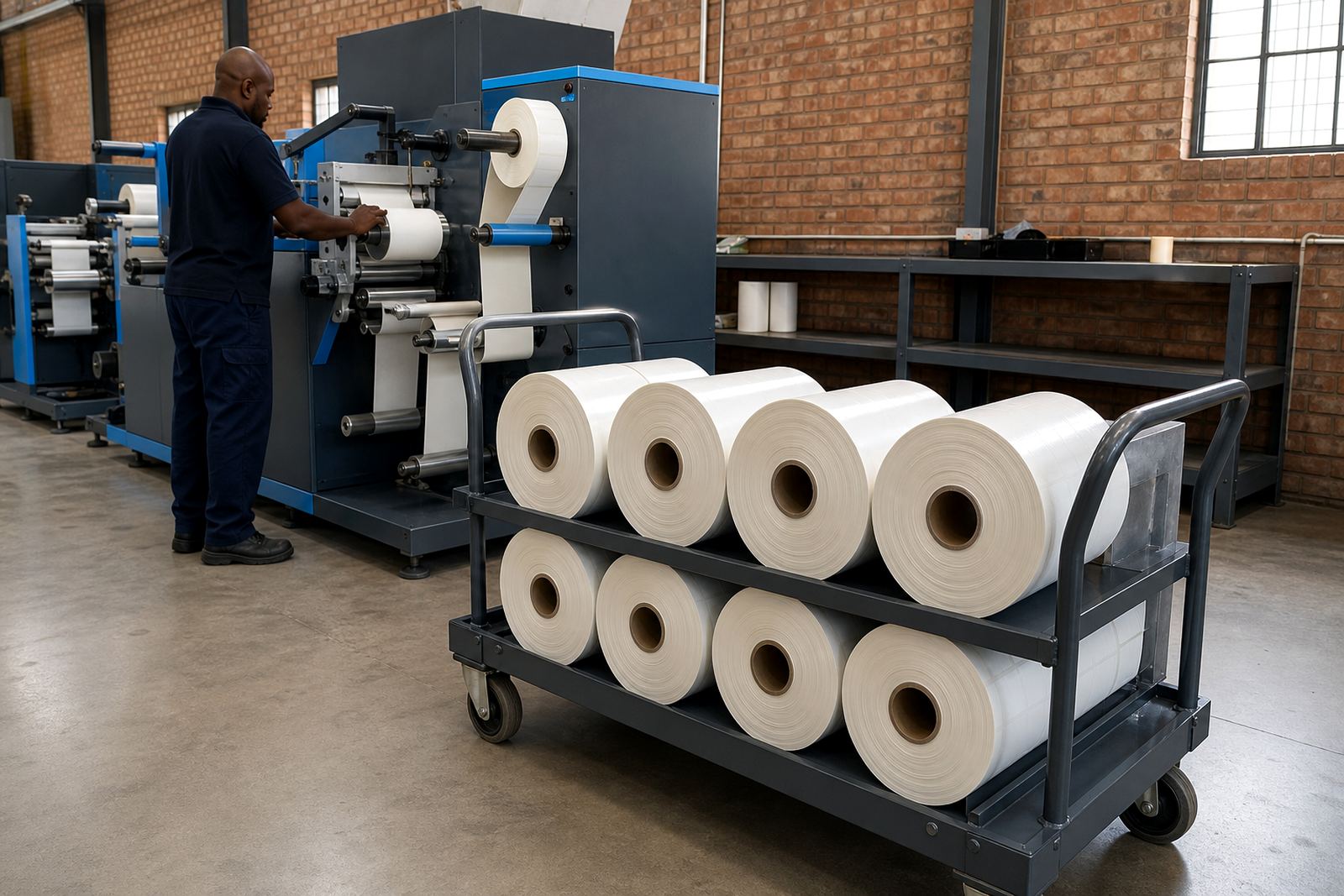
On most digital label finishing lines, the morning check should begin with the basics: unwind tension, web alignment, edge guides, brakes, rollers, static control and the take up condition on the rewind. In humid Durban rooms, a film or coated paper stock can pick up moisture and behave differently from the day before, so the web should be set up with care and not forced through the path.
- Check that the unwind shaft is seated correctly and locked.
- Spin rollers by hand where the machine design allows it.
- Remove trim, label dust and old matrix from the area around the path.
- Confirm that guards, covers and safety switches are back in place.
Read the registration marks before the first job
Digital finishing depends on stable registration marks, whether the line is doing laser die-cutting, semi-rotary cutting or a flexible die job. The marks need to be clean enough for the sensor to read them without hunting, and the material web must move evenly past the reading point. When the sensor sees marks late or weakly, the cut drifts and the waste pattern starts to change.
A short morning check should include a look at the printed side, the backing web if present and the first repeat length. If the stock is a narrow label with a tight repeat, the operator should verify that the mark position still suits the programmed cut length. Small differences matter more on short runs, especially where varnish, lamination or heavier ink coverage changes the appearance of the mark.
- Clean the mark sensor lens and reflectors with care.
- Check that mark contrast is strong enough for the selected setting.
- Confirm the programmed repeat against the printed layout.
- Test one or two cycles before loading full speed work.
Lamination and varnish need their own look
Where the morning shift includes lamination or varnish, do not treat the coating section as an afterthought. Adhesive films can trap dust along the rollers, while varnish can leave a faint edge build up that affects the next roll if it is not cleared. In Kya Sand and other parts of Gauteng, fine workshop dust also settles on exposed rollers and can show up in the finished face if the line is started in a rush.
Check the laminate web for tracking, wrinkles and lift at the edges, then inspect pressure points on the nip rollers. If the line carries varnish work, confirm that the surface is dry enough for handling and that no tack remains where the sheet or web is meant to separate cleanly. A good start here reduces rework later in the day.
- Inspect laminate tension and edge tracking.
- Check for adhesive build up on pressure rollers.
- Look for curl on coated material before feeding the next roll.
- Make sure the take up on the liner or laminate path is even.
Waste stripping and slitting should not be left to chance
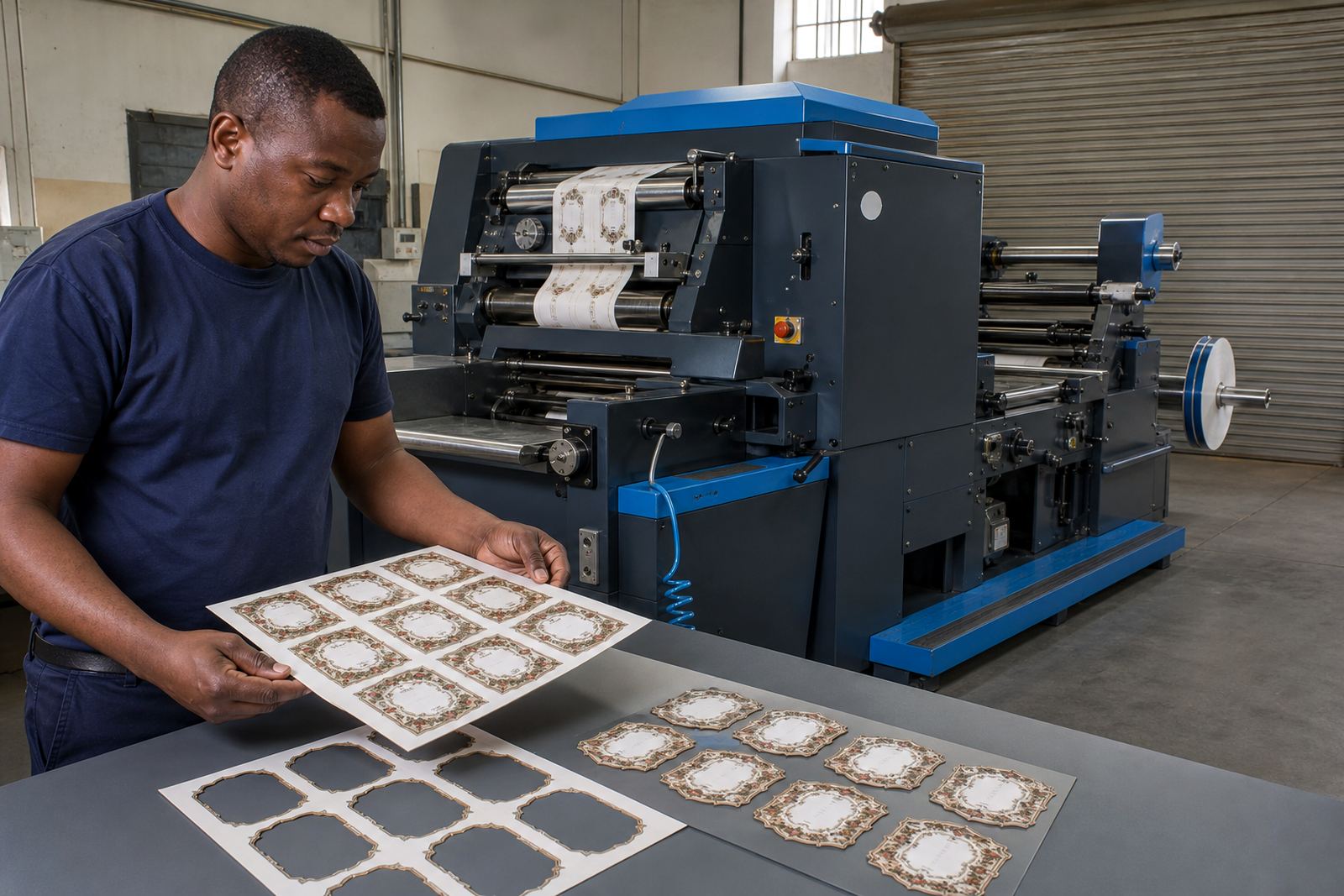
Matrix stripping and slitting are usually the first places where a poor start becomes visible. If the waste matrix is not stripping cleanly, the cut may be right but the line still stops every few metres. If the slit knives are set badly, narrow rolls wander, edges fray or the rewind packs unevenly. A morning check catches those faults before they take up a full order.
Look closely at the strip path and the waste core. The matrix should travel without snagging, folding or dragging across the finished labels. Then inspect the slit set for alignment and blade condition. On short production days, teams sometimes push through a dull edge and live with the result but that tends to waste more material than it saves.
- Check that the matrix path is clear from the die area to the waste core.
- Confirm the slit positions against the job sheet or production plan.
- Inspect blade wear, scoring and alignment.
- Watch the first rewind build to see if the roll is winding evenly.
A morning pause before the first full run
A proper startup check is not a long ritual, it is a way of making sure the machine is speaking the same language as the job. Teams in Randburg, Pretoria and Midrand often work through mixed materials in the same week, and the setup that suits a paper label one morning may need adjustment for a coated film or heavier pack label the next.
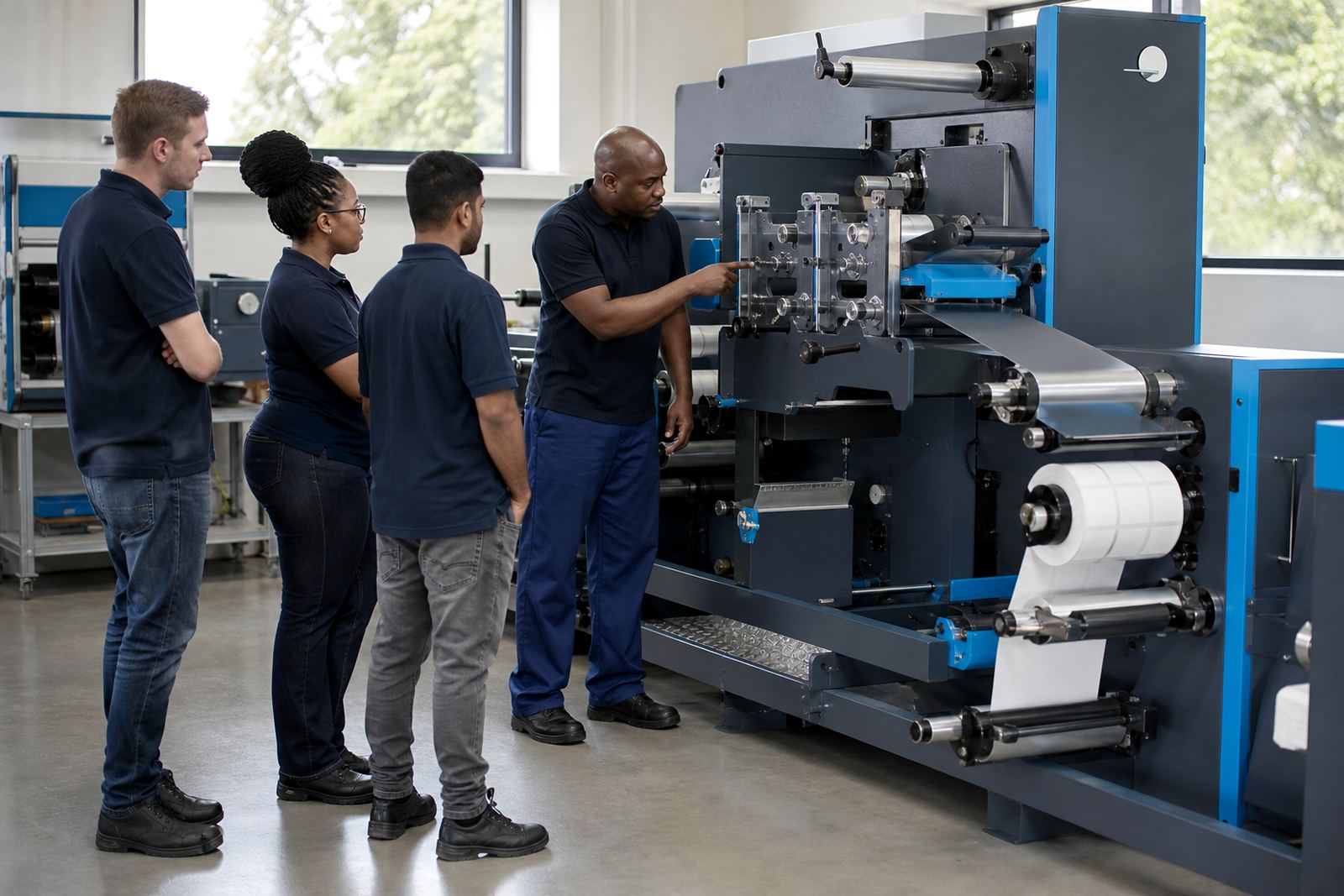
Before production gets moving, have the operator and the person responsible for the line stand at the machine together and walk through the job in the same order every day. That habit makes it easier to spot a loose guide, an incorrect tension setting or a sensor that no longer sits where it should. It also helps newer operators learn the difference between a machine that is ready and one that is only half prepared.
- Confirm the job stock, repeat length and roll width.
- Check that all tools, spacers and spare knives are at hand.
- Review the first pack of material for defects or damage.
- Agree who watches the first metres and who adjusts settings.
When the first roll behaves badly, look back at setup
If the first roll starts making odd noise, wandering on the path or giving poor cut quality, the issue often began earlier in the morning. A roller that was left dusty, a sensor that was not cleaned, or a rewind core that was not seated properly can show up only after the line has been running for a short while. That is why the startup routine matters more than a quick visual glance.
For teams in Johannesburg and Cape Town handling long label runs, it is worth logging the daily setup notes beside the job sheet. A short record of tension settings, mark position, slit widths and any unusual behaviour gives the technical team a cleaner picture when servicing or breakdown repairs are needed. It also helps during operator training because the next person can see what was changed and why.
At Label-Cutter in Kya Sand, Randburg, our work around machine installation, line commissioning, preventive maintenance, registration calibration, rewind setup and slitting setup is built around that kind of practical detail. A machine that starts cleanly is easier to run, easier to keep in line and far less likely to waste material before the shift has settled.
A short local example from the shop floor
A packaging team near Kempton Park once started a morning run on laminated labels without checking the matrix path properly. The waste strip had picked up a small fold around the guide, and the first few metres looked fine until the tension climbed and the waste began to tear. Nothing dramatic had failed, but the line could not settle until the strip path was cleared, the sensor cleaned and the rewind rebuilt from the start.
That sort of stoppage is common when people assume the previous job left everything ready. A sensible startup routine takes a few minutes and saves the bigger frustration of resetting a line after the first roll is already half used. For production sites in Durban, Gqeberha and across Gauteng, that morning discipline is often the difference between a calm first hour and a day spent correcting avoidable faults.