Where the cut line stops, and why that matters
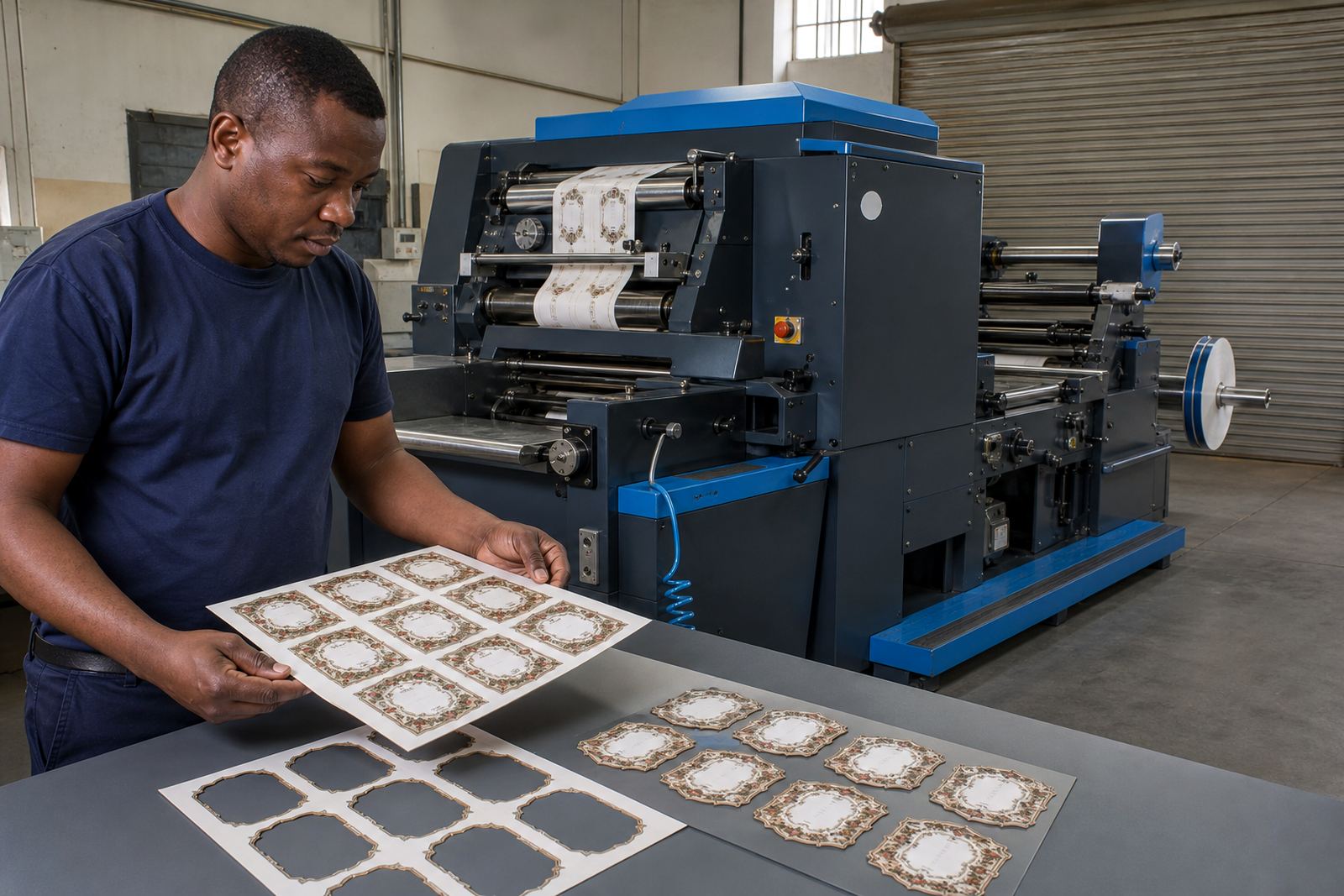
Kiss cutting removes the top face stock and leaves the liner intact. Full cutting takes the knife right through the label and the backing, so each piece is separated fully. In practice, that one difference changes how the product is packed, counted and used on line.
For pressure-sensitive labels, kiss cut work is the usual route when the customer wants labels on a liner for fast dispensing. Full cut suits sheeted pieces, loose inserts, sample packs and jobs where each piece must leave the roll or stack as a separate item. The job is not only about sharpness. It is about control of depth, pressure and repeatability.
What changes in the finishing set-up
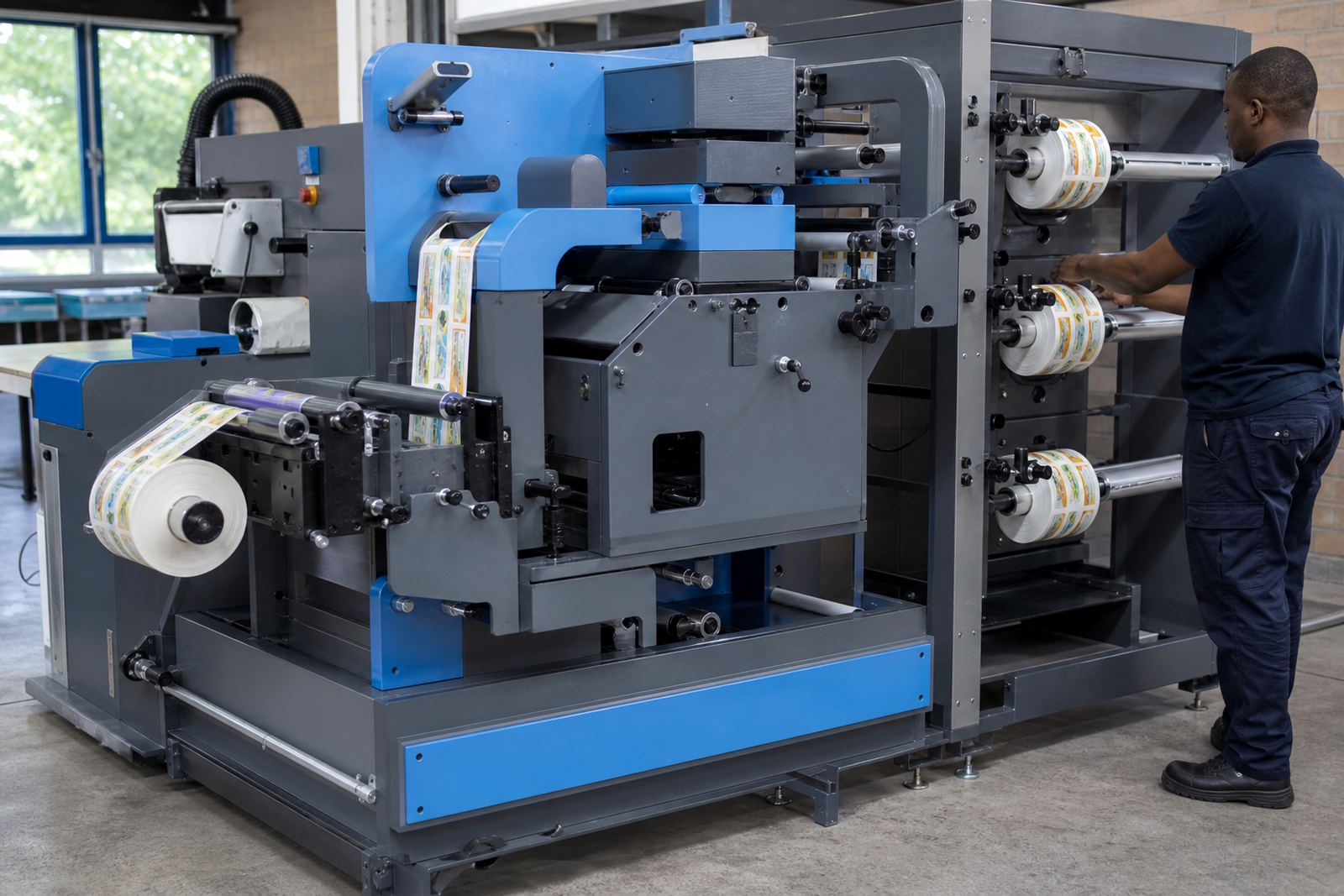
A finishing line can handle both methods, but the settings are not the same. A kiss cut run needs stable web tension, good registration mark reading and a clean cut path that stops before the liner is scored too deeply. A full cut job needs stronger cut force and a setup that keeps cut depth even across the web width, especially on heavier stocks.
Laminate thickness, varnish laydown and the type of adhesive all affect the result. If the laminate is stiff, the die or laser must deal with that extra layer without lifting corners or leaving ragged edges. If the label face stock is thin, the operator has to avoid cutting into the liner, because that can weaken the roll and cause feed issues later.
- Kiss cut keeps the liner unbroken for dispensing.
- Full cut separates every label or insert completely.
- Heavier face stocks need steadier pressure and cleaner depth control.
- Registration marks help the cutter stay on pitch through the run.
When kiss cutting is the better fit
Kiss cutting is usually the better choice for self-adhesive label rolls. It supports peel-and-apply work where the liner must stay intact until the applicator or hand-applied station lifts each label. That matters on food packs, bottles, cartons and pouches, where the label has to stay in roll form and move through a dispenser without breaking apart.
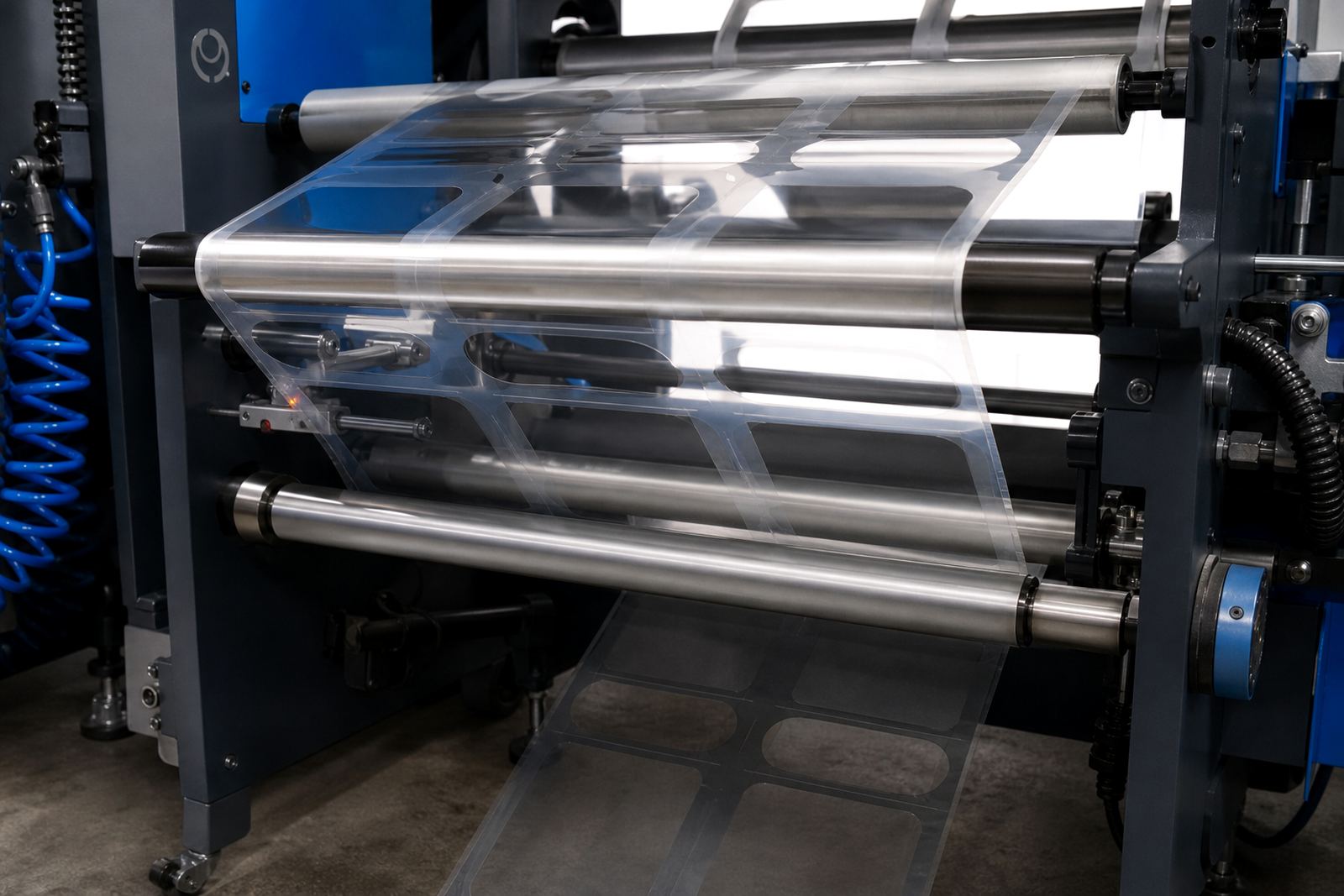
It also helps when the printer and finisher are handling multiple shapes on one roll. With good matrix stripping, the waste is removed cleanly and the remaining roll stays tidy. If the label edge is meant to be neat for a retail finish, kiss cut is often the cleaner answer. The operator can still slit the web into narrower lanes and rewind it into smaller rolls for different packing lines.
- Use it for pressure-sensitive labels on liners.
- Use it when labels must feed through dispensers.
- Use it when matrix waste needs stripping off in one pass.
- Use it when a clean edge matters on the final roll.
When full cutting makes more sense
Full cutting is the right call when the finished item is not meant to stay on a liner. Some packaging teams want loose cards, folded inserts, sample pieces or sealed pack components that can be counted and packed separately. In those cases, the cut has to go all the way through so the pieces can be handled by hand or moved into the next stage without peeling.
Full cut also comes into play on thicker stocks where the converting job is closer to a sheet finishing process than a label roll. A semi-rotary unit with flexible dies can manage many of these jobs well, while laser systems can suit intricate shapes and short runs where tool changes would slow the work. The right method depends on stock, shape and the way the next process handles the item.
A Randburg example from a real production floor
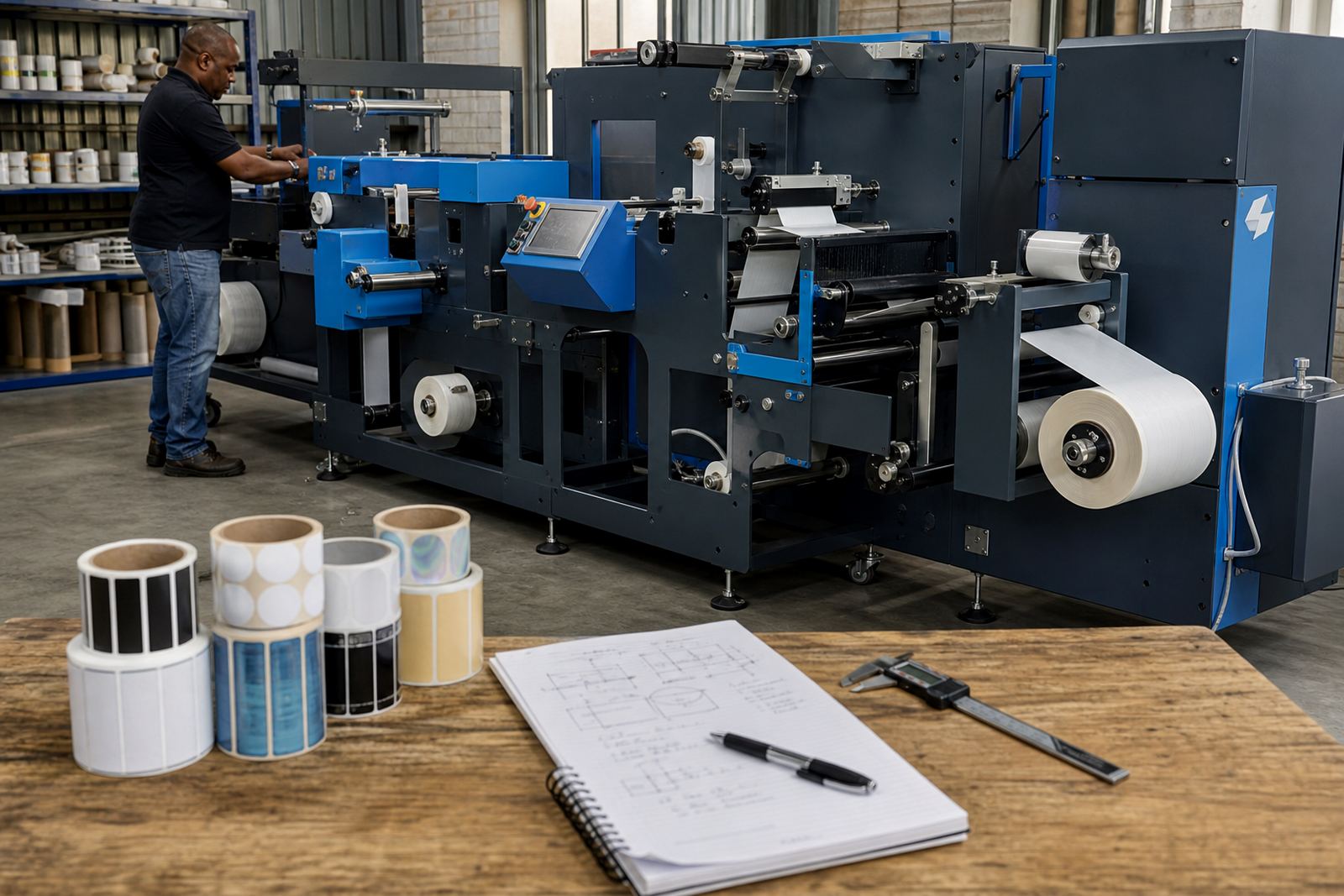
A label printer in Gauteng might receive a wine label job with a gloss varnish, a tight contour cut and a narrow waste lane. The client wants labels supplied on rolls for hand application, with the face stock staying intact until use. That job leans toward kiss cutting, with careful registration calibration and controlled matrix stripping so the liner stays strong through packing and transport.
Now compare that with a packaging producer in Durban asking for trial pack inserts on heavier stock. The pieces need to be separated fully, counted and boxed for line testing. That job points to full cutting, possibly with slitting and rewinding after the cut if different pack widths are needed. In both cases the key is not speed for its own sake, but the clean fit between the cut method and the next step in production.
- Wine labels and cosmetics often need kiss cut rolls.
- Trial inserts and loose pieces often need full cut separation.
- Coastal humidity can affect paper curl and roll handling.
- Good rewinding keeps the final roll tight and usable.
The checks that save a run from trouble
Before setting the machine, the team needs to know the roll width, core size, face stock, adhesive type and whether the job carries print on a light or dark background. Registration marks must be clear and placed where the sensor can read them. If the marks wander, the cut will wander too, and kiss cut work becomes risky because the blade can nick the liner.
Operator training matters here. The person setting the line has to judge cut depth by the actual stock, not by memory from the last job. Preventive maintenance also plays a part. Worn rollers, dull knives and dirty sensors make both kiss cut and full cut work harder than it should be. On a busy shift, those small faults show up as waste, rework and poor roll edges.
- Check roll width, core size and rewind direction.
- Confirm the printed mark position before the run starts.
- Watch the liner for scoring on kiss cut jobs.
- Watch the cut edge for drag and burrs on full cut jobs.
Matching the cut to the job, not the other way round
The best converting setup starts with the end use. If the label must dispense one at a time, kiss cut keeps the liner in service and the roll easy to handle. If the piece must be free from the liner, full cut finishes the job properly and avoids extra hand work. That decision affects die setup, slitting, rewinding and even how the finished product is boxed for delivery.
For label printers and packaging producers, the sensible path is to match the cut style to the stock, the artwork and the line that will use it. When the machine, the operator and the product all line up, the run is calmer and the output looks right. That is usually where the saving sits, not in pushing one method into a job that wants the other.