What a flexible die actually does on press
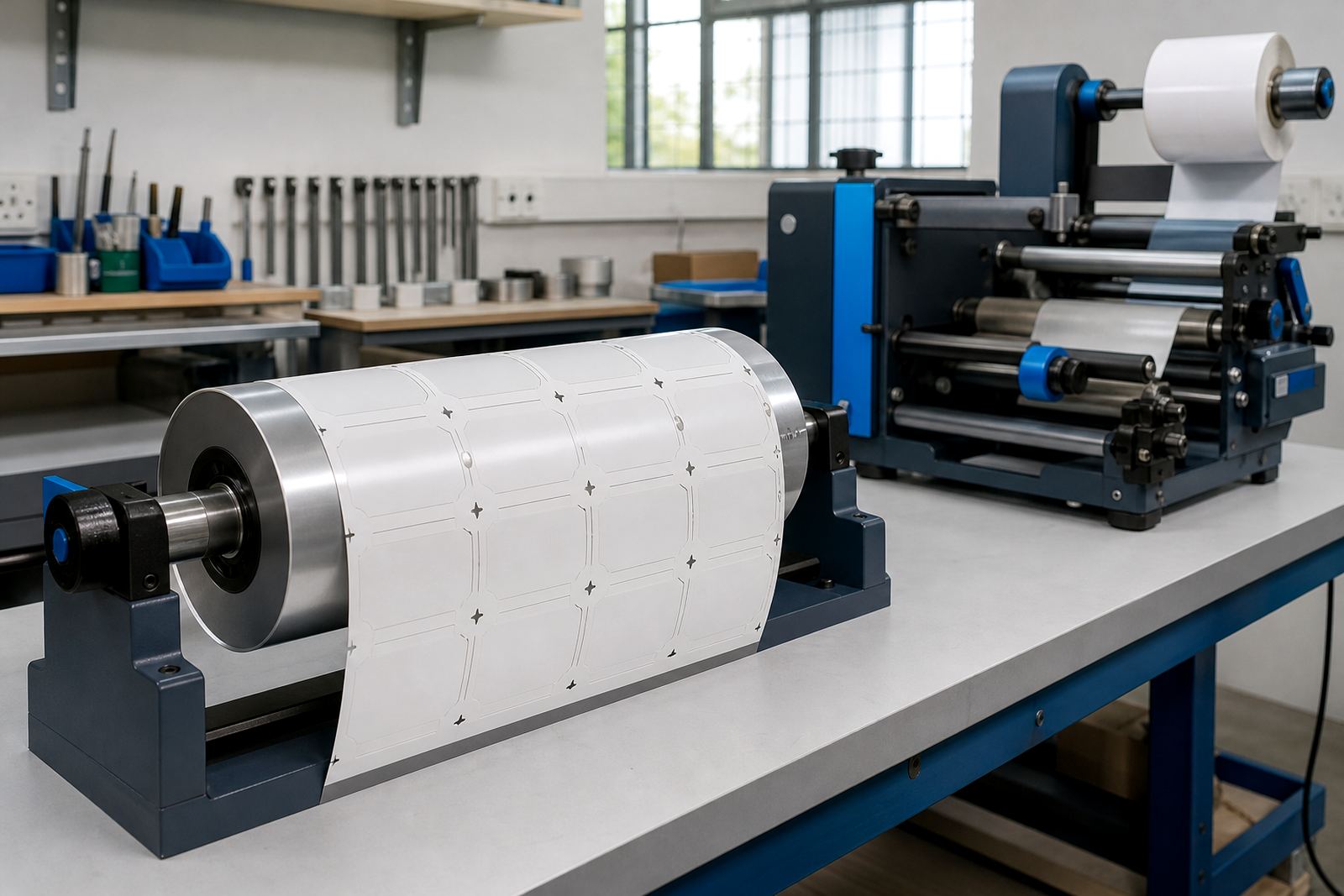
A flexible die is a thin cutting tool that wraps around a magnetic cylinder or similar mounting system and cuts the label shape as the web moves through the finishing line. It is usually chosen for self-adhesive labels, small cartons and short to medium production runs where the artwork changes often and the cut line must stay close to the printed image.
In practical terms, the die cuts through the face material while leaving the liner intact. The finished roll can then move straight into matrix stripping, slitting and rewinding, which matters when a printer is sending out narrow rolls for different applicators or packhouse jobs.
- Used for repeat label shapes, not full sheet cutting
- Works with clear registration marks on the print
- Fits production lines that need frequent artwork changes
How the die is mounted and aligned
Mounting starts with the die fitting onto the cylinder in the correct orientation, then setting the web path so the cut lands on the printed mark. A clean mount matters because even a small error shows up as a shifted cut, a rough edge or a waste matrix that tears instead of lifting cleanly.
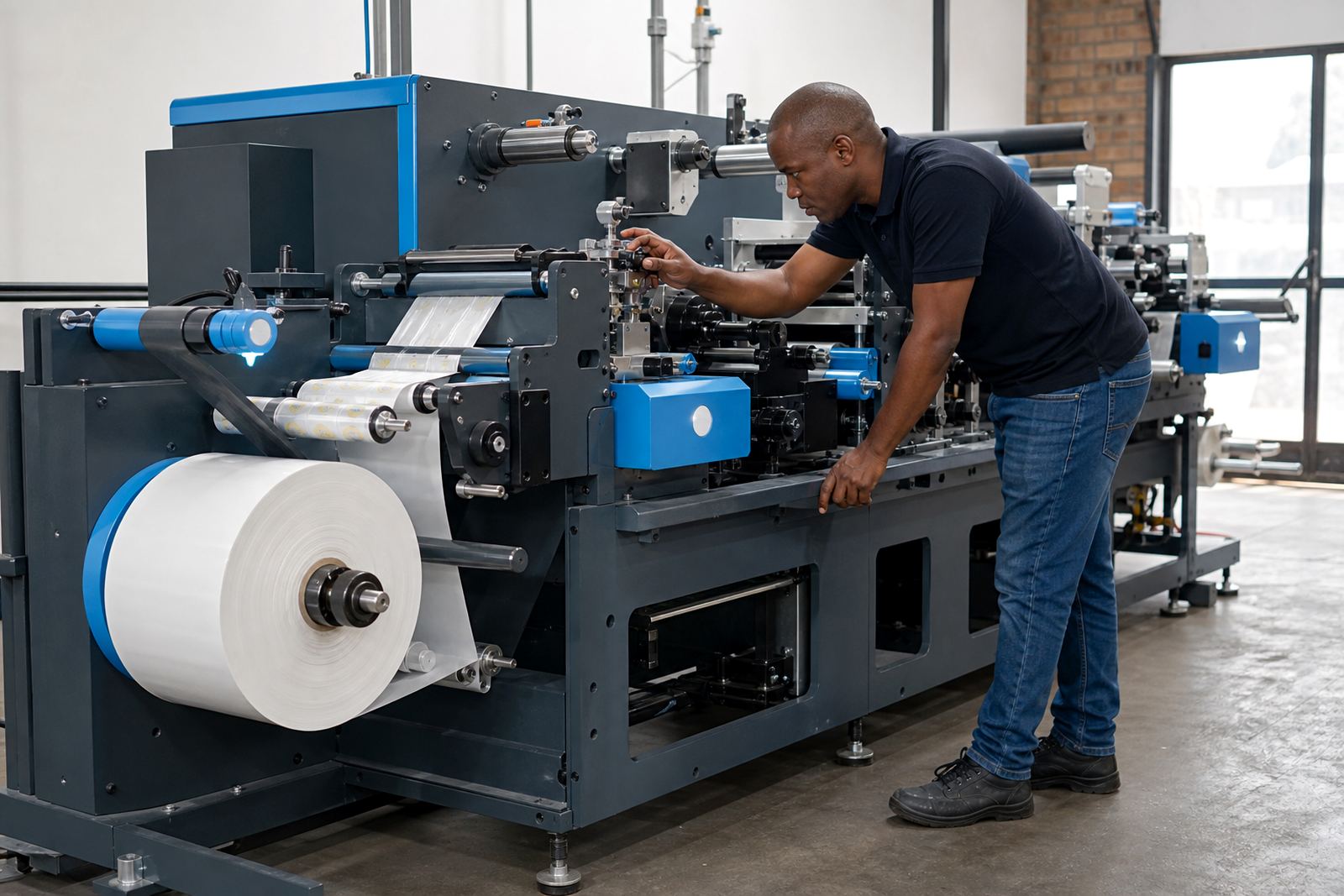
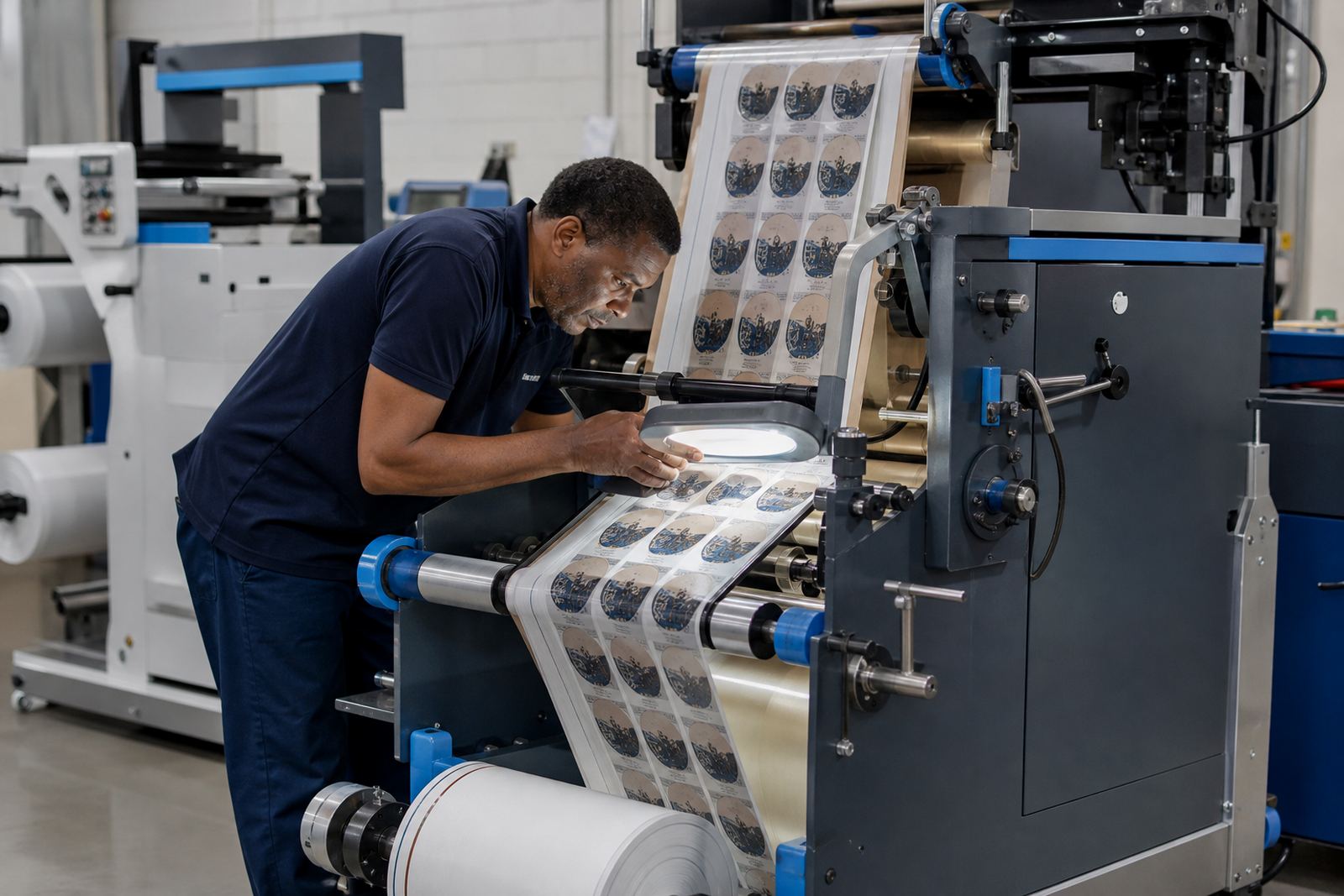
On many finishing lines, the operator checks pressure, registration and web tension before running at production speed. If the press run includes varnish or lamination, the finishing station must be set so the surface stays stable and the cut depth remains consistent across the roll.
- Check the print mark before the first full run
- Set pressure for the face stock and liner pair
- Watch the first rewind for drift or edge damage
When flexible dies make more sense than other cutting methods
Flexible dies make sense when the job mix changes often, the cut shape is well defined and the printer needs a tidy finish without long setup delays. They are a practical choice for South African label printers handling food labels, chemical labels, barcode labels and short packaging runs with several versions in one week.
Laser cutting can suit some very detailed jobs, while semi-rotary die-cutting offers another route for shorter runs and variable repeat lengths. Flexible dies still hold their ground where the label shape is stable, the register is consistent and production has to move from print to finish without too much handling.
- Well suited to stable shapes with regular reorders
- Useful where short setups matter more than full automation
- Works well with slitting and rewind stations
Where the finishing line must be set up properly
Flexible dies are only one part of the job. The unwind, laminate station, die station, matrix stripping section, slitter and rewind all need to work as one line so the roll leaves the machine square and tight. If the web tracks badly, the cut line wanders and the waste matrix starts to pull unevenly.
That is why installation and operator training matter on a real site. A finishing line in Randburg does not behave the same way as one sending rolls to a humid Durban warehouse, or a Cape Town plant handling smaller overnight batches. Temperature, liner choice and storage conditions all change how the die runs.
- Keep the web path straight through every station
- Match the die to the label material and liner
- Set rewind tension for the final roll width
A local example from a busy label house
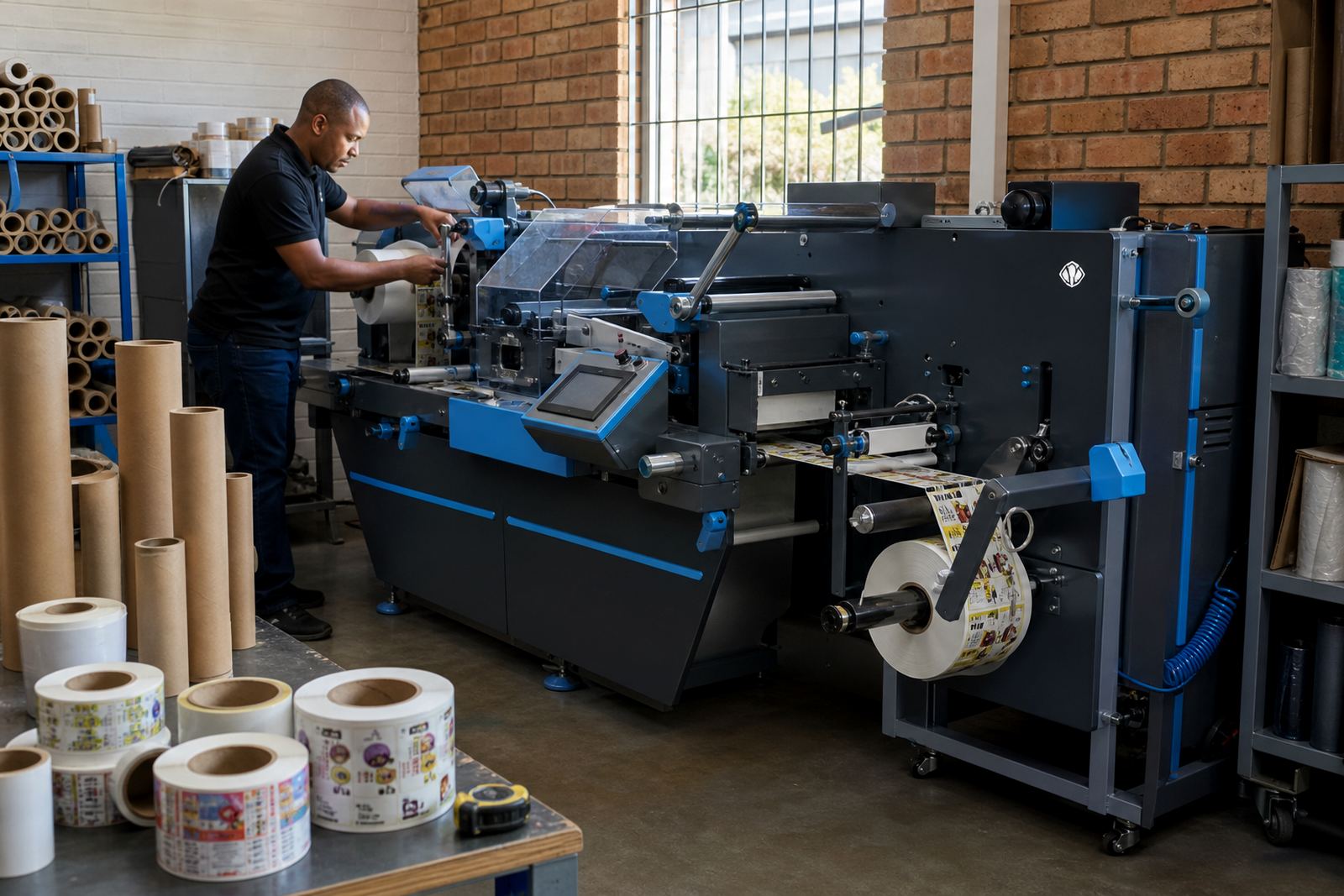
A packaging producer in Midrand may need 10 or 12 label versions for one product family, each with a different ingredient panel or barcode. In that kind of job, a flexible die lets the team finish the shapes cleanly while keeping the line ready for the next version without rebuilding the whole process.
When the printed web carries registration marks clearly, the operator can keep the cut in step with the artwork and send the rolls straight into slitting and rewinding. If the rolls are going to different pack lines in Johannesburg, Pretoria or Gqeberha, the final rewind must stay even so the labels feed properly at the end user.
That is where production optimisation earns its keep. A small tweak in die pressure, waste stripping or rewind setup can save a lot of scrap on a week with mixed artwork and changing roll widths.
Practical checks before you move to flexible dies
Before choosing flexible dies for a new label line, it helps to look at the print method, the label face material, the liner thickness and the smallest repeat you expect to run. The die needs enough support from the mounting cylinder, and the print must leave a reliable registration mark if the cut is going to stay true.
Preventive maintenance also matters. Worn bearings, poor alignment, dull cutting edges and loose web guides will all show up as messy finish quality long before the label leaves the plant. Spare parts supply and breakdown repairs are part of keeping a finishing line steady, not an afterthought.
- Confirm the artwork repeat and cut shape
- Check whether lamination or varnish changes the surface
- Plan for cleaning, storage and replacement of tooling