Start with the smallest roll that still tells the truth
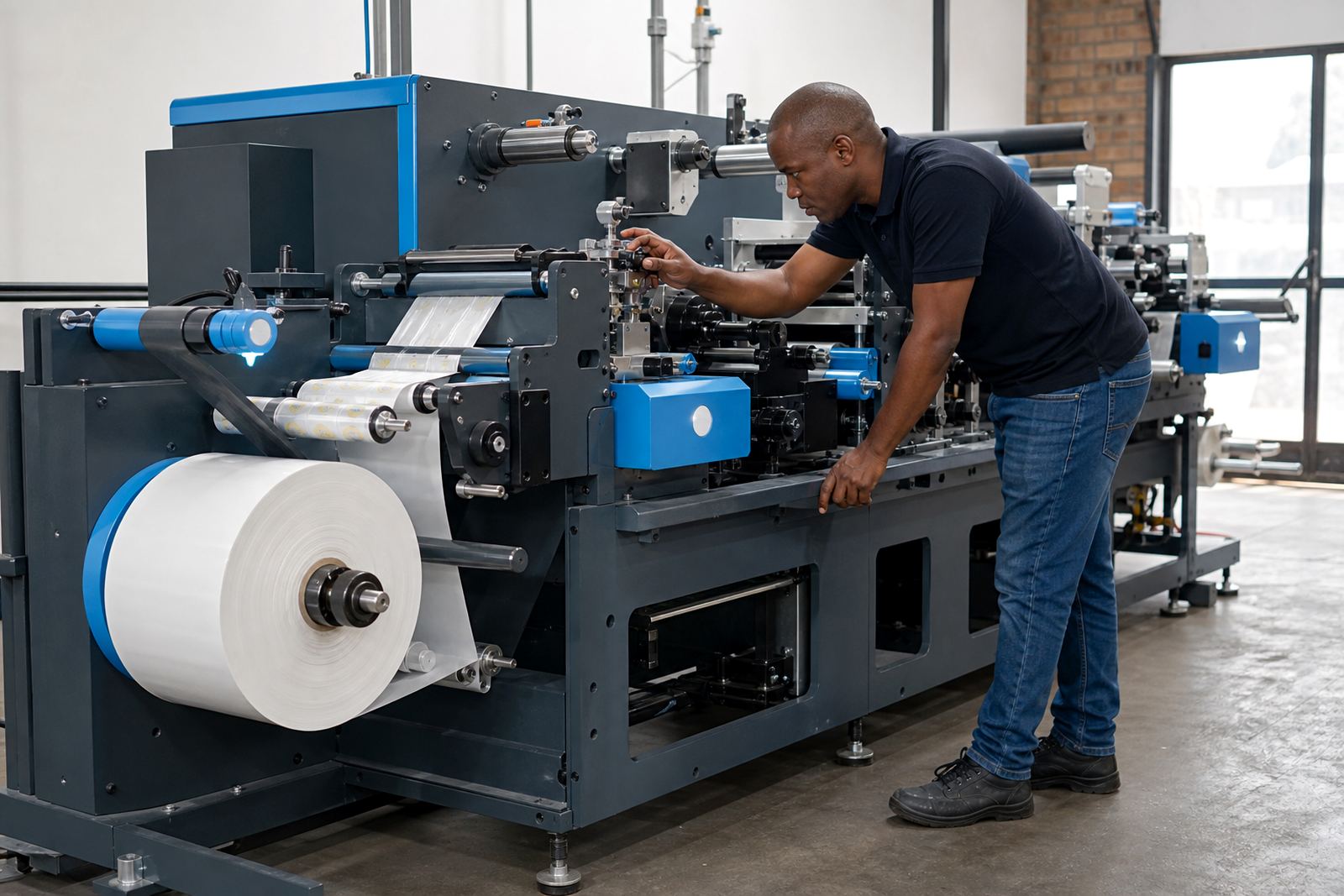
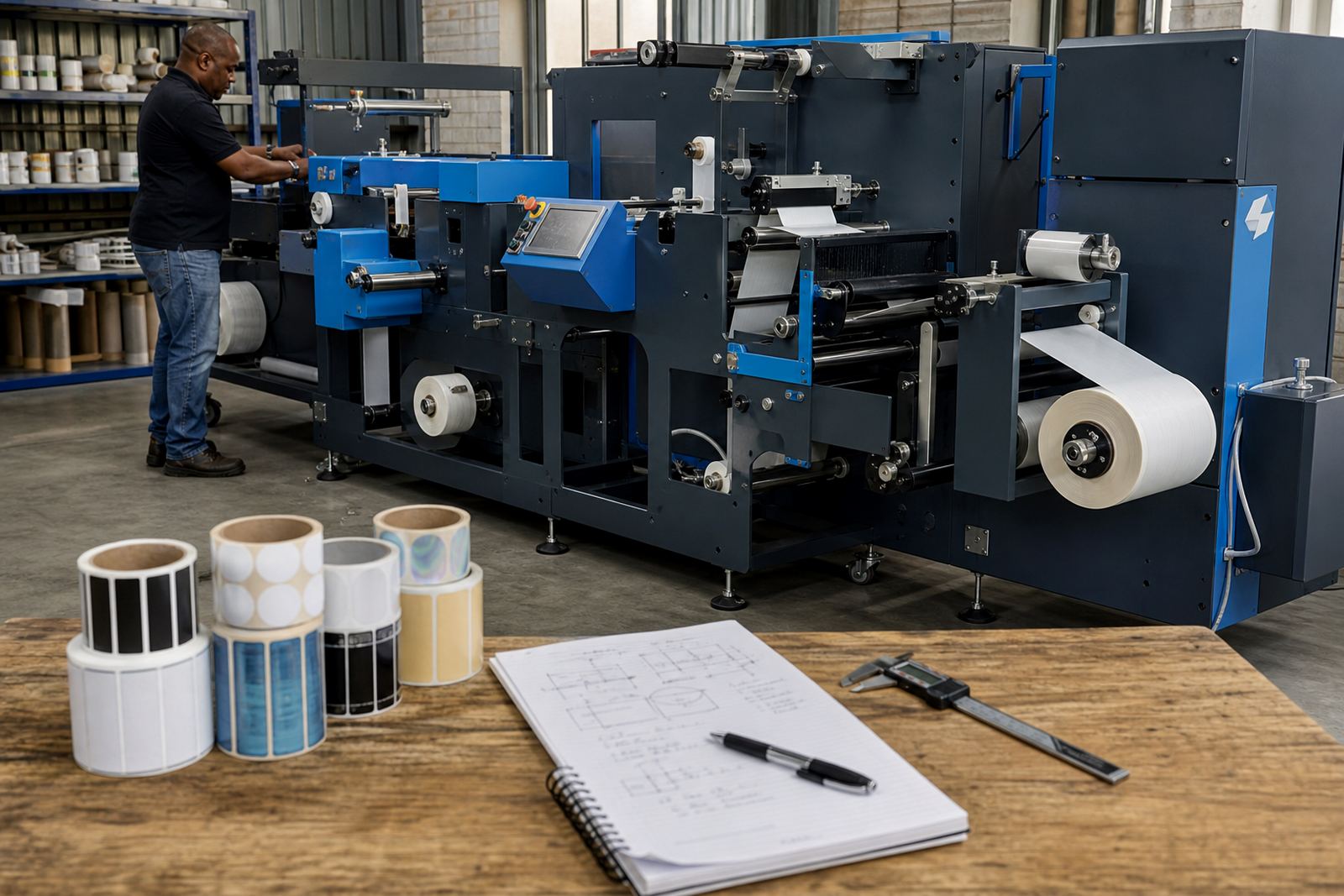
A sample roll must prove the label will run, print and finish properly on the customer’s line or on your own press, not just look neat on the table. That means the roll width, core size, unwind tension and rewind build need to match the intended use closely enough to expose real problems before full production starts.
For very short runs, it often helps to work from the final repeat and trim first, then decide how much web length is needed for colour, cutting and inspection. A sample should show the label edge, the matrix behaviour and the rewind condition clearly, even if the run is only a few hundred metres or less.
- Keep the roll width as close as practical to the final format.
- Use the same core diameter the client will load in production.
- Allow enough metres for registration checks after the first stable start.
- Leave space for slitting and rewind changes if the layout has multiple lanes.
Make the setup shorter by fixing the repeat before the machine starts
Most waste in sample roll production starts before the first metre moves. If the artwork is not locked to a repeat that suits the die, laser path or semi rotary tooling, the operator spends too long chasing mark position and side drift. A clean setup sheet saves more material than a fast operator with guesswork.
Registration marks need to sit where the sensor can read them without fighting varnish, foil or busy artwork. If the marks are too light, too close to the edge, or buried in a pattern, the finishing line will stop and start without producing a clean sample. That matters on short runs because every restart uses more web than people expect.
- Confirm the repeat length against the cutter path before loading the roll.
- Place registration marks where the sensor sees steady contrast.
- Check whether varnish or lamination will hide the mark area.
- Keep trim margins consistent so slitting knives do not wander.
Choose the finishing route that suits the run, not the habit
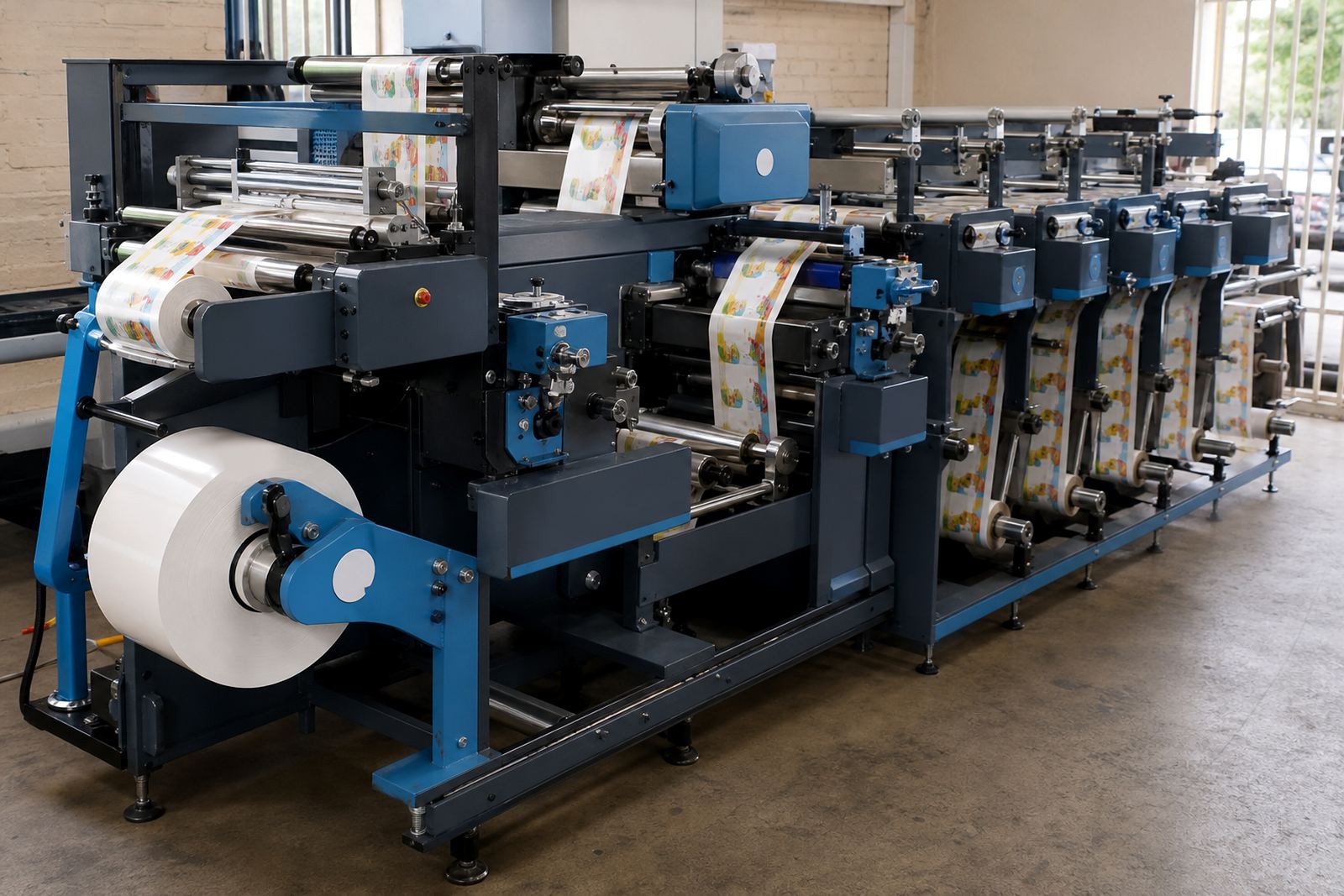
Short runs are where a finishing line earns its keep. Laser die cutting can work well when there are repeated design changes, fine detail or frequent artwork swaps. Semi rotary die cutting is stronger when the same shape will be repeated across a batch and the tooling can be set cleanly. Flexible dies still matter when the job needs a sharper edge or a proven cut through specific label stock.
Lamination and varnish both add value to a sample, but they also add another point where waste can creep in. A light varnish may protect the face stock and help the customer handle the roll, while lamination can show how the labels survive scuffing in transit. If the job only needs a proof of shape and registration, leaving extra finishing steps out can keep the sample honest and lower the make-ready burden.
Matrix stripping, slitting and rewinding are not afterthoughts on short rolls. They decide whether the sample comes off the machine as a usable production pack or as a loose stack of tight turns and loose edges. Clean separation of waste and stable rewind tension matter just as much on a 200 metre sample as they do on a longer order.
Where waste hides on a short label run
Short runs punish poor housekeeping because there is less web length available to spread the losses. A small error in web tension, mark reading or cut depth can throw away a surprisingly large share of the roll. That is why the first metres deserve careful observation, not just a quick nod and a walk away.
On metallic stocks, clear films and other slippery label materials, humidity around Randburg and the wider Gauteng area can make tension feel different from one shift to the next. The same setup that behaved on a dry morning may need a slight correction later in the day, especially where static and web curl start to show up on narrow rolls.
- Watch the first rewind pack for edge build and telescoping.
- Check whether the waste matrix lifts cleanly at speed and at start-up.
- Inspect slit edges for burrs, crush marks or ragged fibre pull.
- Keep enough lead-in material to settle the web before final cutting.
A Johannesburg sample run that needed less heroics
A packaging team in Johannesburg asked for a small sample roll for a new snack label, with a varnished face stock, narrow format and several shape changes across the artwork. The first question was not how to run faster, but how to avoid three separate setup corrections on a short web. The machine was set with the final repeat, the mark position was shifted clear of the varnish, and the slitting plan was simplified so the finished roll could be checked without extra handling.
That approach reduced waste because the operator did not need to split the job into several uncertain stages. The sample roll came off with stable rewind tension, clean matrix removal and a finish that told the client exactly how the label would behave in production. For a short run, that is the real target, not an impressive pile of offcuts.
What your line should be ready to handle before the first sample roll
Before a short sample run, the line should already be set up for the stock, the core, the finish and the label geometry. If the operator has to improvise too many machine changes during the roll, the sample no longer reflects the job under controlled conditions. Installation quality, sensor calibration and rewind setup all show their value on this kind of work.
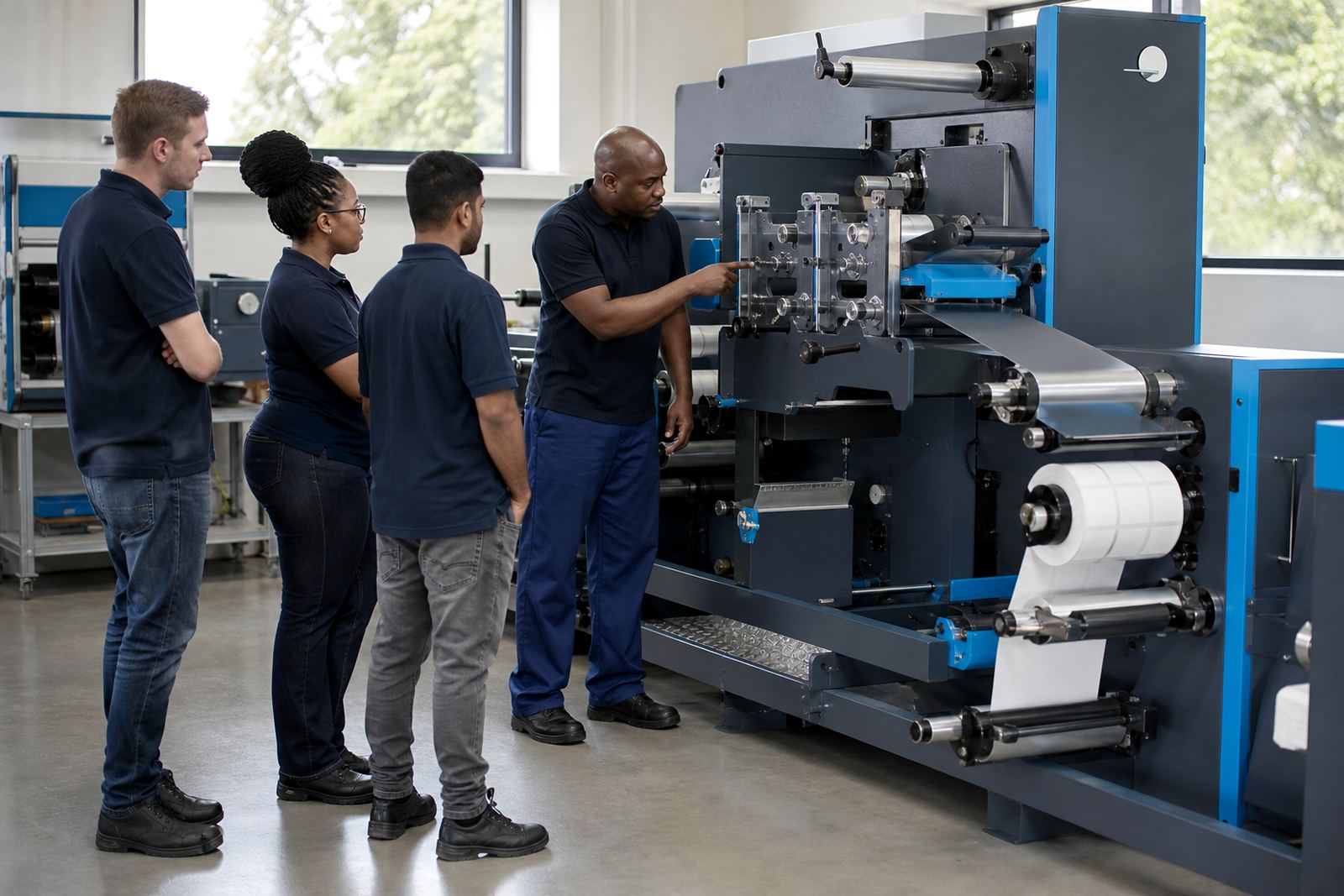
Teams that move between label formats every week usually need a repeatable routine for sample production. That routine is less about fancy settings and more about the same checks being done in the same order each time, so the web path stays predictable and the waste stays small.
- Confirm unwind and rewind tension for the stock weight and width.
- Set the slitting knives or cutting lanes before the web speeds up.
- Check the die depth or laser path against the liner and face stock.
- Verify the registration sensor on the actual printed roll, not a guess.
Keeping samples useful for the next production decision
A sample roll should help someone make a real decision. It may be used to approve artwork, test a label line, compare cut quality or confirm that the rewind pack will travel well to another site. The cleaner the sample, the easier it is to compare results from one job to the next.
At Label-Cutter, that is the point of sample roll production support. We work with label printers and packaging producers who need short runs to behave like proper production, even when the quantity is small. Our team in Kya Sand supports installation, operator training, preventive maintenance, breakdown repairs, remote support and parts supply across South Africa, with the same practical focus on registration, waste control and stable rewinds.