When the portfolio keeps moving
A label range that changes every week does not behave like a steady carton line with one repeat and a fixed trim path. Short runs, mixed shapes, variable data and frequent artwork revisions push the finishing department toward equipment that can change over without much delay, or hardware that can repeat the same cut with a strong mechanical guide.
Laser finishing uses a programmed cut path. It suits intricate shapes, kiss cuts and label versions that move often, because there is no physical tool to replace for every outline. Die-based finishing uses a flexible die or a semi-rotary system, and that still makes sense when a shape is repeated across larger volumes or when a stable format must hold its registration from roll to roll.
The real question is not which method is newer. It is which method keeps the line calmer when the pack list changes and the client wants more than one SKU in the same week.
Laser finishing where artwork changes fast
Laser systems are useful where label artwork includes many contours, fine internal cut-outs or repeated format changes. They read the printed web and follow the path in software, which reduces the need to prepare a physical cutting tool for every job. That matters when a converter handles private label work, seasonal packs or regulatory updates that alter copy and layout without warning.
For digital label work, laser finishing also handles small text-heavy labels and tight radius corners with a high level of control. Registration marks still matter, because the cutter must stay aligned with the print. If the print drifts or the web wanders, the operator sees it immediately at the finishing stage and can correct the registration settings before waste builds up.
- Best suited to changing designs and short to medium runs
- Handles detailed shapes without a physical cutting tool change
- Needs careful registration and consistent web tension
- Useful where artwork revisions happen often
Die-based finishing where repeatability does the work
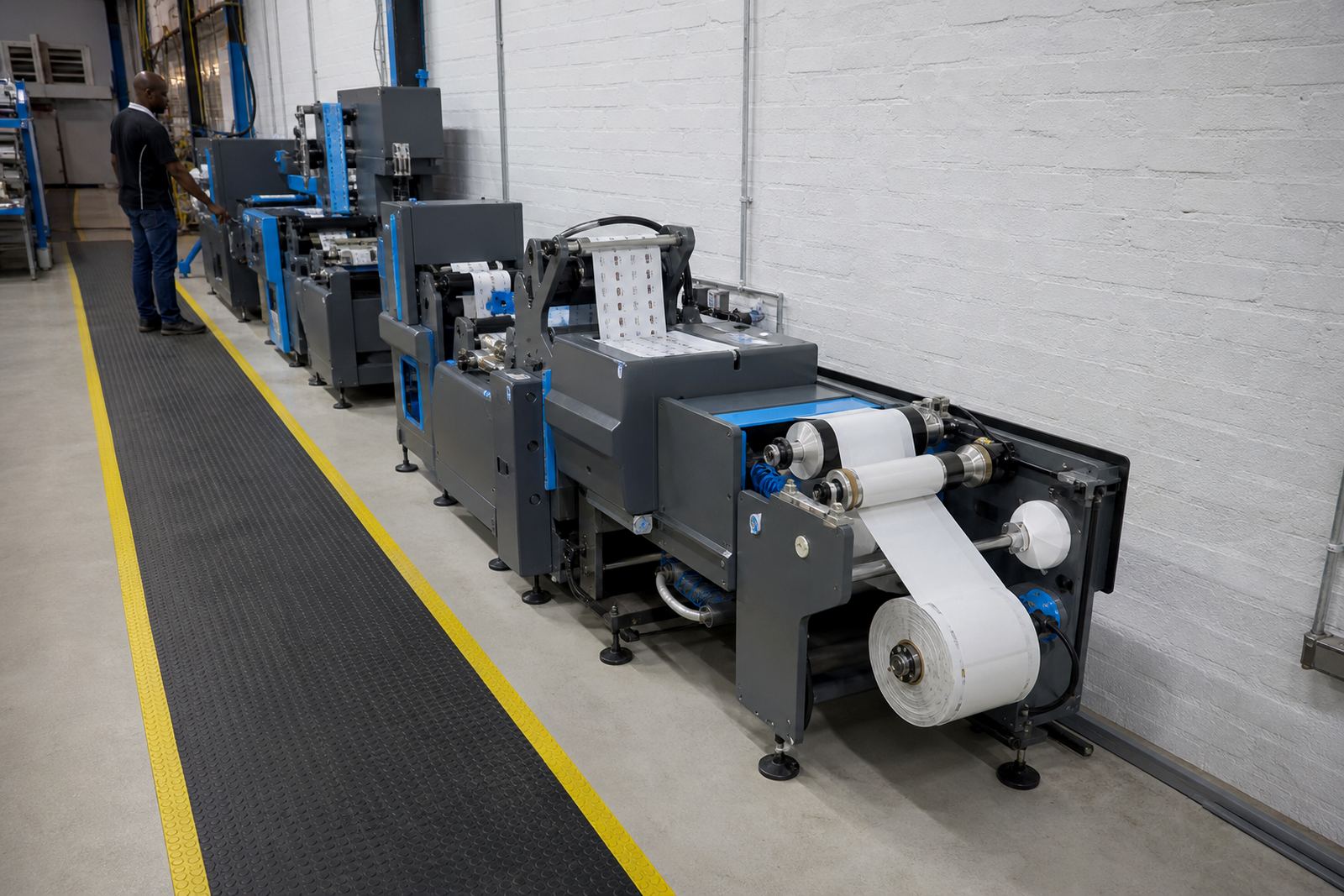
Die-based systems still have a strong place in label production. A flexible die gives a repeatable cut profile, and a semi-rotary unit can suit label webs that run in a controlled cycle. Once the die is set and the web is aligned, the job can move with less variation from roll to roll, especially on labels that stay in the same size for longer stretches.
That is helpful for food, chemical and industrial labels where a pack family stays consistent. It also matters when a printer wants to laminate, varnish, strip matrix waste, slit into multiple lanes and rewind in one pass. The cut is mechanical, so the setup depends on correct die depth, pressure and web path rather than a software contour alone.
In the right job, die cutting gives a cleaner production rhythm than a more flexible process. It usually suits volume and repeatability more than constant shape changes.
- Strong fit for repeat jobs and stable label sizes
- Works well with lamination, varnish and matrix stripping
- Needs correct die setup and pressure control
- Supports multi-lane slitting and rewind work
The middle ground: mixed finishing lines
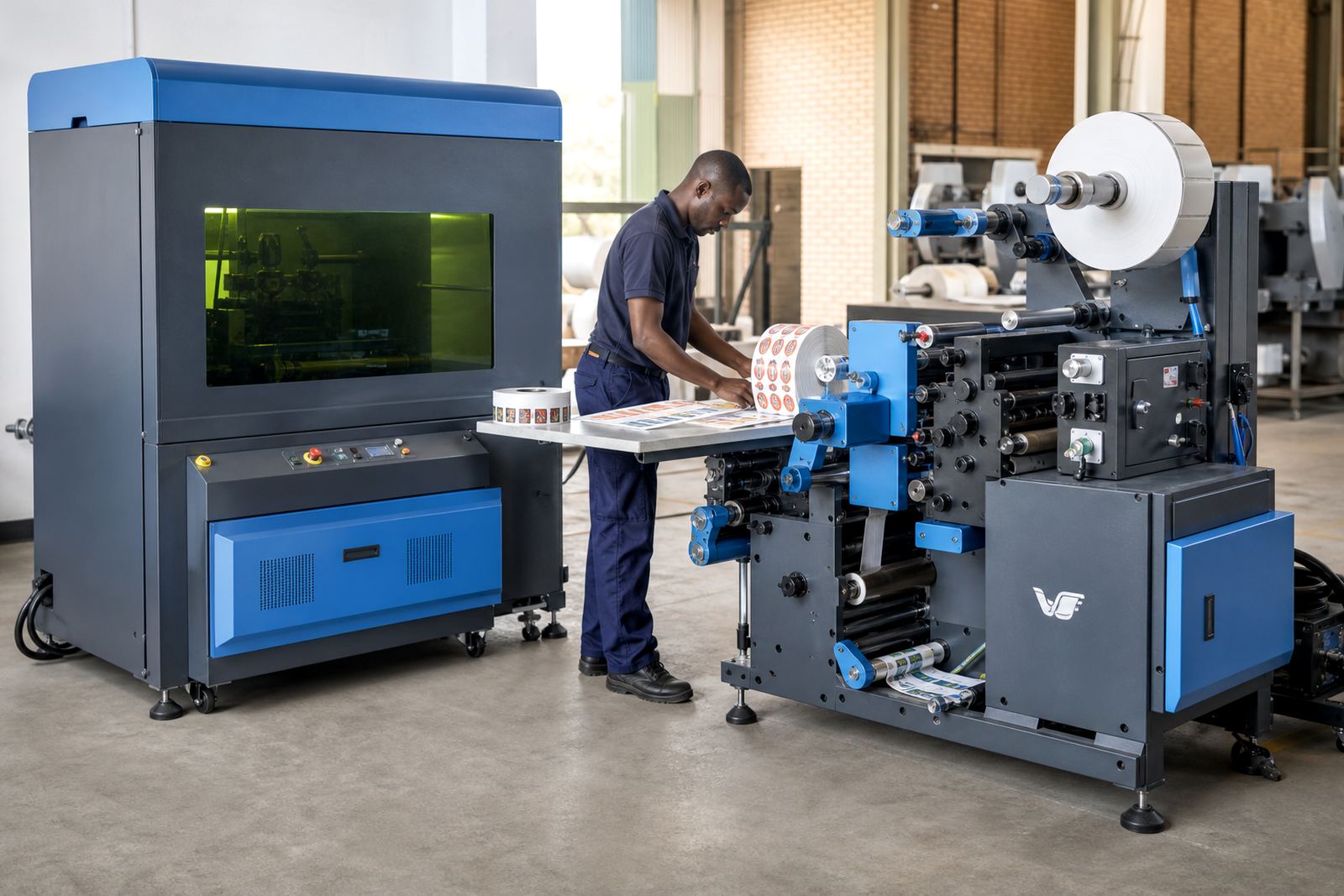
Many label plants do not live in one camp. They combine digital print with laser for fast-changing work and keep die-based finishing for repeat formats or heavier volumes. That mix allows a printer to route jobs by shape, run length and finish. It also reduces the pressure on a single machine to do every kind of job on every shift.
Local conditions matter too. In Randburg, a converter might handle a cluster of cosmetic, homecare and short promotional labels for clients across Johannesburg and Pretoria, then switch to a second run headed for Durban or Cape Town. A mixed line makes those changes less disruptive because the finishing method matches the job instead of fighting it.
It is common to see one job laser-cut for a highly detailed sleeve label, then another job run through a die station with slitting and rewind set for a broader pack range. The plant gets more control over the schedule, and the operator can keep the rolls moving in a way that suits the print programme.
The parts that decide whether the roll behaves
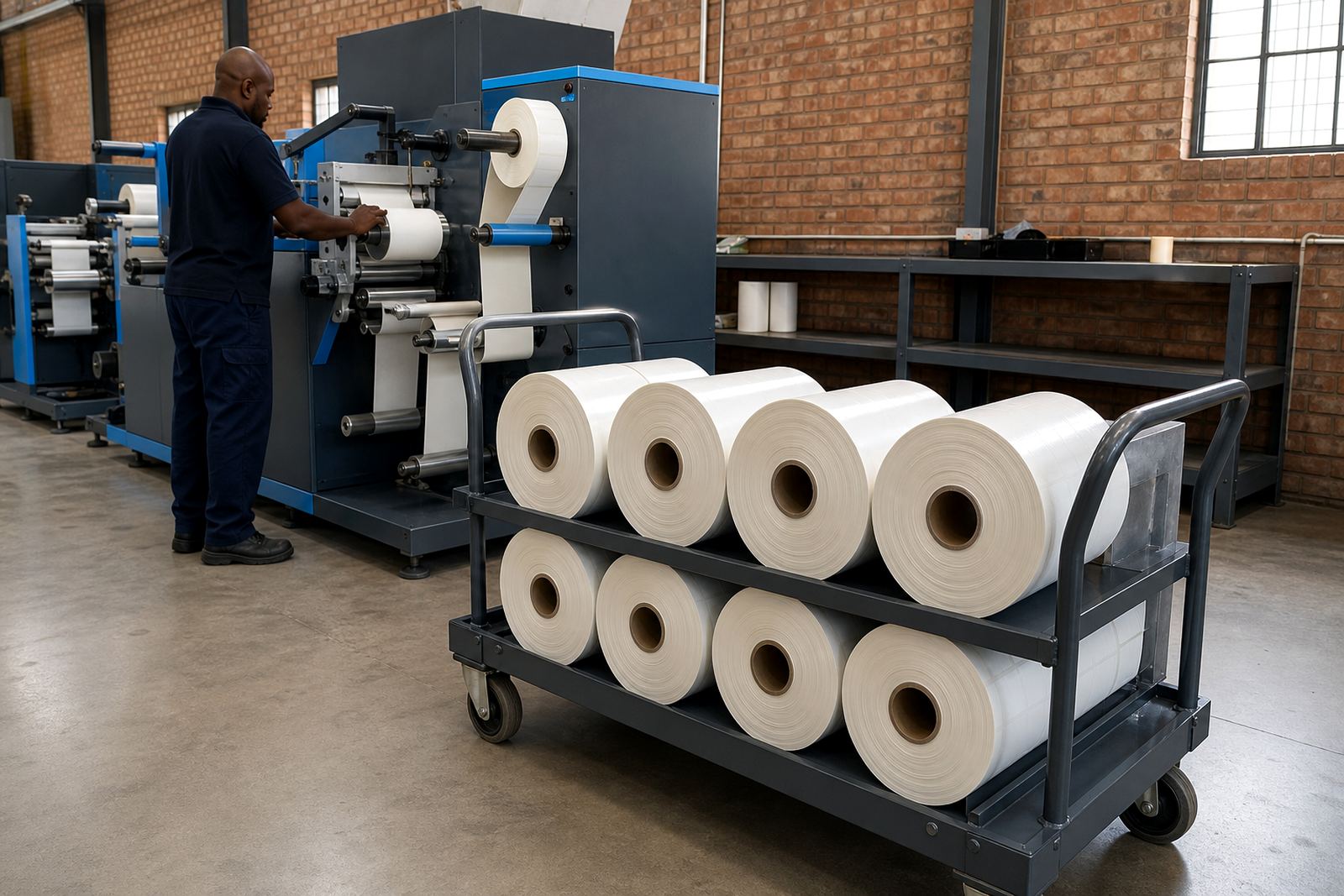
Finishing is not only about the cut. The way the roll is handled before and after the cut often decides whether the result stays neat. Unwinding, lamination, matrix stripping, slitting and rewinding all need to work together. If the web tension shifts or the rewind is too tight, even a clean cut can land badly at the packing stage.
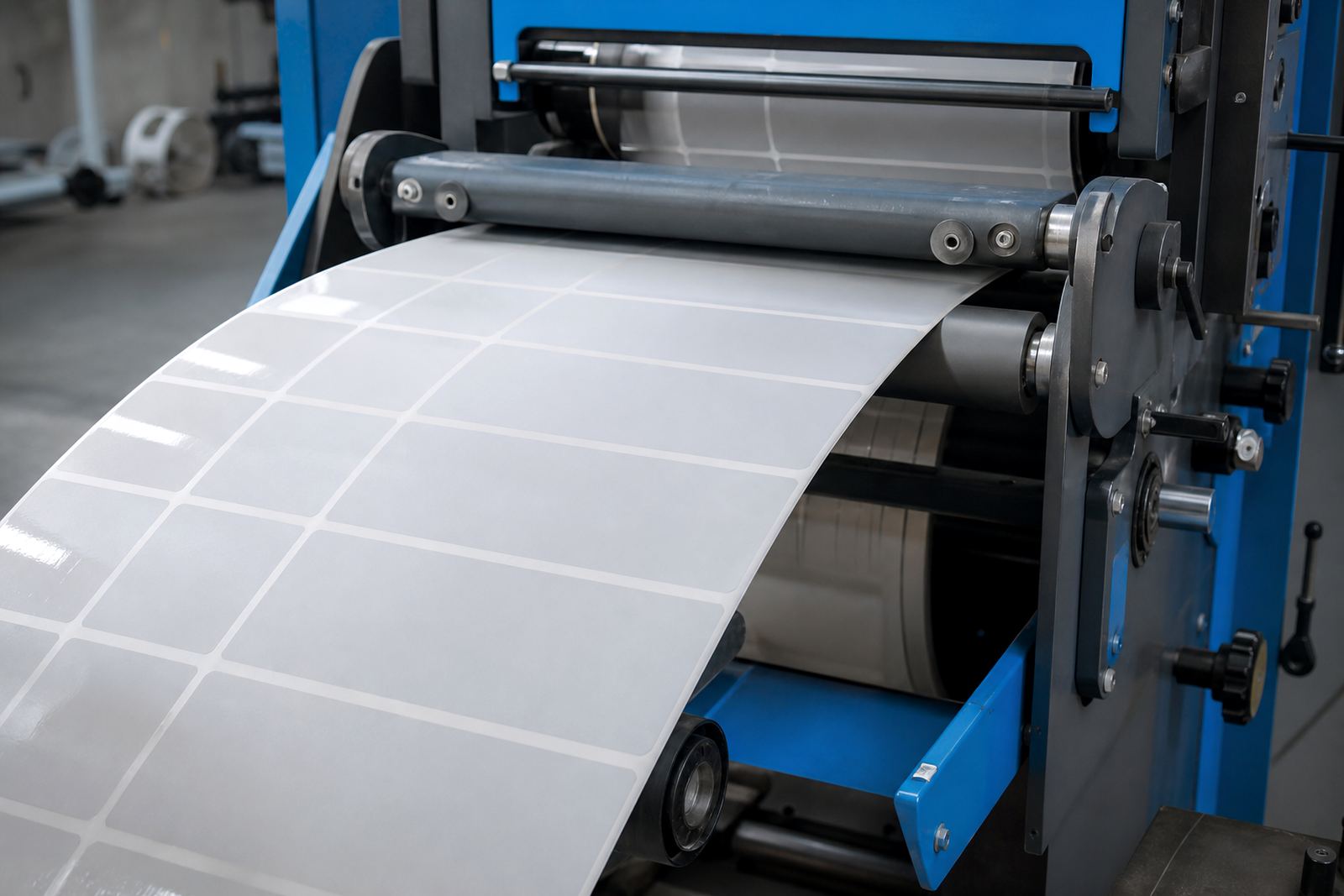
Registration marks are the anchor point for digital work. They guide the machine to the printed image, especially when the layout includes multiple SKUs on one web. If the marks are faint, the laminate is stretched or the print sits off centre, the setup needs attention before the job runs at volume.
- Unwind stability keeps the web flat through the line
- Lamination and varnish change how the surface feeds
- Matrix stripping must clear waste cleanly
- Slitting and rewinding must suit the final roll size
A Randburg example with a moving label range
A packaging producer in Kya Sand might print a small detergent range in several bottle sizes, then add a seasonal scent label and a private label version for a different retailer. The artwork shifts, the copy changes and the final pack sizes do not all share one die. In that setting, laser finishing can make sense for the short and variable runs, while a flexible die line can take the repeated format that stays in production for longer.
That kind of split is practical in South Africa because transport, warehousing and customer demand do not sit still. A line that works for Johannesburg may also need to support Pretoria, Durban, Cape Town or Gqeberha schedules without forcing every label into the same process. The better choice is the one that keeps changeover manageable and protects the printed web from unnecessary handling.
Our installation, operator training and servicing work usually centres on that sort of decision. When the team understands the cut path, the registration, the waste strip and the rewind, the machine is easier to run and easier to keep in step with production.
How to match the process to the job
There is no universal winner between laser and die-based finishing. The right answer depends on the artwork, the order size and how often the label changes. A job with fine contours and constant version updates points toward laser. A steady pack format with higher repeat volume often suits a die and a controlled semi-rotary line.
When you are comparing the two, look at the job mix across a full month rather than one test roll. That gives a clearer picture of where the machine will spend its time, how many settings have to move between jobs and which finishing path supports the real production rhythm.
- Choose laser for frequent design changes and intricate shapes
- Choose die-based finishing for repeatable formats and steadier volumes
- Check registration control, slitting and rewind requirements
- Match the line to the job mix, not only to one sample order
Label finishing works best when the cut method fits the way the portfolio behaves. That is the part that keeps a plant from overcomplicating the week.