The liner is doing more than carrying labels
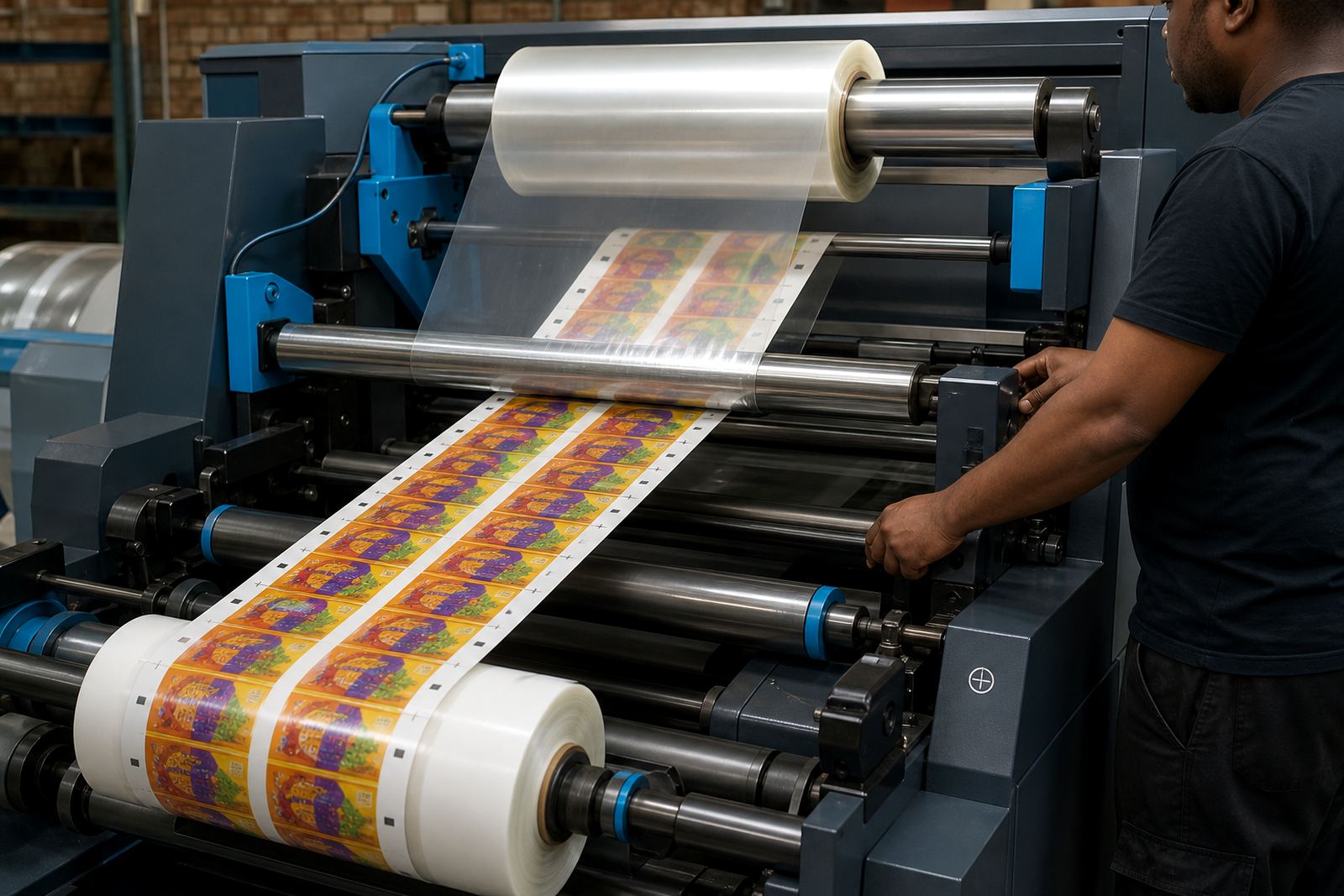
On a digital label line, the liner is not just a carrier sheet. It holds tension, keeps the web flat through the die station and gives the rewind a stable base to build on. When the liner varies in thickness or has soft spots from heat and storage, the whole path starts to behave differently.
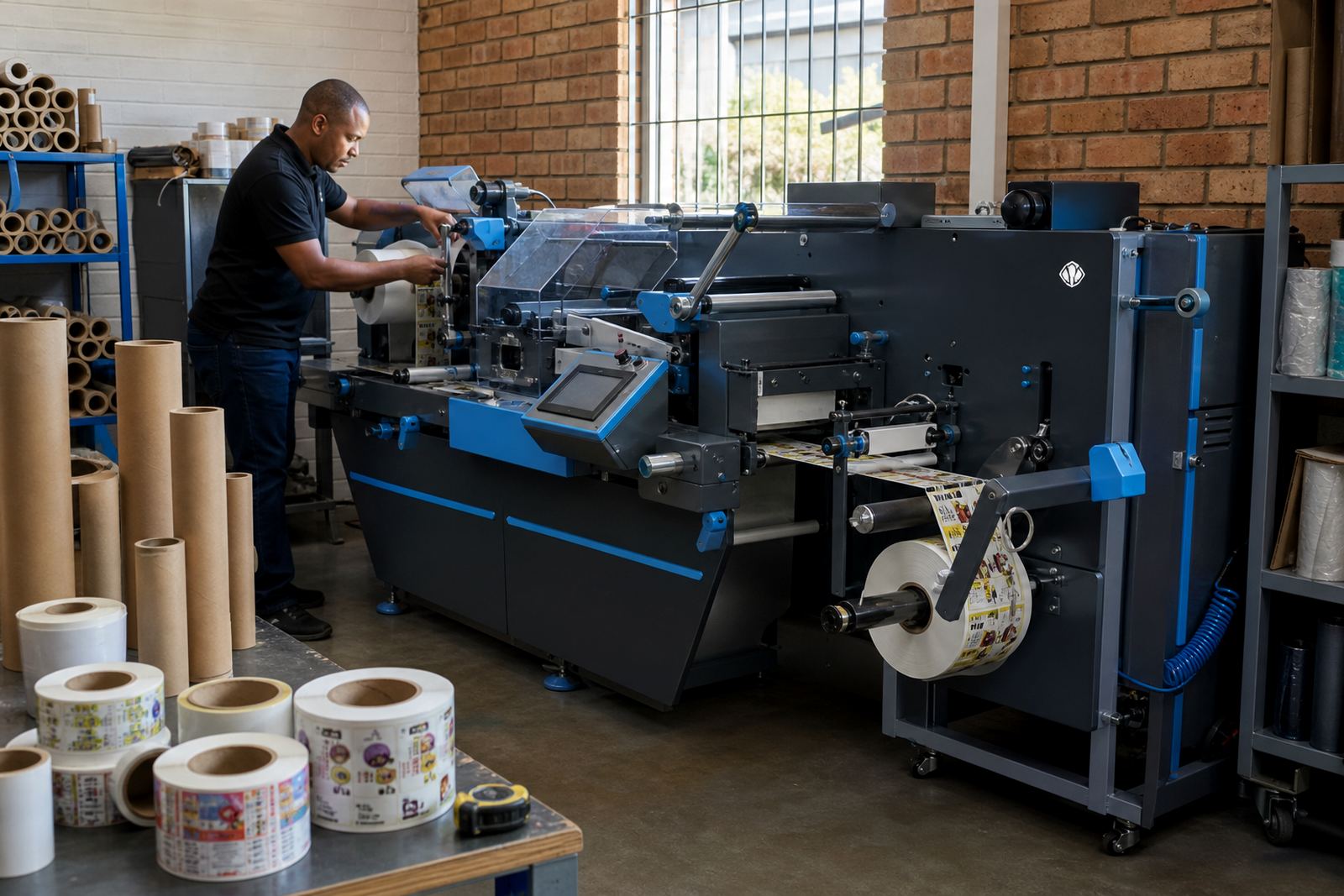
In Kya Sand, one packaging team ran short polyester labels for a bottled goods run and the roll looked fine on the core. Once the web reached the semi-rotary unit, the liner was curling at the edges and the waste strip started wandering. The issue was not the die, it was the liner memory from poor roll storage near a warm wall and a loading bay with dust.
What liner faults show up on the machine
Some faults are easy to miss until production is already moving. A liner can be too thin for the tension set on the rewind, too slippery for stable stripping, or marked by dents from rough handling. If registration marks are printed accurately but the web still drifts, the liner may be stretching unevenly under load.
- Edge curl that lifts the matrix at the stripper bar
- Splices that thump through lamination or varnish stations
- Uneven caliper that changes cut depth across the web
- Dust or coating residue that reduces grip on rollers
- Flattened spots from storing rolls on their side for too long
Laser finishing and semi-rotary die-cutting both depend on a clean web path. The liner must carry the sheet through each step without creating shock or slack, especially on narrow labels where the waste strip is thin and easy to tear.
Die-cut depth and liner strength need to match
Cut depth is set around the face material and the liner together, not one on its own. If the liner is weak, a cut that should just kiss the face stock can start to mark the backing. That leads to slow release, rough edges and poor peel performance on the packing floor.
Flexible dies and rotary tooling need steady nip pressure and a web that sits flat across the impression zone. Where the liner is too soft, the cut may vary from one side of the roll to the other. On a wide job, that means some labels pop out cleanly while others stay tied to the matrix.
- Check liner thickness before changing cut settings
- Watch for fibre lift at the cut edge
- Recheck pressure after a change in roll supplier or storage conditions
- Keep registration marks clear so the cut stays aligned across the roll
Waste stripping is usually the first place trouble appears
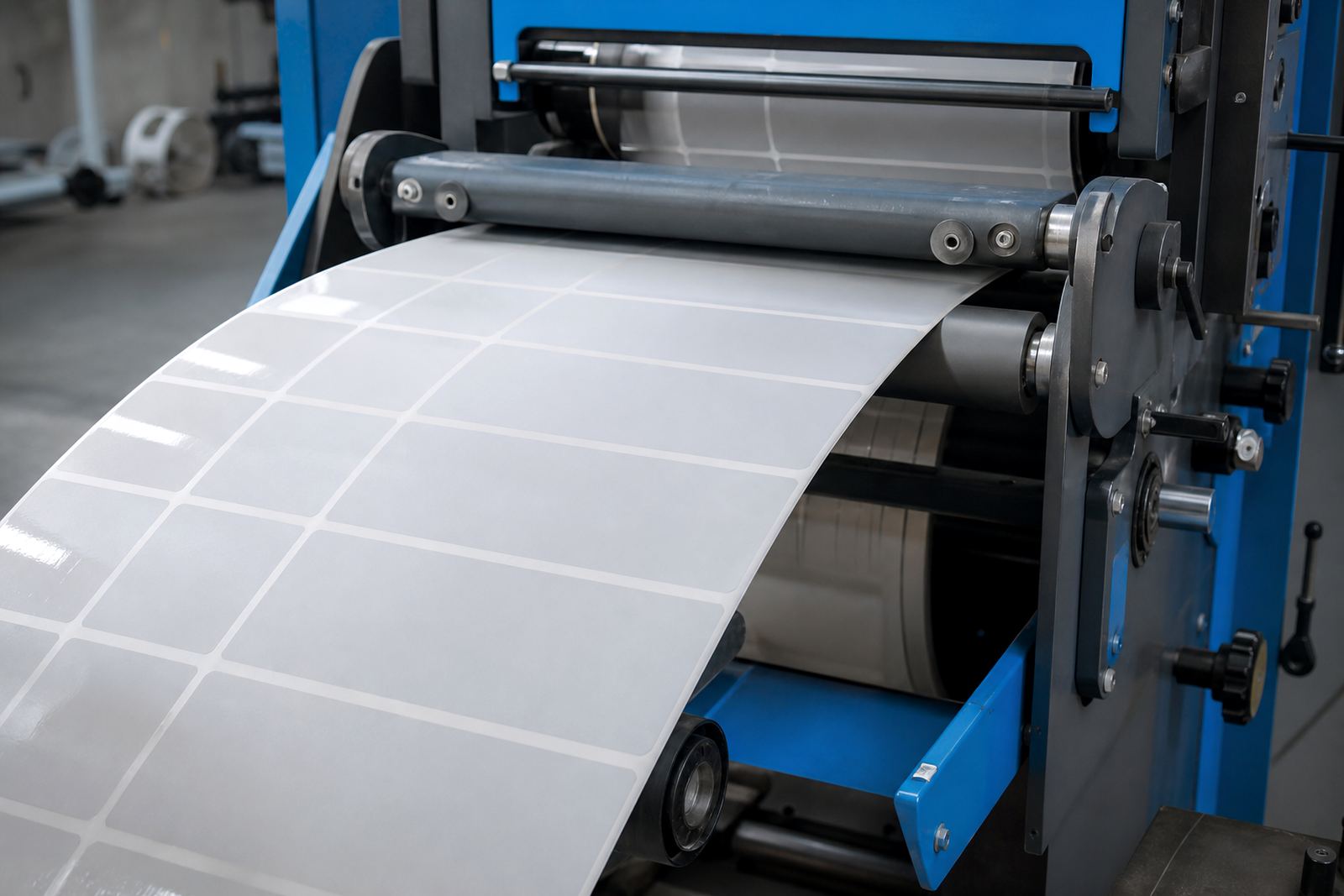
Matrix stripping exposes liner problems quickly because the waste strip places constant side pull on the web. If the liner surface is too slick, the waste can slide instead of peeling. If the liner is too brittle, the strip can snap in short sections and wrap around guides.
Good stripping depends on the angle of the waste path, the tension applied, and the consistency of the liner under that load. A clean strip should leave the labels in place while the waste exits in one controlled ribbon. When the liner has a wrinkle or a crushed edge, the matrix often breaks at the same point on every roll.
In Durban, coastal humidity can change how paper-based liners behave during a long shift. Rolls that felt stable in the morning may start to tighten or soften later in the day, so the operator has to watch stripping behaviour and not only final print quality.
Rewind stability starts before the final roll
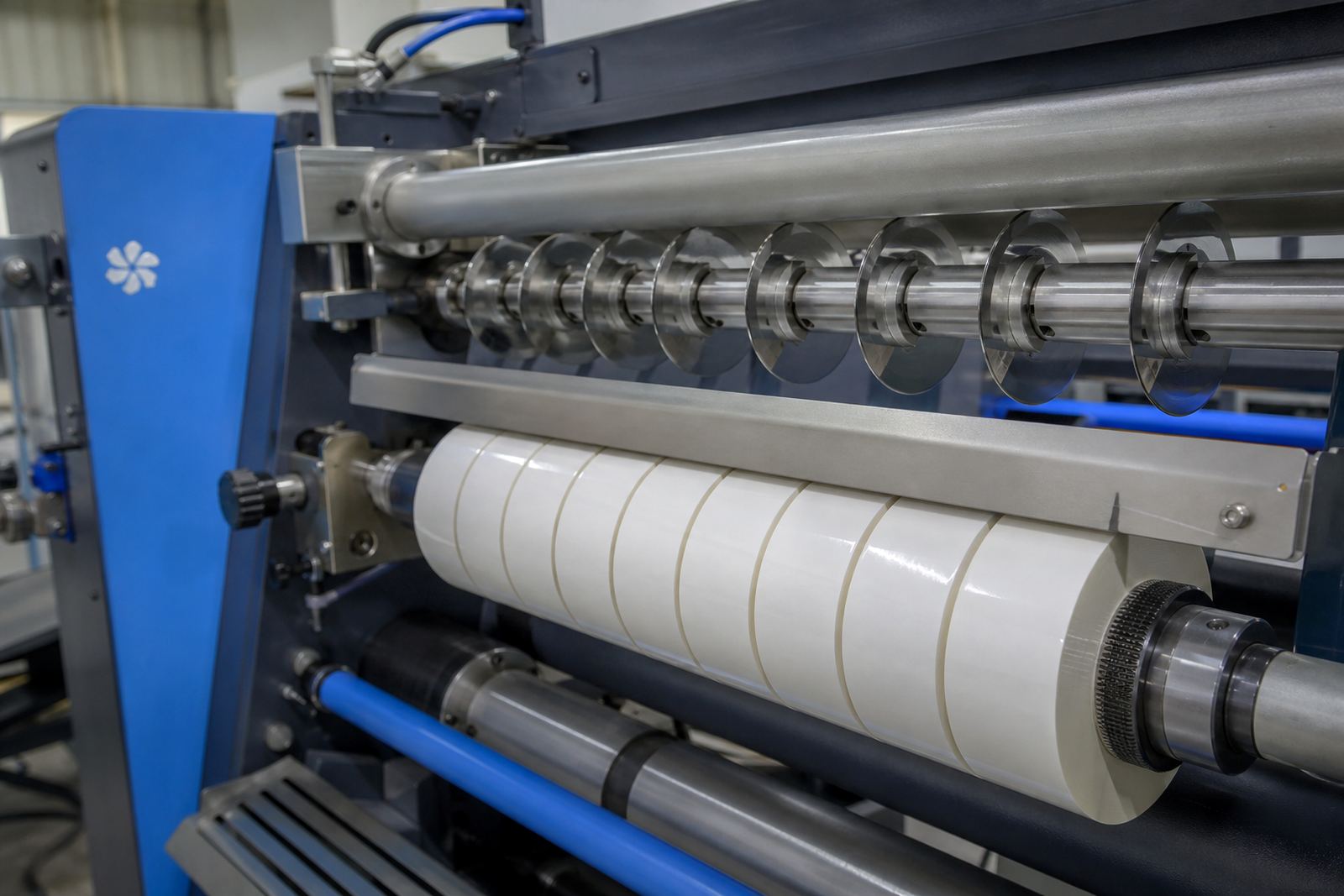
The rewind does not only collect finished labels. It also records every small issue that passed through the line. If the liner has variable tension or the slit lanes are not even, the rewind builds a cone, telescopes or forms a loose edge that shifts during handling.
Slitting setup matters here because the liner must hold a neat lane division all the way to the core. A roll that looks tidy at the machine can still crush on pallet transfer if the rewind tension was too low. Too much tension, on the other hand, can stretch the liner and make label spacing drift.
- Set rewind tension with the full web width in mind
- Confirm slit edges are clean before a long run
- Use cores that fit square and do not rock
- Inspect the roll profile after every change in job length or material mix
A working method for South African production floors
A sensible liner check starts with storage, then loading, then the first few metres of the run. Keep rolls off damp concrete, away from direct sun and away from forklift knocks. On the floor, make sure the roll is mounted square and that the web path is clean before the first label is cut.
Operators should treat the first test strip as a real diagnostic sample, not a quick throwaway. Look at cut depth, waste pull, label release and rewind shape together. If one element is off, the liner often carries the clue.
Our team in Randburg sees this on packaging lines that mix short digital jobs with longer production batches. A change in liner stock, storage, or winding pressure can shift the whole set-up, and the fix is usually in the basics rather than the fanciest part of the machine.
A short checklist that keeps the line honest
Before a production run, a few checks save a lot of waste on the floor. They do not need special tools, only attention and a consistent method from the operator.
- Confirm the liner type matches the job and cut method
- Check for curl, crush marks or dust on the roll edge
- Verify the registration marks stay readable through the web path
- Look at the waste strip after the first metre and after any stop
- Inspect the rewind for telescoping, cone shape or soft edges
Where issues keep repeating, our service team can assist with die setup help, registration calibration, rewind setup and slitting setup. Liner care is not a side note. It is part of keeping digital label finishing steady from unwind to final roll.