Edge quality starts with the roll build
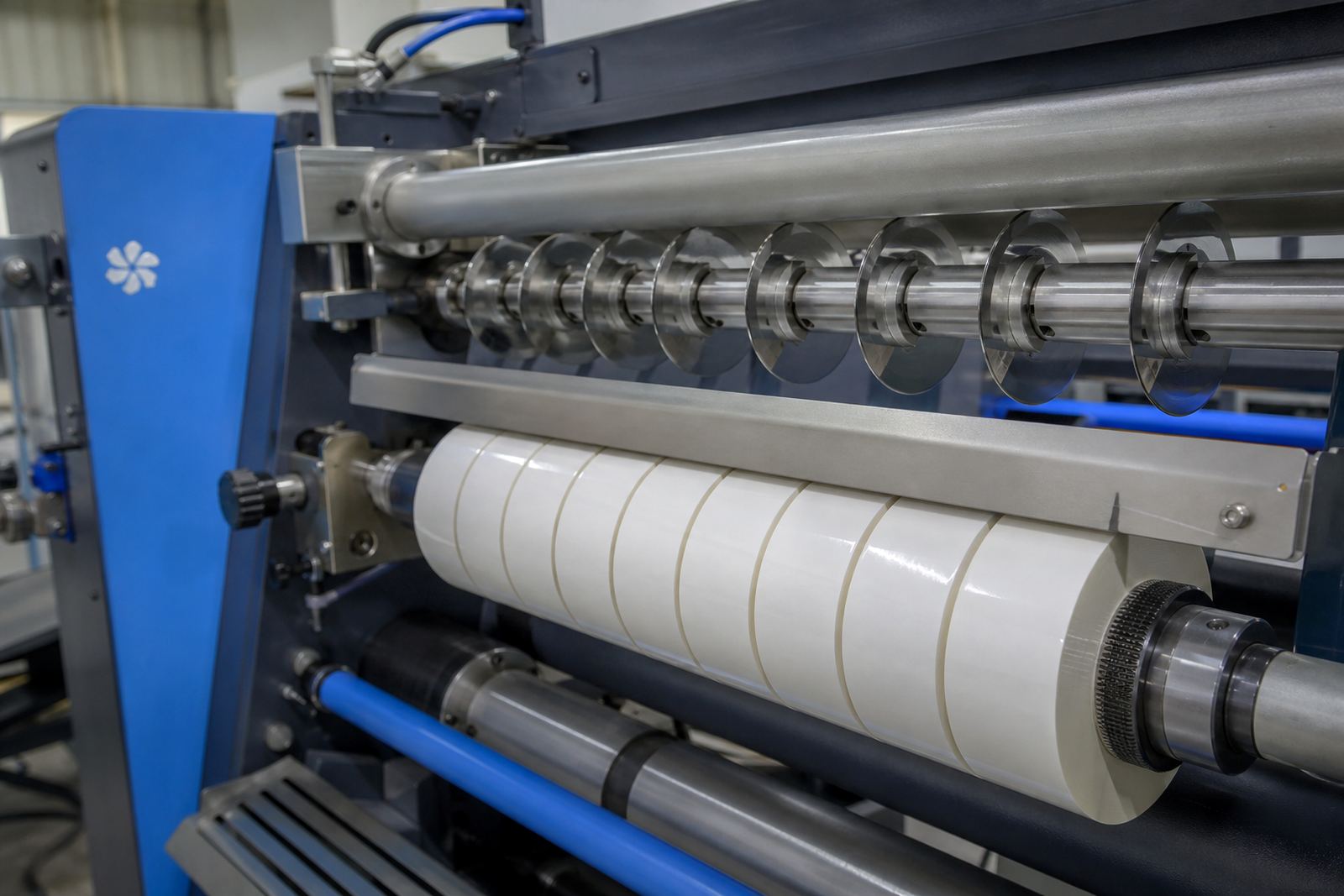
Slitting looks like a finishing step, but the cut line is shaped by the roll before it reaches the knives. If the web is wandering, the slit edge will show it. Digital label work brings narrow webs, changing repeat lengths and short production runs, so the slitting section has to stay calm while the rest of the line is moving.
On pressure-sensitive labels, the printed web may already carry laminate or varnish. That extra layer changes how the blade enters and exits the material. Paper face stocks behave one way, film another, and a soft adhesive can drag if the cut edge is too hot or the blade is dull. The small things matter here.
- Keep the web path square before slitting starts
- Match blade angle to the face material and liner
- Watch for dust, adhesive build-up and edge fray
- Check that the rewind core is straight and firm
Blade choice is not a small detail
A slitting blade that looks fine on the bench can still leave a rough edge on press. The right profile depends on the substrate, the liner thickness and the speed of the line. Some jobs need a clean shear action, others work better with a sharper kiss that does not pull the face material sideways. If the blade is wrong, the edge tells the story straight away.
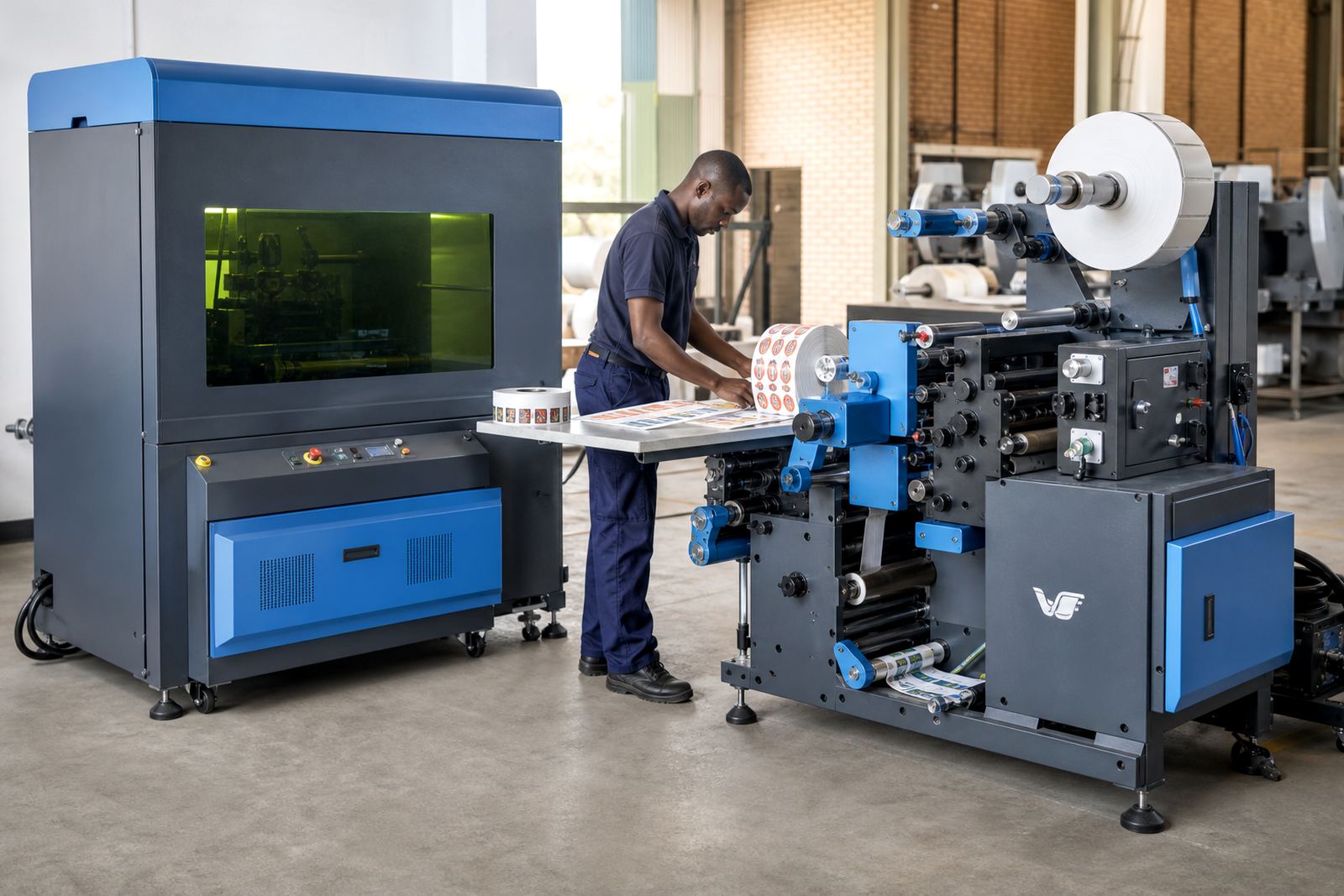
Flexible dies and semi-rotary cutting can make the front of the job tidy, but slitting has its own behaviour. A narrow web that has already been die-cut will react differently from a plain roll. The operator needs to know when to change blade pressure, when to back off and when to replace a worn edge before it starts lifting fibres or curling film.
- Use a blade profile suited to the stock structure
- Replace blades before the edge quality drops off
- Set contact pressure only as high as needed
- Allow for coated stocks that shed more residue
Tension control keeps the cut line steady
Web tension is one of the main reasons a slit edge goes uneven. Too much pull and the web necks down, too little and it starts to float. On a label line, that movement can show up as crooked slits, wandering lanes or a rewind that builds unevenly across the roll face. The cleanest edge often comes from a stable web, not from forcing the blade harder.
Registration marks help the cutter stay aligned on printed work, but they cannot rescue a web that is fighting the machine. If the unwind brake is too aggressive, or the rewind torque changes too sharply, the web will shift before the blade gets a proper bite. That is where line setup and operator habits matter most.
- Set unwind and rewind tension in small steps
- Check lane tracking before increasing line speed
- Keep splice points neat and well trimmed
- Watch for lift on light films and narrow webs
Matrix stripping needs room to behave
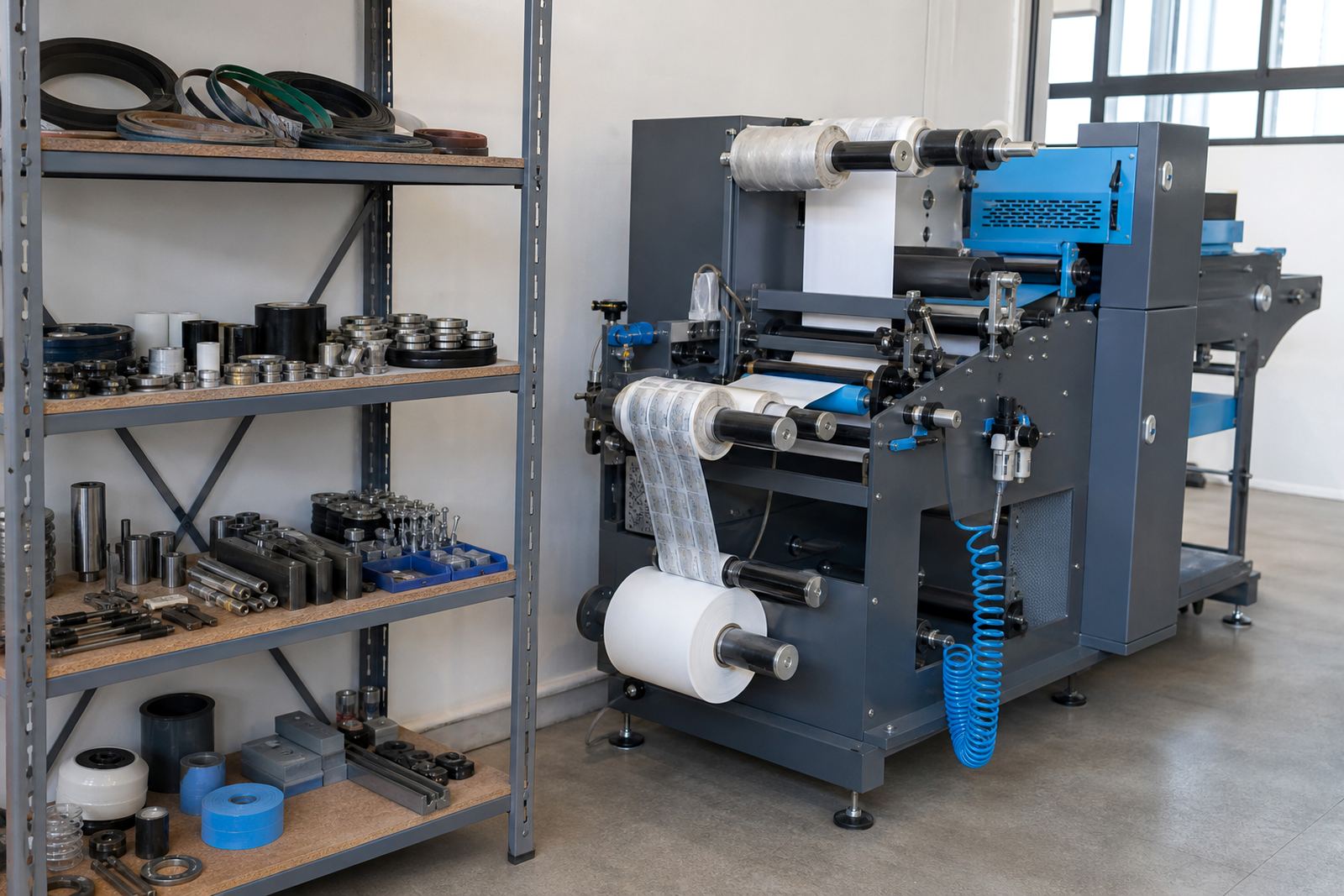
Clean slitting is linked to clean waste removal. If the matrix is not stripped well, it drags against the labels and can pull the web off line. On label finishing machines, waste stripping, slitting and rewinding work as one system. A neat slit can still look poor if the waste path is tight or if the strip has to fold around a poor guide.
In humid coastal conditions, adhesive can stay tacky for longer and waste may cling where it should release. In those cases the setup needs more attention to guide angles, strip tension and the condition of the stripper bars. The machine may be correct on paper but the job still needs proper handling on the floor.
- Keep waste paths open and free of sharp rub points
- Check that strip angles suit the web width
- Remove adhesive build-up from guides and bars
- Make sure the waste roll is winding evenly
Lamination and varnish change the way the blade behaves
When a label has lamination or varnish, the cut line is no longer dealing with bare paper alone. The top layer may cut cleanly while the adhesive layer drags or strings. That is common on higher gloss labels and on jobs where the finish needs a hardwearing surface. A slitting setup that worked yesterday on plain paper may need a new touch on a coated roll today.
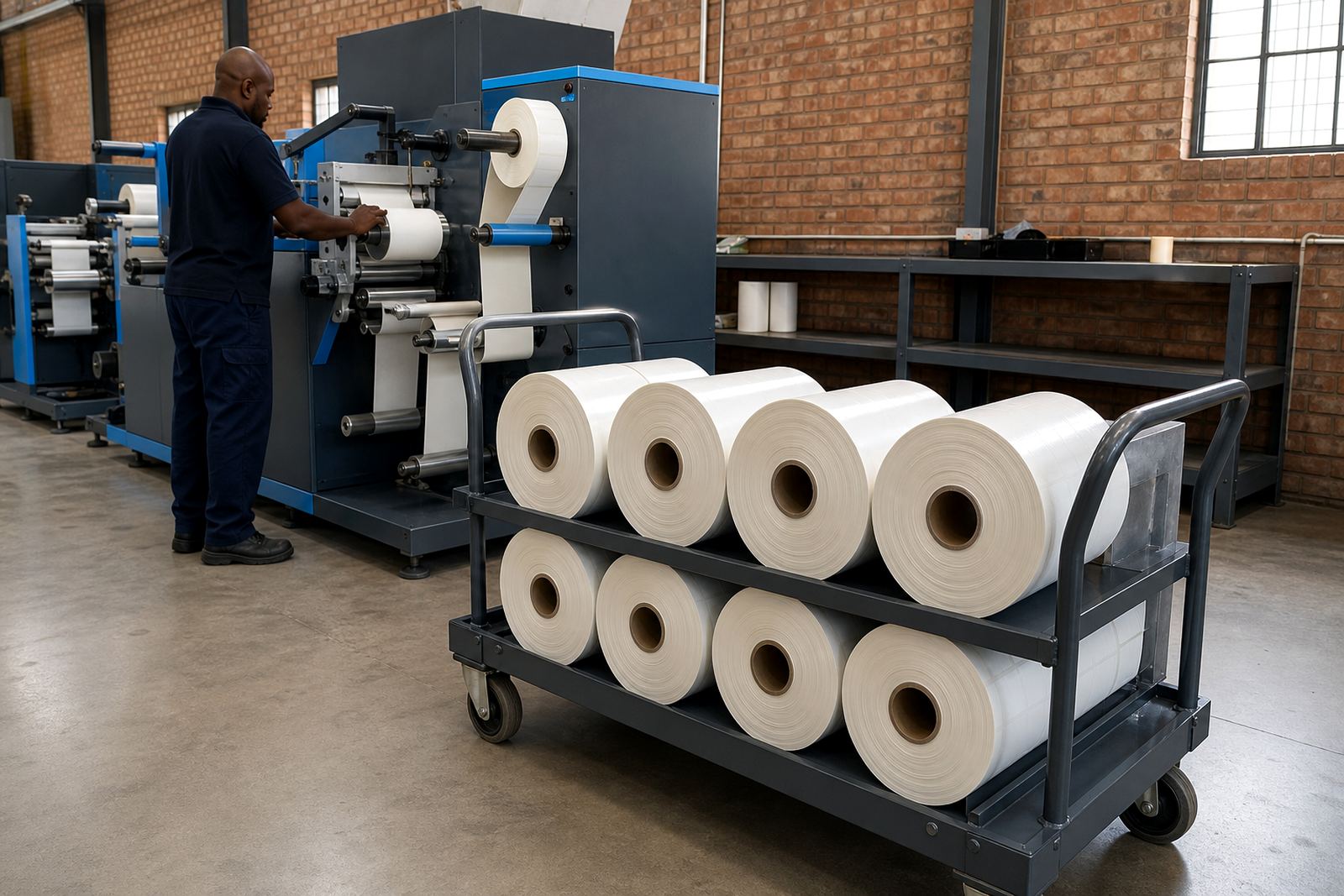
Local packaging producers around Johannesburg often run mixed jobs in one shift, moving between paper, film and laminated labels. At that point the operator cannot rely on feel alone. A proper check of blade wear, web tension and rewind firmness saves a lot of rework. The line should sound steady too, because rough cutting usually leaves a different noise before it leaves a visible mark.
A Randburg example from a mixed label line
A packaging team in Randburg was running short label rolls for a food line, with printed varnish on the face and a narrow slit width for hand application. The edges looked fine on one side of the roll but feathered on the other. The issue was not the print, it was the build-up of tension through the web path and a blade that had lost its edge after a few runs. Once the unwind, slit spacing and rewind set-up were corrected, the roll face became even and the edge held its shape.
That kind of job is common across South Africa, especially where one machine has to handle different label structures in the same week. The answer is usually methodical: inspect the web path, check blade condition, confirm registration and then test the rewind. Small adjustments made in the right order do more than any quick fix.
- Record the settings that gave the best edge
- Repeat the same setup on similar stock
- Keep spare blades and core stock ready
- Review the slit edge before the roll leaves the line
What to watch before the roll goes to dispatch
Slitting looks complete only when the roll behaves in use. A good edge should unwind without dusting, telescoping or edge lift. The labels should release cleanly from the reel and the lanes should stay aligned through the full roll. If the rewind is too loose, the roll may shift in transit. If it is too tight, the edge can bruise and show a wave.
For label printers and packaging producers, the best habit is simple enough: inspect the slit edge under real production light and not just under the machine lamp. That shows fibre lift, film burrs and adhesive smear more clearly. It also helps the crew spot when a job needs a change in blade choice or a calmer web path before the next run starts.