Start with the waste path, not the label stock
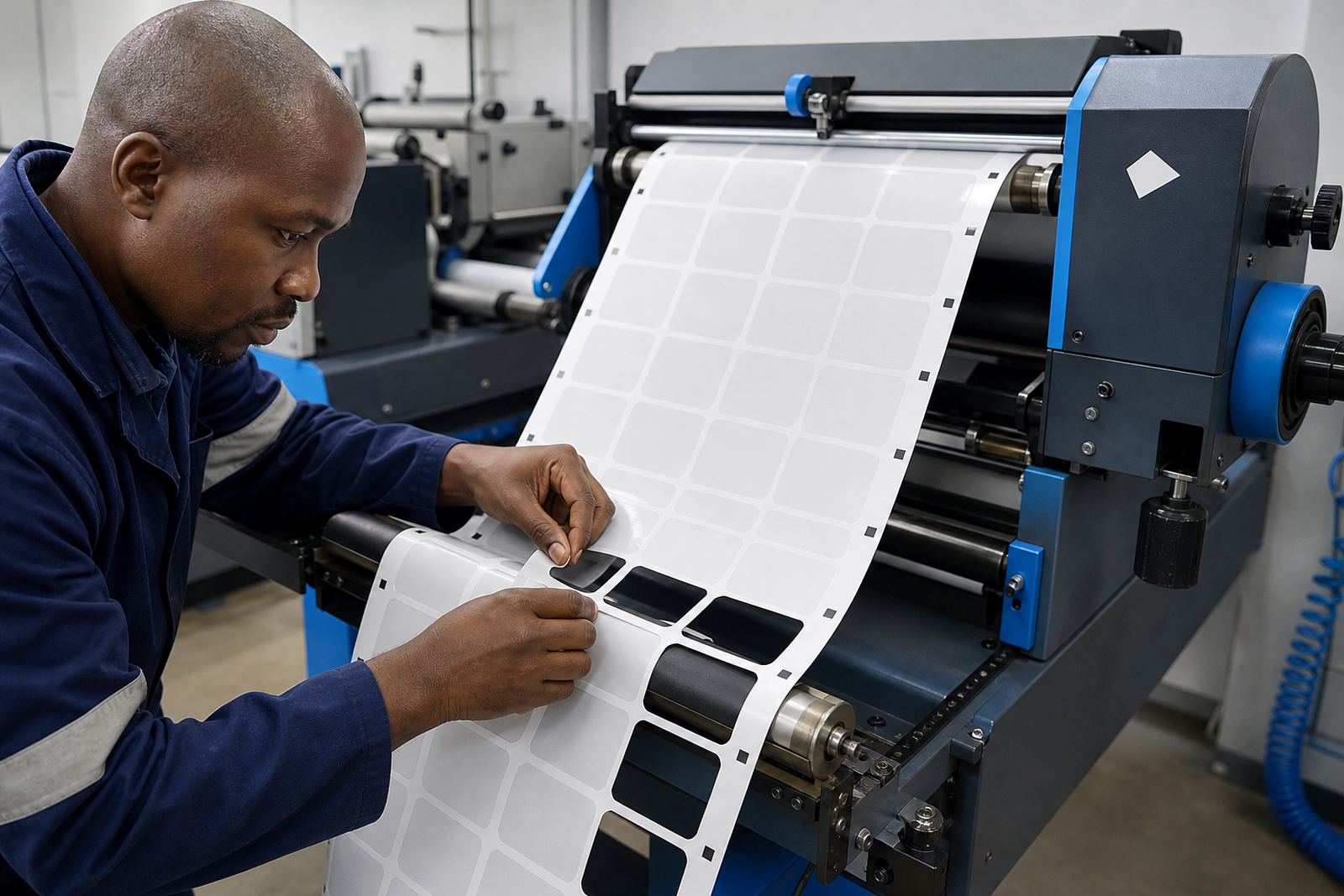
When matrix waste tears or stays attached, the problem often sits in the path the waste has to travel after cutting. A narrow strip that has to turn too sharply, or cross a guide that is set too tight, can pull against the face material and leave ragged edges. Check that the waste can move freely from the nip point all the way to the rewind, especially on long label webs where static and light film liners add drag.
Keep an eye on the unwind tension as well. If the web is held too firmly, the liner stretches and the cut line shifts slightly out of register. That tiny shift can be enough for a corner to hold the matrix, then the tear runs along the wrong side of the cut instead of lifting cleanly.
Cut depth that looks fine can still be wrong
Matrix stripping failures often begin with a cut that is only a little too deep or too shallow. A blade that cuts into the liner will score the waste and make it difficult to release in one piece. A blade that is too light leaves fibre bridges between labels, especially on coated papers and some synthetic face stocks. The cleanest setting is usually found by testing a short repeat, then checking the cut edge under good light.
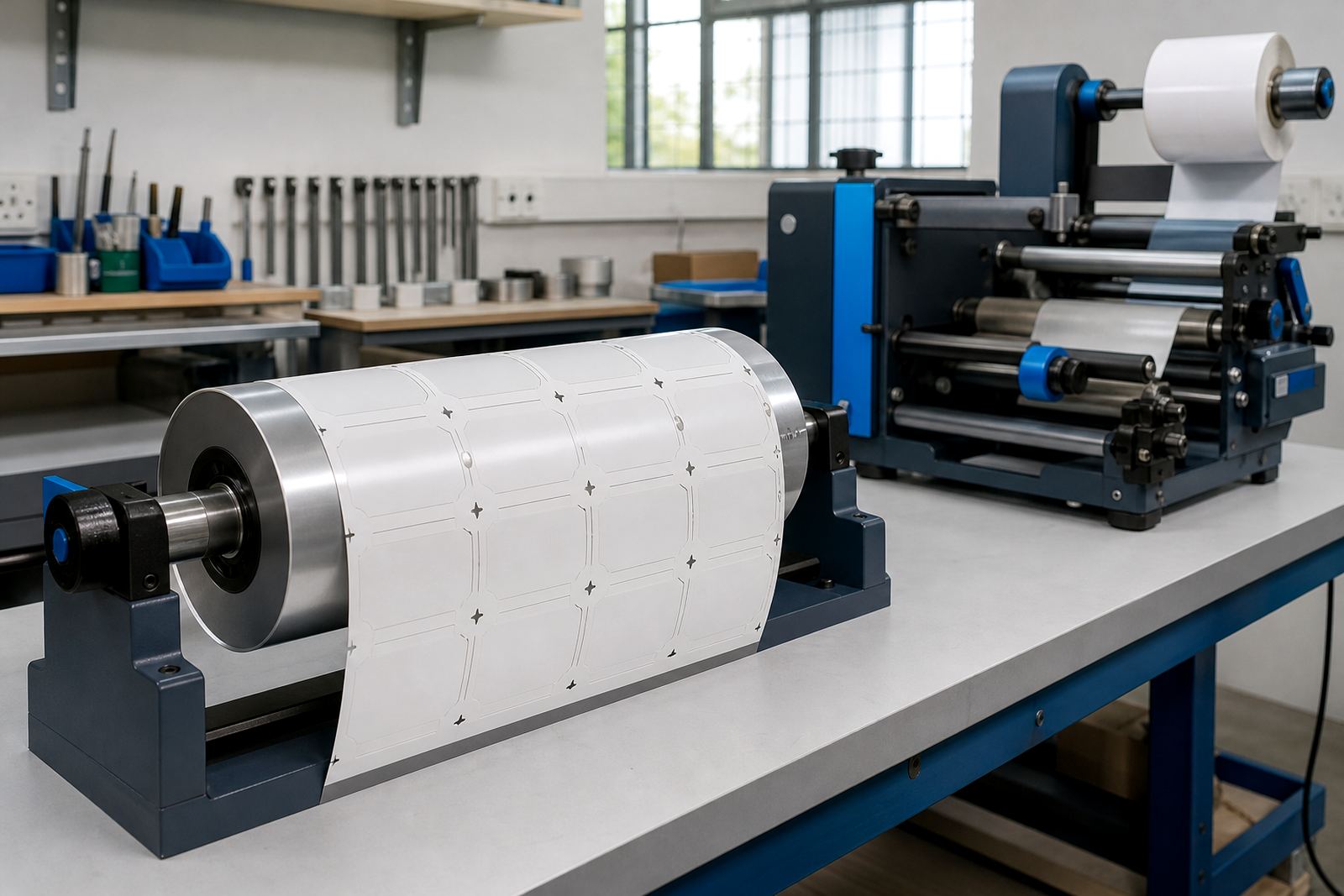
On semi-rotary jobs, pressure changes from one side of the web to the other can create uneven stripping. If the waste lifts better on one edge than the other, look at cylinder pressure, web tracking and the condition of the flexible die. A worn edge may still print fine but it will leave rough waste edges and extra dust in the line.
Registration marks must stay honest
Matrix stripping gets harder when the cut starts to drift from the printed image. If the registration marks are faint, dirty or placed too close to a busy design, the sensor can chase a mark that is not clean enough. The result is a cut line that wanders and a waste matrix that starts to fold back into the labels.
This is common on short label repeats where the press speed changes during a run. It also shows up after lamination or varnish if the top surface changes how the mark reads. A quick check of mark contrast, sensor angle and web cleanliness will often solve a problem that looked like a material fault.
What to check before blaming the substrate
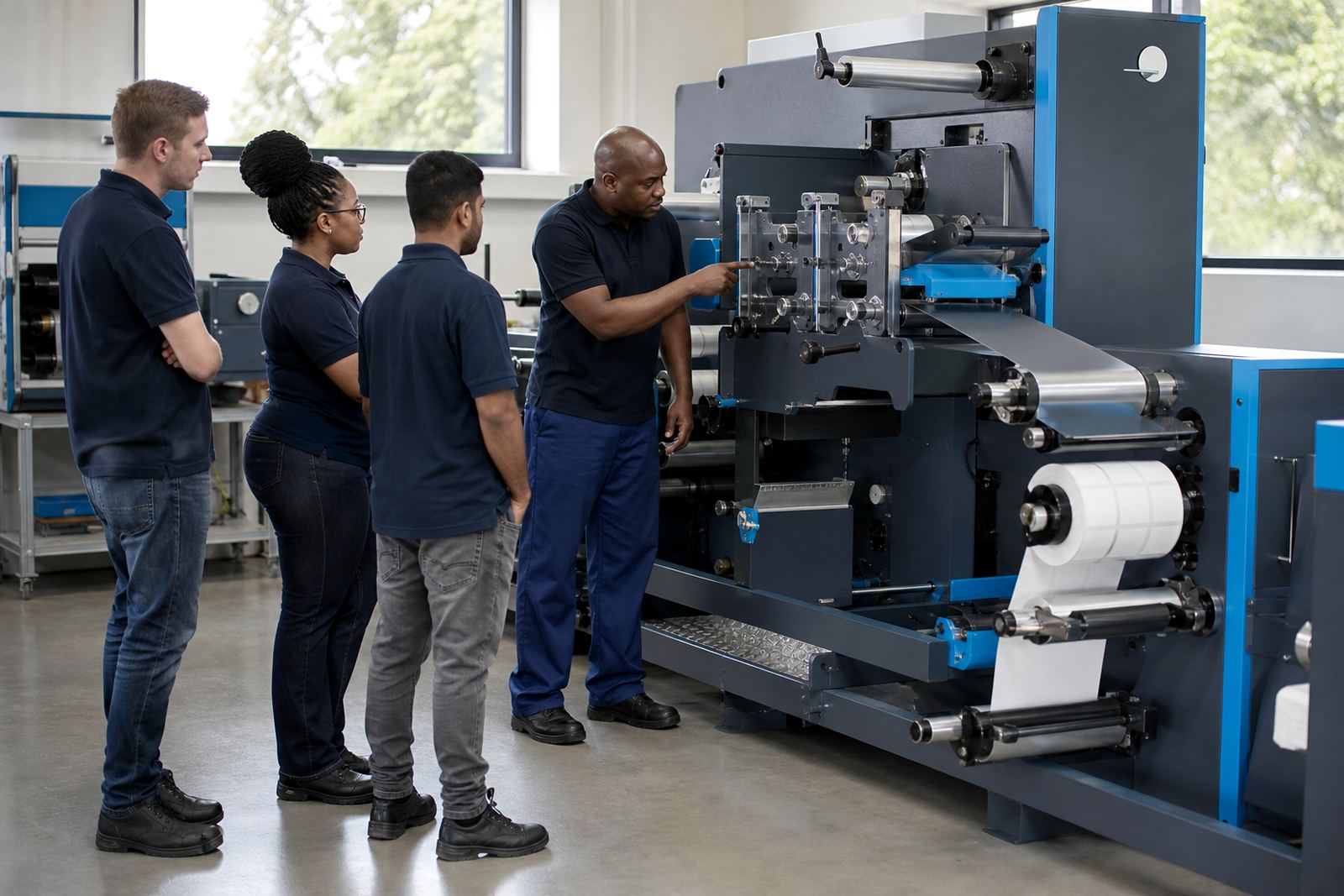
Before you write off the material, go through the machine points that control waste lift. A simple inspection can show whether the fault is mechanical, operator related or linked to the job setup. In many cases the liner and face stock are not the issue at all, the real trouble sits in the slit width or the rewind tension.
- Check blade condition and die edge wear.
- Confirm the cut is not kissing the liner.
- Watch whether waste breaks at the same point each time.
- Inspect static build-up on film jobs.
- Make sure the matrix rewind core size is correct.
- Test the registration mark position and contrast.
When those points are stable, you can judge the substrate fairly. Without that check list, the same roll may be blamed for three different faults that came from three different settings.
Lamination and varnish can change the stripping behaviour
A laminate layer or a heavy varnish can make a label face stiffer, which sounds helpful until the cut needs to separate waste from label. The extra layer may bridge fine details and hold tiny islands of waste in place. In other cases, the coating changes the way the blade enters the face stock, so the cut edge looks clean but the matrix still resists lifting.
For jobs with a coated surface, keep an eye on the balance between cut pressure and rewind tension. If the waste pulls too hard, the face material can feather at the edge. If it is too loose, the waste collapses and wraps around guides. A controlled test roll with the actual finish in place usually tells the truth faster than guessing.
A Randburg line that struggled with short repeats
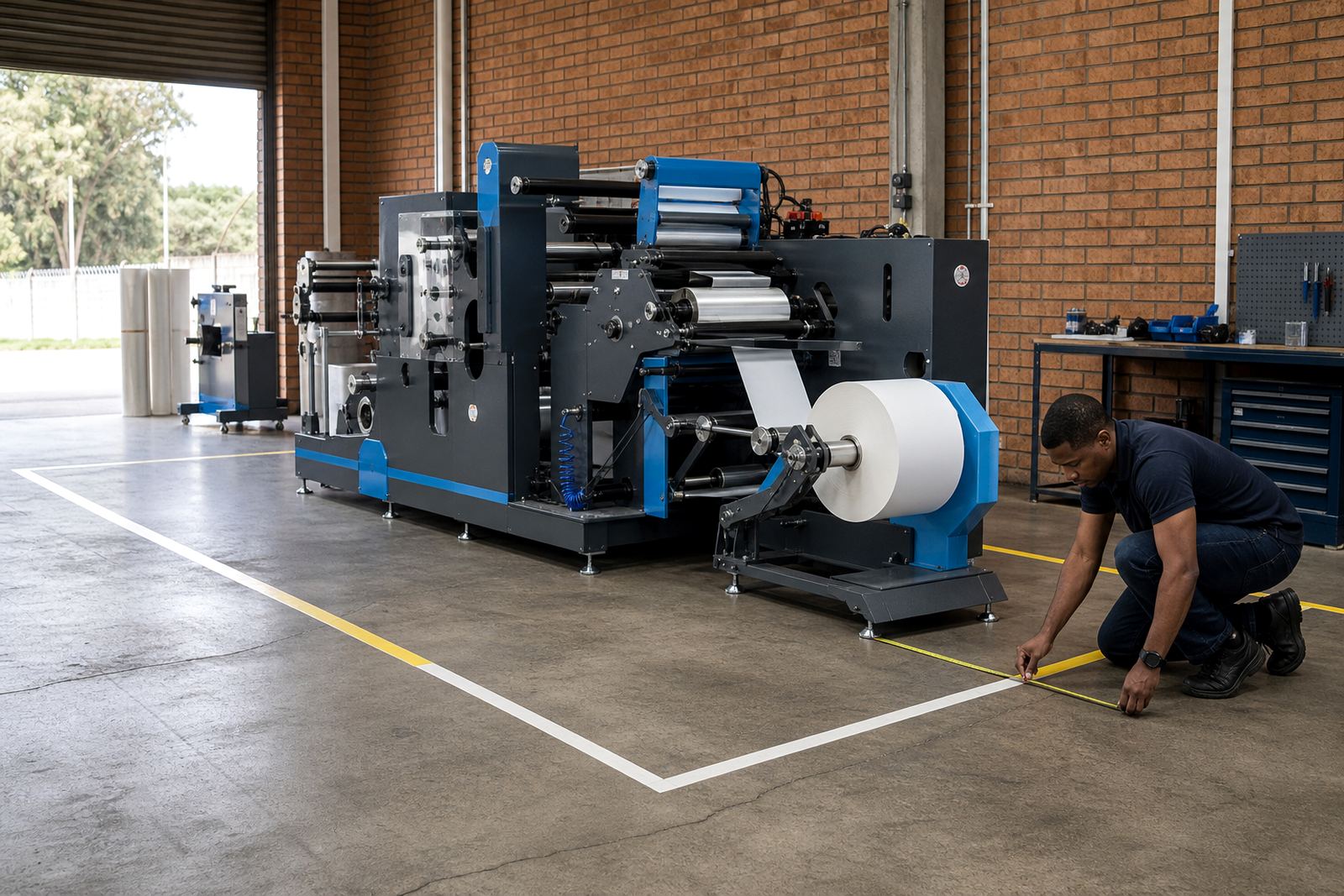
A packaging producer in the Randburg area had neat print, but the waste on short repeats kept splitting before the rewind could gather it properly. The first thought was that the liner was at fault. After checking the line, the real issue turned out to be a mix of slightly deep cutting, tight waste routing and a registration mark that sat too close to a dark graphic block. Once the settings were corrected, the same stock stripped cleanly and the finished roll wound evenly.
That kind of case is common in Johannesburg and Pretoria too, especially where a machine shifts between paper labels and synthetic films in the same week. The material can behave differently each time, so the operator has to read the whole path, not only the cut line.
Keep the waste path clean and repeatable
Good matrix stripping depends on small routines that stay consistent from job to job. Clean the guides, check the rewind core, watch the slit width and keep the waste path as straight as the machine allows. If the machine has been sitting after a shutdown, inspect for adhesive dust or liner debris around rollers and sensor points before starting the next roll.
On busy finishing lines, the best habit is to make one change at a time. Adjust the cut, test the waste lift, then move to tension or registration if needed. That method is slower than guessing, but it avoids chasing faults across the whole machine and it keeps production steadier through the day.