The parts that wear first on a busy roll line
Most label finishing lines wear in the same places first. Cutting edges dull, rollers glaze, belts stretch, sensors drift and the waste take-up starts to fight the roll path. When that happens, the operator spends more time adjusting than finishing.
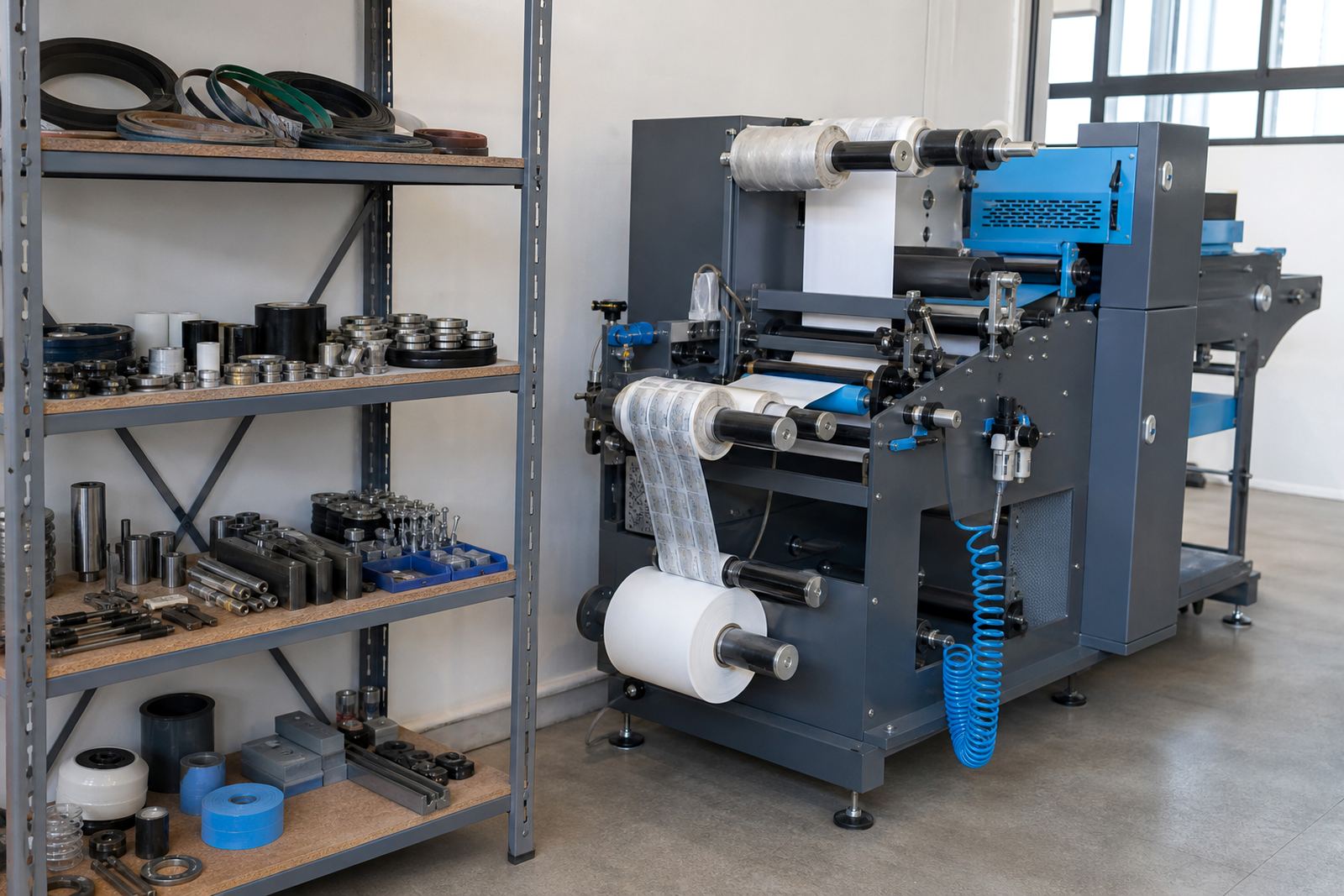
A practical spares shelf usually begins with the parts that touch every roll. If a machine runs clear film, paper, or a coated stock with varnish, the wear pattern changes a little, but the pressure points stay familiar. In Kya Sand we often see rooms keep a small set of these items aside before the first outage becomes a bigger stoppage.
- Cutting blades or wear knives matched to the module in use
- Bearings for rollers, shafts and guide points
- Drive belts, timing belts and tension items
- Photoelectric sensors and registration readers
Blades, flexible dies and the edges that do the work
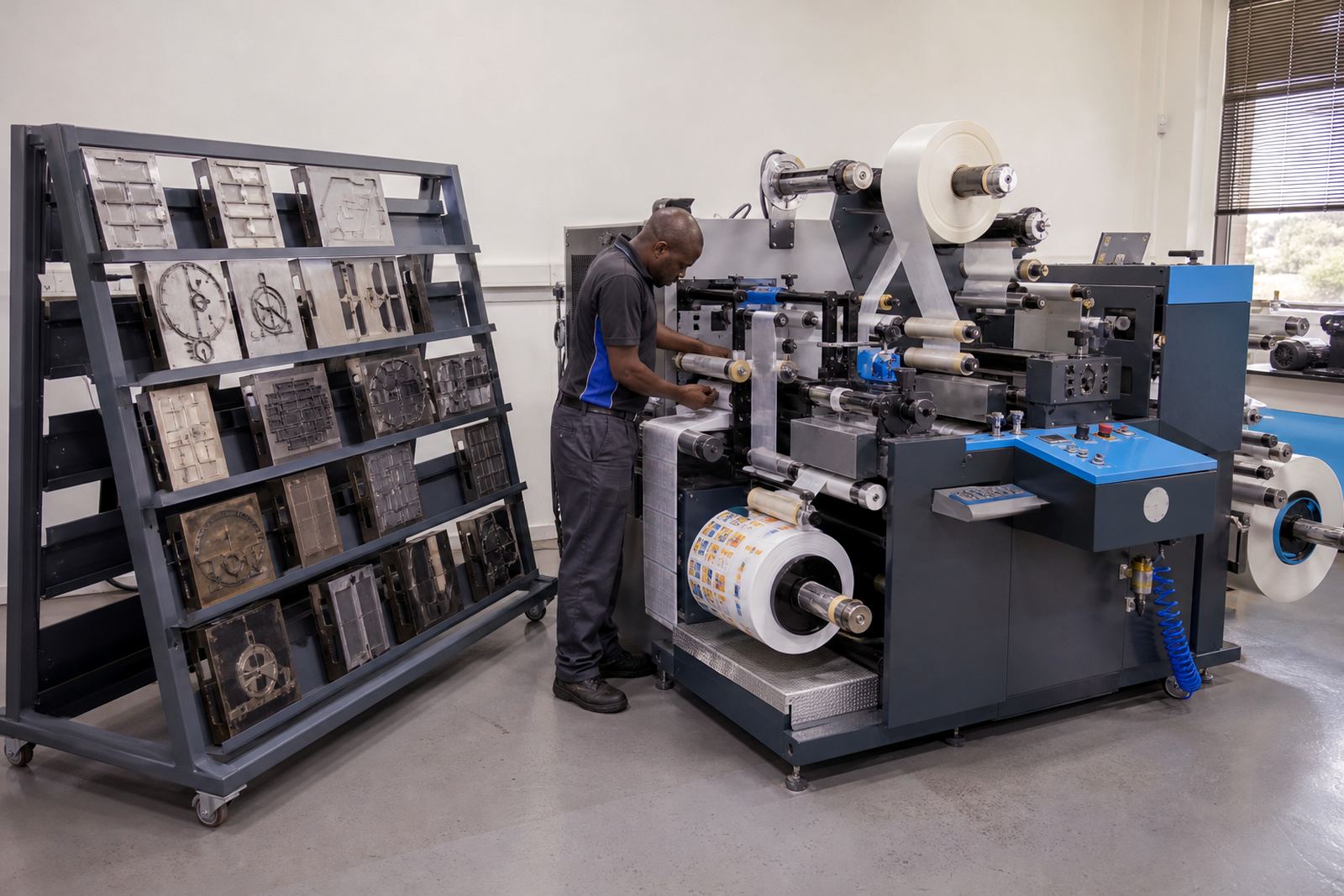
Die-cutting on labels asks for clean edges and steady pressure. Whether the line uses laser cutting, semi-rotary tooling or flexible dies, the working edge is the part that tells the whole story. A worn blade leaves fibre pull, a chipped die leaves ragged corners, and a weak cut can make the matrix strip behave badly.
Many packaging producers keep a second set of the cutting parts on hand when the line runs short lead-time jobs. That is less about fear and more about control. When a customer changes artwork, a well-kept spare set helps the room reset without hunting through mixed tooling.
- Flexible dies for repeat label shapes
- Backing or support parts that hold cutting depth steady
- Spacers and shims for fine adjustment
- Clamp pieces that secure the tooling correctly
Roll handling parts that keep tension steady
Good finishing depends on how the web moves from unwind to rewind. If the tension wanders, the print can drift off register, the laminate can wrinkle and the slit edge can start to wander. Small wear items in this section are cheap compared with the waste they prevent.
Rooms that run larger rolls, especially on heavier materials, often keep a spare core chuck, a few rollers and a clean set of bearings nearby. Coastal humidity can also leave marks on stored parts if they are kept open on a shelf, so sealed boxes and clear labels help more than people expect.
- Core chucks and rewind holders
- Idler rollers and guide rollers
- Torque components for unwind and rewind control
- Anti-static brushes or bars where the substrate needs them
Sensors, registration parts and the small eyes of the line
Registration marks are only useful when the machine can read them cleanly. A dirty sensor lens, a loose mount or a tired cable can throw the cut off by a few millimetres, and on narrow labels that is enough to ruin a sheet of output. The same applies to edge guides and web-detection parts.
For rooms handling mixed substrates, the spare list should cover the parts that are easiest to knock out of alignment during changeover. These are small items, yet they decide whether the operator spends ten minutes setting up or half a shift correcting drift.
- Registration sensors and holders
- Edge guides and web guides
- Cables, plugs and connectors for moving sections
- Mounting brackets with fine adjustment slots
Lamination, varnish and matrix stripping parts worth holding
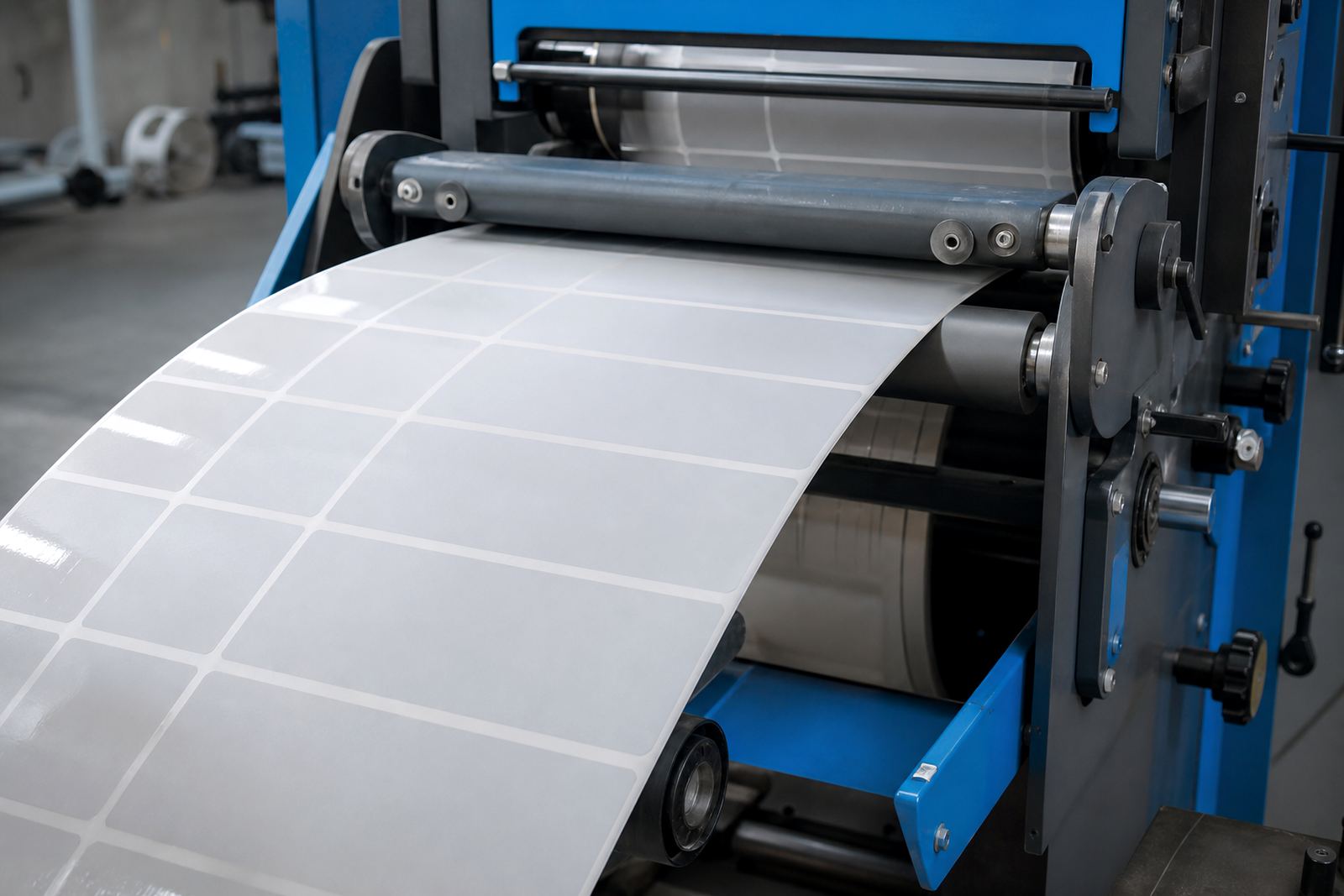
Many finishing rooms do not just cut labels, they also laminate, varnish and strip waste in the same pass. That means the spare shelf has to think beyond blades. A cracked roller on the laminate path, a worn stripping edge or a weak vacuum part can slow the whole job and leave a neat print looking untidy.
A Johannesburg converter that runs short production windows might keep these parts separate from the main tooling box so nothing gets mixed up on the floor. The point is not to stock everything. It is to hold the items that are awkward to borrow from another machine when the room is busy.
- Laminate rollers and pressure rollers
- Waste matrix stripping fingers or guides
- Slit knives and slit spacers
- Rewind shafts, sleeves and clamping parts
A sensible shelf for a Randburg finishing room
At our Kya Sand base, the best spare rooms are never the biggest ones. They are the ones where every box is labelled, every part number is clear, and the operator knows what belongs to which machine. That matters even more when one line handles labels for food packs, cosmetics or chemical drums, because each stock type behaves differently under heat, pressure and speed.
For a Midrand or Pretoria site, a compact shelf with the right wear items often works better than a crowded store room. Keep a second set of blades, a few sensors, belts, rollers and the critical rewind parts, then review what actually moved during the last few months. That keeps money tied up in useful steel and not in leftovers.
- One labelled bin for cutting parts
- One labelled bin for web-handling parts
- One labelled bin for sensors and electrical wear items
- One labelled bin for stripping, slitting and rewind parts
When a spare set earns its place
The value of a spare is not measured when the box is full, it shows up when a job is due and the line still holds registration. A small set of practical wear items can protect a shift, protect substrate and keep the finish clean enough for the next process. That is the point of holding parts on hand in the first place.
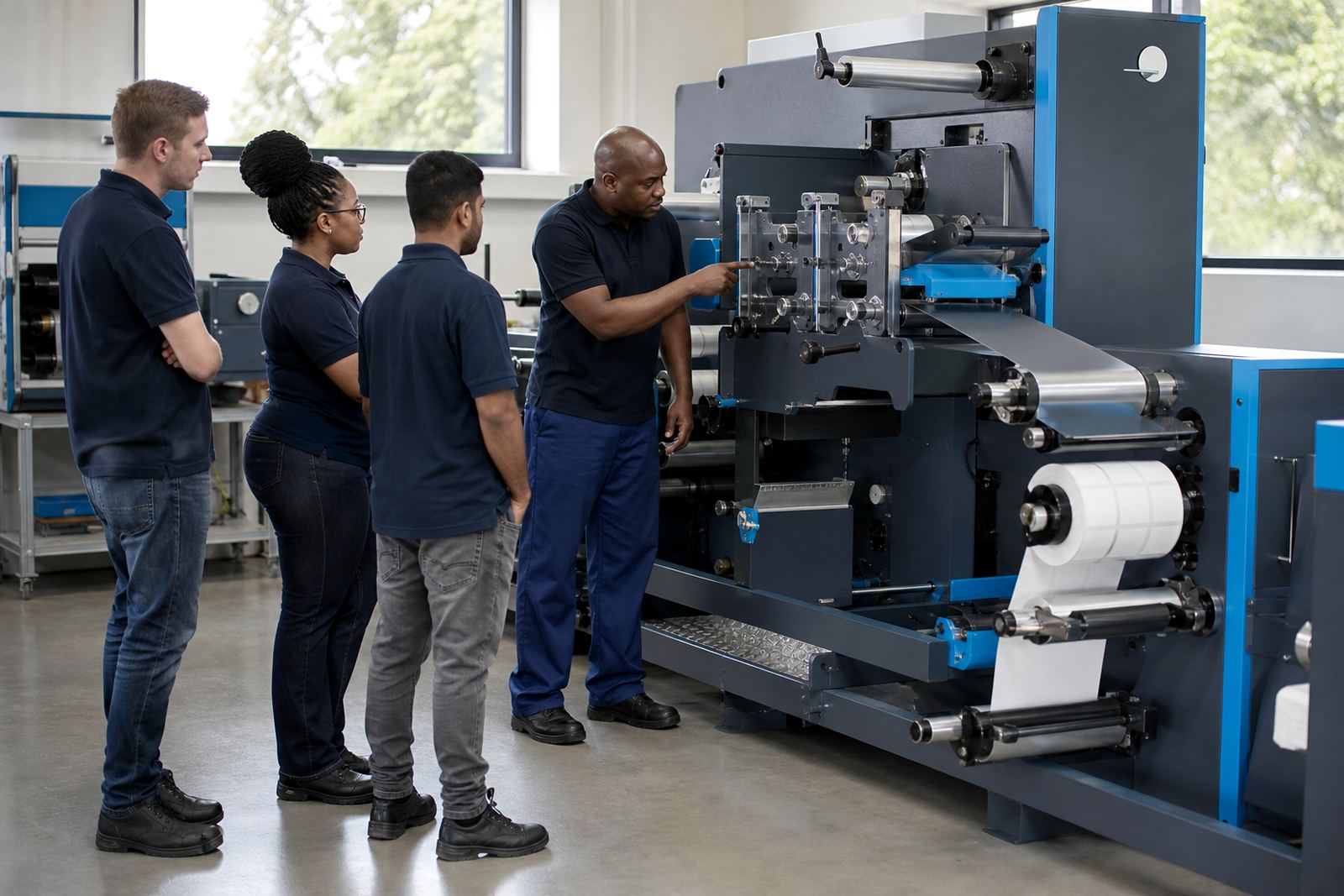
Our team supports label printers and packaging producers across Johannesburg, Pretoria, Durban, Cape Town and Gqeberha with installation, training, maintenance and parts supply. If you are setting up a new finishing room or tightening an old one, our contact form is the place to send the machine details and the parts list you want to carry.
- Keep only the parts that wear regularly
- Match spares to the exact machine module
- Store parts in dry, clearly marked boxes
- Review the shelf after real production runs