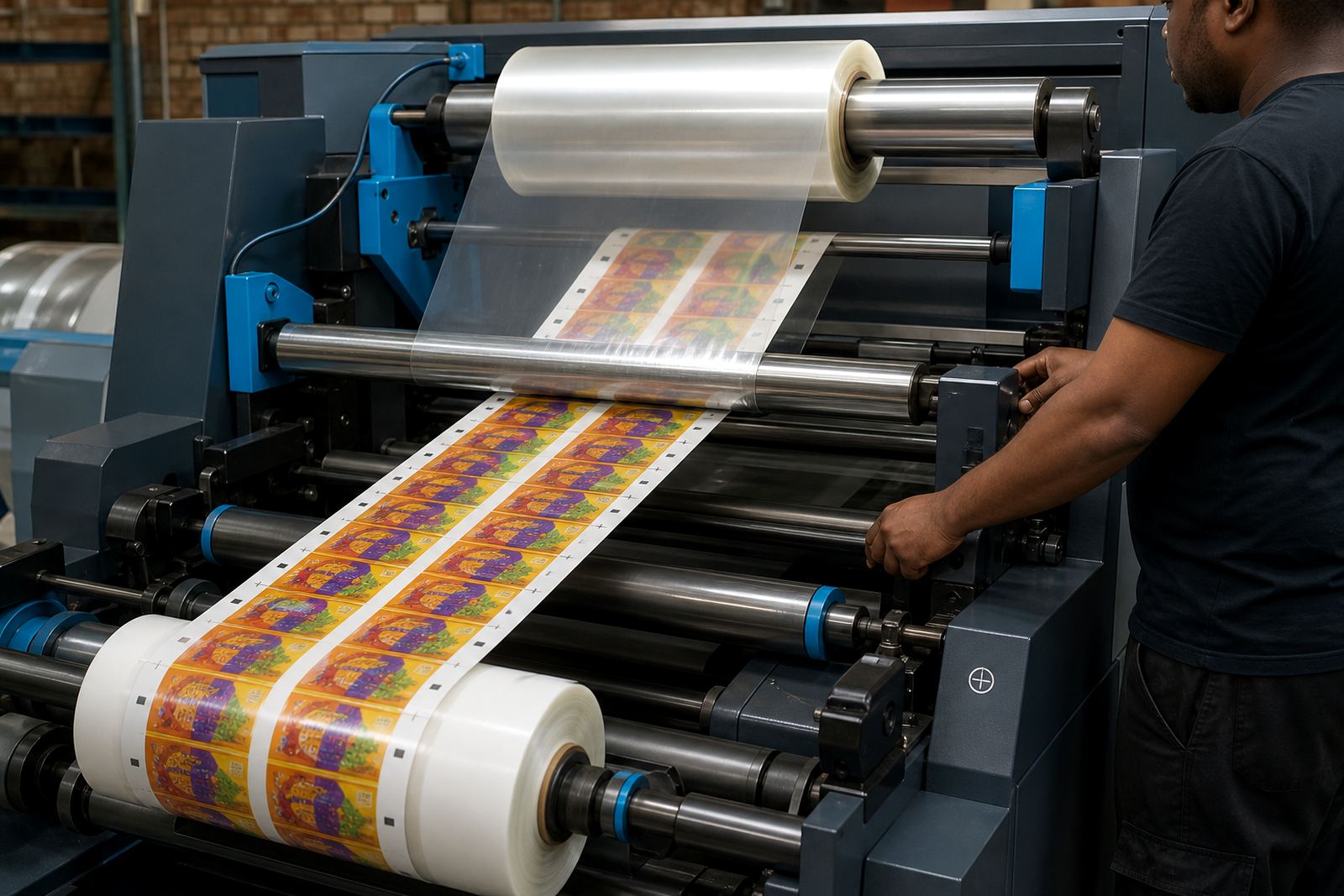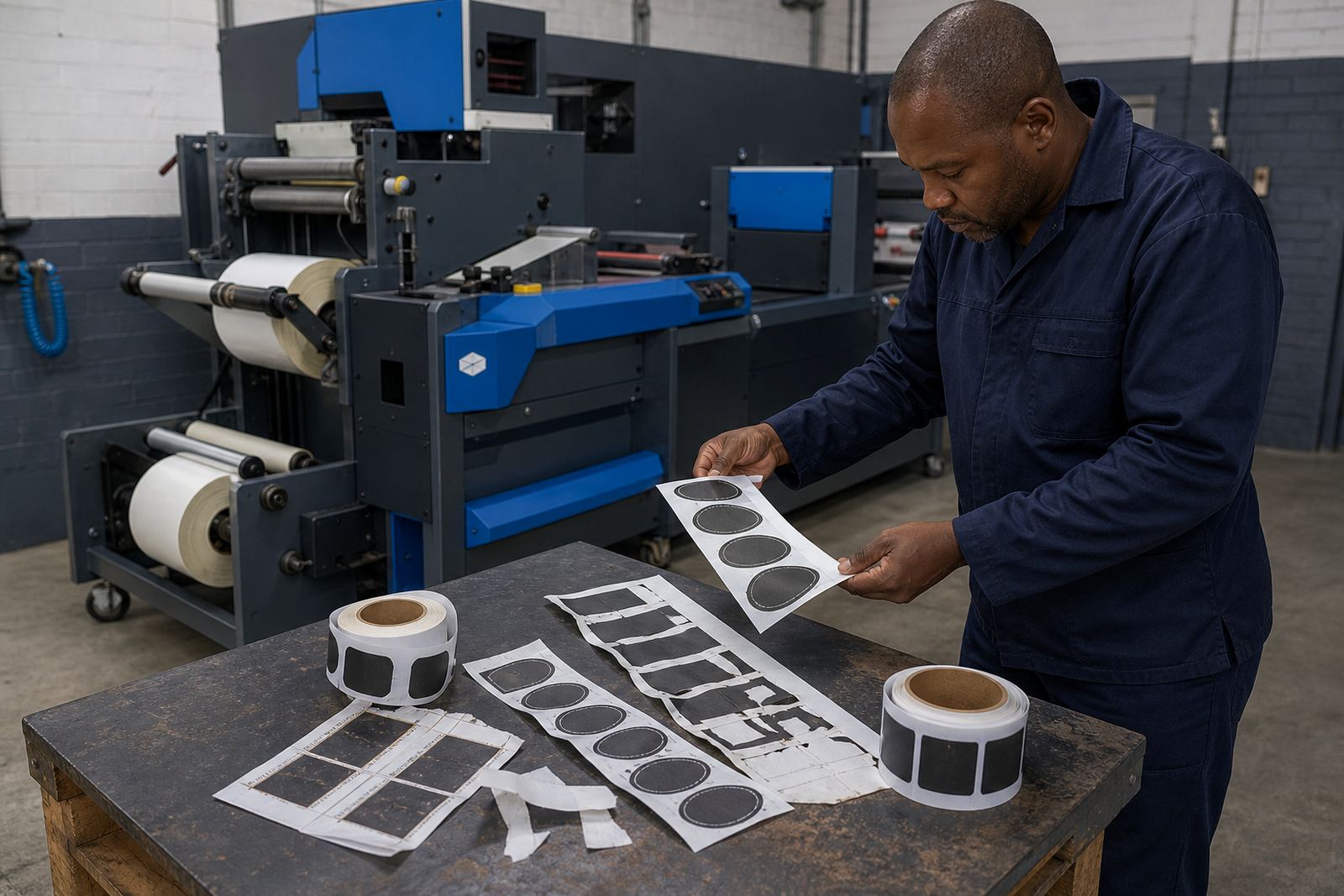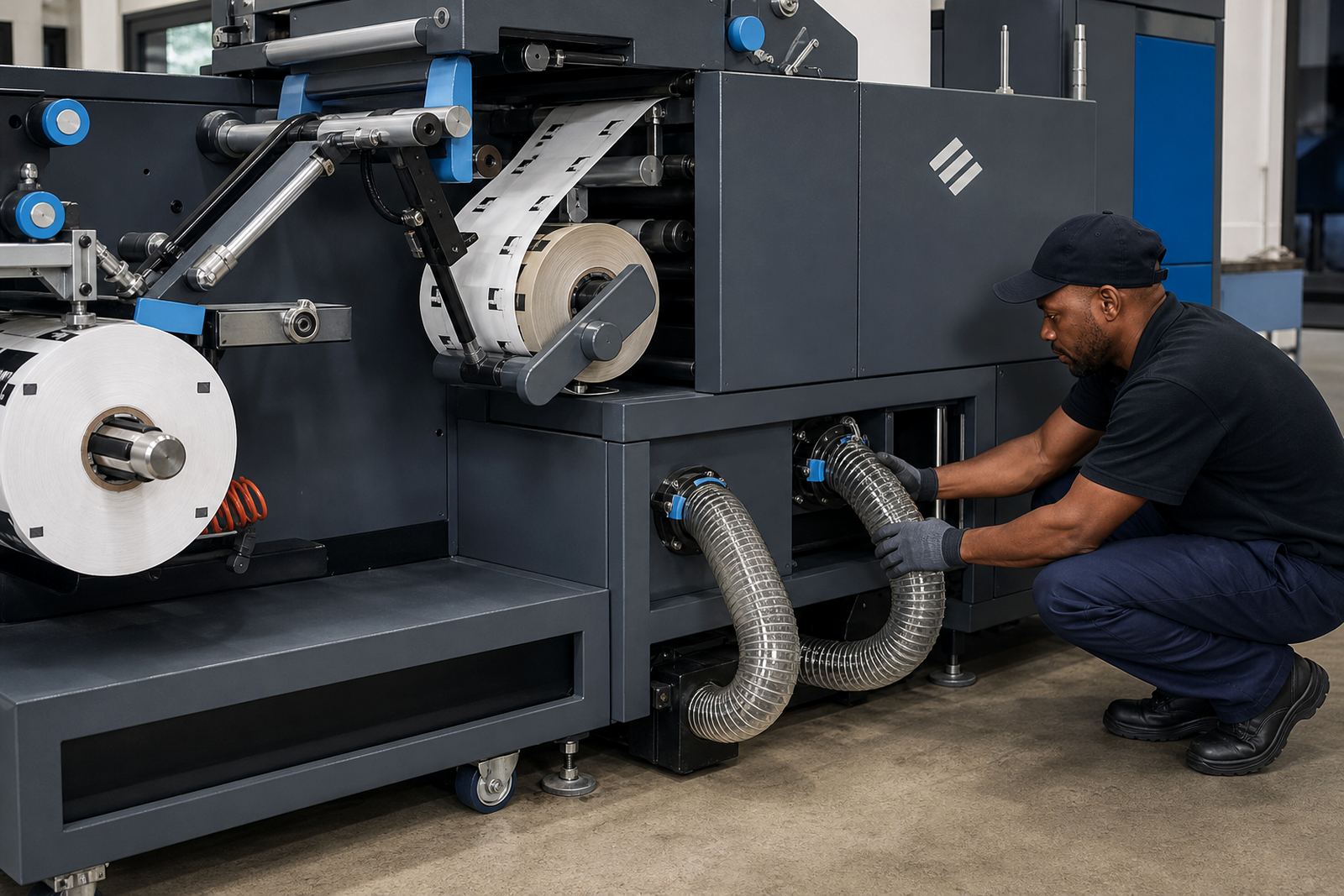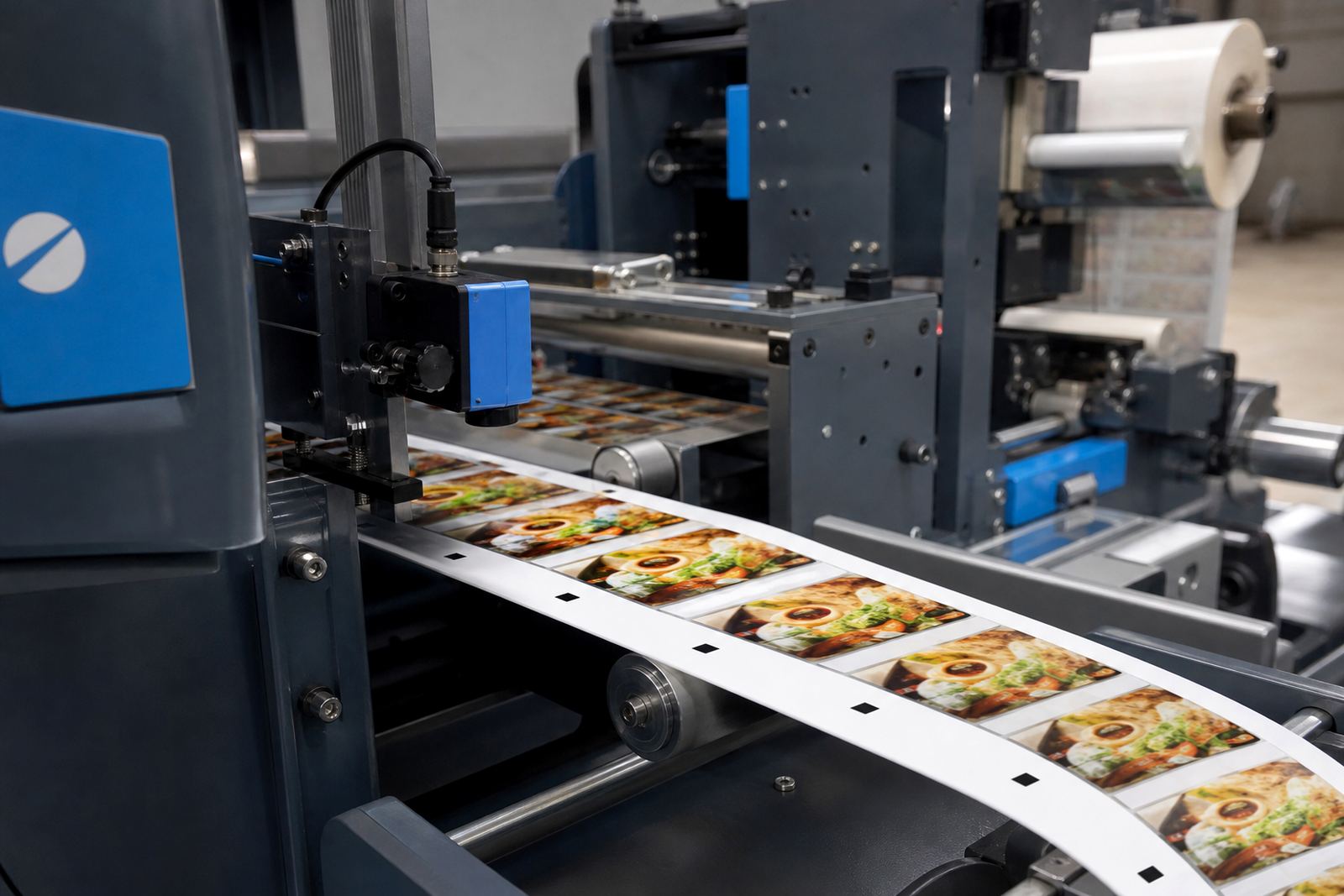
What the mark is really doing on the roll
A registration mark is a printed target, usually a small shape or bar placed outside the live artwork. The finishing machine reads that target and uses it to decide where the next cut starts, where a kiss cut lands, and where the waste is stripped. On digital label work, the mark is what lets a roll printed in short runs still finish with clean repeat length and tight positioning.
Without that reference, the machine is guessing from the previous pass and the roll stretch, coating variation, or print shift starts to show. A small change in material tension or web path can move the cut just enough to leave a sliver of adhesive at the edge or trim into a corner of the label.
- Keep the mark outside the finished label area.
- Use a mark size and contrast the sensor can read cleanly.
- Place marks consistently from repeat to repeat.
- Leave enough quiet space around the mark for the sensor to lock on.
How sensors read print without chasing the artwork
Most finishing lines use an optical sensor that looks for contrast. Some setups read a black mark on white stock, while others use a light mark on a dark field. The sensor does not understand the label image, it only sees the change from background to mark, then tells the drive when to correct the web position.
That correction matters more on jobs with lamination, varnish or semi-rotary cutting. A laminated roll can reflect light differently, and a glossy varnish may fool a poorly aimed sensor. If the web wanders under tension, the reading window becomes narrow and the machine begins to hunt for the mark instead of tracking it calmly.
- Set the sensor height so it sees the print, not glare from the film.
- Check that the mark colour has enough contrast on the chosen stock.
- Test the sensor after lamination, not only on the printed web.
- Watch for false readings near shiny surfaces or printed tints.
The small settings that decide whether the cut lands cleanly
Reading a mark is only the first step. The machine still needs the right delay, speed match, and tension so the cut arrives at the right place on the label. On a digital line, a few millimetres of drift can show up as a trimmed barcode, a nicked corner, or a matrix strip that breaks unevenly.
When the job uses flexible dies or laser finishing, the mark still serves as the anchor point. The operator has to match the setup to the repeat length, roll diameter, and material stretch. On narrow rolls, even a slight brake change on rewind can shift the web just enough to upset the next mark reading.
- Confirm repeat length before running long metres.
- Match unwind and rewind tension to the material.
- Check the first few repeats after any speed change.
- Keep an eye on slitting lines, because wandering slit edges can mislead the web path.
A Randburg job that showed the difference
A packaging converter in the northern Johannesburg area had a glossy label run with a laminated finish and a fine cut path around a small logo. The print looked fine, but the cut was drifting at the same point in the repeat and the waste was tearing where the matrix should have lifted cleanly. The issue was not the artwork. It was the mark being read from too much glare and not enough contrast.
Once the sensor position was adjusted and the mark format changed to suit the stock, the line settled. The operator could hold the cut line through the roll and the rewind packed neatly, without chasing the web from one side to the other. In a humid week, with the roll moving from print room to finishing area, that extra stability mattered more than a fancy setting sheet.
- Glossy films often need more careful sensor alignment.
- Marks that work on paper may struggle on clear or metallic stocks.
- Changing one detail, like mark shape or placement, can improve the whole run.
Trouble signs operators should not ignore
When registration slips, the machine usually tells on itself before the whole roll is affected. The sensor may hunt, the cut may drift in waves, or the slitting blades may begin to leave uneven strip widths. If the line is running multiple lanes, one lane can stay true while another moves out, which makes the fault harder to spot at first glance.
The fix is often mechanical as much as electronic. Tension, brake pressure, web guides, sensor angle, and clean rollers all play a part. Dust from matrix stripping or adhesive mist can also settle on the sensor window and dull the reading. A quick wipe is not enough if the setup is out of square.
- Watch for repeated drift at the same repeat point.
- Check whether the sensor window is clean and dry.
- Inspect rollers for adhesive build-up.
- Listen for tension changes during rewind or slitting.
A cleaner registration routine for busy finishing rooms
Good mark reading is less about luck and more about routine. Keep the same mark position in the artwork, the same sensor setup on each job family, and the same checks on start-up. That habit helps when a room handles mixed materials, from paper labels to film stock, and the rolls move between printing, lamination, cutting and rewinding.
For teams in Johannesburg, Pretoria, Durban, Cape Town and Gqeberha, the local climate also matters. Coastal humidity can affect static and web handling, while inland dry air can make lighter stocks jump on the unwind. If the line is set for one condition and left untouched, the registration marks end up carrying the blame for a setup problem elsewhere.
- Standardise mark placement across repeat jobs.
- Keep a clean sensor window on the daily checklist.
- Record the tension and speed that worked on the last run.
- Review the mark format whenever stock, finish, or roll width changes.
When the mark is doing its job, the finish looks ordinary in the best way
In a busy label room, the best result is usually the one that draws no comment. The cut lands where it should, the waste lifts in one piece, the rewind stays even and the cartons leave without a stack of rescued rolls beside the machine. Registration marks make that possible by giving the finishing line a point it can read and trust through the whole run.
That is why mark setup deserves the same attention as the blade, the die, or the lamination station. A machine can be capable of fine work, but it still needs a mark it can see clearly and a web path that keeps that mark honest.