Waste is not just scrap on the floor
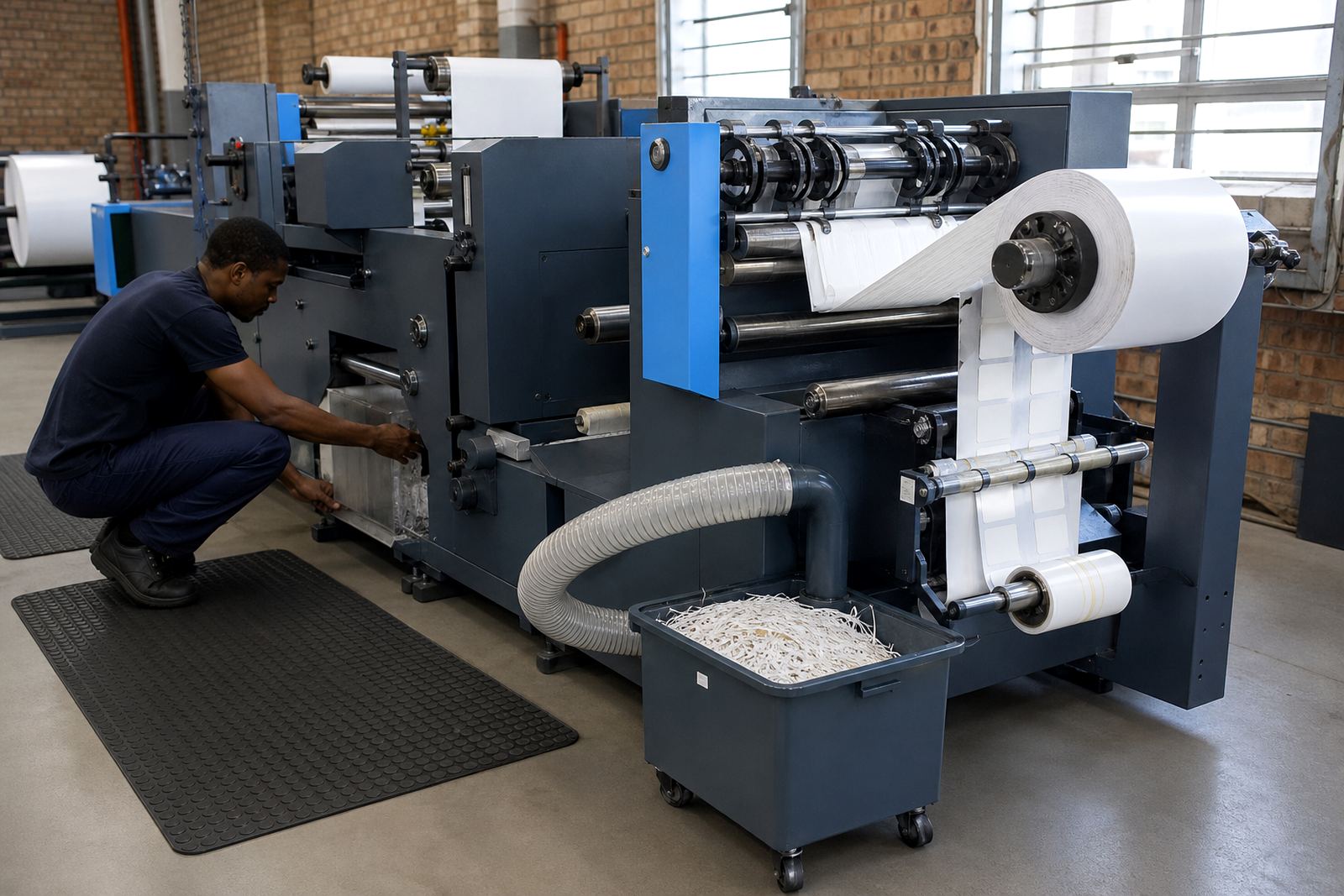
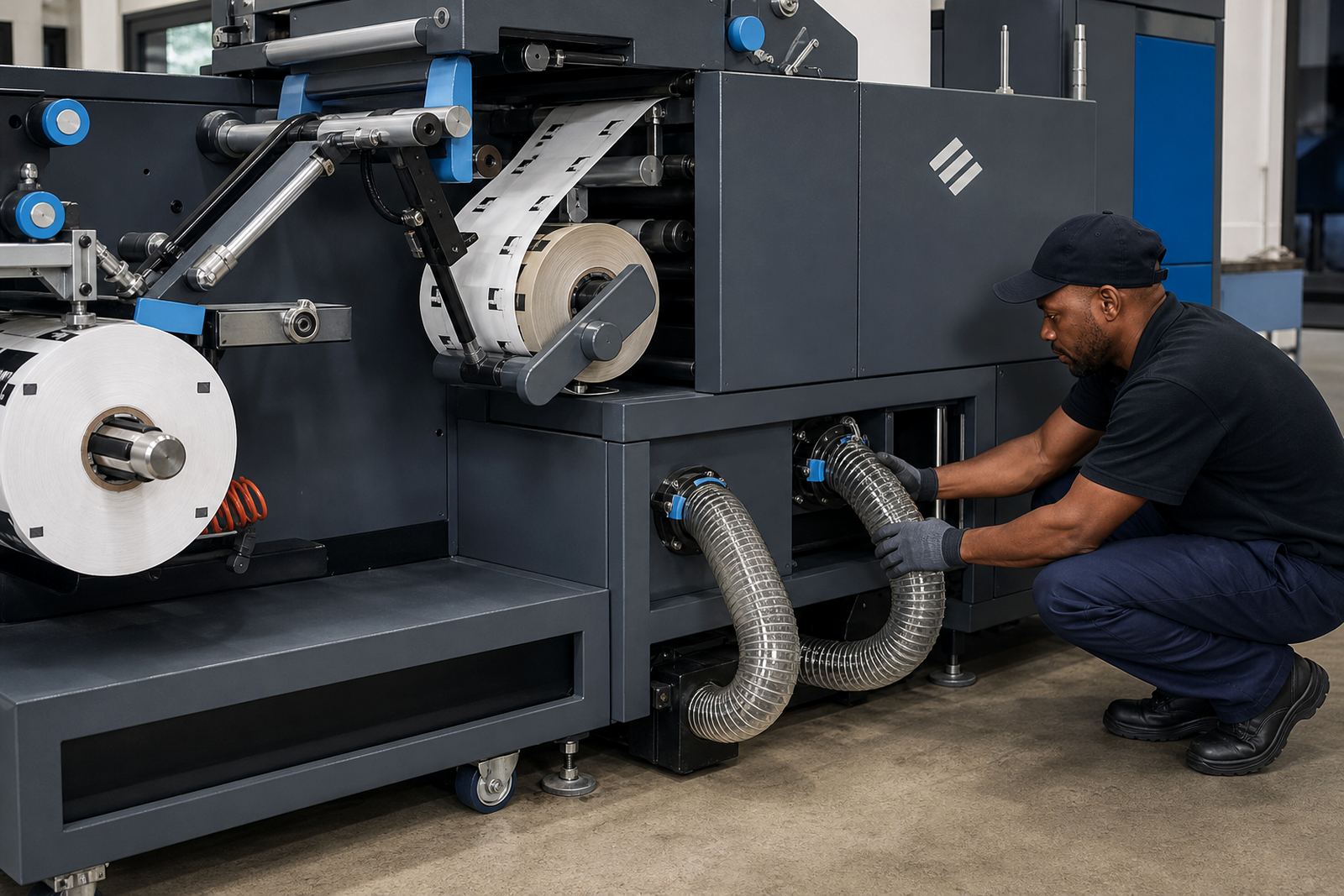
On a digital label finishing line, waste usually means the liner matrix left after die-cutting, edge trim from slitting, and any loose slivers that escape control during rewind. If those pieces do not leave the web cleanly, they can wrap around rollers, catch on guides and spoil registration. On pressure-sensitive work, especially short runs with variable artwork, the waste path needs as much attention as the cutting head.
Good waste handling starts with the right order of operations. Some lines strip matrix first, then slit, then rewind. Others cut, slit and remove trim in separate stages, depending on the label width and the number of lanes. For packaging producers in Randburg, Midrand or Pretoria, the aim is the same: keep the web stable and keep the finished roll neat enough for the next press or applicator.
- Matrix removal deals with the adhesive-backed skeleton after die-cutting.
- Trim removal handles side offcuts from narrow or multiple-up webs.
- Rewind control keeps finished rolls tight, even and easy to pack.
Matrix stripping for higher-volume label runs
Matrix stripping is the most common waste handling method on pressure-sensitive label work. After the shape is cut, the unwanted web around the labels is pulled away at a controlled angle and tension. When the product has many small labels on a wide web, the matrix can be surprisingly heavy, so the stripping route must stay open and steady.
Flexible dies, semi-rotary cutting and laser finishing all need a waste path that suits the label design. Small text, fine corners and tight radii can leave thin bridges that tear if the pull is too aggressive. That is why setup matters. A clean matrix path reduces breaks, keeps the liner travelling flat and protects the next stage of slitting or rewinding.
- Use matrix lifting points that match the cut shape.
- Set peel angles to keep the liner from curling.
- Watch adhesive buildup on guides and rollers.
- Check registration marks when the artwork changes from roll to roll.
Trim removal for narrow webs and multi-lane jobs
Trim removal becomes important where the web is slit into several lanes or where the label width leaves a strong edge strip on both sides. Those strips need a direct path out of the machine, otherwise they drift back into the web and create edge damage. In practice, side trim can be easier to overlook than matrix waste, yet it often causes the messiest stoppages.
For a converter running beer labels, personal care sleeves or chemical labels, the trim method should match the web width and the roll build. Wide edge trim can often be drawn away with tension rollers and a waste take-up path. Very narrow strips need careful guiding so they do not twist, fold or wind around the shaft. In humid coastal conditions, especially around Durban and Gqeberha, soft adhesive can make this job even fussier.
- Keep trim routes short and direct.
- Separate side trim from matrix waste where possible.
- Use stable edge guides before the rewinding stage.
- Inspect the waste path after every change in label width.
When lamination or varnish changes the waste path
Lamination and varnish can alter how waste leaves the web. A laminated film has more body, so the matrix may lift differently from an uncoated face stock. Varnished jobs can also change friction, which affects how tightly the waste pulls through the stripping section. On some short runs the finish looks simple, yet the waste path behaves very differently once the coating is added.
That is why finishing machines need to be set for the actual material stack, not only the artwork. A line that handles paper labels well may need a different peel point, extra nip pressure or a revised slitting blade position when the job moves to film. Operators in Johannesburg and Cape Town often notice the difference first at the rewind, where a bad waste path shows up as telescoping or loose edges.
- Coated webs often need more precise tension control.
- Laminated stock may need firmer separation before stripping.
- Varnish can change how cleanly the matrix releases.
Registration marks keep the cut and the waste aligned
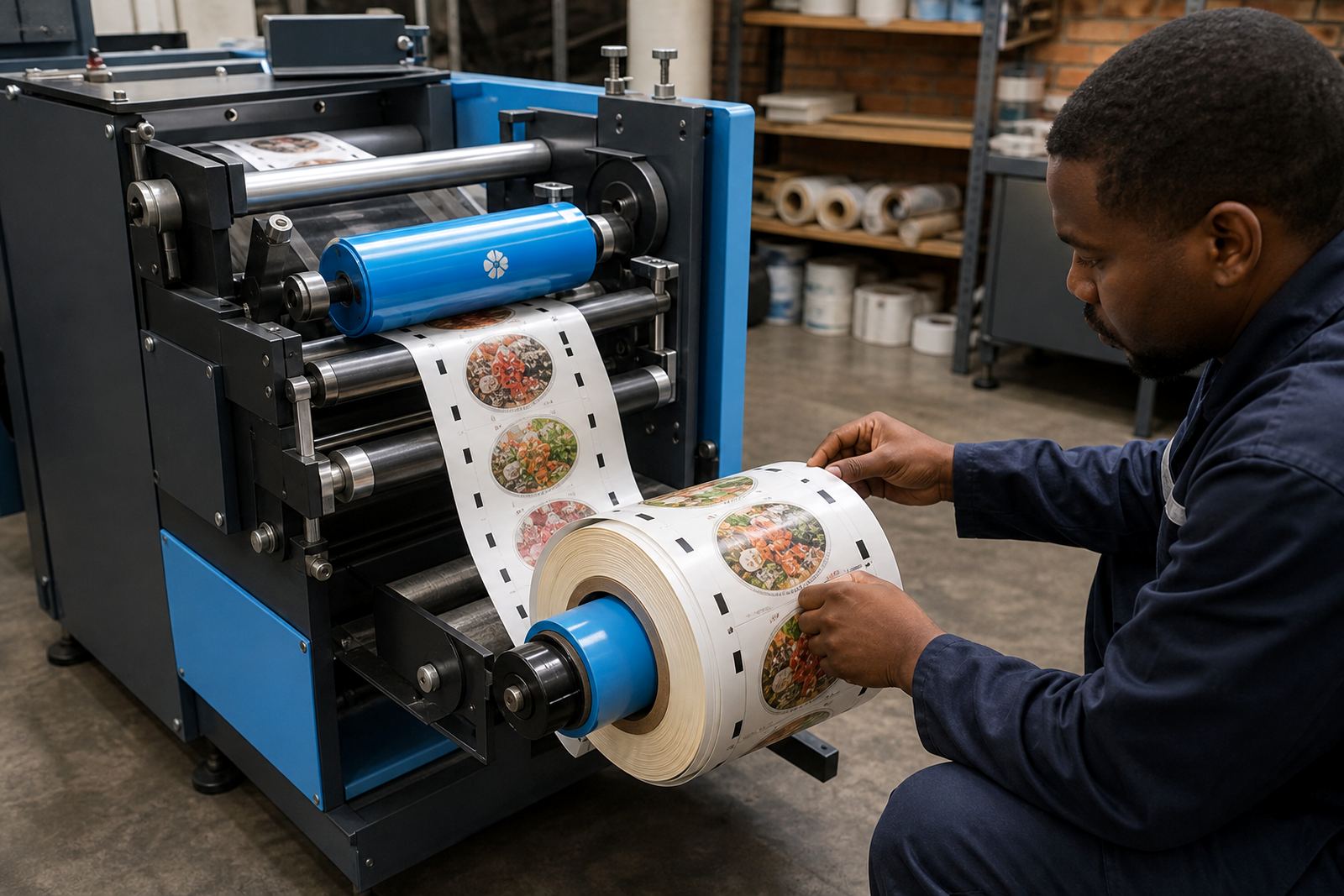
Registration marks are not only for cutting accuracy. They also help the waste handling section stay in step with the printed image. If the cut drifts, the matrix can become uneven and the stripped waste may tug on one side harder than the other. That leads to tears, skew and wasted substrate.
On a semi-rotary line, proper registration control matters when the repeat length changes or when the web carries several artworks on one roll. On laser finishing, the cut can be very precise, but the waste path still needs the right tension and a clear stripping route. Machines with good setup controls make it easier to move from one job to the next without spending half the shift fighting the same web issue.
- Align the cut to the printed mark, not only the web edge.
- Confirm repeat length before loading the next roll.
- Watch for drift after slitting or rewind changes.
Rewind setup after the waste is gone
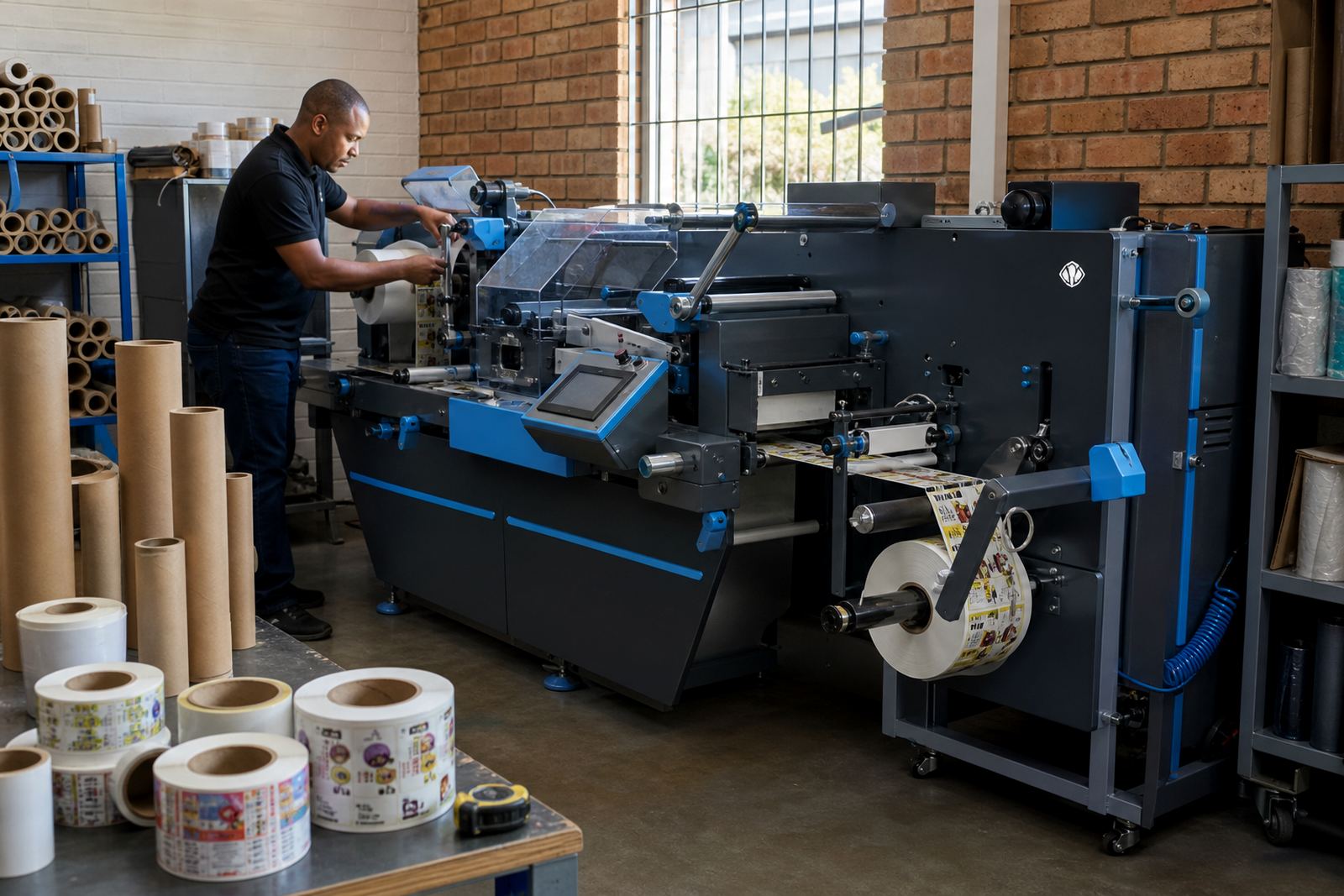
Once the matrix or trim has been removed, the finished roll still needs a proper rewind setup. If the rewind tension is too loose, the rolls telescope. If it is too tight, the liner can stretch or crush the label edge. That is especially true on narrow rolls used for hand application or on longer production rolls prepared for downstream packing.
Rewind setup links straight back to waste handling because a cleaner strip normally gives a cleaner rewind. Operators should check core size, roll width and the number of labels per roll before the job starts. A good setup makes the final roll easier to count, bag and store, which matters when label printers in Randburg are building stock for distribution around the country.
- Match rewind tension to the material and roll diameter.
- Keep the roll edges straight during the final wind.
- Set the slitter blades before the first full production roll.
A Kya Sand job where waste control saved the shift
A packaging team in the north of Johannesburg brought in a job with narrow film labels, heavy matrix waste and two side trims. The first set-up left the waste curling into the guides, and the rewind started to wander. After adjusting the peel angle, moving the trim path and resetting the slit positions, the line settled down and the finished rolls stayed neat enough for packing and dispatch.
That sort of correction is common on mixed label work. Waste handling is rarely one single setting, it is a chain of small choices that either support the cut or work against it. With the right machine setup, the stripping section, slitting station and rewind can all pull in the same direction instead of fighting each other.
For converters that run labels across Johannesburg, Pretoria, Durban, Cape Town and Gqeberha, the practical lesson is plain: waste should leave the machine as cleanly as the labels do. If it does, the line runs calmer, the rolls look better and the operator spends less time clearing tangled offcuts.