Wider rolls change the job before the first label is cut
A move from narrow rolls to wider webs looks straightforward on paper, yet the finishing line feels it everywhere. The unwind has to hold a larger diameter, the web path needs steadier control and the rewind must build a fuller roll without drifting or telescoping. On pressure-sensitive work, even a small sideways movement can show up as poor register, a wandering slit or a neat label edge that turns ragged after winding.
When a label printer in Johannesburg adds wider roll work, the first check is usually not the cutter head. It is whether the whole line can keep a flat web through lamination, die-cutting, stripping and rewinding. Wider material tends to show wrinkles more clearly, especially on coated papers and films where moisture or static can change how the web tracks. In coastal yards, Durban included, humidity also affects liner behaviour and release performance, so the same job may need a different tension setting from a dry inland plant.
More lanes mean more chances for one poor setting to spread
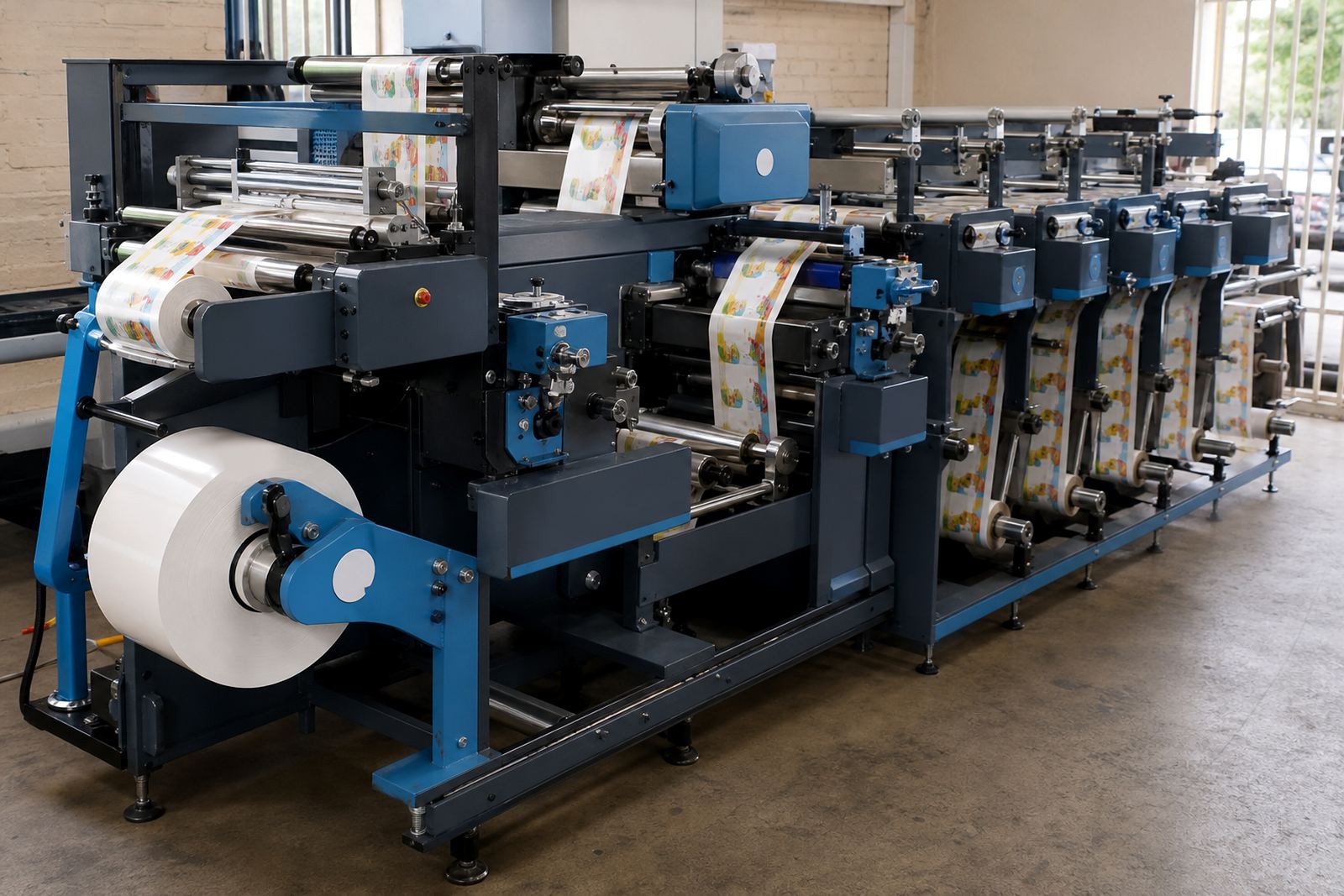
Adding lanes lifts output, but only if each lane is behaving. A clean multi-lane layout needs consistent cross-web tension, accurate slitting and a rewind that builds each lane evenly. If one lane runs tighter than the rest, the slit edge can wander, the web can pull against guide rollers and the stack of rolls at the rewind can start to look uneven before the shift is halfway through.
For packaging producers working with shrink sleeves, wraparound labels or multi-up prime labels, lane count should be matched to the real repeat length and the press registration marks. A setup that looks efficient on a sample roll can create trim problems once production starts. If the matrix is too thin, waste breaks. If the cut depth is too aggressive, the liner gets scored and the rewind becomes unreliable. Those small errors multiply when the web is wider and the lanes are closer together.
- Check lane spacing against the slitting knives and rewind shafts.
- Confirm the web path leaves enough room for matrix stripping.
- Watch for edge curl after lamination on film stocks.
- Keep the rewind build balanced across all lanes.
Registration marks need more discipline on a broad web
Once the web gets wider, registration marks stop being a simple sensor job and become part of the full process. A mark that reads well on one side of the web may become less reliable if the material drifts, if the printed side is not flat or if the laminate changes the surface reflectivity. Laser and semi-rotary systems both depend on stable repeat control, and the wider the web, the more important it is to keep the printed image centred and the cutters aligned to it.
Registration calibration should be checked against the actual press output, not just a trial roll. If the print is slightly out, the die can still cut accurately enough for a narrow label, but on a wider layout the error becomes visible sooner. That is the point where operators spend more time compensating and less time running. In Pretoria, where some converters run mixed short and medium batches on the same line, it helps to record the correct mark position, knife spacing and web tension for each common stock before the next changeover starts.
Lamination, varnish and waste stripping need extra headroom
Finishing features such as lamination and varnish can add value, but they also add stiffness, thickness and surface change. A wider web with a heavier laminate layer needs more care at the unwind and more discipline at the nip points. The same is true where the job carries a varnish or overprint that changes slip or tack. If the line is already at the edge of its tension range, a wider build can turn a manageable setup into a stop-start routine.
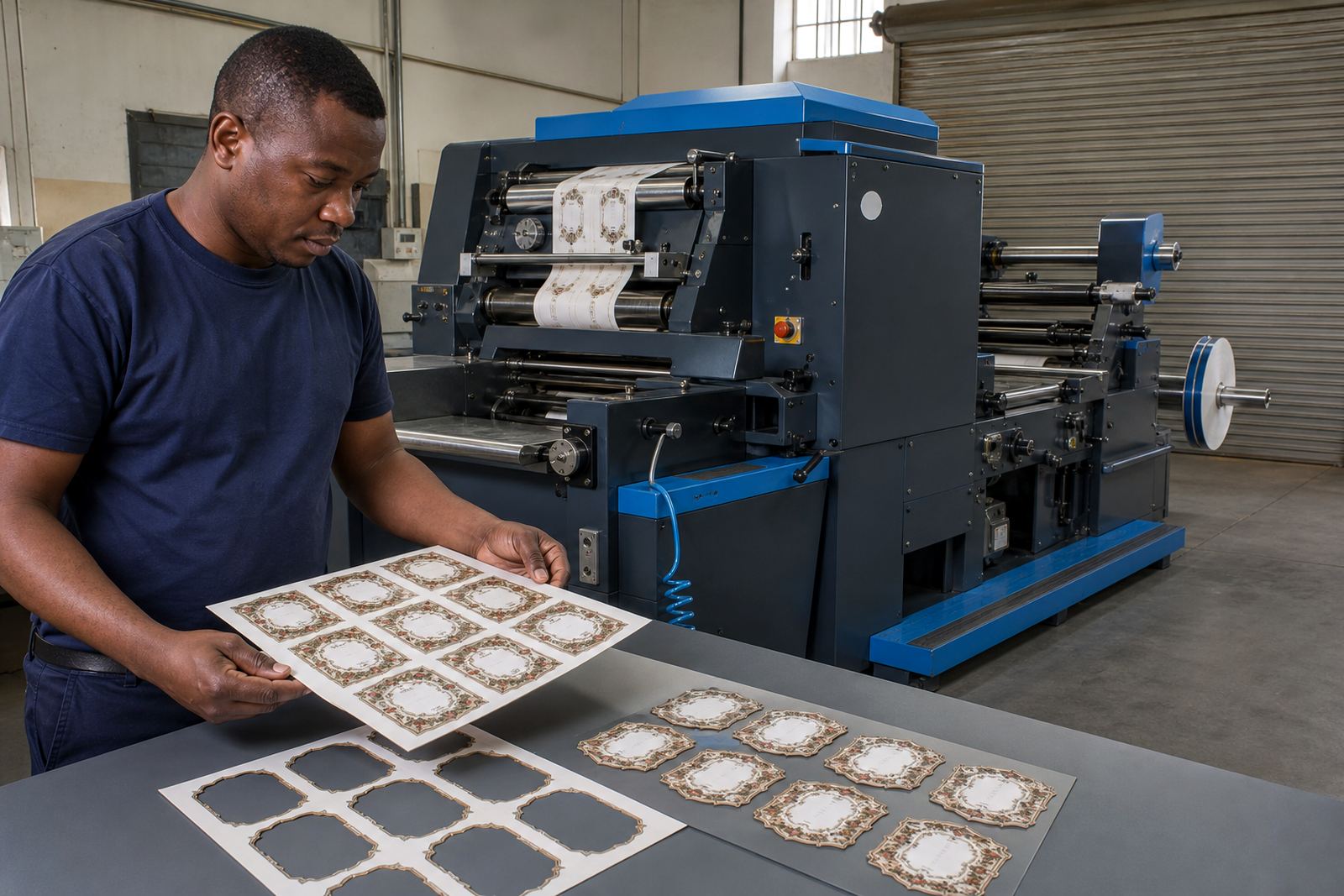
Matrix stripping becomes more sensitive too. Once the waste strip is broad, any weak spot in the die cut can tear across the lane and leave fibres on the labels. A few points matter most:
- Keep the waste take-off angle steady and free of sudden pulls.
- Use the correct die depth for the face material and liner.
- Check that static is not lifting light matrix waste back into the web.
- Match rewind torque to the added stiffness of laminated stock.
These checks save time on the floor, especially where the line is feeding a second operation after the labels are wound.
Roll build, core size and finished reel handling are part of the decision
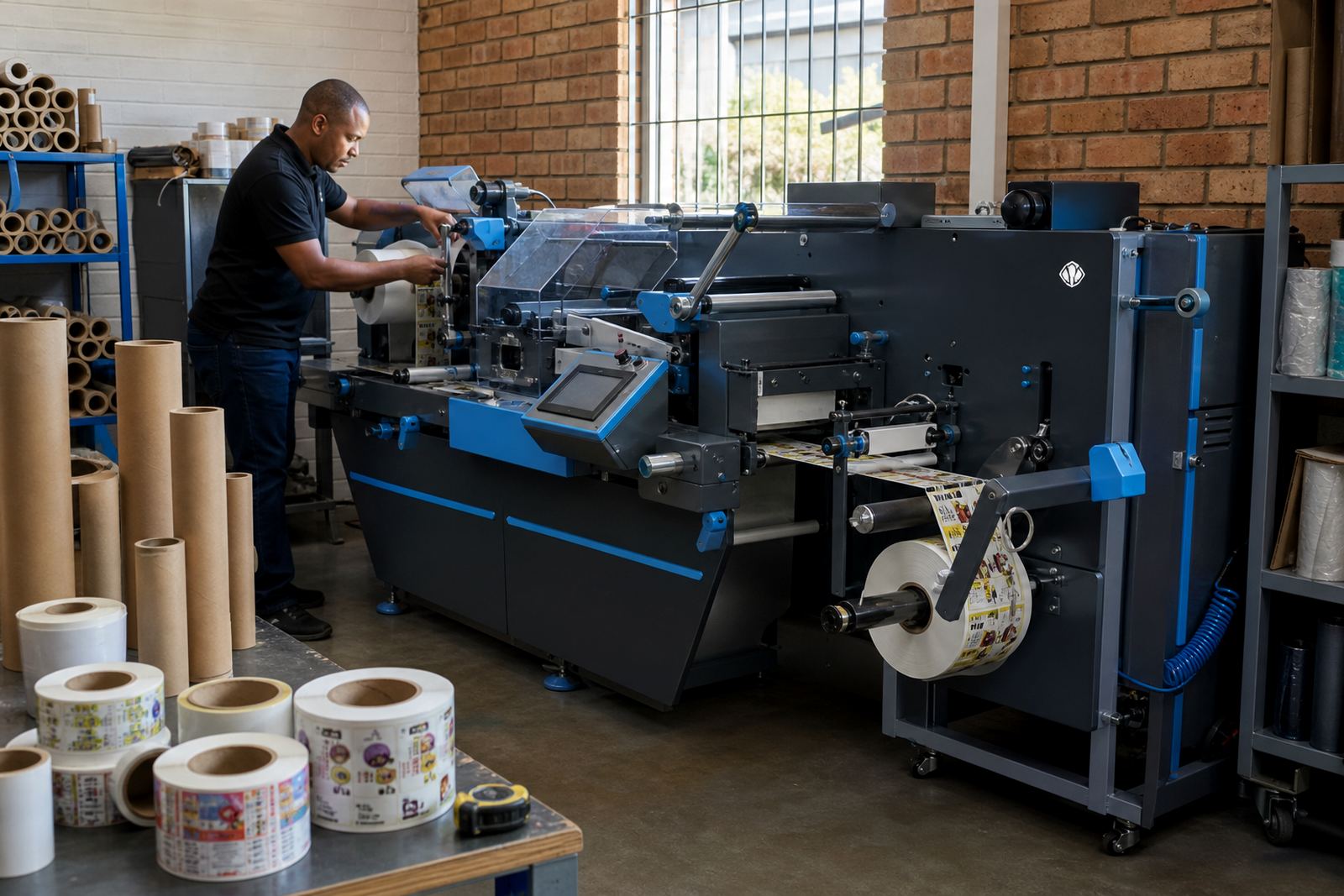
More lanes often mean larger finished rolls or more rolls per shift, and that changes handling. A finished reel that is too loose can telescope in transit, while one wound too tightly can crush the liner or print layer. Core size matters as much as roll width. If the core is too small for the final diameter, the outer layers can become unstable before packing. If it is too large, the line may not give enough winding length to make the batch practical.
At the Kya Sand base in Randburg, many conversations start with the press output and end with how the reel will move through the rest of the plant. A wider job for Cape Town may be finished differently from one sent to a packaging room in Midrand, because the downstream cutter, applicator or packing bench may have its own width limits. The best setup is the one that matches the real pack, store and dispatch routine, not only the first pass off the machine.
A local changeover example from narrow labels to wider packs
Consider a packaging producer in Gauteng moving from a two-lane narrow label format to a wider four-lane structure for a new food pack. The print already carries fine text, a clear registration mark and a varnished panel. On the original format, the line ran well enough with minor attention. On the wider layout, the operator found the waste strip lifting unevenly and the rewind building slightly harder on one side.
The fix was not one single adjustment. The team reviewed the unwind brake, reset web tension through the lamination point, tightened registration calibration and changed the slitting position so the lane edges sat more evenly. Training mattered too, because the operator needed to spot the first signs of drift before the reel started to cone. With wider webs, that early reading saves material and avoids a long clean-up at the end of the run.
That kind of changeover is common across Johannesburg, Durban and Gqeberha, where label rooms often handle a mix of short runs and repeat work. A wider line can do excellent work, but only when finishing settings, stock behaviour and reel handling are treated as one system.
What to review before the line gets wider
Before moving into broader rolls or extra lanes, the practical review should cover the mechanical side, the print side and the workflow around the machine. If any one of those is ignored, the other two carry the strain.
- Check unwind capacity for the heavier parent roll.
- Confirm die-cut registration across the full web width.
- Test slit positions against the finished reel width.
- Set rewind torque for the heaviest planned build.
- Review matrix stripping on the widest expected waste span.
- Match operator training to the new lane count and stock mix.
For larger finishing lines, that review is rarely about one part alone. It is about whether the machine, the stock and the people at the controls can all handle the larger web without chasing faults from one station to the next.