Where semi-rotary sits in the finishing line
In a digital label finishing line, semi-rotary cutting usually sits after printing and often after lamination or varnish. The web travels through unwind, registration, cutting, waste removal, slitting and rewind stations, with the die cylinder making contact only through part of the rotation. That lets the operator cut shapes closely to the printed image while keeping the line moving at a practical pace.
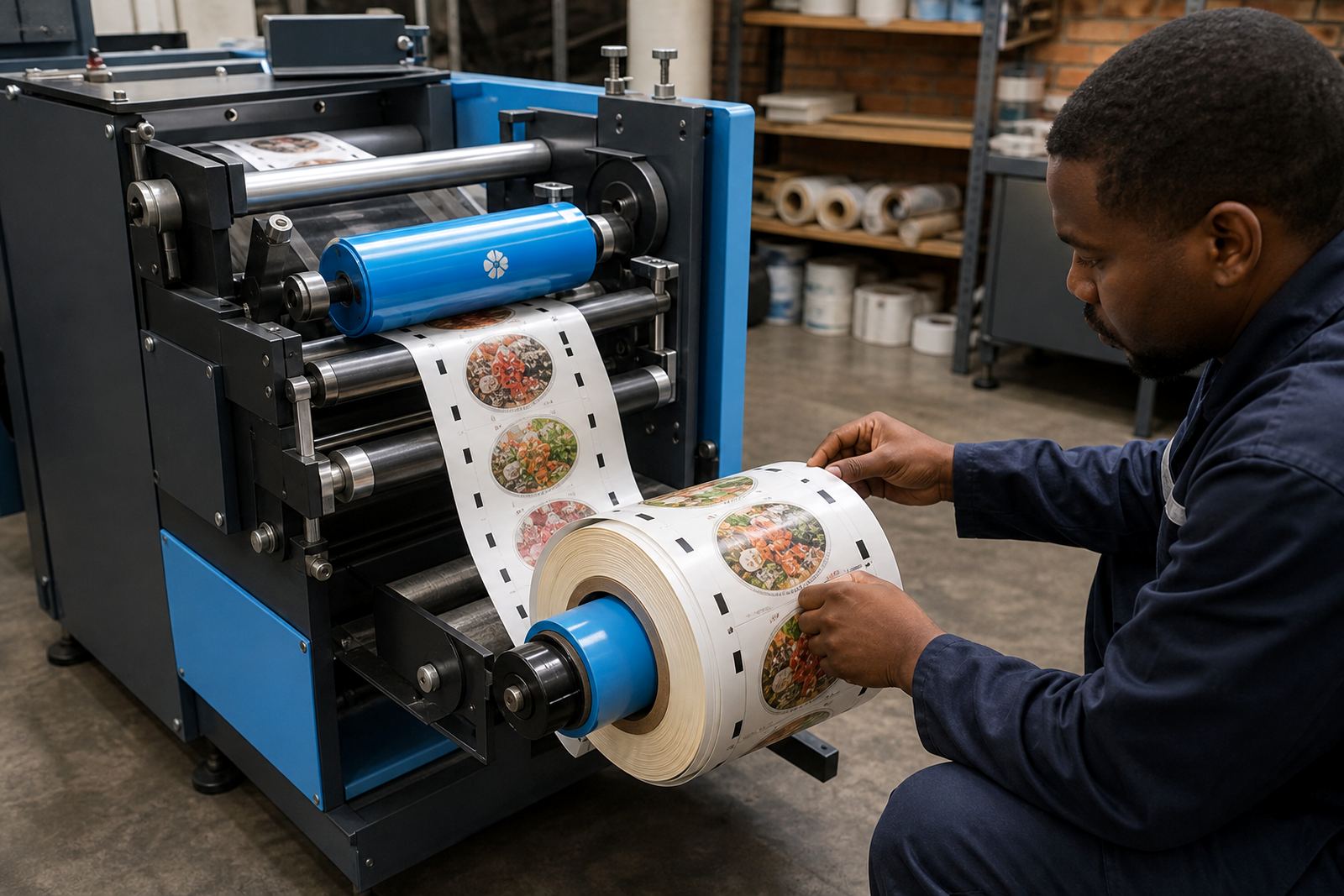
The key point is control. The machine reads registration marks, then lines the cut to the print image as the web advances. That matters on self-adhesive labels, sleeves, tags and cartons where the shape must sit where the artwork says it should. A clean cut at the right depth saves time later, because there is less hand finishing and less rejected stock.
- Best suited to short and medium label runs with repeat artwork
- Works with printed rolls that need accurate registration
- Can sit alongside lamination, varnish and matrix stripping
- Useful where finishing quality matters as much as print quality
What the operator is watching during setup
Semi-rotary jobs depend on setup discipline. The operator checks web width, core size, rewind direction and the position of the repeat before the run starts. If the printed image wanders or the registration mark is weak, the cut will drift and the waste strip may tear unevenly. That is why machine calibration is as important as the cutting head itself.
On a typical setup, the team confirms die pressure, cut depth, web tension and slit positions. Some jobs need a flexible die, others run better on a different tool geometry or on laser cutting where the artwork and substrate suit that route. Film facestocks, paper labels and coated stock each behave differently, and humidity in places like Durban or Gqeberha can change how the web lies on the rollers.
- Check repeat length against the printed artwork before full speed
- Match cut depth to facestock, adhesive and liner
- Keep tension even through unwind and rewind zones
- Watch waste stripping for snags at the matrix edge
How semi-rotary differs from full rotary and laser
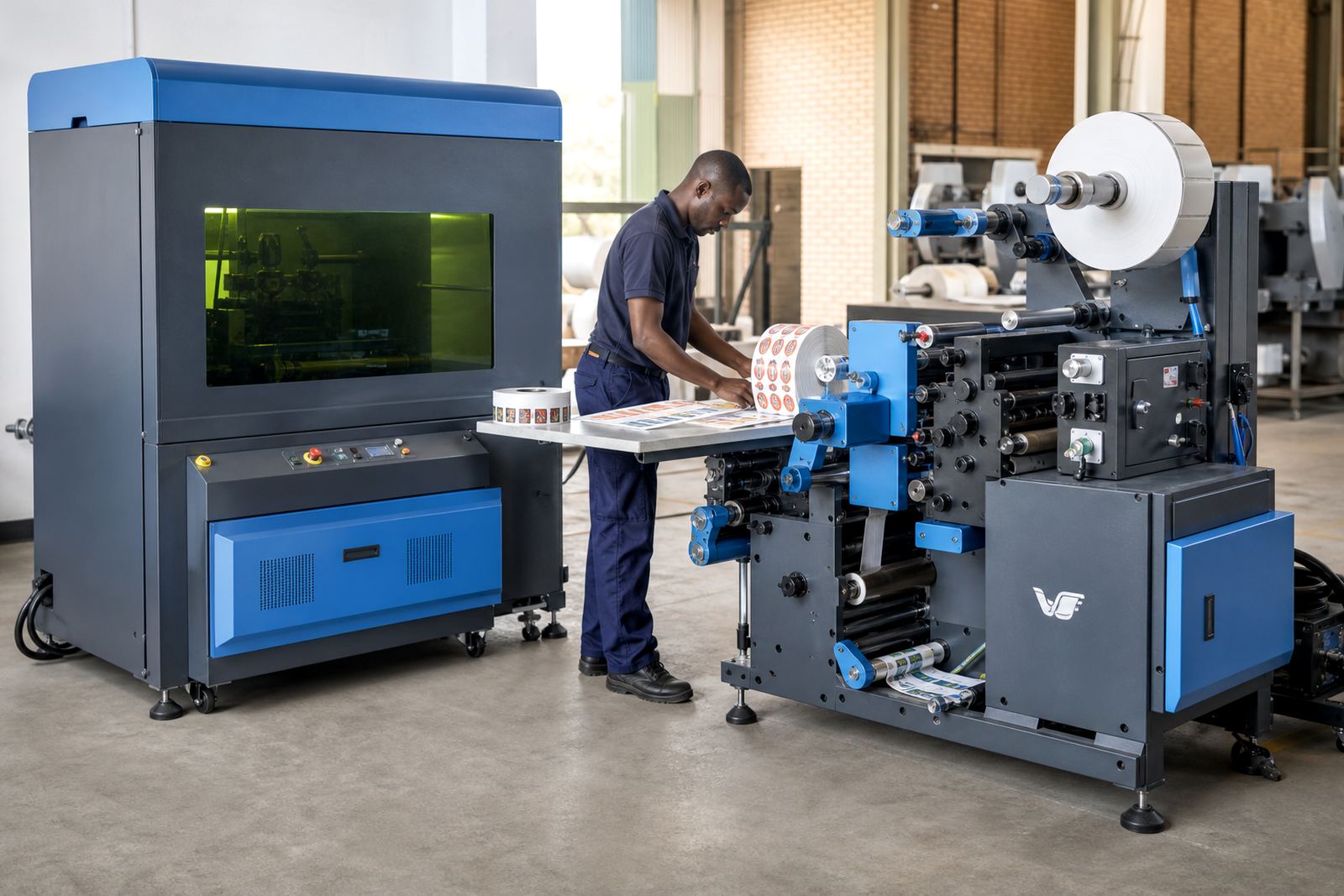
Semi-rotary is often chosen because it gives a useful middle ground. Full rotary systems are strong on long runs and fixed repeat work. Laser systems bring a different set of strengths, especially on complex shapes and jobs that change often. Semi-rotary sits between those ends, giving label printers a practical route when they need speed, shape control and acceptable tooling costs in the same line.
It also works well when jobs vary by customer but still repeat often enough to justify setting a die. A packaging producer in Kya Sand may run multiple label sizes on the same afternoon, then need slitting and rewinding into several roll widths for dispatch. Semi-rotary can handle that kind of work if the line is set correctly and the operator keeps an eye on the cut line through the run.
For many teams the decision is not about which method is better in theory. It is about which method matches the stock, the finish, the volume and the level of repeat work on that week’s plan.
The small faults that usually cost the most time
Most semi-rotary trouble starts in setup, not in the cut head. A weak registration mark, poor web tension, dull tooling or a winding fault can turn a clean job into a stop-start shift. When the waste matrix breaks too early, the operator spends time rethreading and checking the rewind path instead of finishing output. That is the kind of loss that shows up in the production room long before it shows up on the invoice.
There are a few signs worth watching from the first metres:
- Registration marks are readable but the cut still drifts
- The matrix strip lifts or stretches at the edge
- Slit lanes curl on rewind and create telescoping rolls
- The liner shows pinching, scoring or uneven pressure marks
- Cut depth changes after the first few hundred metres
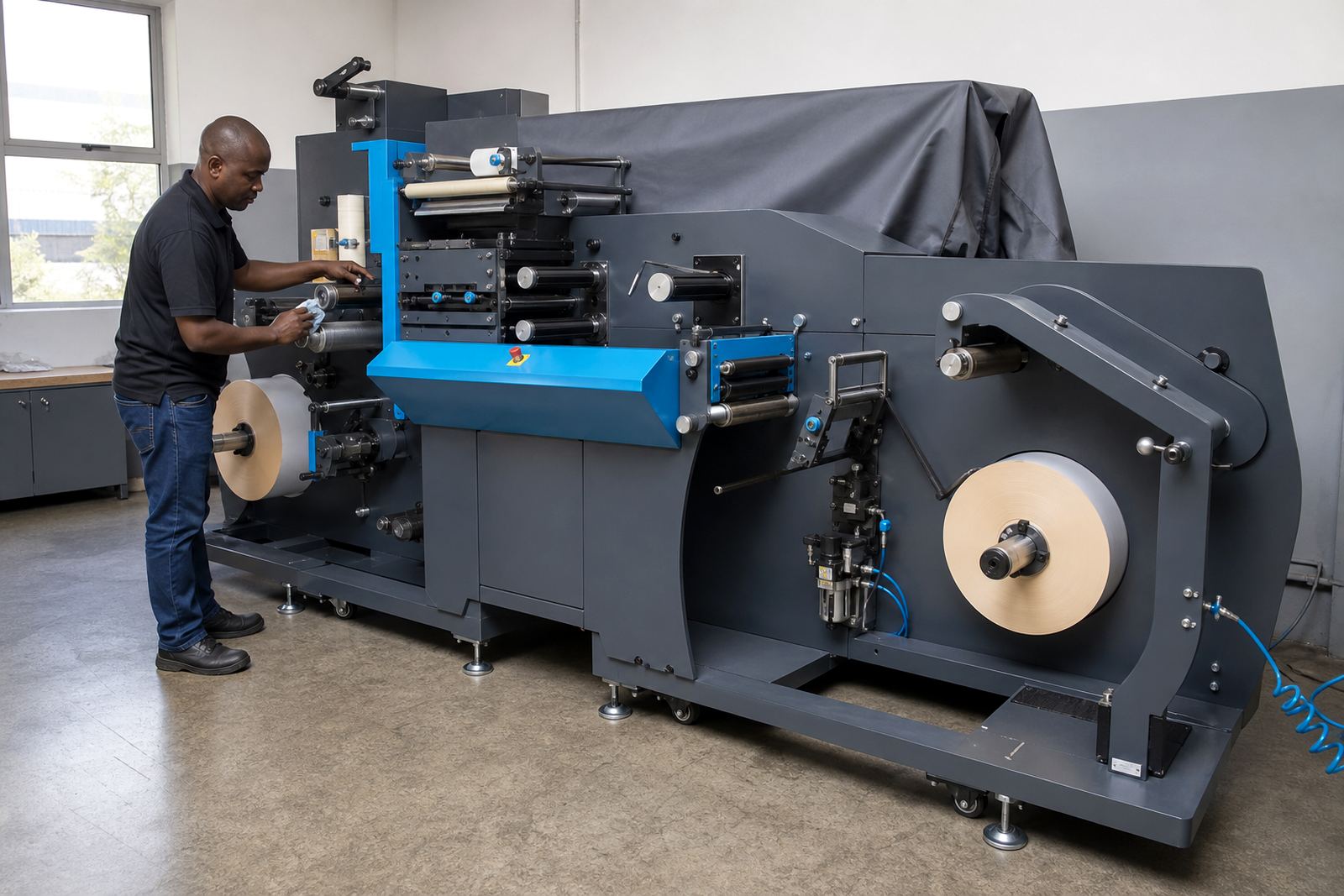
Preventive maintenance helps here. Clean rollers, sound bearings, sharp tooling and correct guides reduce wear on the whole line. In Johannesburg or Pretoria, where some printers run mixed shifts and tighter dispatch plans, that maintenance discipline keeps the finishing line steadier than constant reactive repairs.
A local job example from Randburg to the coast
A label printer in Randburg may start with a short run of cosmetic product labels, then move to a second job for a food packer in Cape Town that needs tighter slit widths and a clean rewind. The first job might use a laminated stock with a varnish layer. The second might need a different cut depth because the substrate and adhesive behave differently. In both cases, semi-rotary cutting is doing the same core work, but the machine settings are not the same.
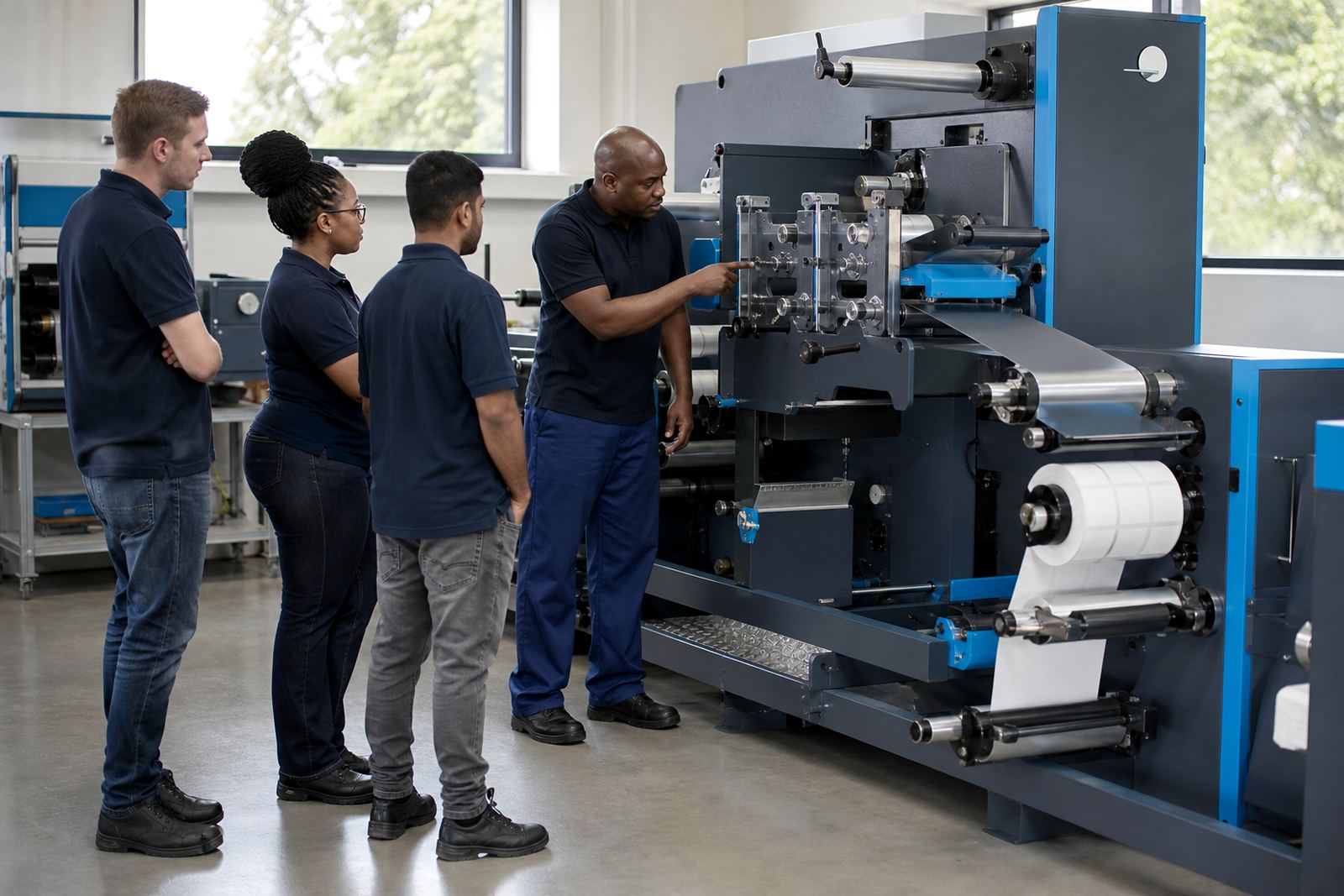
That is where installation and operator training make a difference. The team has to understand how registration calibration, waste stripping and rewind setup all affect the final roll. If the settings are rushed, the machine can still run, but the rolls may not leave the floor in the shape the customer expects. A calm setup, a proper check of the repeat and a steady eye on the strip path usually save more time than any guesswork.
For South African label and packaging teams, the practical value of semi-rotary cutting is easy to see. It is a controlled way to turn printed web into usable rolls, especially when the job mix changes through the week and the finishing line has to keep up without fuss.