Clear the line before anyone starts stripping panels
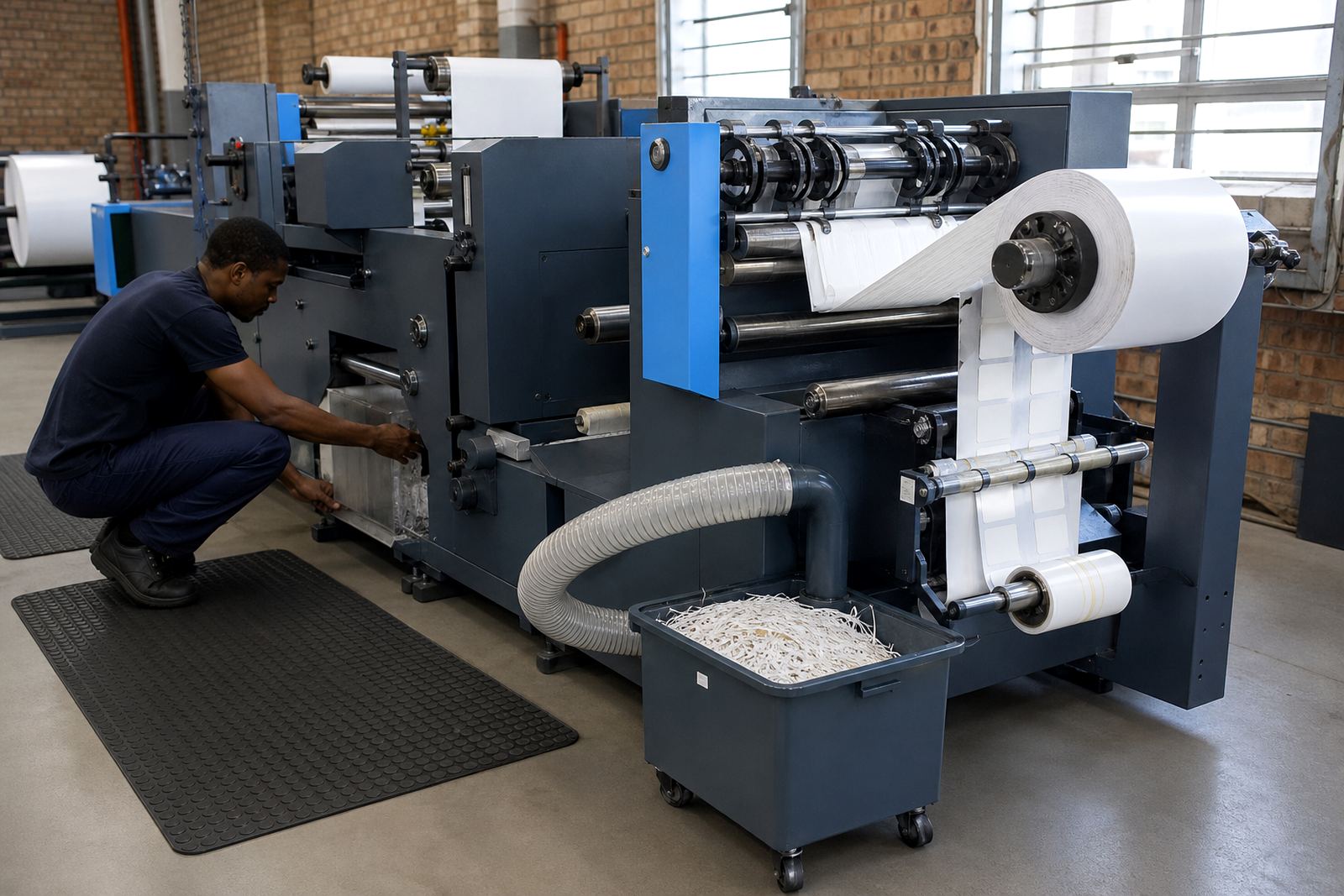
Give the technician space to work around the unwind, web path, laminate station, cutting head and rewind. If the unit sits tight against a wall or another machine, move nearby stock, pallets and loose tools first. That includes sample rolls, pallets of labels, offcuts and packaging cartons that usually gather around the finishing line.
Switch off and isolate the machine in the way your site uses for maintenance, then keep the area open for inspection. If your team is running more than one shift, let the operators know which unit is booked for service and which feeds are off limits. A tidy floor helps, but the real gain is access to guards, sensors, rollers and the web path without constant stop-start interruptions.
- Clear at least a working corridor around the machine.
- Remove loose rolls, knives, cores and job cartons.
- Keep the current job ticket near the machine.
- Leave the power isolation point easy to reach.
Have the right rolls, samples and job notes on hand
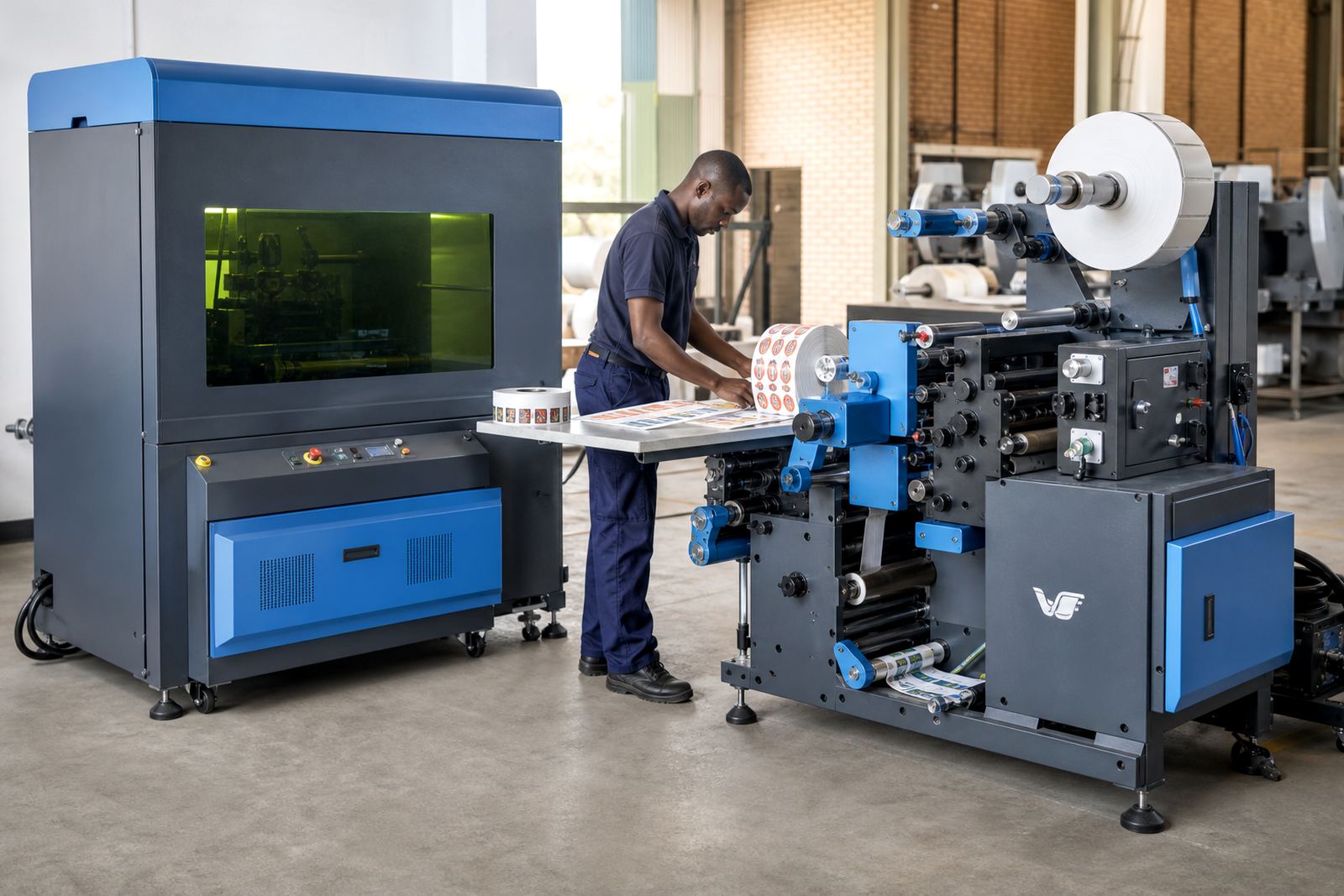
Service work goes better when the technician can see the same material that gives trouble in production. Keep at least one sample roll of the label stock, liner and laminate, plus any printed samples that show the fault. If the issue only appears on a narrow web or on a heavier face stock, say so before the visit starts.
Job notes should show the roll width, core size, outer diameter, unwind direction and the finished label size. If you run multiple formats, point out which one has problems with registration marks, matrix stripping or rewind tension. A small detail like a web wandering on a 330 mm roll or a crease on a clear film can change the set-up completely.
- Bring the current job ticket and sample reels.
- Note the face material, liner and laminate build-up.
- Record the finished label size and slit widths.
- Mark whether the issue appears on first pass or later in the run.
Tell the team what the technician needs to see
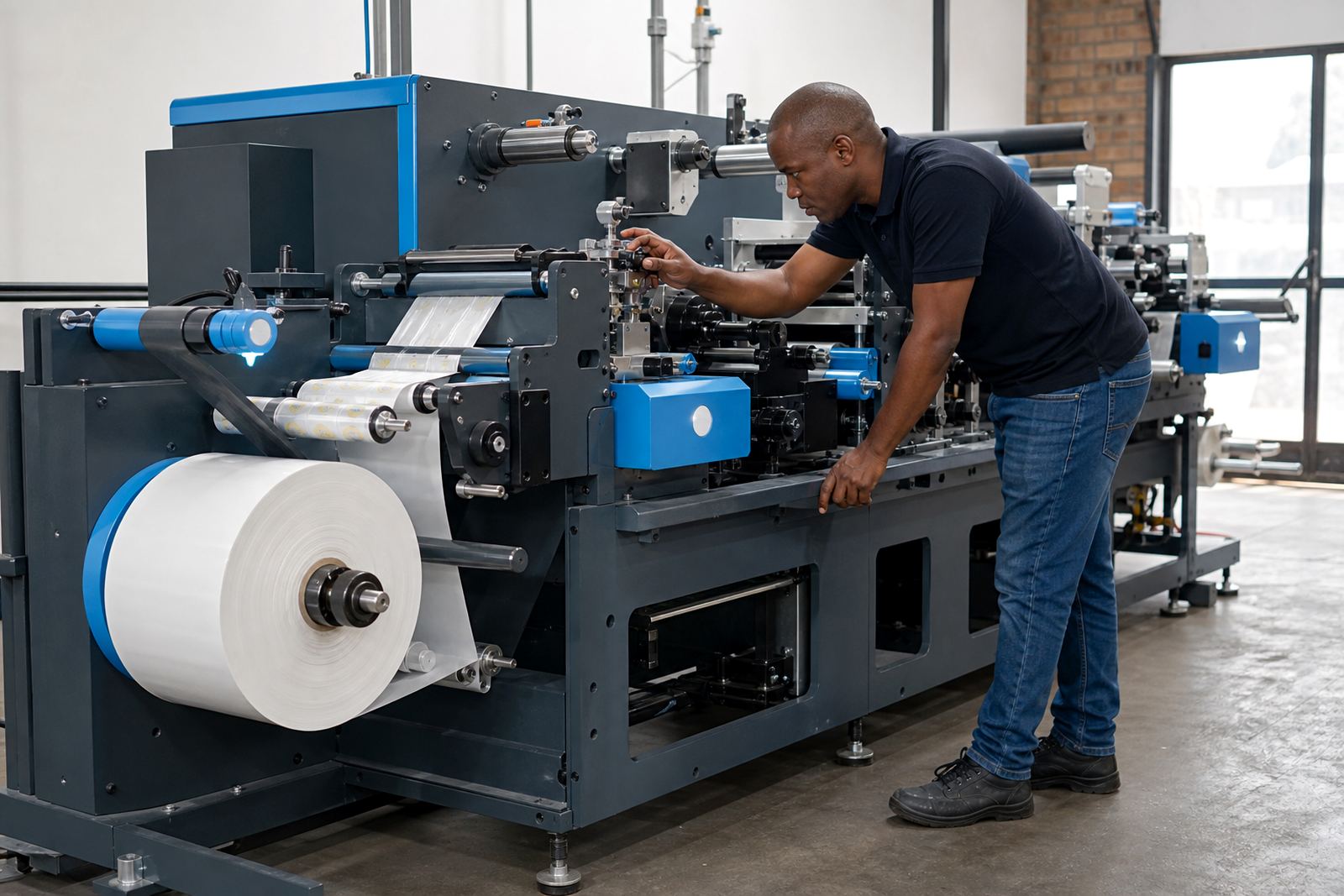
Operators often know the problem better than management does, but they do not always describe it the same way. Ask the operator to show where the fault starts, what the machine sounds like, and whether the defect appears during unwinding, lamination, die-cutting, stripping or rewinding. If the trouble is linked to a certain job, keep that job active on the line until the technician has seen it.
It helps to have one person who can answer questions about history on the machine, while another stays with production records. That avoids mixed instructions and keeps the visit grounded in actual running conditions. In a busy Randburg print shop, for example, the afternoon shift might know that a certain semi-rotary cut drifts only when a long run follows a warm morning start. That detail matters more than a broad description.
Registration, tension and die setup need plain records
Digital label finishing relies on accurate web handling. If your machine uses registration marks, keep a few printed sheets or a short roll showing the marks clearly. If the setup includes flexible dies, note which die is fitted, how it is mounted and whether the cut depth has been changing. When the issue sits between slit width, tension and rewind pack, small notes save a lot of guessing.
Before the visit, check whether the lamination station, varnish unit or waste strip path was altered during the last job change. A loose guide roller or a tired bearing can look like a print fault until the web path is checked piece by piece. The technician still needs to measure and test, but your notes narrow the search and make the first inspection more useful.
- Keep examples of visible registration marks.
- List any recent die changes or adjustments.
- Note slitting widths and rewind core sizes.
- Point out any web path changes made during the last setup.
Protect the machine history, parts and access details
Service visits run smoother when the team can show what has already been done to the machine. Keep a small file with previous breakdown notes, parts replaced, roller changes, blade changes and any recurring faults. If the machine has a known issue with waste stripping or roll tracking, that record saves time and stops the same checks being repeated from zero.
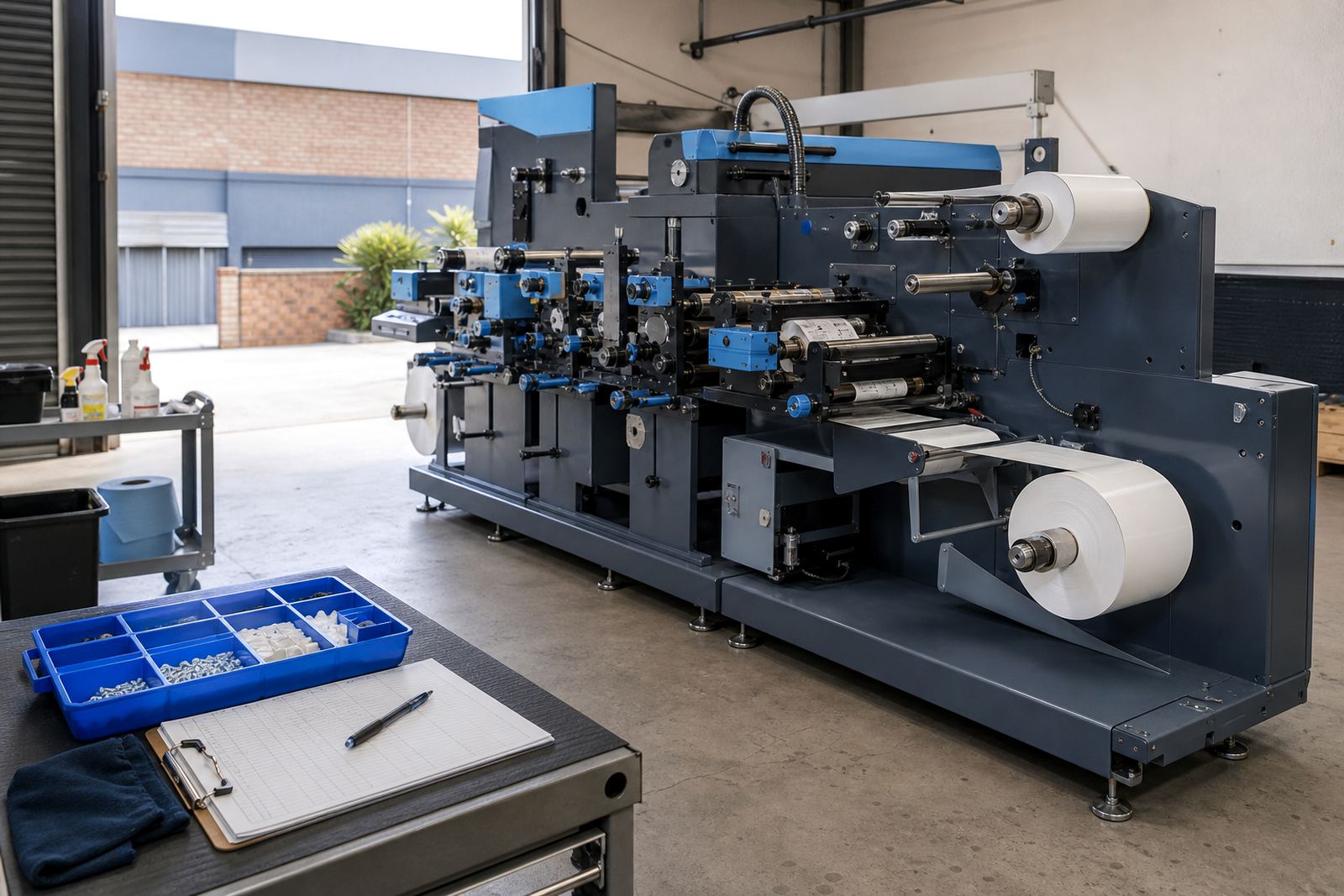
It is also worth making sure the technician can reach the spares you keep on site. Belts, sensors, bearings, knives, cores, tape and clean lint-free cloths should not be buried under other stock. In larger plants around Pretoria or Cape Town, people sometimes store spares in two rooms and nobody can find the right part when it is needed. One labelled shelf is better than a big room full of uncertainty.
A Kya Sand label line can be ready in one morning
Picture a packaging producer in Kya Sand running narrow labels for a food carton range. The machine has started leaving a slight bur on the slit edge and the rewind is packing too tight on the last two turns. Before the service visit, the team sets aside the printed roll, the spec sheet, the spare cores and the last maintenance note. The operator marks where the problem starts, and the floor is cleared around the unwind, lamination station and rewind mandrel.
When the technician arrives, the visit begins with the actual fault, not a search through the storeroom. That usually means the machine can be checked against the same stock, the same settings and the same web path that caused the issue. The result is a cleaner visit and a better chance of getting the line back into proper production condition without extra noise from avoidable delays.
What to leave ready at the gate and on the floor
Access details matter, especially on busy industrial sites where security and loading bays control movement through the day. Make sure the technician knows which gate to use, where to park, and which person on site will escort them to the machine. If the line sits inside a packaging hall with strict safety rules, have the required access gear ready before the visit begins.
A short final check on the floor helps the whole job feel calmer. The machine is open, the samples are near it, the operator knows what to show, and the parts tray is not mixed up with unrelated stock. That is usually enough to let the service work start properly, with less scrambling and fewer interruptions once the covers come off.
- Confirm the site entry point and parking area.
- Set aside the operator who knows the fault best.
- Keep samples, notes and spares next to the machine.
- Leave the surrounding floor free of stock and packing waste.