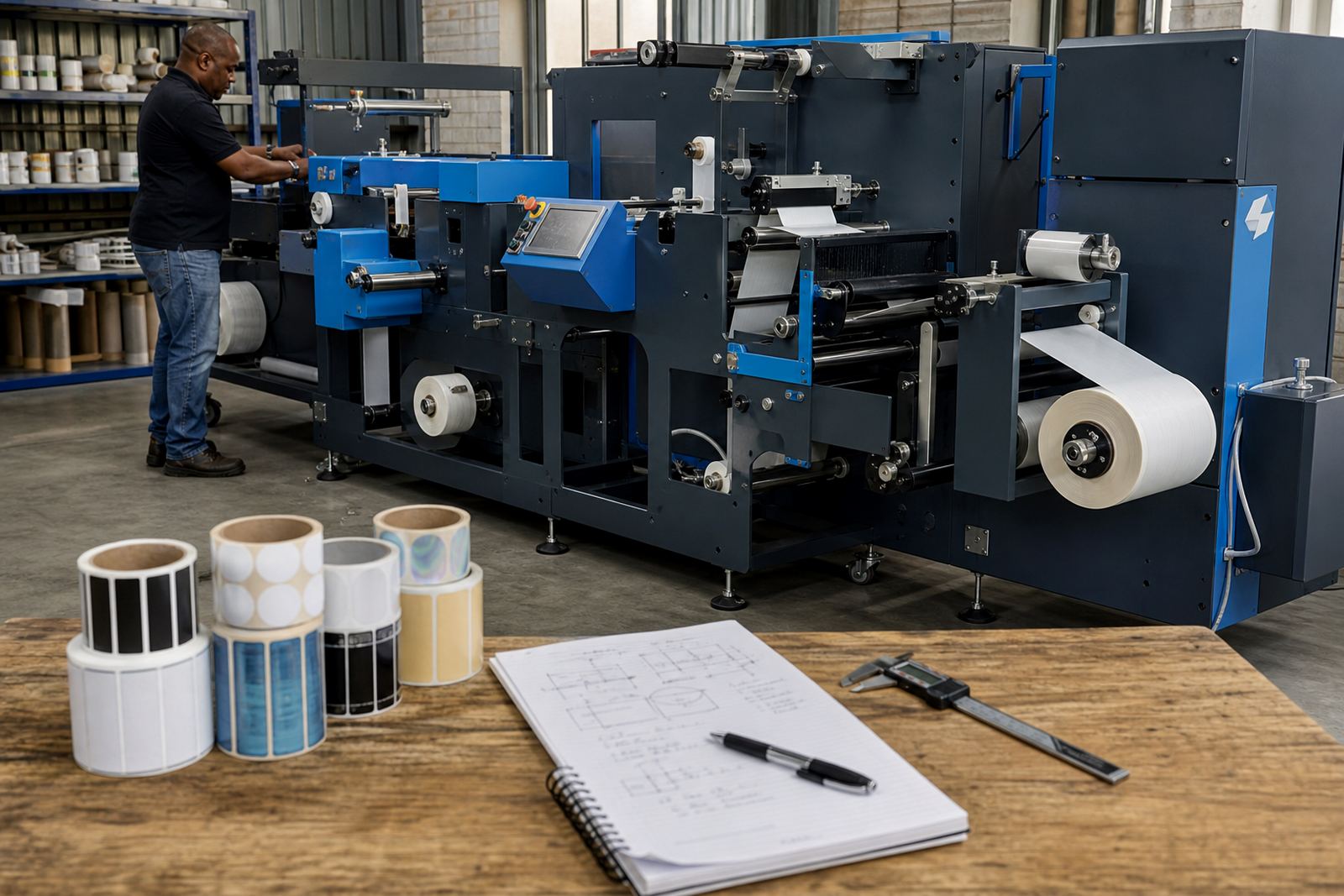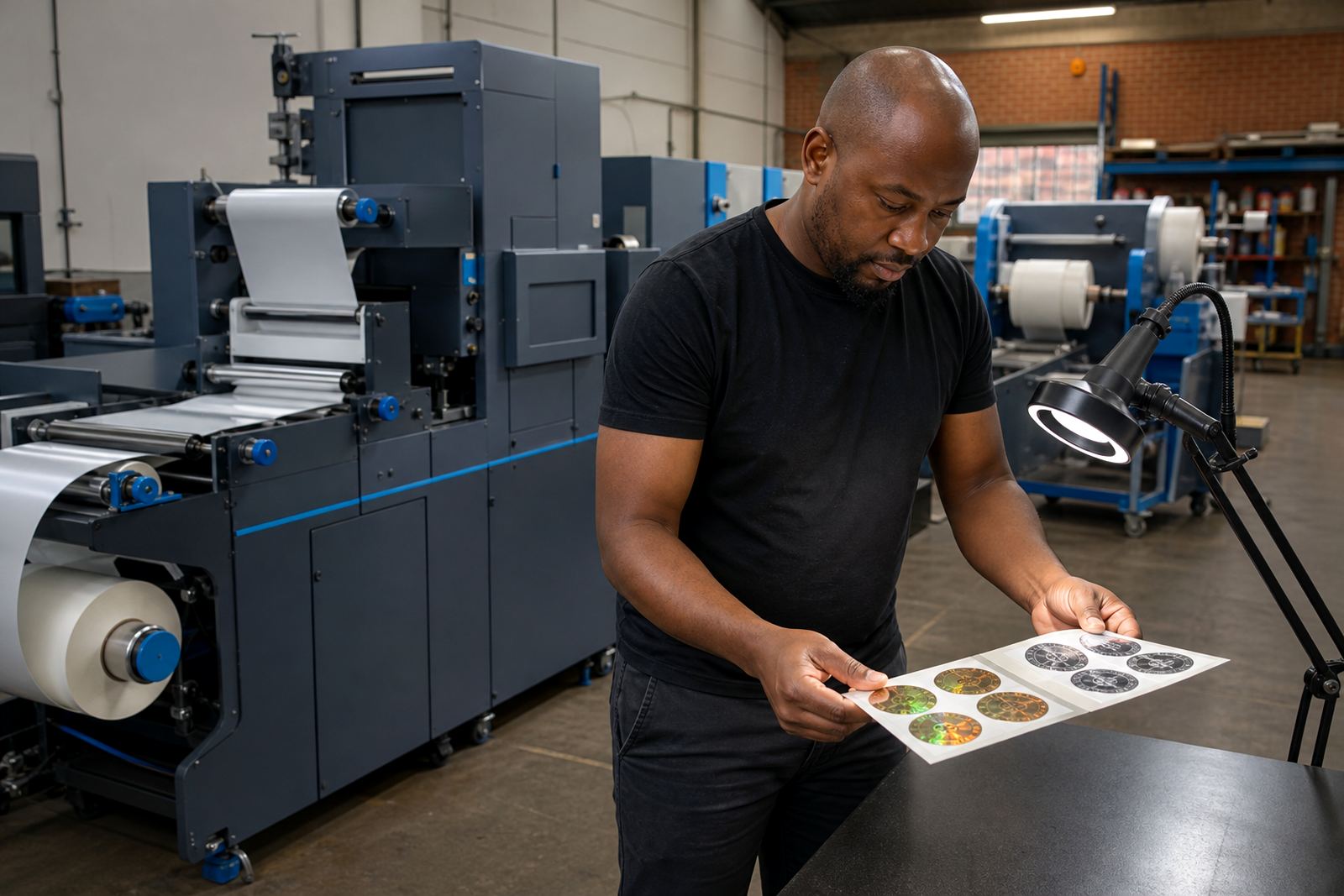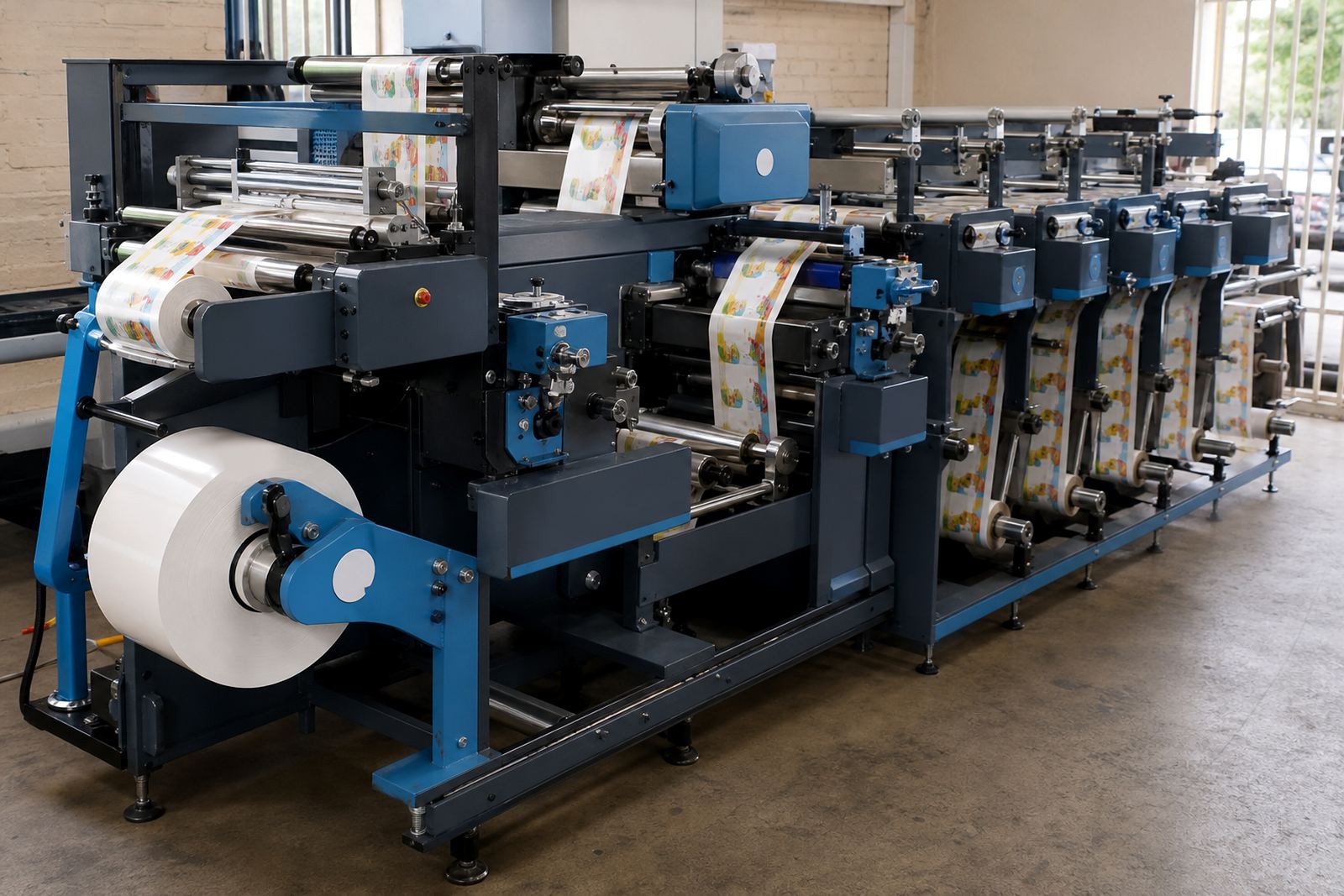
Put the die away clean, not just out of the machine
After a run, the die should be cleared of adhesive, paper dust and coating residue before it goes into storage. Fine waste left on the cutting edge can harden, and that makes the next setup harder than it needs to be.
Use a soft cloth, a low lint wipe and the cleaning method suited to the die material. Avoid scraping with hard metal tools, because one slip can mark the cutting line or bend the fine detail. If the job ran with laminate or varnish, check the waste paths and relief areas as well, not only the visible edge.
- Remove loose waste from the die face and backing area.
- Inspect for nicks, bent points and adhesive build-up.
- Wipe dry before packing, especially after humid coastal work.
Flat storage keeps the cutting line truer
Flexible dies should sit flat, with no pressure on the cutting edge and no twist across the body. Rolling or leaning a die against a wall may seem harmless, but it can introduce a curve that shows up later in poor cut depth or uneven stripping.
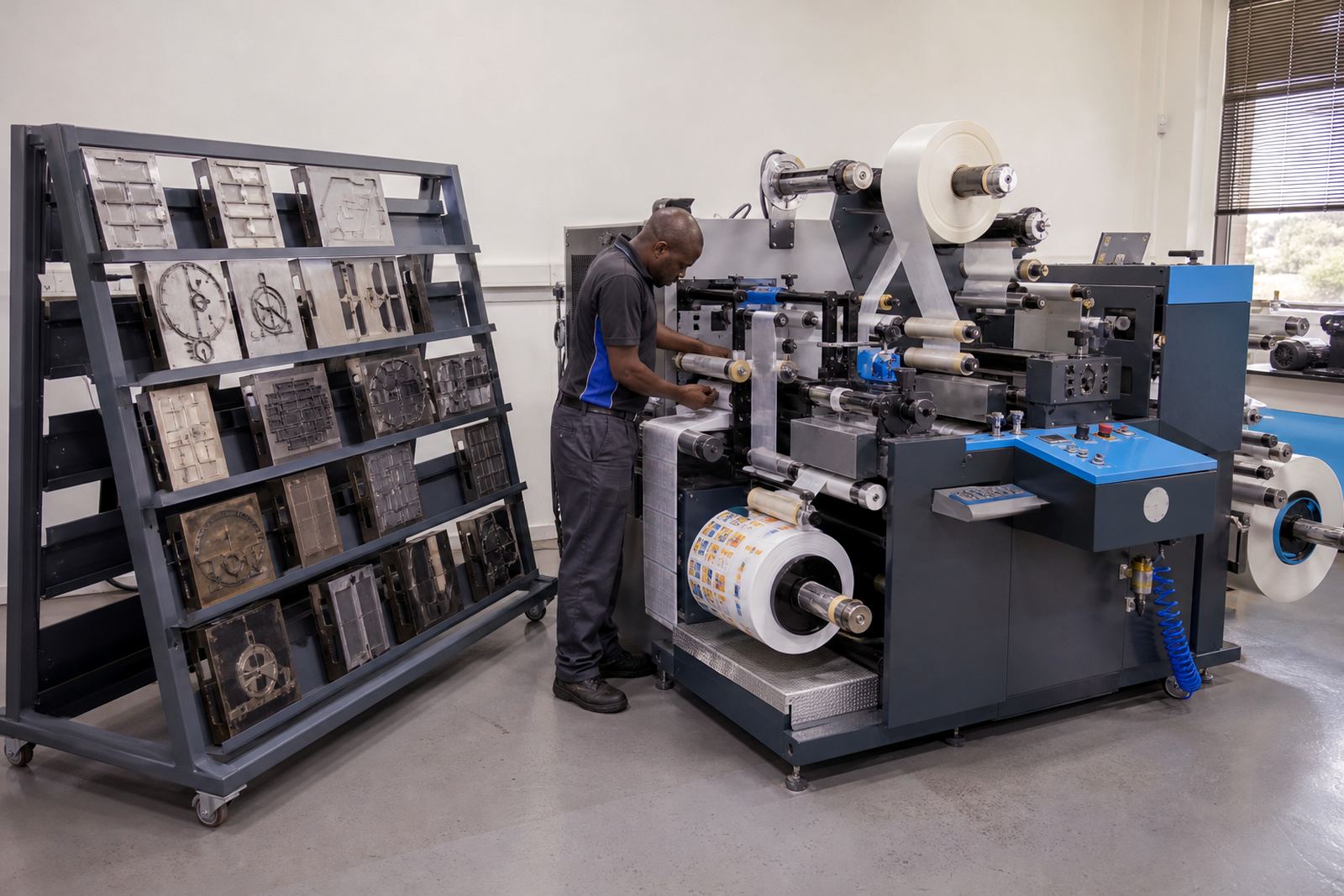
Store dies in labelled sleeves, trays or racks that support the full length evenly. If the shop handles several repeat jobs, separate the dies by size, job name and substrate type so the correct tool is easy to find without handling every piece twice.
- Keep dies flat on a shelf or in a purpose-made rack.
- Use dividers so dies do not rub against each other.
- Mark each die with job name, repeat size and date of last use.
Humidity matters more than many teams expect
In Johannesburg, a neat store room can still pick up dust and temperature swings. In Durban or Gqeberha, the bigger issue is moisture in the air. Both conditions can affect the backing material, the adhesive layer and the fine geometry on a flexible die.
Do not leave dies in open packing next to cleaning chemicals, floor wash areas or loading bays. A closed cabinet with stable temperature and limited humidity is far better than a shelf near a roller door. If the site sits close to the coast, inspect stored dies for surface oxidation and any sign that the backing has lifted at the corners.
Match the storage note to the next print run
A stored die should carry enough detail to make the next job straightforward. When the label printer or packaging team opens the file weeks later, the storage note should answer the common setup questions without guesswork.
Useful notes include the substrate, repeat length, slit layout, registration mark position and whether the job ran with lamination, varnish or matrix stripping. If a job uses semi-rotary cutting with a flexible die, note the anvil setting or any packing change that affected cut depth. That small record saves time at the machine and keeps repeat work consistent.
- Write the substrate and repeat size on the storage sleeve.
- Record any packing changes used on the last run.
- Note whether the job needed slitting, rewinding or extra waste strip-out.
Handle dies like precision tools, not loose consumables
Operators often move quickly between changeovers, and that is where damage usually starts. A flexible die should not be dropped into a mixed parts tray with knives, spacers and loose fasteners. One rough edge against another can create a small flaw that only shows up when the job is back on the machine.
Train the team to lift the die with two hands, keep the cutting face protected and avoid stacking weight on top of it. If a die is going into service vans or between sites, use a rigid carrier. That matters on jobs moving through Randburg, Midrand and Kempton Park where dies may travel between press rooms and finishing lines in the same day.
A Randburg label shop with a practical storage routine
A packaging team in Kya Sand that runs short repeat batches on self-adhesive labels has a simple routine: clean the die, check the edge, log the job details and store it flat in a dry cabinet. When the same label returns for a reprint, the operator is not starting from a mystery box of tools.
That routine is useful where jobs move between digital die-cutting, slitting and rewinding. The die stays protected while the finishing line handles the next order, and the stored notes help the team line up registration marks, waste strip-out and repeat length with less stopping at the machine.
- Keep the storage cabinet close to the finishing area, but away from dust.
- Separate active dies from older repeat jobs.
- Review the stored die before it goes back into production.
When a stored die should be checked before use
Even good storage cannot stop every problem. Before a repeat job goes live, inspect the die for edge wear, lifted corners, dried adhesive and any change in cut quality from the previous run. A die that looks fine at a glance may still leave a weak matrix strip or uneven kiss-cut.
If the job now uses a different liner, varnish layer or roll width, the old storage note should be updated before the die is fitted again. That habit helps the machine team keep production steady and reduces avoidable setup trouble on label work with tight registration.
Flexible dies earn their keep when they are stored with the same care used during setup. A clean, flat, labelled and dry place is usually enough to keep them ready for the next repeat job.