Why the web matters before the blade touches it
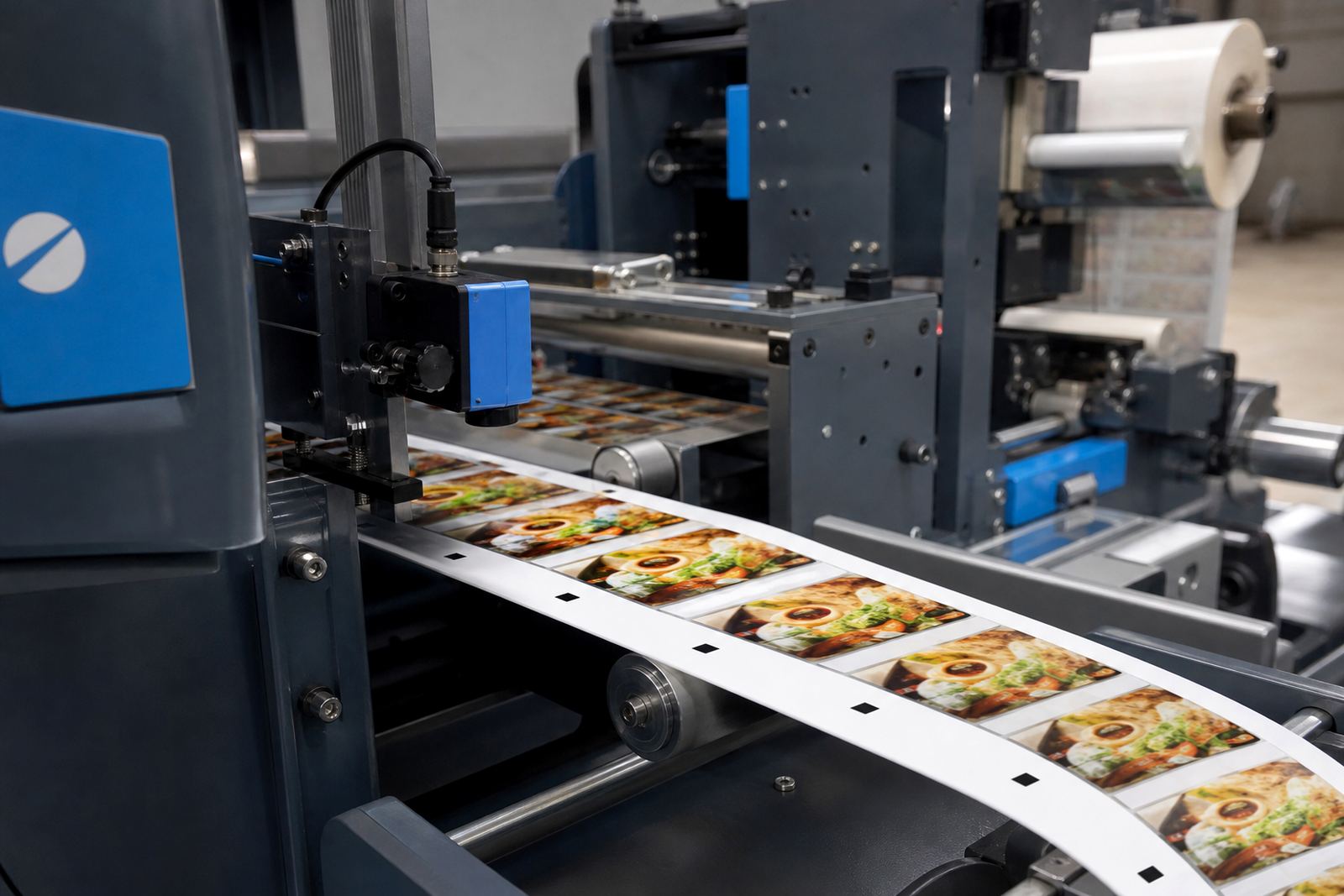
In a label finishing line, the web is not just moving material, it is the carrier for every cut, coat and rewind. A stable web keeps the printed register marks in place and gives the die, laser head or slitting blade a clean target. If tension changes from one stage to the next, the finishing step may still run but the result can drift, curl or crease.
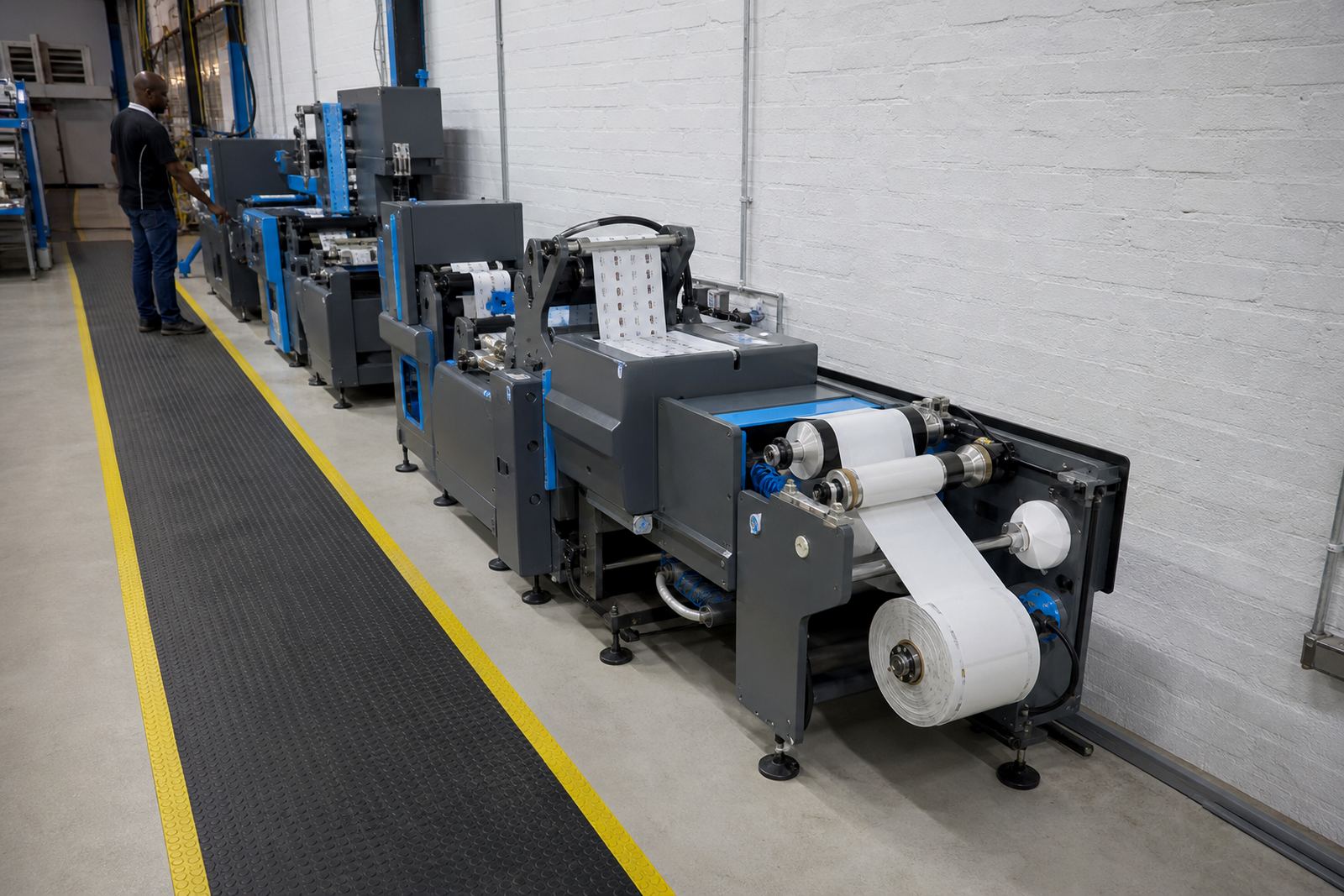
That stability starts with the unwind. A parent roll that is too tight can pull the web thin, while one that is too loose can telescope or flutter. In both cases the next station has to fight the feed, and that is where small faults turn into scrap. On narrow-web work, even a light change in braking pressure can show up on the finished reel.
- Keep the web path straight and well aligned.
- Match unwind braking to roll weight and diameter.
- Check that guide rollers turn freely and without side play.
Unwind pressure and roll size need each other
Most finishing problems start at the roll stand, not at the cutter. A larger roll diameter changes the pull on the web as it unwinds, so the machine must control that pull in a steady way. If the tension is set for a small roll and the same setting is used on a heavier roll, the web can neck down or pull off centre.
For label printers working with 330 mm or 430 mm parent rolls, the unwind section must suit the stock weight, adhesive build and liner type. Paper behaves differently from film, and heat-sensitive material reacts differently again. In coastal towns like Durban, humidity can alter how the roll feeds too, so a dry, flat roll and correct storage still matter before the machine even starts.
- Set braking for the material, not only the roll width.
- Watch the roll edges for cupping or wander.
- Keep stock wrapped until it reaches the line.
Lamination and varnish need even pull, not extra force
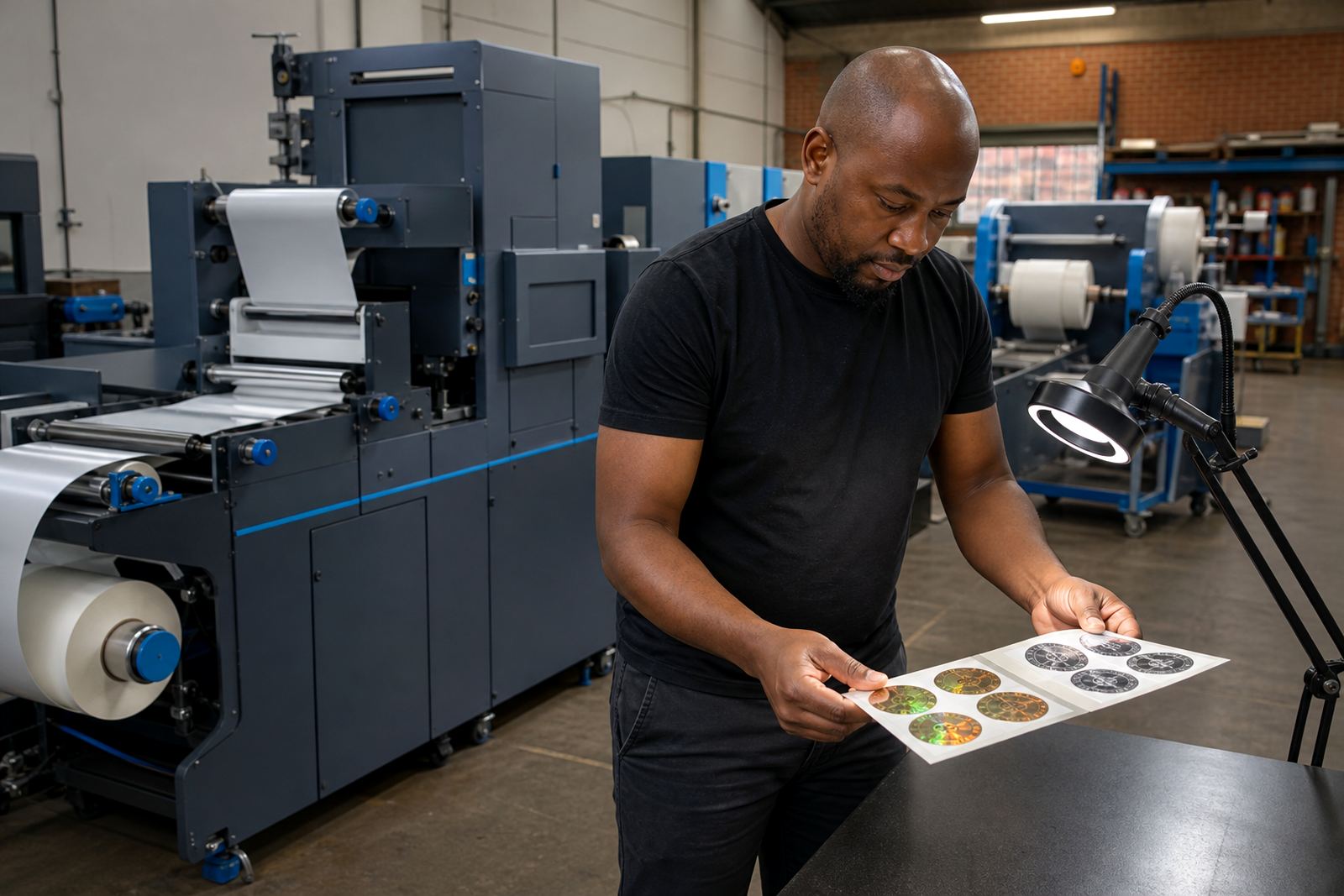
Lamination and varnish stations place different demands on the web. A film laminate wants consistent laydown so the adhesive bonds evenly and the surface stays flat. Varnish, whether flood or spot applied, also needs a steady feed so the coating lands where it should. If tension rises too sharply, the web can stretch before the coating has settled.
On a busy packaging floor in Randburg or Pretoria, operators often blame the coating station when the real issue is earlier in the path. A small gain in tension between print and finish can change the register mark position enough to throw off a spot varnish. The cure is not more pressure, but balance across the whole line.
- Hold the web flat through the coating nip.
- Avoid sudden acceleration after laminate contact.
- Check that chill rollers or guides are clean before running film.
Die-cutting works best when the web stays honest
Whether the line uses flexible dies, semi-rotary die-cutting or laser cutting, the cutting station depends on a predictable web path. A flexible die needs the material to arrive at a consistent pitch so the blade meets the repeat at the right point. Semi-rotary systems are sensitive to timing, while laser systems still need a stable web so the material does not shift under the beam.
Registration marks are there to guide this work, but they only help if the web stays true. If the print length changes through stretch or slip, the cut can land too high, too low or across the adhesive zone. On longer labels the error may be small at first, then show itself as a sliver of liner left behind or a label edge that lifts after stripping.
- Calibrate the registration sensor before a long run.
- Check repeat length after any roll change.
- Keep die pressure even across the width.
Matrix stripping and rewind pull must be balanced
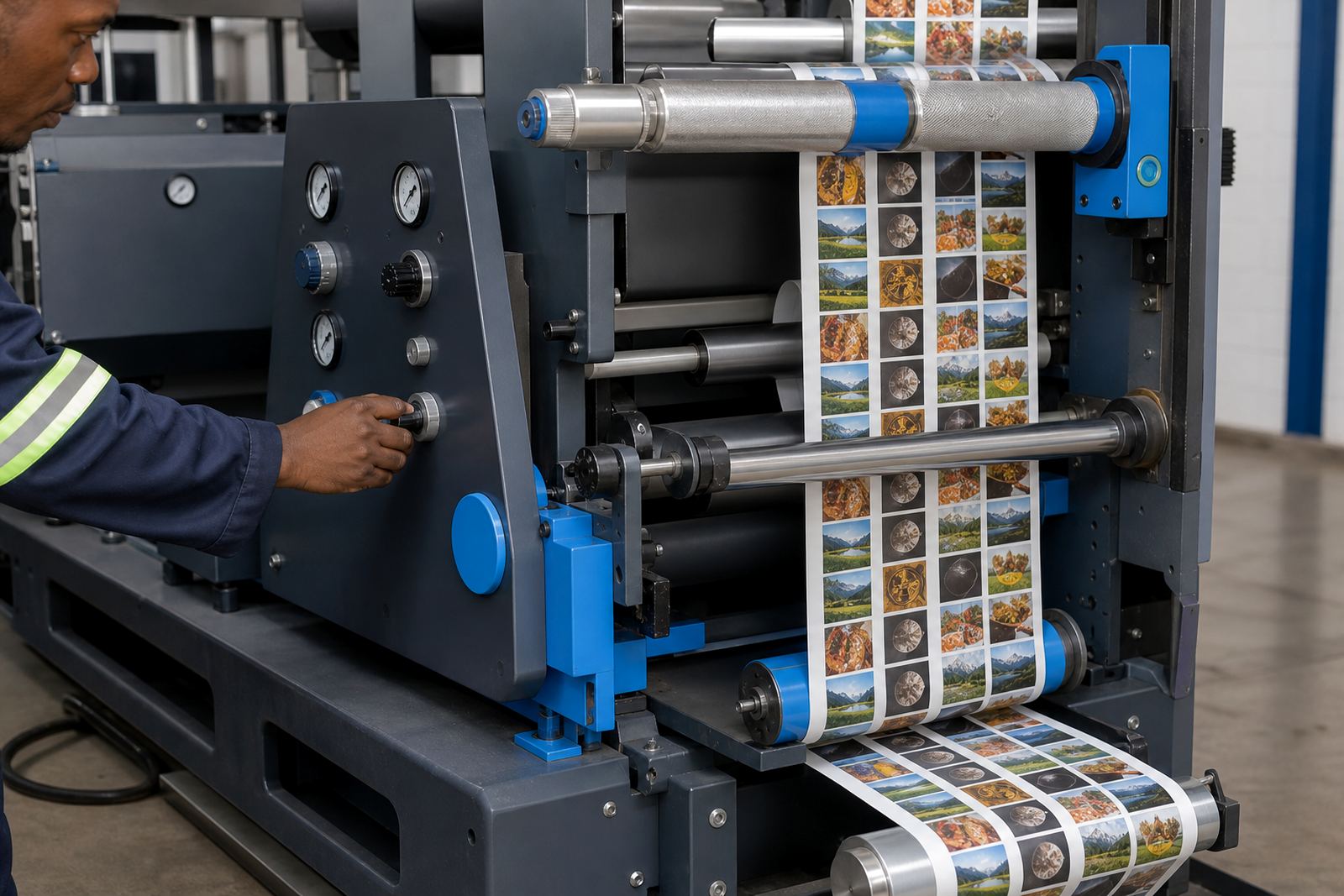
After cutting, the waste matrix has to leave the web cleanly. If stripping tension is too low, the matrix can break in narrow bridges and leave scraps behind. If it is too high, the face material can lift or distort as the waste is pulled away. The same idea applies at rewind, where the finished rolls must wind tight enough to stay neat but not so tight that the label edges crush into each other.
Slitting adds another layer. Slit rolls can wander if the knives are dull or the web is not centred before the blades engage. The result is edge curl, dust and uneven roll build. A good setup gives each lane the same pull, then hands the web over to rewind without a sudden change in drag.
- Keep matrix take-up tension steady through the run.
- Set rewind torque for roll width and label stock.
- Replace worn slit knives before edge quality drops.
When the line feels twitchy, look for the cause in sequence
Operators often notice a fault at the last station, but the cause may sit two or three stages earlier. A web that feels twitchy can be the sign of a loose guide, an over-tight unwind, a dirty roller, or a sensor reading that drifts on reflective stock. On mixed jobs, this shows up when the next reel runs differently from the one before it. A neat sample at the start can hide a problem that only appears after the roll settles.
In a Kya Sand workshop or on a production floor in Midrand, the practical habit is to check the line in order: unwind, guides, print marks, coating, die-cut, strip, slit, rewind. That sequence saves time because the tension fault is often upstream from the visible defect. A careful setup on the first roll can spare a full batch of rework later.
- Inspect the path from unwind to rewind in the same order every time.
- Keep a note of stock types that need different settings.
- Run a short test length before full production.
A local example from a busy label floor
A label printer in Johannesburg may run pressure-sensitive labels on paper in the morning and switch to film later in the day. The first job might strip cleanly with light tension, while the second needs a firmer unwind and a more careful rewind to keep the web flat. If the operator uses the same settings for both, the film can stretch at the laminate nip and the cut then lands off the mark.
That is where installation, operator training and production support matter in practical terms. The machine has to suit the stock, yes, but the settings also need to suit the reel width, roll size and finish. A stable web is not about one magic number. It is about matching pull, speed and stage by stage control so the roll leaves the line in usable shape.
For teams in Randburg, Pretoria, Durban, Cape Town and Gqeberha, web tension is one of the first things to respect and one of the last things to ignore.
What a stable line feels like
When the web is well controlled, the machine sounds even, the register marks stay where they should and the finished rolls wind with clean edges. Waste comes off in one piece, slit lanes stay straight and the operator does not have to keep chasing the same fault. That steadiness is the real aim of tension control, because every station depends on the one before it.
Label-Cutter works with digital label die-cutting and finishing equipment for label printers and packaging producers across South Africa, with installation, training, servicing, parts supply and setup support for the line as a whole. The job is not only to fit a machine, but to get the web moving in a way that holds through the full finishing path.