A Bloemfontein floor with only one clear lane
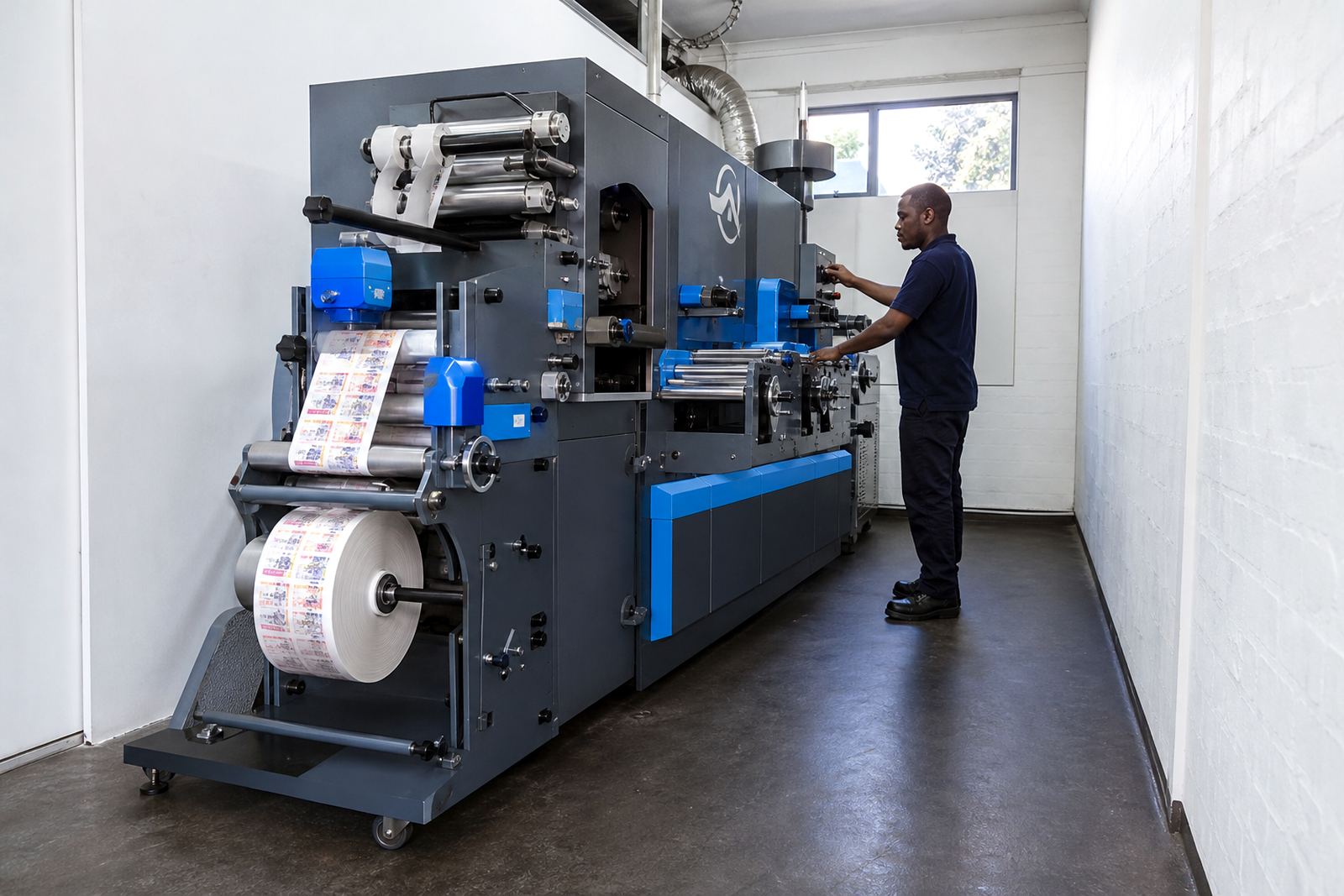
The brief came from a packaging producer in Bloemfontein that was running narrow web labels and could no longer justify a separate machine for each finishing stage. The room was tight, the aisle had to stay open for pallet movement and the operators needed a line that could sit close to the press without forcing awkward roll handling. The job was less about adding size and more about arranging a practical flow through a small footprint.
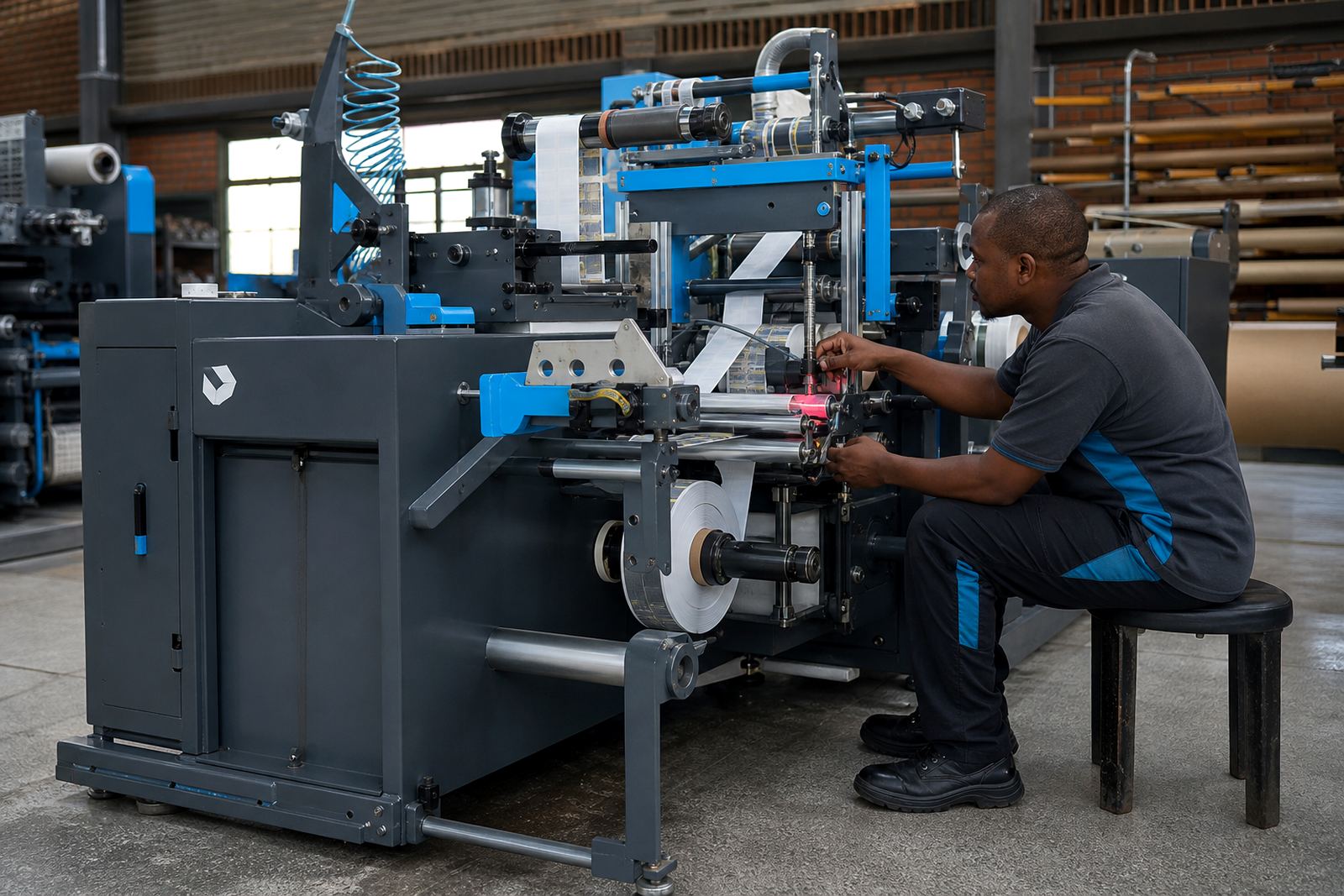
We worked around the available floor space and the roll paths that had to stay clean from one end of the line to the other. That meant keeping the unwind, web guides, lamination section, die station, waste removal and rewind points in one compact run, with access still open for setup and daily cleaning. The result had to suit labels that needed precise repeat registration and steady tension through each stage.
- Client type: label printer and packaging producer
- Town: Bloemfontein
- Challenge: limited floor space and a need for fewer handling steps
- Scope: one compact finishing line with setup support
What the brief called for on the shop floor
The client was handling a mixed label schedule, with short runs, repeat artwork and some jobs needing lamination before die-cutting. They also wanted cleaner matrix stripping and neater slit reels for dispatch. The pressing requirement was to keep the machine compact but still capable of accurate web control, because a wandering web in a small line becomes a daily nuisance very quickly.
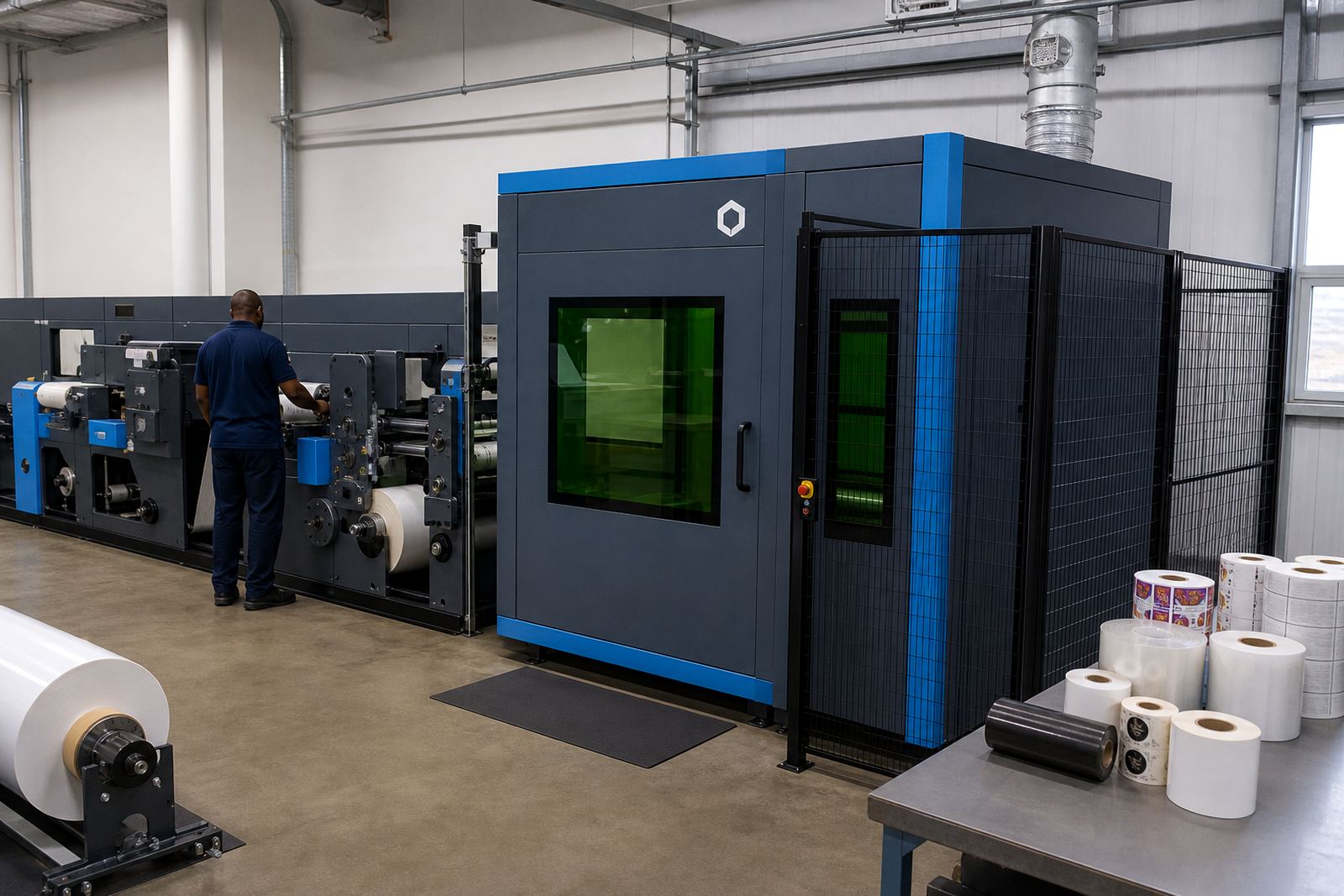
We proposed a digital finishing arrangement built for pressure-sensitive label stock, with registration mark reading, a controlled unwind, a lamination section, die-cutting, waste strip removal, slitting and rewinding in a single path. Where needed, the setup also allowed flexible die use and a practical route for varnish jobs that did not require a full press change. This gave the team a line that could handle plain label runs and more involved finishing on the same floor space.
- Registration marks for repeat position control
- Flexible dies for short and mixed production runs
- Matrix stripping to clear waste cleanly
- Slitting for narrower finished reels
How the line was arranged in six weeks
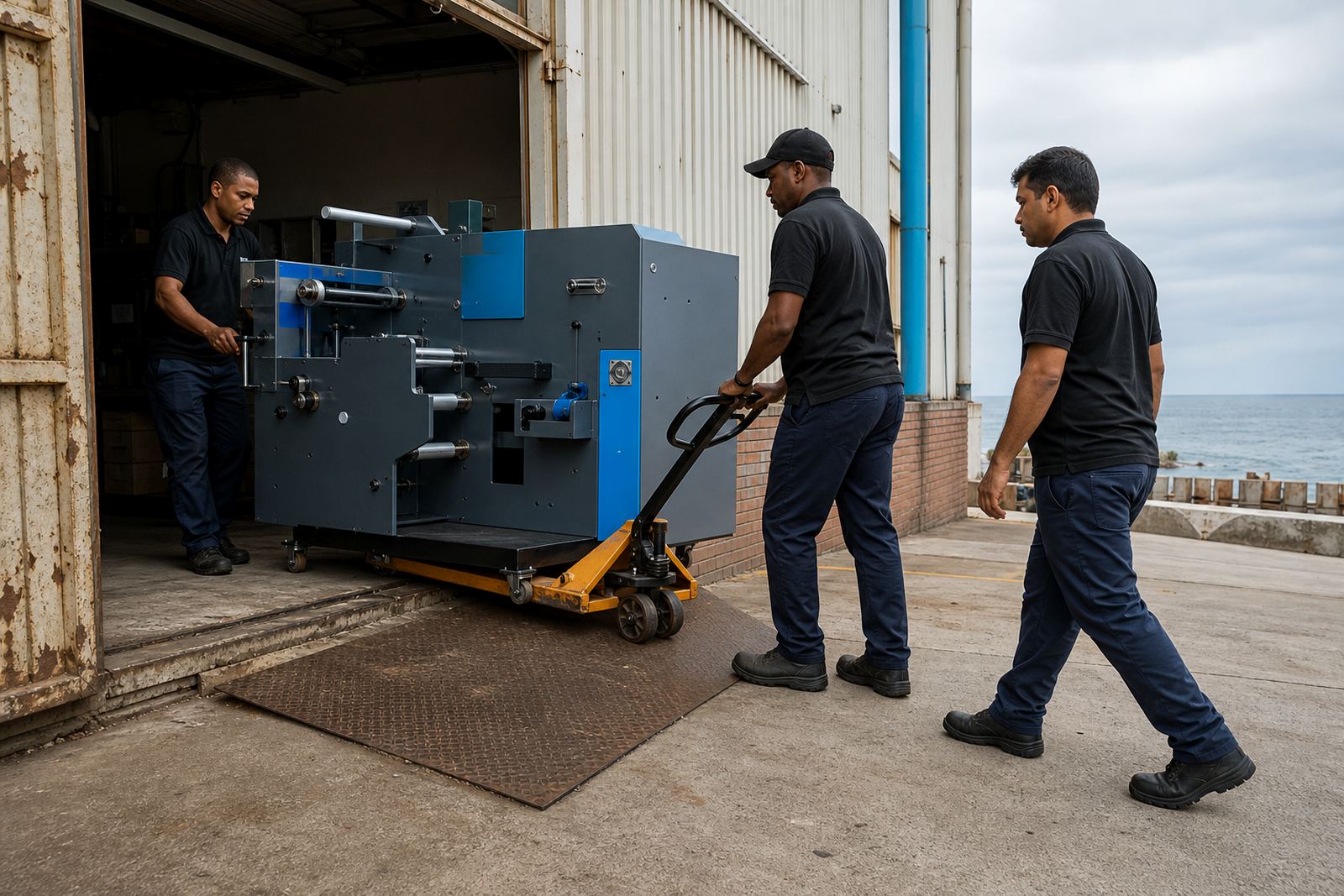
We mapped the installation over six weeks, starting with floor positioning, utility checks and web path planning. The line had to sit where operators could load reels without blocking access to the rest of the room, so we kept the service side clear and set the finished-roll side toward dispatch. That arrangement saved movement around the machine and made the small room easier to work in.
Installation included mounting, alignment, electrical connection and a full set of start-up checks across unwind tension, lamination pressure, die alignment and rewind control. After that we commissioned the line with actual production stock so the operators could see how the web behaved at different speeds and where minor register corrections were needed. The machine was then handed over with notes on setup sequence, waste control and routine cleaning points.
- Week 1: site measure and layout plan
- Week 2 to 3: delivery and placement
- Week 4: installation and connection
- Week 5 to 6: commissioning, operator training and handover
Training that matched the real run order
Bloemfontein operators needed training that followed the way they actually run labels, not a classroom version of the process. We focused on loading the roll correctly, setting web tension, reading registration marks, checking die depth, watching the lamination nip and keeping the matrix strip stable through the full run. A small line works best when the team understands where the pressure points are and what to look for before a run drifts out of trim.
The training also covered slitting setup, rewinding to tidy roll edges and the practical use of changeover tools. There was time spent on stopping a web break from turning into a long recovery, plus the sort of small settings that affect reel quality more than people expect. A line like this is only useful when the operators can move through the sequence without second-guessing each stage.
- Web loading and edge alignment
- Die setup and registration calibration
- Slit width changes and rewind control
- Daily cleaning points and wear checks
What changed after the compact finisher went live
Once the line was in production, the biggest change was how little room it needed for the amount of work it could handle. The client could keep the floor open for movement while still finishing labels in house, which reduced waiting around for outsourced jobs and gave more control over schedule changes. The web stayed cleaner through the line, and the finished reels were easier to pack and move on to the next stage.
There was also a practical gain in consistency. Registration stayed steadier on repeat jobs, matrix stripping was easier to keep under control and the rewound rolls came off neater, especially on narrower formats. For a plant with limited space, those are the details that matter most because every extra correction takes time and ties up the team.
- More finishing work kept in house
- Cleaner reel presentation after rewind
- Less handling between label stages
- Better use of a small production room
What we would keep in a similar Bloemfontein job
On a similar job, we would keep the same thinking: short roll paths, a clear access side and setup steps that match the way the team runs actual production. A compact finisher is only worthwhile when the machine layout works with the room, not against it. That is where a careful install saves trouble later, especially when the floor is shared with other packaging work.
We would also keep the training tied to the daily sequence, from unwind settings through to rewinding and waste removal. If the operators know where the web can drift and how the registration marks should read, the line stays much easier to live with. In a small finishing area, practical setup matters more than excess machine length or spare movement that nobody uses.
- Keep the machine path short and direct
- Leave room for reel loading and cleaning
- Set training around the real job sequence
- Check waste stripping under production speed
Key facts
| Machine type | Compact digital label finishing line |
|---|---|
| Core functions | Unwind, laminate, die-cut, strip waste, slit and rewind |
| Web control | Registration mark reading with tension control |
| Production format | Pressure-sensitive label rolls and narrow web stock |
| Installed in | Bloemfontein |
| Project duration | 6 weeks from layout to handover |