Durban web control, from the first reel to the last
The brief came from a Durban production team running short and medium label jobs for FMCG and packing work. Their issue was not one single fault, it was the way moisture, roll build-up and changing substrate behaviour showed up across a full shift. The line needed to unwind cleanly, hold register on printed marks and keep the finished rolls tight without telescoping or edge damage.
We started with the roll path and worked forward. That meant checking unwind stability, web guidance, static control and the position of each station so the operator could see what was happening without leaning into the machine. Coastal humidity can soften the behaviour of some label stocks and adhesives, so the set-up had to stay predictable when room conditions moved around during the day.
- Job mix covered paper and film face stocks
- Printed rolls arrived with registration marks for guided cutting
- Finished reels had to suit direct use on labelling lines
The finishing line we put into place
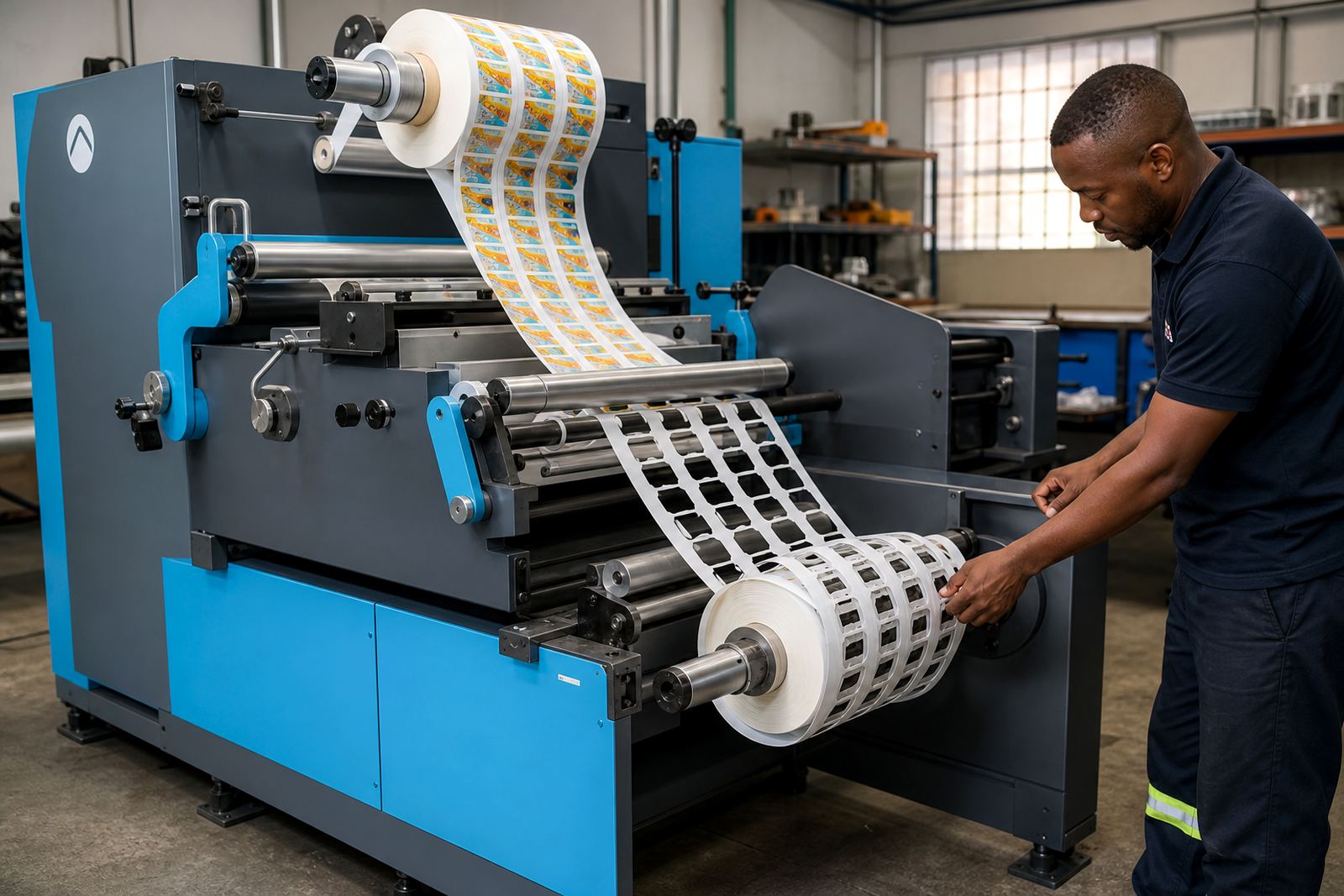
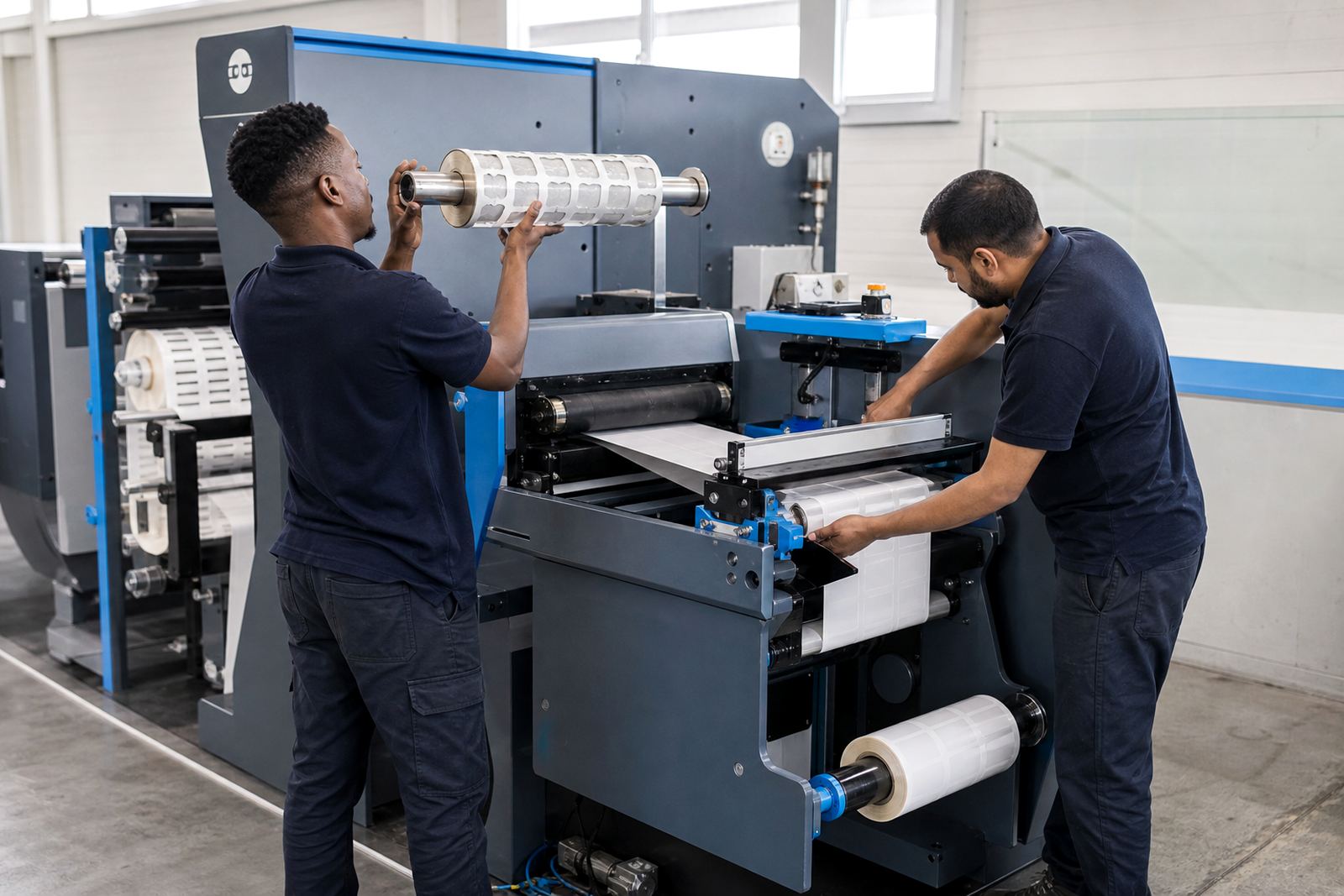
The equipment package combined unwind, lamination, semi-rotary die-cutting, waste stripping, slitting and rewind in one controlled line. The customer wanted one machine path that could handle pressure-sensitive labels, protect print where needed and produce neat final rolls without extra handwork between stages. Where jobs called for it, the line was also prepared for flexible dies and fine registration adjustment.
We set the web path for stable tension through the nip, die station and rewind. The lamination section was aligned to keep the face material flat, while the waste matrix was stripped cleanly before the slit knives divided the finished web into the required widths. For some work the team used varnished stock, so the cut settings were tuned to protect the finish and avoid rough edges on the wound reels.
- Supported roll widths from narrow labels to wider production webs
- Registration marks were used for print-to-cut accuracy
- Rewind tension was balanced for compact, even rolls
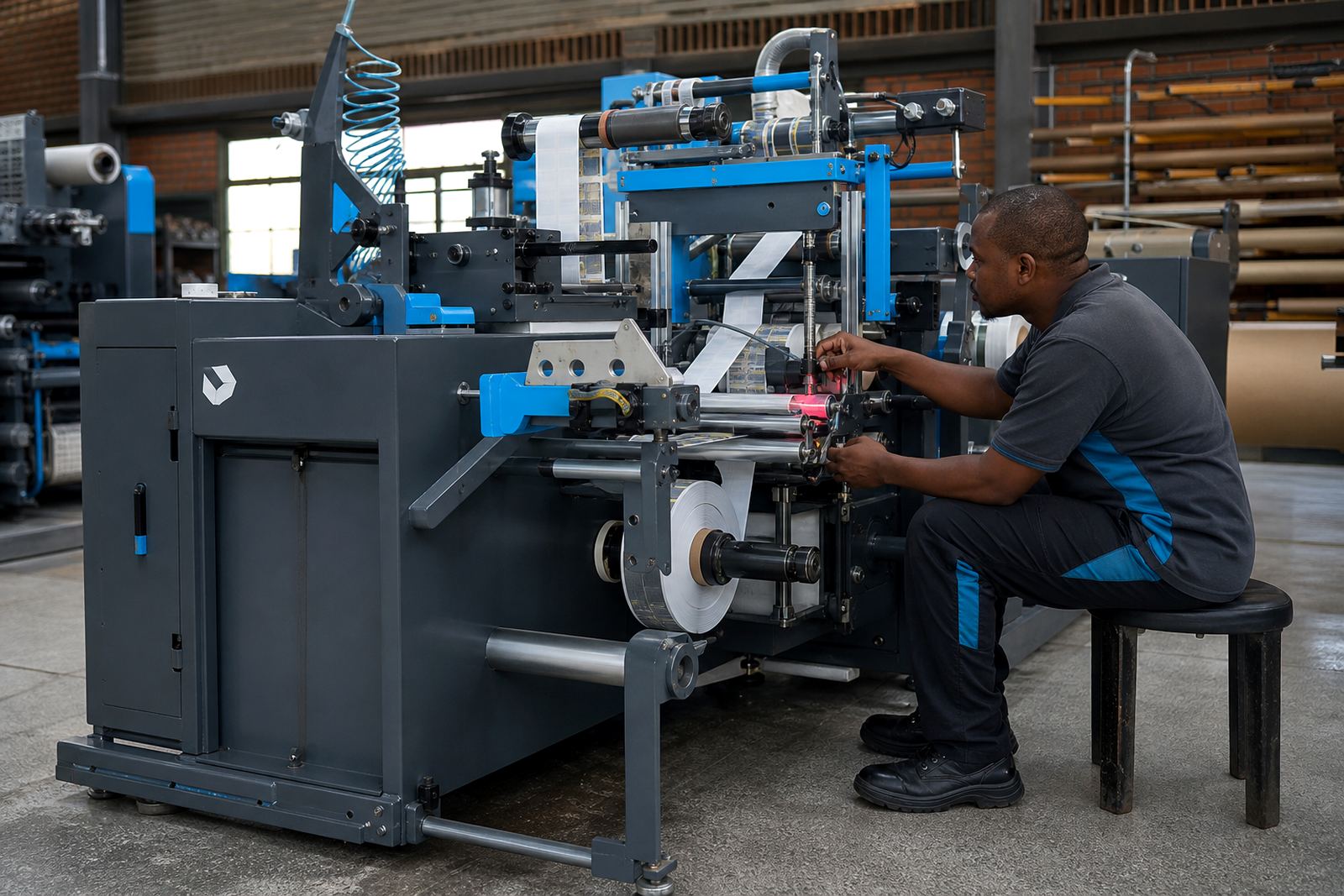
The operator station was laid out for practical work, not showpiece viewing. Gauges, controls and access points were kept where a setter could make adjustments without stopping every few minutes. That matters on a Durban floor where the same line may move from short runs to longer repeat work in the same week.
What had to be kept stable in coastal air
Humidity near the coast changes the way some materials feed, especially on lighter webs and on adhesive stocks with a softer face layer. The customer needed less drift in the cut line and fewer roll defects at rewind. We treated the project as a web control job first, and a cutting job second.
That meant checking the unwind brake, the dancer response, the side guide behaviour and the rewinder nip pressure. We also watched how waste matrix stripping behaved on the more flexible label structures, because a loose strip can pull the web sideways before the slitting stage. Small changes in temperature and moisture can show up as a wandering cut or a roll that starts to cone, so every station had to support the one after it.
- Web alignment was set before production runs began
- Die pressure was adjusted for clean release without overcutting
- Slit width and rewind tension were tested on short sample runs
There was also the matter of handling mixed job types. One day could call for clear labels, the next day a white facestock with varnish, and then a short batch of packaging labels with tighter register needs. The line had to move between those jobs without becoming fussy or difficult to reset.
Installation and commissioning on the Durban floor
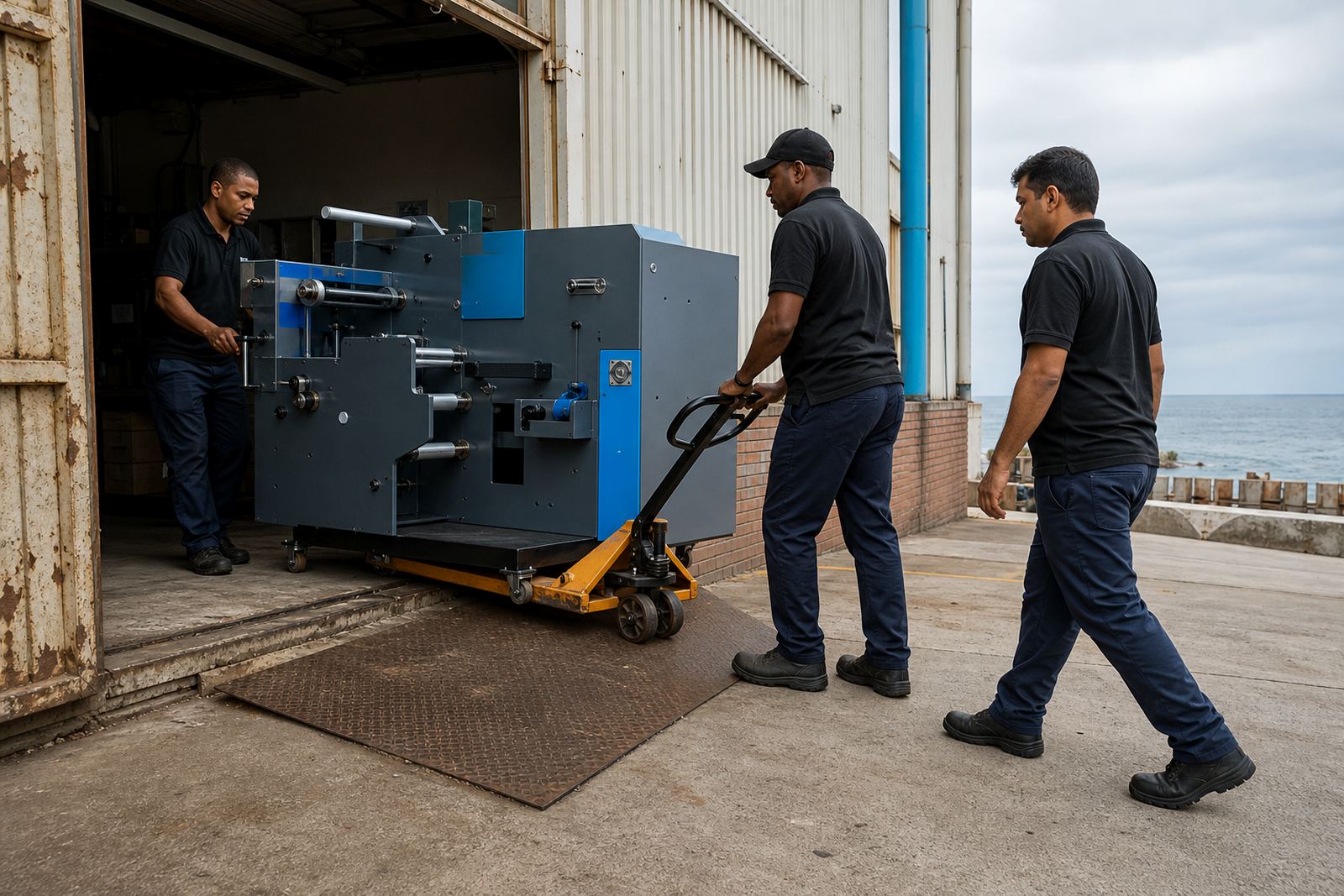
Installation took place over two weeks, starting with the base position, power and airflow checks, then moving into mechanical alignment and web path setup. Once the machine was in place, we commissioned each station in order, first unwinding, then registration, then cutting, stripping, slitting and rewind. That sequence made it easier to see where any fault was sitting instead of chasing it through the whole line.
Our technical manager handled the commissioning checks with the local team, while the applications trainer worked with operators on job setup, die changes and tension settings. The service coordinator kept the spare parts list and wear items organised so the customer had the items most likely to be needed on hand. It was a practical install, not a theory session, and the operators touched the machine while the settings were still fresh.
- Mechanical alignment and web threading completed first
- Commissioning covered registration, cut depth and rewind build
- Operator handover included safe die changes and waste handling
By the end of the commissioning stage, the team had working recipes for the main stock types and a clearer sense of what to look for when a reel started to drift. That saved time when the machine went into regular use, because the settings were tied to the actual jobs they were running, not a generic sample sheet.
Training for setters, operators and maintenance staff
Training covered setup, basic fault finding and the daily checks that keep a finishing line honest. We showed the team how to read registration marks, how to spot a wandering web before it becomes waste and how to balance rewind tension when the roll build changes. The point was to make the machine easier to live with on a normal production day, not just on the commissioning day.
We also covered practical maintenance. Coastal air can leave its mark on bearings, guides and exposed surfaces, so cleaning routines and inspection points were included in the handover. The team was shown where to check for adhesive build-up, where matrix stripping can start to snag, and how to keep the slitting section clean enough for repeat work.
- Daily checks on guides, knives and rewind build
- Changeover method for flexible dies and cut stations
- Cleaning points for adhesive, dust and stock residue
Where the customer asked for it, we also explained how to stage jobs for better yield. In practice that meant grouping similar stock types, keeping the waste path clear and matching the rewind core to the finished roll size. Small habits like that reduce operator frustration and help the line hold its settings for longer.
Results that mattered on production day
Once the line settled into routine use, the Durban team had a cleaner path from printed roll to finished label reel. The main gains were steadier web travel, better cut consistency and neater rewind packs that were easier to move into the next stage of production. The customer also gained a more controlled way to handle short-run work without overcomplicating the set-up.
The real value showed up in day-to-day handling. Less correction at the web guide, fewer waste issues at strip-out and better repeatability between similar jobs made the machine easier to run. The operators did not need to keep chasing every roll by hand, which is often where a coastal site loses time.
- Cleaner edge quality on finished rolls
- More stable register across repeat jobs
- Reduced handling at rewind and pack-off
If we were approaching a similar Durban install again, we would keep the same order: web control first, cut quality second, training third. That sequence suits coastal work because it deals with the moving parts that actually disturb production. The machine itself matters, but the way it is tuned for the room and the stock matters just as much.
Key facts
| Project location | Durban, KwaZulu-Natal |
|---|---|
| Application | Digital label finishing line for printed rolls |
| Core functions | Unwind, laminate, semi-rotary die-cut, strip waste, slit and rewind |
| Web features | Registration mark control, tension management and stable roll build |
| Roll handling | Wide range of label roll widths and rewind core sizes |
| Project duration | Two weeks from install to commissioning handover |